Welcome to Life,
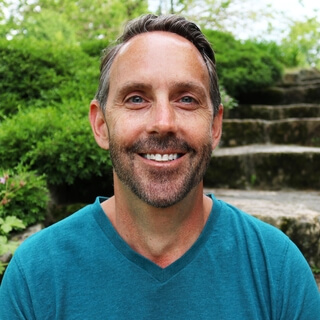
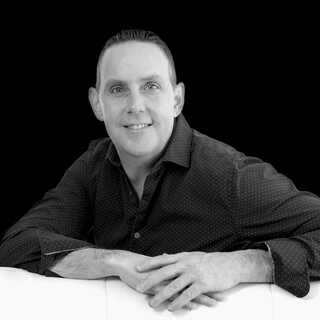
Lessons and Laughter with your host Glenn Ambrose.
Hello.
Welcome to the podcast from sunny Florida.
I'm excited we're doing our first video podcast.
So we're taking in the scenic beauty of Florida so I could get out of the cold of Rhode Island for a while.
Yeah,
So we're going to apologize a little bit for the sound quality.
It's not exactly what you're used to on the show but I am here in Rhode Island still with all of our equipment and Glenn is doing this via Zoom video with his headset in Florida.
How's it going down there,
Glenn?
Oh,
It's beautiful.
I'm loving it.
I needed a little R&R,
A little sunshine,
A little warmth.
It feels good.
I'm practicing traveling in the now.
Exactly.
So what are we talking about?
That's what we're talking about,
Traveling in the now.
So it's basically being in the present moment while you're traveling.
So basically when you travel,
You're going to an unknown area which is a little bit different for my particular situation on this particular trip because I live down in this area for 10 years so I'm somewhat familiar with it which can be nice in certain situations.
But what we're really talking about is traveling in the now in areas that you're not familiar with because what it does is you can't take things for granted.
You're not at home,
You don't have your food in the fridge and you're not familiar with the restaurants and all that stuff.
So basically everything that you do requires some thought.
So generally there's one of two ways you can go with that.
Either you're really going to enjoy it which is cool and you just love being in the present moment and it kind of forces you into the present moment.
So you really embrace it and you enjoy it and you love kind of living a little spontaneously and it really can fill you with joy a lot.
That's why a lot of people like to go on vacations.
But then there's also the other way and that is people who tend to want to control a lot of things and don't have that derive a sense of comfort from controlling the atmosphere and things around them.
Then all of a sudden you take them and you put them into a completely different atmosphere where they don't have all the control and it can be very,
Very stressful.
So some people like that don't enjoy traveling and you can see if you were talking about traveling to another country how that would be even more blown up.
It would be more apparent because if you don't speak the language and you need to just figure out how to do anything and how to communicate,
If you don't embrace that type of being in the present moment and just adapting to what's happening,
Boy,
It's going to be very difficult.
You're going to struggle a lot.
But if you embrace it,
It can be very exhilarating and fun.
So that's kind of what we're talking about today.
Those are kind of the two sides.
Have you always enjoyed traveling?
Yes,
To some degree.
I think I'm on the line.
I think I've experienced a little bit of both.
And one of the things that I do struggle with when I'm traveling is I have a poor sense of direction so I can get lost very easily.
And I don't like that aspect because I just don't like getting lost.
It's not that I'm real scared and I'm like,
Oh my God,
What am I going to do?
I mean,
I'm calm.
I just don't like the experience of getting lost and then maybe missing whatever I was planning on doing or something like that.
So I have that part of me.
But as a general rule,
I kind of like the spontaneity.
I like the,
What do you want to do now?
Geez,
I don't know.
Let's go drive and find something.
I enjoy taking on new experiences.
While I'm traveling,
It usually kind of pushes me in that direction because I get caught up into a routine to some degree at home.
Of course,
Being a single parent,
You have responsibilities and you've got life going on and all that stuff.
So when I'm traveling,
It's a little bit more apparent like,
Hey,
I'm somewhere far from home.
Let's take advantage of the area that I'm in and go experience something that I can experience here that I wouldn't be able to experience at home.
And I think,
Of course,
You're going to have people with both sides that are very much hate traveling.
And some people that absolutely love traveling.
But a lot of us are going to lie somewhere in the middle where there's some aspects of it we really enjoy and some aspects not so much.
So we kind of have to navigate that.
And as I live more presently and more in the moment,
I keep that in mind.
And that usually is enough to adjust our behaviors.
It's just keeping things in mind,
Just living consciously.
So if I'm on vacation somewhere,
All of a sudden I start feeling tense.
I'll stop and go,
OK,
Why are you feeling tense?
Oh,
Well,
I'm out of control in this situation.
I'm not really comfortable.
Oh,
Well,
It's fine.
You're OK.
There's no reason to get stressed out about it.
It'll just go with it and it'll play out how it's supposed to play out.
Oh,
Yeah.
And then I get a little bit better at it.
But that's really all it takes.
It doesn't take that much conscious effort.
It's just about living a little bit more consciously and paying attention to how you're feeling.
I used to love traveling.
I think.
Really?
Yeah.
I mean,
I've never done it extensively.
But when I was younger,
High school,
I guess,
We first traveled ever.
When I was like nine,
We drove to North Carolina twice for a couple of years in a row.
And then in high school,
I went to Montreal once and like Hershey,
Pennsylvania.
So like never far.
I've never been on a plane in my life.
And of course,
I've traveled from Rhode Island to New York like hundreds of times almost.
It feels like hundreds of times.
I know New York City better than I will ever know the town next to the town that I live in in Rhode Island.
But I used to love traveling.
And now I thought,
I can go anywhere.
I can go anywhere.
I'll do anything.
Like it doesn't matter.
I can sleep anywhere.
I can fall asleep anywhere.
I don't need much.
It's fine.
And now I'm like,
I don't really want to leave my house.
Yeah,
It's that safety and that comfort.
And as we get older too,
We can kind of design our lives the way we want a little bit more too.
We can be like,
Well,
I like my house and I like my bed and I like my.
.
.
There's nothing wrong with that aspect of it too.
But embracing the different experiences is,
I think,
Important for most people.
Not everybody.
I grew up.
.
.
I was just talking to somebody about this recently.
And especially me being down here in Florida,
I come down here and I visit with friends that I grew up with in Massachusetts.
So I knew them,
This family,
Most of my life.
Going to school with them.
And then I lived down here in Florida for 10 years while they were living down here.
And they're kind of like my surrogate family down here.
So I've known them for a long period of time.
And there's people who have traveled away from my hometown and people who have stayed there,
Obviously.
And there's a difference there.
It's not necessarily good or bad.
It's just different.
So there's people that I grew up with in my hometown that are amazingly wonderful people that just salt of the earth.
To this day,
I think the best people I've ever met,
Just morally and just good,
Solid people are in that town I grew up in.
And again,
Some of them have left and some of them have stayed.
But there was just really a lot of good people where I grew up.
And some of them stayed there.
And I love having certain conversations with them.
And they tend to stay in a certain area.
But then if I'm with some people I grew up there but don't live there any longer,
The conversations tend to go in different directions just because they've had different experiences.
So I don't think that one is necessarily better than the other.
For me personally,
I needed it.
I never thought I was going to leave my hometown.
I never thought about leaving it really.
Not seriously.
Didn't you leave at like 18?
Yeah,
But that was just me running away.
I just took off and then came back a couple months later.
There was zero thought to that.
But then when I was like 24,
25 or something,
My life wasn't going well.
And again,
It was me running away,
Quite frankly,
Thinking that the grass was greener somewhere else.
But when I moved,
And I lived there for a little while,
After about a year,
I was like,
OK.
I could almost feel my mind expanding.
And I needed that.
I just personally needed that.
And I tried to explain it at different times to friends of mine that were from my hometown.
And I remember one conversation.
A friend of mine thought I was kind of talking down about my hometown because I was saying,
Oh,
I need to get away.
And I was like,
No,
No,
No.
I'm not talking down about it.
It would be much easier if I didn't need to get away.
Because changing your whole life can be difficult.
It takes a lot of effort.
And you have to deal with a lot of things that you're uncomfortable with and get used to new things and all that.
So it would have been much easier if I was one of those people that could have been happy staying in my hometown.
But I'm just not one of those people.
Once I moved away,
I was like,
Oh,
Yeah,
I needed.
I didn't even know I needed to get out of there until I did.
And I was like,
Oh,
This was a good move for me.
So you talked a lot about the jolt of not having the food in your fridge and not having the comforts of your schedule are a big deal for traveling.
And that kind of forces you into being present.
So most people,
I would say that,
As you said,
That do not like traveling go against that.
And they try to control it.
Could we use that every day?
Yeah,
Absolutely.
It's that we can even exercise our freedom of choice to,
You know,
Like I said,
When I moved,
It really expanded me in a way that I didn't even know I needed.
Well,
Like a smaller version of that is just acting on our freedom of choice.
We have choices in our life all over the place that we just take for granted because we're such habitual beings.
So we can choose to sleep on a different side of the bed.
We can choose to use a different hand to brush our teeth.
We can choose to come home a different way from work.
Those types of behaviors kind of activate your mind so we're not on autopilot so much and just doing the next expected thing.
You know,
You hop in your car and you start driving home and then all of a sudden you kind of wake up when you're pulling into your driveway.
You don't even remember how you got there.
It's like because it's so programmed into you what you're doing that it's difficult to be really conscious.
But if you're taking a new way home,
All of a sudden that forces you into the moment because you have to say,
Okay,
Now where do I turn?
I have to be paying attention to what I'm doing instead of just doing it out of habit.
So that's kind of like a smaller version of what I'm talking about when we're traveling.
So we can do it in our everyday lives but just to become more conscious.
So those are like exercises that you can do.
And there's also just,
You know,
This is why mindfulness is so huge right now in the spiritual teachings and stuff.
Because it's,
And I've been saying this a lot more lately and that is,
You know,
All the different things that I teach and all I talk about and all this stuff.
Yeah,
It can be helpful coming at it at different ways.
But if I were to try to boil it all down to one thing,
It's just living consciously.
Just be aware of what the heck you're doing when you're doing it.
And it's because when you're completely in the moment,
You don't make poor choices.
You just instinctively know what to do in situations.
It's when we're all caught up and stressed out and our thinking isn't clear that that type of stuff starts getting,
You know,
Jaded and we start making poor decisions.
And it's so like if we're in the present moment all the time,
We're conscious and we're mindful of where we are and what we're doing and why we're doing it really,
You know.
And we don't tend to make mistakes.
People don't make mistakes because they choose the wrong thing.
It's usually they make mistakes because they're not aware of the right thing,
You know.
So it's just and that comes back to the present moment.
If you're really centered,
The right thing is usually right in front of you,
You know.
It's not too difficult to figure out the right thing usually when you're calm and thinking clearly and really centered.
Did you say that an advantage to traveling or just taking a different way home or,
You know,
Switching things up on yourself like that is that it's preparing you for when things don't go the way that you planned them for.
You know,
All of these things are planning you for,
Are preparing you for when the things that you did not plan,
Like,
You know,
All of a sudden.
I'm just using this example because it just came to my head.
I was supposed to do a podcast earlier with somebody,
A business owner,
And we had to reschedule at the last second because the sprinkler system went off when it wasn't supposed to,
You know.
So when you have a day like that,
It really helps.
That's the best time.
That's kind of why we do the meditation and the spiritual disciplines because it kind of levels us off.
I remember years ago,
I was meditating every morning and then somehow something happened and I got out of the rhythm.
I ended up going like two weeks without meditating and then some stuff was happening at work and I was getting really frustrated.
Things were getting to me,
Like little things started getting to me more.
And all of a sudden I was like,
What is going on with me?
You know,
Why are all these little things getting to me that don't normally get to me?
And I thought,
And I was like,
Oh,
I haven't been meditating.
Maybe that's it.
But the first time I understood that meditating,
Of course it has its benefits in the moment while you're meditating,
But it also has long-term benefits and that is just kind of being even keeled throughout your day and not getting knocked off center so quickly.
So it gives you the obvious peacefulness when you're meditating,
But then it gives you,
If you do it regularly,
It gives you an underlying current of peacefulness that's within you as you walk through your day.
It's subconscious so you're not really even aware of it,
But it does make people a lot more even keeled.
So it's the same way with any type of this stuff that can bring us into the moment and keep us more present and conscious and in the now.
So when something does happen,
It doesn't knock you off center.
When I was younger and very dysfunctional,
Anything that happened,
It was like it was the end of the world.
It was all,
Oh my God.
People would be like,
Glenn,
Calm down.
What do you mean calm down?
I didn't know how to calm down.
I didn't know what they were talking about.
Calm down.
One,
I don't know what that looks like.
Two,
I don't know how to get there.
Three,
Just stop saying it because it doesn't make any sense because obviously there's something wrong right now.
That was my reaction.
So now that I'm more peaceful,
I have my moments,
But as a general rule,
People think that I'm actually a pretty calm and peaceful person,
Which still makes me giggle a little bit because even after all these years,
I don't completely perceive myself that way.
But people see me handling situations.
And I had a friend of mine over,
I don't know,
A year or two ago that had some young kids and they were running around my house,
Like literally doing laps,
Chasing each other and stuff.
And I was sitting there talking with my friend in the living room,
Just having a conversation with him.
And he's like,
Are they driving you crazy?
I'm like,
No,
I'm fine.
And we kept going on with the conversation.
And then him and his wife had mentioned it later that like,
Oh my God,
You're so calm with all that racket going on around you.
But I'm able to do that,
Especially when it's somebody else's kid.
It's always easier when somebody else's,
When it's yours,
You pick up on everything that they do.
But yeah,
So that's why we practice this stuff is so when something does happen,
It doesn't overtake us so much.
And it doesn't knock us off center so much.
And we can manage things from a calm,
Peaceful place because that's where our best thinking comes from.
If there's something we need to do,
If there's an action that needs to be taken,
If we're calm,
That's when we can take it.
If we're panicking and not thinking clearly,
We do not make our best decisions then.
Something that has occurred to me in the last few minutes is this whole aspect of doing something new like traveling makes you more present.
We're doing something right now that's new as we're talking the way that we're recording this podcast.
And it's definitely got me more present even than we usually are during the show.
And I'm wondering how you feel about that as well.
Because I know that you do Skype and Zoom and stuff for clients all the time.
But is it a little weird recording a podcast like this?
I think the first couple minutes it was a little bit weird.
But not much.
But I think that's because of the way that I live.
It's about when I feel that resistance is our biggest problem.
So when I feel that uncomfortability,
I don't resist it.
I just go,
Oh,
I'm feeling a little uncomfortable because this is something new.
That's normal.
And then it just subsides on its own.
It's not that I need to make it go away,
Or I did anything,
Or I didn't have to calm myself down.
I didn't have to talk myself off the ledge.
I just said,
Oh,
There's a little bit of uncomfortability that I'm feeling because it's something new.
Oh,
OK.
Well,
Yeah,
That's probably normal because I'm doing something new.
So yeah.
And then I just get lost in what I'm doing.
And then I don't think of it again until you just brought it up.
Yeah.
So you and I are obviously video chatting right now through a service called Zoom.
And I tried to do this a couple times through my MacBook and a different laptop,
Actually,
Which is how you and I usually video conference.
And it's great.
But being hooked into the recording system,
There was too much of a buzz.
There was too much of snow,
Which I'm sure you guys are getting a tiny bit of now with Glenn.
But the connection was kind of rough.
And so I had to switch to my phone.
So now that I'm on my phone,
Which as you can see by me reaching up to my hand,
I completely have forgotten that I'm on video a couple of times while we've been recording because I can barely see the little thumbnail of myself.
I'm watching you and that's cool and normal.
And I'm like,
Oh,
This is,
You know,
I like the you got the pool behind you like this is a good look.
I'm thinking about like what he's doing with his hands and everything.
And then I get too relaxed and I'm like,
Oh,
Crap,
I'm on camera.
Maybe I shouldn't have yawned a minute ago.
So it's very anyway,
Like that's very.
You can't help but think like,
Oh,
I'm doing something different.
And especially if you're not practiced at it,
You know,
But I'm very focused on what you're saying right now.
I'm very focused on the levels.
I keep looking over to the computer like,
Is everything cool?
Is he good?
Like way more than I'm a lot less relaxed than I am during a normal podcast with the two of us.
Glenn kind of implies stress.
You know,
So not,
You know,
Not that everybody feels that way,
But I just wanted to clarify that because a lot of times when people think less relaxed and they kind of think of stressed,
So but more attentive,
You know,
That's like when when they had and I don't I don't know if it was Buddhist monks or what,
But there's certain type of monks that when they would meditate that their instructor would come up and like hit them with a bamboo stick or something,
You know,
And if they were if they were fully present,
They would catch the stick,
You know,
Because they would know it was coming and they'd catch it.
But if they wandered off into meditation and they weren't fully present,
Then the stick would hit them.
You know,
So I mean,
That's that's like the full attentiveness that,
You know,
It's we're fully living,
We're fully experiencing things,
We're fully engaged with life.
You know,
That's we can feel like joy flowing through us if we pay attention closely when we're really active and participating.
So when we're fully present and being pushed into the moment like that,
That's the part that you know,
That's it's a good feeling because it's what we're supposed to be.
You know,
There's always a pleasurable response for being something that that we're supposed to be.
So if we're in that present moment,
There's an aliveness and attentiveness to us and we're more alert than ever,
You know.
So that's a big difference than being like,
Oh,
Crap,
Freaking out and stressed.
So all of that being said,
That pretty much wraps up this podcast.
But you are nailing it right now.
Like I've said that the last couple episodes,
You're really starting to hit your stride with this show.
This is like several great episodes in a row for you.
Then we'll have to cut them down to 15 minutes because I'll just nail everything right in the beginning.
We'll be like,
OK,
Good night.
There you go.
Wasn't it a couple episodes ago,
You said like you talked for about a minute and a half at the beginning and we were just like,
All right,
Well,
We're done.
Yeah.
All right.
That's good.
I think we did an aspect of that,
Like something happened like that during our hundredth episode.
Oh,
Yeah.
Yep.
So we stopped recording and then picked up somewhere else with something else because we're like,
All right,
You just nailed it.
Yeah.
So the only thing that would have made this episode better is if,
Like it was when we tested this out last week,
If your son was playing basketball in the background there.
He probably would be if I hadn't asked him to stay inside.
And the only thing I was thinking is like I told my friends,
I said,
Hey,
I'm going to be videotaping a podcast.
Is anything going on this afternoon?
They're like,
No,
But the pool guy hasn't come yet.
So if you see the pool guy,
He's only going to be here like 10 minutes.
But we never know when he's coming and it usually comes on Wednesdays.
So I wonder.
Well he didn't show.
I want to jump in that pool so badly.
It's so cold here.
Oh,
Well the pool is just,
I'm spoiled because I'm on the West coast of Florida and that's where I lived on the West coast in the Sarasota Bradenton area.
And so the ocean water gets over 80,
You know?
So that's what I'm used to.
So this water,
It's in February.
So this water is still a little bit chilly,
But it's been warm for a few days.
So it might be getting swimmable right around now.
All right.
And if the video of this turns out good,
And again,
I had to use my phone,
So we're getting this from Glen,
The video from Glen.
So if the video turns out good,
You know,
You can find this video along with other videos on Glen's official YouTube channel that I will,
I'll put a link for in the description of this.
And if the video didn't come out good,
You're never going to see it.
But there's a really nice pool behind me,
Just so you know.
I'll send you a picture.
I'll post a picture.
So if you've ever thought about life coaching and you're nowhere near Rhode Island,
Which the majority of our listeners are not,
Contact Glen anyway,
Because what he's doing right now with Skype,
I should be looking into the camera,
What he's doing right now with Skype and Zoom is a fantastic way to get your life coaching.
Yeah.
Yeah,
And I post them,
Like,
I think I have at this point,
I have two clients that I see in person and even some of my local clients choose to either do life coaching by phone or Skype or Zoom just because of the convenience of it.
So yeah,
Most of my business is done this way.
It is very convenient.
We have a meeting every week and I prefer to do it over Zoom.
Yeah,
Because I mean,
You know,
If a meeting is an hour,
Then it's an hour.
You don't have to figure in the travel time and the weather and the,
You know,
So yeah.
So contact me and I do work with people all over the world.
So fun,
Fun stuff.
Thanks for joining us on our first video podcast and I'm sure we'll be doing more of it as we go.
All right.
Thanks,
Glen.
All right.
We'll see you.
Glen is available for life coaching sessions in person or via phone and Skype.
To book an appointment or for more information,
Go to glenambros.
Com,
Follow him on Facebook and Twitter or click the link in the description of this episode.