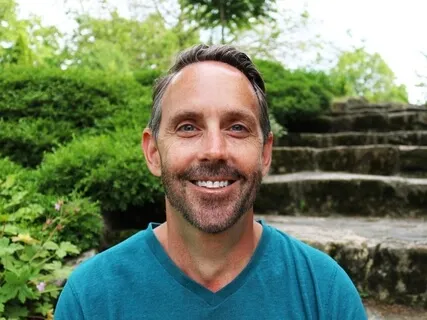
Welcome to Life,
Lessons and Laughter with your host Glenn Ambrose.
Hello everyone,
Welcome to the show.
Today we are talking about teens,
Teenagers,
Young adults.
And what's specifically about them,
Glenn?
I don't know,
We'll see where it goes.
I guess we'll talk about life changes and stresses and their lives.
I think a lot of people,
A lot of adults look at teenagers just like any other age kid and they look at what's going on in their life and they compare it to theirs.
Then they're like,
Oh my god,
What do they have to be stressed out over?
The thing we have to remember is our stresses are based on our perspective.
They've never lived an adult life.
They haven't gotten there yet.
So if you compare,
It's comparing apples to oranges.
If you look at their lives from their perspectives,
They actually do have things that they care about and that concern them and that they stress over.
It's just they're so different that sometimes as adults we don't see them.
And I see that sometimes with my own son.
I have to remember that his life is his life now.
If I'm trying to teach him responsibility,
Then it's easy for me to remember.
I go,
Oh,
Okay,
Well,
You can't just snap your fingers and be responsible.
You need to learn it as you grow.
So you start out with small responsibilities and then you increase them so you're capable of handling them.
My mind can understand that as a way of teaching him things.
I think it's really important to always remember at any age where the child is.
Think about it from the teenager's perspective or a younger child.
Because when you're only coming at it from your perspective,
It's easy to get into the mindset of why aren't you doing this the way that I think that you should be.
As adults,
We just think that if a kid isn't doing what we've told them,
Then we haven't explained it clearly enough.
Or we have explained it clearly enough and it's clear as a nose on their face.
They're just refusing for some reason,
Which frustrates us.
Yeah,
And the reason behind it is the thing that you should try to find out.
Yeah,
A lot of times they're just not ready.
That's just not where they are.
I learned that with a lot of things,
Parenting.
If my son makes a decision that he's going to do something,
He's good.
He'll do it.
He'll probably do it very well.
He's more than capable.
But if you try to push him into doing something that he's not ready for or he doesn't feel like he's ready for,
Even if I think he's ready for it,
Then all of a sudden he'll just shut down and resist it.
Or just plain not do it.
I noticed that a lot.
And I think most kids are like that.
Obviously not all of them.
Every once in a while you run into a kid where it's insane almost.
You see their parent go like,
Geez,
It's time to potty train you so what you should do is really go to the bathroom because if you don't,
It smells.
And the kid goes like,
Oh,
Okay.
And then that's kind of it.
Are you kidding me?
Yep,
Exactly.
Yeah.
So as kids get older,
Most kids are not like that.
It takes time to teach them things.
It takes time to teach them to do their chores and handle their responsibilities and all that stuff.
And as they become teenagers,
I think the decisions that they're making are getting older so the decisions that they're making have more weight to them towards the future of their lives.
So as parents and adults,
We get more fearful and we really try to direct them,
Which is ironic because that's the time in their lives where they're becoming the most individual.
They're becoming an individual.
They're breaking away from us and they're starting to live their own lives and make their own decisions.
And that's when adults tend to come in and try to steer them the most because their decisions have the most weight for them and we love them and we want the best for them.
And teachers and all adults,
Of course we want the best for kids as they grow.
So it's not just the parents,
It's all the adults in their lives really trying to steer them to make these important life decisions the right way.
And yet,
At the same time,
They're becoming individuals and they're wanting to make their own decisions more than ever.
And it's actually necessary that they do make their own decisions even if we don't like them.
Right.
Because it is their lives.
Yeah,
Definitely.
So this show is about teenagers and the beginning is about adults and how we're looking at them.
But I think as teenagers listening,
If they understand,
Just like we as adults need to try to understand where teenagers are coming from,
Teenagers need to try to understand where the adults are coming from.
It goes both ways.
And what's cool is I'm seeing more and more teenagers understand that.
I'll be talking to teenagers regularly and I'll be like,
Well,
You know that your parents love you and it's coming from a good place.
And they're like,
Oh yeah,
Absolutely.
Yeah,
Yeah,
Yeah.
I didn't even know that when I was a teenager.
Of course you didn't.
I just saw how adults sucked.
Yeah,
Of course you didn't know that.
Do you think that it should be,
See what you just said is an interesting dynamic because I feel like it should be easier for the parents to see things from the kids' point of view because you've been there and you have that experience and you have that memory recall of what it was like.
And from a teenager perspective,
Like you said at the beginning,
This is all they know.
Right.
So they don't have that ability to look into the future and feel what they would feel as a parent towards the child.
However,
What you just said is completely true.
I feel like in a lot of circumstances now,
Kids are understanding that the parents love them and are looking out for their best interests.
And sometimes the parents are like,
Have no recollection of what it was like when they were 17.
Right.
And I think there's multiple reasons for that.
And I think one of them is that kids are coming in more open nowadays with a deeper understanding.
That's the shift that's happening in this world and I see it through the children very clearly.
Which is wonderful.
They do have deeper understandings of more things than I think previous generations had.
But also,
So they can understand that and they're open to understanding that.
Whereas the adults,
Our generation and the generations right before us,
We've been raised in a society that is very fearful.
And then you throw all the love that you have for somebody.
Love is a very strong emotion.
Emotion clouds our vision.
We're so scared that we want our kids to have such a wonderful life that there's a lot of fear there that they're going to do something that's going to hurt them.
So then that fear bubbles up and it just clouds our vision.
Right.
I think that that's one of the biggest things that clouds our vision.
And the other aspect is society,
The society we've lived in.
We've been here living in a warped society for 40,
50,
60 years.
So we're kind of more distanced from our truth than kids that have been here a shorter time.
And we're coming from a generation that everybody said,
Well,
There's a very easy formula for life.
You go to school,
You do well,
You have to be the star athlete.
And then you go to college and then the best college and the most expensive college you can get into.
And then you do well there and then you get a good job and then you're happy.
You know,
The perfect wife will just appear because you're successful and everything's based off of your success.
You'll have wonderful children.
You'll be able to support them and,
You know,
And the rest of your life will be wonderful.
And a lot of people went out there trying to accomplish that,
Found out that that wasn't the key to life and life doesn't work that way.
Yeah,
That is legitimately what you were told.
Oh,
Yeah.
We're taught that by our parents,
We're taught that by our grandparents,
We're taught that by society,
We're taught that by our teachers,
Our guidance counselors.
You know,
Everybody said that this is what you need to do.
My doctor,
My doctor during a physical exam once was like,
You know,
Ben,
I got a nice house,
I got a pool.
How would you like to have a swimming pool,
Huh?
He like showed me a picture of him and his kids at like Disney's.
Like,
What you do,
You know,
You got to do,
You got to do the stuff that you got to do and then all this stuff will happen for you.
Like in the very specific like way that the teachers and parents do that,
Like,
If you do that,
Then this perfect wife will come and you're going to have the two kids.
And they never asked you once,
Like,
What brings you joy?
Right.
You know,
And it's like,
So it,
You know,
It really,
We're really raised differently and it's hard to break free from that conditioning.
You know,
So we have the fear clouding our vision plus the societal pressures and the way we're lived.
And so we have a lot of things we have to kind of break away from,
Forget,
Disconnect from to be able to just get to the sheer truth where these kids are coming in,
They're more open.
And,
You know,
So I think it's easier for them to just be like,
Oh,
Yeah.
And they don't have all the fear.
There's a part of them that knows that everything's going to be OK.
And,
You know,
So like,
Aren't you scared?
They're like,
No,
Not really.
Yeah.
Yeah.
So it's,
You know,
I think that that's part of the reason.
But,
You know,
That's not to say that they don't have stresses because our society is still.
I'm trying not to be too harsh.
In my opinion,
It's warped.
You know,
There's a lot of pressures on these kids to still,
You know,
Excel and follow the money and to do things a certain way and fit into a box.
And it's,
You know,
So as open as they are.
You know,
I think I saw this.
I've said this in a similar way when I've talked about addiction.
It's like I think a lot of people turn to addiction when they have difficulty letting go of what they know to be true deep down in their core.
You know,
And I don't think it's conscious.
I mean,
You know,
It's sure as hell wasn't for me.
Like,
I didn't know.
But then all of a sudden,
You know,
Like if I look at my life as a whole,
I go,
OK,
Well,
Why was I so tortured as a kid?
Like I had a good family,
Nice upbringing,
You know,
Why was I so tortured that I had to turn to addiction to anesthetize myself and all this stuff?
And then all of a sudden I fast forward and go,
OK,
Then why did I open up so dramatically like I did?
And if I look at my whole life in a snapshot,
It's like,
Well,
I think I refuse to forget what I knew to be true.
Because a lot of the things that tortured me was all these what society was teaching me.
There was a part of me that was just going,
No,
Man,
I don't I don't believe it.
I don't know.
And I resisted.
And I didn't know what I was resisting or what I was resisting or why I was resisting it.
But I was I resisted,
I think,
At a deep level.
And that that's why I turned to addiction.
And then that's why I also popped open later.
And I think that these kids are similar,
The high rate of teen suicide that we see and stuff like that,
Because I think that these kids do know the truth more.
There's more of them that know the truth.
There's more of them that are connected.
There's more of them that know that happiness and fulfillment and love is the real truth.
And that's what we all deserve.
And we can all have that.
And then as they start becoming adults and they get hit with all these pressures from a warped society,
It really messes them up because there's something deep inside of them that knows that what everybody else and the way the world looks isn't right.
And that's very difficult,
You know,
Because you're trying to fit into a world to some degree that's warped.
But yet there's a part of you that knows that everything should be loving.
And I think that that's the controversy that really causes a lot of the inner conflict.
And these kids don't always have the right place to get the answers.
How do you create a space for them to get answers?
Well,
I guess that's why we're doing this podcast,
You know,
Is to let them know that they are closer to the right path than any other generation has before,
In my opinion.
It doesn't mean that they have all the answers.
You know,
Like there's this deep knowingness that they deserve happiness and fulfillment and wonderful lives.
There's this deep knowingness of that.
And people call it entitlement.
You know,
They feel deep down that they are entitled to that and they are.
But the problem is,
You know,
That there were also,
That's a spiritual truth.
That's a deep truth that's within them.
And it's true.
But there's also,
They're also living in a world of ying and yang.
You know,
They're living in a world of experiences and linear thinking and linear ways of doing things.
So a lot of times they're sitting there,
They're going,
No,
I know that I'm going to be happy.
I know I'm going to be filled.
I know everything is OK.
So they're just like leaning back and they're not taking the action necessary to accomplish whatever they want to accomplish.
Like,
You know,
If you want to be,
If you want to be a great artist because you love painting,
You can be a great artist and you can paint for the rest of your life.
And you can have whatever you want.
You know,
You can have the pools and the vacations and the big house and all the abundance that you want in your life.
But you can't sit home playing video games telling everybody that you're going to be a great painter.
You actually have to paint.
So that's the little piece that I think their knowingness that everything's OK and they can and they're happy and fulfilled is so strong that it's almost overpowering them to take action sometimes.
They have to understand that,
Like,
Well,
You have to take that the gifts that you have and you need to birth that into this world because they're feeling a spiritual feeling.
But that spirituality needs to be birthed into this world of linear thinking and linear experiences.
So you need to take all that and birth into this.
And once they start doing that,
The kids that have attempted it or experienced it in some way,
It's really,
Really,
Really fulfilling.
It's like it's way more fulfilling and it's way than the contentment they're feeling from just sitting there knowing everything's OK.
That's a cool contented feeling.
But birthing your gifts and what you're supposed to be doing into this world is that's where your deep fulfillment and happiness and joy and enthusiasm comes from.
That's an amazing feeling that nobody wants to miss.
So that's the part of the learning curve I think that they're in,
Is not getting hung up and settling for a level of contentment that they feel inside and really reaching for the enthusiasm and the joy and the elation of actually expressing themselves in this world where they have all this opportunity.
I think that that's the little learning curve.
But as soon as they experience it,
As soon as they mess around with it a little bit,
They're like,
Oh my God,
This is wonderful.
And then they go right off on it.
So that's all.
You just laid out like a little monologue of profound wisdom right there with these kids today.
How old are you Ben now?
You're now saying that.
Oh man,
I mean,
I'm twice the age of most of these teenagers now,
Which,
Wow.
What was something that you wish somebody told you when you were a teenager?
You know,
I hear that question all the time and it always makes me laugh because I wasn't listening.
Do you think that they're listening now?
I think some are.
I think they're more capable of listening than I was.
It's just you have to hit them on the right day or come at them from a right perspective.
Just like everybody else,
You have to open their mind first to receiving something as opposed to just being another adult telling them.
There was no lack of people telling me stuff when I was a teenager.
I had parents,
Aunts,
Uncles,
Grandparents,
Teachers,
Principals,
Police,
You name it,
Man.
They told me what I should be doing.
I had no lack of input,
But I just wasn't willing to listen,
Which was to my detriment.
Just because adults are filled with fear and sometimes their delivery is wrong doesn't mean that their message is wrong.
I think the biggest thing as a teenager is really just spend a little time following your joy.
Find out what you love.
Find out what makes you lose time.
What you get caught up doing.
Even if it's video games,
I don't care if it's video games.
Some parents freak out about the video games.
Don't get me wrong.
They can be seriously annoying.
My son plays them and sometimes he plays them way too much and he loses time.
He gets caught up in it,
But that's just a distraction.
You're distracting yourself.
There's a difference there.
But if you actually want to play video games for the rest of your life,
Then do something with it.
Become a professional gamer.
Don't sit on your ass in your living room or your bedroom playing video games for eight years and don't do anything with it.
You can do something productive in the realm of what you're passionate about.
There's a whole internet world out there that you can make millions of dollars and wonderful living doing whatever you want.
So go turn it into a profit somehow.
Research it.
Or even if you're spending that time doing something,
If you have other stuff and you still want to set aside that time,
That's not where your ambition is,
But you want to set aside that time,
That's great as well.
It's not like you have to give up playing video games.
Like most teenagers,
You could probably play two hours of video games a day plus five hours a day on the weekends and you could still handle all your responsibilities in life.
You could still do things outside of that that you enjoy.
You could still research jobs.
You could still,
You know,
So I mean,
It is.
You can block off time to do a fun hobby activity,
But it's just that.
It's a hobby.
You know,
It's not your life.
You have to put some attention towards what you want to do.
And if you do that,
You're going to enjoy it more than video games because video games is a distraction.
And you know,
We're using video games as an example.
I mean,
It could be a lot of other things,
But the meaningless stuff that you do,
Watching TV,
Sometimes even just hanging out with your friends,
Although that can be good from a social aspect.
Sometimes it's people lean on it too much.
So like all that stuff is good.
And I don't think that people should abandon any of that stuff.
But what it is,
Is like make some time to find out what,
Why you're here.
Like what you're supposed to be bringing into this world.
It's like you're here for a reason.
And what's cool about it is when you find that reason,
It's the most fulfilling thing that you can do.
It's the most enjoyable thing that you can do.
That's why like having these conversations,
My energy goes up.
I enjoy having these conversations.
I enjoy talking about this stuff.
Nobody has to make me record podcasts.
I freaking like recording podcasts.
So it's not a job to me.
It's enjoyment.
And that is what I think I really want kids to understand.
I'm not saying go find out what you're going to do for a job because that sounds like a pain in the ass task.
No,
Go find what brings you joy.
What makes you feel alive and do that.
Not what distracts you from life.
What makes you feel alive.
That's the difference.
That's what everybody needs to find.
Teenagers or adults.
It doesn't matter what age you are.
But if you can find it as a teenager,
You'll never work a day in your life.
You'll literally be making a living doing what you enjoy.
And that's all money is,
Is an exchange of energy.
So we're here to give of ourselves.
And how we know what we're supposed to be giving is whatever brings us the most joy.
That's how we know.
That's our guidance system.
So it's like,
Okay,
I really feel good doing this.
Okay,
So that's what you're supposed to be doing.
So do more of that.
And then in exchange,
You'll get energy in the form of money so you can buy food and have a roof over your head and experience the nice things in life.
There's a song by Jonathan Larson,
The guy that wrote Rent,
The Broadway musical.
After he passed,
They took a collection of songs that he wrote for a biographical show about himself,
An autobiographical show.
And they finished the show with the music that he wrote and made a biography about him from when he was writing Rent.
And there's a song called Why in it.
And it's just him at the piano singing about when he was a little kid trying out for a talent show and trying out for West Side Story in high school and rehearsing all day and then coming outside and it was dark out.
And I thought,
Hey,
What a way to spend a day.
And then he declares that this is what he wants to do every day.
This is the thing that he finds joy in and can really lose time in it.
Right.
And that's exactly what we're talking about.
So when you find it,
It's not like you have to make yourself do it.
It's that you get to do it.
You're excited that you get to do it.
And as you were talking,
As soon as you said piano,
It reminded me of a song I heard yesterday while I was driving.
I've been hearing a lot of Jackson Brown on this particular station lately.
And one of his most famous songs is about the roadies cleaning up after a concert.
And he's saying,
Make sure you got everything set to go before you come for my piano.
Because after the concert,
As they're clearing everything,
He goes back out and he just sits out after a concert.
He's been playing all night.
He goes back to his piano and sits there and plays and says,
Make sure you come for my piano last because you know I want to play.
That's love,
Man.
That's joy.
He didn't make himself do that.
He did that because he loved it.
And then that song goes into a second part of the song,
Asking the audience to stay a little longer because they got to hit the road on a bus and go to another town to perform.
But please cheer for us so we can stay and do another encore so we can continue playing because that's what we love to do.
So that reminds me,
Mike,
Who you know,
A good friend of mine,
Mike,
Who's a pianist who plays with Dave,
The other producer on the show,
Broke his finger last week.
Oh my god.
On his left.
It's the least important finger for playing piano,
Thank god.
But he broke his finger and I was talking to him the other day so he can't play for like a month.
And he was like,
There's so much stuff that I still want to learn and he's been playing piano since he was 33.
And he's amazing.
I've heard him play.
He is amazing.
Check out Happyinthemoonshine.
Com.
Definitely.
He was like,
I'm just reading music now and trying to learn it even more.
I mean,
He went to Berklee.
He's a very smart man theory-wise.
But even though he can't play piano right now,
He's spending all of his time reading sheet music to understand what the chord progressions are so that he can solo better later.
That's when you're doing something that you love.
When nobody has to make you,
You just want to do that.
And that's why I look for,
I've mentioned this before,
My chiropractor,
My acupuncturist,
When I do business with people.
Whenever I interact with somebody on a business perspective,
I always search for that.
I look for passion.
Because they are always ten times better than anybody else in the field.
Because you don't have to tell them to study and to learn.
They want to know everything about it.
They dive into it.
It fulfills them to know more.
And to express it.
And that's the joy in what I want teenagers to find.
Don't waste your time doing something that somebody told you to.
Just find what you lose time in.
Find what brings you joy.
Find what makes you feel alive.
Find what you want to do.
And make sure you know the distinction between distraction and enthusiasm and joy.
Find what brings you joy and makes you feel alive.
Not what distracts you from what's going on around you.
Because sometimes that can be a little tricky when you're first learning it.
And going back to the beginning,
Parents try to listen and understand and help them find that.
Yeah,
And support them and understand.
All we've got to do,
I think as the adults and as the parents,
I think if we slow down.
Because we live in a very fast-paced society.
If we slow down and just really think,
Go,
Okay,
Wait a minute now.
What do I really want for this child?
Well,
I want them to be successful so they don't have to struggle.
But how do I want them to get there?
Oh,
I want them to get there through joy.
Oh,
Okay.
And then if we just slow down a little bit to think of that first,
Then our delivery will be different.
Perhaps what we say might be different.
And we can connect to them.
And if we let them know that that's what we really want for them.
And we don't let the fear run us.
Oh,
Well,
You have to do this because you don't want to struggle for the rest of your life.
That's just fear-based.
You need to slow down and come from the love-based.
Because if you come from love-based,
That's what connects with everyone.
And teenagers are closer to love than most of the adults here are.
So they're going to connect to that even more.
Well said.
And if somebody has a teenager or who they want to get some help for and get somebody to talk to for them.
Or if you want somebody to talk to about your teenager or about any other problems,
Issues,
Or opportunities that you're thinking of.
I have a perfect idea for you.
Contact Glenn Ambrose.
Yeah,
Absolutely.
I've been talking to more and more teens.
And it's funny because my teen,
I talked to him about going to another life coach that I knew.
Because even though I'm a life coach,
I'm his dad and things sound different coming from me.
So I had my son go talk to a life coach and he said the same stuff I'd been telling my son for the last 15,
16 years.
But he listened to him.
It was coming from a different person and it made an impact.
So when I talk to kids,
It's an outside person.
And I think most parents will understand that.
Usually kids,
It's different coming from somebody outside of the parent.
They tend to listen more.
So I've had a lot of success with that.
And if they can really get focused on finding their passion,
This is really an important time in their lives.
That they have somebody that they can talk to about this stuff that they know is on their side.
And we can sit on the couch all day long and go,
Yeah,
But I'm in their parent.
It should be me.
Yeah,
Well,
It should be.
But half the time it's not.
So if your child is a little bit concerned or if you're concerned about your child finding the direction and you think they need somebody to talk to,
Do what I did.
I mean,
That's why I don't like pitching stuff.
But really,
I don't mind pitching this because I did it for my own son.
So I have no problem going on the air going,
Hey,
Listen,
It's a good idea.
And it doesn't have to be me,
But guess somebody for your kid to talk to that they can connect with one on one.
Yeah,
I know that you did that.
I remember I was there once.
Yeah,
I did it a couple times.
Yeah,
No,
But I mean,
You and I happened to be at that life coaches house.
Yes.
Remember?
Yeah.
So,
Okay,
Well,
If you want any more info on Glenn,
Check out GlennAmbrose.
Com and that's it for this episode.
Absolutely.
We'll talk at you soon.
See you.
Glenn is available for life coaching sessions.
To book an appointment or for more information,
Go to GlennAmbrose.
Com,
Follow him on Facebook and Twitter,
Or click the link in the description of this episode.