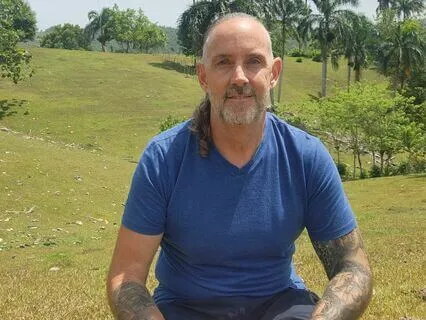
Welcome to Life Lessons and Laughter with your host,
Glenn Ambrose.
Hello,
Welcome to the show,
Everybody.
Welcome,
Welcome.
Hope you guys are leaning into the new paradigm.
New way of being.
So I guess this kind of blends a hand with that.
You know,
There's something that I guess if you want to call it a pet peeve,
I guess it's a pet peeve of mine.
It's I don't like handing my power away.
I don't like it.
I don't like other people handing that power away.
So.
So one of the things that I see,
You know,
Out there and hear about fairly often is people saying that they're a good person or they have a large heart or they're an empath.
And this is it's so difficult because people hurt them because they're so open and loving and wonderful.
And.
And it's.
That's just not how it works.
OK,
So like that,
Like love is the most powerful energy in the universe.
It's the you know,
What we're all striving towards to be open hearted and loving and kind to one another and and not close off and have to be defensive all the time and all this stuff.
Right.
So if that's a direction we're trying to head,
Why would it be a detriment?
Like what?
Why?
You know what?
Why would it be a good.
Why would it be a bad thing if that's what we're trying to accomplish?
OK,
So that it's not a bad thing.
If you're walking around with an open heart,
Getting hurt,
That's because you're not doing it correctly.
OK,
So this this is the there's a learning curve to living in a completely new way.
You know,
We've been living the wrong way for one hundred thousand years or so,
Or a lot of us have.
So when we're getting into a new way of living,
Of course,
There's a learning curve,
There's a learning curve for everything.
So,
You know,
It's when we when we walk around with an open heart and just and and then use it as a doorway for people to hurt us.
To come in and hurt us,
Then we're not doing it right.
We're not being responsible in our own lives.
And that's what it comes down to is radical responsibility.
We need to be responsible for our own energy.
We need to be responsible for who we allow in.
We need to be responsible for what we allow people to do to us.
We and we need to be loving and open in a responsible way.
OK,
So there's you know,
I guess,
You know,
There's multiple ways to come at this,
Of course.
So,
You know,
One thing that I'll start with just kind of the tangible,
You know,
The tangible stuff,
Like how to take responsibility for your own life.
If you're this goes on so many levels,
You can ride it as deep as you want.
It's for one example,
People are so concerned about what's going on with other people.
You can't control them,
So therefore you can't be responsible for them.
So using your energy to worry about what other people are doing or whether they are wrong or whether they're right,
It's just a waste of energy because it doesn't matter.
You know,
This is how,
You know,
Like the thing that you're ruminating in your brain is an egoic thought when it has no end.
It's just a dog feeding its tail of energy.
Or if if it does come to a conclusion,
There's no right or wrong there.
Let me rephrase that.
Even if you perceive a right and wrong,
That's not going to change your life.
OK,
So so you can look at,
You know,
The current events are just a beautiful example of this,
Basically all of them.
So,
You know,
The reason that we get so caught up in current events is because we're we're not being responsible for our own energy.
We're just we're just kind of putting our energy towards whatever grabs our attention.
OK,
So this is why it's unnecessary to put your attention on all these things that are going on in the world.
It's because you're not going to do anything.
That's why I mean,
Don't get me wrong.
There are some people that are going to do something.
So if you want to go do something about some injustice that you see in the world,
Then by all means,
Go take some action,
Go do it.
If you want to send some money in,
If you want to go protest,
If you want to go make a sign,
If you want to write your senator or whatever you want to do,
Go do it.
Go take the action if that's what you want to do.
But sitting there ruminating about things going,
Oh,
My God,
You know,
Israel's right.
The Palestinians are right.
Trump is right.
Biden's right.
This one's right.
That one's right.
This one's wrong.
That one's wrong.
It's a waste of time because it's it doesn't matter.
You're not going to do anything.
You're going to get up and you're going to go to your personal job and live your personal life and go have your salad for lunch and go have your pizza for dinner or whatever you're having.
And you're going to and it's it's a complete waste of time and energy talking about this stuff because you're not going to do anything about it.
It doesn't it's whether whether one side,
Whether you determine one side is right or one side is wrong,
It doesn't affect your life.
Not not to a level where you're going to do anything.
It's not going to change anything or whatever it does change.
You're not in control of.
So be responsible for your energy.
Stop putting it out on all these things.
So this is this is one of the things that I used to do.
I don't even bother doing it anymore.
I just found out that I just don't need to put my attention on 90 percent of what's going on in the world.
But this is how I I eased into it in what I call a responsible way.
Like whenever something triggered me,
I would put it on my plate and I go,
OK,
Glenn,
Are you willing to do anything about this?
And sometimes I wrote an article.
Sometimes I did a podcast.
Sometimes I put out social media posts.
With my perspective that I thought might enlighten or or or just share my perspective.
So then other people could hear my perspective and then they could look at it and go,
Wow,
I like Glenn's perspective on this or,
Oh,
Wow,
I don't like Glenn's perspective on this.
I didn't care which they chose.
But maybe I could help people put words to something they were thinking or help people know that they're not alone with what they're thinking.
But I would do that for,
You know,
I mean,
A post or two.
I'm not doing it endlessly.
And then once I did that action,
Then it was off my plate.
I didn't allow myself to ruminate over it for weeks and months and let it consume me like it was important in my life.
So my rule is,
Is.
Am I going to do am I going to take any action if I am,
Then take that action.
And if I'm not,
Then take it off my plate.
It's not worth worrying about.
Worrying doesn't change anything.
All it does is feed negative energy towards it.
Right.
So that's one way of being responsible for for with your energy.
Like I said,
I was going to go in a more tangible way.
So I'll do that now.
Like,
You know,
Lending money is a good thing.
And don't just get caught on the lending money.
This applies to anything.
It applies to lending your time,
Helping people,
Giving gifts.
It applies to helping out friends or family that are in trouble.
It applies to basically everything when you're giving of yourself.
Okay.
Financially or or time wise or emotionally,
Anything.
We need to be responsible for what we're giving.
So so if somebody,
You know,
Borrows 20 bucks from you and they don't pay you back,
Whatever,
Man,
It's not that big of a deal.
Like,
Take the lesson.
Don't lend them money anymore.
Instead of,
Oh,
My God,
I can't believe they didn't pay me back.
I can't believe I can't believe,
Oh,
My God,
I'm such a victim.
Who cares?
It's 20 dollars.
And if you're lending,
If you needed that 20 dollars to pay your bills,
Then that's irresponsible lending.
Okay.
My point is,
Is we're not supposed to be waiting for the world to change and everybody else to change for us to live a happy,
Responsible life.
That's my point.
Okay.
So this is this is what I'm talking about.
It's always my fault.
Everything that's transpiring in my life,
How I handle it is up to me,
How I perceive it is up to me.
And this is how I walk around with an open heart,
Not getting hurt.
Because when somebody says,
Hey,
Can can you lend me money?
The first question I think I ask myself,
Not anyone else myself.
Can I afford to lend this person money and still take care of my responsibilities?
If the answer is yes,
Then I go to question number two.
Okay.
If they don't pay me back,
Am I going to be resentful towards them?
Okay.
And the way that I answer those questions is.
And the reason that I even ask them is because I'm taking responsibility for two things.
I'm taking responsibility for my responsibilities,
In this case,
Paying bills.
And I'm also taking responsibility for my own happiness.
The first question is me taking responsibility over my life and paying my bills.
If somebody says,
Hey,
Can I borrow a thousand dollars?
And I go,
If they don't pay me that thousand dollars back,
My life is going to suffer.
Either I won't have money for the things that I want or I can't pay my bills.
Then what that is,
Is that's taking the responsibility for my life financially and putting it in somebody else's hands and going,
Oh,
I hope they act responsibility with my finances.
That's foolish.
That is irresponsible behavior.
So don't do that.
Don't put your financial security in somebody else's hands and then keep your fingers crossed that they make the right choice with it because they're not you.
They're not as invested in your security as you are.
So don't lend it if you can't afford to lose it.
This is kind of like,
You know,
A version of what they used to say with betting.
If you can't afford to lose it,
Don't bet it.
It's the same thing,
Man.
When you're handing money to somebody else that isn't you,
That's a gamble.
You don't know for sure.
I don't care if you've known them for 150,
000 years and 32 lifetimes.
It doesn't matter.
Maybe they're going to trip and fall and hit their head and forget about you.
Maybe they're going to get hit by a bus.
Maybe some weird circumstance that you could never project is going to happen to them.
And all of a sudden they're going to want to be able to pay you back,
But they literally can't.
So when you're taking your financial responsibility,
Your financial security and putting it in somebody else's hands,
That's your fault.
Anything that goes wrong with that,
That's your fault.
See,
If you look at it like that,
Then you won't take foolish chances and then you won't get burned.
It's the same way with your time.
It's the same thing with our happiness.
That's why I asked the second question.
The second question is,
Am I going to be resentful towards them if they don't pay me back?
And if it's a small amount of money,
Probably not.
If it's a large amount of money,
Probably.
So I won't.
If I'm going to be resentful towards them,
That means I'm taking my happiness and I'm putting it in their hands.
My happiness is based on what they do.
That's irresponsible.
I want to be in control of my happiness.
I don't want to give somebody else control over my happiness.
Okay.
So then and sometimes,
You know,
Like,
You know,
Sometimes people say that ego will come in and or people's perspective.
When I talk about this,
They're like,
Oh,
Well,
If somebody doesn't pay me back,
I'm always going to be resentful.
Okay,
Well,
Then never lend money,
You know.
But I have found over time that that's not actually the case.
Sometimes there's somebody in a tough situation and the amount of money is small and I don't really care.
I don't mind taking a gamble.
I'm like,
You know what?
I kind of just want to help them out anyway,
So I'll give them the money.
I'll either just give it to them or I'll give it to them and use it as an opportunity for them to pay me back just to see.
But I won't expect it.
You know,
In my mind,
It's a gift.
So if they don't pay me back,
It's like whatever.
It's 20 bucks.
They needed it.
I won't lend them money again in the future.
Because they just showed me that they're incapable of paying me back.
So if I ever give them any money,
It's always considered a gift,
You know.
And sometimes I've done that with people where one,
Two,
Three times I was like,
Yeah,
I wanted to help them out.
They're a good person,
Maybe a little irresponsible with money,
But a good person.
I just kind of want to help them out.
And then maybe the third or fourth time,
I ask myself that question.
I ask myself those questions every time.
The third or fourth time,
I go,
Will I be resentful if they don't pay me back?
And the answer comes back differently.
I'm like,
Yeah,
You know what?
I think that would actually irritate me.
Because the first few times,
It's just kind of me helping them out.
At this point,
It's just them taking advantage of me.
They just come to me whenever they need money.
So if I give it to them at this point and they don't pay me back,
Yeah,
That would irritate me.
So sometimes the dynamic changes.
And then the answer was yes a couple times.
Now it's no.
Right?
Because my happiness is my responsibility.
So this is what we need to do in all areas of our life.
We need to practice unconditional giving.
Most people give of their money or their time or their emotional support.
And they do it conditionally.
It's conditional giving.
I did a podcast on this years ago.
I forgot what it was called.
Unconditional giving or conditional giving or something.
But this is what we need to practice because it's responsible behavior.
Anything else is putting our happiness in somebody else's hands.
So most people,
When they give of money or their time or their emotional support,
They are expecting something in return.
They refuse to admit it.
And even this is what's kind of funny.
This is how unconscious we go through life.
I'll give you a scenario.
Somebody comes to them like one of their friends that they've known a long time or a family member.
And they need emotional support.
And this person will be there for them and give them all this emotional support.
And then that situation is passed.
And then all of a sudden they go through a rough time.
And they're like,
I need emotional support.
And they go to that person.
And that person is incapable of giving emotional support.
Which they wouldn't have seen if they actually looked at them honestly instead of what they wanted to see.
Most people,
When they get upset for other people not emotionally supporting them,
When I ask them why they are upset,
They say,
Well,
Because I gave them emotional support.
Or I've known them for 40 years.
Or some other reasons that have nothing to do with whether somebody is capable of giving them emotional support or not.
People aren't automatically capable of giving you emotional support if they've known you for 40 years.
That's not a qualifying aspect of emotional support.
That just means you've known them for 40 years.
And most likely if that person is incapable of emotional support,
If you look back you will see that they have never been able to give you emotional support.
This time it just pissed you off.
Before it didn't.
Because you didn't notice it.
It wasn't that big of a deal.
But some people are capable of it and some people aren't.
So don't go to the ones that are not capable of it and expect it.
Or don't go to somebody because you've known them for 40 years and think that that is what qualifies them.
No,
There are people who are capable of emotional support and there are people who are not.
So if you go to somebody that's not capable of it,
They're not going to give it to you.
People that are very hurt by other people not giving them emotional support or their time or even their money,
I'll say to them,
I'll be like,
Okay,
Well,
Why are you upset with them?
Oh,
Because I gave them emotional support.
So now it's my turn.
I go,
Oh,
So when you gave them emotional support,
The deal was you gave them emotional support contingent that they did it for you after when you needed it.
Oh,
No,
No,
No.
I just gave my emotional support just because I'm such a good person.
And that's what good people do.
So I didn't expect anything in return.
Okay,
Then why are you upset?
Well,
Because I gave them emotional support and now they're not giving me emotional support.
Right.
That's expecting something in return.
So you didn't give it to them freely.
Oh,
Yes,
I gave it to them.
No,
You didn't give it to them.
If you gave your support to somebody freely,
And then it was your turn and they didn't give you support back.
You wouldn't be upset with them because you're not expecting it from them because it wasn't contingent on what you did for them before.
So this is why we need to slow down and understand why we're upset.
People go,
Oh,
I'm upset with them because they didn't give me emotional support.
And all their friends run around,
Go,
Oh,
My God,
That's such a jerk.
I can't believe they didn't give you emotional support.
Oh,
My God,
I hate that.
You're such a good person.
And nobody slows down to actually look at what's going on.
They just stay on the surface and pat each other on the back.
Like we all have a right to be a victim.
Oh,
You have the right to be a victim,
Feel like a victim because they're victimizing you.
They're not giving you support when you gave them support.
So it's like,
Whoa,
Whoa,
Whoa,
Wait,
Let's look at the dynamics of what we're doing.
This is the only way we can take responsibility for our lives if we actually understand how we function.
Right.
If you don't understand how you function,
How can you take responsibility for your life?
If you ask 10,
000 people if they know what they're doing and why they're doing it,
10,
000 people or at least 9,
900 of them are going to say,
Of course,
I know what I'm doing and why I do it.
I'm awake.
I'm walking through my life awake.
I make decisions.
Of course,
I know what I'm doing and why I'm doing it.
No,
We don't.
That's the whole point of unconsciousness is we react to situations from socially conditioned places.
What socially it's socially acceptable to help somebody else.
And then when they don't help you.
To say they're bad,
I'm good.
It's like,
Wait a minute,
Let's go deeper so you can understand why this is happening and how to prevent it in the future.
OK,
So when you gave to them.
There was a contingency that you were unaware of.
You know,
And I can prove they're unaware of it because I literally asked them.
Oh,
So when you when you help them,
It was you help them so that they would help you.
And when it was your turn.
Oh,
No,
No,
No.
That's not why I helped them.
That is why that that was a contingency when they helped them.
Maybe it's not why they helped them,
But there was a contingency inside them on an unconscious level that said.
I will help people.
And when it's my turn,
They're supposed to help me.
That's what's going on underneath on an unconscious level.
That's what's going on in the background.
We need to be we need to start becoming aware of that because that's the big deal.
That's what's causing all these resentments.
That's what's causing everybody to get upset with one another and push and get defensive and push other people away and feel like victims.
This is a major problem in society.
We are not aware of what we're doing or why we're doing it.
It's just this unconscious level stuff.
And nobody goes deep enough to understand the dynamics in which they're going.
We have somebody says they're upset with somebody.
Well,
Why?
Because they pulled out in front of me or why?
Because they didn't pay me back the twenty dollars or why?
Because they weren't there for me emotionally or why?
Because I didn't get a raise or why?
Because of this,
Because of that.
And that's where they stop.
No,
That that that is.
That's the reason that triggered something deeper.
So you're not mad at somebody because they cut you off in traffic.
You're mad at somebody because you experience a sensation of fear.
That you didn't like and you didn't know what to do with it.
And the easiest thing to do is blame somebody.
And a lot of times when people get cut off in traffic,
We've all done it.
Somebody gets caught up in traffic.
Who knows?
Maybe they're daydreaming.
Everybody that I know has daydreamed while driving before.
Or maybe they.
Maybe they're trying to figure out how to leave their abusive husband with their children.
Or maybe they heard a radio.
A song on the radio that reminded them of the most beautiful time in their life.
And they went to turn up the volume and didn't pay attention for a second.
Like that's usually what happened.
People aren't usually trying to cut other people off.
They're not out there driving going.
Let's see,
How could I cut this person off?
Or maybe they're late for work and they're choosing to drive irresponsibly.
But it's not about you.
That's my point.
It's not about you.
But you're personalizing it like it is about you.
And getting mad at somebody.
Like at another person.
When you don't know why they did what they did.
Or what was going on.
Or.
And you've done the same thing.
You know,
This is what we find when we go deeper.
Oh,
They didn't pay me back.
Well,
You know why?
It's funny.
People will get.
People will get proportionally upset with somebody not paying them back.
Based on how much money it is.
Because that's how much it impacts their happiness.
Or their financial responsibilities.
So that determines how angry.
If somebody lends somebody a dollar and they don't pay them back.
It's a buck.
Somebody lends somebody $20 and they don't pay them back.
Depending on your financial status.
Sometimes people get a little bit more upset with that.
Somebody lends somebody $10,
000 and they don't get paid back.
Most people get even more upset.
Again,
Dependent on your financial status.
Because some people can lend $10,
000 and not see it again.
And it's like nothing to them.
Well,
They have a less likelihood of getting upset.
Why?
Because it doesn't affect their life the same way.
That's why.
So you're not getting upset because somebody didn't pay you back.
You're getting upset because them not paying you back.
Impacted your life negatively.
So you shouldn't have lent it.
Or if you did lend it,
Use it as a learning experience.
Go,
Okay,
That person I can't lend money to.
And maybe I'm going to be more responsible about lending it to anybody.
Maybe,
Like when money is tight with me.
I don't lend money to anybody.
Why?
Because money is tight.
And if I lend it out and don't get it back.
Then I have difficulty handling my responsibilities.
If money is a little loose.
Looser.
Then maybe I might lend a little more.
Why?
Because it's not going to negatively impact my life if they don't.
Okay,
So this is radical responsibility.
We have to take responsibility for our lives.
Our own happiness.
Our own peace.
Our own contentment is our responsibility.
Do not wait around for the rest of the world.
This might sound funny when I say it.
But slow down and think.
And there's areas where most people do it.
Most people are waiting for the rest of the world to be perfect.
For them to be happy.
And not upset.
They're waiting for everybody else to be capable of emotional support when they need it.
They're waiting for everybody else to be responsible with their money.
And pay them back.
Or just be responsible for their own money.
They're waiting for other people to drive perfectly.
They're waiting for the rest of the world to change.
So they don't get hurt.
So nobody comes into their world and hurts them.
Financially or emotionally.
That's irresponsible.
And it's unrealistic.
It's not going to happen.
It's not going to happen.
You can't wait.
I believe that we're beginning a new paradigm.
So who knows?
Maybe in 20 years or 30 years or 100 years.
We might be in some sort of utopia.
Where everybody's running around living perfectly.
Okay,
Cool.
I'm not holding my breath for that.
I'm not putting my happiness on hold until that happens.
I'm going to be responsible for my happiness.
Regardless of the circumstances that are on the outside that I can't control.
I can control me.
I can control my behaviors.
I can control my motives for doing what I do.
I can give unconditionally without expecting anything in return.
Not say that I do so I feel like a good person.
I can actually do it.
We have to be careful about just doing things to sound like a good person.
It's not that people are bad people.
I'm not trying to imply that people are doing it maliciously.
It's just a level of unconsciousness.
So please go into your life and look at the things that you're doing in the name of being a good person.
Understand that that's not what being a good person is.
Helping other people at the detriment of your life is not a good person.
That doesn't make you a good person.
That makes you a doormat.
And it makes you a short-term giver.
Because as people abuse you,
You don't have what's necessary to help people that actually need the help.
Or you help a few people and then all of a sudden you're broken and somebody comes along that actually needs the help that's responsible.
And you can't because you ran out.
Because all these irresponsible people took all your stuff because you weren't responsible with it.
This is the sustainability.
Living responsibly is a sustainable way of living.
A sustainable way of giving.
So it's about not handing your power away.
We do this with our heart too.
Like Brene Brown has one example about her daughter getting upset at school.
Because her best friend told a secret about her.
So she talked about this glass jar.
The daughter says,
Oh,
The teacher had to threaten to take marbles out of the glass jar.
The kids were picking on me so bad.
It's like,
Well,
What's the glass jar of marbles?
And she said,
Oh,
Well,
Whenever we do something that's in alignment with the values of the class,
Like honesty and respect or whatever,
The teacher puts a marble in there.
And once we fill up the jar,
Then we get a pizza party.
So the teacher had to threaten to take marbles out because the kids were picking on me so bad.
So Brene used that as an opportunity to teach.
I love this because I think it's a good way to teach.
But to me,
It just shows that Brene was present in that moment.
She wasn't wrapped up in the victimization of her daughter getting picked on.
She was present.
So she used the circumstances of the situation to create the answer for her daughter in a teaching moment.
And that's when I've had my good parenting moments.
When I was present and I wasn't caught up in what I think I should be teaching as a father.
Instead,
If you're in a present moment,
You can come up with creative solutions like this.
So the solution,
She said,
You know,
Hey,
So picture your heart like that glass jar.
And,
You know,
When you open your heart to somebody,
Just open it a little at a time.
When you learn to build trust with somebody,
Just learn to build it slowly over time and trust them with something small.
And if they show themselves to be responsible with your heart or with your trust,
Then they get a marble in their jar,
You know,
Internally.
And then over time,
You start seeing who you can trust with what.
And then you can start trusting them with bigger things.
You know,
This is a good idea because,
I mean,
Quite honestly,
If you pay attention,
You don't even need to do this jar.
If you just sit down and are honest with yourself about what qualifies somebody as a good bet.
As far as lending them money or them emotionally supporting you or trusting them with your heart.
If you really look at people you've known for a while.
And pay attention to their behaviors and what their behavior means.
You can probably see who you can trust to be emotionally supportive.
You know,
If you have a friend that you've known for 40 years and every time somebody is going through a difficult time,
This person is nowhere to be found.
That means they're not a person that's capable of being emotionally supportive.
So do not turn to them for emotional support.
People show you who they are all the time.
We just refuse to look.
We're like,
Yeah,
But I've known them for 40 years.
Well,
Have you learned the type of person they are over that 40 years?
I've known them for 40 years.
I should be able to trust them.
No,
Not if they're untrustworthy.
Have they been untrustworthy with other people?
Do they gossip to you about your other friends?
Yes.
Then guess what?
They're gossiping with their other friends about you.
It's not rocket science.
Pay attention to people's behavior and choose responsibly.
Okay,
So this is how we can stop getting hurt by just slowing down and look at things more realistically.
People show you who they are.
And when they do,
Believe them.
Don't see what you want to see.
And most people get very defensive.
Oh,
No,
I can't.
I can't show myself.
Just relax,
Man.
Relax.
Relax.
If you relax around people,
They're more likely to show you who they are.
And when you're in control of your own energy,
Your own happiness,
Your own finances,
Then you have no reason to be defensive because nobody can take those things from you.
Nobody can hurt you because you're in control of them.
You're responsible for them.
This is how we stop getting hurt is by being in control of our own happiness.
Okay,
So let people show you who they are,
And then you can choose what to do with them.
Some people I just go,
I'm pretty sure that I don't know necessarily what they're capable of,
What they're incapable of.
But here's kind of another angle,
But it kind of coincides with what I was just talking about to some degree.
We have a sixth sense.
Most of us,
Well,
All of us read energy better than we think we do.
So that little,
I'm not sure about this one.
That's something,
You know.
So pay attention to that and put a little caveat next to their name in your head.
Be careful with this one.
There's tons of people that I associate with in my life that have a little caveat.
And I don't consciously think of it this much.
It's just I've gotten used to doing it.
And so it's kind of second nature at this point.
But in the beginning,
You have to put some consciousness to it so you get better at it,
Right?
So when you see somebody and you just kind of maybe after meeting them,
When you walk away,
You're like,
I don't know about this one.
Or I didn't really feel comfortable around them or whatever.
That's fine.
Like,
I don't stop associating with people like that necessarily.
Because most people in my life and other people's lives,
We don't have to open up our heart.
Like,
I don't run around opening up my heart and pouring out my emotional vulnerabilities,
Which I don't know how much emotional vulnerabilities I have left.
I mean,
I'm pretty much an open book.
Because if I open up my heart and say,
Oh,
My God,
This really bothers me.
And then some person that's incapable of emotionally supporting me comes up,
Comes over and says,
You're an idiot.
You should be shameful the way you feel or something ridiculous like that.
I'm not going to believe them.
So therefore,
It's not going to hurt me.
Right.
So this is so I mean,
Most people I don't have to do that with,
Though.
I'm not going to let them into my inner sanctum,
Into my inner circle,
My close circle.
And I can still affiliate them with them in business and social situations and all kinds of wonderful things.
And we can have fun together.
But doesn't necessarily mean I'm going to go to them if,
You know,
I don't just run around going to people with sensitive stuff.
And it's not because I'm like I was just saying,
It's not because I would get hurt.
It's just because why I don't I don't need to open up my heart to some real emotional.
Sensitive topic to a bunch of strangers.
I don't need to do that.
There's no like why why do that?
You know,
I wouldn't know why somebody wouldn't do that.
So don't do that.
Don't do that.
Only open up your heart about sensitive things to people that have earned your trust,
That have enough marbles in their jar.
Through experiences that are smaller,
That you can actually trust them.
Right.
And then,
You know,
I guess,
Was this Brene Brown,
Too?
I think this was Brene Brown.
Also,
I guess I'm quoting her a lot in this.
She says vulnerability isn't isn't opening up with the risk of being hurt.
Vulnerability is opening up fully and finding out that you can't be hurt.
OK,
That's really deep.
So I'm going to repeat it one more time.
Vulnerability is not opening up,
Exposing yourself to the risk of being hurt.
True vulnerability is opening up fully and finding out that you can't be hurt.
OK,
This is where I'm getting to in my journey.
My 100 percent there?
I don't know.
I would guess no,
But I'm doing pretty well in it.
Like I said,
If I open up vulnerable,
You know,
Just open up to where I'm vulnerable to something that's sensitive to me and somebody comes in and says.
You know,
Hey,
Glenn,
You're a bad person or they're incapable of being supportive or,
You know,
I just get this.
Really irresponsible or negative feedback in some sort of way.
I'm comfortable enough in myself and with who I am and my vulnerabilities to know.
That I'm not going to take that personally.
Like they must just be misreading the situation or they're incapable of supporting me in that particular way or whatever.
It doesn't matter.
It's not about blaming them.
It's just going,
OK,
That's not somebody that is helpful in this situation.
That's it.
But I'm not going to take it on and go,
Oh,
My God,
I opened up my heart and then this person said something mean to me and now I'm emotionally distraught.
Like I said,
I'm not saying I'm 100 percent there,
But honestly,
I cannot think of something that somebody could attack me with.
Verbally,
That would make me emotionally hurt.
Like I can't imagine something that I could open up and say and then somebody handled poorly and then me go,
Oh,
Oh,
I'm so messed up because of what they said or did.
Like I'm in control of my happiness and my peace,
Even if I open up,
Even if I'm vulnerable and open up and share something that's sensitive.
If somebody mishandles it.
I'm not going to be like,
Oh,
No,
You touched my freaking thing and now I'm all messed up.
Don't get me wrong.
I mean,
I'm human.
I could get triggered in a moment.
Who knows?
You know,
There are there are things in everyday life.
That could trigger me.
So I imagine there might be something on an emotional level deep that that could trigger me,
But I'm sure I get over it pretty quickly because I'm not taking my happiness and the way I view myself and putting it in somebody else's hands.
That's my responsibility.
OK,
So this is how we can stop getting hurt.
It's being it's radical responsibility.
Take responsibility for our happiness.
Take responsibility for how we feel about ourselves.
Take responsibility for our self-esteem and our self-love.
How I look at myself is my responsibility.
We get hurt when there's a part of us on an unconscious level that agrees with what somebody said or we fear it might be true.
That's when we get emotionally hurt.
So if I say,
Oh,
My God,
I'm feeling I'm not even trying to come up with something like emotional that somebody might get hurt with,
You know,
Like,
Oh,
I open up my heart and I say,
Oh,
This this.
This thing that happened in my relationship is,
You know.
I honestly can't even think of something that would hurt me emotionally like that.
But I open up to somebody and then they say,
Oh,
You know,
You're you're an idiot.
I know I'm not an idiot.
Like,
I know I'm not an idiot.
It might sting for a second.
Oh,
Like I'm an idiot.
I wasn't expecting that.
I was expecting maybe support or something.
And then they attacked.
Wow.
I wasn't supporting.
I wasn't expecting that.
So there might be an initial sting or something.
But then it's but I don't stop there.
I go deeper.
Should I be upset?
Is that true?
These are the types of questions that I ask myself.
This is how I take responsibility is I go deeper.
Is that true?
Is what they said true?
Should I adopt?
Should I feel bad because they said I should feel bad?
No,
No,
I don't think I should.
Oh,
OK.
So therefore,
I won't.
Now,
This takes practice.
You know,
So don't run around opening up your heart and having,
You know,
People punch you in the chest and go,
Geez,
I wonder why that hurt.
You know,
No.
Start with little things.
You know,
And then after over time,
Like.
You get to the point where you're confident and secure within yourself enough that even if somebody does mishandle a situation,
You're not going to take it personally.
So I think that's about it.
It's,
You know,
It's really radical responsibility and it's it's on all levels.
It's on energetic levels.
You know,
I'm an I guess I'll wrap up with this.
You know,
People often the empath thing.
Oh,
I'm an empath.
So I take on other people's emotions and I feel everything will will control your energy field.
Like if you're walking around through public feeling what other people feel all the time and it's unpleasant to you,
Which most people it would be.
Stop it.
Stop doing that.
Like you are responsible for your own energy field.
We are responsible for our own experience here on earth.
Like the the.
You know,
The one thing that spiritual law can't override is our free will because our free will of our own experience is a baseline spiritual law.
So another spiritual law can't override our free will.
So if we're an empath and we say I'm feeling too much,
I don't want to feel that if we if we say I don't want to feel everything,
You know,
I'm going to simplify it here.
We can just say I don't want to I don't want to feel other people's emotions.
We can shut that off if we believe we can shut it off.
The only thing that's in the way is our belief.
No,
This is how I am.
I have no control over it.
Yes,
You do have control over it.
You can stop connecting to people on an emotional level.
And you can stop walking around like a raw nerve like you can control your energy field.
You know,
And I mean,
I have ways of doing that in a more,
You know,
In ways that have worked for me.
So,
I mean,
Reach out if you need some help with that.
But we can be control in control of that.
And some people need to do that.
Some people just need to shut down.
And,
You know,
I don't like the idea of shutting down completely because I think being an empath is a gift to some degree.
We just need to learn how to interact.
Again,
There's a learning curve.
We need to learn to interact with it.
We need to understand.
I truly believe that empath isn't just about feeling somebody else's feelings.
I believe an empath is connecting deeply with somebody else.
We just notice it more often when we connect deeply emotionally because we feel it so deeply.
We can do it intellectually as well.
You know how like mediums,
They have clairvoyant and clairaudient and clairsentient.
I believe empath is the same way.
It's just connecting deeply.
We can do it through different senses,
Not just our emotion.
Because that's what I did.
I was connecting with my clients emotionally when I first started life coaching.
And I realized after a month,
I wasn't going to be able to do this for that long.
It was exhausting.
So I was like,
Oh,
My God,
I can't do this.
What do I do?
And Spirit was like,
Try connecting deeply intellectually.
And I'm like,
No,
That won't work because I won't be able to connect so deeply.
I can help them because I can feel what they're feeling.
That was my interpretation at the time.
And Spirit was like,
You just said you can't do that.
And you asked me what to do instead.
I told you what to do instead.
And you said,
I can't do that.
I was like,
Oh,
Yeah.
Okay.
So I tried it.
So I just tried it.
And what I found was within two weeks,
I got very good at it very quickly.
It was really natural.
So that's how I started coaching.
And this is why my emotions aren't so involved when I'm coaching.
It's because it's not helpful.
I found I was more helpful connecting intellectually to topics or people.
I can connect deeply.
I can think what they're thinking.
Just like I could feel what they're feeling,
I can think what they're thinking.
And I can even go deeper underneath their surface thoughts and think what they're really thinking and then express it to them to give them clarity.
That's how I life coach.
I don't do it through emotions.
And I found out that my emotions were clouding my vision and actually made me less impactful because I was so caught up in what the other person was feeling that I couldn't see the answer so clearly.
Emotion clouds our vision.
When I do it intellectually,
I can get just as deep,
Actually deeper understanding intellectually,
And therefore I can help them more without all the emotions swirling around.
So that is one way to start controlling and interacting with your empath abilities as well.
There's a learning curve.
Learning what they are.
Learning how they work.
Learning how to interact.
Play around with them.
Ooh,
This hurt when I did that.
Okay.
How can I not feel negative emotions?
Oh,
Well,
I'll just put up a block and say I can't feel negative emotions.
Like we are in control of our own experience.
So whatever we adopt as our rule for our energy field,
That's what we do.
How do I know this?
Because of all the ways that people do it in a negative light.
This is how I came across it.
Because I was like,
Why?
You know,
It would have been more beneficial for spirit to wake Glenn Ambrose up 10,
15 years earlier.
I could have been helping all kinds of people.
I could have hurt less people.
I could have made the world a better place earlier.
Why didn't it do that?
Because it can't override my free will.
And I was bound and determined to be a maniac alcoholic for 20 years.
So that's what I did.
Spirit was trying to wake me up.
It was trying.
But my free will overrode that.
And it wouldn't allow it.
I wouldn't allow it.
So if I can use my free will in a negative way to hold out spirituality and my own awakening,
I sure as heck can use it in a beneficial way.
All right.
I think that's a good place to stop.
All right.
Hope that helps,
Peeps.
Yeah.
Reach out if I can help.
Peace.