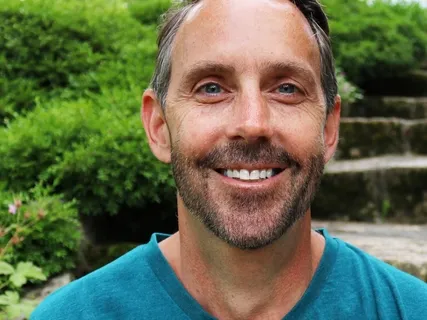
Welcome to Life,
Lessons,
And Laughter with your host,
Glenn Ambrose.
Hey,
Everybody.
Welcome to the show.
So we are talking about boundaries.
Yes,
Yes,
We are.
Yes,
We are.
Yes,
We are.
Yeah.
Why are you laughing?
Because I was staring at the camera.
Oh,
You completely blank.
Completely blank.
I was just the start finger way.
Ben waves his finger at me violently to start these.
And no,
He doesn't.
But I just kind of started laughing.
It was funny.
So anyway,
I'm back.
So today we're talking about boundaries and I have no idea what I'm going to say about it.
So this should be good.
So boundaries are important.
They are.
Yeah.
We talked a little bit about this in one of our very first episodes.
I remember this because our first two episodes we recorded at your apartment in Coventry,
Which was so long ago.
It was five years ago.
It was over five years ago.
And it was like three or four house moves since then.
A state move away.
But I remember because I was sitting in the armchair at your house and Dave had the little handy recorder,
Which we only use that one time for you and we were talking about boundaries.
And I remember feeling weird because we were talking about my mom and I was like,
Yeah,
No,
I definitely need more boundaries with my mom.
And literally,
An hour ago before we got on to start recording the special podcast we just recorded,
My mom called and I looked at Dave and went,
I got to set some boundaries.
So yeah,
It might be time to do that.
So nothing has changed in five years.
Mom,
You're not going to be hearing this.
So whatever.
Yeah.
Well,
Yeah,
Boundaries only work if we set them and then reinforce them.
Yeah.
So I think one of the most common misconceptions or I shouldn't say misconceptions,
I think one of the most common things that people need to understand to understand effective boundary setting is that the other side doesn't have to agree.
The other side's agreement and cooperation in your boundary is not necessary.
If it is required,
Then you're not setting a good boundary.
You can't put your happiness and the way things are going to go in somebody else's hands that is already not acting in a way that you want them to.
And then say,
Okay,
Well,
We'll see if this works.
We'll keep our fingers crossed.
It's not going to work.
They're already not doing what you want them to do.
So setting about talking to them about a boundary isn't going to work.
And that's something that I've talked about in other areas too.
We have this idea that talking about things will fix them.
And it just stirs the pot.
It doesn't change what's in it.
So I mean,
There has to be a conclusion.
So when you're setting a boundary,
It's about coming up with a scenario that's a win-win for you.
Everything spiritual is a win-win.
We're not supposed to win or lose or suffer.
That's not a good boundary.
We're trying to prevent suffering.
So the boundary has to be a win-win.
So just for a quick example,
If you're talking to somebody on the phone and they're yelling at you,
Then you can say,
Hey,
Listen,
You either need to stop yelling at me or I'm going to hang up.
So it's a win-win.
They either stop yelling at you,
Which is a win,
Or you hang up and you're not talking to them any longer and you're not exposed to that type of stuff,
Which is a win.
So that's an example of a win-win.
You can't be like,
Well,
Yeah,
But it's not really a win we hung up because I didn't get my point across.
No,
It's getting people to respect you and your boundaries and how you live is a case by case basis.
You have to get that foundation of respect first.
Then you can work into bigger things and stuff like that.
And an example of you not needing their permission or their agreement,
If somebody's yelling at you,
Sometimes you're like,
Hey,
You have to stop yelling at me or else I'm going to hang up.
And you're like,
Yeah,
But they yelled through the whole time so they didn't even hear me.
That's okay.
Their cooperation is not needed.
They cannot hear you.
I've literally been on the phone with somebody that wouldn't let me get a word in edgewise and I'm like,
Listen,
If you keep talking over me,
I can't get a word in edgewise.
This conversation is going nowhere.
So I'm going to hang up.
And now keep in mind this whole time they're talking,
They're not hearing a word that I'm saying most likely because they're talking over me.
And I just stay calm and I go and I understand that you're talking over me and you may or may not be hearing this,
But I can't put my happiness in your hands.
So I'm going to follow through and if no,
At this point,
I'm probably saying it for my own,
You know,
My own benefit as opposed to theirs because most likely they're not hearing it.
But maybe they are hearing it a little bit and catching a word here and there.
And I just go,
So if you don't stop talking in five seconds,
I'm going to hang up five,
Four,
Three,
Two,
One,
Click and I hang up.
This structure to it,
I just did it and I don't,
It's not important if they,
If they didn't hear me all of a sudden,
They're not talking to me.
And that's a problem because they obviously wanted to talk at me for longer.
Otherwise,
They would have stopped talking.
So I interrupted their flow.
I interrupted what they wanted to accomplish.
So it wasn't about them.
It was about me just stopping that.
So you know,
So that's,
And then,
You know,
Sometimes it depends on the situation and the person.
Maybe sometimes if they call back,
I won't answer.
Sometimes I will and be like,
They'll be like,
Why'd you hang up on me?
Well,
Because I couldn't get a word in edgewise.
I actually warned you,
But you were talking over me so you didn't hear.
So I'm just not going to be talked to like that.
And then they'll go off and be like,
Okay,
You're doing it again.
I'm going to hang up again.
And they might be talking,
Click,
Do it again.
And it's like,
And I'm in control,
Like if I'm getting upset and they call back,
I don't answer the phone.
And if they keep calling back,
I'll block their number,
Mute the phone,
Block the number or whatever I need to do to be responsible for my happiness and my peace.
You know,
If I do feel like giving them another shot,
I will pick it up again.
Okay.
Are we ready to talk calmly or am I going to hang up on you again?
Because I can do this all day.
You know what?
How do you want to do it?
You know,
And so that's an example of setting boundaries where,
You know,
I'm in control of my experience and it's a win-win for me.
They either respect what I'm asking or I end it,
You know,
And I'm not waiting for their cooperation or understanding,
You know,
Them to be on board with the situation,
Nothing.
So do you think that the level at which you set a boundary is,
Um,
Like in,
In coordination with the level of which what they're doing needs to be set.
You know what I mean?
Like if somebody is,
But,
Um,
Okay.
But I mean,
Like if you're,
Well,
The boundary that you set is that like,
You're not going to talk to somebody that you're,
Um,
That is not letting you talk.
Like for example,
In the,
In the scenario you just described.
But like it's a win-win,
Hopefully like you,
The aggression with which you set the boundary of like blocking your phone,
If they call that is in response,
Direct response and correlation.
That was the word I was looking for in correlation to how much they push against the boundary,
Right?
Because,
Because you're going,
I'm not engaging.
And if they don't try to break that boundary,
Then not engaging is just going,
I'm done talking.
Sorry.
Like this is,
Or not sorry,
But you know,
Like this is,
This isn't going to work.
I'm not,
We're not going to engage further.
But then if they continue trying to engage,
Then you have to make sure that you solidify that boundary.
Right.
You need to reinforce it.
You need to stand in it.
So it's like,
You can't let them get what they want.
You can't cave.
And then,
You know,
A lot,
Cause a lot of times the reason that we need to set boundaries with people is we just give them what they want just to satisfy them.
So they'll stop.
And that's,
You know,
That just feeds them doing it again.
And again,
They're getting what they want.
People,
You know,
That's what we have to understand is the reason we need to set boundaries with people is because whatever they're doing is working.
If it wasn't working,
Then they wouldn't be doing it.
People only do what works.
So to stop it from working,
They tend to stop it.
That's what a boundary is,
Is it's stopping whatever somebody is doing from working.
We teach people how to treat us.
Exactly.
We teach people how to treat us.
And it's,
It's,
You know,
There's,
I think we did a podcast on that,
Right?
I think so.
Yeah,
I'm sure we did.
So and you know,
Of course,
Like a lot of things in spirituality,
There's overlap.
So it really,
There's a lot of overlap in this,
Those particular episodes.
So it's,
You know,
There is,
There is somebody like I've been living this way for quite a while now.
And the way people treat me is a complete reflection of boundary setting and how I live.
And I still find it amazing.
But it also gives me the confidence in saying what I'm saying because,
Because I live it and I've seen it.
And I've seen people in situations where they talk to me and behave differently with me than they do with the person right next to me.
And it's because if I say no,
I mean no,
And they know that I mean no,
Because I reinforce it if they attempt pushing further.
And now if somebody says if I say no to somebody and they start trying to talk me into it,
I usually call them on that.
You know,
I'll be like,
Okay,
Wait,
Hold on.
Now I said no,
And you're trying to talk me into this like you're,
You know,
Just point out what they're doing.
You understand that I said no,
Right?
So that it's and you know me,
So no means no,
It's definitely not happening.
So really anything that you say,
Trying to get me to change my mind,
Do you think that's going to work?
You know,
And when you put the spotlight on it,
Usually that's enough once,
You know,
And of course,
This is this is because the only time somebody does something like that to me is when they either don't know me,
Or they're just not conscious at that particular moment.
Yeah,
I just bring the consciousness in.
But you know,
If you're talking about a situation where you haven't been setting boundaries and you set you have to set new ones,
Then the reason that type of stuff doesn't work for you is because you've trained people to not listen to your words in the past,
You've taught them.
You've literally taught them that if you say don't do this,
And they continue to do it,
You'll allow it.
So what happens is every time you attempt to set a boundary or tell somebody you don't want them to do something,
If you don't stand in that boundary,
You're basically showing them by your actions that they're so if they want what they want,
What they need to do to get it is to ignore your words.
So you're teaching them how to treat you.
And usually we feel like such victims were like,
Oh,
This person so overpowering their they push and push and put it's like,
Yeah,
That's because every time they push you cave.
So you're you're basically who you have shown them if you push,
You will get whatever you want.
You've shown them that over and over and over and over and over again,
You've taught them that.
So now it's just about changing what the lesson is that you're teaching them.
Saying,
Okay,
That doesn't work anymore.
Can we address for a second about how this episode is a personal attack against me?
We could have hey,
Man,
If you're identifying with it,
We could have we could have done this off the air.
Glenn.
Yeah.
But why so so but actually that no,
That leads into I think a good question,
Which is and I think it's a good question.
Who knows?
If you're somebody who is conscious and,
You know,
Living consciously and trying to do the things the right way and blah,
Blah,
Blah,
And like,
You know better and you can give the advice and if somebody if you see somebody not living consciously or in a scenario where they're putting their happiness on somebody else and not setting a boundary,
You can identify that you can help them with that,
Etc,
Etc.
But then you you can't enforce the boundaries yourself.
Why?
Why?
What?
Because being a life coach is easy,
Man.
Living life is hard.
No,
I mean,
There's some truth to that.
I mean,
You know,
You know,
I do what I do in my way.
But I mean,
As a general rule,
It's easy fixing everybody else.
You know,
Everybody can do that,
Not just life coaches.
I mean,
Anybody can see what's wrong with somebody else.
What's that saying?
There's a there's a parable about that.
Something about seeing like something about seeing like missing or noticing a sliver in somebody else's eye.
Oh,
Yeah,
Yeah,
Yeah.
Yeah.
How can you take a grain of salt out of somebody else's eye while the whole time having a little plank in your own?
OK,
Something like that.
Yeah.
But that's the point.
So it's like we can see other other people's stuff because we don't have our our emotion around their stuff.
It's hard for us to see our stuff because there's emotion around it.
You know,
So we're scared of hurting people and we don't,
You know,
It's it and which kind of leads into the direction of how to set a healthy boundary energetically.
It has it can't be out of frustration,
You know,
Once if we're waiting until somebody pisses us off and then we're like,
Well,
I'm not putting up with this crap anymore and you're not going to talk to me like that anymore.
And that's not a frustration.
And it's putting the blame on somebody else,
Which is not energetically good.
And it's really not that powerful because all they're going to do is just get defensive.
You shouldn't talk to me like this.
You you you.
And when you point a finger at somebody,
Just remember this three fingers pointing back at you.
So you should be looking at yourself three times more than you're looking at the other person.
You know,
So it's you trained.
Remember that you train them to treat you this way.
So it's your responsibility.
And they're just doing what you know,
They're looking at life from their perspective.
Even if this is somebody new and you didn't train them,
They're looking at life from their perspective.
They're not slowing down to look at it from your perspective.
This isn't a personal attack on you.
They're just trying to get what they want and at whatever way they know how.
And they will continue to do so unless they are taught differently.
So it's just your job to teach them differently about you and your life.
And it's it's so it's not about them.
It's about you being treated the way you want to be treated,
You know,
And that's self love.
And it's not angry.
It's not you,
You,
You.
It's me,
Me,
Me.
And it's it's a loving me.
It's a factual me.
No,
You know,
I'm sorry.
I don't like being talked to like this.
So I'm just going to hang up or we're going to have to fight.
We're going to have to end this conversation now because I just this doesn't get anywhere and I can't do it.
I just feel upset when I when I leave a conversation like this and I don't like feeling upset.
So I'm just not going to do it.
So that's all about me.
And it's not anger based.
It's love based.
It's self love based.
It's about me and what I deem appropriate in my world.
And it's a lot harder for somebody to deal with that.
You know,
Like if I say,
No,
I don't like having conversations like this.
What's somebody going to say?
Like how do you counteract that?
Yes,
You do.
Like that doesn't even make sense.
I mean,
I'm not saying that nobody would ever say that,
But they'd have to be pretty unconscious and out,
You know,
Not thinking clearly to think that that might make sense.
Anybody that is thinking is going to they're not going to be like,
Well,
No,
Arguing is that's right and good.
We should come on.
How do you I want to get to the second half of this topic,
Which is setting boundaries is obviously we've covered that a lot.
Why why you need to do it?
Why,
You know,
It's taking control of your own happiness and men making sure that you teach others how to treat you,
Et cetera,
Et cetera.
What about respecting the boundaries set by other people?
You have to.
And that's really the foundation of everything.
It's respect.
Yeah.
You know,
Respect.
And I mean,
You know,
Let's just play around with it a little bit.
I mean,
You know,
You the whole point of boundaries is people have freedom of free will.
Like they don't have to live,
Treat you the way you want to be treated.
But they don't have to do that.
They have an option and that's not to interact with you.
That's OK,
Too.
But sometimes people don't realize that somebody leaving your life is not necessarily a bad thing.
It's OK.
If they are incapable of respecting you.
Then it's OK if they leave and vice versa.
If if like if if you if somebody sets a boundary,
You need to respect their boundary.
You know,
It's just a matter.
It's just a level of respect for human beings.
Now if that means,
You know,
Like if you respect somebody's boundary and you go,
OK,
I respect their boundary,
I'm not going to do or say or whatever they they didn't want me to do.
I'm not going to do that.
I think they're wrong.
I don't like the way they think.
I don't agree with it.
It doesn't jive well with me.
So I'm not going to interact with them anymore,
But I'll respect their boundary.
That's cool.
I respect that.
It's like,
Oh,
That's your boundary.
OK,
Cool.
I respect your boundary and I will live by it.
Situations over.
That's your boundary.
Then I go over in my life and I go,
OK,
Do I want to interact with that person anymore because of the boundary that they set?
Can I accept it and still have a joyful interaction with them?
Or is that something that it's just I don't want to interact with people like that?
I don't want to interact with people like that.
OK,
Well,
I won't interact with them anymore.
And I move on and it's not it's nothing personal.
It's just I like my I like my relationships to look a certain way.
And if they don't look that way because of a boundary somebody set,
Then I just don't continue that relationship.
What about it's not my way of it's not it's it's not that their way is wrong.
It's just it's not my way.
What about family?
Really?
You know,
The short answer is it's the same thing.
Like I mean,
You know,
Especially once you're over 18.
You know,
I mean,
I understand when you're a kid,
The dynamics are a little bit difficult setting boundaries with your own parents and stuff.
You know,
I mean,
That's that's how our society is.
But,
You know,
Well,
That's a topic for another show,
You know.
But as far as as far as adults in a family,
It's the same thing.
It's just because somebody's family doesn't mean you're supposed to be close with them.
Doesn't mean,
You know,
Like,
You know,
Like I'm not real close with my family.
And but I love them and I know they love me.
It's just we're very different in a lot of ways.
And the way when when we come together and interact,
It's very loving because I miss them and I enjoy seeing them and I enjoy talking with them when I do.
But if I were to talk to them all the time,
It's just that's not our relationship.
You know,
It's just not.
And you know,
Like and in the past,
My sister is very close with my parents.
So like I used to look at that and subconsciously you just think like,
Oh,
I want that.
Like you know,
And I think a lot of people do that.
They think that they're supposed to be close with their siblings and their parents and the family is supposed to be this one big happy unit.
And that's no,
The relationships are supposed to be healthy.
And what I consider healthy is a respectful,
Loving,
Happy relationship.
And that's what I have with my parents,
Even though we're not interacting constantly.
It's very healthy,
You know,
And that's what I want.
It just looks different.
Now what they have with my sister,
You know,
I don't know.
I mean,
I know all of them.
It looks pretty healthy from the outside.
I don't know the inner workings of it,
But it seems like it's pretty healthy.
It just looks different.
And I think that's what we have to understand when it comes to family.
Don't have these preconceived ideas of what your family relationship is supposed to be.
Figure out what works for you guys.
And you know,
If a family member is incapable of respecting you,
Then you're not going to have a happy,
Healthy relationship with them.
And then it's your choice.
Do I want to walk around being disrespected just to have a relationship with somebody that doesn't treat me well?
Or am I willing to stand my ground and set the boundary to shift and see if they'll shift the dynamic?
If they will start respecting me and treating me the way that I want to be treated,
Then we can have a cool relationship.
If they can't,
Then we won't.
You know,
I mean,
You know,
My son said that years ago when he was having difficulty,
You know,
With his mom,
He was like,
If I can't have a healthy relationship with her,
I'm not going to have one at all.
And that was one of the most profound things that came out of his mouth at a young age.
It's like,
Damn,
You know,
Okay.
Like,
That's some serious self-love.
When you can say that about your own parent,
That's some serious self-love.
I demand a healthy relationship or else I won't have one.
And unless we can get to that point within ourselves,
Then we don't love ourselves truly.
You know,
This is all based in self-love.
You know,
If you love yourself,
You are going to demand the respect that's necessary to be in a healthy relationship.
And as your self-love grows,
This is going to become more important.
You know,
It's just being treated disrespectfully.
It's just not okay anymore.
You know?
Absolutely.
All right.
Well,
That's about all the time we have because we have a boundary.
A time boundary.
We have a time boundary for sure.
So thanks,
Man.
This was a really insightful episode for me in particular.
And stuff that I'm sure that we'll cover again in more detail through other podcasts,
As you said,
A lot of things overlap.
So where can people find you?
You know,
How can people find you?
In the ether.
They can find me in the ether.
I'm everywhere.
We're all one,
Ben.
Glenambrose.
Com for podcast blogs,
Blogs.
Yeah,
You can find me there too.
Yeah.
I mean,
If you want to get specific,
You can find me at Glenambrose.
Com.
Yep.
And if you want another video show,
Join the mailing list on Glenambrose.
Com for a new thing that we're doing that's going to be a lot of fun.
All five questions with Glen.
Yeah.
Yeah.
So that should be a lot of fun.
Check it out,
Man.
Yeah.
So the week that you don't get life lessons and laughter,
You'll get a video straight to your email.
Five questions with Glen.
So that's it.
You know,
Join us on Patreon.
Best way to support the show.
Glen,
You want to say goodbye?
Yeah.
That's an exclusive offer,
The five questions with Glen,
Just for my email members.
So make sure you go to my website and subscribe.
And that's all you got to do.
It doesn't cost you anything.
Just go subscribe.
And it's exclusively for my email members.
So yeah,
Go sign up on my website and they will be coming to you soon.
So that's the exciting new thing we got coming out and that's going to do it.
So thanks for listening,
Everybody.
And we will talk at you soon.