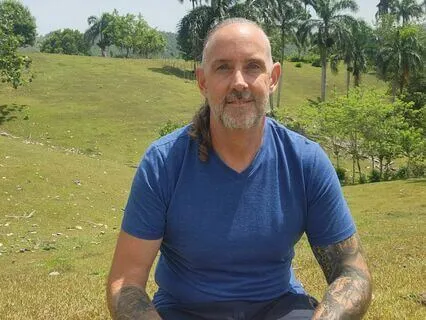
Welcome to Life Lessons and Laughter with your host,
Glenn Ambrose.
Hey,
Welcome to Life Lessons and Laughter with yours truly.
So,
So how did I possibly come up with this podcast topic?
Resentments resolved,
The way I always come up with them,
Patterns,
Not always,
But yeah,
It's,
You know,
This is,
I often see patterns when I'm working with clients,
You know,
Work with clients two weeks a month,
So it's not every week.
So like,
I'll often see,
See patterns when I'm working with a client and,
And elsewhere also.
So I see it on social media,
I see it in conversations with friends.
So this has been popping up a lot lately,
And I know I've talked about it probably quite a few times,
But I want to get specific with it and put it back out there.
Attempting to talk about things that I've never talked before is,
Talked about before,
Is fairly futile after doing this for nine years or something.
So there's always new ways to come at it,
And sometimes it's just a matter of putting things out for a newer audience,
You know,
People who haven't been listening to me as long,
Or people who have listened to this before and forgot all about it.
So the,
I'm talking about what the theme that keeps coming up lately,
The pattern that I'm seeing is people are having difficulty letting go of resentments.
So a lot of times,
You know,
They'll,
They'll talk about,
I think I saw a post that recently that it was,
It comes in waves,
You know,
This,
This,
These hurt feelings from the past come in waves,
And the anger will get triggered in waves,
Like,
Well,
Not in waves,
Excuse me,
But the,
The thing that the resentment will get triggered because of circumstances.
And a lot of times people are trying to let go,
You know,
Geez,
I don't know why I can't let go of this.
I don't know why I can't get beyond this.
I don't know why I can't move on from this.
Just when I think I'm over it,
It comes back up and pisses me off,
Or I have let go of it.
But,
You know,
It's,
It's really not a big deal.
I'm really not that angry.
But it's,
But then somebody says something,
I see that person,
I talked to that person,
And then it pisses me off again.
It's like,
Well,
That these are all signs that we haven't done the work.
So we have to understand what the work is.
And then we can do it.
A lot of times,
You know,
One of the big roadblocks to this is people think that self knowledge is the answer.
Okay,
And this is because we've been conditioned that way,
You know,
You go to school.
And if you take in the knowledge that the school gives you,
The teachers give you and you're capable of regurgitating it back to them.
That means you understand it,
Right.
And that's the goal of school learning to get you to understand things on an intellectual level.
So that's why they teach you like that.
It's not always effective,
But that's the system.
And that's why they use that system.
When you are working with your emotional body,
When you are working with your energy field,
When you're working with you as a person,
You as a spiritual being having a human experience,
The work is much deeper than that.
It's not about learning.
You know,
The other thing that this is fed by is the information age that we're in.
There's just so much information out there.
So what people do is they just take in more information,
Like,
Like,
Like,
So like,
Let's say they have a resentment towards somebody,
Right.
And,
You know,
Two years goes by,
And it just keeps coming up,
And they keep getting triggered.
Well,
They figure that they just must not know something.
That's why it keeps coming up,
Like there must be some piece of information that they're missing.
So they'll go study another teacher,
What does this teacher say about resentments?
What does that teacher say about resentments,
And they'll take in more knowledge,
And then two more years goes by,
And they're like,
Boy,
This is still bothering me,
I must be missing something.
No,
You're not missing anything.
The problem is,
Is that it's not an intellectual exercise.
Like you go,
Oh,
Well,
You know,
Like you have a resentment towards somebody.
And then all of a sudden,
You know,
You,
You talk it out with somebody,
A therapist,
A life coach,
Or you read a book,
And they talk about how to,
To get over a resentment,
You,
You need to,
You need to not view yourself as a victim of the situation.
Like,
Let's say that's the advice they give you.
So you're like,
Okay,
Yeah,
That's right.
I can't be a victim of the situation.
So I'm not a victim.
Let's say,
I'm a survivor.
I'm a survivor.
I'm not a victim.
I'm not this person's victim.
And you go,
Why?
Well,
Because that's important.
Like,
As long as I think of myself as a victim,
I will feel like a victim.
So I'm not going to think of myself as a victim anymore.
So I'm not a victim anymore.
I'm not this person's victim.
I'm just not.
Why?
Because it's not empowering to think like that.
That's why.
Okay.
Do I understand that?
Yes.
I understand it.
I got it.
Okay,
Cool.
Now I'm free of this resentment,
They think.
That does nothing.
That does nothing.
And it's not the problem of the advice.
The advice is heading in the right direction.
It's just,
It's not a self knowledge issue.
It's deeper than that.
It's a belief system issue and an energy issue.
Okay,
So what I mean by that,
Those are the two parts that need to be shifted permanently.
So it's not,
Oh,
I understand what you're saying.
And then move on.
No,
It's deeper.
So the dynamics of this resentments,
How that how it works is,
You know,
The beginning dynamics is very similar to lots of different dynamics.
Like this dynamic works in a lot of different areas.
Resentment is one of them.
So what happens is you experience something,
Right?
So like,
Let's say it's somebody putting you down,
Somebody mentally or emotionally abusing you,
Somebody treating you bad in some way.
And then you get a resentment towards them,
Right?
So what happens in that dynamic is there is stimuli coming in,
There is like,
We'll just simplify and call it,
You know,
There's many reasons for resentment,
But I got to pick something for the,
For the example that I'm going to give.
So let's just say there's some,
We won't even go into like emotionally abusive,
We'll just say it's mentally abusive.
Just somebody was,
You know,
Somebody called you a freaking idiot,
You know,
Or something like that.
And for some reason,
You know,
They really hurt your feelings.
Maybe it was somebody close to you,
A family member,
Whatever.
But anyway,
There was there was some sort of mental abuse that came at you.
That's the stimuli.
Okay.
The way you process that is based on you.
It's based on your personality.
It's based on your past experiences.
It's based on your level of self love,
Your level of self esteem.
Because if somebody goes to to a person that has high self esteem,
Or maybe that person,
Like you actually trust that person.
And you know that they're kidding or something that that they actually love you,
Even though they called you an idiot or something like,
Whatever,
There's variables.
The point is,
Is you process it a particular way that causes the resentment.
So for some reason,
When this person said this to you,
Maybe you were at a low point,
Maybe you have low self esteem,
Whatever.
For some reason,
When they said you're an idiot,
It hurt you,
It hurt your feelings.
Right?
So the reason that hurt your feelings was because of the way you received it.
You processed it and a part of you either believe,
Well,
Basically a part of you believed it to simplify.
You just didn't have strong enough self love to just let that bounce off of you or pass right by.
Because that is possible.
Somebody can call somebody else an idiot,
And then go just inside thinking,
This person must be upset,
Because I know I'm not an idiot,
And have it literally not affect them and not cause a resentment.
So that's the variable,
The how we process things coming in is the variable.
So if you processed that in a way that caused a resentment,
Then it can be helpful to know why you perceived that as as why you took it,
Why you processed it,
And it landed as a resentment.
Because like I said,
You know,
And this could be part of the healing process.
Like I said,
Like if your self esteem was high,
Or if the person saying it was maybe a three year old,
We probably wouldn't have taken it seriously.
And it wouldn't have formed a resentment wouldn't wouldn't have been that big of a deal.
So see,
We have to empower ourselves,
The solution is always to empower ourselves.
So but I'll finish up with the dynamic because there's only two parts to it.
So the stimuli came in somebody called you an idiot or whatever.
And you process that as a resentment for one reason or another.
So when that became when you process that as a resentment,
When it ain't when it made you angry and upset,
That triggered that's negative,
Right?
When you develop a risk when it's processed as a resentment,
Then it triggers negative emotions within you.
Whereas if you process that as Oh,
This person must just be upset today,
And it actually doesn't bother you,
Then you can just let it pass.
Why?
Because it doesn't stick to you.
Because there's no negativity,
There's nothing to protect yourself against this,
There's no negativity to it.
Like,
And every time you get reminded of it,
Like,
Let's say you see that person again.
And like,
Let's say you see that person once a month.
Every time you see that person,
You may for a little while remember that interaction.
And if you do,
You will remember it the way you process that.
And if you process that in a healthy way,
Then you're just going to be like,
Oh,
Yeah,
I remember last time I saw that person,
They were really upset.
And they called me an idiot.
I hope they're feeling better now.
But it's not going to be a big deal.
It's not it's not generating any negative emotion within you because the original way you process that didn't trigger any negative emotions within you.
So therefore,
You're fine.
So if we process things in a healthy way in the beginning,
Right when they happen,
We're good.
We're good.
So you know,
Of course,
We want to try to get better in that at that.
And one of the best ways to get better at that is to raise your self esteem,
Raise your self love.
And then when negative things are thrown at you,
Because they will be there,
They're thrown at everybody,
Probably less people that have high self esteem,
Because people can feel that and read energy,
It just doesn't happen as often.
But when it does,
It's going to go pass right by because you're not going to take it seriously.
Because you you know who you are,
And you love yourself and you have high self esteem.
So you're not going to let the fact that somebody else is upset at this particular moment,
Generate a bunch of negative feelings inside of you.
Right?
So but so the dynamic is,
Is it triggers that negative emotion.
So there's two parts that we need to,
To heal.
If we're going to get on the other side of this,
And until you heal these two parts,
You're never going to let it go,
Ever.
You will hang on to resentments until the day you die.
If you don't heal the two parts,
You could stuff it and pretend it's not there.
You can rationalize why this person's a jerk,
And you didn't want them in your life anyway,
And try to avoid them.
You know,
There's this,
But the fact is,
Is if you do not shift your belief system about how it was processed,
That's triggering the negative emotion,
And release the negative emotion,
You're going to be carrying this around forever.
And it's going to get triggered every time you probably see them,
Every time you hear their voice,
Every time you hear their name,
It'll be triggered sometimes when you hear somebody else that has the same name,
Or somebody else talking about them,
You know,
Or if somebody else calls you an idiot,
Or any other name,
It can bring back the feelings from that particular incident.
So how do we do this?
How do we do it?
There's two parts.
How do we reframe the belief system that was originally set in place when we processed the,
The event?
And how do we release the emotion,
The emotional charge that's attached to it,
That was initially triggered in the initial event.
And every time we thought about it,
Every time you think about it,
Every time it gets triggered again,
Every time it gets brought up again,
You're creating more energy on top of that.
Because your body doesn't know the difference between whether you're thinking about something,
Or whether you're experiencing something.
Like they've proven this,
It like your body reacts the same,
The same stress hormones are released the whole nine.
So like,
If you're thinking about something,
That's why your heart rate gets up,
And you get all jacked up.
But if you keep thinking about it,
And keep ruminating about it,
Your body physically goes into a stress response,
Like it's actually experiencing it.
And this is that's another reason why we have to let go of the emotion properly,
Because people will bring up this,
This mentality,
And they'll ruminate over it.
And they'll cry,
Like,
Let's say,
Let's say,
You're trying to release the motion,
And you're thinking about the event,
And you're crying,
So you can get it out of you.
This is one of the most common mistakes people make,
Is while they're doing that they keep thinking about.
And,
And he,
He said,
I was a jerk,
Too,
And an idiot.
And,
And it made me feel bad.
And it made me feel horrible.
And all this stuff is coming up,
And the tears are coming in,
The emotion is being purged,
And you think you're doing something,
Because actually,
Your body gives you a positive response,
Whenever you do something positive,
And allowing yourself to feel the emotion,
So they go is positive.
The little piece that most people don't know is that if you are thinking about the the scenario over and over while you're crying,
While you're releasing the emotion,
You're just creating another batch of emotion,
Because your body doesn't know that you're just thinking about it,
It thinks you're experiencing it again.
So you might be releasing the initial batch of emotion from the first event.
But you're creating a whole new batch to replace it.
This is why we never get over it.
One of the reasons it's either that or we didn't reframe properly.
Okay,
So this is what we need to do.
So let's do it.
So when we when we're reframing,
It has to make sense.
We have to believe the reframe,
We have to believe that the reframe makes more sense than the original way we processed it.
Okay,
So what I mean by that,
Is somebody calls you an idiot,
You go,
Oh,
My God,
That hurts my feelings.
I can't believe that they would say that about me.
Oh,
You know,
All that.
So you get all that hurt feelings and stuff,
Right?
So you process that that way.
So for you for it to generate negative emotions,
Like I was saying earlier that there has to be a part of you that believes that it might be true.
Because if you know,
Like if somebody walked up to you and said,
Like,
Hey,
Like,
Hey,
I you know,
The fact that you're 40 feet tall,
Makes you a complete moron and you're stupid because you're 40 feet tall.
You're like,
Well,
I'm only five,
Eight.
So it doesn't really make any sense.
You probably would be less likely to internalize that as an insult,
Right?
Why?
Because it doesn't make sense.
That's why.
So this is why there has to be a part of that that resonates with a weak spot within us.
That's why.
So basically,
The reason our,
Our feelings get hurt,
And I'll generalize this,
And please try to lower your defenses for a moment,
As you listen to this part.
Because what what happened is like one of the biggest things that we need to work on through is victim mentality.
And now everybody knows what victim mentality is.
And everybody knows that it's not good to be in a victim mentality.
So as soon as you say the word victim mentality,
All the defenses go up.
No,
I've worked on victim mentality.
I'm not a victim.
I'm not a victim.
That everybody gets very defensive when you say the word victim mentality.
Relax.
We all feel like victims sometimes.
Like if you're just having a bad day,
You know,
You can't even point at anything in particular going wrong.
You're just having a crappy day.
That's a version of victim mentality.
Because it's just you'll look at the TV and you'll be like,
There's nothing on here.
That's stupid.
You're a victim.
You're a victim.
You're a victim.
You're a victim of the TV.
I don't even know why I got to go to work every day.
Now you're a victim of your job.
If something's bothering you.
And you're blaming it outside of yourself.
That's a victim mentality.
Okay,
It's a very general term.
And we all do it.
I still do it.
I still fall into victim mentality.
Of course,
I try not to fall into the obvious big victim mentality.
I've been doing this for 20 years.
But yes,
There are little trinkets.
And I when you're honest with yourself,
You can see it.
And that's how you heal it.
So don't put up the wall and get defensive.
It's okay.
We all do it sometimes,
You know,
And there's many,
Many,
Many different versions of the victim mentality.
It's a broad,
Broad,
Broad concept.
So and it's helpful to understand that because then you can recognize it quicker and then you can heal it quicker,
You know,
And that's what we're doing here.
We're trying to help.
We're not trying to put you down or call you a victim.
We're trying to we're trying to get to the truth so we can solve it.
Okay,
So there's a part of you that feels like you are their victim.
They did something to you.
In this particular case,
They called you an idiot.
That's not nice.
They're not nice.
And they were not nice to you at you towards you.
They did it to you.
They said those words to you.
Do you see that's victim?
I am their victim.
Otherwise,
Why would you?
Why would you be upset?
Like you wouldn't?
You wouldn't be upset unless you were their victim in some sort of way,
Shape or form.
So it's a version of victim mentality.
It doesn't mean so maybe this will help clarify.
It doesn't mean that what they said was right.
Maybe that's why people maybe I'm having an epiphany right now.
Maybe this is why people get so defensive about the victim mentality.
Maybe they think I'm saying that like if you're in the victim mentality,
Then the other person didn't do anything wrong.
Maybe that's what people think.
Well,
Just for the record,
That's not what I'm saying.
Some people shouldn't walk around calling other people idiots.
Okay,
Just for the record.
So I don't think that this person was right.
All I'm trying to do is help you heal.
That's it.
I don't really care about that other person.
Why?
Because I'm not working with them.
If they come to me for life coaching,
Then I'll start pointing out why they shouldn't walk around calling people idiots.
But that person I'm not really worried about because quite frankly,
If they're running around calling people idiots,
They're probably not doing any work on themselves.
So they're probably stuck.
They're probably incapable of healing themselves the way they need to.
So I'm going to focus on the people listening to the podcast because they are doing the work on themselves.
So you can heal.
Don't worry about them.
You just take care of you.
That's all you have control of anyway.
So when you reshape this,
Reframe this,
You have to not be a victim of it.
So there's many different ways to do this in many different situations.
But the easiest way to explain it is to say that if you're going from victim,
You want to go to victor.
Or if you're coming from victim,
You want to go to survivor.
If you're coming from victim,
You want to go to empowerment because victim is a form of disempowerment.
So you want to go towards empowerment,
Right?
That's the energy shift that we're trying to occur.
We're trying to make occur in this situation.
So we're shifting the energy that's attached to the situation.
Because like I said,
Remember before at the beginning,
The stimuli came in,
They said something,
You process that a particular way that generated negative emotions.
So we need to find a way to process the same situation in a way that doesn't generate the negative emotions.
So,
And it has to make sense.
So,
So like,
Okay,
So what's more likely that now that usually when somebody calls somebody else an idiot,
They're upset about something,
Right?
Let's,
I mean,
Usually people aren't like going,
Hey,
You know,
I really enjoyed having lunch with you.
This is great conversation.
By the way,
You're an idiot,
Right?
That's not usually how it happens.
Usually the,
The,
The,
The person saying it is upset about something,
Right?
So is it more likely that you actually are an idiot?
And like,
Like you're,
You should judge yourself and feel bad about that and crawl under a rock or something?
Or is it more likely that this person was having a bad day and perhaps just perhaps that they were taking out their negative emotions on you.
And it actually had nothing to do with you.
Even if they pointed the finger and said,
You are an idiot.
Even if they used your name,
It doesn't mean it's about you.
You know yourself.
And an idiot is a derogatory term,
Right?
It's not like when somebody says you're an idiot,
That doesn't usually mean they go,
Geez,
I feel that my IQ is at least 10 to 14 points higher than this person.
And therefore they are less intelligent than me.
And therefore they are an idiot.
And therefore I must insult them.
Like that's,
That's not usually how it happens,
Right?
Idiot is a,
A,
A slang negative derogatory term.
So it's just like calling somebody a jerk or whatever.
So whatever they said,
Even if they were specific,
Is it more likely that you actually are that?
And if you are,
Maybe,
You know,
Maybe like if you're something negative,
Like if you're being a jerk to somebody and somebody calls you a jerk,
Well,
Then you need to do some work on yourself.
Stop being a jerk to other people.
I would start there.
I wouldn't start by worrying about a resentment that I have for somebody being honest with me.
If I was acting like a jerk and he called me a jerk,
I should look at myself and stop being a jerk to other people.
Right?
That's not what we're talking about.
That's not a resentment.
We're talking about working through resentments.
So a resentment is something that is untrue.
That's,
I wasn't being a jerk.
I wasn't being an idiot.
So what's more likely that you're an idiot,
Which we basically just determined you're not,
Right?
Or is it more likely that this person was upset for some reason and lashed out at you?
And actually their insult has more to do with what's going on inside of them and the anger that they were unable to contain in that particular moment than it really has to do with you.
Especially if you're this good person that's doing all the work on yourself,
Which you probably are if you're listening to this podcast.
What's more likely?
It's more likely that they were upset.
They didn't know how to handle their emotions and they came bubbling out and lashed out at you.
Is that a reasonable conclusion to come to?
I would have to say yes in most situations.
And of course,
Sometimes people ask me for specifics and it's like,
Well,
It's a podcast.
I'm getting as specific as I possibly can.
But sometimes this reframing,
I've gotten very good at it over the years with myself and working with other people.
So if you need some help reframing,
Let me know.
But you get better and better at it the more you do it.
It kind of becomes second nature.
You can do it very easily,
Very quickly.
But you can reframe anything,
Anything that you have a resentment towards,
You can reframe it.
So this is another piece that's important with the reframing.
Reframing something is not letting the other person off the hook.
It's the same as forgiveness.
It's not about them.
It's not about saying what they did was okay.
It's about you letting go of their throat.
It's about you let it like stopping the energy,
The negative energy from inside of you,
Either.
Well,
It's usually just going inside of you.
You think you're sending that down,
But you're not because they can't feel it.
Like if somebody is going to feel bad about something that they did,
It's going to be because they feel bad about something that they did through self-reflection.
It is never going to be because you're upset with them.
That's not how it works.
So,
You know,
Like Buddhists have a great philosophy on this.
I believe both of these are Buddhists.
They say it's like drinking poison,
Expecting the other person to die or picking up a hot rock and tending to throw it at another person.
You just burn your own hand.
So this is the same thing.
It's forgiveness is just about or reframing the resentment.
It's not about letting them off the hook.
It's about letting you off the hook and clearing out this energy that you're walking around with that's wrecking your life because every time you think of them,
You get upset and send all these stress hormones through your body and toxicity and wreck your day and all that.
You're experiencing that stuff.
That's why you forgive.
That's why you work through through resentments,
Not for the other person.
And as far as the other person,
That's what boundaries are for.
You know,
I've done podcasts on boundaries.
That's the accountability aspect of it,
Like forgiving somebody or reframing a resentment.
Doesn't mean that you have to expose yourself to more of the same.
Those are two different things.
That's about boundary setting.
If somebody is negative,
If they behave in a way that is not OK,
Then you need to set boundaries with them.
You need to teach them how to treat you.
You cannot allow that your life and your energy is your responsibility.
You can't allow other people to treat you poorly.
And if you think that you do,
Please definitely reach out because you don't.
Because you don't.
So that's a whole boundary topic and all that stuff,
You know,
Some people you you have to exit them out of your life,
Some people you just need to teach them how to treat you,
Whatever,
Whatever the appropriate boundary is in that situation.
So be it.
That's the accountability piece.
You're not when you forgive or let go of a resentment.
It's not so that you expose yourself to more of the same.
Absolutely not.
That's a boundary.
So back to the reframing,
If you're sitting there reframing this particular issue and it's like,
OK,
You know.
They said that they must have been having a bad day.
It wasn't about me.
I'll throw one other thing out there just because it's got a little different energetic,
Energetic angle to it.
So the another big cause of resentment,
Like I will use a childhood experience for this example.
I'm not going to go too deep,
But but like just like because childhood examples like children,
Unfortunately,
Are exposed to negative adult behavior in various,
Various,
Various ways,
You know,
And of course,
There's there's obvious ways such as sexual abuse and things like that.
But but there's also less obvious ways of like children not being heard and,
You know,
All that kinds of stuff.
So like so sometimes when you're technically a victim of of somebody else in a situation,
Whether you're a child or an adult,
I'm just using the child as the example for now.
But when you're an actual victim of somebody like one way that you can get to the reframe is that once it's over and you learn,
You like teach yourself to set boundaries and and you look into things that you can do to strengthen yourself and prevent things like this from happening in the future and your self-love rises and your self-esteem rises,
Then you are a survivor.
You're not a victim.
You know,
That's a very that's one of the few things I think in society that we started leaning in the right direction.
You know,
People call themselves a cancer survivor.
It's like,
Yes,
Yes,
You're heading in the right direction.
Right.
You're a survivor.
That's empowering.
I'm strong.
You know,
Mental emotional abuse as a child,
Like,
You know,
Most people like we don't get strong by not experiencing any difficulties.
I'm sorry.
We just don't.
We don't we don't get stronger with just living a peaceful life.
And nobody has those.
You know,
There's like three people on the planet that have had an easy life.
And they're about as deep as a puddle.
Like you can't even talk to them,
You know,
Because they don't understand anything.
Like most of us have gone through difficulty.
So when you go through difficulty,
It's you know,
We we think like children,
Like parents,
We do this.
Oh,
You know,
I'm going to protect my child.
Oh,
My God.
They they they experience sadness or that,
You know.
Oh,
My God.
They saw their parents fighting.
Oh,
My God.
They saw this.
Oh,
My God.
Like,
It's OK.
They're going to get exposed to negativity in life anyway.
They need to learn how to handle it.
I'm not saying argue in front of your child all the time or or expose them to stuff purposely.
I'm saying when it does bubble over and they happen to see something,
It's OK.
You're not a bad parent,
You know.
So we have this.
The reason I'm saying this is because we have this unconscious belief that we're like everything's supposed to go smoothly all the time.
And then when difficulties arise,
There must be something wrong with the world,
The universe,
The flow of life,
People in general or something else.
Now,
This is life.
This is life.
We all experience difficulties.
So if you experience difficulty and you use that difficulty to strengthen you and to learn how to have a healthy,
Strong outlook in life and how not to be a victim in the future and all that stuff,
Then you are stronger because of it.
You are a survivor.
You're you're using it to empower you instead of to disempower you.
And that is what we're looking for in a reframe.
We're going from disempowerment to empowerment.
OK,
So that's why we want to be so.
And it has to make sense.
You can't sit there and be like,
Oh,
Well,
You know,
I was abused as a child and I'm going to be strong now.
So there.
No,
You got to go deeper than that.
You know,
And if there are when you're sitting there reframing,
I go,
OK.
I was you know,
I was a victim of some mental and emotional abuse.
I go,
OK,
Well,
My reframe is is that.
Their opinion of me.
No longer matters,
I have set up boundaries where they can no longer do that to me.
And.
So I grew through that experience and I am stronger because of it,
And now.
I know that I'm never going to allow that to happen again.
So if anything,
Maybe I should be thanking this person.
And yes,
You can actually get to that place.
Not not necessarily to run over there and thank them,
But to feel gratitude for that experience that that person gave you,
You can actually get there.
So like,
Let's say you're trying to do that reframe and you're feeling into your body because this is this is going deeper than the intellectual.
You have to feel into your body.
And when you go.
That experience actually empowered me,
And now I'm a better person because of it.
If you say that.
And you're paying attention to your to how your body feels,
If if you say and when you're first learning how to do this,
Like I I can feel stuff right away.
But you might have to say it a few times and go deeper each time.
Do I really feel like I'm empowered because of this?
Do I really,
Really feel like I'm empowered because of that experience?
Like if you really go in deep and feel like you'll there'll be this little twinge of energy if you don't actually believe it.
They'll just be a list.
Sometimes it's just like this little just look.
Sometimes it'll be nausea.
Sometimes it'll be some tension in the head.
Between the temples.
Sometimes it can feel like pressure on your chest.
Anything negative is a sign that you are saying something that your body doesn't actually believe that.
So it could have objections to it.
So so you could be like,
OK,
Well,
That doesn't feel right.
When I say it doesn't feel like a truth to me.
It doesn't feel like I believe it.
So why go within?
Have these conversations with yourself.
Well.
Because that person was just a jerk.
Why should I give them credit for helping me?
You go,
Oh,
OK,
That's a good objection.
Well,
It's not that you're necessarily giving them credit for helping you.
Maybe you haven't gotten that far where you feel gratitude for the experience.
It's just a matter of fact.
It's just a matter of fact that you're just a matter of fact that you did grow from it.
Maybe you can.
Does that feel true?
Does that feel good?
Does that feel right?
You know,
You have to believe it and it has to make sense and it has to make more sense than the victim mentality.
You know,
So I mean,
I could probably go on this little path for another 15 minutes,
But but hopefully you get the point.
And like I said,
If you need help,
Reach out.
But it's.
You have to reframe it in a way that makes sense,
It makes more sense than the other.
Well,
The other I should feel like crap every time somebody mentally and emotionally abuses me and I have no strength.
I have no ability to set boundaries.
I'm at the whim and and a victim to anybody that has a big mouth.
If that's your reality,
You need to do some self-work.
Because it's never going to stop.
So don't worry about the one resentment.
Worry about working on yourself.
So you don't feel like that's your truth anymore.
So so once you get the reframe,
Then it's about the energy,
Right?
That's part two.
So once you truly believe your new truth,
Now you can go in and just kind of feel some of this energy.
Sometimes you can do a little bit of this before the reframe.
But even if you do do it before the reframe,
Like sometimes it's helpful.
I guess this is a good thing to say,
Too.
The reframe is so important,
OK?
That's why I I lead with it.
But sometimes there's so much emotion around something you can't even think straight.
So then you could do some of the emotional release that I'm about to talk about now.
First,
Just to release some of the emotion around it and then do the reframe and then revisit the emotional charge after again and release some and release some more emotion if there's any left.
OK,
So you can play around with the order in which you do these things.
And it's not that big of a deal.
It takes 10 minutes.
Right.
So but to feel the right way,
You can bring up the topic.
OK,
This person called me an idiot.
And just let that settle in.
This person called me an idiot.
The emotional.
Remember how I felt when that person called me an idiot,
Whatever you need to do.
Oh,
Yeah.
Back when I believed that it hurt.
It made me feel bad about myself.
OK,
Then let go of the story.
You have to let go of the story then,
Because if you keep replaying the story problem,
It's going to just regenerate another batch of emotion like I was talking about earlier.
So you let go of that story.
You got to give your brain something else to do because you can't tell your brain,
Don't think about the story.
That's like saying,
Don't think of the color red.
It's just going to think of the color of the story.
So give it another job.
That other job can just be the to be a witness,
To be the observer of the physical sensations that you're feeling.
So you can be like,
Oh,
That really hurt my feelings.
OK,
Let go of the story.
Where do I feel this?
I feel it.
I feel it in my temples.
And I'll just do a little bit like I'm going to release as I'm as I'm talking to you guys.
I don't know what I'm releasing about,
But there's always at least a little trapped energy in there to go.
So I can actually feel I could feel it in my temples when I said that a moment ago.
And then now it's time to go down the back of my neck just slightly.
I got to pay close attention to feel it.
And it's going down both sides of my neck and into my into my traps here.
Which is interesting.
It doesn't do that that often.
Yeah,
Whatever I'm releasing and sometimes,
You know,
Just for the record,
It doesn't really matter sometimes like if you're working on a particular issue,
Of course,
You want to really release energy attached to a particular issue.
Right now,
I'm just I'm just releasing just general trapped energy.
I have no idea what it's attached to.
But whatever it was,
It seemed to really embed itself right back here.
So isn't that interesting?
Wow.
Oh,
Yeah.
Everything's dropping down.
Now,
That's kind of like I was saying that I guess it's really settled in there.
A lot of times I'll feel it in my chest pressure.
Sometimes.
Sometimes it goes into my stomach,
I'll feel just a slight tinge of nausea.
I'll feel a little bit of my stomach.
I'll feel just a slight tinge of nausea,
Whatever.
And you just become you're the observer.
Wow.
Isn't that interesting?
You might even be able to recognize what type of energy it is.
You'd be like,
Wow,
This is sadness or this is anger or this is frustration.
Isn't that interesting?
The way sadness or frustration manifests itself in my body is a physical sensation of tightness in my chest or pressure in my temples.
And then it can start as one thing and then shift to another area of the body.
Midstream.
Isn't that interesting?
Oh,
I guess I store my my body can store sadness and in multiple spots from one incident.
Isn't that interesting?
You're not judging it.
It's just and your emotions can't hurt you.
Only your reactions to your emotions can hurt you.
So you're safe.
You know,
Sometimes your breathing can get really labored.
So just remind yourself to breathe.
That's basically the only other thing that I do.
OK,
Breathe.
You're OK.
I might tell myself that I'm OK if it starts feeling like it's getting overwhelming.
Breathe.
You're OK.
Your emotions can't hurt you.
OK,
And that is how you release emotion without creating a new batch.
OK,
So it's those two things.
Once you do those two things,
Then you don't have to try letting go of anything because there's nothing to let go of.
You're empowered,
You have an empowered outlook.
The energy that was the charge that was attached to that incident called energy was released.
It's gone.
Because that's what that's what its job was like.
That's what emotions job is.
Emotions job is to capture our attention and say,
Hey,
This could be something important.
You want to.
This isn't like.
You went to grab a fork and grabbed a spoon on accident.
There's really no reason to get upset about that.
That's why I didn't trigger any emotion within you.
Our body triggers emotion when it's trying to capture our attention and say,
Hey,
If it's negative emotion,
It's trying to say,
Hey,
You should put your attention on this.
This might be something that you don't want to experience again.
You might want to think about protecting yourself from this now or in the future,
So or if it's happy emotion,
Then it's like,
Hey,
This is something that's really fun,
Really exciting.
You might want to duplicate this in the future.
You really like this.
That's what emotion is there.
It's to capture our attention and say,
Hey,
Whatever's happening could use some of your attention.
There might be something either good or bad that you might want to do with this.
You know,
That's its job.
You know,
There are other aspects of feeling,
But we pay attention to our feelings more than the millions of thoughts going through our head on a daily basis.
That's why the emotion captures our attention more.
OK,
So emotion's job is to be felt.
We generally do not allow ourselves to feel it.
Or we care and or we carry around a resentment mentality that keeps triggering it and creating new batches of it.
Right,
So if we allow ourselves to feel it,
Then it just transmutes into a different form of energy,
It goes,
It's gone.
So that's that's,
You know,
That's what we need to do.
We need to feel these feel,
Allow ourselves to feel the emotion so that it just goes without replacing it with a new batch.
And then the mindset,
If it's a healthy mindset,
Then it's never going to trigger those negative emotions again.
Because we have a mindset that doesn't trigger negative emotions.
OK,
This is how you can move on with your life.
This is how you can fully transcend stuff and have it never be an issue again.
And this is how we're supposed to be living.
We don't need to go talk to a therapist for 20,
30 years about the same frickin topic.
You just you release a little bit of emotion and a little bit of trapped energy.
So you feel a little bit better when you walk out.
But then every time you think about it,
It creates another batch.
Then you go talk about it again.
And you do that for 20 years.
We need to transcend our issues,
Man.
We're here to live a happy,
Successful,
Productive,
Fun life.
We're not here to be just accruing resentment year after year and never being able to get rid of them.
We need to get rid of them,
Transcend them.
So if anything just keeps popping up and popping up and you just can't seem to shake it,
You can't seem to let it go.
I don't know why this keeps coming to me.
You know,
I don't know why I can't just let it go.
It's because you haven't done this.
This is that's the dynamics of this.
This is what you need to do to transcend this stuff fully.
You know,
This is why like I talk about my past,
You know,
And I was an alcoholic for 20 years.
So like after I went through the steps initially,
Which woke me up spiritually and blew me open so I could understand everything.
It was all about that 20 years of being an alcoholic.
Well,
And even my childhood.
Because that's,
You know,
That's the stuff that I dealt with when I was going through the steps.
The steps actually is one of the things that walks you through this,
Okay?
Like you deal with your resentment.
This is kind of,
I mean,
I learned how to do it this way,
Which I think is more effective and more specific and a deeper understanding throughout these last 20 years.
But I mean,
I did this originally with my resentments when I went through the steps.
And people often,
I mean,
This,
Some people still notice it even to this day,
I'll be talking about my past,
And they'll be like,
You can just talk about like,
Really messed up stuff that you did,
Or like,
Really painful stuff.
It seems really painful from your childhood.
And you just talk about it.
So matter of factly,
Like,
How do you do that?
Well,
It's because I've done all this work.
That's why,
Like,
So I can talk about,
You know,
How difficult it was being a child just being just told that I was bad by everybody in society on a daily basis for 14 years growing up,
You know,
And how that hurt me and messed with my head and all this stuff.
And it's just matter of fact,
Like,
I mean,
It just,
That's how it was.
It doesn't hurt me now.
I don't I don't think back that Oh,
And experience this heartache.
No,
Man,
That's gone.
It doesn't affect me in the least.
It's just,
It's a factual experience that I'm talking about to help teach other people that it doesn't hurt me.
Because I've done this process,
And everything is supposed to be like that.
And it can.
All right.
So that was I think that was pretty detailed and in depth.
I mean,
Hopefully it gives you what you need to work through this stuff,
You know.
So all right.
Thank you guys for listening.
And best wishes with this stuff.
And yeah,
I think that'll do it for now.
So peace.