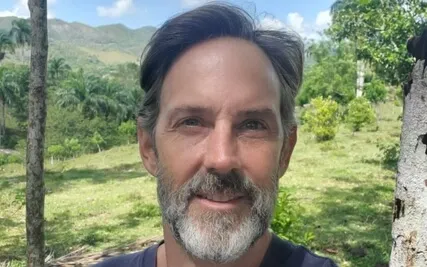
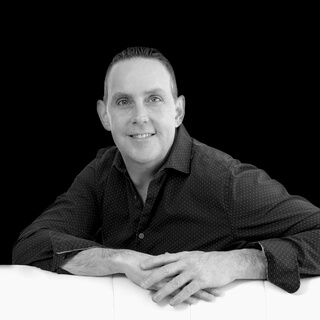
Welcome to Life Lessons and Laughter with your host,
Glenn Ambrose.
Hey everybody,
Welcome to the show and welcome Aubrey.
Hey Aubrey.
Hello,
Hello,
Hello.
Good,
Here we are.
Here we are recording.
It's been a challenge with our schedules lately.
So I figured it out.
Many things,
Life,
Life just is happening.
Yes,
Life is happening.
And that's kind of,
I guess,
What we're going to talk about today,
Questioning stuff,
To make sure that we're interacting with life in a healthy way.
It's funny,
When I was a kid,
My thinking was so off that my father used to notice it,
Like he could see it.
I think the way that I think and the way that my father thinks are very closely related.
I think that's where I get a lot of it.
His mind works very similar to mine in a lot of ways.
So I remember him saying,
Your thinking is just off.
It's just off.
It's heading in the wrong direction.
And I didn't know what the heck he meant by that.
But that was probably when I was a teenager,
And I wasn't really interested in his perspective.
And I was trying to figure out my own way.
And the fact that it didn't make sense to him was actually feeding it,
Because I didn't want to be like him at that stage.
I was trying to break away from all that stuff.
But he used to see it.
And a lot of times when I'm working with clients,
I try to explain it to them.
Because I'll be like,
You know what?
Your thinking is dead on.
Like you're good.
I think I've said that to you before.
It's like,
Your thinking is dead on.
And I try to explain it,
Because that doesn't seem like it's that important.
But it is.
I don't know what came first,
The chicken or the egg,
The thinking or the acting.
But if you're clear,
And your thinking is going in the right direction,
Then that is either the driving force or the symptom of you being in alignment.
You can't be in alignment and have your thinking breaking off into a different direction.
It just doesn't work that way.
So when you're in alignment,
Your thinking is in alignment.
Your energy is in alignment.
Everything is in alignment.
That's what being in alignment means.
So I can monitor the thinking.
Somebody can say three sentences,
And two of them will be on,
And one of them might be off.
And it's like,
OK,
So I just grabbed that third one and just adjust it a little.
OK,
We've got to tweak this a little.
You're starting to veer a little bit there.
So you've just got to tweak that.
Tweak your perspective just a little,
And then that gets back in alignment with the other two sentences.
Now your whole thought process is in alignment.
So monitoring our thinking is important.
And sometimes we can monitor our own.
Sometimes it's important to get an outside perspective.
Because if our thinking is off,
How are we supposed to recognize that?
Yeah,
It's in our own heads,
And we're not getting it out.
Yeah,
It's the Einstein quote,
A problem can't be solved with the consciousness that created it.
Yeah,
It doesn't make sense.
If you walked yourself into a problem because of the way you were thinking,
Then you didn't do that on purpose.
You weren't trying to walk yourself into a problem.
So you thought you were doing the right thing.
So therefore,
Your consciousness is off around that particular subject.
So to find your way out of it is hard.
It's not that it can't be done.
Sometimes we can do it.
It's just a lot easier getting another perspective.
Because that's why we're here.
We're here to help one another and to give each other different perspectives from the outside.
So that is very helpful,
And that's one way to do it.
I think today we're going to be talking a little bit more about how we can try to do it for ourselves.
Yeah,
Because you don't know what you don't know,
Right?
Right.
You don't know what you don't know.
So therefore,
Basically what you need to do is pay attention to your alignment and your energy first,
And then think,
And then try to figure out the thinking.
Because if you're out of alignment and you're off,
If you're caught up in fear or frustration or anger,
And those emotions are flooding you,
And they are going to shape,
I don't give a crap what anybody says,
They are going to shape the way you think.
They are going to shape the way you make decisions.
It's going to happen,
And it's going to make your decisions worse every time.
Yep.
You're in reality,
And then you find yourself in a weird spot.
Yeah.
You're just like,
It's the foundation of your thinking.
Your thinking comes from somewhere.
I mean energetically,
The direction of your thinking comes from somewhere.
So if you're centered and clear,
Then it's very clear thinking.
If you're emotional,
It's going to push you into a different direction with your thinking.
This is why another example of it is as soon as I get sober,
I heard you can't parent from guilt.
It's true,
Because what happens is,
And I was a drunk for 20 years,
And my son was what,
Three and a half or something.
By the time I had gotten sober and started being with him again.
There was a two-year period where I just visited him.
I had a lot of guilt about not being there for those two years.
And then just living as a drunk for 20 years,
I mean,
You got trailer loads filled with guilt that you have to let go of.
Of course,
You let go of a lot of it through the program and stuff,
But when it comes to parenting,
There's so much love there.
There's a lot of guilt.
It's very easy to tap into that guilt.
The reason you can't parent from guilt is because it will drive your decision-making.
It's very easy to see.
It's the little things at first.
Kids manipulate.
That's what they do,
Because they're trying to figure out this world and how to get what they want in this world.
Their ego identity is expanding,
And they're connecting to it.
They're navigating things.
They're trying to figure out what works and what doesn't work.
They're constantly manipulating scenarios to get what they want,
Which is not good if you're driven by guilt,
Because they're going to play you like a fiddle.
You're going to give in.
Yep,
Give in to whatever,
Because you're trying to overcompensate.
Right.
You're going to give in more than you should,
And it's going to affect them,
And they're going to walk all over you.
It's going to play out like that,
Guaranteed.
It's a good example of how that underlying energy has to be cleared away,
And then you can be clear and make clear decisions.
Everything's like that.
What do you think is the first step in recognizing that your thinking is not right?
Disconnecting from the thinking first,
Because really,
That's what we do.
We run around thinking all day,
Every day about stuff and try to figure out intellectually how we're supposed to do things.
That's the first mistake.
We just have to stop thinking first.
Yeah,
Slow down.
Yeah,
Slow down,
Stop.
Just stop thinking,
And then center yourself.
Just get calm.
Disconnect from,
Like,
So my son's been sick,
And I'm over here in Florida taking care of him.
Now,
I've seen what the healthcare system does.
I don't particularly like the healthcare system anyway.
I think it's a load of crap.
I think it's money-driven.
I don't think that the people that are making decisions give a flying crap about human beings.
I think it's all about profit,
And they'll pass any medication.
You can literally die and have strokes over medications,
But they're safe to take.
What has to happen for them not to be safe to take?
I'm curious.
All this stuff,
And lawsuits.
There's six million reasons why I don't trust the healthcare system or the people in it as far as I can throw them.
I've got all kinds of reasoning to back it up,
And logical reasoning and facts.
If I anchor into that,
And that is what controls my decision-making,
My decision-making is going to be slanted in a different direction.
If I focus on that,
I can get frustrated.
I can get irritated.
I can get angry that it's like that,
And that my son is being affected by that in a negative way.
It's real easy for me,
Especially when it's interacting with my child,
For me to be able to get angry about that.
I have to disconnect from that and center myself and go,
Yes,
That's just,
In my opinion,
That's the facts.
It's messed up.
You can't fully trust it.
What can they do?
Is there any information that I can weed through this load of crap and find something good?
Nothing is all bad.
What can I find that's good?
I'm not going to sit there and say,
Well,
Every test that he had is complete BS because they're BS,
And they screwed up on 15 different things that they screwed up on.
That means the other six things are tainted as well.
I can't do that.
If I'm driven by emotion,
I completely do that.
Yeah,
Yeah,
Yeah,
Exactly.
You're trying to look at it from a non-emotional,
More realistic view.
Right.
I have to disconnect from the anger,
The frustration,
My belief systems,
And center myself first and go,
Okay,
Let's get the emotion out of the way and let's look at this clearly.
This piece came back positive.
What's the likelihood that that's positive?
Then go research and find information elsewhere in a more trustworthy situation like people who have actually dealt with this for years and understand it and all that.
Go get my information elsewhere.
Now all of a sudden,
After talking to two or three what I would consider more professionals because they actually lived it and navigated all the nightmare of the medical system and then came out the other side healthy and found the actual right way of doing it.
Those people,
I think,
They hold better information.
Now their information is tainted too because there's fear.
I have to be careful what I grab onto.
You have to be very logical.
You have to be like,
Okay,
I'm letting go of this stuff that I don't like and I have to look at it clear and realistically.
Then I'll go over here for help,
But I have to understand that they're conditioned by fear a lot of times too.
Maybe I'll agree with 75% of what they say,
But there's still 25% that is probably driven by fear that's pushing too far.
I have to be careful of that as well.
This kind of sounds complicated,
But everything in spirituality does until you actually try it.
It's much simpler than it sounds because you can lock into stuff.
If you're paying attention to the way you're thinking and the way you're feeling while you're thinking it,
You can tell if you're being driven by emotion or not.
Yeah,
Absolutely.
Yeah,
It's just being realistic with yourself.
How do you,
Especially in such a,
I don't want to say triggering,
But this is a very high emotionally connected situation for you.
How do you check in with yourself and stay grounded and keep yourself in that right thinking pattern versus the alternative?
Well,
I'll tell you,
I've come a long way.
Yeah.
She's really nice to say.
Yeah,
That's amazing.
Raising my son with the family court stuff that was always going on,
Nothing about raising my son was smooth from an external level.
Our relationship was wonderful.
We had tons of wonderful times together and it was the most amazing experience of my life.
However,
When you're talking about a logistical thing like medical aspects,
School aspects,
Family court aspects,
All those types of things was very difficult.
I had to grow a lot in those areas through those times.
But then now,
He's an adult now,
So I've had time to rest and purge out the residual emotion that was left over from all those 18 years of what I went through.
I'm much more grounded now,
So it's much easier for me to stay in.
Sometimes we'll bitch about the healthcare system because I want to get it out.
There is frustration there.
It helps me purge it and get it out,
But then it's like,
Okay,
Am I disconnected from that frustration?
It's just really as simple as nowadays,
I can just be thinking about something.
Usually I can feel when I'm getting emotional.
If I start feeling emotion or I start generalizing,
That's ego.
They all suck.
No,
Nothing of everything sucks.
If I catch myself generalizing and just making sweeping statements or feeling emotional,
Those are all signs like,
Hey,
Glenn,
If you want to use this moment to purge out some of your frustration,
Fine,
But don't take yourself too seriously right now because you're caught up in a bunch of BS.
This isn't concrete information that you're spitting out now.
You're just venting.
I allow myself to do that whenever the hell I want to.
People around here have heard me bitch about the healthcare system several times in the last week.
I'll do it more,
But I'll make my decisions from that.
I have that type of similar thing with the healthcare system.
I was really looking into functional medicine for a long time.
There's these things called FDMPs.
They're functional diagnostic nutritionist practitioners.
What functional medicine does versus Western,
I was very scorned from Western because I just feel like,
Especially with reoccurring issues,
Those reoccurring symptoms that people have,
It's very difficult to get to the root cause of the issue or you hear a lot where people it's just tough to cross and they want to do prescriptions and whatever.
It really is perspective because I had a lot of resentment against it too.
I'm like,
You know what?
It's good for a broken arm or those emergencies.
You're right though.
It's not all bad.
It's easy to get caught up in that too.
That turns into victim mentality quickly.
I think that that's actually a good tool that you just pointed out.
Really mentally find what's good in it because you can't just completely complain about it all the time and then expect your unconscious to think that there's something good with it.
Your unconscious is deeper and it will override your surfacey thinking.
Actually finding,
And I do this,
I find situations where I go,
Okay,
The healthcare industry was good and this,
And of course there are many people that it's helped.
Of course there is.
I just read a story on Facebook,
A little post a week ago or something that somebody was very sick in the Dominican Republic and they didn't get the help they needed.
They flew over to either US or Canada.
They got the help that they were needed and it was wonderful and they got healthy.
They're using it as an example of the DR having bad healthcare and the US having good healthcare.
So far in my experience,
It's been the opposite.
I've liked the DR healthcare system better than the United States healthcare system in my experience.
The point is that somebody had a good experience and that was a week ago and the reason that it's coming up now is because when I read that,
My first instinct was,
Boom,
And I went,
Glenn.
You wanted to brush it off immediately.
I wanted to,
Yeah,
But I was like,
Glenn,
This is a really good opportunity for you to see the good in the healthcare system.
Sometimes it does help people.
Sometimes it does do good and to say it never does is ridiculous and it's not true.
So don't allow yourself to go down that direction.
Are there many problems?
Yes.
Do I hate it?
Yeah.
Yeah.
I mean,
I can give a laundry list of what I don't like about it.
However,
Can it help people in situations?
Yes,
Of course it can and it's helped many people,
Millions,
Probably hundreds of millions over the years.
So it does have some good in it.
It's got problems too and my job is to navigate those.
My job is to use my common sense,
Use body awareness if it's to do with me,
Try to help people I'm talking to learn about their body.
If you tune into your body,
You'd be surprised how many answers come up.
I get used to that in personal training.
I'd be like,
So if I'm rehabbing an injury or something,
I'm like,
Okay,
How does this feel?
Well,
It hurts.
Okay,
Well,
What do you mean by hurt?
Does it feel like it's injuring it more or does it feel like it's kind of stretching it?
And I'd be like,
I don't know.
You're like,
Okay.
So you actually do know.
You just don't know that you know.
So just think about that.
Think about,
Go light,
Go slow and pay attention to your feeling and ask yourself,
Is this injuring me or is this just stretching it?
And it'd be like,
And now I usually kind of knew the answer already,
But because my intuition knew it,
They're freaking hurting themselves.
Yeah,
You would have probably stopped it.
I want to teach them how to know their own body because it's a valuable asset.
So they'd be like,
No,
I think it's just like stretching it.
I don't think it's a damaging feeling.
I'm like,
Okay,
Good.
Pay attention to that.
Get to be able to tell the difference between those two things.
It's helpful.
And I mean,
You could teach somebody that.
They wouldn't be good at it.
They would have to practice it,
But you could teach somebody that in 30 seconds.
Yeah,
To just settle in and actually pay attention.
Yeah.
So this is like when I'm talking to my son about how he's feeling,
I'm also monitoring his energy.
Is he talking to me through frustration?
Is he frustrated right now?
Oh yeah,
He's all wound up.
Okay,
Well,
I'm not going to take what he's saying.
I'm going to take it with a grain of salt.
I'll be like,
There's probably some truth here.
He's probably exaggerating some of it because he's upset.
So I do it with other people too.
I can feel when the thinking is off.
So yeah,
We can learn to do this for ourselves,
But it's just paying attention to the red flags.
What's driving my thinking?
What emotional state am I in right now?
And what can I use to help me?
If you put your attention on 10 bits of information and nine of it is useless,
And your intention is like,
Is any of this helpful?
And you just read each one.
That one piece that's helpful is going to capture your attention.
It's going to be a little bit of a different feeling when you're reading that one.
If you learn to monitor that,
It's really helpful.
So that's kind of what I do.
It's just massively bringing consciousness,
Being aware,
Bringing conscious thinking,
Bringing mindfulness into whatever you're doing.
Take 100% of your focus and just put it on that.
Some people almost hear a voice.
Some people feel a physical sensation.
Some people feel an emotional sensation.
There's all kinds of different ways of discerning information and tapping into your inner voice.
Mine is by feel,
Like an emotional feel usually,
Sometimes a little bit physical,
But mostly it's an emotional feel.
So if I'm reading something that's truthful or helpful,
I feel completely contented.
Then all of a sudden a little piece is off and it's just like,
Eh.
I can feel it.
It's just eh,
You know?
So I take all that into consideration.
It's funny,
I don't know exactly what I'm doing.
I'm playing with it.
So I look at this information.
I go,
Okay,
Maybe this piece and this piece could be helpful,
Maybe,
From the healthcare system.
Then maybe this piece and this piece from the spiritual could be helpful.
Then maybe this piece and this piece could be helpful from the community of people who have struggled with these symptoms before.
So then you start looking at that and you go,
Oh,
Okay.
So really,
If I do this that the medical system kind of leaned into and that test is true,
Which these people said it very well could be,
Then whether it's true or whether it's not,
It's going to clear that out.
Oh,
Okay.
Well,
What's the drawback?
There really isn't one.
Not much of one.
Okay,
Cool.
Then it would probably make sense to do that.
So we're just making sure of things from a medical standpoint,
The Western medicine,
That if there is this problem,
We're probably going to wipe it out.
It doesn't seem to be much of a drawback to experimenting with that.
Okay,
Cool.
Now,
What else?
Well,
This—now,
My son's got a few different things going on.
It's like,
Okay,
None of the medicine is going to help with that.
He's been struggling with it for five weeks.
Okay,
Well,
I want to try to do something with that.
So that's when I brought in—talked to him about trying Cambo.
Cambo is frog medicine from the Amazon,
And it's a huge immune system booster,
Huge energy booster,
Which he has none.
I'm thinking one of the reasons why he—he has multiple problems,
So his body's depleted.
So when he has these waves of the mono,
Which we think it is,
It's like his body can't fight it off.
It's just too weak from the other couple things and the mono.
So it's like if we can give him an energy boost and boost his immune system,
Get his body stronger,
Then maybe the next wave,
His body can fight that off better.
So this is all—it's all logical thinking,
Clear thinking.
It's not woo-woo,
What the hell.
And it's funny.
It's like sometimes when you bring in the plant medicine argument,
People like—well,
My son was even asking me about it,
I think,
Yesterday or the day before.
He's like,
Seriously?
What's up with the frog medicine?
I was like,
Well,
I said,
You know what's funny about that?
I said,
As soon as you asked me,
I got this flash of all the other medicines.
It's like,
Do you know what's in the acetaminophen and ibuprofen that everybody's been taking on a daily basis?
I just had the same thing when you said that he said that.
I was like,
It's funny.
We're just prescribed stuff all the time and nobody's asking what's in it.
They just literally go to the toilet and they take it.
There's a laundry list of side effects that they tell you have definitely occurred when people take this medicine.
They have definitely gotten dizzy.
They have definitely had strokes.
They have definitely died.
They have definitely—this definitely has happened.
One you hear on infomercials is possible death.
Literally,
They say that at the end of almost every one.
They say that because—I was listening to one last week.
They literally said,
After they listed all the symptoms,
They said,
We are telling you about these possible side effects because they have occurred in people in the past.
Not because we think they might occur.
We have to tell you about them because they literally have occurred.
Past tense.
People literally have died from taking this medicine that we think you should take.
It's like,
Okay.
That's one side.
Then the plant medicine,
It's like,
Well,
People have been taking this for 5,
000 years.
Meredith Horowski Right.
It's natural.
Dr.
Pompa Yeah.
It's natural.
We're putting—we're like,
Oh,
It's man-made and synthetic and it kills people?
Oh,
Well,
I'll take that because the doctor prescribed it.
This is natural.
Nature made it and it's been around for 5,
000 years and people have been using it.
The health benefits have been documented.
Well,
I don't know.
That's kind of woo-woo.
I don't know if I can trust that.
It's like,
Wow.
That's how whacked out we are with our thinking.
It's amazing.
Meredith Horowski Yeah.
I think,
Though,
I think that just this time and space,
People—I see it more like where I am.
I don't know where you're at,
You're entrenched in it,
But I'm in the city in the US.
There's a lot of more functional medicine and people using alternative natural remedies versus getting prescriptions from the doctor.
You'll always have that,
Of course,
But I see there's a major shift here,
For sure,
Especially where I'm at.
Dr.
Pompa It's a beautiful thing.
There's a gigantic shift with this stuff.
I mean,
The expansion of this stuff in the last ten years is just mind-blowing.
Even if you say the last twenty years,
None of this was really—it was just starting.
People were starting to mess—I mean,
As far as mainstream,
There was always a spiritual community that was into it and stuff,
But it just started becoming mainstream,
I don't know,
Ten,
Twenty years ago.
It's like where it is now is night and day to where it was back then.
Then twenty years before that,
Forget about it,
It's not even in the same ballpark.
It's coming.
Dr.
Pompa It's interesting.
I feel like the failure of Western medicine,
Just like the countless times that it's just failed people,
Has actually pushed this next phase of people wanting plant medicine and all of the natural stuff because the old way didn't work.
You're forced to—if you're not getting treated for something,
You're forced to go outside and find it if you want to get better.
Dr.
Pompa Look,
The solution is built into the problem.
It's like this is the beauty of where we are in human history.
This is why I try to point this stuff out whenever I see it.
That's why I get all excited when you said it.
It's like it's yet another example of how when we talk about on other podcasts about how greed is coming to a pinnacle and then we're looking for a new way.
When we're looking at the job market becoming an employee market instead of an employer market,
What is driving all this change?
It's failure.
That's what's driving it.
Because people focused on money and everybody—so if you sit there and you go,
This is horrible.
This is a good example of emotional thinking that doesn't work.
This is horrible.
Oh my God,
The healthcare system doesn't help people.
It's horrible,
Blah,
Blah,
Blah.
Yeah,
But the fact that it's not helping people is pushing people to find alternative views.
We're in a learning curve.
That's where we're going is the solution,
Just like in the job market,
Just like with the money,
Just like in every other area that's falling apart.
People are finally opening their eyes.
What it is is when your eyes start to open and you start seeing this stuff for what it's like,
It's overwhelming and it's frustrating and it's angry.
You have to let go of that and go,
Okay,
Stop cursing the darkness and praising the light.
Stop being upset that your eyes were closed before.
Stop being upset that the governments and the businesses and the big pharmacy and all the other things that are dysfunctional in this world have done what they've done and are driving the driving force that they are.
Don't worry about that.
That was when your eyes were closed.
That was when everybody didn't understand,
But our eyes are opening now.
We're seeing things for what they are.
Now we can change.
That's the same in a macrocosm as it is in a microcosm.
I do this with individuals too.
When people start seeing the error in their ways,
They start beating themselves up.
It's like,
No,
No,
No,
No,
No.
Think about it.
If you've been lost for 40 years,
What chance did you have of taking control of your life and getting better?
Zero.
You had no chance because you didn't know what you didn't know when you didn't know it.
You had zero chance of fixing anything.
Now 40 years later,
Your eyes pop open,
You understand,
And you can take ownership of your life and start living differently.
Why beat yourself up for 40 years of walking in the dark?
Why not praise that the light's on?
You can actually now start living the way you should be getting excited about that.
Let that excitement,
Let that joy pull you.
Pain pushes until pleasure pulls.
That pain pushed you into awakening.
Now you're awake.
It's time to stop focusing on the pain and stop focusing on the joy of the future because now you're in control of creating the future that you want.
Up until yesterday,
You weren't.
You had no chance.
Yeah.
There's no way to change that.
Like you said,
There's no use in beating yourself up about it either because you really don't know what you don't know.
You could have gone on forever like that.
Yeah.
Unless you have a time machine,
You might as well just get on with the joy of it.
I think to maybe try summing it up,
It's about making sure your energy is clear and just being calm and centered and realistic.
This is why my book is called Down to Earth.
I don't teach woo-woo floaty around stuff.
This is real crap.
I love when people say woo-woo.
It just cracks me up.
It's like,
Okay,
So you think that the only capabilities that we have is the healthcare system?
That's woo-woo because if you start looking at all the people that have been suffering with conditions for years,
Chronically,
That the healthcare system can't fix and they say they can,
That's woo-woo because it literally doesn't hold water.
It doesn't work.
That's why it's woo-woo.
If you look at the healthcare system and you go,
Okay,
This piece does work.
This piece does work.
This piece seems to work.
My best guess is that this does work.
Now,
The rest of it is a load of crap and I'm tossing it all out.
That's realistic.
That's discernment.
That's assessing and making logical conclusions,
Not sweeping everything aside because you don't like them.
Looking over the demo,
Oh,
I like these people.
That doesn't mean you should take 100% of what they say.
It just means you value their opinion a little bit more.
Okay,
Cool.
Still be discerning when you take in that.
Then use your head because we have one.
It doesn't take a rocket.
I think in the past,
Human history,
All through human history,
We put doctors,
Judges,
Principals,
Teachers,
All kinds of different people in hierarchy.
We make them like they know something we don't.
They don't.
They're no smarter than us.
They're no better than us.
Half of the doctors want to finish school 20 years ago.
I don't know.
Maybe they have to take some continuing education freaking stuff or something.
I mean,
Seriously.
The way technology is moving and medicine is moving.
Somebody that graduated medical school 30 years ago,
They're going to know everything that's going on now?
Where do they get their information?
Oh,
Yeah,
From the pharmaceutical salesman that comes and tells them that they have a numerical drug.
I guess I'm not going to.
You know what?
I can just feel myself ready to go in.
I'm like,
It's out of emotion.
I know it's out of emotion.
We have to take that stuff into consideration.
That's why we have to bring ourselves back down to earth before we decide to make decisions.
We can get emotional and bitch and complain and post on social media and pretend it's going to do something and all that stuff.
If we want to,
Then.
At the end of the day,
I think we have to take our decision making a little bit more seriously.
This isn't just about medical stuff.
I know we use that as an example today,
But it's about every area of your life.
Emotion is a gift.
It's a wonderful tool that we have,
But it's not there for making decisions.
If we gather information calmly,
Collect it all,
Use our heads,
We're going to come out with really good decision making skills.
It's just we have to make sure our energy is clear first.
Yeah,
Absolutely.
Cool.
There,
That's all I got.
What about you?
Yeah.
No,
I think we about covered it.
It's just leaning into the good overall,
Leaning into the good.
Yeah,
Leaning into what feels good and just that centered state that I'm not being swayed by emotion in either direction and then making your decisions from there.
And then sounding boards are great too.
Talk it out with people.
I've done that too.
It's like,
Okay,
When I come to my conclusion,
It's like,
Say it out loud because weird stuff makes sense in our heads.
Say it out loud,
Talk it over with people,
Try to get other perspectives.
Does this make sense?
Am I missing anything?
You got to be careful who you do it to because if you do it to somebody that's attached to the medical system or that's completely against the medical system,
They're not going to have a taint.
Their view is going to be tainted.
So it's like you have to be careful who you go to.
Yeah,
Yeah.
It's be wise in who you choose to bounce off that very important information that's just in your head.
Yeah,
Yeah.
Just be careful and just be like,
Are they emotionally invested in this?
A lot of times,
A lot of times families are not the one to talk things over with.
Sometimes they are,
Sometimes they're not.
And a lot of times when it's around emotional things.
Yeah,
Yeah.
Yeah,
Especially if it's someone very close.
You know,
It can be someone very close to you that can be emotional and triggering and you know,
Be careful.
Yeah,
I think it's like what I do usually,
Like,
You know,
I like to keep my family involved with stuff like this because I know they care and I know they're curious.
So usually what I try to do is I try to like kind of come to my,
I kind of do this anyway.
I like to come to my own conclusion.
And then maybe,
And then I talk it out with my son,
You know,
In this particular situation because he's involved.
He's an adult now.
Like,
I'm not just going to go,
Hey,
You're going to do this.
No,
Like he's agreed to,
I ask him,
I inform him and let him make his decisions because it's his body.
I don't tell him he's doing anything.
So you know,
So talking it out with him and explaining why I think the way that I think and if he's on board and then we kind of,
You know,
Okay,
Cool.
Like we kind of come to a conclusion what we're going to do.
Then I talk it over with people,
You know,
And I still stay open to if they have a different opinion and be like,
Okay.
And if they do throw an opinion,
I go,
Okay,
Is this something,
Is this something I need to bring into my little puzzle over here and incorporate in?
Or is it just fear-based?
No,
It's just fear-based.
I'm just going to stay with my little model over here then.
Yeah.
So you're filtering you and everyone else basically.
Right.
So it's,
You know,
So if they,
If they get caught up in fear a little bit,
You know,
It's like,
Oh,
It's no big deal.
It's almost expected,
You know,
But it's like,
What the hell,
Man,
You're bringing fear in.
It's like,
Just relax.
Just don't let it in.
You know,
I'm in control of my energy.
I don't have to worry about if somebody spreads a little fear,
It's like,
Okay,
I can,
I can recognize it for what it is and go,
No,
I'm not allowing that in here.
You know,
I don't have to get defensive and be like,
Oh my God.
Yeah,
It's fine.
Make it all dramatic.
Yeah.
Yeah.
So,
So yeah,
Just make sure your energy is clear.
You know,
You're,
You're not letting,
You know,
So,
And a good way of doing that is,
You know,
Seeing the good,
Even if something's 90% bad,
Look at the 10% good and,
And really allow yourself to feel it,
Absorb it.
Like,
Yes,
There is good here.
That's a fact.
There is good here and let that really settle into your body.
Yes.
Is most of it BS?
Yes.
But there is some good here.
Okay.
So if you can really feel that to be true inside your body,
That will keep your energy clear.
Yeah.
You know,
And therefore you're thinking clear.
I like it.
I'm going to practice it.
Yeah,
Me too.
I'm going to continue practicing it.
All right.
That'll do for this one.
Thank you everybody for listening and thank you,
Aubrey.
Thank you.
And we'll see you guys soon.
See you guys.
Looking for more,
Check out over 200 episodes of Life Lessons in Laughter,
Or click the link in the description of this episode to connect with Glenn directly.