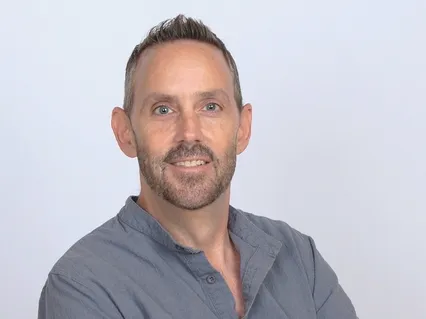
Welcome to Life,
Lessons and Laughter with your host Glenn Ambrose.
Hey everybody,
Welcome to the show.
So let's welcome Ben,
Benjamin.
Hi Ben.
Hey Glenn.
So what are we talking about today?
Stuff.
We're talking about.
.
.
There's lots of different ways to phrase this to get the mindset,
But basically it's about not defending ourselves.
Okay,
Explain that.
I feel defensive already.
Let's see.
Well,
I've seen this as such a consistent part of negativity,
How we interact with life,
And I've noticed it in myself.
I mean,
Everybody's defensive.
That's kind of.
.
.
Most of the conversations that take place in just everyday life are attack and defend.
And we don't perceive it as that a lot of times because we're so used to that type of information exchange that it just seems normal until you get into a relationship.
Especially a romantic one.
And then it gets annoying because it causes a lot of fights because it's really not a good way to communicate because you're not actually communicating.
You're saying your side and you're trying to defend it and then the other person says their side or just the other side just because you finished clearly stating that side.
So why would.
.
.
They kind of have nothing else to say,
So they'll just take the other side and talk about that and try to prove how that's right.
And I think it's so unconscious,
This way of communicating,
That we've just.
.
.
And it's so common now,
We don't even notice it.
And it's really a foundational problem in our society because,
Like I said,
That's just how people communicate and they don't even notice that they're doing it.
And they don't even notice that there's anything wrong with it,
Which I think is along a lot of the teachings that I do,
This is why I say awareness is the biggest deal.
Because most of the things that we're doing that don't work,
We just haven't slowed down to look at them and go,
Geez,
This doesn't work.
Maybe I should do it a different way.
It's just so common in our society and it's so accepted that we just do it.
And if we look closely,
We see that it doesn't work.
So it's,
In theory,
A communication and or a conversation is supposed to be like an exchange of ideas.
It's an exchange of ideas,
Not as a defense of ideas or not even a stating of ideas.
It's an exchange of ideas.
And this is one of the reasons why it's so helpful to be a part of a community.
This is why we have an innate desire to connect with other people because we're better as a group and more capable as a group with multiple minds looking at one thing than we are alone.
And it seems like now we're just kind of a bunch of islands floating around,
Not connected with anybody,
So stuck in our way of viewing things.
And if somebody just offers a different way,
We get defensive and defend our position.
And it's like,
I think the Dalai Lama is the best example of this.
I was reading one of his books years ago and he was talking about two things.
One is that people question him as to why he talks world politics with people who sweep floors.
And people like that who most people would think don't have an intelligent point of view on that subject.
And he's like,
Why wouldn't I discuss it with them?
Like they have such a different perspective than I would being immersed in it that it helps me see things in different ways.
So he sees the value in that.
And then the other thing he was talking about is being blamed for being wishy-washy.
He's like,
Well,
People will pay attention to me as I'm hearing different sides and somebody explains their side and I go,
Yes,
I understand.
I understand what you're saying.
Yes,
Okay.
I see where you're coming from.
And then somebody else says something completely different and I go,
Yes,
I see where you're coming from.
I understand.
And they're like,
Oh,
You're wishy-washy.
And it's like,
No,
I'm not wishy-washy.
I'm paying attention to what they're saying and I'm trying to understand their point.
And when I do,
I say,
I understand your point.
That doesn't mean that I'm adopting their point,
Which I think is kind of the foundation of what we'll go more into today is the difference and the healthier way of communicating.
Yeah,
I think it's difficult to communicate without being defensive.
And even if it's because we think of defensive as like as a super negative,
Like we know when other people are being defensive.
We can tell when other people are being defensive and it's like an innate thing clicks in our brain when we are being defensive to the point where we're not communicating properly.
You know what I mean?
With each other.
We don't understand necessarily that we're being defensive.
But I think what's really interesting is that you,
For the title that I had written down at least,
You said that there's no need to defend or protect.
And I really want to get into the protection aspect of this,
Especially in the element that you talked of beforehand of relationships and any sort of interpersonal relationship.
When we're being defensive,
We're being protective of ourselves for some reason.
Can you talk a little bit about that?
Yeah,
That's the foundation of why we do it.
We're so identified with us being our ego,
Us being our mind-made selves that we feel the need to protect it because it's not safe.
You know,
Like our ego can be hurt.
This is why I love my favorite quote because it applies to kind of everything.
It's,
You know,
Nothing real can be threatened.
Nothing unreal exists.
Herein lies the peace of God.
So if our ego can be threatened,
Then it's technically not real in any eternal sense.
So it can be threatened.
We feel that unconsciously.
We feel that our ego can be threatened.
Somebody can hurt our feelings.
Somebody can hurt us.
So we believe.
So we're constantly defending because we're overly identified with the ego.
You know,
We don't look at ourselves as a spiritual being having a human incarnation and also having an ego during that time.
We identify ourselves as,
I'm Glenn.
I am my ego.
I think I'm my ego.
So if somebody attacks my ego or I perceive somebody attacking my ego,
Then I have to defend it,
Which basically everything is,
Everything attacks your ego.
It's because the ego,
The whole basis of your ego's existence is separation from others,
Separation from anything.
So it's why it's so fearful because it feels it's separate from others.
It's why it defends itself because it feels it's separate from others.
It's how it builds itself to what it perceives as stronger by creating more separation.
So it's when we're identified with our ego,
What happens is every time we defend ourselves successfully,
Then our separation from the person we're defending ourselves or people like them increases.
So we're more right and they're more wrong.
So therefore we're better,
They're worse,
And I feel better about myself.
You know,
And if I do that over and over and over and I increase separation,
Then it's that that's the better I feel about myself.
You know,
So I think,
But this is,
We got to remember this is all ego how I feel about myself.
It's not really how I feel about myself.
It's all fictional.
It's all made up.
It's not real.
So it's very fragile.
That's why we have to constantly keep doing it.
You know,
It's work and we do it through everything we do it through.
I mean,
Do you know anybody that doesn't complain?
Me neither,
Including me,
You know,
So like,
I mean,
Everybody complains and that is another example of building our ego.
You know,
We complain about something and what we're actually doing is saying,
I wouldn't do it that way if it were up to me.
Therefore,
I'm better than the situation or the person that was doing it the other way or whatever.
So we increase separation.
We increase the feeling that we're better than and that person is less than the better I make myself out to be.
And the more confident I act about my decisions,
My perspectives,
The way I am,
The higher my ego,
You know,
And the more separation from others.
So the better I think that I feel about myself.
But like I said,
It's all an illusion.
There's,
You know,
The other way is to actually feel good about yourself.
That's like self-love.
That doesn't need to be constantly fed by putting down others.
What if you're not?
So what about a situation where you're,
Where you like,
It's a friend or a family member or a romantic partner,
Where you love them and you're,
You know,
You're not trying to put them down,
But you're so,
But you're being so protective of whatever it is that you have the fear around and whatever you're vulnerable about,
You know,
Because I feel like,
At least in my own experiences,
That's when you're really defensive,
Is when you're vulnerable or when it's something that's hitting on a fear.
And even when,
Or maybe most of the time,
I personally find myself to be more defensive with the people I care about the most,
If that makes sense.
Well,
Yeah,
That's because they can trigger our insecurities,
You know,
Like in our mind,
Like they're the ones that are supposed to love us unconditionally.
And I can't even trust you.
So we get madder.
Like,
I mean,
If somebody we don't really know challenges us and,
You know,
We can intellectually keep in mind that,
Like,
Well,
You know,
I'm not going to see this person again,
Or I don't care what they think,
Or screw them.
We can dismiss it for one reason or another.
It's not that big of a deal.
But if there's somebody that's in our life,
You know,
This is why learning to communicate is so important,
Because it destroys relationships on a regular basis,
You know,
And it's there has to be,
You know,
I think in relationships,
We have to have rules for fighting,
You know,
There has to be certain things that are unacceptable,
And there has to be kind of like,
Safe words,
We,
We have to communicate to communicate.
Like a lot of times,
You know,
I've said this many times,
I'm a,
You know,
Men are genetically predisposed to fixing things.
You know,
It's not our genetics.
I mean,
We've been raised,
That's our responsibility for thousands of years.
And so of course,
We have a tendency to want to fix things,
And we're more cerebral.
So we're not as understanding of emotions as women are,
As a general rule.
So,
So like,
You know,
Like a woman might be saying,
Seeing the the benefit of verbalizing something and getting out of them emotionally,
And just freeing themselves of it.
And then they can move on,
They're fine.
And the man doesn't even like,
Huh,
What does,
You're supposed to feel your emotions?
I don't know what this is that you speak of.
So we're automatically trying to fix things,
You have a problem,
I fix it.
Why would you not want me to fix it?
Why would you want to sit in a problem?
That's,
You know,
That's a lot of times how men perceive something.
So like,
We've got that,
That man aspect,
And I'm a life coach running around trying to fix people's problems all the time,
You know,
For lack of a better explanation.
So you're trying to,
And you're trying to let them feel the emotion,
But then also fix it,
Which is still not,
Which is still the first problem,
Right?
I would assume.
Yeah,
Well,
I mean,
Generally,
You know,
The benefit I have as a life coach is that when people are coming to me,
They actually want to fix their problems.
They're not just,
You know,
Just going to vent.
So,
So I mean,
I kind of,
Go ahead.
Do you have that issue with people that aren't clients,
Though?
Yeah,
People who are not clients.
Yes,
People who are clients.
No.
So,
So,
You know,
This is why when I have,
If I'm in a relationship,
You know,
I tell people like,
Hey,
Listen,
If you just need me to,
To listen to you,
Please tell me,
Because that's not my go to.
It's not my mind doesn't just go,
Oh,
They probably just want to be heard.
No,
My mind goes,
Oh,
How can I help?
That's what my mind does.
So if you want me to do other something other than help,
Let me know,
And we're going to get along fine.
So,
But I had to learn that.
And when I learned that it was very beneficial,
You know,
And I mean,
So,
So sometimes we,
I think,
Like I said,
We need to learn,
We need to communicate about communicating.
Hey,
I just need to be heard.
We can say that upfront or,
You know,
Or even slowing down and say,
Hey,
I want to talk things out,
But I just kind of want to brainstorm and look at,
Look at things in different ways.
And then I'll make the decision at the end,
Because ultimately it's my thing.
So I want to make the decision at the end.
But I'd love your input and your help bouncing ideas around without us really getting latching onto one.
And then you start doing stuff like that.
But just kind of,
You know,
Saying stuff like that,
It helps because otherwise unconsciously,
We just dive right back into the pattern that we always do.
Is there a defensive or protective element to that trait that,
You know,
We've said is more of a masculine trait to not listen and to help,
You know,
To try to help and not listen?
Is there some way that that fits in with being like,
With us being defensive or protective of like,
Is that an insecurity on our part?
Like we need to help,
Or we need to fix it?
Or is it just like,
Is that something about our ego?
Like,
Oh,
They have a problem,
We need to fix it?
Because that makes us feel better about ourselves.
Oh,
It definitely makes us feel better about ourselves.
You know,
It's,
And I mean,
This isn't,
You know,
You know,
I enjoy going into this because it gives more explanation.
But,
You know,
It's,
I think it's important to say that,
Like,
Not everybody's like this,
This isn't some sort of,
We're not broken.
You know,
It's like,
I mean,
This is just thousands of years of conditioning,
And we can control it,
And we can get better at it and stuff like that.
And women have their stuff,
And men have their stuff.
It's because,
You know,
We've lived gender roles for so long that this stuff just literally gets passed down generation to generation in our DNA.
And it's our,
You know,
So it kind of,
We lean in that direction more,
That's all.
But,
Yeah,
The,
I mean,
We can,
You know,
And women,
I mean,
Geez,
You know,
How helpful are women?
You know,
I mean,
Women are naturally very helpful.
So,
I mean,
They have their version of it,
You know,
So we all,
Most people lean in that direction.
Sometimes it looks differently.
But,
So what was your question?
I was just wondering if the need to be helpful that you were talking about is based on an insecurity and is there for a sense of defense or protection,
You know?
Yeah,
It does.
It makes us feel better about ourselves when we can be useful,
You know.
If you want to emasculate a man,
Just don't,
You know,
Just make him feel useless.
Just,
You know,
And I mean,
Most likely they'll spiral into a depression,
And it'll get bad because,
I mean,
That's,
That's their unconscious identity.
I'm the man of the house,
You know,
All that stuff that's been passed down.
So,
Yeah,
There is an insecurity,
But it's,
You know,
Whether it's based in our gender,
You know,
Roles,
Whether it's based in society,
Passing down,
It's all the differences,
You know,
There's different versions of it.
And it's just a matter of differentiating between boosting your ego and strengthening your ego and strengthening your self-love,
You know.
When it's self-love,
We don't,
It's not an empty hole that constantly needs to be filled because,
You know,
Like I had this vision a little while ago.
It's filling,
Trying to fill your ego is like trying to fill a hole with the thought of dirt.
You know,
It's an illusion.
It's just the thought of the dirt.
You can't actually fill it with the thought of dirt,
You know,
And that's what it's like when we're trying to build our ego.
We throw in this imaginary dirt and we go,
Oh,
I feel better about myself,
You know,
And then sometimes 15 seconds,
Sometimes five minutes,
Sometimes two hours later,
All of a sudden we're like,
With that,
Didn't I just put dirt in there?
I don't see any dirt.
Oh,
Well,
I'll throw some more dirt and this is why feeding our ego gets so compulsive and so unconscious and so addictive,
You know.
So it's,
Whereas if we work on our own self-love and our connection to source,
Then we're not,
We don't have that hole.
That's what our,
That hole is.
That hole is disconnection from source.
So if we connect to our source and we connect to our own self-love,
Whatever you want to call it,
It's basically the same thing.
For people who aren't real big on the God idea or a higher power,
Like if you just work on your self-love and believe in intelligence of the universe as things,
The thing that makes things go around,
That's fine.
It doesn't matter what you believe in.
It's just,
It needs to be real self-love as opposed to egoic,
I'm better than.
And that's the unconscious triggers all the time.
The way that you were talking about the gender roles and just how things are ingrained in us for thousands of years,
It made me think of,
And I don't know when this podcast is going to be released because we have a bunch in the can,
But right now as we're recording it,
It's the beginning of June and we are in the middle of all of the protests and the entire worldwide outcry for Black Lives Matter.
And it makes me think of political conversations because you cannot have any conversation with anyone who has a different idea than you,
Even slightly different idea with you.
People that are technically on the same side of an idea,
But without defensiveness and protecting their idea and their own confirmation bias.
What is it that makes people so,
Is it an attachment to their ego?
What is it that makes people so ingrained to be defensive in their own thoughts on a subject that maybe doesn't even have anything to do with them whatsoever?
Well,
Yeah,
It's completely their ego and it's one of the biggest problems.
And this might be our next podcast.
It's the,
This is how we,
It's divide and conquer.
This is how we're losing.
Because like people are so,
People have gotten so,
You know,
Yeah,
And it's June,
Beginning of June of 2020.
So these things will be going out for a while.
But I mean,
So is the political situation been going for a while.
And you know,
It's gotten so divisive even before this,
Just political wise with Trump supporters and non-Trump supporters.
And it's just,
And this is just,
Just like everything else before it has separated everybody even more.
And it's absolutely absurd at this point because I mean,
People who are Trump supporters will defend absolutely anything he does,
No matter how horrible and abhorrent it is,
They will defend it.
And people who don't like Trump will blame him for absolutely everything,
Even if it has nothing to do with him.
I mean,
Some of the stuff that I've seen out there is absolutely absurd.
It literally has nothing to do with Trump and these people are making it a Trump issue for either for or against.
And it's,
And I'm not saying that the Black Lives Matter is that,
I'm saying I've seen things that are that.
So the problem is that it is divisiveness and I'm,
You know,
I see contrast,
You know,
This is what we call contrast.
It's what does contrast do?
Well,
It makes things clearer.
You know,
It's,
You know,
It separates the two sides so you can see them clear.
And what I'm hoping is that all this,
What we're talking about is improving the contrast so at some point,
The general population will start seeing how ridiculous this is because it's literally ridiculous.
It's ridiculous.
It makes zero sense because all that,
It's just polar opposites.
I mean,
You know,
Trump is not,
I don't care how much you like him.
He is not the second coming of Jesus Christ himself.
I'm sure of that.
And like for the supporters are getting to the point where they're almost acting like he is.
It's just the,
And the people blaming him for absolutely everything that has nothing to do with him is ridiculous too.
So we're not even vaguely close to reality at this point.
And I'm hoping at some point people go,
Oh,
Whoops.
And we actually understand what we're doing because this has been going on unconsciously in society,
But also in politics for the last 200 years and it's getting worse and worse and worse and worse and worse.
So the reason that nothing ever gets done in politics is because of this.
It's just Democrats trying to be right and Republicans trying to be right.
Why?
So they can get into power so they can get more power.
It's just a power struggle.
It has nothing to do,
There is zero,
Zero in politics that has anything to do with the betterment of the people or solving any problem on the face of the planet.
Zero to do with it.
That's why nothing ever gets solved is because they just want to prove their side right so they can get more power because their mind says,
Well,
If I get more power,
Then I'll fix stuff.
Then I'll have the power to change the world because I'm really a good person.
But you never get there.
You've been arguing for 40 years over the same issue and nobody ever ends up with absolute power so they can go fix the world in the way that they want to.
But they don't even know that.
They're too busy fighting with each other for 40 years.
So why do we get so defensive about the side that we chose in a particular argument no matter what?
Because we're petrified.
Because we're looking around and we're scared.
We're fearful and we don't feel safe because we are not connected to our source.
We do not love ourselves as beings.
So we can sense that we are in an unsafe atmosphere.
So if we feel unsafe,
Then what do we try to do?
Feel safer.
And since we don't know how to connect the source and fill our self-love and really actually feel safe,
Then we do the unconscious stuff to make us feel safe which is feeding our ego,
Which is increasing separation and making us right and them wrong.
So that's the formula.
So everybody's addicted to that formula because they haven't found the actual thing that works yet.
So it's just getting worse and worse and worse and worse and worse and it's just creating more and more separation.
And at some point,
This is why I think we're getting.
.
.
I think a good example of how this can pay off at the end is a lot of the rich,
Famous people going to philanthropy now.
There's more of that going on than there ever was in history.
In the last 20 years,
There's been more of it than previously.
And that's because after you make billions of dollars,
Literally,
And you cannot go any place on the planet without being recognized,
At some point you go,
I've kind of reached the pinnacle of success,
Or most people do,
And they go,
I still feel empty inside.
There's still this hole.
So then they start turning to philanthropy because they start finding out that doing good deeds makes them feel better.
It starts helping fill that hole.
Of course,
If they're doing it in an egoic way,
It still never fills that hole.
But it's a step in the right direction.
They're looking for spiritual means of filling that hole.
So that's contrast.
Well,
I have $10 million.
Well,
I could get $100 million.
Well,
I could get $200 million.
Well,
I could get a billion dollars.
Okay,
I got a billion dollars and this still isn't working.
What else can I do?
Then you start looking around.
And I think that's what contrast does.
So I'm hoping that sometime in the near future,
We get to the point where we go,
Oh my God,
Look at what we're doing.
Like one side literally is saying Donald Trump is Jesus Christ.
And one side is literally,
Not figuratively,
Saying he's Satan incarnate.
Like I think maybe we went too far.
Maybe we're off our rockers here a little bit.
And then once people start waking up to that or they just wake up to the reality that things are continually getting worse and we're not doing anything.
I don't know what's going to wake people up.
I'm hoping one of these does.
Where they go,
Oh,
Well maybe we should stop arguing who's right and who's wrong and actually try to solve.
Maybe we should communicate together.
Instead of attack and defend,
Maybe we should go,
Hey,
Could we find a middle ground?
This is like rocket science.
Okay,
I'm going to fix the entire planet right now.
So all we got to do is start having conversations where you go,
Hey,
Let's sit down,
Be courteous to one another,
And bounce ideas back and forth.
And maybe we'll compromise a little bit in the process.
But what we're going to do is we're going to focus on the problem and the solution to that problem.
And we're going to talk to try to solve the problem as opposed to what I think we should do and what you think we should do.
We're just going to not be attached to any specific way.
And we're just going to discuss this until we figure out the best possible solution together.
Oh,
Okay.
If we did that,
If we had been doing that for the last 20 years,
We would have solved poverty.
We would have solved world poverty.
We would have solved just about all the problems on the entire planet.
But nobody does that.
And that's how simple it is.
Because we're defensive and protective of our own positions.
Right.
Because it's completely ego-based and we don't even know we're doing it.
We're running around and this is,
Like you said,
Right where we are,
This is,
I think,
The biggest problem.
Because you have the problem,
Right?
And you have racism right now is the problem.
Okay.
So that's the problem that requires a solution.
What we're doing is we go,
Okay,
We're going to divide that between Trump supporters and non-Trump supporters.
Okay.
Now we're going to divide those two groups between people who like the term Black Lives Matter and the people who don't like the term Black Lives Matter.
And then we're going to divide those two groups.
It starts looking like a network marketing frickin' plan.
Then we divide those two groups between somebody that thinks protesting is beneficial and some people that are just focused on the rioting and saying that it sucks.
And then we'll take those two.
Do you see how it's eventually,
You just keep separating,
Separating,
Separating,
Separating,
Separating.
And eventually you have 150 people in each pile locked on to certain belief systems that they refuse to let go of.
And then we wonder why we can't come together as a united front for something as simple as killing a human being is bad.
Like,
You can't unite on killing a human being is bad.
You can't unite on that.
That's ridiculous.
It's ridiculous because we keep dividing and dividing and dividing and we get caught up in,
Well,
Yes,
That's bad.
But let me talk to you about something that we disagree about so I can build my ego a little stronger for a while.
Because that's what you can't tell me that this isn't important.
You know,
And then they lock on to that and it's what we just divided.
We just lost our focus on what the actual problem was.
And this is why we can't unite on stuff because we're just too busy being right.
It doesn't matter what words you use.
It doesn't matter what you believe.
Just remember killing fellow human beings equals bad.
Don't let your brain veer off of that and we'll actually come to the solution.
But I don't get jazzed up about this shit.
I think that this was a very good representation.
I really feel like the defensiveness and protection of our own ego part in the first,
You know,
90% of this conversation really did affect and is highlighting what you just said in the last 10.
You know,
And so I think that a lot of the solutions are the stuff that Glenn talked about at the beginning about the interpersonal relationships and about not having it attached to your ego and about being open and honest to people and being listening and putting your guard down.
So I thought that that was great.
Where can people find you?
They can ask questions live if you want to see Glenn get jazzed up live.
You can ask him anything on Facebook Live and on YouTube Live,
6 p.
M.
Eastern on Thursdays.
Live,
He does a live Q&A then.
And then he also has Ask Glenn Anything,
Friday's email exclusive Q&A show with new episodes every Friday.
Join the mailing list at glennambros.
Com.
Glenn,
Take us out.
Yeah,
I think that's mostly it.
Go to glennambros.
Com.
That's got everything there.
I am coming out with new stuff soon.
I'm not going to tell you what it is because it's not done yet.
But in July of 2020,
You should be seeing some new stuff coming out.
And yeah,
Just sign up for the mailing list so we can let you know about the stuff that is coming out at glennambros.
Com.
And I think that'll do it for right now.
Thanks for listening and we'll talk with you soon.