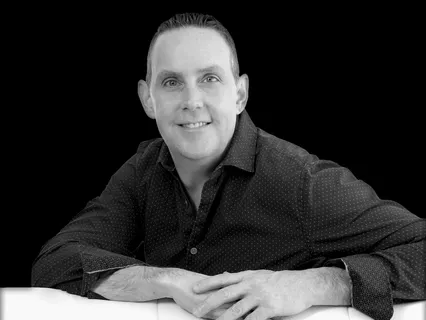
Welcome to Life,
Lessons and Laughter with your host Glenn Ambrose.
Hello!
Welcome to Life,
Lessons and Laughter with Glenn Ambrose and Dave DeAngelis and Ben Barber.
I was first.
Whoa,
Why is he first?
I'm the normal co-host.
I know,
I don't know,
I just kind of.
.
.
I'm even first alphabetically.
Apparently I'm using the left side of my brain and he's on my left.
That's right.
We'll go with that.
I don't know.
Maybe I got excited because he's not usually on.
Not more special.
I figured I'd get him in there right off the bat.
No,
You get excited for Dave.
Because I'm exciting,
I'm entertaining.
Well,
Anyway,
Happy holidays guys.
Happy holidays.
Happy holidays.
Oh yeah,
I'm going to be house band today.
Nice.
We have a professional house band.
Yes.
So today we're talking about New Year's.
New Year's resolutions,
New beginnings,
New starts.
2015 baby.
That's coming up.
2015.
15 years after the millennium.
What have you done?
Nothing.
Well no,
I've done most of everything I've done in the last 15 years.
Yeah,
Really.
Well,
Being technical.
First 15,
I kind of set for you.
You grow,
You go to school,
Stuff like that.
So we are four days away from New Year's.
Resolutions are obviously a big thing.
Do you have a resolution,
Dave?
Don't ask me.
Well,
Resolutions are big,
Especially in my industry.
I mean,
With a life enhancement center,
That's personal training,
Life coaching,
It's all about change and moving in positive directions.
So New Year's resolutions are big this time of year.
Of course they're big this time of year.
Yeah,
It's tough to make a New Year's resolution in June.
What calendar are you following?
The Mayan.
We're in overtime now as far as they're concerned.
Yeah,
We've made it.
We're living on borrowed time.
Which is a good way to look at it.
It kind of gives you a boot and a butt.
We're kind of all on borrowed time,
Technically.
I think we talked about this one other time.
I heard something,
I forgot where I heard it,
But it was talking about when death comes,
What are you going to say?
Like,
I didn't know you were coming.
Of course we knew it was coming.
It's coming for all of us.
There was a,
Dave read me a story,
It was a bedtime story,
No it wasn't.
Dave read me a story yesterday online that was about a guy that had a watch,
That had like a clock that was ticking.
And he knew the exact moment that he was going to die.
So he lived life to the fullest,
He was never afraid,
He spent his last moments saying goodbye to his wife,
Saying goodbye to his kids,
All of this stuff.
And then the clock struck zero,
And nothing happened.
He was still there,
And for the first time he was afraid.
Did I get that right?
And for the first time ever he was afraid,
Because now he didn't know what was coming and what was next.
He was always really comforted by the fact that this watch was counting down,
He knew exactly how much time he had left.
And then when nothing happened,
He was like,
This is the first time I've ever been scared.
That's a cool story.
And it's interesting,
I'm going to have to read that story.
But it gets right to the point of where our fear comes from.
It's that sense of control,
Not knowing what's going to happen,
How much time.
As soon as our mind gets involved,
Then all the fears come up.
That watch set his mind at ease.
I know exactly what I'm doing.
I know exactly how much time I have.
So I'm going to make the most of it.
And that's what we,
If we live our lives like that every day,
Or at least as often as possible,
We're going to have a lot of happiness.
The fear doesn't do anything,
It just paralyzes us to not do what we would do.
That's kind of what I want to talk about with the resolutions.
Why make them?
Most of my adult life,
I did not make a New Year's resolution because I thought they were a joke.
Well,
I saw everybody else doing them.
And it seemed like at least most of the time,
I'm trying to be kind and realistic looking back a lot of years,
That at least most of the time,
People gave up on them.
And they failed.
Quickly too.
Yeah,
Usually quickly.
And then being a personal trainer for a lot of years,
You can set your watch by it.
Generally,
It takes a week or two for people to get working out after New Year's.
Because,
You know,
They say they're going to do it right at New Year's,
But it takes a week or two to get it fit into their schedules or something.
And then,
You know,
Then they make a push.
And by the end of February,
Getting into March,
That's when people start falling off,
Usually.
I was going to say,
I think the end of March is the longest I've ever made it with a New Year's resolution.
I used to make resolutions specifically after New Year's.
Like if I wanted to do something,
You know,
This was 20 years ago,
I would wait and then like a couple months after New Year's,
Then I would pick a date and then go for it.
Let's just be openly defiant.
Right.
Which was basically my former life.
You just summed it up.
I would rebel against anything.
Even if it was imaginary.
So why do people make New Year's resolutions?
Going back to the story that I told a minute ago and what you were saying about it,
It seems to be like one big thing that people would want to make New Year's resolutions for is control.
Is to feel like it's a nice moment in time to say this is a new page.
Right.
And,
You know,
It's.
Is it like and then they can be in control from here on,
Like,
Is that there more to it?
Is that incorrect?
I think there's more to it.
I mean,
Obviously,
People will make resolutions for a lot of different reasons,
But,
You know,
There's a there's a portion of it that's just sheer good old fashioned hope.
You know,
Because I mean,
If we look around and look at even all the studies about how happy people are,
We are not very happy as a society.
So,
You know,
People want a better life.
They want to be happier.
They,
You know,
They want to enjoy their lives.
So,
You know,
When a new year comes,
Like you said,
It's a good point in time to turn the page and go,
OK,
This year is going to be different,
Which is nice.
It's it's hope.
And really,
As long as you have that hope,
Then then the door is open.
When you lose that hope,
Then you're really in trouble when you have that hope.
That's really all you need to get started.
But a lot of people have that glimmer of hope.
But that's where they stop.
They don't know how to take and implement the resolution into their lives.
And they don't know how to change and they don't know what change looks like.
So that's why the failure comes in.
You know,
We set these resolutions and basically what we're doing is we're taking a person set in who they are and we're trying to make them act a different way.
So unless I change,
My behaviors aren't going to change.
So what I'm trying,
You know,
That that's where the big problem is,
Is they try to,
You know,
To to have a new year.
You have to be a new you.
You know,
If you're the same old you,
Then you're going to have the same old year you did last year.
Unless you change something inside of yourself and everything starts inside.
All work is inside work.
So you can't change things outside of yourself.
You have to change things inside of yourself.
So like,
Let's say,
You know,
One of the biggest resolutions is exercise,
Obviously.
And being a personal trainer,
It's a nice,
Nice thing for me to talk about because I've seen so many examples of it.
So everybody says,
OK,
I'm going to work out.
And they say,
OK,
I'm going to go to the gym.
Well,
You've done that 10 times in your life and it's never worked.
So why is it going to work this time?
Because you said no,
This time it's going to work.
Like that doesn't do anything.
It's you know,
You haven't changed anything.
All you did was yell louder.
You know,
I'm going to change.
No,
I'm going to really change.
No,
I'm going to really,
Really,
You know,
Like,
Oh,
OK,
It doesn't do anything.
It doesn't do anything.
You know,
So you have to change your perspective on things and you need to set yourself up for success.
A lot of times we set ourselves up for failure instead of setting ourselves up for success.
You know,
Usually the resolutions are just too,
They're either too much to do all at once or just too large of a goal to be realistic.
To uphold.
I have a question.
I believe I read that there's a actual like thing that happens in your brain when you make plans to change things.
And when you make plans to see me,
You make plans to accomplish certain tasks or.
I think it goes towards the resolution,
Like something in your brain makes you believe that you've done it already.
And that's why when you sit with like your business partner or somebody and you're like,
Yeah,
I'm going to do this.
I'm going to start going to the gym or I'm going to really get on that project I was meaning to work on.
And like,
I'm going to really stick to this.
Something in your brain basically rewards you.
Like you've already accomplished that task.
And that's because I think I read that in response to someone going,
Why at night when I say to myself,
All this stuff's going to,
I'm going to,
I'm going to do all this stuff and I feel great about it.
And then the morning I'm like,
Nope.
Yeah.
Because your brain actually convinces you that you've done it already.
Yeah.
Well,
It fires out the same.
Your body physically,
Like the neurons firing out,
The hormones releasing everything,
Flushing through your body.
All that stuff happens the same inside of your body when you're talking about doing something or when you're actually doing it.
There's no difference.
You know,
So that's,
So that's the positive feedback you get from,
From saying that you're going to do things.
That's what it is.
The endorphins are going through you going like,
Yeah,
Yeah,
Yeah,
This is good.
This is good.
This is good.
So you are getting that positive feedback physically,
But that can be dangerous.
Can it not?
No.
I mean,
Well,
I mean,
It's,
I feel like it is if you're like,
Yeah.
And then the morning and nothing changes.
Right.
But the problem is the morning.
The problem isn't the night.
Right.
You know,
That's,
That's why,
Like,
I mean,
If you're one of the,
The biggest things I try to teach people is that positivity makes you want to do things differently as opposed to negativity.
You know,
Most people will either unconsciously or consciously think that when they get frustrated enough or when they fail,
There's a part of them that almost goes,
OK,
Good,
Because now I'll really want to do it next time.
Like,
You know,
Like it's this,
Oh,
I'm getting closer to really hitting my bottom.
So then I'll be forced to change like,
You know,
And it just doesn't happen.
If you you know,
You can I have people do like a little exercise and just,
You know,
Beat themselves up.
Or I'll do it for them.
Just be like,
You know,
Oh,
You know,
This stinks.
I can't believe I didn't do this.
You know,
I should have done it.
And there's no excuse.
Why did I do it?
When you're talking like that?
Do you feel empowered to go do something?
No,
You feel kind of like it's depressed and heavy and and down.
And just saying those words,
I felt down,
You know.
But but if you say I'm going to do this and,
You know,
Isn't it great that that I put my sneakers by the door?
Because that's one step closer to get my butt to the gym.
Way to go.
Nice job.
Nice.
Now I'm saying those words and I'm I can feel my enthusiasm rising.
I can feel myself getting more empowered.
And that's where positive change change comes from.
You know,
It comes from being empowered.
So so when you give yourself those,
I mean,
You know,
You can sit there and keep it in your head and never take any action.
I mean,
But it's if you if you keep giving yourself positive energy,
You're you're going to tend to act on it because you're going to feel empowered.
You're going to feel like you want to.
You know,
That's everybody thinks that change is such hard work.
Like,
Oh,
My God,
I have to force myself and it's I have to push and I got to drag my butt out of bed or I.
It's it's not like that.
It doesn't it doesn't have to be.
I mean,
You know,
Yeah,
You can force yourself that way.
But it doesn't it's not much fun that way,
You know,
And it's harder because you're overcoming all that negativity to get there.
But I mean,
If you empower yourself and and talk in a happy,
Positive way that you're going to do these things,
You do get that positive feedback.
You do get that enthusiasm rising and you are more likely to to take those steps,
You know,
And that's that that's one aspect of the change.
I think the.
You know,
Having not knowing how to change,
Though,
It's.
Changing your perspective on what you want to work on in the year 2015 is huge.
You know,
That's the first thing if if if you look at and we'll go back to the exercise thing,
Because it's so common right now.
The if you look at it and you go,
OK,
Why did I fail exercising before?
You know,
And you look at that and you go,
OK,
Well,
Maybe it was because I I thought of it as punishment.
And anything that punishes me,
I am only going to do for so long because punishing yourself is not natural.
It doesn't feel good.
So after a while,
I'm going to stop punishing myself because I don't like punishing myself.
So if I change my perspective and start looking at going to the gym as me time as something that I can do out of self love for myself,
Something that I can do so that in the next 20,
30,
40,
50,
60 years that I'm alive,
My body actually functions in a way where I can enjoy and participate in life.
If so.
So every time I go to the gym,
I'm going to start telling myself that this is my me time.
I'm doing this because I love myself.
And I started doing it.
Start giving myself that feedback.
Now you're changing a perspective.
You're changing yourself.
You're changing how you look at things.
Now you've got a chance on following through,
You know,
But people think that they're going to keep their old perspectives,
Look at the same things the old way,
And then also somehow be motivated to carry on some new behavior that doesn't even match with who they are.
Know what I mean?
How's that?
It's good.
I think that you said a long time ago to me that the Dalai Lama said that,
I think it was the Dalai Lama,
I could completely be butchering this,
That the problem is with Western culture and dieting and stuff is that when you're on a diet and you go for the exercise,
You have cheat days and you look at it as the reward is I get to have a piece of cake on Friday if I do this all well.
The problem is looking at the cake as the reward.
Well,
I know what you're talking about.
Did I get any of that right?
It was like three years ago.
Yeah,
There's two good points in what you were saying.
The Dalai Lama was talking about the problem with Western culture being the fact that we punish ourselves.
So he was talking about the cake and he said if you look at the cake and you say,
No,
I'm denying myself that cake.
That's what it was.
So he said,
I'm denying myself that cake.
So then you're punishing yourself,
You're denying.
So that's bad and you can only keep it up for so long until you rebel against it.
Whereas if you look at it at that cake and you say,
OK,
I have a choice to make with this cake.
I can if I don't have the cake,
Then that's one step closer to a happier,
Healthier person that I want to be.
And I can congratulate myself for that.
So I give myself positive feedback for not having the cake.
Then it's you know,
You're you're more likely to keep that up because you're giving yourself self-love.
You're giving yourself positive feedback that you can do forever.
Punishing yourself.
You can't.
You'll rebel against it at some point.
Also,
I did a little bit of research on the subject that Dave was talking about.
I believe what you were referencing was the theory that telling others about your goals is what hinders you.
It was a TED talk that I remember talking about with you a couple of years ago by a guy named Derek Sivers.
It's the it's called social reality is the psycho whatever it's called psychology term for it.
Psycho social reality is the idea that bragging about your goals and talking about it with friends gives you the satisfaction.
So it's not so much the internal thinking about it that that gives you that.
Like that does drive you,
As you said.
But this this theory and I remember talking about this with Dave,
So I think it's the right one,
Is that talking about it with your friends and like that kind of dreaming about stuff with your friends is what keeps you from doing it.
Yeah.
And I mean,
Obviously without hearing the talk that we're talking about,
I'm just kind of taking a stab in the dark here.
But I could see how that would be true,
You know,
Because now basically what you're doing is you're you're you're giving yourself by bragging to others that you're going to do this or that you've done this.
Now you're you're receiving outside.
Congratulations.
And,
You know,
For for something you haven't even done yet.
So,
You know,
So you're kind of sucking the reward out of what you're going to do without even having to do it.
And,
You know,
We've talked about this in the past,
Too,
Is that we have a tendency to just give ourselves enough,
Find enough positive feedback to hold ourselves over and then move on with our lives.
You know,
Like if we allowed.
Yeah.
So,
You know,
So you just you get enough.
That's why a lot of people will live on talking like when something's bothering them,
They'll talk about it with their friends and they'll purge it all out and they'll feel that relief.
Well,
That's enough relief that that they get a little bit of positive feedback.
They never actually deal with the problem,
You know,
So we find all types of little ways our ego finds little types of ways to get just enough positive feedback where we can navigate around staying stuck.
Well,
We don't actually have to move or do anything because we're getting enough little squirts of happiness,
You know,
Little little feedbacks of happiness here and there in different ways that we don't actually have to do anything.
Yep.
Yeah,
We do that.
Yeah,
I do that all the time.
Yeah.
And then the other thing,
Too,
That people do is commiserate.
Now complain.
Oh,
Those are the other two huge aspects of getting positive feedback,
You know,
And I think we talked about when we were talking about Facebook.
It's like you go out there and be like,
Oh,
Can you believe this person did that to me?
Then you get 30 people that go,
Oh,
Yeah,
Poor you.
You don't need them anyway and blah,
Blah,
Blah.
And then that's so you get reinforcement that you're right.
So your ego gets a boost and then you can just kind of stay stuck and you never actually deal with the feelings or the issue at hand.
Right.
You know,
It's all it's all brain trickery.
It is.
It is.
And it's you know,
There's no shortcut to to dealing with what we have to deal with.
And that's,
You know,
And that brings us right back to the resolutions.
It's there's there's no you know,
It's it's pretty easy to see if your resolution is going to work.
Just look back to your last ones.
I mean,
It's,
You know,
Resolutions really can be a good thing.
I mean,
It's it's nice drawing lines in the sand and going,
You know what,
From here on out,
I'm doing this from here on out.
I'm going to live like this from here on out.
You know this.
I've got a goal.
I'm working towards.
That's wonderful stuff.
And to use New Year's as as a line in the sand.
That's wonderful,
You know,
But don't do the same old thing.
You know,
Thinking what's the definition of insanity?
Doing the same thing over and over expecting a different result.
You know,
If they haven't worked in the past,
They're probably not going to work this time either.
So why don't we do something that's going to make it work?
You know,
Change your perspective.
I mean,
You know,
I always throw in,
You know,
Talking to a life coach because I am one.
But talk to your friends.
Get a different perspective.
Find somebody that's successful at something and then try to emulate them.
You know,
Whatever you want to do.
I've never been a big runner.
It's just been boring to me,
You know.
But when I wanted to start running regularly,
I talked to people who enjoyed running,
Who really found enjoyment in running.
So and I'd ask them questions like,
What goes on in your head?
Because I'm miserable.
Yeah.
You know,
So what goes on in your head when you run?
Why do you enjoy it?
What what feelings do you get?
What what thoughts go through your head?
What happens while you're out there and when you come back,
You actually enjoyed yourself?
You know,
And I found out that that they you know,
Some of them would would kind of picture the oxygen running through their cells and firing out their muscles and and just feeling that their body was working for them.
And it was just this wonderful machine that they were blessed to have that worked for them.
And and others got lost in nature while they were doing it,
Really appreciating the nature around them.
Others would just let their mind run with with thoughts and they could think through things on a calming in a calming way without being becoming stressed out about them.
So that's what I started doing when I go out running.
I'd start implementing those things.
I'd start doing those things that worked for them.
And at the end of the day,
I never became a full fledged,
Hey,
I love running,
But I was able to go out and enjoy a fair amount of my runs by doing what they did.
You know,
But what what I needed to do was I needed to change my perspective on running.
I didn't need to go force myself to go run.
You know,
If I just said I'm going to run,
You know,
Three times a week.
I would have stopped within a couple of months,
Just like everybody else.
But I put the time in to try to find out why I would enjoy it,
Why.
You know,
If I don't like doing something,
I'm not going to keep doing it.
So so how can I find enjoyment in this?
And,
You know,
That's one of our biggest keys in the exercise field,
As well as any other field.
Why are you going to enjoy it?
You know,
If I'm going to I'm going to make more money this year.
Well,
How?
By torturing yourself?
If they did,
Because if that's your goal,
You're probably there's a good chance you're going to fail.
And even if you don't fail,
What's that look like?
You got a ton of money in the bank and you're freaking miserable because you tortured yourself all year.
You know,
I mean,
So it's you know,
A lot of it is getting back to the core and finding joy in what you expect,
What you're trying to do in your life.
So there.
That's good.
That's a good way of explaining how to actually take.
Take your idea of what you want to change and then actually doing it instead of being the classic.
Just saying it.
That's that's really cool.
Find find really analyze it more.
Yeah.
Think of it more as like,
Yeah.
Yeah.
Find a joy in it.
How can I enjoy this?
Yeah.
Something that I don't really particularly like.
Why are you doing it?
And that's that's the question you need to ask yourself.
People don't think that they think I need to do it.
Right.
They don't think anything into that.
And that's why you don't stick with.
Yeah.
Michael Bernard Beckwith says something he uses the same type of thought when he talks about meditation.
It just dawned on me.
He says he says the problem that most people have with meditation is they ask how to do it before they ask what it is.
Yeah.
You know,
It's like you have to understand what it is.
People expect just to zone out and be like,
Wow,
I did it.
Yeah.
I meditating.
Everybody says to me like,
You know,
I recommend meditation to everyone.
And the first thing I always hear is I can't I can't slow my mind down.
It's like,
Have you met me?
I mean,
If anybody has a hard time slowing their mind down,
It's me.
You know,
I mean,
I'm going 90 miles an hour regularly.
So it's I mean,
That's if I can do it,
Anybody can do it.
You know,
So that,
You know,
That understanding why you're doing something so so if you you can take any of your New Year's resolutions and go,
OK,
I want to do this.
Why?
Why do you want to do that?
Is it going to make you happier?
Is it you know,
That it needs to be you need to be following your joy in some way,
Shape or form,
Because if you're setting yourself up to punish yourself for the next year and you think you're going to get something good out of it,
It's not going to happen.
There's no happy ending to an unhappy road.
So,
You know,
You need to you need to improve your life.
And why is it going to improve?
And then you need to give yourself that positive feedback when you're so if you're going to the gym.
And you go,
Oh,
OK,
Well,
You know,
I'm going to do this.
So I'm healthier.
This is my me time.
This is something good for me.
Then then you can do that.
But,
You know,
If you're going well,
I'm going to I'm going to work 60 hours a week instead of 40 because I want a boat.
You might want to,
You know,
Dive into that and find out,
Find a different way,
You know,
Find a different way.
Maybe you can work 45 hours a week instead of 60 and get the boat in five years instead of three years and actually enjoy yourself,
You know,
For a little bit of time and give yourself some positive feedback along the way.
And then take the extra 15 hours a week that you're not working and set that aside for time for yourself.
You know,
I'm going to go spend even in this day and age.
Let's be realistic.
Let's set an hour a week that you can just go do something for yourself.
You know,
To just to show yourself that you.
Care about yourself.
Just anything,
Go sit in the tub for an hour,
You know,
Go get a massage,
Go get some Reiki,
Anything just an hour a week.
You know,
Give yourself that.
I mean,
That's that's the type of thing that you're more apt to keep up on.
You know,
Anything that brings you joy and happiness.
And that's what we're talking about most of the time anyway.
That's awesome.
So quickly,
Before we wrap up this,
This is a quick segment of our show.
It's not going to need any discussion today.
I don't think I'll find something.
Our quote of the week deals with resolutions.
Always bear in mind that your own resolution to succeed is more important than any other.
Abraham Lincoln.
Wow.
Deep,
Right?
Honest Abe.
Honest Abe dropping some knowledge.
And then he just flashes the deuces and he leaves,
Which is my new call.
Goes to a play.
Yeah.
Oh,
Too soon?
Too soon.
Glenn,
Where can people find you?
Got my new place.
He's sitting right here at the coach.
Yeah,
I mean,
Just what's your address here?
1729.
Well,
They can find me at my new location.
Oh,
See how I slid that in there.
2076 New Snack Hill Road,
Coventry,
Rhode Island.
That's the location of Glenn Ambrose's life enhancement center.
I know the owner.
Great guy.
Humble.
Humble.
Very humble.
And you can reach me on my Web site,
Life dash enhancement dash services dot com and Facebook.
Life enhancement services and my personal Facebook page.
Glenn Ambrose.
So,
Yeah,
Get in touch.
We'd love to hear your ideas for new shows and your input.
Good luck with everyone's New Year's resolution.
Yeah.
Good luck.
And yeah,
Just,
You know,
Set it up where you're following your joy and you're you're going to have a lot more likelihood of following through with it.
Make it the year of you.
Year of you.
You're dead.
2015.
Let's knock it out of the park.
I'm ready,
Man.
I am.
I'm pumped for 2015.
2014 was a it was a great year of change,
But there was a lot of hard work.
And unfortunately,
A fair amount of struggle for a lot of people to change isn't always easy,
But it's often necessary.
And there was a lot of change in 2014.
I think it's setting us up for a great 2015.
So good luck,
Everybody.
And we'll talk to you soon.
This podcast is presented by New Shore Productions executive producers,
Glenn Ambrose,
Benjamin Barber and David DeAngelis.