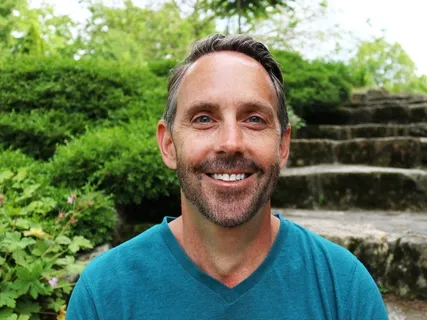
Welcome to Life,
Lessons and Laughter with your host Glenn Ambrose.
Hey everyone,
Welcome to the show.
Today we are talking about everything childlike.
We're talking about looking at things like a child,
The faith of a child,
Things like that.
Right,
Ben?
Absolutely,
We are.
Cool.
Yeah.
Cool,
Cool.
Should we talk about why we're doing this?
Yeah.
Alright,
So first of all,
To everybody who for years has said Ben sounds like he's sick,
Today that might actually be true.
Excuse me.
I'm not,
But the allergies have been killing me.
It's August when we're recording this and AC to heat,
AC to heat,
AC to heat,
And I've been hosting a lot of stuff.
So luckily today is the best,
My voice has sounded all week though,
Which is fortunate.
Yeah,
Sounds pretty good.
Yeah,
So I told you a couple weeks ago when you and I were having a conversation off air that the three year old that I live with has a phrase that he says over and over and over and over and over and over.
And to the point where it's annoying,
But also to the point where I,
You know,
Maybe the only one,
But I found it like inspiring.
And I was like,
I think there's something here.
So I told you about it.
And he kept asking,
He asked,
What are we going to do today?
Yeah.
All the time,
You know,
It doesn't matter if it's six o'clock in the morning when he wakes up or 755 at night when we're trying to put him to bed,
You know.
Ben,
Mom,
What are we going to do today?
And what are you and me going to do today?
And I was like,
I think that you could take that as like a,
As like a,
A mantra,
A mantra.
Yeah,
You know,
Like,
Everybody should wake up and go,
You know,
What are we going to do today?
Yeah.
So I thought that that was cool.
And then this morning when I was doing my,
My journaling with the five minute journal,
I was trying to think of things that would make today great,
Which is one of the things that it asks you.
And I just said,
You know,
I'd like to,
I have a long to do list today.
And I just said,
You know,
I want to enjoy everything along the way that I have to do today,
Like a child.
And,
And then in the affirmation part,
I said that I think that that's a good thing because I,
I'm,
I feel like I'm somebody who kind of looks at life almost through the eyes of a child,
You know.
And then,
And then when I was doing one of the errands that I had to do this morning,
I was listening to an interview with somebody who I look up to and they were talking about how he,
You know,
Is writing orchestral music and wrote a Broadway show and does all this other stuff.
And he said that he likes being a beginner at things and that he,
He enjoys,
He tries to keep himself childlike without being childish.
Yeah.
And all of those things combined,
I was like,
I gotta talk to Glenn about this.
Yeah.
Yeah.
There's definitely lots of signs pointing to it.
And it's,
You know,
One of the best things that I think we ever do when,
When we're off the path is kind of get back to basics,
Which is very similar.
You know,
It's,
Life is supposed to be simple and,
You know,
We're the ones that make it complicated.
So I think that that's why the references to children and childlike is so effective and strike such a chord to us because,
You know,
There's not a lot of worry.
I mean,
It's just,
Hey,
What are we gonna,
What are we going to do today?
You know,
And it's just like the,
The energy behind that is like,
The world is your oyster.
Like we could get to do so many cool things.
And,
You know,
When you're,
When you're a kid,
It's,
It's like,
You know,
A summer day can be a lifetime.
You know,
Be like,
Remember that day we,
You know,
I mean,
I,
I can kind of go there in my own head when I think back about my childhood,
You know,
It's like,
We'd walk down the street and go to my friend's house and get them.
And then,
You know,
Then we'd walk down to the store and get some snacks.
Oh my God,
You know,
And it was so exciting and you could get whatever you wanted.
And then you'd walk across the street and see who was at the playground and talk to a couple of friends.
And then go back up and then go swimming and then dry off and then have lunch.
And then,
You know,
And it was just like this adventure to adventure to adventure.
And,
You know,
It was such a,
Like you squeezed in a whole vacation in one day and everything was exciting,
You know.
Something that I,
This is kind of almost the opposite of what you said.
When I,
Sometimes when I'm meditating or when I,
Like,
Anytime I just stop to think about something,
Right,
Like,
I think that I used to notice things a lot more when I was a kid.
Right.
So like last week,
I was printing,
I had a bunch of stuff that I had to print in our other room over there.
Like,
And there's two ceiling fans and I was sitting on a couch waiting for the thing to finish printing and it was a lot of paper and I had nothing to do.
My phone died.
Like I was doing nothing.
And I looked up at the ceiling fan and I was just watching it.
And in that little moment,
I was like,
I used to notice things like this all the time when I was a kid.
Like it felt like you had all the time in the world and you just noticed,
Like I used to really notice like the legs on a table.
You know,
Like what,
Oh,
That leg on a table looks a certain way.
And like,
I bet it feels a certain way.
I remember like thinking about how the leg of that table felt and like just these little thoughts,
These little thoughts that were everything when you were like eight.
Yeah,
Because everything was new,
You know,
To some degree and we're still learning,
You know,
Kind of like the dream of the planet where everything's labeled.
And,
You know,
Now you look at a table leg and you go,
Oh,
It's a table leg.
And then that's its label.
So,
You know,
The texture of it and how it looks and the shape of it and how hard it is,
It doesn't,
It's like you never dive into it that deeply to explore it and to connect to even its essence.
It's a table leg and you move on with your life because your brain knows what it is.
So it's like,
What's,
You know,
Oh,
Look at over there.
Oh,
It's just a table leg.
Oh,
Okay.
Well,
That's not interesting.
I've seen those before.
What's something else?
You know?
And it's like,
You know,
So,
And that's why,
You know,
Labeling things is one of the,
Well,
I don't want to say it's the worst thing we can do,
But I mean,
It's just,
It does suck the essence out of life,
You know?
And it's a good,
But it's also a good practice to bring,
Connect back to the essence of life is look at things without labels,
You know,
And it works usually more dramatically on something alive.
Like stop labeling a person,
Stop labeling a tree and just look at them,
You know,
Or a plant with open,
With an open mind,
Not thinking that,
Oh,
It's just a tree.
Well,
I don't,
You know,
Just,
Oh,
I don't know what it is.
It's wow.
It's just a,
This big thing and wow.
And like when you're not labeling it,
All of a sudden you start connecting to the actual essence of what it is because it's more than a tree.
You know,
We're more than just people.
We have a life force that flows through us,
An essence to us.
And when we take the label off,
I know what this object is.
It's an object called the person or an object called the tree.
When we take that label off,
All of a sudden the grandiosity of its essence can start coming through and we can actually find it interesting,
You know,
And kids walk around like that.
Yeah,
Absolutely.
So,
How do you like,
What are,
Is that something that you try to practice in your own life?
And if you do,
How do you,
How do you do that?
Like,
How do you try to get back to that?
Because it's really difficult.
Yeah,
I mean,
It's,
It feels like it's simplifying things.
Yeah,
It is.
And that's,
You know,
I mean,
That's one of my favorite spiritual laws.
I mean,
If you want to get closer to the truth,
Simplify.
No,
If you want to get further from the truth,
Complicate.
So it's,
That's any way we can do it is helpful.
And sometimes mixing up the ways we do it is helpful.
That's why there's so much overlap in spirituality that I think oftentimes we're looking for the key.
You know,
We go,
Oh,
Well,
Like,
You know,
How do I,
You know,
Is being like a child the key?
So,
Oh,
Hopefully that's the key.
So how do I do that?
And it's like,
Well,
It's not the key.
It's just another way of doing the same thing that we're always trying to do.
You know,
Not labeling is connecting to the essence.
Well,
What's that?
Well,
It's like looking at something like a child.
Well,
What's that?
Well,
That's like being in the present moment.
Well,
What's that?
That's like,
Well,
That's not having no concept of time.
Oh,
And you know,
It's all the same thing.
It's just different ways of phrasing it,
Different ways of pointing to it.
So,
But,
You know,
Children are such a good example.
They're a living example.
So sometimes that living example is a wonderful way to connect us back to what we're trying to do.
And that's,
You know,
Just looking at things in amazement and forgetting about the concept of time.
They have no concept of time.
You know,
It's just,
They're like,
You know,
It's time to eat.
And they're like,
I'm not hungry.
Thank you though.
You know,
And then we're like,
No,
It's time to eat because it's six o'clock.
And it's like,
Well,
Yeah,
But I'm not hungry.
And,
You know,
Unfortunately as we condition now to use to society's rules,
They learn to not trust themselves.
Right.
You know,
So it's like,
You know,
They're sitting there going,
I'm not hungry.
So therefore I don't need to eat.
And we're saying like,
Well,
No,
There's a certain time to eat.
And what that means is basically you cannot trust the signals that your body's sending you.
How do you combat taking that away from them?
I know that this show is not about,
You know,
Parenting.
But like,
How do you,
Is there a way to stop us from losing that or stop future generations from losing that sense of awe or sense of instinct?
Well,
I think it's like everything else.
I think it's a gradual part of the shift,
You know,
Because I mean,
I,
You know,
My son was two.
Yeah,
He was like two when I woke up,
Two or three.
So like,
I knew a lot of this stuff and here I am raising my son and I found myself regularly caught in those,
That crossfire like,
Okay,
You know,
Am I stripping the actual truth from him to teach him society's rules?
And a lot of times,
You know,
It was a little confusing because I didn't know which way to go.
But I mean,
The fact is,
Is we have to function in the society.
So at this point,
I don't think you can walk around with a kid that just has no concept of time or,
You know,
Stuff like that and expect him to fit into society because we use time for everything.
So,
You know,
Never be able to hold a job.
He'll never,
Because he'll just be doing things,
You know,
And I mean,
Is there a way for somebody like that to function in some degree?
Maybe they might just naturally find their,
Maybe they might start their own business naturally just because it's what feels right to them or something.
You know,
I don't know.
I don't know all the answers,
But I think that right now,
I haven't found a way to just teach spiritual law and not teach a child how to fit into society also.
I've tried to blend the two and I've also tried to explain it as I blended it,
You know.
So I would try to like explain to him,
Hey,
You know,
This is society's way of functioning.
So this is why you need to do it that way.
I understand that,
You know,
Like you don't want to sit in a classroom for seven hours a day.
And I understand that is boring and I understand that you get restless and that's all normal.
There's nothing wrong with you for feeling restless or bored or wanting to not sit in a classroom for seven hours.
I get it,
You know,
That's natural.
So don't feel like there's something wrong with you.
This is just how society is set up right now.
So,
You know,
That's what I tried to do.
I tried to separate it and just go,
You know,
There's nothing wrong with your natural feelings,
But society is having you do this at this particular moment.
So you need to do that,
You know.
Absolutely.
So when you have kind of,
You know,
Strayed from that,
When you have grown up,
As we all do,
What are the ways that you use to get back there?
Like what are some tools?
I think,
You know,
Actually,
I think we just kind of came into it on the back door and that is just looking at it and going,
You know,
The problem isn't so much that society has set ways of doing things.
The problem is that we identify with these ways of doing things as truth and right and stuff like that.
So what I just said really is the biggest,
One of the biggest parts of that is separating and going,
Well,
I'm doing this because this is the way society is set up.
I understand that it's not actually true,
You know,
It's just a dream that every bunch of people agreed to believe in,
You know.
So if everybody agrees in it,
It's kind of the way that society goes,
But it doesn't mean it's actually true.
So it's the same thing with ourselves understanding that,
You know,
We're spiritual beings having a human experience.
We're spiritual beings and we also have an egoic identity of who we think we are.
There's nothing wrong with having an egoic identity.
There's nothing wrong with playing the role of father or teacher or life coach or son or friend or those are all roles that we play.
And there's nothing wrong with playing those roles while we're here.
The problem is when we identify with that's who I am,
You know.
So knowing that you're a spiritual being playing these different roles through life,
That's where you find the healthy truth because that's the truth of it.
You're an eternal spiritual being.
So anchor into that as who you are and then understand that the other things are just roles that you're playing.
It's the same with society's rules,
You know,
You can understand that like,
You know,
You're playing society's game,
But there's laws that actually run everything.
This is just the way society does things.
So you're not overly identified with that being actual truth because it's not.
Yeah,
Absolutely.
So again,
Back to the looking at it like a child,
You know,
Like a child will,
Especially if they trust the person they're with,
They'll do stuff that they're told to do.
That's society's ways.
Right.
Without being overly consumed by it,
You know,
It's like,
Oh,
It's time to go.
And I mean,
Assuming the kid's not completely engrossed in what they're doing,
It's like,
Oh,
It's time to go.
We're going to go have another adventure somewhere else now.
They go,
Oh,
Okay.
You know,
Like,
Yeah,
It's like,
Just,
Oh,
We're going to wander over here and do something fun over here too now.
Okay.
And they just go,
You know,
And that's kind of how we need to be looking at things.
And like you,
When we started,
You said,
He says,
What are we going to do today?
And,
You know,
One of the tools that has been used in spirituality is saying,
You know,
Just tweaking the phrasing of that to get what he means out of it even more.
Because adults need to specifically say things a specific way to get the specific meaning.
Kids are like,
What are we going to do today?
And the energy of what are we going to do today is open.
You can feel it,
You know?
An adult,
A lot of times,
Has so much meaning attached to the words that they need to tweak their words a little bit so they can say,
What do I get to do today?
And that changes it from what are we going to do today to what do we get to do today?
It completely changes the energy of the sentence,
You know,
Where a kid is already there but can tweak a word and really get closer to the meaning that they want.
This is good stuff.
Did you want to touch on any of the things that you,
You looked up some things right before we started recording.
Do you remember what those were?
Yeah,
It was just kind of the faith of a child and stuff like that.
Really,
It was looking at things,
Number one,
Simply,
And number two,
You know,
It's the same mentality of the faith of a mustard seed.
You know,
Oftentimes as adults,
We say we just make things so big that we can't accomplish it.
You know,
And somebody says,
Oh,
You know,
You really need to have faith and trust.
And they go,
I can't,
It's too big.
I want to have faith.
I want to trust,
But I can't.
It's just,
Oh,
It's like,
It's like it's,
That's not,
That's not what you need to do.
It's just that,
You know,
The faith of a child,
Just the faith of a mustard seed,
Just a little bit.
Just step away from the worrying a little bit and attempt to simplify things and just have a little bit of simple,
It's like a hopeful expectation.
You know,
That's what kids do that,
You know,
They wake up and it's a hopeful expectation.
They're not looking around going,
Going like,
You know,
What do I need to protect myself from?
Right.
You know,
But yeah,
Adults,
That's usually how we're walking around.
And then we wonder why we keep seeing things to protect ourselves from.
It's because we're walking around literally looking for things to protect ourselves from.
Yeah.
I mean,
I saw that,
I've seen that with doctors and,
You know,
Our medical system points in that direction.
It's like,
Well,
Let's do 352 tests to find out if there's something wrong because if there's something wrong and like,
This is,
I think this is a good example of this because it kind of shows both sides and how I work through it.
It's like my,
I don't go looking for problems.
It's just not,
You know,
It's not my nature.
I mean,
I was more of an optimist when I was younger.
Kind of identified with more of an optimistic view.
And then,
You know,
Of course I went through my dysfunctional 20 years and there was a lot of pessimism in there,
You know.
I like that you didn't say your dysfunctional 20,
Is it your dysfunctional 20 years?
Yeah.
Yeah.
Okay.
Yeah.
That was like from 15 to 35.
Okay.
So,
I mean,
During that point,
I mean,
I guess my nature somewhere underneath was more as an optimist,
But I lived very pessimistically through that time.
So I've kind of seen both sides.
You know,
When my son was growing up,
He was small and at some point,
Right before he hit puberty,
They went and they did all these tests to make sure that there wasn't anything wrong with his growth.
And I was like,
The first day I walked in to the endocrinologist and I was like,
Could it just be that my side of the family is small,
His mother's side of the family is small?
I hit puberty late,
My father did,
He's probably,
You know,
Could it be that?
And they're like,
Yeah,
You know,
It definitely could be.
And then through all the,
You know,
A year and a half of testing and comparing and him hitting puberty and,
You know,
So the,
You know,
The hormone levels changing and comparing that.
And they go,
You know,
Then they go,
Oh,
The first day you walk in here,
There's nothing wrong with him.
And it's just probably that he comes from a small family and he's hitting puberty a little later.
That's it.
So,
You know,
Like the part of me at first,
I'm going seriously,
Like we went through all this.
And,
You know,
God knows how many tens of thousands of dollars were spent that somebody made on all this testing and stuff.
And a part of me was like,
This is ridiculous.
You know,
Like when I was growing up,
I experienced the same thing.
I didn't get any tests.
You just waited it,
You know,
A year.
Right.
Absolutely.
They should have tested you for other things though.
Yeah,
No kidding.
But,
You know,
So at first I'm looking at it from my perspective and I'm going,
Well,
You know,
This is ridiculous.
They're looking for a problem and all this stuff.
But then,
You know,
I always try to make peace with a train of thought.
And I looked at it and I'm like,
Well,
What's another way to look at this?
I said,
Well,
You know,
What if there was something wrong with him?
What about the kids that are having growth issues that technology can find out about and fix at an early age so they can get the help that they need so they can grow at the normal rate and live a more normal life and all that stuff?
It's like,
Well,
What about those kids?
It's like,
Oh yeah,
So maybe the testing was worth it.
Yeah.
You know,
Because if there was something wrong,
They could have caught it and stuff.
And it's like,
So I mean,
I understand that,
But then that's kind of,
So that's both sides of the coin.
And then it comes back into the way of thinking,
Looking for problems or not.
And at the end,
The endocrinologist was like,
Well,
Would you like to check in every six months or do you just want to get in touch with me if there's a problem?
And I'm like,
Now,
I would just like to get in touch with you if there's a problem.
I don't want to go looking for one.
That's not how I live my life.
And I think that that's something as adults we need to get away from and get back more into a childlike mentality.
They're not looking for problems to try to protect themselves from them.
If there's something wrong,
Then you go,
You know,
Then you address it then.
But you don't have to,
We don't have to go looking.
Kids assume everything's fine.
Yeah.
Which is awesome.
So everything is fine right now for listening to this podcast.
I don't have a segue to the end.
I don't have a segue to the end.
Are we done?
Yeah,
We're done,
Man.
I had no idea where we were on time.
Oh,
Yeah.
It's hard when we're not in person to give you the cues.
Yeah.
Because also.
I'll have to start using a timer after what,
Four or five years?
I'll start using a timer.
There you go.
Because we're also not,
We're,
So we always,
You know,
We record these now on video chat and we're starting to record them.
So I didn't want to like flash a video.
Yeah.
We're starting to video.
Yeah.
We're starting to video record the shows.
So I didn't want to like flash you like a five minutes left,
Which,
You know,
I could have done.
I could have sent you a text message or something,
But yeah.
So the reason why we're recording these on video now is if you'd like to support the show,
There's a new way to do it.
We'll announce all the details and stuff later,
But by the time you're listening to this,
You can definitely go check it out already.
You can follow Glen Ambrose on Patreon.
Yeah.
So it's patreon.
Com slash Glen Ambrose.
And we've got some cool stuff there and some different ways that you can support the show and some exclusive content that you can get.
And some video versions of shows and some messages from Glen and all sorts of stuff.
So I'm really excited about that.
Yeah.
Yeah.
I'm pumped.
I'm excited to get that up and running.
So we're,
You know,
Excited like children.
Yes.
A childlike enthusiasm,
If you will.
There you go.
All right.
And of course you can support the show,
All of the other places that you usually do iTunes and Spotify and all of that stuff.
Leave reviews,
Please.
Comment all of that stuff.
So Glen,
Anything else?
Just,
I think it's just really,
If we kind of get in the mindset of looking at things like a child and we pay attention and we spend some time thinking about it,
Our answers are going to come to us.
So like if you're in a situation and you're feeling stressed or you're just going to walk through your day reminding yourself over and over,
How would I look at this like a child?
How would I deal with this like a child?
How would that child look at that?
Like if you just asked yourself that question in different situations,
You'll see how being like a child would enhance your life in each particular situation.
And if for some reason you look at one situation,
You're like,
I'm not sure about this one.
All right,
Well,
Whatever.
Move on to the next one.
Do it again later.
So I think that that's kind of the best well-rounded version that you can implement in a lot of different areas.
Awesome.
So there,
I'm going to leave it with that.
Thanks for listening,
Everybody.
And we will talk at you soon.
Glenn is available for life coaching sessions.
To book an appointment or for more information,
Go to glennambros.
Com,
Follow him on Facebook and Twitter,
Or click the link in the description of this episode.