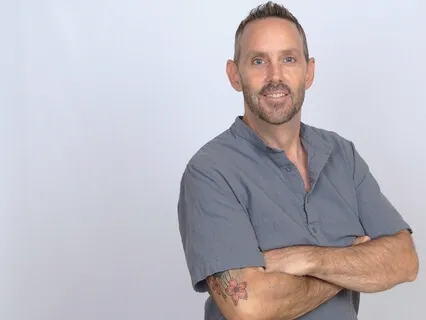
Welcome to Life,
Lessons and Laughter with your host Glenn Ambrose.
Hey everybody,
Welcome to the show.
So today we are talking about a non-issue.
We're talking about nothing.
I love that because we always do,
We always talk about,
You know,
Like the titles for the shows could be categorized as issues,
You know,
How to deal with this issue,
How to deal with that issue.
Today is the opposite of that.
Today we are taking the Jerry Seinfeld approach and we're talking about nothing.
There you go.
So we're talking about non-issues as opposed to issues.
And non-issues is really one of the most beautiful telltale marks that you've reached a spiritual place with that subject.
It's really hitting that place where things are a non-issue.
I remember when I.
.
.
The first time I really experienced it was in recovery.
So when you have something that's an issue in your life,
Like for me,
It was drinking,
And then all of a sudden you get to a place where it's just a non-issue,
It's completely freeing.
It's wonderful.
And to me,
That's really what recovery is about,
Is getting to that place where whatever used to be your problem is now a non-issue.
Because you can't hide from it.
If you've got an addiction,
It's going to find you.
So if you're triggered every time you go out to dinner or drive by a liquor store or experience a negative situation,
Then it's still an issue.
It's an issue that you need to deal with.
But once it becomes a non-issue,
Now all of a sudden you're free from the grips of it and you can go about your life without it being an issue.
People still ask me to this day,
Because I drank a lot,
Man.
When I drank,
I drank.
So people still to this day that knew me back then will occasionally bring up that and they're like,
What's it like?
Does it bother you if you're in this situation or if you're in that situation?
And I'm like,
No,
It's a non-issue.
I don't like tomatoes.
I don't.
I don't like that little larval stuff in the middle.
I'm a texture guy.
It grosses me out.
I don't like tomatoes.
But I don't run in fear of them.
If somebody has tomatoes at dinner next to me,
I don't care.
I'm not threatened by them.
They're a non-issue.
It's the same thing with alcohol.
It's just a non-issue.
It doesn't bother me either way.
I don't care if somebody is drinking right next to me.
I don't have a fear that the bottle is going to leap across the table and jump into my mouth and pour itself down my throat.
It has no power over me.
So that was my first experience with it.
And then as I worked through things spiritually,
I started seeing that it applied to a lot of things.
A lot of things that used to bother me are now non-issues.
They don't own me.
They don't rent space in my head.
I'm free of them.
I'm free of the grips of them,
Which is beautiful.
Like what?
Can you give some more examples of things that are no longer issues?
Because I think that the drinking one is a great one,
But it's a big one.
And that's fantastic.
And as someone who has.
.
.
You and I have gone to see Dave play together at a bar.
And it didn't occur to me until like halfway through that,
Oh yeah,
Glenn was an alcoholic and is at a bar.
Because it was such a non-issue for you.
You were fine.
It wasn't a thing.
It was completely normal.
There was nothing weird about any of it.
No,
I'll go meet somebody for happy hour.
Yeah.
Still.
Like now I will go meet somebody for happy hour.
I just don't drink while I'm there.
It's not an issue.
And if you can't do that,
That's a different subject.
Then it's an issue for you.
And we have other podcasts on that.
Right.
And I think that that is such a big.
.
.
I didn't know when I got into recovery.
I didn't know how that played out.
So when I learned that if it is still an issue,
Then there you could still do more work on your recovery.
But it was like,
Cool.
So then I knew that it was possible to get there.
And I don't think a lot of people know that in recovery.
I don't.
It's like people are like,
Oh,
It's 20 years later.
They're like,
Oh,
It's a day to day struggle.
And I'm like,
Oh my God,
20 years.
It's a day to day struggle.
That must be horrible.
Now,
I'm not saying that my way is going to be the exact way for everyone.
But my experience,
Not only mine,
But a lot of people I've worked with and been around,
It is possible to get it to that place where it's a non-issue.
So if you're not there,
I recommend doing more work so you can get there because it's really nice.
Well,
Let's put a pause on the more examples of some things that are no longer issues for you.
I want to go into how do you slow down enough to recognize that it's no longer an issue for you?
Like what's the.
.
.
Well,
It's usually,
It's actually one of the things that I enjoy about the spiritual awakening process is that you don't go about noticing that you're aware.
All of a sudden you just wake up and you are.
Like one day you just wake up and you go,
Oh my God,
I haven't thought about this for days or weeks or months,
Whatever it may be.
And of course that can vary depending on the topic that we're discussing.
But you just wake up one day and it dawns on you that it's no longer an issue.
Then you start trying to figure out when the last time it was an issue was.
Because you're curious.
It's like,
Oh my God,
This isn't an issue?
It used to be an issue.
It used to absorb my thoughts.
It doesn't.
I wonder when did that happen?
It's like,
It's really exciting and fun to get to that point.
But I think that that ties in to kind of the,
I don't know if it's the last step,
But a part of the process of making things a non-issue.
And part of the process is to stop keeping score of everything.
To stop seeing where you are.
Because what we do is,
We'll take something that we're trying to make a non-issue.
Let's just mix it up because I don't want to talk about recovery the whole time because that's not what this is about.
So let's say it's a relationship that ended.
And you're sitting there and you're thinking about your ex.
And then all of a sudden,
One day you wake up and you realize,
Oh my God,
I haven't thought about them for a few days or a week or two weeks or something.
Oh my God,
How did I get here?
And it's wonderful.
And one of the things that can block us from transcending things to the point that they are a non-issue is when we are constantly keeping score of where we are with it.
We go,
I'm not going to think about them.
I'm going to try to transcend this.
And there's mistakes right there.
I'm going to try to transcend.
You can't try in spirituality.
It's not about effort in the way we're talking.
And when we're in that mindset,
When we're really trying to accomplish something in a linear mentality with spirituality,
We put all this effort and trying in.
And basically with that mindset,
It's just manipulation.
We're trying to manipulate the spiritual system to get to the desired outcome.
I'm going to really not think,
So then I'll get to the place where I'm not thinking.
Okay,
Go.
And it doesn't work that way because you can't.
You either transcend or you don't.
You either let go or you don't.
It either becomes a non-issue or it's not.
You can't try to get there to do something so you get to the place where it's no longer a non-issue.
Because all that trying to get there is just manipulating the system to get you what you want.
So it's about doing the work.
It's not about achieving the outcome.
So that's why you don't know when you did it because you're not checking every other day to see if you got there yet.
Did all that work that I put in give me what I want yet?
Ah,
No,
Not yet.
I'm still thinking about her.
Damn it.
Okay,
I'll try to manipulate the system for a few more days and see if that works and gets me what I want.
So it's about,
Like a lot of things,
All work is inside work.
So it's not about taking an outside issue and trying to do something with it outside of you.
It's about turning inside and like if,
We'll use the relationship for an example.
If,
Like what I do is the replacement.
I just think replacement technique is important because don't think of the color red.
You think of the color red.
So after I broke up with a relation,
In a relationship at one point years ago,
I was sitting there and I'm like,
Okay,
Well,
I think about her a lot.
How,
What can I do with this?
So I need to replace it.
Okay,
So whenever I think of her,
I'm going to use that as a red flag for me to connect because that was my source of intimacy for a while.
So now I'm going to get my source,
My intimacy from God,
From my connection with the universe.
So every time I think of her,
I would connect to God and I would just take a few seconds and feel love.
And then I'd be like,
Okay,
Then I'd move on.
Then I'd start my car and then I'd start backing out and then I'd think of her again.
And then I'd be like,
Oh,
Red flag,
Think of God.
All right,
Okay.
Then I'd finish backing out and drive and then I'd turn the corner and then I'd think about her again.
And then I'd do it.
So in the first few days,
It was like constant.
But what I was doing was constantly connecting with a source of unconditional love.
And after a while,
I noticed that I wasn't doing it as much.
Like I don't even know what I noticed first.
That I wasn't connecting to source as often or if I wasn't thinking about her.
But they obviously tied in hand in hand with each other.
And then all of a sudden I realized like,
Wow,
I haven't been lonely in a long time.
It's like,
Oh,
That's because I've connected to source so often that I know that there's unconditional love there for me all the time.
So I'm not feeling like I'm missing it.
It's right there.
But that was part of the aware process.
But I didn't say,
Okay,
I'm going to do this for three days and then see if I'm not thinking about her yet.
So I just kind of fell into the work,
Into the technique.
And I just said,
I'm just going to do this technique.
I didn't say I'm going to do it for a certain period of time or I'm going to do it and see if it works.
And that's something that we have to be conscious of in this type of work that I'm talking about.
Because we just like,
I can't count how many times I fell into trying to manipulate the universe to get what I wanted without knowing that I was doing it.
I thought I was working on myself.
So once I realized that I was doing it and I started focusing on just doing the work with an unattachment to the outcome,
I'm not attached to how it plays out.
Then I just do the work and the work does its thing on me all by itself.
And then I wake up one day and I'm like,
Holy crap,
This is a non-issue.
And breathe.
All right.
Well.
.
.
All right.
Thanks for playing.
Yeah.
Before I move on to the second aspect of this that we wanted to talk about.
So you talked about recovery,
You talked about getting over a relationship.
What are some other things personally for you that you've noticed are non-issues now?
Also,
Can you hear the rain in the background for me?
Because it is.
.
.
No.
I can't hear it.
So it's such a bad storm outside.
Go ahead.
That's how it was last night here.
But no,
I can't hear it,
So that's good.
Yeah.
I think,
Honestly,
A lot of things are non-issues.
Right.
I mean,
They're so non-issues that I don't think about them,
So I don't know what they are.
But I mean,
No,
You can use it in a lot of situations.
I mean,
One that's kind of recent is my son just graduated high school.
So I was kind of like,
Okay,
Now what?
And he's not sure what he wants to do.
So of course,
My parenting slash life coach comes flying in and wants to control the situation because I love him.
But I know I can't control it.
So I try to be clever and pretend that I'm not trying to control it because there's all that emotion around it.
So like when I was in there going,
Well,
When I was incessantly thinking,
What would be good for him?
What can I expose him to that he might like?
What should he do?
When I was constantly thinking about that,
I was stressed out.
I started getting frustrated with him because he wasn't taking action like I take action.
And because he's behaving differently than I would behave.
And it was a little bit difficult.
And then when I stepped back and gave it some space.
I've got to take a sip of water here.
That's all right.
Water Break is brought to you by,
We need a water sponsor.
Yeah,
We do.
A little help with the water sponsors.
I'm trying.
So yeah,
When I stepped back and then started going,
You know what?
I'm just going to take care of my own energy.
And because acting out of frustration is no good.
So I'm going to take care of my own energy.
And then when I'm in good space,
Then I'll address the issue.
If he sits on his butt for a month while I'm working on my own energy,
Who cares?
He just graduated high school.
It's summer.
Give him a month.
So once I stopped focusing on the external and I started focusing on myself and just stopping myself from obsessively thinking about him and what he should be doing and just got myself into a happier place,
He actually felt the release of pressure.
And all of a sudden,
He started thinking about things and coming to me and going,
Hey,
What about this?
Hey,
I was thinking about this.
But I think he could feel my pressure.
And then so it became a non.
.
.
Once I did the work on myself and stopped focusing on it and focused on myself being in good space and being grateful for him and what we have and our relationship and how good of a kid he is and all this stuff and just got myself into better space,
Our conversations picked up.
He felt freer to discuss things.
I felt freer to discuss things.
The conversations went better.
It was just.
.
.
But I had to get to a point where it wasn't this problem that I was trying to solve.
So it got to that place of a non-issue.
So we can do it in just about.
.
.
We can do it in a lot of areas in our lives.
Okay,
So we've talked a lot about recognizing that things are not an issue anymore.
And we've talked about how to do the self-work to get things that are issues to become non-issues.
We've talked a lot about those two aspects.
What about realizing at the beginning that something is not an issue that you.
.
.
I feel like a lot of times,
Myself included,
I feel like a lot of people put a lot of mental energy and anguish on stuff that they don't need to be worried about.
I feel like a lot of us create our own issues.
So how do you go about recognizing when something doesn't have to be an issue for you?
Well,
Slowing down and taking a look at it.
I think for me,
I really gained a big leap in this area in my first year of waking up.
I had this idea that I was going to be honest.
And I wasn't really dishonest.
I think I was more honest than most people actually,
Except with myself,
Of course.
I was wrapped up in an addiction before that.
But as a general rule,
I was a pretty honest person,
I think.
But I decided I wasn't going to tell any lies,
Not even little white lies,
To make things easier.
It was dishonest and I didn't want to be that person.
So when I started doing that,
I also didn't want to go in the direction of being brutally honest because I had tried that once in my life and that's really ugly.
You can lose friends and acquaintances in record time by being brutally honest.
Some people that get into it,
They tell themselves,
Oh,
I'm just being honest.
No,
You're being a jerk.
There's a big difference.
If you're trying to be honest without being brutally honest,
Then a lot of things you're going to find,
Your opinion is not required.
It's not necessary and it's usually not even wanted.
So this,
No,
I'm just being honest.
Hate me if you will mentality doesn't fly.
There's a thing with,
It's a great meme,
I think it might be a Buddhist philosophy about asking yourself three questions.
Is it nice?
Is it necessary?
And will it help?
I think those are the three things.
And those are big questions.
Is it necessary for us to give our opinion on certain things?
And a lot of times the answer is no.
Will it help?
A lot of times the answer is no.
And when you start asking yourself those questions along with,
Is it honest or is it kind?
And is it kind also?
I mean,
A lot of times,
No,
It's not kind.
Okay,
Then you don't necessarily have to say it then.
Just because it's true,
There's lots of things that are true.
Doesn't mean they have to be jammed down somebody's throat.
So when you start coming at it from that approach,
I learned that when I was trying not to lie but trying not to be a jerk all at the same time,
I was like,
Wow,
I really should shut up a lot more than I realized.
And for me as a talker,
For that first year,
I talked dramatically less because it took some getting used to.
And I started understanding where my input was necessary and where it wasn't.
Because I wasn't going to lie and I wasn't going to sugarcoat things,
So I just found myself not speaking more.
Of all the tangents that you've gone on during a show that were off topic a little bit,
That was the best one that could be and probably should be its own episode of a podcast living honestly.
That's actually a really good one.
We should do that.
Yeah,
We should definitely do that.
I did already.
I wrote it down five minutes ago.
All right,
Good.
So what the hell was I talking about?
So how do you look at something and go,
That's not an issue I need to get involved with?
That's not something that needs to be an issue for me.
Asking those three questions,
That's one great way.
And it's just taking a step back,
Pausing and looking at the situation.
Is this necessary?
Do I need to get involved in this?
Michael Singer does a nice job talking about it in The Untethered Soul.
He talks about leaning back.
So when drama unfolds,
There's a moment when something happens and you have a choice in that moment to lean into the drama of it or to lean back away from it.
And if you lean away from it,
It just puts a little space in between you and it.
And it's weird talking,
Of course,
We're recording this on video.
And it's like you can actually physically do it as well as emotionally or mentally or spiritually doing it.
Physically doing it actually kind of helps you internally do it.
But you can just lean away from something when it starts happening.
And it does.
It creates this little space and you're looking at it instead of diving in and being involved in it.
And right in that space,
You can choose,
Do I want to lean into the drama of this situation or do I want to lean back?
And most of the time,
You can lean back.
Most of the stuff that we get involved in on a day-to-day basis,
We don't need to.
It's just a bunch of drama.
And when you stop playing around with that,
You get better and better with it.
And with social media now and all of the,
I mean,
There's more issues.
There's more social issues.
There's more political issues.
There's more fun entertainment-based issues that people argue about.
I mean,
There's so much.
We recently did a show on social change and we talked about that a little bit.
And you did a vlog about how to handle arguments based on a podcast we did a long time ago.
And there's so many things that you have to choose to engage with or not engage with.
Yeah.
Yeah.
And I mean,
If I see a post on Facebook that says,
I can't believe it when I scroll past it.
It's,
You know,
Because nothing,
It doesn't get better from there.
You know,
Or don't you hate it when scroll,
You won't believe this scroll.
Like 90% of the stuff.
It's,
I mean,
Granted my feed doesn't have that much of that stuff anymore because I mean,
If it's incessant,
I just blocked the,
I still stay friends with people.
I just blocked their feed because it's not what I'm interested in.
You know,
The constant complaining about things.
It's just not,
I'm just not interested in hearing it or seeing it.
So,
You know,
I'll just block their feed.
But it's,
Yeah,
It's choosing what you want to lean into and choosing what you want to lean away from.
And once you,
It's just,
You know,
Like most things,
It's playing around with it.
You know,
Sometimes we get too caught up in fully understanding something before we try to implement it.
And it's just,
This is just concepts leaning away.
Like there are no words to actually describe what we're talking about.
Yeah.
You know,
These are just signposts.
So if you have some vague idea about maybe possibly what I might be talking about,
Kind of,
Sort of,
That's perfect.
Good enough.
Just go in there and try playing around with it.
And then all of a sudden what happens is all of a sudden you do it.
And you're like,
Oh my God,
I did it.
Well,
What did it seem like?
What did it feel like when I did it?
I don't know.
I can't put words to it.
It was just kind of like I kind of leaned back or I thought before I spoke.
I paused and then decided whether I wanted to or not.
I think that that's a great philosophy also for dealing with interpersonal relationships,
You know,
Romantic or otherwise.
Just like what are you going to let be an issue?
Because everybody has issues in their relationship.
But it doesn't have to be like you stack the dishwasher wrong,
For example.
You know,
Like you can go,
Does this matter?
Is this important?
Will this help?
You know,
A lot of what you talked about,
About the honesty thing.
Like do I want to engage with this and make this an issue?
Or does it really not matter at the end of the day?
Right.
Or is there a way that I can slightly engage and try to not make it an issue?
Right.
Stay solution based and not problem based.
You know,
That's another technique.
And,
You know,
A little exercise you can do too is just,
You know,
Take out a piece of paper and write down all the things that are bothering you.
Just everything you can think of that bothers you.
And maybe both sides for some people.
You know,
I think there's 25 lines on each side of an 8x10.
That's 50 things,
Man.
If you can fill up 50 lines,
Just stop at 50.
But then just fold it up,
Put it in an envelope with that day's date on it,
And then a date two weeks from now.
And put it on your fridge or something and open it two weeks later and see how many of those problems are non-issues now.
It's probably 75% of the stuff that you worry about is a non-issue.
You know,
We have to remember,
I think this is a key point.
You have to remember that worrying is not helpful.
It doesn't help solve things.
Worrying is so tied,
In a lot of people's lives,
Worrying and taking action are so tied together that people think that they're the same thing.
And they're not.
When there's action necessary,
You can take the action to solve a problem.
Worrying about it and obsessing over it and thinking about it and judging it is bad.
None of that does anything to work towards the solution.
All it does is send negative toxins through our body on a minute-by-minute basis,
Strips our immune system of its ability to work,
Brings in disease,
You know,
Colds.
So it does all kinds of stuff,
But it doesn't help solve the actual problem.
So we can put aside all the worry and the stress about things and still actually take action when it's necessary.
But most of the stuff we don't need to be thinking about.
It's going to solve itself.
Yeah.
All right.
Well,
We're out of time for today.
So,
Whew.
So I guess we could do a whole podcast on this topic.
Yeah.
Proven.
Yeah.
Good thing we didn't worry about it.
I know,
Right?
So anyway,
Yeah,
Well,
Let's talk about where people can find you and stuff.
Everything that you do,
The blog,
The vlog,
All of that stuff can be found on Glenn Ambrose.
Com for life coaching.
All of that stuff.
If you want exclusive content,
Video versions of Life Lessons and Laughter,
Early releases of stuff,
Behind the scenes stuff,
We just did a Q&A.
That'll be up when you hear this.
All of that stuff at patreon.
Com slash Glenn Ambrose,
Best way to support the show.
And Glenn,
Tell people about the new exclusive show when they sign up for your email list.
Five questions with Glenn.
Ben just drills me relentlessly as a vicious co-host.
I do.
And we just rip through five questions.
So,
You sign up for the email and that gets kicked out to you.
It's monthly,
Right?
So,
Life Lessons and Laughter is biweekly and the Sunday is that there is no Life Lessons and Laughter.
There's five questions with Glenn.
See,
Thank God I have Ben because he knows what I'm doing more than I do.
So,
Yeah,
So sign up for the email list and you'll automatically start receiving those five questions with Glenn.
That's a cool thing that we just recently started doing.
So,
Sign up on the website and I think that's it.
So,
Thanks for listening everybody and we will talk at you soon.
Glenn is available for life coaching sessions.
To book an appointment or for more information,
Go to GlennAmbrose.
Com,
Follow him on Facebook and Twitter or click the link in the description of this episode.