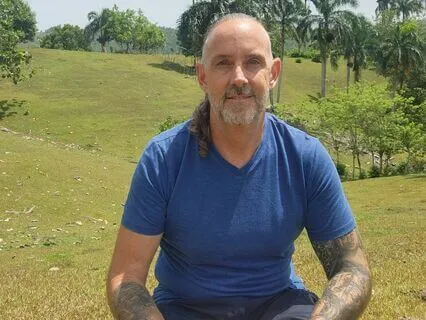
Welcome to Life,
Lessons,
And Laughter with your host,
Glenn Ambrose.
Hello,
Welcome to the show.
Welcome to the show.
You know,
These kids today,
Ah,
These kids today,
I hear that so often.
You know,
I guess I get used to hearing it when I was a kid.
You know,
My parents' generation,
My grandparents' generation were always going,
Ah,
Kids today.
So here we are,
You know,
Now I'm that old.
So it's all the kids today.
So I hear it a lot,
And,
You know,
I don't,
Of course,
Some of you that know me might have an idea,
But most people probably aren't going to know what to expect from this podcast because of the title,
Kids Today.
Of course,
The topic is,
I'm going to be talking about kids today.
However,
It's probably not what you think.
Because a lot of people see the,
Well,
They see the differences,
You know,
People just don't like change.
And every generation changes,
Like it's different.
And right now,
We're in the middle of this huge spiritual shift where the way we interact with life is literally changing.
Not to mention all the technological advances and stuff,
You know,
Technology advances based on previous technology,
Right?
So the speed increases because they use the technology to advance the technology,
You know?
So like,
If you had to research something for 10 years,
60 years ago,
You can research,
You can do that same amount of research in 10 minutes now.
So it's,
You know,
So that,
So there's,
My point is,
Is that there's lots of changes on lots of different levels.
And,
And unfortunately,
Our conditioning,
You know,
At some point,
We become our own jailers in our own prison.
So when we're growing up,
And we're,
We don't understand life,
And we're just kind of in the moment,
And we're,
We're living our lives the way we're living our lives.
And then these adults are like coming in going,
No,
You have to work hard and you have to you know,
You got to become responsible,
And you need to do this,
And you need to do that.
And you need to do this.
And this is unacceptable.
And all this stuff.
And eventually,
We,
We buy into that,
Because that's how society is set up.
And then we police ourselves.
So that's what I mean by we become our,
We become,
Excuse me,
We become our own jailers in our own prison,
Like we police ourselves.
And we drank the Kool-Aid and we go,
Oh,
This is how life works,
You know,
And then we have our own experiences to back up that that's how life works.
So you know,
So of course,
We're going to lean into that.
But like,
You know,
I think it's important to remember our childhood and how we thought and some of it is just how a child thinks and it really doesn't have much value in adulthood.
But some of it,
I think is really valuable.
You know,
I mean,
The faith of a child,
And you know,
Jesus talked about children all the time,
You know,
So,
So there's some things that we forget,
I think that it would behoove us to remember about our childhood.
So that being said,
I'll talk about the kids today,
You know,
That's kind of a general,
Some general points,
You know,
But every generation thinks their generation knows what's going on.
And a generation after them is a bunch of idiots.
Every generation since I've been alive,
And I've seen it in readings for many years prior to that.
So like,
It's just common,
You know,
But I don't like just going along with what society says is normal,
Because society is pretty dysfunctional,
In my opinion.
So I like to look into things.
And of course,
I raised a child,
I have a child that's 23 now.
So he's part of the kids today.
So and I'm very proud of my son,
Like,
He's now granted,
You know,
Like he he's an I think he's an amazing kid.
Of course,
I do,
Because he's my kid.
But like,
You know,
Other people see it,
Too.
He's a very hard worker.
He's very responsible.
He's highly capable,
Highly intelligent.
You know,
He just decided to move to Rhode Island from Florida and did it in like a week by himself.
Figured everything out.
He was visiting Rhode Island,
Booked the plane ticket back down to Florida.
Got a shipping company,
Got all his stuff,
Loaded it up,
Shipped it up,
Flew back up,
Received the stuff,
Found an apartment working like he like he did all this stuff himself in like a week.
You know,
It's amazing.
So so yeah,
You know,
Of course,
My outlook is going to be have something to do with that.
But but I also understand that not every child is like him,
Like that they're not functioning at that.
I thought there's my mind bell,
Which we don't need in the middle of a podcast.
So,
You know,
I really try to teach him how to be responsible as he grew and give him consequences,
Natural consequences for his choices.
And and,
You know,
Hopefully I did a good job.
And I think he's an amazing person anyway.
So that really helps.
So that's cool.
It's not that everybody isn't like that.
You know,
I see I work with kids sometimes and I also see other kids and talk with kids and find out what's going on in other areas.
And like so I have an idea of things.
And you know,
You hear a lot of like,
How do you not hear the complaining?
Right.
Of course you do.
Everybody does.
I see a lot of parents complaining about kids,
Not usually their kids,
Of course,
Although sometimes in certain situations and then bosses big time,
You know,
A lot of people my age are the bosses now.
So they're complaining about it.
Business owners,
Stuff like that,
You know.
So I'm seeing all this stuff.
But my life is not my life is based on spirituality.
My life is based on evolution of our species,
Which I believe is,
You know,
It's another way of saying the spiritual shift that's happening in the world.
It's an evolution.
Of the human species,
Because if we look at our world right now,
It's a really good time to understand that the way we live.
As a general rule is not working.
Right.
Our systems are set up just to funnel power and money upward.
Our government poisons us like,
You know,
The FDA is owned by the by the companies that support them.
Anything can be approved.
You know,
I saw some some skin thing on the news,
Some commercial news on some commercial on a sporting event I was watching being advertised.
And they said one of the possible side effects literally was death.
And it was for a skin issue.
So I'm going to risk death like.
What side effects does a medicine have to cause for it to be rejected by the FDA is my question.
Like oh,
You have a skin issue.
That's an inconvenience.
So I think a comparable thing is to give you a pill that you could die from,
But your skin might clear up.
So like,
You know,
And half of our foods are poisoned.
You know,
There's lots of foods that that we've been eating and we found out that the stuff they're putting in it in the 60s and 70s and stuff was actually poison and caused all kinds of diseases.
And it's so proven that other countries have made them illegal.
Therefore,
The companies who make the the products literally make a different product for other countries than they do for the United States.
That's mind blowing to me.
So these companies were selling these products.
They found out these other countries were like,
We won't buy your you can't sell it here because it's poison.
And they go,
Oh,
OK,
Well,
We'll make a secondary product with different ingredients.
Then will you sell it?
They're like,
Well,
Sure,
If they're not poisonous,
They go,
OK.
So then they do that.
But they don't change.
They don't take the ingredients out of the original thing.
They just keep giving it to people and there's no consequences.
It's so most people are unhappy with their lives.
The political climate,
We can see what's going on there,
Like the divorce rate is,
You know,
50 percent or higher,
Like most people don't like their jobs,
Like we're not living in a functional way.
We're destroying our planet like it's time to change,
OK?
It's time to change.
So we're changing,
We're evolving as a species.
That is what is happening with the spiritual shift.
So when evolution occurs.
Each generation of a species has different changes,
Right?
So we're evolving spiritually,
We're evolving with the way that we look at things.
Why?
Because we have to.
We don't have to evolve in a way where we grow a tail.
You want to know why?
Because there's really no benefits for us growing a tail.
That's why.
That's how evolution occurs.
It occurs when it's going to benefit the species.
So the way that the evolution is occurring is that we're looking at things differently.
We're coming in more spiritually open.
You know,
And this is what's happening more and more each generation are coming in.
I mean,
I've even seen a difference between,
Like,
I have nieces that are around 35-ish now.
You know,
So I guess they're probably at the beginning of the millennials,
We'll say.
I don't get too caught up with labels,
And these things overlap anyway,
So whatever.
But I see the changes in the people their age,
And I see the changes in the people ten years younger,
Like around my son's age,
And I see the changes in people even younger.
So what they're doing is they're coming in looking at things differently.
They've been raised with different information,
Which actually makes a difference,
Too.
It's not just all innate within them.
Some of it is innate within them.
Some of it is environmental,
The way they grew up.
The kids today grew up in a world where people were concerned about the planet.
So when you take a kid and you go,
Like,
For the first eight years of their life when they're creating their belief systems,
And they hear every once in a while,
Hey,
We shouldn't destroy the planet,
Hey,
We're doing bad things to the planet,
Hey,
We shouldn't do that to the planet,
That becomes a belief system in them.
And they don't question it,
Because it's just a hardwired belief system.
It's down in their unconscious.
So they just walk around through life.
This is why people like my age and older,
They'll debate,
Like,
Whether we should destroy the earth or not.
They'll be like,
Well,
You know,
Some of the things that they say that are good for the earth actually aren't good for the earth,
And some things are bad for the earth.
And like,
I don't know,
You know,
But then they say there's global warming,
But that's not true,
But it's natural global warming.
It's not because of the,
And they'll discuss it and have arguments and disagree and all this stuff.
And the kids,
They don't get into any of that,
They're just like,
We shouldn't wreck the earth.
Yeah,
But let's discuss,
They're like,
There's nothing to discuss,
We just shouldn't wreck the earth.
Well,
This isn't true.
They're like,
I don't care if that's true or whether it's not true.
I'm just saying we shouldn't destroy the earth.
Like,
I don't care why,
It's just a bad idea.
It's where we live.
Being where you live is not a good idea.
It's just not.
So I don't care if you want to say,
Well,
Solar power uses things that destroy the earth more than gas.
Like,
I don't care what your conversations are.
I'm not hung up on solar power.
I'm not hung up on wind power.
I'm not hung up on one thing.
I'm not hung up on whether global warming is being affected by human interactions or not.
Like,
All I'm saying is we should just treat the earth better.
That's all.
If there's an opportunity or a way to treat the earth with some sort of level of let's not destroy it attitude,
I'm for that.
Just period.
And of course,
We need to look into better ways and find out that,
You know,
Some of the ways we thought were good for the earth actually aren't good for the earth.
Like I get that argument,
But I'm talking about the kids today.
Like,
They're not going to argue with you whether solar is good or wind is good.
They're just going to be like,
OK,
Well,
If solar is bad,
Then we should do something different.
Like,
I don't care.
They're not hung up on a particular topic.
They're just saying we should treat the earth well.
And that's a general consensus across the board with just about all of them.
You know,
Of course,
There's some variances,
But the large majority,
They're just very matter of fact like that,
Which I think is cool because it's going to benefit us moving forward.
You know,
So one of the things I did many years ago when my son was still little.
Is this was when the topics were like,
I don't know,
Maybe it's because I'm older,
But I don't hear this complaining quite as much as I used to.
When I was younger and my son was younger and I was more involved with the community and other people and stuff,
I used to hear it all the time.
And and,
You know,
The the term was millennials back then that everybody was complaining about.
Now everybody complains about millennials and anybody under them.
So what I did and I actually had started this before.
The complaining is,
Is I was I was interested in starting my own business.
And before I figured out that I was going to be a life coach,
I looked into business in general,
Different types of businesses,
And I would do research.
And one of the things I researched was they said millennials were the biggest group population wise since the baby boomers.
So they were going to be controlling the marketplace for many years to come.
And that a lot of the big companies had figured this out already.
And they had they were changing the way they were marketing to fit millennials.
So I started learning about this,
About the research done on millennials that way originally,
Which kind of gave me a base.
And then I looked into it more later.
And what I found out that was what most people were complaining about with the millennials were that they felt entitled,
Like they just.
You know,
Felt that they should have things without necessarily having to work 20 years to acquire them.
They wanted high starting pay.
They wanted a decent amount of vacation to start a job.
They wanted to take more time off.
You know,
They wanted more time off from their jobs.
Stuff like that.
Now,
Some of it,
Of course,
You know,
It's I mean,
I look at the cause like,
You know,
When a boss says,
Oh,
My God,
This is unbelievable,
Like.
This kid took 18 days off in their first three months.
This is horrible.
I'm like,
Aren't you the boss?
If you don't want kids to take 18 days off the first month,
Fire them,
Go find another one.
Just keep doing that.
Like,
I mean,
This,
You know,
People like,
Oh,
We didn't do that.
This is this is what I find comical,
Is that we we romanticize the past so much we actually lose the sight of reality.
Like and I know that I'm not speaking for everybody.
And I know that I was more wild and crazy than a lot of kids were when I was young.
But I went to I was very responsible when I went to work like I was there on time.
I was there consistently for the most part.
And I was an alcoholic.
Now,
Don't forget,
You know.
So I mean,
There was variances,
OK?
Let's be let's be fair.
But but I was a hard worker.
That's why I kind of last lasted at a lot of places.
They kind of overlooked some stuff.
But I,
You know,
I worked hard and got my job done.
Some people would argue that.
But like what I was going to say is that I didn't take 18 days off because for one reason is because I couldn't.
It wasn't because I was responsible.
Like and that's kind of I think we forget that like.
If when we were 18 years old working our first jobs,
If we could get away with taking a day 18 days off in the first three months,
We would have.
We would have.
We weren't responsible at 18.
And we look back like we were,
Oh,
I was such a hard worker and I was so responsible.
It's because you had to like if like you would have gotten fired like like I got fired many a job,
You know,
If I applied myself,
I was better.
I know I'm kind of giving mixed signals here.
So so it's it's.
I let me put it this way.
I moved out when I was 18.
OK,
I had a job since I was able to work.
Maybe even I might have even gotten the thing that you get when you're 15 so you can start working early,
Whatever that is.
But like I and I've always worked.
You know,
I mean,
Of course,
I had little blips of unemployment here and there.
But I mean,
As a general rule,
I always worked.
And even when I was collecting unemployment,
I was still paying my own bills with the unemployment.
So like I always paid my own bills since I was 18 years old,
For the most part.
You know,
Thank you.
You know,
My my parents actually helped me a couple of times.
And once I became responsible and I had court issues with my son and was going through this difficult thing,
You know,
But when I was younger,
My parents weren't helping me.
Why?
Because I wasn't I wasn't overly responsible.
I was an alcoholic.
I you know,
I mean,
I screwed stuff up.
But my point is,
Is I always had a roof over my head.
I always had a car like I could always take care of myself,
So therefore I was always working.
Right,
I mean,
That I always had a job,
So I was so there was enough consistency there where I was always earning a living because I was always out on my own and I always paid my own bills.
Maybe that's a better way to say it,
But my point is,
Is like it's not all because we were responsible,
It was because of what the standard was.
Now,
All of a sudden we're the bosses and we're allowing people to get away with things that sometimes they shouldn't be getting away with sometimes.
OK,
You'll see why I said that a little bit later on.
Sometimes we shouldn't be letting them get away with it because we need to teach them responsibility and we're not we're not giving them consequences.
That's the biggest problem where.
We're the biggest victim mentality that has ever walked the planet,
Nothing is our fault,
We can be the boss and our job is to oversee our employees and our employees will suck ass and screw off and somehow it's not our fault.
It's their fault.
It's the employees fault.
It's like you're the boss.
It's your fault.
And we do the same thing with kids all the time.
Oh,
Do you believe these kids?
I don't.
It's like,
Aren't you the parent?
If the chickens are running the roost,
The problem is with the rooster,
Not the chickens.
You know,
If your children are running your house,
They're not supposed to.
They're not old enough yet.
They haven't learned enough yet.
So they shouldn't be running things,
You know,
That's when I did my best parenting.
I mean,
Granted,
I get frustrated with my son sometimes,
But you want to know when I figured out how to handle a situation was when I stopped looking at him and I started looking at me.
That was the best thing that I ever did as a parent.
When he was young,
I started I started going like,
I can't believe I told him the same thing 10 times and he's still doing it.
And I heard myself say that.
And I'm like,
Why would I tell anybody anything 10 times?
That's foolishness.
That's insanity.
That's doing the same thing over and over again,
Expecting a different result.
I need to approach this differently.
What am I doing wrong?
And that's what I started doing things when when when there was chaos in my house,
Which seemingly came from my son sometimes or my son was driving me crazy about something,
I I'd stop and go,
What whose responsibility is the house?
It's mine.
OK,
So if stuff's going wrong in the house,
That means I'm doing something wrong.
So I so then also now I can start looking for solutions,
Right?
So I start looking for solutions and it's like and you know what,
I found them,
I found out the way if I was like,
OK,
If I'm doing this to correct the problem and it's not correcting it,
Maybe I should do something else to correct the problem.
And then I would try to find something else and then I would find it.
And then I would try that to correct the problem.
And if that didn't work,
I would look for something else.
But I wouldn't keep jamming a square peg in a round hole,
Wondering why it doesn't fit and then claiming that I'm a victim of my child.
So we know that this is in a negative way,
Quite honestly,
I think this is part of the problem because we're not teaching our children responsibility.
We don't teach them consequences.
There are no consequences for their actions.
You know how many times I talk to parents and they're like,
Oh,
My kid is doing this.
They've been doing it for a long time.
I'm like,
OK,
Well,
What are the consequences you gave them?
What do you mean?
Well,
I tried something once,
But it didn't work.
OK,
So so basically you're just letting them do whatever they want,
You say,
Hey,
Don't do that,
They do it anyway,
And then they get what they want and you don't do anything about it to correct it,
And then you wonder why you don't have control over your child.
Well,
Because that's what children do.
They try to figure out how to get what they want.
That's what I did.
That's what everybody does as a child.
You figure out your their ego is developing.
They're trying to figure out how to get what they want.
They're very self-oriented and they're trying to figure out how to get what they want.
And then all they they figured out is if you tell them no and they ignore you,
Then they get what they want.
So you just taught them,
Literally taught them by your actions how to ignore you.
And then you throw your hands up in the air and go,
Oh,
These kids today,
You can't control.
Oh.
Come on.
See,
What happened,
I think,
Is we used to beat them,
You know,
We beat kids for one hundred thousand years more and then evolution began and we started going,
You know what,
Maybe beating our kids isn't good.
We started to see the evolution started before the millennials.
It started with us.
It started with our parents.
And what happened was we started getting more emotionally sensitive.
The reason is,
Is because this is the direction that our society is going as human beings,
Hurting one another.
And just,
You know,
Hoarding billions of dollars while other people starve,
That's not normal.
That's not like if if a monkey did that,
We would probably kill him,
Cut his brain open and dissected,
Try to figure out what's wrong with him.
And humans do this all the time and it's just accepted as normal.
It's not normal.
It's dysfunctional.
It's whacked.
So we're not supposed to watch other human beings suffer.
And then by our 13th private jet,
That's just foolishness.
So like what we're doing is we're becoming more emotionally sensitive so that our actions and how we affect other people and how we live get heightened to a heightened sensitivity.
OK,
So so this is part of the evolutionary process.
And what happened was when our parents started going that and they would get beaten by their parents,
Like they would like some of them would start getting emotional scarring from it.
Right.
And then they get older.
And then a lot of the parents and the beatings,
A lot of the beatings stopped in my generation.
Why?
Because the generation before were the parents then.
And they were getting they they had emotional scars from the beatings when they were a kid.
So then they're like,
Maybe I you know what,
I was beaten and I'm kind of messed up about it.
It kind of hurt me emotionally.
Maybe I shouldn't beat my kids.
So they stopped beating their kids.
And,
You know,
And then it carried on.
Now,
Very,
Very few people beat their kids.
It's fricking illegal at this point,
You know.
So I think I don't even know.
But anyway,
So that's how this is how evolution happens.
So what happened is we went from beating our kids as a consequence to no consequence.
See,
We didn't bridge the gap with consequences.
That's the problem.
Like when I was a child,
I still got consequences.
And I think maybe what happened was maybe some of those consequences hurt our feelings or something,
Or maybe like we came out even more sensitive than our parents.
So so maybe when they yelled at us like that,
That had the emotional scarring.
So we're like,
OK,
Well,
Now I can't beat my kids and I can't yell at my kids.
And maybe we just didn't like we don't think very deeply on things,
Believe it or not,
Even when it comes to raising our children,
It's it's kind of sad,
Something that's that important,
Raising your children,
And people don't even think that clearly about it.
They just go along with what everybody else is doing.
Everybody else goes,
I don't lie.
I can't beat them and I can't yell at them anymore.
So I don't know what to do.
And then everybody else goes,
I don't know what to do either.
You don't know what to do.
I don't know what to do.
And then they just don't do anything like we have to give consequences.
There are natural consequences,
This is how I view it.
There are natural consequences in nature.
It's not like I never punished my son.
I gave him natural consequences because I don't believe in negative reinforcement.
So negative reinforcement says you're bad,
You're wrong.
You're bad,
You're bad,
You're bad,
You're bad,
You're bad,
You're bad,
You're bad.
So negative reinforcement says you're bad,
You're wrong,
You did something wrong,
And now I'm going to make you suffer because you did something wrong.
And then maybe if you suffer enough,
You'll change your behaviors.
Right.
I didn't believe in that.
What I looked at is I said,
I want to give freedom his choice.
I want to give my son freedom.
So I'm going to give him I'm going to make it clear that he gets to choose to do whatever he wants to do.
Whatever he wants for the most part,
You know,
I mean,
If there's danger involved,
I'm not going to let him.
I'm the authority.
So I will just say,
No,
You can't at certain times.
And if I have a respectful relationship with him,
He's going to follow that for the most part.
And he might cut around me every once in a while because he's a kid.
So.
So,
But I gave him natural consequences,
I said,
You know,
Oh,
You're not doing your homework,
OK,
You don't have to do your homework.
It's your choice.
I can't make you do your homework.
I can't stick a pencil in your hand and and drag your hand across the paper.
So you have the choice whether you're going to do your homework or not.
Now,
If you're not going to do your homework,
There's a natural consequence to that.
There's natural consequences to life.
If you don't get at least a minimum education,
Then you can't get a job.
And if you can't get a job,
Then you can't buy food.
And then if you can't buy food,
You can't eat.
And if you can't eat,
Then you die.
Those and those are not punishments.
Those are all natural consequences of choices.
So I need to so I was like,
I need to teach you.
This is how we become responsible in life.
We need to learn.
You need to learn that there are natural consequences for your choices.
Now,
It might sound the same as punishing,
But the energy is completely different.
And that's what makes all the difference.
So I said,
No,
You you can choose whatever you want.
So I noticed you're not doing your homework.
So this is what's going to these are I need to put some consequences in place to teach you that there are natural consequences.
Until waiting until you're 18 and starving to death on the street and you die.
So I don't want that to happen.
So I'm going to teach you consequences now.
So I'm nature.
So I would give them natural consequences that got worse the longer he chose not to do his homework.
And then he'd usually blow right past the first consequence and then go into the second consequence and blow right past that one.
Then by the third or fourth,
It'd be like,
OK,
I really don't like the way my life is going.
So I'm going to make a different choice.
Because I don't like how this is playing out.
I don't like the consequences that I'm experiencing.
And then so you teach.
So then he then after that,
It was it was easier and easier because he knew if.
Like,
If I set up consequences,
He would oftentimes start doing them right away.
He wouldn't even experience the first consequence,
Sometimes he would,
Maybe the first one.
But but then he changed his behavior because he knew that I was going to follow through.
You know,
I had the consistency to follow through.
This is this is how you teach people consequences.
And just sidebar,
This is actually also what you need to do with addicts and alcoholics because they manipulate situations to get away and not face the consequences of their actions.
So you need to set up a series of consequences for them and understanding that they're probably going to blow past the first one,
Two or three.
But you have to implement them.
And then all of a sudden they start drawing a line and going,
Oh,
My God,
Like I can't continue behaving like this.
And still have a functional life like I can't.
And then that's what pushes them towards their emotional bottom to where they decide to get sober.
Whole nother story,
Just want to throw that little piece in there.
So so consequences are a big thing.
OK,
So now up until this point in the podcast.
I've kind of been talking about the the parts of a lot of the parts of the the.
The kids say that are actually somewhat dysfunctional and could use some attention and are somewhat our generation's fault because we're creating it.
OK,
Now,
Granted,
Life is going to teach them this at some point because there are natural consequences to life,
So they're going to figure some of this stuff out as they grow older.
I personally just didn't want to watch my son get kicked in the head by life 32000 times to learn a lesson like I did.
And I figured I'd teach him as he grew,
But whatever.
So.
I think I think because we'll see what flows information wise,
The rest of the podcast,
I kind of want to talk about the differences,
Just kind of like I touched on it a little bit.
Sensitivity is hot,
Is heightened.
The kids today have this knowingness that everything's OK.
And the the technology,
Namely video games and social media,
Play a part in that.
They they don't really experience boredom like we used to see.
Boredom pushed us to go do things like everybody in my generation want to get their driver's license as fast as humanly possible.
Kids today don't really care.
Why?
Because they're not bored.
If they could be trapped in a house for two years and they'd be fine.
They got their video game.
They can communicate with their friends.
They can entertain themselves.
Watch one hundred and forty eight thousand different channels on television,
Stream whatever they want,
Whenever they want,
Or they just don't have that boredom to push them into doing things,
So sometimes we have to push them.
But.
But they but underneath that,
The thing that people are missing a lot.
With the younger generations is they have a knowingness that everything's OK and that they're going to be OK.
That's a that's that's a spiritual thing.
And just understand that as I explain this stuff,
One,
You're probably not going to believe it at first,
But to these kids don't know that they're like this because it's completely natural to them.
It's like trying to explain water to a fish.
Like if I go to a kid and I see their behavior and I'm like,
You have this knowingness that everything's going to be OK.
They're like,
What do you mean?
Like,
I still worry about stuff.
I'm like,
Yeah,
But you've been you really haven't been doing anything with your life for a couple of years.
Like and yeah,
It's affecting you,
You're starting to get depressed and you're starting to experience the natural negative consequences from that,
But like.
Two years is a long time,
Man,
I couldn't go two months without doing something like so they they they're just like.
It's it's going to work out,
It's going to work out.
Somehow it'll work out and it does.
Like my point is,
Is this knowingness that everything is OK,
This is what a lot of us that are older strive for.
This is a spiritual connection.
This is a level of peace and contentment.
This is what happens when you have a spiritual awakening,
You connect to something bigger than yourself and you understand that you are loved,
Protected and everything's OK and it's going to be all right.
Like we have to go through spiritual awakenings or work through our inner child or something to do to arrive here.
And these kids just have it naturally so much so that they don't even know that they have it,
But they do.
You know,
And it's so much a part of them that it's just how they are,
So they don't know and we don't know that they have it.
So we're wondering why they're not doing stuff.
And like it's going to be OK.
And like the reason I say that that happens is I see it in like if there's a if there's a kid that's well adjusted and they're doing things with their life,
They're master manifestors,
They manifest amazingly well.
That's another quality that they have.
And they know that things are going to be OK.
And they they are like very quickly.
Now,
When you have a kid that isn't well adjusted and is falling into the video games and the distractions like I was talking about earlier,
They have that knowingness,
Too.
But since they don't do anything for such a long time,
The depression starts settling in and it starts wearing on them.
You know,
So with them,
It's just they can kind of go longer.
And believe it or not,
Just your parent that the parents not throwing these kids out is part of that.
They just they know they're like,
Well,
They're not going to throw me out so.
But but they know that about life,
Too,
Which is wild.
So that's a little bit ethereal.
So,
You know,
You can take my word for it.
You can look into it.
You can think that I'm wrong.
That's fine.
But but they have this knowingness that everything's going to be OK somehow.
And of course,
They can get knocked off of it through depression and other issues.
But for the most part,
I'm talking in generalities.
Like I said,
They're master manifestors.
It's amazing.
Like I like I my son is just just blows my mind.
Like he manifests things all the time.
He always has,
You know,
And like and I told him,
Like,
You're amazing at this.
Like one time he comes in and he goes,
Dad,
I want a ripstick.
I'm like,
What the heck is a ripstick?
It's like a skateboard with two wheels and you kind of wiggle and it moves it forward.
I want one and the neighbors have some and I want one.
I'm like,
OK,
Well,
Start saving your money,
You know,
And maybe you can get one.
So like I think it was like four days later,
He comes inside from playing,
Holding a ripstick.
He's like,
Dad,
Look what I got.
Like,
What's that?
It's like a ripstick.
I'm like,
It's yours.
It's like,
Yeah,
Where'd you get it?
I think he goes,
Well,
One of my friends bought a new ripstick and he had his old one.
And he told me if I gave him 10 bucks,
He'd give it to me or something,
You know.
So I so I went in and I had 10 bucks.
So I gave it to him and I got the ripstick.
It's like,
Wow,
Look at that.
You manifested a root.
You wanted one.
You manifested it.
He did stuff like that all the time.
And it's not just him.
Like,
I see this with the whole generation.
They manifest things all the time.
I have people like one time somebody came to me that was an older woman and her older than me at the time.
This was quite a few years ago,
So I don't remember the specifics.
But she came and she was very spiritual on a spiritual path for many years.
Really,
Her life was about that.
And she came to me and she said she was I got to be honest,
Like,
You know,
Just to give you a little background,
She's like,
Our family is very well off.
We have lots of money.
And I think I raised my kid.
To just like he's entitled,
He expects stuff.
To happen,
And I think life is going to.
Really kick his butt.
And he just graduated college and he comes to me and he's saying,
Like,
I want to,
You know,
I'm going to get my first job and I'm going to go on an interview,
But,
You know,
I might not take the first job that they give me because,
You know,
I want to make sure that I like the workplace environment that I'm in and I want to make,
You know,
A certain amount of money to start and I want a certain amount of vacation,
You know,
And so I'm not just going to take the first thing that they throw at me unless it has everything that I want,
You know,
And she's she's like,
I'm thinking,
Oh,
My God,
This kid has no idea what he's about to experience.
Like,
He's going to have to go on interview after interview after interview,
And he's going to be lucky to get half of that and blah,
Blah,
Blah,
And then he comes back after first interview and he's like,
Oh,
Yeah,
I got it.
Yeah,
I took it.
Yeah,
They had everything.
And actually I'm starting about thirty thousand dollars a year higher than I wanted.
So that's cool.
And she's like,
How the hell did he do that?
It's because it's natural to them.
Just this is part of see,
This is what people look at entitlement and expectation,
All these kids are entitled,
What it is,
Is they're master manifestos.
So what they they just know that if they put it out there,
That they can get it.
Now,
I'm not saying that they all do it perfectly all the time.
You know,
I mean,
It is what I'm saying is,
Like I said,
I'm talking in generalities here.
This is stuff that I see consistently happen with kids.
I also see other kids that aren't doing this,
But I didn't I didn't I never saw it.
I don't see it consistently in this to this day in our generation.
I don't see people consistently manifesting what they want.
Right,
But I see it in the kids consistently manifesting what they want.
So this is why,
You know,
I've over the years,
I've kind of noticed this stuff and I'm like,
Oh,
My goodness,
This is how it is.
So that's part of their entitlement.
You know,
Think about what manifesting is.
It's feeling worthy of it.
What's another way of saying that entitlement?
Right.
So.
So the other thing I'm going to kind of.
Touch on something I said earlier,
So so like I said,
You know,
The complaints about the millennials and younger are that they have this sense of entitlement that,
You know,
That they should just have these wonderful things without working for them and that they should have a certain amount of vacation and extra time off and they should make good money and they shouldn't have to work 10 or 20 years to get to a point where they have that.
And I'm thinking so everybody's going,
That's ridiculous.
It's like,
Well,
That's not how the world works.
Like,
That's not how the world used to work.
That kind of is how the world works now.
Why?
Because they're the ones that are controlling the world.
That's why.
And why are we complaining?
Wouldn't we like it?
Wouldn't that be a nice world to live in where just like,
OK,
You do what you're supposed to do,
You get an education in a particular area,
You go through college or you start a business and you actually can make a decent living where you don't have to scrape and grovel and and work for 10 years to try to have a decent life?
What why?
Why is that?
Like,
Why is that right?
You know,
Why are we hanging on to a crappy life where we don't get to spend time with our families?
We're working all the time.
We hate our jobs.
Our boss is a jerk.
We can't get any time off.
We can't afford to go to Hawaii because it's just too damn expensive.
We can't afford to take our children to Disney World because it's too expensive,
Because we don't make enough money.
So then we're working overtime.
We're complaining about our life.
And then a generation comes in and says,
I'm not doing it like that.
And we go,
Yes,
You have to.
You have to suffer and struggle and be miserable like we did.
Why?
I support them.
Good,
Good.
You don't want to work like an animal for 20 years,
40 years suffering and struggling and then retire and die six months later like our generation or the generation before it was doing.
You don't want to do that.
Good,
Good.
Create another create a new way of being good.
I support you.
And what's beautiful is they're doing it.
Covid was a big help for them because what happened is everybody got so burnt out and frustrated,
Especially in the in the love industries,
I call them like teachers and health care.
Most people that get into teaching kids and the health and being a nurse and health care system and stuff,
They have big hearts,
They care,
Right?
And those are the people that are taken advantage of the most because they're not that good at setting boundaries or standing up for themselves because they're just open hearted people.
And in our world,
We haven't figured out how to be kind and loving and still have self-respect.
We think being kind and loving is being a doormat and allowing people to crap on us.
So a lot of people in these industries got burnt out,
Especially the teachers and the nurses.
They get burnt out and there's a shortage.
So now they got to hire these kids and these kids are getting like ten thousand dollar sign on bonuses and stuff like,
You know,
What's happening is the there there is so many kids out there that won't go work their asses off just to struggle because they know that they'll be OK,
That they're just like,
Screw it,
I won't work.
And they don't.
And it's affecting the workforce to a point where now the employees for the first time in history are starting to be gain control into the job market instead of the employers,
Now the employers are like,
Crap,
We have to create a happy environment for these kids because they won't come to work.
If they don't.
We have to give them more vacation because they won't come to work if they don't,
And I'm like,
Good,
This is progress,
This is evolution.
We shouldn't be struggling for dimes.
If we go to work consistently and do a good job to make companies,
Millions and billions of dollars,
We should be able to live a normal life.
We should be able to go on a good vacation.
We should be able to take the afternoon off and go see our kids freaking dance recital.
That's the world I want to live in,
And these kids are creating it and we're criticizing them for it.
That's my point.
They're creating this awesome world,
They came in more sensitive,
More loving.
They accept crap less and see the differences is with my generation,
Like some people call it like indigo children and crystal children,
Right?
So like indigo children,
We're like a lot of hippies and and and and me like and people like me.
And when you talk about hippies,
They think of peace,
Love.
And that's all true,
But they have an edge to them.
They they protested.
They stood up against organized anything,
Organized religion,
Organized government,
Corporate America.
And they did it in corporations all around the world and they shook everything to its core.
That's what that's what the hippies did.
You know,
Yeah,
They were doing it because of peace and love and yelling peace and love while they were doing it.
But they had an edge to them,
Man.
They fought against things.
They had a major problem with authority,
Just like me.
See,
That's indigo.
We got problems with authority,
Man.
And it's to tear down the old structures.
And then from the millennials on,
Those are crystal children.
They're coming in more open,
More loving and more.
Matter of fact,
They don't have such an edge.
They don't fight.
It's just matter of fact to them.
It's just like,
No,
I'm just not doing that.
And we look at it and it looks like that they don't care.
And it's not because they don't care.
It's just their standards are different.
They're like,
I'm not going to work like 50 years and suffer.
And then it's something that I hate and then die.
Like,
That's not life.
I'm just not going to do it.
That's just how they are.
It's just very matter of fact.
That's how you know it's a name.
It's just in them.
If you talk to these kids and start exploring this stuff,
You see that that they're creating,
They're literally creating a new world that we could only dream of.
It's going to be beautiful,
Man.
You know,
Either that or we'll blow ourselves up and wipe ourselves off the map,
You know,
Before they get old enough to create a new world.
But but this is where we're going.
We're going to a love based reality because we've lived in a greed based reality for too long and it doesn't work anymore,
It's reached the pinnacle,
It's a giant pyramid scheme the way society is and we've reached the pinnacle,
Like it's just you can't funnel much more money upward without everybody else being broke.
And that's when the pyramid scheme collapses.
Every when everybody else on the bottom is suffering enough,
The whole pyramid collapses.
So this is what's happening.
The globally we're just doing it globally right now.
So globally,
The whole world is collapsing as far as what the way it looked for the last,
I mean,
A hundred thousand years,
Really.
But but specifically the last few hundred years,
It's all collapsing.
And these kids are bringing in a new way of being that's based in love,
Love for themselves,
Love for others,
Love for the planet.
And this is what they're creating.
So even if you I got to wrap it up,
But even if you don't agree with this,
You know what?
I do me a favor and just take some of the bits and and and talk to some of these kids,
Pay attention,
Try viewing it with an open mind in a different way.
And you might just see that some of what I'm saying is right.
These kids are phenomenal.
They're amazing.
They're wonderful.
Oh,
I do have to say this one thing,
And I'm going to say it quick because I got to wrap up.
There's a learning curve in every generation,
The learning curve that the younger generations need,
Which we can help them with,
Is drawing the line between action and joy.
Because like I said,
They have this feeling that everything's OK,
They're going to be OK and they're and they get distracted really easy with their video games and the social media and all this other stuff.
So so they don't take action quite as much because of the boredom,
Like I was saying earlier.
So if they don't take action,
Then they don't experience joy.
Joy is the result of participating in the unfolding of your own life.
Joy is what we get when we we strive for something and we get it or even sometimes we fail,
It's in the striving,
You know,
So that joy they so they we need to help them learn that if they take action to design the life that they want.
Not just dream about it,
But take the action to they have to go do stuff to go that we have to help them take some action and and then say,
See,
Do you feel what you've experienced?
You feel joy.
You feel self-pride,
Right?
Yeah,
That's good.
That's because you took the action,
Help them draw that line and it's going to happen much quicker.
Otherwise,
They'll just have to learn to do that in their own time.
So,
All right,
That's all I got.
Thanks,
Everybody.
And we'll talk to you soon.
Peace.
Whoops,
Was the ending.
I was rushing.