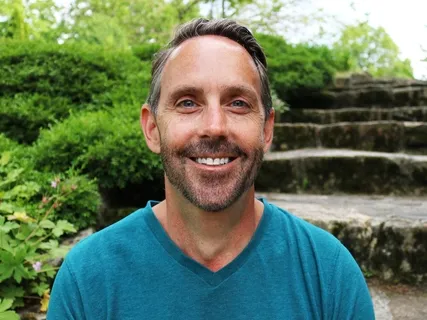
Welcome to Life,
Lessons,
And Laughter with your host Glenn Ambrose.
Welcome to the show,
Everyone.
So today we are talking about healing old wounds,
Which I'm very impressed that that just came to me because I was so focused on all the recording equipment that I.
.
.
There's a lot of recording equipment going on right now.
Yeah.
So we're just thinking,
We're just talking about that.
So when I said welcome to the show,
I had no idea what we're talking about,
But it came right in.
So that's good.
I'm proud of you.
Yeah.
Doesn't always come right in.
So if you're listening to this on Insight Timer,
This is,
Which the majority of you,
I believe,
Are,
This is a current episode.
Yes.
It is October to 2018.
Right.
So we're going to be sprinkling in these newer episodes because the ones on Insight Timer,
A lot of people don't realize that sometimes they're four years behind,
A year ago,
Two years ago.
So it's all depending on which one you're listening to,
They're old episodes.
So we're going to sprinkle in some new ones to keep you up to date.
And if you're interested and want to be up to date,
You can go to glenambrose.
Com.
You can find all the ways to listen to the show.
And everything is going to still be on Insight Timer.
The way that it has been,
You're just getting more content.
Right.
And if you're not listening on Insight Timer,
Insight Timer is an app,
A meditation app with all kinds of good information on it.
So check it out.
It's a phenomenal app.
I highly recommend it.
I love Insight Timer.
I use it to meditate all the time.
Yeah.
I do too daily.
I mean,
I use the timer daily and then there's so many good guided meditations on there and it's a free app.
It's,
I mean,
It's phenomenal.
And they have good courses on there too,
Which mine is going to be up on there soon,
But the courses are only $4.
99 to go through once.
Yeah.
It's phenomenal.
I love Insight Timer and I'm so excited that we're going to be current as well as still uploading all of the old episodes.
Right.
So eventually we're going to have all of them on there.
And that's what I've been doing.
I've been,
Even though we release these every other week,
I've been uploading them weekly on Insight Timer to try to get them caught up.
Yeah.
And they're not a sponsor or anything.
We just really enjoy Insight Timer and they've done it for once.
They're reaching new audiences.
Right.
Yeah.
So yeah,
They don't sponsor us at all,
But they're really worth mentioning because they do a great job.
And not only is the app wonderful,
But all the people I've worked with over at that app are phenomenal as well.
So far so good.
So let's get into this.
Healing old wounds.
Let's go.
Let's rip some wounds open.
Yeah.
And then heal them again.
And heal them.
So there's,
You know,
This kind of can come up in so many different ways,
Which is interesting.
It's because like a lot of,
Of course,
When we start our spiritual walk,
We've got old wounds that need to be healed.
So that's one of the first things that we do.
And then a lot of times,
Like especially the bigger wounds,
All of a sudden,
You know,
Depending on the person,
The situation,
It could be six months later,
It could be a year later,
It could be five years later or 10 years later.
All of a sudden,
A wound that you think was healed can come back up.
And usually the first inclination is to think,
Oh,
No,
I didn't heal it properly.
I didn't make the progress that I thought I made.
But generally what that is,
Is it's another layer of the onion.
You know,
We can only do so much healing at one time.
And these issues that are large harness a lot of energy.
So like we can transcend part of it.
And then it comes back up a year later.
And we go,
Wait a minute,
I thought I dealt with this,
But we did.
We did deal with it.
We dealt with the first layer of it.
We couldn't handle all of it all at once.
It was too big.
So you know,
We're given what we can handle.
So we've taken.
So the first thing we have to do is make sure we don't judge it and go,
Oh,
You know,
I actually didn't heal this because no,
You did.
It's just it looks the same because it's the same issue.
It was just more to it.
You know,
And then the other thing is something that when we're transcending where we are,
It's very similar.
I don't know if you can use the same words.
You kind of can.
It's very much like healing old wounds.
It's I guess if I want to get more specific on it to try to differentiate it,
It's kind of like letting go what no longer serves you.
And so there's a level of healing that goes on with that,
Because basically healing is letting go of,
You know,
It's not bringing it around.
So letting go of what no longer serves you and opening up to higher vibrations and higher ways of being and embodying them.
That is a an aspect of healing old wounds.
So I think that that was the that was the opening that I wanted to get out there.
That there's kind of multiple ways to come at this and see it.
And it can happen at different stages of where you are.
Yeah.
And letting go of old wounds is is or letting,
You know,
Letting go of things that no longer serve you,
I think is what is something that we've definitely touched on in the past.
And why is it so difficult?
Like,
You know,
Why is it difficult to to let go of the things that happened in the past that that caused these wounds that make you feel a certain way that,
You know,
Shaped shaped you in so many ways?
You know,
You had a what was the thing that you did or do?
Sorry.
But that that you and I did once with the core of the spiritual encoding.
Yeah.
Yeah,
That's the spiritual encoding is kind of embodies a lot of aspects of it because you know,
The first aspect is discussing it really,
You know.
So it's it's the reason that it's so hard to let go is because it's our intellectual processing that triggers the emotion.
So basically,
A situation happens,
We process it as negative and then that triggers an energy called emotion,
And then we don't want to feel the emotion or we can't handle all the emotion.
We don't know how to process the emotion.
So we stuff it.
So then it's kind of trapped within us and then we're walking around and every time something touches it,
Every time something triggers it,
That energy comes back up and we re-experience it.
So healing old wounds,
Of course,
It's getting rid of that trapped energy.
And I think that that's kind of the part that everybody wants to get to.
They go,
Well,
You know,
When when this gets touched,
I don't want it triggered anymore,
Which is wonderful.
But there's the intellectual understanding that we need to go through first,
Because unless we shift the way we look at it and the way we've processed it,
Then whenever we think of that situation or whenever something reminds us of it,
It's just going to generate more negative energy because of the way we're viewing it.
So that's why,
Like when we did the spiritual encoding,
It's really about discussing it and talking it over and coming to an understanding of how this whatever situation happened,
How we can let go of the shame around it sometimes,
The hurt around it,
Whatever needs to be processed,
Whatever is causing the pain.
We need to,
You know,
A lot of times it's we feel like a victim of it.
And once as long as we're looking at it like we're a victim,
Then we're always going to be victimized by that type of situation.
But if we can come to a different understanding how some of the situations we can look at and go,
How did this happen?
You know,
Why did this happen for me?
And we can see something we got out of it.
OK,
Great.
Other situations we can say,
OK,
Well,
How can I shift?
You know,
I don't like the fact that this happened.
I don't like the idea of saying that it happened for me.
So what if I just say it happened?
I have to accept it because the reality is,
Is that I can't change it.
And the fact that I'm resisting the reality of it happening is causing suffering.
So then you have to come to a level of acceptance.
And once you accept it,
Then you know,
Then you can process it.
But it's not,
You know,
The first thing we need to do is just process the,
You know,
Shift our perspective to get the way we're processing information around that type of subject to go through our system differently so it's not constantly conjuring up negative energy and negative emotion.
And then we can release the negative energy.
How do we do that,
Though?
Like how do we reshape it?
Yeah.
And it's the I mean,
You know,
The spiritual encoding is is unique.
So I'm not going to spend a lot of time talking about it,
But it is kind of a good snapshot of what you need to do.
Right.
Well,
I mean,
In general,
Like in general,
How do we,
You know,
Because if you're trying to heal an old wound,
Right.
Like,
How do you if you can't see that,
Like if you can't get to the perspective that it happened for you and not to you,
You know,
If you can't get to the if you can't if you can't see the benefit,
You know what I mean?
Like it's kind of like it's one of the like,
I don't know what I don't know.
Right.
Type situations,
You know,
So how do you how do you make that move?
How do you make that switch over?
Well,
It's and I think and I think that that's why the spiritual encoding is a good example because it just squeezes everything in.
Like I did that in one session.
So it's like so we talked about it first.
We come to a different understanding as you're talking about it.
It's bringing it up to the surface,
All the energy that's trapped.
And then you're changing the way you look at it to get to a healthier place.
Once you get to a healthier place,
Now you're you started with the mental because we're discussing it as as it bubbles up,
You're experienced,
You're starting to experience the emotional.
So you know,
Now you've got the mental and the emotional.
And it's actually as you're talking about it in a healthy way,
As it's coming up to the surface and you're not running from it or rationalizing or pushing it back down,
It's actually already starting to release.
So that's you know,
That's part of the release.
And then I did like an energy work thing kind of like that's similar to Reiki,
Where I pulled out the old energy,
The old belief system and encoded a new one in,
Which is just basically releasing the energy.
So you know that I did in one session.
Okay,
You know,
That gives us all the parts.
We've got the mental,
The emotional and then the energetic.
So we've got that.
Now we take that structure and we go,
Okay,
How can I do that if I'm not getting a spiritual encoding session?
You know,
Right.
So it's you know,
It is about discussing it.
I mean,
Usually it's about discussing it.
I mean,
Every once in a while,
If you just shift your perspective,
Because generally our perspective is like I was saying,
A lot of times it's victim mentality.
So let's just use that for an example.
If it's a victim mentality,
As long as you're looking at it from that perspective,
You're right,
You don't know what you don't know.
So nothing,
It's going to be very difficult to find a healthy way to look at it.
So if you can put some distance between you and the pain and just stop for a moment and just shift your perspective and say,
Okay,
I felt like a victim of this.
What if I just imagined that I was the creation of a loving creator?
What if,
You know,
All of us have loved something in our lives,
Either a child or a pet or a parent or a friend,
Or all of us have loved somebody.
And does that make sense to you that you would want to watch that person suffer when they don't have to?
Of course not.
So we take that mentality and apply it to what if there's a loving creator that created me that loves me?
They wouldn't want me to suffer needlessly.
So what if I just put it through the filter of there must be something I can get out of this,
There must be another way I can look at this and really expand your mind out of the victim mentality to what good can come of this?
How can I use this for my benefit?
Not thank God it happened,
I'm glad it happened because I benefited from it.
You know,
Some things were never going to be glad that they happened.
And that's not what we're looking to get to.
We're not looking to get there and be running around to all our friends high-fiving them that this horrible thing happened in our lives.
That's not the space we're looking to get at.
It's just a level of acceptance saying it happened.
And sometimes we'll be able to see how it happened for us.
Sometimes we'll just be able to get to the place where it happened and my resistance to it is dragging me down.
It's not benefiting me in any way.
It's just making me less than I'm supposed to be.
So how can I stop that and learn something from this so it actually heightens me?
And I think death is a good example of that.
You don't have to be happy that somebody died.
But you can sit there and say,
Okay,
The fact is that they did.
So if they're sitting up there and they love me as much as I love them,
What would they want to see looking down on me?
Would they want to see me dragging my stuff through the mud and suffering for the rest of the years that I'm here on this planet?
Of course not.
And a lot of times,
Especially with that subject of death,
The way I get people there is I tell them,
What if it was you that passed?
What if it was you that passed and you were up there and you were looking down at your loved ones?
Would you think like,
Oh,
Thank God they've destroyed the rest of their lives because now they've finally proven that they actually love me?
Of course not.
You'd want the best for them.
You'd want them to go on with their lives.
You'd want them to become the most and the best version of themselves that they could be and experience the most happiness while they're here.
That's what you would want for them.
So it's like,
Well,
Okay,
Then if you would want that for them,
Let's flip-flop it.
That's what they want for you.
So once you can start getting to those types of places and understanding that,
Honoring somebody that's passed by holding them up as a blessing and celebrating the fact that they were here for a while instead of that one day that they're gone.
Instead of reliving that one day,
It's celebrating their life by honoring them by living your life to the fullest.
So it's that type of thinking that can get us to a healthier place.
And once we start understanding things like that and processing it different,
Then we've got that wound,
That emotional and energetic aspect of the wound that we need to heal.
So what do you think about that then?
What do you think about that part?
I think that the victim mentality of feeling like a victim is a very,
It's obviously a very touchy subject.
Yeah,
It's very touchy.
So depending on the things that you feel victimized by,
Obviously no one is saying that there isn't a validity to it.
Oh yeah,
There's situations where people are actually victims.
Right.
Nobody else,
Yeah,
I mean,
You can actually be a victim.
But if you walk around- It's healing.
We're talking about healing.
We're talking about letting go.
Right.
Like somebody said to me like a while ago,
They said,
You have the right to be angry.
And I was like,
Well,
Yeah,
But I don't,
Could I forego that right?
Because I understand I have the right to be angry.
Something happened to me where I have the right to be angry in a logical sense,
But what does that get me?
It gets me the ability to walk around angry.
I don't want that ability.
So it's the same thing with victimization.
Like yeah,
Maybe you were a victim of something,
But what does that get you?
I mean,
Yeah,
You can walk around for the rest of your life going,
I am a victim and everybody can go,
Yeah,
You're right.
You're 100% right.
You're a victim.
Okay.
So you get to walk around unhappy for the rest of your life as a victim.
You know,
There's got to be some point where you say,
I don't want to walk around feeling like a victim anymore.
That's when you can get to a level of acceptance.
You know,
So if you can look at it and go,
Okay,
I accept the reality that it happened and wishing it was different,
Doesn't get me anything.
It doesn't bring joy,
Peace,
Happiness into my heart and to my life.
It doesn't expand this world.
It doesn't make me have better relationships with anybody else.
I'm here for a finite time.
You know,
What are you going to do with it?
And again,
It doesn't mean that you can't go through a process of grieving and some of this stuff doesn't take time.
I'm not saying it's a flip of the switch.
What I'm saying is at some point,
If you're always looking at yourself as a victim,
You're never going to experience peace and happiness.
And if that's what your choice is,
That's fine.
You know,
I'm not going to argue with you.
You have the right to feel like a victim forever.
But if you'd like to experience peace and happiness and joy,
Then you can continue listening and try to implement some of this stuff to the best of your ability.
And it's going to be difficult.
Yeah.
Healing.
And it's going to be a process,
Most likely.
It doesn't have to be,
But we've got all these mental blocks in the way of how we think things are that kind of,
I mean,
In theory,
We could just let everything go and just,
Oh,
Everything's wonderful.
My experience is it doesn't usually happen that way.
What are some old wounds that you've,
You know,
What are some specific examples of old wounds and how they were dealt with?
Well,
Either from you or,
You know,
People that you know,
Historic people,
You know,
Anything like that.
Yeah.
I mean,
I'll use mine just because I would never use one of my clients.
No,
You're right.
Exactly.
Yeah.
But it's easier that way.
You know,
You get a personal take on it and they're healed.
So I don't mind bringing them up.
That's kind of the point,
You know,
It's like when 15 years ago,
You know,
I came in the door,
The spiritual door,
My awakenings happened by going through the 12 steps and getting sober.
So one of the big things with that is,
You know,
The most obvious ones are steps four and five,
You know,
Making a personal inventory of all those you've harmed,
Harms done,
Others,
Resentments,
All that stuff,
Writing it down,
Looking at it,
And then going over it with your sponsor and going through it in detail.
And you know,
My sponsor helped me see how I played a part in all the things that were going on in my life that I didn't like.
So that's a big part of it.
And then the other aspects of it are steps eight and nine,
Where you go out and make amends.
So taking that action to take responsibility and make right the wrongs that you did.
I mean,
That was huge,
You know,
Doing that,
Because after I did that,
I was able to walk around and that was when I really experienced on a full level what we're talking about,
Because I could go,
I lived very dysfunctionally for 20 years,
And I can take every incident that I lived in those 20 years,
And there was a lot of them,
And talk about them without shame,
Without guilt,
You know,
Especially those two,
Because there was a lot of things that I did that were painful to me and others.
Right.
So,
So to be able to talk about those things without the emotional charge that they carried for so many years,
That made me feel less than and made me feel bad about myself.
You know,
That was amazing.
That was an amazing experience.
So it's,
You know,
Being able to,
That was when I really noticed that the,
You know,
What the feeling was that I could really see the difference of the emotional charge when you have it and when you don't,
Because now it's like I'm talking,
I mean,
You know,
I know the specifics,
It's intellectually,
It's a learning tool,
Not only for me in my future,
But also I can use all my past experiences to connect with and to help other people as well.
So that's what it means by turning all of your,
All of your bad into good,
Because instantly it's turned into good.
All the things that I was carrying around that I thought were so heavy and difficult turned right into good.
And you know,
As soon as it turned into good,
I was like,
Oh,
All right.
So this is what was my biggest detriment is now my biggest asset.
So that was huge,
You know,
Experiencing that.
And I mean,
There was,
I think that was my first biggest experience and it touched on a lot of subjects.
And then the other biggest one,
And I'm thinking of the chunks of things I did was my family of origin stuff.
You know,
There's,
I mean,
You know,
All our stuff is started with our family of origin.
So it's.
.
.
Explain that a little bit more.
I'm not familiar with the family of origin.
Family of origin is,
You know,
What we grew up in.
So it's like our belief system is basically set between the ages of four and eight.
So we,
You know,
We're taught things all as we're growing up,
We're exposed to things and all this stuff.
And we're new in this earth,
You know,
We came from a place of all love and then all of a sudden we come in here and it takes us like up to eight years,
Sometimes longer,
Of course,
To make sense of the reality that we're in here.
31.
Yeah.
And counting.
And counting.
Well,
To make.
.
.
Yeah,
I should clarify that.
To make this functional sense of what's going on here.
Basically,
For us to make enough sense of it for us to buy into the crap that we're being taught.
Okay.
And the dream of society,
Because society is dysfunctional.
I mean,
You know.
.
.
No.
That's pretty obvious.
Ours?
Yeah.
Ours society is dysfunctional.
I know.
I know.
It's a shock,
But it's true.
Okay.
So as we come into this world,
We're not dysfunctional.
We're expecting everything to be loved and it takes us a while to assimilate to this dysfunctional thing and set up these belief systems like I'm not good enough.
You know?
Like,
Oh,
All right.
Well,
You know,
Like I can't listen to my body.
But like the feelings that I have that have been telling me what to do and when to do it,
I cannot listen to that because my body lies to me.
Like when it's time to eat,
You know,
You're playing and having fun.
All of a sudden,
You know,
Mom says it's time to eat.
Like what?
No,
I'm not hungry.
I'm in joy.
And then,
You know,
Then you get yanked up by your forearm and plopped out a kitchen table because the food's getting cold and you don't understand.
And it's like,
Oh,
Okay.
So now I have to put food in my mouth and swallow it when I'm not hungry as opposed to continue experiencing joy on the floor with my toys.
Okay.
You know,
And that type of stuff happens all the time.
So we learn not to trust ourselves.
So and,
You know,
And then most of us have some sort of version of I'm not good enough that's based off those types of learnings.
You know,
I'm oversimplifying it,
Of course,
To make a point.
So I mean,
There was a lot of stuff and I came down with a heavy case of I'm not good enough.
And it was reinforced daily at school by going,
Glenn,
Turn around.
Glenn,
Sit still.
Glenn,
Stop entertaining the class.
Glenn,
Glenn,
Glenn,
Glenn.
You know,
All day long getting sent down to the office constantly and not knowing why I couldn't sit still for seven hours in a classroom at eight years old.
Right.
You know,
Like so it got reinforced that I wasn't good.
What I was doing,
I was literally incapable of not entertaining myself.
I mean,
I could not just sit there.
Still.
But for class period and actually pay attention to what somebody was talking about,
I couldn't do it.
So I got punished over and over and over again.
Then after a while,
You know,
Then you wonder why by the time I hit,
You know,
13 years old,
I started breaking left.
It's like,
You know,
Of course.
But I had to heal all that.
You know,
I had to come to a different understanding of what,
You know,
That that core belief system that I developed as a young child that I wasn't good enough and understand that I am good enough.
You know,
And that's a big one.
That's that's a big chunk of emotion and energy that needs to be released.
You know,
And we you held up a sign earlier.
We're like,
Oh,
Yeah,
We're definitely.
Yeah.
So we got to do a part two because I'm just starting to get into the how the physicality and the details about letting go of this stuff.
All right.
Sounds great.
So we're doing a part two on this puppy.
That's what I was like.
I don't know how to end it.
Normally,
I would have ended this and,
You know,
Wrapped it up in a cute little bow and cut you off.
But I had no idea where to end.
Yeah,
This is too big.
This is a big one.
So yeah,
But that's that,
You know,
This is why I like doing it.
This way,
Because we just go where it takes us and it's organic and it's truthful that way.
Definitely.
All right.
So if you guys want to get in touch with Glenn,
Glenn Ambrose dot com,
As we said,
You know,
There's a there's a course coming on Insight Timer.
Check out the new podcasts on Insight Timer as well as we're still going to be uploading the old ones,
The older ones to insight.
They're not old.
But yes,
We're getting caught up.
I think where this is one twenty two session on Insight Timer where somewhere around I'm going to ballpark somewhere around 80 85,
Possibly 90.
So we're getting caught up.
There's not that big of a gap.
And new ones come out on Insight Timer every week.
So some of them will be new and some of them will be and some of them will be,
You know,
In the order that that they're currently being uploaded.
Right.
And if you want to find out anything else,
Just go to Glenn Ambrose dot com.
Join us on Patreon to find videos of this and a bunch of other exclusive content.
Glenn,
Is there anything else you want to know?
No,
I think that's it.
I'm still in healing mode,
So I'm ready for part two.
All right.
We will.
Well,
Yeah,
We'll cut.
We'll end it here and then we'll pick right back up on part two.
So thanks for listening,
Everybody,
And we'll talk at you very soon,
Especially in my time,
Like three minutes,
Probably.
All right.
Talk to you later.
Glenn is available for life coaching sessions to book an appointment or for more information,
Go to Glenn Ambrose dot com.
Follow him on Facebook and Twitter or click the link in the description of this episode.