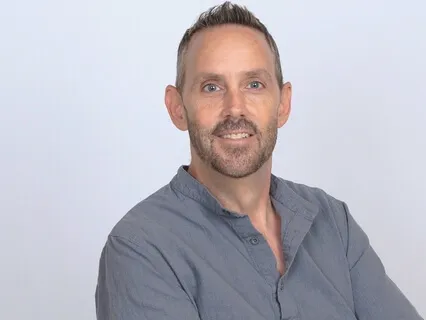
Welcome to Life,
Lessons and Laughter with your host Glenn Ambrose.
Hey everybody,
Welcome to the show.
So today we are going to discuss functioning from the reality of the situation that you're in.
Instead of what?
Functioning from the reality that you wish you were in or you think you're in.
Right.
Yeah.
So functioning from actual reality instead of what you hoped and wished it would be.
You hoped and wished and a lot of it is like preconditioned patterns too that we have in our brain about particular roles.
Like I think parenting is a good one.
You know,
Like most people that become a parent at some point,
They do something that they go,
Oh my God,
I'm turning into my father or I'm turning into my mother.
You know,
You behave in a way that when you were a kid,
You were like,
I will never do this.
I will never say this.
And then all of a sudden you find yourself saying it to your kid.
And I mean,
I think that's a good example,
But it happens in all areas of our lives.
It happens as an employee.
It happens as a friend.
It happens in all relationships.
So we have these mental pictures and these conditioned patterns as to what particular roles look like.
So and we're just domesticated and conditioned to create these things in our mind and we don't even know we did it.
So like there's a thing that you have in your head about what a father does or how a father acts or how a mother acts or how an employee acts.
And then all of a sudden when you're unconscious,
You fall into those conditioned patterns and you stop behaving that way.
And it's,
You know,
We've got to snap out of that and actually live consciously.
You know,
Not because like when I made decisions caught up in a role of being a father,
There were several,
Dare I say many situations that I did not handle the best way possible.
Because they weren't authentic to me.
They were just,
This is what you're supposed to do.
This is how things are supposed to work.
And but when I was present and anchored into the present moment and just allowed the answer to come to me,
Geez,
What should I do in this situation?
Well,
When I was a kid,
Like this was how I worked through a lot of the things I'd center myself and say,
Okay,
Well,
You know,
I may not be able to remember exact specifics and all the things that happened to me when I was a kid,
But I could remember the feelings.
I could remember feeling like the teacher was out to get me or I,
You know,
Or I wasn't supported or whatever that feeling was.
And I'd be like,
Okay,
My son's feeling that now.
When I felt that,
What did I get?
And in my generation,
It was usually discipline.
It was some sort of,
You know,
You need to do this differently or whatever.
It was usually pointing the finger back at me.
And what I was and it was like,
Okay,
Did that work?
And in some situations it did,
And most of them it didn't for me.
And my son and I were very similar as the personality types.
So it's like,
Okay,
Well,
If I got discipline and discipline didn't work,
What is another avenue I could take?
Well,
I kind of believe everything's love based.
That's good.
So what if I came at this from an angle of love?
What would that look like?
Well,
It might look like this.
Okay,
Why don't you try that?
And when I did stuff like that,
It usually worked out really well.
You know,
But that was so I,
You know,
I centered myself into the present moment and I cleared out what I thought I was supposed to do,
You know,
Of the role of being a father.
And I just kind of looked into things different ways and explored into them.
And then the right answer would usually bubble up.
And we can do that in a lot of situations.
What are some ways that you're like,
What about interpersonal relationships?
Like,
If you're,
Say,
Like you are in a,
You want to be in a relationship,
Right?
Okay,
So let's go with like the unrequited love situation or something like there's or you're actually in a relationship.
There's a lot of times where you keep trying something with somebody because you want it to go a certain way.
You know,
Like you're in a relationship and it's not working,
But you're hanging on or you're in love with,
You know,
Him or her and it's but it's not going to happen.
Like it's not happening and it's very clear that it's not happening,
But like you're holding on,
Like you're thinking about what you wish it would be instead of where you actually are.
Can you talk a little bit about that?
Yeah,
I can talk a lot about that cause I lived it.
You know,
But yeah,
I mean I was in,
I was in a relationship at one point where it's,
It's like it was really good in the beginning and I could feel it and it was real.
It was like,
It was really a cool relationship and then all of a sudden like I felt the fear on her end kind of bubble up and her stop pulling back and I could sense that and it's like,
No,
No,
No,
No,
No,
No,
No.
Like stay right here in a present moment.
This is actually,
It can stay like this and you know,
But the,
The emotion clouds our vision of course.
So as she pulled,
I reached,
Which made her pull more,
Which made me reach more,
Which made me pull.
You know,
So I mean that's,
That's such a common dynamic that when,
When one's pulling the other one reaches more,
Which pulls and you know,
You can see how that plays out.
It ends because you know that dynamic,
That's the only way it's going to play out.
So I,
You know,
At one point I had gotten to a place where I was like,
Okay,
I recognize that I was reaching.
So I was like,
I have to stop that and give her space.
But I was giving,
I was trying to see,
It's an energy of manipulation when we're trying to get somebody into a place that we want them in,
Even though they're not there.
So what I was trying to do by reaching was,
You know,
I didn't know this consciously at the time,
But I was trying to manipulate her into getting back to where I wanted her instead of allowing her to be.
So then I was like,
Okay,
Well I need to give her space.
I knew that,
But I was still behaving unconsciously.
So I was like,
Okay,
I will give her space.
Once she has enough space,
Then she'll feel relaxed and then she'll be who I want her to be.
So I was manipulating her through non-action,
Which is kind of ironic,
You know?
So,
And you know,
Once I recognize that,
It's like,
Holy,
Like how lost am I that I'm like,
I'm going to manipulate somebody by not doing anything.
Like that's how powerful I am.
You know,
So it's,
And what it is,
Is it's that manipulation energy when we're trying to get somebody to do something that we want them to do,
That's what they can feel.
It doesn't matter what it looks like.
It doesn't matter how smart we are.
It doesn't matter if it looks like giving them space or it looks like reaching for them or it looks like pulling them.
It's all manipulation.
You're trying to get them to do what you want them to do.
And that's what we need to let go of.
We need to actually look at the reality of the situation and be like,
If you're going to give somebody space,
Actually give them space.
Like energetically too,
Like take your hands off of that and go,
Okay,
If you're not ready for this,
We'll step away.
And you can have all the space you need.
Me,
I'm going to go on with my life.
And if you come around and all of a sudden you want to give it another chance,
Let me know if I'm not into anything and I feel like it's a good move,
Maybe we will.
I don't know.
We'll cross that bridge when we come to it.
But you actually have to disconnect and deal with the situation as it is.
Do you feel like there's a lot of unconscious manipulation?
The way that you're explaining that feels like everybody is trying to manipulate each other at all times,
All the time.
Yeah,
Kind of.
I mean,
It's basically what,
Like in the Celestine Prophecy,
They talk about how,
Which is a wonderful book,
They talk about certain dynamics between people that basically,
Since we are no longer connected to source,
We're always connected to source,
But we're not openly connected.
Source is our source of everything,
Including energy.
So since we are not openly in exchange of energy with our source,
Then we try to get energy from other people.
So basically the whole dynamics of the earth is just people constantly trying to steal energy from each other in different ways.
So like,
You know,
One person is a perpetrator,
So they're overpowering and they basically take energy from other people.
And who do they take it from?
People who are victims.
And then the victims,
They feel sorry for themselves,
Which is a passive way to get energy,
Because then people feel sorry for them because they're a victim.
So then they get energy from other people that feel sorry for them.
So it's just this big exchange of people constantly stealing energy from each other and different,
With different techniques,
Because we don't have a connection to source.
So,
I mean,
That book does a really cool job of explaining that,
You know,
It immediately made me think of that,
But there's some truth to that,
You know?
Yeah,
We are running around and this is why it's so hard.
We get so locked on to the way we think things should be.
Like sometimes we'll be in a situation,
You know,
Relationships,
Work,
All different types of situations.
School is a good one.
Like a lot of kids don't like school because it shouldn't be the way it is.
Well,
It's stupid.
It shouldn't be like this.
Well,
As long as you hang on to that and you interact with your daily life in school,
You're going to suffer because it is the way it is.
Like you could,
Hypothetically,
You could be a hundred percent right.
You could prove to everybody on the planet that the school system is designed wrong.
And guess what?
You're still going tomorrow.
So what does that get you?
It doesn't,
You know,
We think like unconsciously,
We think fair is so important.
Like this world is like fair or something.
Now in a universal sense,
It is fair.
It's perfectly fair.
But in a human sense,
Nothing is fair.
Like,
You know,
It's not fair that,
You know,
One person makes $150 million a year and then you have 500 people working for them that make $12 an hour and can't afford a one bedroom apartment.
Like that's not fair,
But it's the way it is.
So,
You know,
None of the external world in a human way is actually fair,
But we think that.
So we go,
Well,
My boss didn't treat me this way and my boss treated me in an unfair way and it shouldn't be like that.
So that's bad.
And you go,
Well,
Not necessarily.
That's just the way it is.
That's the reality of the situation.
And people will go,
Well,
I'm just saying it's bad.
It's like,
No,
You're holding up resistance to the reality of the situation and all suffering is resistance to what is.
So the fact is,
Is that's the situation you either accept it or you suffer or you get out of the situation.
Like,
I mean,
You can get out of the situation too,
But it's,
This is the thing that I think I did.
We did a podcast on it before about this three ways to do something.
You either do it with enthusiasm,
You do it with acceptance,
So you don't do it.
Anything other than that is suffering.
So like if you're in a job situation,
Jobs are the simplest things that look the most confusing.
A job is an agreement.
You know,
Everybody's excited when they get a job and then a year later,
Hardly anyone's excited.
And it's because their perspective changed.
It's not because the job changed that much.
It's usually because their perspective changed because so they go in,
They go,
I want this job.
They go,
OK,
Well,
If we give you this job,
You've got to do this type of work to the best of your ability.
And you're going to do it my way because I'm the boss.
That's how things work.
And then we'll give you this amount of money.
A year later,
That's still the agreement.
But everybody's pissed off.
What changed?
It's just your perspective changed.
Well,
That's not fair.
My boss told me to do that and I wouldn't do it that way.
That was stupid.
So you knew that going in.
When you agreed to take the job,
You knew that you weren't going to decide what,
Like how exactly everything was going to run in this company.
You're just a worker.
You're not the one making those decisions.
So in the first few months,
We're fine with that.
Then after a while,
We go,
Well,
It should be this way.
And then we latch onto it.
Well,
It'd be smarter to do it that way.
It'd be better to do it that way.
And we complain about everything and it builds up and builds up.
That's why we hit a year.
We hit our job.
Because we're not looking at the reality of the situation that we're in.
If you want to make a decision about how a business is run,
Start a business.
But you don't get to run the business and decide how it's run if you're just a worker in it.
That's not how it works.
So the resistance that we create,
Just pushing against what we don't like,
Causes immense suffering.
So this is what I mean about looking at the reality of the situation.
And we'll mask this by going,
Well,
No,
It's just my opinion that they should do it that way.
There could be some truth to that every once in a while.
But most of the time,
No,
That's an excuse for you to harbor resentment towards somebody doing something the way you don't like.
So you can feel right instead of being happy.
So this is what I mean.
We have to look at the situation realistically and be like,
I am a worker.
This is a boss.
The boss decides how things are going to be done.
And then I do it that way.
That's just the reality of the situation.
If you don't like that situation,
Then you must go out and do something to change it.
But staying in there,
Resisting the reality of that,
Just causes suffering for no reason.
This has been a fascinating topic so far.
We've covered some big everyday problems that people have as far as being in relationships,
Wanting to be in relationships,
Work life.
Let's talk about kids more now.
You talked about a little bit at the beginning about having that instinct of what your parents did and being that and then going,
Oh,
No,
I can't do that.
But what about just like,
Oops,
I almost broke my mug on my computer.
What about being your kid not being exactly what you want them to be?
You know what I mean?
Especially,
You have an 18 year old now,
A lot of people,
19 year old now,
He's got to stop growing up.
When you have a kid that's going to college,
A lot of people are not going to college or whatever.
When they're that age,
When they're becoming an adult,
It's hard to let go for parents.
Yeah,
I think it's difficult through the whole thing.
But yeah,
When they get older,
It's a little harder because I think it seems as though from our perspective that the consequences get more extreme.
When your kid's six and they don't listen to you and they go out without a coat,
Well,
They might catch a cold.
When they're 18 and they don't put in a college applications,
Well,
Now all of a sudden there's a bigger consequence,
Which triggers the fear in parents,
Which makes us more unconscious,
Which makes us try to control the situation more,
Which is exactly what we're talking about.
Yeah,
I think as a parent,
My son is very much like me in a lot of ways.
When he was little,
It was like living a second childhood because I could so identify with the way he felt,
His sensitivity levels,
How things affected him.
There were so many parallels to the way we interacted with the world.
Then as he got older,
He developed more into his own self and I'm more adventurous.
He's not as adventurous.
I'm more of a thrill seeker.
He's not.
Then all of a sudden,
That started,
I'm like,
Let's go skydiving.
He's like,
What are you,
Crazy?
It's like,
Well,
What do you mean?
You don't want to do the things that I want to do?
That's not cool.
This is fun.
Don't you understand that this is fun?
It's like,
Well,
It's not fun to me.
It's like,
Oh,
Well.
I had to understand that.
He's a processor.
I'm an action taker.
He takes time to process things.
Then when he's ready,
He takes action and knocks it out of the park.
Me,
I'm just like action.
If I have an idea,
Usually I'm trying to act on it.
I don't take a lot of time to process.
It's very frustrating for an action taker to try to deal with a processor.
In a relationship,
I've had it in relationships,
Romantic relationships,
Plus with my son.
It's one of those things that I've needed to work on consciously to get better at because somebody that takes a long time to process something,
It looks like they're just sitting there not doing anything forever to an action taker.
It's like,
Oh my God.
Just do it already.
They're just not ready.
It's just not how they function.
It's leaning back.
At the end of the day,
The answer is consciousness.
It's mindfulness.
It's living consciously and not allowing yourself to drop in.
Whenever you feel frustration,
It's one of the best red flags to say whatever the scenario.
If you feel frustration,
That should be a red flag that says,
Hey,
Hang on.
I'm looking at this wrong.
There's something wrong with my perspective about this situation.
Center yourself because that way,
You can get into the space that you need to be in and start looking at it from different perspectives and you can handle it better.
I think being a parent,
That's the stuff.
I had one son and he was a boy.
As a single parent,
I'm a boy.
It seems like it'd be easier.
I don't know.
I haven't had a daughter,
But it seems like it'd be easier.
My son likes sports.
I like sports.
That was easier for me because he likes sports.
To me,
It's like,
Oh my God,
The life lessons I got and the physical activity and the friendships and all the stuff that I got from sports.
Of course,
I wanted my son to share in that.
I had a couple big things that fell into place for me as a parent.
Whereas somebody that is an athlete that has a child that's not into sports,
You've got to be aware of that.
There are places to get friends,
Teammate mentality,
Activity,
And fill your soul other than sports.
Whatever brings them joy,
That's the point of it.
We have to be open-minded enough not to pigeonhole our kids into the directions that we want,
Try to feed them whatever brings them joy.
Teach them to follow their joy like we need to teach ourselves to follow our joy.
The only way we're going to do that is by being conscious.
The more unconscious we are,
The less we're going to do that.
Thank you for covering parenting.
If you're listening to this show,
You probably are somebody who focuses a lot on self-improvement.
In what ways do we try to manipulate ourselves?
In what ways do we try to resist what is for ourselves when it comes to our own self-betterment?
I think a lot of it is just making excuses and letting the fear creep in.
I think that's the biggest thing.
One way it's said is we compare our insides to everybody else's outsides.
If you think that somebody else out there that's doing something that brings you joy has something that you don't,
You're mistaken.
A lot of times,
We'll look at somebody that has… This was something I was very conscious of when I was starting my business.
Of course,
It's people with very successful life coaching businesses.
Of course,
I had fear around it.
Can I do this?
Is this even possible?
Do I have what it takes?
Blah,
Blah,
Blah.
All those fears come up,
But I just looked at it and I was like,
Well,
No.
They're just teaching the same stuff that I'm teaching.
I mean,
No,
Not in the same way,
But I mean,
They're just teaching.
Oh,
Well,
Do they have a business mind?
Do they have this?
Do they have that?
Do they have money to start their businesses that I don't have?
All those fears wanted to creep in.
I just never let it be that concrete in myself to hold me back.
Yeah,
Those fears shot through my head.
Yeah,
There was always a part of me going,
What are you,
Crazy?
You're a single parent in Rhode Island who just got full custody of his kid who's collecting food stamps and now you're going to double your rent and start a life enhancement center.
And you've never done anything like this before in your life.
What are you thinking?
That's what my brain wanted to say,
But I didn't let it anchor in.
So it was just like,
Well,
What can I do now?
I think the biggest thing is not,
Like I said,
Not getting caught up in the excuses.
Just look where you are.
What can you do from where you're standing realistically?
If you're going to start a business,
I just stumbled onto a good example,
My example.
So when I started business,
I was collecting food stamps.
So now if I sit there and look at that,
Well,
That's a really good reason to not start a business.
Or a really good reason to start a business.
Or,
Right,
Depending on how you look at it.
But in most people's minds,
I had to look at the reality of the situation and understand where I was.
Yes,
I'm here.
Okay,
What does that mean?
If I'm looking at my situation realistically,
Which this podcast is about,
That means I don't have money to start a business.
Okay,
So how can I get money?
I don't know.
Okay,
Well start Googling stuff.
Like how can you make money?
And somewhere,
I don't know where,
I had heard about crowdfunding.
Okay,
What's this crowdfunding thing?
I look into the crowdfunding more and it says,
You can promise people rewards so they get something for their money,
But they give you money ahead of time for a project.
Huh,
No kidding.
That sounds interesting.
So I looked into it more and that's what I ended up doing.
And I raised like 1500 bucks to get some exercise equipment and a Reiki table and some stuff to start my business.
And some chairs for some events.
So I had some ways to,
You know,
What did I,
So that was one way and then the other way I had to look at different streams of revenue.
And it was all hypothetical,
You know.
Well,
I'll pay people on a percentage basis to come in here.
So I don't have to put anything up.
And advertising,
What's free?
So you just,
But it was because I understood that I have no money.
That's realistic.
That doesn't mean that I don't get to start a business.
That just means that whatever business I start,
I need to start from the reality that I don't have any money and find ways to do it without money in each direction.
And that's what I did.
And because I was looking at my situation realistically and just taking it one step at a time,
It worked.
But if I was,
You know,
If I was delusional about,
I should have money.
When you start a business,
You should have money.
If I sat there in that space,
I never would have started my business.
Well,
It's,
It only makes sense that you have to have money to start a business.
And let me say that 13 different ways to convince myself that it takes money to start a business.
No,
That's not realistic.
That's a programmed,
Unconscious mind pattern that you're putting into your head.
And when you get centered and present,
You don't get caught up in those.
That's not reality.
That's excuses.
Reality is you're broke.
That's reality.
You got no money.
Got it.
That doesn't mean you can't start a business.
Doesn't mean you can't do a lot of things.
It just means that you have no money.
Figure out how to do it with no money.
You know,
I think,
I think that was a great,
You know,
Great advice.
And we really covered so many different aspects,
A plethora,
A plethora of things,
If you will,
For sure,
For sure.
And you know,
Word for the day and you know,
Somewhere else that you cover a plethora of different subjects is boom down to earth.
The spiritual beings guide to a happy human experience.
Wow.
That's right.
Alex.
Awesome.
And,
Uh,
You know,
You can find all of that stuff on glennambros.
Com links to the new book and,
Um,
More episodes of the podcast blogs,
All of that stuff.
Uh,
Sign up for the email list to get the email exclusive video series where you can ask when Glenn questions when you can ask when I don't know who Gwen is.
Glenn questions.
And uh,
And yeah,
So you can check out all of that stuff.
Also,
If you like the show,
Leave a comment wherever it is that you're listening to it or watching it and um,
You know,
Leave a rating if you so choose and uh,
And,
And uh,
You know,
Or review all of that stuff would be really helpful.
Um,
But yeah,
You can find everything that Glenn does on glennambros.
Com,
Which is very simple.
And of course that's in the show notes as well.
Yeah.
Yeah.
So check it out and thank you for listening and we will talk with you soon.
Glenn is available for life coaching sessions to book an appointment or for more information,
Go to glennambros.
Com,
Follow him on Facebook and Twitter,
Or click the link in the description of this episode.