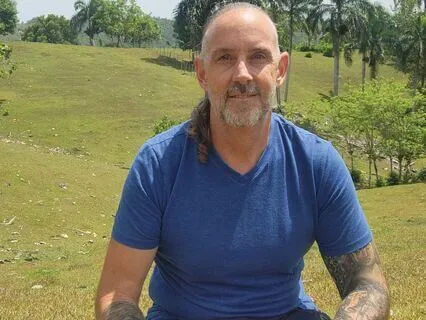
Welcome to Life Lessons and Laughter with your host,
Glenn Ambrose.
Hello,
Hello,
Welcome to the show,
Everybody.
So you might notice I got this new virtual background for those of you that are watching the video and trying it out.
So those are the yin yang symbols you're seeing are actually the logo for my book.
I have a copy right here.
So yeah,
I'm just playing around,
Playing around with some virtual backgrounds on a green screen,
You know.
So this podcast,
I'm kind of excited about because I've been talking about it a lot.
I get pretty jazzed up about this and implementing it in my own life.
And I've had such success with it that I've been sharing it a lot.
So recently,
Maybe a couple weeks ago,
I just did a podcast on radical acceptance.
And that was something that I was implementing and I was having some success with it.
And I shared a lot about that on that podcast.
Well,
Since then,
That topic has just jumped up right in front of my face over and over in different ways.
And it's kind of exciting what has transpired.
You know,
Oftentimes we talk about radical responsibility.
And I did the podcast on radical acceptance,
Which those two words don't usually go together.
Usually when you hear radical responsibility,
You know,
In the self-help genre,
It's radical responsibility.
It's not radical acceptance.
So it was very specific.
And it started,
The podcast actually didn't get uploaded for some strange reason.
And then the morning before I started working with my clients,
It got brought right up into my attention through a friend's post and me looking for that podcast,
Finding out it wasn't uploaded properly,
You know,
Getting some help uploading it properly.
And it just really zoomed my attention in on this.
And that was one thing.
And then also around the same time,
And I'm talking about within a 24-hour period,
Because I work with clients every other week.
So it was Sunday and Monday morning.
So it was probably about 36 hours that it just a bunch of stuff kept drawing my attention to this.
And another thing was I clicked on a little 30-second blurb of a podcast I had seen before talking about everything being good,
No matter what happened,
It was good.
And I was like,
Oh,
Yeah,
You know,
I've heard this before.
And that's kind of cool and stuff.
And I've even taught this versions of this for many,
Many years.
You know,
The idea that things are happening for you,
Not to you and acceptance and developing trust in your higher power and all this stuff,
You know.
But it caught my attention because it kept being shoved in my face.
And I started playing around with it.
And I realized immediately that there was a difference between acceptance and gratitude,
You know,
Which gratitude basically comes when you're saying that things are good.
Not just accepting them,
Not sitting there going like,
Well,
This stinks and I don't like it,
But I'll accept it.
There's a big difference between that and going,
No,
This is happening for me.
This is actually good.
And I'm actually experiencing gratitude for it,
Even though it's against my preferences.
Even though I don't particularly want this to happen or like,
I don't think I like this happening.
Can I find a way that I can see how this is happening for my benefit and therefore actually feel grateful for it?
You know,
And so as I was playing around with that,
I started noticing this.
I'm like,
Wow,
This is better.
And then I was like,
OK,
Why is it better?
You know,
And what I saw is that,
You know,
For one thing,
Our preferences,
You know,
We're very,
Very attached to our preferences and,
You know,
And what we like and what we don't like.
And one of the reasons is,
Is that on an unconscious level and,
You know,
This might sound a little bit weird intellectually on a surface level.
But,
You know,
Like I always try to do,
I try to follow the thought or the words deeper to find out what they actually mean energetically to my unconscious.
OK,
So if I'm sitting there and going.
If if I'm so attached to my preferences.
One of the reasons is,
Is that.
On an unconscious level,
We we feel that if we accept things the way they are or,
You know,
In this case,
Actually feel gratitude for them,
That means that we are approving of what's happening and we're calling more of this in.
Right,
If we don't resist something that we don't like.
And experience this negativity,
This this,
Oh,
I don't like that,
This frustration or anger or whatever it may be.
If we don't experience that and we just go,
Oh,
OK,
Thank you,
Then that means that we're calling in more of it.
And that's not true.
Acceptance doesn't mean that we want more of it.
Gratitude even doesn't mean that we want more of it.
Not more of the specific thing.
Gratitude when we when we feel gratitude,
What it attracts is more things to be grateful for,
Not necessarily the more of the same situation.
OK,
So so there's this.
There's this difference there,
And it's kind of hard to explain because it's spiritual.
But like,
You know,
I'll try to give an example.
Like if something happens in my life that I don't like and and instead of being focused on the actual event like,
You know,
The other day,
How this played out,
You know,
As soon as we come across the new epiphany or a new way of looking at things,
The universe gives us an opportunity to try it,
To implement it,
To stand in it.
So it shifts our vibration.
And I'll get into more of that later.
But but the way this happened with me was my electricity going out.
Now,
The electricity goes out in the street regularly.
So I have an inverter.
It's not a big deal.
But when the electricity goes out of my house,
Then that's a problem and I have to fix it.
So when there's a big difference when the electricity goes out and I go,
Oh,
I hate this.
This sucks.
Why is my electricity going out?
It shouldn't be going out.
And I'm experiencing all that angst and frustration and all this stuff.
Why?
Like it doesn't solve anything.
I don't have to get frustrated when the anxiety goes out.
So why do I think that I have to?
And it's like I was just saying,
It's it's this thing that I like if I go,
Oh,
If I say good,
The electricity went out good.
This is happening for me.
See,
People think that that's going to make my electricity go out more often.
You know,
This is on an unconscious level.
We don't know we're thinking this,
But our unconscious actually drives our behaviors.
So there's a place deep within us that thinks that if we label something as good,
That means that we're going to bring more of it in.
And it doesn't do that.
Especially if if you shift the way you're looking at it,
As you shift the way you're looking at it,
It actually shifts the energy that you're saying good.
So when I say good,
My electricity went out.
I'm not sitting there saying I'm glad my electricity went out.
What I'm doing is I'm first,
I have to reframe that and find out why the electricity going out was in my benefit.
How am I benefiting by my electricity going out?
And in that situation,
I'll look,
You know,
And I'm going to get into some of this more and more,
But I need some examples to explain this stuff.
So in that situation,
Why is the electricity going out in my favor?
Well,
It helps me build trust in the universe.
It helps me build trust in God.
So in that situation,
I can look at that and say,
Oh,
OK,
Like I'm attached.
My happiness is attached to having electricity in this particular case.
And if anything happens with the electricity,
Then I am at the whim of that.
I experience frustration and anger,
Whether I want to or whether I don't,
Because I have an attachment to the electricity working.
So this situation,
It gives me an opportunity to if I really trust in God going,
This is happening for me,
It's not happening to me.
So why could this be happening for me?
Well,
I'm running around a little bit unconscious.
I have an attachment to electricity equals happiness.
This is giving me an opportunity to let go of that attachment and trust in God and say the electricity going out is just trying to slow me down.
Bring me back into the present moment,
Disconnect my attachment,
My unconscious attachment that I have where electricity equals happiness and say,
Thank you,
God,
For bringing this to my attention.
I appreciate it.
Now,
All of a sudden,
I'm experiencing gratitude for God's love,
For God bringing this situation into my life to teach me something.
So my gratitude is attached to my trust in God.
So.
It's just I'm feeling gratitude for God,
So all I'm calling in is more things to be grateful for,
Not necessarily more things to go wrong for me to be grateful for.
Just things to be grateful for.
I'm just building my trust.
I'm just using it as an opportunity to express my trust in God and feel gratitude.
Understanding that whatever is happening must be happening for me,
Not to me,
Because God is not up in the sky with a magnifying glass chasing me around trying to burn me for no reason.
God is bringing circumstances into my life that can benefit me.
And if I use these situations to benefit me and to build my trust in God and God's plan instead of thinking that I know what's best for me,
I know everything because that's really what we're doing when we're judging everything that happens in our life,
Because that's what we're doing is we're judging everything.
And we think it's very important to have our judgments and we're judging everything.
And in so judging,
When something happens that we don't understand or we don't like,
We don't see the benefit in it.
We don't learn from it because we're like,
I don't like this.
I don't want this to happen.
Well,
You're not going to learn from it that way.
It's not going to enhance your trust and faith in God.
But if you use it to enhance your trust and faith in God and say,
God,
I don't know why this is happening.
You know,
Sometimes it has to be even that I don't even know why,
But I trust you.
A lot of times we can find hypothetical reasons.
Like,
I don't think that I necessarily know 100% exactly why everything's happening because then I would be God and I'm not.
So when I'm reframing things and finding positive ways to look at them,
They're hypothetical.
I'm not saying this is definitely true.
This is definitely why it's happening.
I just know it's happening for me,
Not to me.
And this is one of the possible reasons.
And it helps bring that gratitude up so I can experience it.
Okay.
So along these lines,
It's helpful to understand why we're so attached to our preferences.
And it's because we are driven by our ego.
You know,
And that's another piece of this that unfolded.
It's like,
Mike,
You know,
Why do I think that?
Like,
It's so,
We're so socially conditioned to this.
If anything bad,
Quote unquote,
Bad happens in your life,
Right?
And you go to a thousand people and you go,
Just,
I got cut off in traffic.
I lost my job.
This happened,
That happened.
Everybody's going to go,
Oh no.
Oh,
You poor thing.
Oh,
This happened.
And I'm frustrated.
Well,
You have the right to be frustrated.
It's normal to be frustrated.
That's a natural action to feel frustrated.
Why?
Why?
Why do we have to walk around through life at the whim of external circumstances,
Determining our emotional state?
If we,
If we're,
If our goal is to,
I've had such success with this that I think it's a huge,
Huge,
Huge thing.
Okay.
I think this is the biggest thing I've ever talked about in 20 years.
Because it was so successful when I implemented it.
And when it was so successful and I'm talking to people about it,
I'm seeing different pieces of it and why it's so successful.
And I'm understanding things so much deeper.
And this is what I'm explaining to you guys.
And,
And I'm at a place that I've dissected this so much and lived in it and experienced it and seen its benefits that I'm so jazzed up.
And I have to try to tone that down right now,
Because I understand that you guys are just being introduced to this and you have to try it yourself and start experiencing the benefits to understand how powerful it is.
So the,
You know,
I have to remind myself,
Don't get too jazzed up about it.
This is,
This is like an introduction to it for people.
But we're so attached to our ego that we defend our right to be miserable.
We,
You know,
And part of this is kind of,
You know,
One,
One aspect of how this was kind of the counter message was spread was something called spiritual bypassing.
Remember that?
And there is such a thing as spiritual bypassing.
We can't lie to ourselves.
We can't stuff our emotions and expect to grow,
Right?
If we do that,
That's spiritual bypassing.
That is not what I'm talking about.
I'm talking about literally every time something happens,
Doing a mental reframe until you get yourself to a place that makes logical sense why you are literally grateful for what's happening,
Not lying to yourself,
Not stuffing your emotion,
Not pretending that it doesn't bother you,
Actually reframing it.
So it doesn't bother you.
So you actually feel gratitude.
So if I'm literally looking at something from a way that induces gratitude,
I'm not stuffing negative emotion.
I'm not pretending that it doesn't bother me.
It literally doesn't bother me.
I am literally grateful for it.
So therefore,
It's not spiritual bypassing.
It's not pretending,
It's not lying to myself.
You know,
When something bad happens,
We think we're being honest with ourselves.
If we say this is bad and I don't like it and if I were to say anything different,
That would be a lie.
It's like,
OK,
So so let's follow that thought process through for a moment.
So something bad happens to you.
Like,
Do you believe in a divine intelligence that's running the entire universe?
Yes,
I do.
OK,
So some sort of you can call it God,
The universe,
Divine intelligence,
Mathematics,
Whatever you whatever you want to call it.
But it's smarter than you and it's running your life.
Do you believe it's running what transpires in the universe?
Yes.
OK,
Well,
By saying that something that's happening in your life shouldn't be happening,
You are energetically saying,
I am smarter than God.
And this shouldn't be happening.
And.
I know more than God knows.
And there's something wrong with the universe.
That's basically what we're saying on an energetic level.
And all I'm saying is just when something happens that we don't like,
We go.
OK,
Well,
There must be a reason for it.
Because this this divine intelligence that's been creating and flowing through life for billions of years on this planet alone and doesn't hasn't need my help.
And that's what's in control of what transpires.
And I'm going to put my trust in that.
And I'm going to assume that this is happening for my benefit in some way,
Shape or form.
That's what I'm saying.
So that's the reframe.
OK.
Let's see.
And I actually took a little bit of notes,
So I didn't get too jazzed up about this and stayed on point.
So we're building our trust and faith.
And that's where we land when we when we practice this.
And another thing we land in is complete freedom.
Do you know how free I did this for two days and I was walking around in perpetual bliss?
Do you know what it feels like?
Can you imagine what it feels like when you're walking around through life and you're not a victim of anything?
Nothing is wrong ever.
You never experience frustration.
You never experience anger.
It's amazing.
You're not at the whim of external circumstances anymore.
They don't control you.
Now,
All of a sudden you're in control of how you feel and you're walking around feeling love and peace and bliss and freedom.
Freedom because nothing's controlling you.
And that's what's happening is these external circumstances are controlling our emotions.
We don't have a choice.
And I mean,
We do have a choice whether we feel frustration or not,
But we don't know we have that choice.
We think if we experience something we don't like,
We must get upset.
We must feel frustration.
Otherwise,
We're lying to ourselves.
And what I'm telling you is that is not true.
If you have complete trust in divine intelligence and then act like it.
This is deep,
True spiritual living.
This is how we implement spirituality in every area of our life.
And it's very simple and easy to duplicate.
And that's one of the reasons why I think other things don't work so well is because we try to work on something.
And then why do we try to work on something that we're struggling with in life?
Because we're suffering,
Right?
And then we work on it for a little while and we have some success and the suffering lowers.
We're not really suffering anymore.
We might even be experiencing joy.
So then it's not in the forefront of our mind.
We stop implementing it because we don't even think to implement it.
And then we wake up a year later or two years later,
And we're frustrated about stuff that we used to be frustrated about four years ago.
And we don't know how we got there.
Right?
This is just a way of life that you implement in everything.
So it's not in one little area of your life.
It's everything.
It's when you drop a cup doing the dishes.
It's when you find out that you have a disease.
It's when you get into a car accident.
It's everything small and it's everything huge.
And it's one thing that's happening for me,
Not to me.
You see,
Everything is opportunities.
So the consistency,
You know,
It's just one thing implementing every area of our lives.
So we're less likely to get off track because it's going to affect every area of our life.
Always.
And it's just going to be how we interact with everything that transpires in our life from this point forward.
And if we fall off track,
It's easy to get back on track because we know what we did wrong.
We didn't label things,
Reframe things into where it was good for us.
That's it.
We do it with everything.
No more workshops.
No more six million things.
No more 32,
000 tools.
Not just this.
In every single area consistently.
And it just becomes our way of looking at life in every way,
Shape or form.
It's how we interact with life.
Every area of it.
So it has that.
It sticks better.
It's easier to get back on track.
It's easier to not get off track.
You know,
And a lot along these,
Those same lines,
I think the reason that it's better than radical acceptance is because,
You know,
And I use an example to explain this because it's kind of hard,
Like energetically,
There is frustration,
Right?
And we will symbolize the frustration by doing the dishes and dropping a cup,
Not a glass that shatters on the floor,
Just a cup.
And the cup goes flying and it gets suds all over the floor and you're like,
Ah,
And there's this little sense of frustration.
That's not a big deal,
Right?
If you're practicing acceptance,
Even radical acceptance,
What you're probably going to do is you're going to say,
Oh,
The cup dropped on the floor.
I'm experiencing frustration.
Oh,
I'm supposed to be practicing acceptance.
Okay,
I'll accept it.
It's no big deal.
I'll accept that the cup fell on the floor and it's,
You know,
I'm not a victim of it.
It just happened and,
And I'm practicing acceptance.
So I'm not resisting it.
I'm just going to accept that it happened.
It's okay.
And we'll pick up the cup,
Go back to doing the dishes.
And in that scenario,
Most of the time,
What we just did was lie to ourselves.
What we just did was spiritual bypass.
What we did was stuff our emotions.
We didn't actually practice acceptance.
It's just,
It wasn't a huge deal.
So there wasn't a huge emotional,
Uh,
Charge attached to it.
So for us to stuff that little amount of frustration and pretend that we're practicing acceptance is extremely easy in that situation.
And there's lots of those situations throughout the day.
So if you're trying to practice acceptance,
Half the time you practice acceptance,
You're probably going to be lying to yourself.
It's just how it is.
We're moving too quickly and we just,
It's easier to just,
Oh no,
I'm accepting it.
It's fine.
And move on with our life.
And all we're doing is we're stuffing it.
So we don't get the benefits by practicing radical acceptance like that,
Because we're not actually accepting anything.
We're actually stuffing emotions.
We're actually spiritually bypassing now.
So that same example,
You drop a cup and,
You know,
For those of you with the video,
You can see,
But I'll try to explain it through the audio.
It's,
You know,
There's just like picture like six inches difference in space between dropping the cup and six inches up is the vibration of frustration,
Which is not that big of a deal,
Right?
And us practicing acceptance.
We're just trying to practice acceptance.
It's just a little gap.
Now picture another six inches up.
That is labeling it as good.
So it's,
There's a bigger difference between dropping a cup and saying it's good than there is when you drop a cup and you say,
I'm going to practice acceptance.
There's a bigger difference between those.
Okay.
And the reason that that's important is because this is why saying it's good works better.
It prevents us from lying to ourselves like the acceptance,
Because if you drop a cup and you go,
Oh,
That's good.
That sounds weird.
If you're not truly in a place of gratitude,
It's more apparent.
There's a bigger difference in energy than just the acceptance.
Now we're saying it's actually good.
I actually like that this happened.
So when you say it's weird to say,
I like,
Like we can say,
Oh,
I accept that it happened even though we don't like it,
But it's weird to say,
I like that it happened even if we don't like it.
Right.
So there's a bigger difference.
So what that does is it slows us down and it,
And it makes us,
You know,
I mean,
It doesn't make us,
We have to participate in the unfoldment of this,
Right?
But we're more likely to look at that and go,
Wait,
That didn't feel right.
Good.
I don't think dropping the cup was good.
Why would I think dropping the cup was good?
And then we have to stop and do the actual reframe.
We actually have to get ourselves to a place of gratitude instead of just bypassing it,
Pushing it aside,
Pretending that we did something good.
So now we actually have to go,
Well,
Why is dropping the cup good?
I don't,
You know,
I don't know.
I think,
Well,
I was doing the dishes and I was moving quickly.
And usually when I'm doing that,
I'm,
I've dropped into an unconscious place.
I'm just,
I have an attachment to getting the dishes done.
I just want them done,
Or I'm just plain unconscious and I'm moving too quickly.
And that's why the cup went flying out because I was moving too quickly.
Okay.
So,
So divine wisdom decided to use this cup flying out for me to recognize that I was moving too quickly and I wasn't in an unconscious state and to slow down and come back into the present moment or divine intelligence used that as an opportunity to grab my attention.
Because if I kept moving that quick,
The glass was going to fall out and shatter all over the floor and I was going to cut my foot.
So it just gave me a warning with the cup.
Good.
Thank you.
I'll be more present.
I'll slow down.
I'll be,
I'll enjoy the moment instead of just using this as an,
Like pretending once the dishes are done,
I'm going to be happier.
Like I'm not,
I can be happy right now.
So thank you for bringing me back into the present moment and not rushing through things.
So therefore I experienced more joy throughout my life.
Thank you.
You know,
And then you do that reframe,
Then you actually get yourself to a point where you're experiencing gratitude.
Therefore,
Again,
You know,
Spiritually bypassing and you did it.
So this is why this works better than just practicing acceptance because it kind of forces you,
It captures your attention a little bit more because there's such a bigger difference between something happening that you don't like and labeling it as good as opposed to just pretending you're accepting it.
See,
So this is another reason why,
Why it's so effective.
Let me see what else I got.
Oh yeah.
Our preferences and our opinion,
Like,
Like why do we think they're so important?
It's because we're identified with our ego,
Our ego identity as who we are.
So we think that if,
Oh,
If I just walk around through life all the time and like,
I have no preferences,
I'm not even going to know who I am.
That's your ego saying that like,
And,
And quite honestly,
Like for those of you that have been on a spiritual path,
Like we,
We all experienced a certain level of that when we surrender to,
When we deeply and truly surrender to a power greater than ourselves,
There's this fear that we're not going to know who we are.
There's this resistance.
Like when you're working on yourself,
When you're really working on yourself,
You experience resistance to working on yourself and fear.
And the reason is,
Is it's your ego that's in control of you going,
Don't do that.
We're not going to know who you are anymore.
Like I need to be in control of you.
You need to be identified with me as who you are.
Your egoic identity is who you are because who are you if you don't have that?
Who are you going to be?
And that unknown scares us.
Oh my God,
Who am I going to be?
You know,
When,
When I was first waking up,
I was like,
I hit that precipice and,
And like,
I,
I could,
I was so scared.
I was so scared because I didn't know who I was going to turn into.
I was like,
If I open up the way that I'm being pulled to open and I just truly,
Deeply surrender,
I might,
Like,
I don't know what's on the other side of that.
I don't know who I'm going to be.
Am I going to lose my personality?
Am I not going to know who I am?
Am I going to end up in a mental institution,
Drooling on myself until I die?
Am I going to be at the airport handing out flowers?
Like,
Am I going to be some spiritual woo-woo nut job that everybody thinks is crazy?
Like,
And I couldn't answer those questions,
But the way that I took the leap was I went,
I don't know.
I don't,
I can't answer those questions.
I don't know who I'm going to be.
But all I know is I'm not willing to live like this anymore in constant suffering.
So I would rather sit in a mental institution drooling on myself until I die or be completely out of my mind floating around than live like this.
So I'm going to leap and I don't care what I turn into.
I'm just not willing to suffer anymore.
So I leapt.
And once I landed,
I was like,
Oh,
Like you don't lose your personality.
I mean,
Do I look like I've lost my personality because I woke up spiritually,
Right?
You don't lose who you are.
It's just you can't fully know that until you do it,
Right?
So it's the unknown.
That's what we're scared of.
And this is why we're going to try to protect our misery.
We're going to try to protect our right to be upset when things go wrong in our lives instead of just accepting everything as part of God's plan because it's part of our egoic identity and it's scary to let go of that.
Okay,
So that's another piece.
So I think that's most of it.
I just wanted to give some ideas because I've been reframing things in different ways for different reasons,
Kind of similar reasons.
They all pointed to what I'm talking about now,
But I've been reframing things because I understand that the way I look at something determines the emotional reaction that I have,
Right?
I've talked about this many times.
So I'm going to give you some examples of some reframes that you can use.
I already did a little bit,
But I'll give you a little more.
So the way things work is like thoughts are units of energy and they transmute into emotions and we experience those emotions.
And it's all based on how we process things.
This is why our perspective is our reality.
So I usually use the example of my son scoring a goal in soccer.
You know,
My son grew up playing soccer,
So that's always in the forefront of my mind.
So if I'm sitting there watching a game and my son scores a goal,
I experience joy.
Why?
Because my brain processed it as a good thing.
My son scored a goal,
Good thing,
Happiness.
Yeehaw,
Right?
Usually we allow ourselves to feel that.
Now the goalie's parent is sitting right next to me.
They process that differently.
It's the same circumstance.
It's the same thing that happened,
But they process it as a bad thing because their child just got scored on.
So they're like,
Oh no.
So their brain said,
No,
Something that just happened is bad.
So therefore it triggers negative emotions.
So they feel sadness or frustration or anger because something happened,
Whatever.
So they experienced something negative where I experienced something positive for the same exact stimuli,
The same thing that happened.
Why?
Because we processed it different.
This is why the reframe is so important.
That's reality.
Our reality is our perception.
If everything in our,
If we decide that everything is happening for us,
Not to us,
And that there's a divine wisdom guiding us,
We're going to be happy all the time,
Joyful,
Blissful,
Grateful.
You know,
Now,
I mean,
If,
If somebody passes,
Like,
You know,
I'll use an extreme example.
I won't stand this too long because I wasn't going to talk about it,
But it came up.
If somebody dies,
Let's say,
Right.
I think it's normal to feel a certain amount of sadness and grief,
Right?
So in that situation,
Since it's so extreme,
I'll just touch on it.
So it's not that we don't experience any sadness or grief or allow ourselves to.
We do because otherwise that would be spiritual bypassing.
But what we do is we still do the reframe.
We go,
Okay,
This person passed.
Well,
Personally,
My ego didn't want them to pass.
I'm not happy that they're passed.
They passed.
So what do I do with this?
We look at it and go,
Well,
None of us have a guaranteed certain amount of time.
On this planet,
So and everything dies that's on this planet.
So the fact that that person left this earth and transitioned,
It's not a bad thing.
It just is.
Now it conjures up some sadness inside of me,
But I'm not going to pretend that it shouldn't have happened.
There is zero contract that anybody can show me that says that nobody is allowed to die before they're six months old or six years old or 60 years old.
There's no contract that says that none of us know how long we're going to be here.
It doesn't like we can still experience sadness and grief.
Because that person is no longer here.
But the difference is,
Is that we don't think there's something wrong with the universe because this happened.
So we can actually process through the grief,
Allow ourselves to feel the sadness and the grief better and work through that process.
Because we're not pretending that it wasn't supposed to happen.
Of course it was supposed to happen.
That's why it happened.
You know,
More than God,
Like you knew that this,
You knew this person's soul contract and the plan that they had.
And for some,
Some outside force came and overruled God and took this person at a time that they weren't supposed to be taken.
How would you possibly know that?
So,
You know,
So that's,
That's an example of a reframe and an extremely,
And I'm not saying that,
That it would be easy in that situation.
I mean,
Geez,
You know,
Depending on the scenario,
That could be your life's work.
Right.
But so,
So the reframe,
You know,
Some of the ways that we can reframe things is reminding us that,
That God is slowing me down to bring me back into the now.
So I can learn to interact with life presently instead of unconsciously.
That's a benefit to me,
Right?
God is stopping everything to get my attention.
So I can either build a solid foundation of spirituality to live my life off of,
Or I already have a solid foundation and my behavior in the way I'm living is chipping away at that foundation and God's bringing my life to a screeching halt.
So I don't chip away at my own foundation.
Like that happens to me,
You know,
Like when,
You know,
Those are the extreme times in our life when,
When like,
You know,
You know,
I remember many years ago it was happening to me and I was like,
Ah,
Like six areas of my life are falling apart.
Why are all six areas of my life falling apart?
And I heard because you would have handled five.
I was like,
And I just started crying and gratitude because I understood that it was happening for me,
Not to me.
I understood that,
That all six areas of my life falling apart was because I had gotten so strong spiritually and I could handle so many things that I was just handling everything.
And God didn't want me to handle everything.
God wanted me to get to my knees and go,
Whoa,
Let me take a look at how I'm living my life.
I'm starting to put relationships and work above my spirituality and I'm losing sight of,
Of my priorities and I'm messing up my life and I'm destroying my foundation that I had built.
And I need to revamp my priorities and get back on track and start living spiritually.
That's a gift,
Right?
Um,
So yeah,
That,
That's one of the things.
And then the other thing,
And I think I'm going to wrap up with this is God is giving us an opportunity to stand in the trust vibration,
Which changes our vibration.
So the way that we change ourselves,
And I've got a specific podcast on this is three.
We basically three ways we have to get things under,
We have to get things.
So we're conditioned to think that once we intellectually understand something,
We got it.
And then we wonder why we have trouble implementing it or blah,
Blah,
Blah.
You know,
It's just because we're taught that that's how we learned in school.
If you can memorize it and regurgitate it back and in your own words,
Then you got it.
Yeah,
You do.
You got it intellectually.
But when we're working on ourselves,
We're not just intellectual beings.
We have to get it intellectually.
We also have to get it conceptually.
And we also have to get it physically.
And once we get all three of those,
That's when we actually shift who we are.
We literally become a new person once we get something intellectually,
Conceptually,
And physically,
And we stand in it physically in a physical circumstance.
That's what actually changes our vibration.
This does all three of those all at once.
That's why it's so powerful.
Okay,
So when we're reframing,
We're doing the intellectual exercise,
We're getting ourselves to understand why intellectually this is for our benefit.
Right?
And in so doing,
And us actually feeling the gratitude,
That we have to get it deep.
We have to really understand that this is for our benefit.
And we have to be talking about a deep level.
We're talking about spiritually,
This is good for me.
Not surfacy,
This is good for me.
See,
The intellect is very surfacy.
It's like,
Oh,
You know,
Anyway,
So it's deeper.
Because it's spiritual.
So that's the conceptual.
And also,
We're standing in a situation with the cup that fell on the floor,
Or the electricity being out,
Or whatever circumstance that you're in,
You're sitting there and you're literally experiencing even if the like,
Even if the cups on the floor,
And the actual falling on the floor happened five seconds ago,
Whatever,
You're still in the circumstance.
Okay,
Is my point.
So basically,
At the same time,
As something is going wrong,
You're physically changing your vibration to joy,
To pleasure,
To gratitude.
That is physically standing in a different vibration in a physical circumstance.
That's what changes our energy field to a vibration that is more filled with gratitude vibration,
And less vibration of victim.
Because that's kind of what we're doing.
When we get upset over things,
The reason we get upset over things that we don't like is because it's a version of victim.
I don't like this.
So,
Well,
It shouldn't be happening because it made my life more difficult.
Oh,
So you're a victim of it.
Do you see what happens when you follow things deeper down?
You start understanding the energy,
You start understanding what you're really saying by these surfacy little thoughts that we have,
And we defend so much.
We got to go deeper to really understand what we're saying.
We're pushing ourselves into victimhood on a daily basis,
And we don't even know we're doing it.
Okay,
So this is giving us an opportunity,
Like I said,
At the beginning of the podcast,
Whenever something like whenever I'm trying to do something,
Whenever I have an epiphany,
And this happens with my clients as well.
I tell them oftentimes,
Like,
If we're working together,
And they have an epiphany,
And they go,
Oh,
My God,
Like,
Oh,
Now I see it differently.
Oh,
This is so wonderful.
I tell them,
Buckle up,
Because within two weeks,
The universe is going to give you an opportunity to practice that,
Because you can't change your physical vibration until you stand in a different vibration in the midst of the circumstance unfolding.
So it's an opportunity.
It's not a punishment.
It's not a test.
It's an opportunity for us to stand in a different vibration and therefore change who we are vibrationally and become a different person.
So it's and it's all packed in one,
We handle the intellectual,
The conceptual and the physical all in one.
And if we do this with everything that happens in our life,
Like I'm telling you,
I did,
You know,
Now I had laid some groundwork by doing the leaning into the practical acceptance for a couple weeks and stuff and,
You know,
Implementing that.
So maybe I had a little bit of groundwork laid.
But I'm telling you,
I did this for,
I think,
A day and a half.
And I was walking around in perpetual bliss,
Just filled with love all the time.
I was like,
Oh,
My God.
Like,
You know,
I think like intellectually and understanding that there was more.
There's always more.
Right.
So from a from a conceptual and intellectual stance,
There's always more for me to understand.
And and I can be an expression of what I've learned in new ways.
Right.
Like 10 years from now,
I'll be expressing the love and joy that's in me in a new way into the world.
So it's not that I never that I'm stopping growing or I'm stopping learning or anything like that.
But just a vibrationally how I was walking around through life,
How I was doing the dishes,
How I was taking a walk with the dog,
How I was working on the computer.
It was completely different.
I was in perpetual bliss.
In like a day and a half.
And like I said,
Maybe I had a little foundation,
But still,
The results were so profound.
It's like,
My God,
Hence why I'm doing this podcast.
I really think this is going to help a lot of people.
I mean,
I from from how I felt just walking through my everyday life energetically,
I felt completely enlightened.
I felt like freaking Buddha.
Just how I felt.
Well,
Again,
Not saying that I had the intellectual,
Conceptual understandings of Buddha,
Just from a vibrational state and how I was interacting with things that transpired in my life,
I felt completely enlightened.
It was wild.
So hopefully if you guys experience half of that,
You're going to be blown away.
So that's my message.
Please go out,
Try implementing this in every single area,
Anything small.
And the last thing,
Biggest detriment that I've seen is busyness.
Unconsciousness.
When we drop in and all of a sudden we realize we're not doing it.
It's okay.
Don't punish yourself if you don't talk bad about yourself.
Don't get frustrated if you catch yourself moving too quickly and falling off.
Just use it as an opportunity to slow down.
Good.
That's good,
Too.
Oh,
Good.
I recognized that I dropped into unconsciousness and I wasn't practicing being good.
Good.
Now I get to practice everything being good again.
Good.
You see what I mean?
Everything is good.
It doesn't matter.
All right.
Hopefully that helps.
Peace.
Let me know if I can be of service or if you have any questions on this or if it's working really well for you.
All right.
Peace.
Thanks for listening.
Good luck.
Everything is awesome.