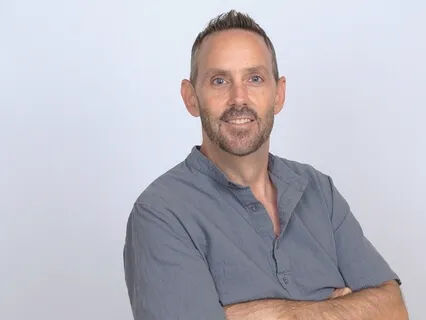
Welcome to life lessons and laughter with your host Glenn Ambrose.
Hey everybody,
Welcome to the show.
Today,
I regret to inform you,
We are talking about regrets.
Oh man,
What do you,
What do you always?
I am king of the segue now.
That's not a segue.
That's just an introduction.
Okay.
Well,
I'm king of the introduction.
What do you always say?
No regrets.
No regrets.
What does that from one letter.
What does that from.
That's from that.
Yeah,
That was the movie.
I think it was the remake of vacation with Jennifer Aniston and at Helms and yeah at Helms.
I think that's what it was.
So,
But this was a so.
Well,
I got to finish explaining it.
Okay.
Yeah.
It had the tattoo.
This kid had a tattoo that said no regrets and it was misspelled.
It was a misspelled with an A instead of an E.
He's like no regrets,
Not even one letter.
So,
Yeah,
So I'm excited.
We're always excited to do that and if you have any topics you'd like for us to cover or just any direct questions,
You can send them in Glenn at Glennambrose.
Com.
There's also Ask Glenn Anything where he just specifically answers your question every Friday with an email newsletter.
But so I'm excited to be talking about I don't know why I'm excited,
But I'm excited to be talking about regrets today.
Well,
Most people have them and I think it's one of those things that society has accepted and it's become so normal.
You know,
It's just I mean,
There's misspelled tattoos about it in movies.
So,
I mean,
It's fairly common in our society.
So it's,
You know,
And it's one of those things that is I think it's a good example of how unconscious our society has become and how our conditioning as you know to function in this society.
It just like most of the things that we're doing don't make a lot of sense.
They just don't work.
You know,
It's they just don't really work if you look real close at them.
And yet most people are doing them and they'll talk about them and they'll write memes and they'll,
You know,
Exchange this information back and forth.
And everybody's like,
Oh,
I know what you mean.
Yeah.
Oh,
I hear you.
And nobody ever slows down enough to see if there's any validity in what is actually being said.
It's just words being tossed around.
So and I think regrets is one of those things like like what I mean,
Why is there even a thing called regret?
I mean,
Like what purpose does it serve?
How does it better our lives if we have regrets?
What purpose does it serve?
What?
Why would why would we even make something like that up?
I mean,
Because really a regret is,
You know,
From the past and we can't go into the past and change it.
So what purpose does it serve?
Like it's oh,
I wish I would have done that differently.
OK.
And,
You know,
And I wish this pen was blue.
You know,
So me carrying that around.
Oh,
I wish this.
I wish my black pen was blue.
Oh,
This makes me feel so bad.
I'm not going to carry that people wouldn't carry that around for decades and decades.
And yet we'll carry regrets around for decades and decades just because I think it's just because we haven't slowed down and really looked deeply into what a regret is.
So,
You know,
If it serves a purpose,
If it doesn't serve a purpose like we this is the lately I've been in the question everything mode.
You know,
Question everything always question everything question all the day to day little things that we take for granted and just assume are true.
Question them.
And this is falls into that category.
What what purpose does or do regrets serve?
Like what is the thing that feels because because if there wasn't some level of feeling good,
Right,
Like we wouldn't hold on to it.
There has to be a level in which because that seems insane,
Right.
It seems insane to think that your regret actually feels a little good.
And that's why you hold on to it.
But like,
Um,
You know,
There's that there has to be truth to that because if it was just pain,
You'd let go of it.
But,
You know,
Holding on to that thing of like,
Didn't you didn't say goodbye the right way to somebody.
You know what I mean?
Like it feels maybe it feels like there's like a connection left.
Well,
I think,
You know,
Of course,
When we're talking about regret,
We're talking about a broad spectrum of different things.
So there's there can be different like flavors of what I'm about to say.
Right.
Of course.
You know,
So so like,
Yeah,
Not saying goodbye to somebody before they died might have one flavor of something.
And then,
You know,
Not applying for a job might have another flavor of it.
But but it's all going to at the deepest level,
It's all going to be the same truth.
So,
Yeah,
You're right.
There is some sort of feedback that we're getting.
And of course,
It's egoic based because it doesn't make any sense if we really look at it.
Yeah.
So it's basically,
You know,
The we're hanging on to the pain because it makes us it it kind of helps us stay stuck in a way because like if I can sit there and say,
Well,
I,
You know,
I would have done that differently.
Well,
But you can't.
Well,
Yeah,
But I would have.
Well,
Then that makes you feel a little bit like a better person.
So that's an ego stroke.
And it's an ego stroke without having to take any action because you're like,
Well,
I would have but I can't.
So my intention was good,
But I didn't do it.
So there's a bit of an ego stroke there,
You know,
And I mean,
It's.
There,
You know,
We can't we can't go back in the past and do something different.
So there's we're trying to stay where we are.
A lot of times we're navigating our way around staying stuck.
So like if if we can feel just a little bit better without having to take any action.
That is very.
Helpful.
Yeah,
It's very appealing to the to the,
You know,
To the egoic aspect of ourselves,
The unconscious aspect of ourselves.
You know,
So it's so we can kind of give ourselves an ego stroke about,
You know,
Not about being a good person.
And at the same time,
You know,
Where where the this keeps popping in and popping out as like I'm getting I'm getting some an aspect of this.
And it keeps kind of popping and popping out when I go to grab onto it.
So the yeah,
The I'll figure it out.
I'll get it.
So sure you will.
So yeah,
The what was I saying a minute ago,
Because that's when it was coming coming in.
It's like the we're trying to feel better about ourselves.
Right.
And it feels like it's a it's appealing to to have to feel right without without doing anything.
So it's the identity that we're locking on to that we're a victim.
See,
We're trying to identify with something.
And if we can identify as a victim,
Then that is something like it.
And we do this in all areas of our lives.
And,
You know,
So this is it sounds weird when you're like,
Oh,
I want to be I want to identify as a victim.
Well,
Not if you look at the rest of your life.
You know,
I mean,
We all do it in multiple ways on a daily basis.
So this is not that outside of the realm,
But just,
You know,
Going for me,
I wasn't able to.
And because it does like you touched on earlier,
It does kind of make us feel like we have a connection.
Even if it's it's a dysfunctional connection.
It's like this.
It's kind of like when we need attention.
It doesn't matter what kind of attention we get positive or negative.
So if we want to keep a connection alive with somebody,
It doesn't necessarily matter what kind negative or positive,
You know,
And there's this unconscious thought that like the more we suffer,
The more it means that we care.
So if you know if somebody says,
You know,
Oh,
Well,
You know,
I should have done this and I didn't.
But,
You know,
Hey,
What can you do?
Everybody looks at them and they're like,
Well,
You're not a very caring person,
Which is a load of crap.
They're actually a more realistic person.
You know,
But we'll sit there and go,
Oh,
My God,
I'm so sorry.
I didn't do that.
Oh,
I wish I could have done that.
And everybody points a finger and goes,
Now,
This must be a caring person because they're carrying around regret.
You know,
So this is this is the identity.
This is that's the feedback.
It makes us feel like a better person.
And society reinforces that.
Oh,
My goodness.
They they they lost their wife and they're just distraught.
Oh,
They must have really loved them.
You know,
Oh,
They lost their wife and they went and played shuffleboard yesterday afternoon.
What's the matter with them?
We're so judgmental.
You know,
Like if we're if somebody's suffering,
Then they actually loved somebody.
And if they if they're not suffering,
Then they didn't.
And you know,
That's the of course,
When somebody when somebody passes away,
That's the big example.
But it's the same mentality that goes into other examples.
It's you know,
You know,
Oh,
I I completely forgot to stop by when I was going to.
I got caught up in what I was doing.
Well,
If you don't just express,
Oh,
My God,
I can't believe I'm so sorry.
That was horrible.
And then two weeks later,
I'll remember that time.
I still can't believe I did that.
I'm so sorry that I did that.
It's just reinforcing this.
I'm a good person.
You know,
See how much I care,
See how much I'm suffering.
That means I'm a good person.
So that's really,
I think the biggest identity aspect of why people carry it around that.
Well,
That's what they get.
They get that ego stroke that they're a good person out of it because they're suffering.
And,
You know,
Does suffering make you a good person?
No,
Let me let me answer that.
No,
It doesn't.
You know,
So so the I'm actually I'm glad you'd let us in this way because we could we could get some clarity on what you get out of it and why we do it to some degree.
You know,
And the biggest part of why we do it is because we haven't looked at it closely.
So unconsciously,
You're getting the positive feedback that we just discussed.
So then if we look at it clearly and say,
OK,
Does this make sense?
It's like,
No,
I mean,
You know,
Like we've had this discussion before the people who have lost somebody that they've cared about and just wallowed in the pain for the next,
You know,
20,
30,
40 years like their lives are basically ruined.
Does anybody think for a minute that if the roles were reversed,
That they would want that for their loved ones?
If they were the one that passed and they were on the other side,
Do you think you'd like to be sitting on the other side looking down on all your loved ones going,
Oh,
They really loved me.
Look how they destroyed the next 40 years of their lives.
Yes.
No,
Of course not.
They're sitting there going,
No,
I'm OK.
Please,
I love you.
I want you to be happy.
Please get on with your life.
Please do things that bring you joy.
I'm fine.
You know,
That's what they would want.
And then the people who have it's and it's not about forgetting.
You know,
This is this is how people anchor.
People anchor that they protect their right to be miserable by saying,
Well,
Then if you don't want me to suffer,
Then you're just trying to get me to forget,
Move on and pretend it didn't happen.
And no,
That is two complete opposite extremes.
This 16000 miles of gray area in between there that you're just skipping right over,
You know,
To protect your right to stay miserable.
So,
No,
It's in the gray.
Of course,
You're not going to forget that person.
And of course,
It's not going to be easy.
And of course,
There's going to be sadness.
And of course,
There's going to be grief.
And you can work through all those things.
And of course,
Life is never going to be the same.
It's not going to be the same.
Even if somebody didn't die,
You can't live on this planet and live 20 years and be the same.
Everything changes.
So,
Yes,
It's never going to be the same.
Life is going to be different.
And the impact of their loss is going to affect how different yours is.
But you can do things.
You know,
The what I was thinking of a few minutes ago is,
You know,
We've discussed how the people who have kind of moved on with their lives and done things to honor the person that has passed seem to heal a lot better and become functional a lot more often.
And I guarantee you ask any one of those people,
Was it difficult?
Were you sad?
Did you suffer?
Every one of them is going to go,
Yeah.
Of course,
There's going to be that aspect of it.
But,
You know,
You can move on with your lives.
You can do things to honor people that have passed.
And sometimes it's outward things.
And sometimes it's just by living your best life,
You know,
And finding some levels of happiness in your own life as you're moving forward.
And again,
That's the extreme example.
And then we take it into the little things of life.
And it's the same thing.
Why is walking around?
So I do this.
I think I did this with you.
Maybe not.
I've done it with several people with working out.
So it's like regret.
Any regret just lowers our energy levels.
And looking at things clearly and even putting a positive spin can raise our energy levels,
Which,
You know,
Of course,
We're more apt to take positive action when we're in positive and high energy mode.
So like if you're sitting there and you go,
Oh,
I'm going to work out three times next week and you don't work out,
You work out once and you sit at home and you go,
Oh,
My God,
I'm such a loser.
I can't believe that I didn't.
I only worked out once when I said I was going to work out.
And this sucks.
And,
Oh,
My God,
You know,
I don't know what I have to do because I said I was going to do it and I didn't do it.
And you can feel your energy dropping.
You can feel the tone of my voice drops,
The energy drops,
The you feel less empowered.
You feel bad.
You don't feel like you can.
You don't feel capable.
You feel less capable.
And,
You know,
It's sitting in that energy and it's like,
Oh,
Do you feel like,
You know,
Bucking up and changing your life?
No,
It's harder before I spent that 30 seconds beating myself up,
Regretting what I just didn't do.
So that's what we do to our energy and our mindset when we're regretting things.
But if you put a positive spin on things and you go,
OK,
I want to work out three times.
Well,
I worked out once.
Well,
That's one more than I did last time.
It's a start.
Next time,
Next week,
I'll,
You know,
Give it my best shot and I'll build off of that success.
I worked out once.
Well,
If I can do it once,
I can do it twice.
Maybe it'll take me three weeks,
But I'm going to get to three times.
Now,
All of a sudden,
Your energy is going up.
You're feeding off the positive and you're empowering yourself and your energy is higher.
My voice is even higher.
You know,
Just talking like that.
And now all of a sudden,
I feel more capable instead of less capable.
So that's the difference of our mindset.
Regret is just a mindset.
It's an unrealistic mindset.
It's it's a draining mindset that doesn't help us in any way for the rest of our lives.
It's like an anchor.
Regret is just an anchor that just drags us down.
So let's let's go a little harder.
Let's talk about people that are living with regrets of something that they did that was like demonstrably bad,
Like a like a crime or like cheating on a cheating on a spouse or,
You know,
Or,
You know,
Some some of the some of the more truly negative things that that people suffer with.
And that,
You know,
Obviously there's there's level there's different levels of regret with all of those things and everything is individualized.
But in general,
If you've done something like a crime or cheated or,
You know,
Something just wrong,
You wronged someone else and you and you have those regrets.
How do you truly heal and get past that?
Well,
With that,
I mean,
To me,
It's,
You know,
This is one of the most obvious reasons why the program of recovery works.
I mean,
That's how I went through it.
You know,
It's like you're,
You know,
The the the program of recovery that deals with past actions is basically making a fearless moral inventory.
So you write down everything,
You know,
Of your past,
All your harms done to others and all that stuff.
And then you discuss it with another person,
Which the,
You know,
The Christian version of this is confession.
You know,
It is something about getting it out of your mouth with another person that that is tremendously helpful,
Because what that does is it gets rid of the shame.
Shame can't stand the light.
So when you get it out to another person,
You know,
And you got to be real careful who you get this stuff out to.
It has to be a nonjudgmental person,
Somebody that's not going to be affected,
Somebody that understands this concept.
And,
You know,
And sometimes a priest or something like that is the perfect person,
Depending on your beliefs and life coaches or people who have been through the process of recovery are great.
Because,
Like,
I like I feel like my sponsor when I went through it really understood the dynamics of of regret.
Like,
I think he understood it better than he knew he understood it.
Like,
I don't know if he,
You know,
If he knew he would know how to teach it.
But I know he knew how to do it like and the thing that he did that was really good is he looked for patterns in my behavior and says,
Do you see how you know that like that you look for the reasons that you did this stuff?
Because most time,
If you have multiple regrets,
There's a common theme and you go,
Oh,
OK,
Well,
I had false expectations and then I would lash out,
You know,
And you can see yourself doing it five,
Six times.
Or something,
Then you're like,
Oh,
And it helps you really learn the lesson.
So I was getting clarity on why I was doing these things at the same time as I was purging the the getting it out there,
Releasing the shame,
Owning up to it,
You know,
Really cleaning my side of the street.
So there's that aspect of it.
And then,
Of course,
Then later on in the program,
There's there's other aspects which which is pretty possible,
Which is pretty popular.
Everybody knows about making amends,
You know,
Then.
So if there's something you can do to right a wrong that you've done,
Then you go do that,
You know,
And there's a lot of creative ways to do that.
Sometimes you can write letters to people who have passed on.
And then go to their grave and read them or burn them or rip them up or whatever.
You know,
You can call people,
You can go talk to them,
Make amends.
And that's really powerful.
You know,
So when there's something you can do to make something right,
Then you should do it,
Which leads into what you mentioned about cheating.
So when when somebody cheats on somebody like that's one of the trickier ones,
Because when or it's a good example of a specific aspect of this,
In my opinion.
Most often,
If you cheated on somebody like you,
You know,
There's not if you care about that person,
There's not much that you can do that's going to make you feel worse about yourself.
Like that is you if if you cheated on somebody you care about,
That will make you feel like crap.
So like,
Of course,
The more you feel like crap,
The more you want to make amends.
A situation like that,
If the person that does that you cheated on doesn't know you cheated on them,
Most often,
In my opinion,
You shouldn't be telling them.
Because all that's doing is hurting them to make to clear your conscience.
That's not love.
You know,
That's just hurting somebody else that doesn't need to be heard.
They don't need to know how is their life going to be enhanced by them knowing.
It's not it's going to hurt.
So intentionally hurting somebody else to clear your conscience,
In my opinion,
Is not the right move.
You know,
Like I said,
There's other ways that you can make that you can make amends.
And one of the biggest ways that you can make amends in any situation is living amends.
It's living differently.
You being the person that you want to be is the best thing that you can do for yourself and others.
You know,
Learning from our past,
Which,
Which,
Which is perfect,
Because this brings us into it's,
You know,
The whole dynamic of regret.
Regret serve no purpose.
Learning from our past does.
So regrets looks at my past and says,
Oh,
I shouldn't have done that.
Oh,
This is so horrible.
Oh,
I wish that was different.
That serves no purpose except to stroke your ego.
It serves no spiritual purpose.
It serves no purpose in a way that's going to make you a better person.
It's going to make you feel worse about yourself,
Which is going to incline you to make more bad decisions or not be able to empower yourself to make good decisions when you need to.
So it's just an anchor that's going to drag you down.
So that it serves no purpose.
Learning from your past serves a tremendous purpose.
You know,
Looking at it going,
That was stupid.
I'm definitely not doing that again.
Oh,
My God.
What was I thinking?
I don't know.
Well,
Note to self never do that again.
That is tremendously helpful.
So we can,
You know,
The problem is,
Is we blend those two together.
And then we're like,
Oh,
I'm having difficulty.
I'm having difficulty letting go of this regret.
Well,
Separate the two,
Separate the difference between dragging yourself down and learning from your past.
No benefit dragging yourself down.
Huge benefit learning from your past.
That's a great place to stop.
That's are we around time?
Yeah.
Wow.
Yeah.
So I think that's,
You know,
That that really does sum it up.
That's why I kind of I knew we were going to get there.
Yeah.
So I was kind of glad that we came and you directed us in a different door because I was like,
Oh,
We'll end there.
That'll be good.
So,
Yeah.
So it's yeah.
You know,
Holding on to regrets.
If you can do something,
Do something to change it.
But you got to get realistic about it.
You just got to lean back and go like,
How does this benefit me?
How does this serve me?
How does this serve anybody else?
It doesn't serve you and it doesn't serve anybody else.
You walking around feeling bad does not make anybody else feel good.
Right.
You know,
That doesn't fix it.
Well,
I'm going to I'm going to punish myself for the next five years because I hurt that person.
Doesn't help them heal.
Not one iota.
They might get vindictive and tell you they want you to hurt.
I hope you suffer forever.
That's vindictive.
That's not actually true.
As long as they're thinking that they're going to be suffering too.
They're going to have to for them to heal.
They're going to have to forgive you.
That's their healing path for you to heal.
You're going to have to forgive you.
That's your healing path.
So so it's forgiving,
Forgiving.
You know,
We have to forgive ourselves.
Look at it realistically.
Learn from the past.
Do what we can to to make amends if we can.
And getting it off your chest.
Don't hide it because shame will build there.
You know,
Share it with another person.
Talk it out.
Preferably a specific person.
Not necessarily.
Not necessarily a friend that you've known for 20 years.
I've known them for 20 years.
I thought they'd be there for me.
No,
Just because you know somebody for 20 years doesn't mean that they're emotionally available and most emotionally mature enough to handle a situation like this.
Pick a professional or somebody that has shown to be able to handle situations like this.
So you can talk it out.
Make sure there's no shame attached.
And yeah,
And then get busy living.
After that.
Amen.
All right.
So that's that's it for this episode.
If you liked it or whatever,
You know,
Leave a comment.
I can only if you liked it.
I mean,
I guess all comments.
But,
You know,
We hope you enjoyed it.
Leave a comment wherever you're listening to it.
Leave a review.
That would really help.
And if you have any questions for Glenn,
Send them in.
Glenn at glennambrose.
Com.
If you sign up for the newsletter on the email address on the website,
You can get the weekly show,
Ask Glenn Anything,
And you know,
All sorts of content,
Blogs,
And everything else up there.
Absolutely.
So go sign up and it's a video series.
So you get to get to watch us be goofy,
Answer all kinds of weird questions and and normal ones,
Too.
So yeah,
Go sign up and the book and the book and go get the book.
Yeah.
So go get the book and leave some reviews.
So thanks,
Everybody.
And we will talk with you soon.
Glenn is available for life coaching sessions.
To book an appointment or for more information,
Go to glennambrose.
Com,
Follow him on Facebook and Twitter or click the link in the description of this episode.