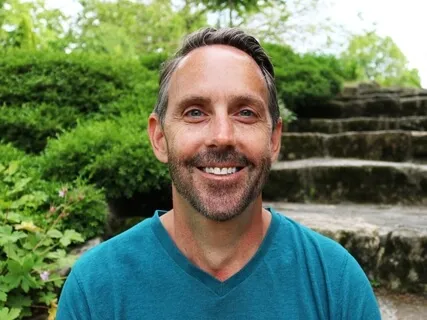
Welcome to Life,
Lessons,
And Laughter with your host Glenn Ambrose.
Hey everyone.
Welcome to the show.
So today we're talking about depression.
And we're giggling because the intro to the show is always funny to me.
So every time,
Every time it's funny to you.
Yeah,
It's just,
It makes me laugh.
I think it's because it's something like formal or something.
Whenever I'm supposed to do something,
I find it silly.
You know what else is you find funny and I don't is for those of us,
For those of you who are watching this on Patreon and not just listening to it.
First of all,
If you're listening to it,
Yes,
I am extra stuffy today.
And if you're watching it though,
You'll notice that Glenn is wearing a t-shirt and I am wearing a full coat.
That right before we started,
Not only am I in Florida,
But right before we started,
He said,
Hold on,
I need to go crank my AC.
Yeah,
Because I was just sweating,
Man.
I was sweating and I wasn't going to make it through the,
I get the heat stats going when I start talking even more.
So I was like,
If I'm sweating already,
I'm going to be a puddle by the time I get halfway through this podcast.
So yeah,
It was,
And I just said it because it was true,
But his response was wonderful.
It was fulfilling.
It was really fulfilling.
So anyway,
So anyway,
Let's talk about depression.
Yeah.
We talked last year a little bit about seasonal depression and obviously with the winter coming,
That is,
That is definitely something to talk about.
So I suggest go back and listen to that.
It's episode 103,
Seasonal depression,
If you want to talk more about that.
But we've never talked about just good old fashioned depression.
Straight up depression.
Yeah.
Yeah.
And it can be brought on by many things.
You know,
It can be,
And people definitely have a propensity to it.
And I found like once you've experienced deep depression,
It seems like you've kind of opened up a door and it's there.
It's a little bit,
You know,
It's a little easier to go there if you're not careful once you open that door.
So but a lot of things can do a change,
You know,
Obviously when things aren't going the way you think they should.
And a lot of things can cause it or trigger it or get you walking in the direction of it.
And I think one of the,
One of the general rules that I found to keep myself out of it as much as possible is the,
You know,
Monitoring my thoughts and my feelings.
Because if my thoughts and my feelings start,
If I start thinking negative things,
If I start feeling unhappy or angry or edgy for days on end,
Then,
You know,
That's a sign that something's off.
So the quicker I can recognize that and do what it takes to get back on track,
Then the better,
You know?
And then I don't dance around with that depression thing at all because I mean,
I have experienced it,
You know,
My previous life I've experienced deep depression,
You know,
And suicidal thoughts and depressions that lasted years,
You know,
So I've had experience with it and it's not fun.
It's not a place I recommend going.
Yeah.
So,
You know,
A lot of people,
Depression is different for everybody.
You know,
A lot of people have different definitions of depression and different ways that it affects them.
And there's,
You know,
There's different types of medical depression now that are,
That are diagnosed,
You know.
I'm not sure what they are,
But I'm sure they've had,
You know,
I'm sure people have made their living out of creating new labels for different types of depression.
Yeah,
Definitely.
So what,
So obviously science would tell us chemical imbalance in our brain causes depression.
And I don't really want to get,
I don't really want to get into a like medicine versus non-medicine debate.
Like if,
If you take medicine for something and it works for you,
Cool.
Like it's a tool to help.
I think that you and I have talked about that a lot before.
Yeah.
I mean,
I was on a,
I was on an anxiety medication myself for a while after I had a near death experience about almost 10 years ago.
And the medication made me more anxious,
You know.
So sometimes the side effects aren't worth it.
And,
You know,
What really leveled that out was doing a lot of stuff that I had talked to you about and,
And stuff.
So there was other ways to manage.
It was,
In this case it was anxiety,
But there,
You know,
There were,
I found different ways to manage depression and anxiety and stuff.
So,
So I thought that this would be a good talk and maybe you could give listeners some of the,
Some of the things that you and I have talked about over the years.
Yeah.
And I think,
You know,
I agree with you as far as the medication,
I'm not one of these people that says nobody ever should be on medication ever.
I mean,
I just don't,
You know,
I believe that there's certain times where it can help us through,
Through tough,
Difficult periods.
I don't,
For the most part,
I don't think that we,
I mean,
And I'm sure that there's exceptions to this.
I don't think say anything all the time,
Always for everyone.
But for the most part,
I think most people can get off of medications for depression or anxiety over a period of time by developing different strategies and working on it.
So I don't think it necessarily,
In most cases,
It doesn't have to be a long-term solution,
But it can be a short-term.
And that's my personal perspective on medication.
So now we'll get into the rest of it.
You know,
The really dealing with it is the hopelessness,
You know,
That's really where the depression energy is.
And it's depression energy and hopelessness is way down at the bottom of the scale of energies,
Because it is dangerous,
Because you have a tendency to stop trying to change anything.
So like on a scale of emotions,
Anger is actually higher than depression,
Because anger can force you into changing something and taking action,
Whereas depression and hopelessness,
You can just stay there,
You know,
And just not see any way out.
A lot of times depression either links up to before or after you're in a depression,
It will link to shame,
Which is another very low emotion.
And you know,
Shame is feeling that there's something wrong with you,
Whereas guilt is feeling that you did something wrong.
Shame is feeling that there's something wrong with you inherently.
So when you get to that level,
Again,
It goes to the hopelessness,
Because the hopelessness is thinking that there's something wrong that you can't change.
You know,
It's never going to get better,
You can't fix it,
It's not worth trying.
That's the energy that,
You know,
Obviously is very dangerous.
And it can take a lot of different faces.
Some people can function externally,
While feeling that way internally.
Some people can't,
You know,
Some people just curl up and can't function at all.
And sometimes it just depends on where they are in the depression.
I've been all over the map with it.
I mean,
I've,
You know,
I've functioned for years just depressed,
But I've also been,
You know,
Curled up in bed all day too.
So you know,
It does take different faces.
You know,
The first thing that we need to do is feed that hope.
You know,
Because that's what's missing.
That's the spark.
It's just start feeding that.
And you know,
Once you can start feeding that,
You can start expanding it.
And you have to understand what.
.
.
No,
Go ahead,
Go ahead.
I saw your face light up.
That means there's something going on in there.
But it's,
You know,
Starting to feed that hope because it's the thinking that there's no,
You know,
Nothing's going to change.
You have to understand like where your mind is when you're in that space is it's,
For lack of a better term,
You're in bad space.
You're in bad headspace.
You're in bad thinking mode.
So if you're in bad thinking mode,
Negative headspace,
The only things that are going to sound right to you that are going to sound like they make sense are things that are negative because that's what your brain's looking for.
It's literally looking for things to be bad.
So when you give it something to be bad,
It says,
Yes,
That clicks with me.
Yes,
That makes sense.
Yes,
Feed me more of that.
Yes,
That's how I feel.
That's what makes sense.
Now you're on the right track,
Which of course you're not.
So one of the first things that I ever do if I get into any negative headspace,
It doesn't even have to be depression,
But just understand that my thinking is messed up in that space,
You know,
So that I can't trust my thinking.
And you know,
Then if you can,
I mean,
Usually I can work my way out of it myself,
Knowing what I know now.
But I mean,
A lot of times you have to get help outside of yourself because you're locked in into the situation.
You know,
It's one of my favorite quotes,
Einstein's quote,
You know,
You can't fix a problem with the consciousness that created it.
So if your thinking walked you into a depression and you think you're going to use the same thinking to walk your way out,
You know,
It's unlikely.
So this morning,
I when I thought about this topic,
I didn't write down notes,
But in my head I said,
Glenn's going to mention Einstein.
You can't change that.
And then somebody who I don't remember where it's from,
Or who or whose idea this was,
Somebody that I was either listening to or know or you or even you and I on this podcast,
I'm not sure,
Once described depression as like a parasite that lives in you.
And it reminded me of what you just said about feeding it.
You know,
The parable of the two wolves?
Yeah.
There are two wolves that live inside each of us,
One is evil,
One is good.
Which one wins the one that you feed the most?
You know,
I was talking to somebody about that recently,
Just the,
You know,
You feel this negativity,
You feel this energy,
You feel all of that stuff.
If you sink into it,
If you stay in bed,
If you whatever,
You know,
Whatever it is,
Feel,
Allow yourself to feel the sorry for yourself,
All of that stuff,
You're feeding that parasite that's inside of you.
You know,
You're feeding the parasite and you're not.
Whereas like trying to get up and force yourself to do things that are opposite of that will eventually,
You know,
Like you're not going to think yourself into better actions.
You're not going to think yourself into better feeling.
You're not going to.
Yeah,
You have to act yourself into better thinking instead of trying to think yourself into better acting.
Yeah,
It's what you feed.
If you starve the parasite,
It will hopefully,
You know,
Lay dormant at least.
Right.
And it's,
You know,
There's truth to what you're saying and there's a little,
You know,
It's mental and it's energetic.
So the mental part is the feeding.
The energy is just really what's there.
So like if you're depressed,
There's a thought process that got you depressed and it's unhealthy and it can't be trusted and you can't feed it.
Yeah.
But there's also,
Once you've gotten there,
There's energy within you.
That's depressive energy.
That's negative energy.
And sometimes that needs to be felt.
And sometimes,
You know,
Because a lot of times what we do is we try to take the high road and just ignore the feelings that we have and then what we do is just stuff them.
So sometimes it's,
You know,
You can feel those emotions.
You know,
The first thing I do if I'm feeling a depressive type energy is because that's kind of where my energy will go.
I call it depressive type energy because I'm not actually fully depressed.
But if I'm allowing myself to behave in,
Like if I'm pushing myself too much and I don't correct it,
It will go into,
It will start heading towards a depressive energy.
And then when I start feeling that,
It's like,
Holy crap,
You know,
I've been pushing myself too much and I haven't been doing anything about it.
I better do something about it now before it gets into full-fledged depression.
You know,
So that's kind of how my road can go.
So like if I'm in that space,
I look at it and the first thing I try to do is be kind to myself,
Be loving,
Be kind.
You know,
We're so hard on ourselves and we're so used to that when something's wrong,
The first thing we bring in is discipline.
You know,
It's like we do it with kids.
We do it because,
You know,
Because that's what was done to us and that's what,
You know,
Our bosses do it.
And all society's set up where if somebody's veering off,
You discipline them.
And usually we don't need discipline,
We need love.
You know,
So I try to give love to myself and honor myself and allow myself if there's energy in there that needs to be felt,
I'll stay in bed for a day.
You know,
I'll allow myself to cry,
I'll allow myself to feel it.
But what I won't do is I won't feed it mentally.
You know,
So there's a difference between the two.
There's this trapped energy that needs to be felt so we can allow it to go.
But we can't feed it mentally.
We can't be sitting there going,
Oh my God,
My life sucks so much.
Oh,
This is so horrible.
Oh,
It's not fair.
Oh,
I'm never going to get out of it.
That's just feeding and creating more negative energy.
So I don't allow myself to think that way.
And I'll,
You know,
I'll push that out and then allow myself to feel it.
Get rid of some of that stuff.
You know,
And if it's going a day or two,
And usually,
Like I can wait,
Like I can hold it off until a weekend if I feel it coming.
So I can do it on my terms,
You know,
And get done what I need to do usually.
I mean,
Most of the time that's a possibility.
But you know,
Feeling that stuff,
There can be,
There's a benefit to that.
You just don't want to allow yourself to fall completely in it.
And you know,
Just,
Well,
I'm feeling.
And then lay there for two months.
Like no,
That's falling into it.
You're not allowing yourself to feel things and escape them.
If you pay attention,
You're creating a story in your head and reinforcing that story to keep you stuck there.
You know,
And that's what you don't want to do.
All right,
So what about people who have depression brought on by traumatic experiences such as the loss of a loved one or something traumatic that happened to them personally?
You know,
What,
Because I don't want to,
Like,
I just want to say the,
Yeah,
Buts,
You know,
Because I think like people that suffer from depression and I'm saying myself as one of them,
Yeah,
But is a,
You know,
Like your,
Yeah,
That's great.
Like I get the answer.
I hear you,
But you don't know what happened to me.
Right.
Yeah.
And that's the terminal uniqueness.
You know,
We all think that,
You know,
If you,
I mean,
I lived that life for 20 years,
You know,
If you had my life,
You'd drink too.
If you had my life,
You'd be a screw up too.
If you went through what I went through,
You too.
And that's just,
You know,
We all think that and,
And in a way that there's no truth to it and there's truth to it.
There's truth to it in a way that,
Yeah,
Of course my story is the worst because it was mine.
I felt it.
I didn't feel yours.
So,
I mean,
So if we're going to weigh out whose story was worse as far as feelings go,
Well,
Mine's going to win against everybody's because I actually experienced the feelings of it,
You know?
So in that type of way,
No,
I don't know what,
What people are,
Have been through.
But it's,
It's,
You know,
The fact is,
Is,
Is always somebody that's been through something more difficult.
The depression is depression.
It's energy.
So it doesn't matter what you've been through.
You can get out of it because somebody has,
You know,
It's simple.
It's as simple as that really.
Somebody has had an experience as bad as yours or worse and have,
Has gotten out of it.
And I think the,
So if it's,
If it's brought on by a traumatic situation,
It's difficult.
Basically,
My answer is the same because it's mental and it's energy.
But the difference is,
Is that you kind of have to go back and forth.
Like if you have depression coming on and it's because of life circumstances and how you're processing them,
You might be able to,
You know,
Go in bed and cry for an hour,
Let yourself process that stuff,
Then pull yourself up by your bootstraps and go on about your life and everything's wonderful.
I mean,
That's,
You know,
Very minor case of energy.
If you have a larger portion of depressive energy within you brought on by a traumatic experience or just by living in it for a longer period of time,
You're going to have to go back and forth,
But you can't allow yourself to stay in one place.
You're going to have to feel more than an hour,
You know,
You,
And you're going to have to,
You know,
Who knows?
It's going to look different from,
For everybody,
But I'll just give an example.
So for one person,
It might look like,
Um,
You take a week and you pretty much don't get out of bed,
You know,
Except when you have to.
And that whole week is basically focused on feeling what you're allowing yourself to feel the feelings of sadness that's within you and paying attention to the physical symptoms of it.
You know,
I've got other podcasts on how to feel the energy,
But basically you got to let go of that story of what's causing it.
Let go of that and allow yourself to feel this physical sensation.
I feel pressure on my chest.
Oh,
I feel nauseous.
I feel the sadness just flowing through me and sweeping over me.
You know,
Feel that just feel that without the story attached to it.
And you might have to do that off and on for a week falling in and out of sleep,
You know?
And then after a week go,
Okay,
I allowed myself to feel that a big chunk of the energy is gone.
Now I need to make sure I take some physical action to start acting myself and to better thinking and start,
You know,
And then you start doing things,
Start doing things,
Preferably loving for yourself,
You know,
Go to a store and buy yourself flowers and stick them there.
And then,
You know,
Pat yourself on the back because you did something positive that day and then something else and then something else.
So you know,
This can,
This can vary quite a bit depending on the person.
But if you honor yourself and give love to yourself and allow yourself to feel some of that stuff and let it out while not feeding the mental thing and start trying to take some positive action and start,
You know,
Feeding yourself positive mental stuff,
Listen to spiritual podcasts,
Read a book,
Start getting some sort of other way of thinking put into your brain so it can start replacing the negativity that's sitting there and you can start seeing things from different perspectives because your perspective is your reality.
You know,
You're the reason that somebody is depressed is because their perspective the way they're looking at the world says that it's not fair,
Nothing's going to change and everything sucks.
So you know,
As long as you're looking at it like that and that's the only viewpoint you have,
You're going to stay depressed.
So you need to start getting in,
You know,
Different food,
Different stuff,
Feeding a different wolf.
The last thing that I want to talk about that I think is,
Is it something that you and I completely agree on?
Don't,
Don't face any of this alone.
You know,
There's no reason for it.
There's no,
There is this terminal.
Yeah,
The stuff that makes sense in your head,
Like a lot of times it doesn't even make sense when it's coming out your mouth.
There's something to what makes sense when it hits air.
Like a lot of times you can pick up on your own crap,
You know,
Depending on where you are,
But it's like you can,
I mean,
I've talked with,
You've seen me talk with,
With people that were looking at life from a depressive perspective and have a conversation and go,
Okay,
Well,
You can see at least this to be true,
Right?
And there,
And I can kind of back them into a corner to where,
You know,
Maybe it's something very small,
Very positive,
But they have to go,
Okay,
Yes.
Yes,
Glenn,
You're right on that little stupid little thing.
That doesn't mean anything.
You are right about that.
They go,
Okay,
Good.
So there's a starting point.
So if I'm right about that,
Then that means that this is that now we have possibilities,
Right?
We do we,
Can we agree that we have possibilities?
But I guess,
Like how can I say no,
There's no possibilities.
Okay,
Good.
See,
You know,
And you can start walking somebody back out of that.
No,
Everything sucks.
It's the only way to see it.
I'm 100% right.
And that's the fact.
It's not the fact.
It's not,
You know,
And if you're talking to somebody that's going to hold you accountable and just be just use logic to things that you've already experienced in your own life,
You can start latching on to the truth of the situation.
And that is the truth is you're just looking at it from a negative perspective.
It's not the end all be all.
It's not the truth.
It's not the reality.
It's just your perspective.
And if it's your perspective,
Then we can change it and see it from a different perspective.
And one isn't necessarily more right than the other.
It's just the perspective.
So this belief that,
You know,
No,
Because people truly believe I mean,
When I've been there,
When you're fully depressed,
You truly believe that you are looking at things honestly,
And you're not.
Yeah.
And you think that everybody else isn't.
Yeah,
Yeah.
And they go,
Oh,
Well,
No,
That's not true.
I can prove the way I look at things is true.
I can prove it.
I can prove it more than they can prove that the way they're looking at things is truth.
And I'll throw that out there as a challenge.
But yeah,
It's you know,
It's and that's that helps.
That's one of that's one of my ways of helping people in this situation.
It's you got to start,
You know,
Just opening up to the possibility that things can be different.
And you know,
When I opened up 15 years ago,
Initially,
That was the first thing that happened to me.
That was the first thing is I,
You know,
I was completely depressed,
Suicidal the whole nine and all of a sudden,
I remember it was the first thing that happened to me was this little spark of hope.
It was just this little tiny kind of,
I don't.
Okay,
Maybe,
Maybe,
Possibly,
I guess,
Perhaps something could be different.
Maybe.
And that was that was it.
As soon as I opened up to that possibility,
You know,
The floodgates just pushed open.
And for the next three months,
I started going through spiritual experiences and my entire world changed.
Just because of that,
But that's what it took was that first spark of hope.
So we are coming short on time here at the end.
Is there any last bit of advice or anything that you'd like to give to people?
Really just get help,
You know,
Get help because I mean,
It's,
You know,
I know way too many people that have committed suicide and it's it's it's not necessary.
And and I mean,
You know,
So that's all the way committing suicide.
But you know,
I know way,
Way,
Way too many people who are living in depression and just not doing anything about it.
And I understand why they don't feel they can,
You know,
And the things that they haven't worked,
The things they've tried before haven't worked.
So but that doesn't mean that nothing works.
That just means the things you've tried before haven't worked.
You know,
So try something different.
I mean,
Why not?
You know,
Like it's not like what do you you know,
What are you trying to hold on to your misery?
You know,
There's a saying in recovery like,
You know,
Just give it a shot.
And if worse comes to worse,
We'll gladly refund your misery.
You know,
So so you're really not risking anything.
You're already where you don't want to be.
So just reach out and try and keep trying because there you know,
There there are people you just comprehend that there are people like me that have been suicidal and depressed and have dove into it very deeply that have come out of it and found new ways to live.
I'm not the only one.
There's plenty of us out there.
So if they can do it,
There is nothing special about me or any of the other people that have come out of it.
You know,
They are not unique compared to you.
You know,
If you're in there suffering with it,
You have just as much capability of coming out of it as I did or anybody else.
So you can do it.
So that's the thing.
Just just keep plugging away.
If you've got five minutes worth of energy,
Then take five minutes worth of energy and listen to five minutes of a podcast or read one paragraph in a book and then the next day read two paragraphs in a book.
There's no step too small.
Just keep moving forward.
Even if it's at a crawl,
Talk to a friend and talk to a professional,
Get a life coach,
See a therapist,
Do something,
You know,
Do something.
Anything.
So that's it for this episode,
Glenn.
Obviously,
If people want to reach out to you,
GlennAmbrose.
Com is the best way to do that.
You can find us on Facebook,
Glenn Ambrose Life Coaching.
We have the weekly show where we run down some positive news stories that happened this week and talk about what's right with the world called What's Right with the World.
Check that out.
You can see video versions of this show and more on patreon.
Com slash Glenn Ambrose.
That's it.
And we've got the blog too,
Mindful Mondays.
The links to all this stuff is on my homepage of my website.
So you can just go to GlennAmbrose.
Com and find the links to everything if you want.
But thanks for listening.
We'll talk to you soon.
Glenn is available for life coaching sessions.
To book an appointment or for more information,
Go to GlennAmbrose.
Com,
Follow him on Facebook and Twitter,
Or click the link in the description of this episode.