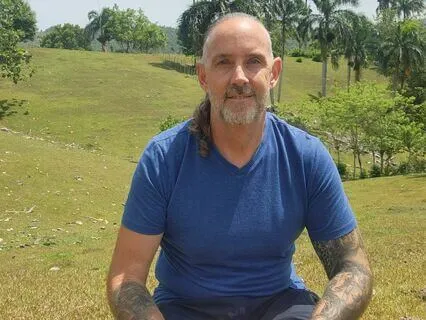
Welcome to Life Lessons and Laughter with your host,
Glenn Ambrose.
Welcome to Life Lessons and Laughter with yours truly.
What's happening?
So,
Today's show is,
As with the theme,
As of late,
It's spawned by some things I've been talking about lately and experiencing.
So,
I actually started.
.
.
This topic is getting more and more clarity as recent time goes on.
Like,
I don't know,
The last year or so.
And,
As with all spiritual topics,
There's a blending that comes together.
You know,
Like,
Things overlap in spirituality.
So,
Like,
You can come in on different doors into the same topic and you can approach it from different perspectives.
You can start talking about one thing and it blends into something else.
So,
You know,
Recently I've done podcasts on defense mechanisms,
Specifically anger and how it's just one of the defense mechanisms.
And as life experience goes and conversations go and information flows,
Like,
It's just.
.
.
Information comes in in new ways all the time.
And sometimes,
You know,
Greater clarity.
So,
That's what's been happening around this.
And so,
I guess it's just something that needs to be understood.
So,
What I'm discussing is coping mechanisms.
And to me,
Or at least the way we're talking about them,
Coping mechanisms and defense mechanisms are basically the same thing.
There's three main,
You know,
Coping mechanisms.
Fight,
Flee,
Or freeze.
So,
Those are the three main things that we do.
And as I've mentioned in previous podcasts,
We all have a go-to.
We all have a norm.
We all have one that we learned as children to depend on,
Basically.
So,
The thing with the.
.
.
You know,
I've been getting greater and greater clarity in all kinds of ways around the coping mechanism topic.
And part of that is really seeing that,
You know,
It's like everything else.
This is kind of,
Well,
At least one of the new parts of this particular podcast.
You know,
Some insights that I haven't shared before because I didn't have them before.
There,
You know,
We live in a world of yin and yang.
There's two sides to every coin.
There's a negative and a positive.
You know,
And I've mentioned it before in masculine energy,
Feminine energy.
There's a negative aspect to masculine energy and a positive aspect.
There's a negative aspect to feminine energy and there's a positive aspect.
There's a positive aspect when we are in alignment with our particular personality,
Has specific positive attributes when we are in alignment with our personality in a good way.
There are negative attributes to our personality when we're out of alignment,
When we're struggling with being ourselves.
And that can manifest in a negative way.
So,
Like you can.
.
.
If some of you are familiar with either the gene keys or.
.
.
I should have said the other one first.
Human design,
I believe is the name of it.
Like those two,
I believe both of them,
You can go online and take like a free assessment and it gives you some insights into your personality,
Possible life path,
All this type of stuff.
And I believe both of them show negative and positive attributes of different sides of you.
So you can kind of understand it better.
You know,
So everything is like that.
Everything has a positive and a negative attribute.
And so do coping mechanisms.
So coping mechanisms,
You know,
If.
.
.
And I kind of tried to make a little bit of some notes for once.
You know,
The coping mechanisms like fight is the first one.
I say the term fight because that is what.
.
.
You know,
Because it starts with an F.
Really,
That's kind of why I say it because it's fight,
Flee,
Or freeze.
You know,
They all start with F.
It's catchy,
You remember it,
Yay.
But really,
Fight is most often,
Most people aren't running around fist fighting.
So it's more like arguing,
You know,
Especially within relationships and stuff.
And that's where,
Especially as adults,
That's where this type of stuff really comes into play within our relationships with other adults.
And of course,
You know,
Whoever you're closest with,
It's going to come into play even more with them.
Like when I was a single parent,
You know,
This stuff would show itself in a relationship with my son.
Why?
Because he was the person closest to me.
So I was the most comfortable around him and we could trigger each other.
We knew each other better than anybody else.
So I would see it with him.
If I'm in a romantic relationship and spending a lot of time with somebody,
It's going to show itself in that.
You know,
It can show itself in any relationship,
Really,
In any situation.
But the person you're closest to and interact with the most,
You're going to see it most clearly there.
So most of us as adults aren't running around getting in fist fights.
So it's more of an arguing,
You know.
And so the fight coping mechanism,
What we label this fight,
Is actually basically like confrontation.
It's confronting the situation.
It's handling it right then and there.
That's really what fight is.
And if we're out of balance and we're doing it in a negative way,
Then it manifests as an argument.
Arguing,
Fighting,
Yelling,
Whatever.
But the actual dynamic or the energy of fight is to address the problem right then.
To work through it.
That's the goal.
Now,
If you let the emotions take over you and you lean in a direction of emotional acting and arguing and yelling and whatever else,
That's when you're out of balance with it.
It doesn't mean that the coping mechanism called fight is bad.
Because if you're in a positive energy,
The coping mechanism called fight is actually communication.
There's a problem and you want to address it and communicate and solve it then.
That's actually what it is.
So you're coping with the problem by addressing it and working through it right then.
That is what we call the fight coping mechanism.
It's just we call it fight because most times when we drop into our coping mechanism,
Our go-to coping mechanism,
It's an unconscious response.
So usually what we do is we just drop into the negative aspect of it.
Why?
Because we're unconscious.
We're not using the coping mechanism in a healthy way.
So therefore it's unhealthy.
So we just drop into it unconsciously and we land into the unhealthy version of it.
This is why so many people identify the fight as a defense mechanism or a coping mechanism.
And they actually think it's fight.
And a lot of times it shows up as that.
It shows up as arguing or yelling or something like that.
So along with that comes shame.
Shame comes with all of them really.
But along with that comes shame because you're acting in an unconscious way that's unhealthy.
So then you feel bad about yourself.
Whenever we feel bad about ourselves,
It just actually gets us to do it more because we don't think we're a good person or we're incapable of controlling ourselves or whatever.
Our energy drops and we don't think as much of ourselves.
And then therefore we fall into unconscious patterns even more.
So I'm hoping that if we can understand these coping mechanisms a little bit better and how they work,
We can understand each other better and we can also understand ourselves better and we can learn to control these things and not just,
Oh,
My coping mechanism is fight so I'm a bad person.
No,
Your coping mechanism is to address the problem.
That's a good thing.
You just are unconsciously choosing to do it in an unhealthy way.
If you can just steer back into that,
If you can be in control of yourself just a little bit more and consciously choose to address the problem in a healthy way,
It's a wonderful coping mechanism because you communicate and you bring it up and then you can work through and get to the other side.
It's a beautiful thing.
It's actually indispensable.
You need to be able to do that at some point.
So we think that this fight response is such a negative thing and it's not if it's used in a healthy way.
But we label it as fight and fight sounds bad.
But that's just a negative version of it.
The coping mechanism is not fight.
It's actually addressing the situation,
You know,
Which,
Like I said,
It's indispensable.
We have to do that if we expect to have a decent relationship with the person that we're having a situation with.
And that's one of them.
And I'll go through the other two.
So the other two are flee and freeze.
And these don't get as much negative attention as fighting does.
But when you're in a relationship,
They can be just as detrimental,
If not worse.
I would argue to say that they're actually even worse than fighting because you never resolve them.
If you drop into freeze and you just know I'm not dealing with it,
You can't work through and get to the other side.
You know,
If you drop into flee and you just walk away and you don't allow yourself to ever address it in a healthy way,
You can't work through it.
Like those relate people who go to freeze and flee.
If you never like it,
Don't get me wrong.
Now,
It's OK to freeze or flee in particular moments.
OK,
And I'm going to get into that in a minute.
What I'm saying right now is that if you freeze or flee forever,
Like if you freeze and you never come back to it or if you flee and you never come back to it,
It never gets addressed.
You are incapable of being in a healthy relationship.
You cannot be in a healthy relationship if you can't work through problems.
Right.
So so to get back to,
You know,
The healthy and unhealthy.
So flee is,
You know,
Just I'm not dealing with this and walking away.
And like if you do that every time,
All the time,
That's a problem.
OK,
But even more importantly,
If you never come back to it.
Gigantic problem now.
So it sounds like I'm saying that flee is bad all the time.
It's not like there are appropriate times to walk away from a situation.
That's why that's flee in a healthy form.
If you just if you like every time you feel adversity or controversy or every time somebody doesn't agree with you,
You just walk away and excommunicate them out of their life or just dismiss it and pretend it never happened or something like that.
That's the negative version of flee.
OK,
So what's the positive version?
The positive version of flee is when there is a situation that like,
Let's say it erupts and the energy is negative.
It's hostile.
And addressing this situation,
It's either not the time or the place or the energy is just too inflamed where you're not capable of having a normal conversation.
Like perhaps the other person has dropped into an unconscious form of fight.
So they're angry and they want to argue.
And then so in that particular situation,
Fleeing is appropriate,
Saying,
No,
I'm not dealing with this right now.
You're obviously upset.
We'll deal with it later.
And getting yourself out of that situation,
Sometimes you have to leave the house or leave the room or just walk away,
Whatever.
Like that is a healthy use of the coping mechanism of fleeing.
You know,
When the time or the place or the energy is not appropriate to deal with the situation in a rational way and you get yourself out of that situation,
That's healthy.
Now,
If you're going to have a healthy relationship,
You still have to come back to it at some point and address it.
You know,
But we're talking about the particular coping mechanism right now.
So coping that the flee coping mechanism in a healthy way is getting yourself out of a situation that is inflamed or the time isn't right or the place isn't right.
So that's a healthy way.
And the unhealthy way is just bailing one,
Either bailing every time something happens,
Every time something feels uncomfortable,
You just bail and or never coming back.
So the problem is addressed fleeing and never coming back is,
You know,
Is extremely harmful to any relationship,
Friendship,
Marriage,
Parent,
Child,
Doesn't matter.
Relationships are all basically the same dynamic.
They just look a little different on the surface.
They're all based in respect and trust and the ability to work through problems,
Quite honestly.
Right.
So.
So,
You know,
That's the flea.
Now,
The freeze is very similar to the flea.
You know that there because those two are both not addressing the the fight response is the only one that actually addresses the problem.
The free or the flee or the freeze do not address the problem.
OK,
So so the dynamics of them are very similar.
I mean,
One might even argue that they're the same one.
Maybe freeze or flee are kind of two different versions of the same coping mechanism,
You know.
But anyway,
So so the freeze,
Like basically it's shutting down.
Not dealing with it at the time.
And sometimes that can look like disconnecting,
You know,
Like I know.
I know when my parents used to talk to me all the time,
You know,
When I was younger and give me my lectures and stuff,
I used to tune them out all the time.
And,
You know,
When my son was growing up,
Like I could tell that he would tune me out sometimes,
Too,
Because I'm a talker and I like to explain things.
And I and like,
You know,
Like I can't I can't have this whole grandiose understanding of the dynamic in my head and in my heart and want to share it with my son because I think you could benefit him and just not say it like that.
That just eats me alive.
So so when my son was young,
Sometimes like when I mean,
I did this a few times after,
But I noticed that one time he looked like I looked at him and he seemed like he was tuning me out.
And I looked at him and I said,
Are you tuning me out?
And he said,
Oh,
Yeah.
I said,
OK,
So how when did you start tuning me out as well?
Pretty much when you started talking.
I was like,
Oh,
OK.
And what was nice is he knew he could be honest with me.
And tell me that,
You know,
And I said,
Oh,
Yeah,
Well,
I used to do that,
Too,
When I was a kid.
I said,
But I said,
Well,
Anyway,
I feel like I have to get this off my chest so I can feel like I'm trying to be a good father.
So I'm just going to say what I need to say.
I'll try to make it a little bit quicker since you're not actually listening,
But I got to get this off my chest.
And he was like,
OK.
So he sat back and tuned me out and I just finished what I was saying.
And I was like,
OK,
I'm done.
What are you going to do?
I can't make him listen.
Right.
Oh,
So so freezing can be tuning people out,
Shutting down.
It's a version of shutting down.
Right.
So it can be tuning people out and staying present or it it can it can be like,
You know,
And that's like if you're in a situation together or something might like bother you.
And you just don't bring it up like you're walking around the house and like I feel energy.
So like if somebody is doing that,
I can feel it like I can pick up on the little nuances.
I think most people can can pick up on the little nuances of their behavior.
You can just kind of tell something's wrong.
That's a version of freeze.
OK,
So because it's just it's not taking any action.
That's why it's called freezing.
So,
You know,
You're you're not getting you're not getting yourself out of the situation.
You're not leaving.
You're not walking away,
But you're still kind of doing the same thing.
You're not addressing it.
You're just holding it within and not addressing it.
So that's a version of freeze.
OK,
So just like flea,
Like I said,
They're very similar,
Just like flea.
If you're in a situation that it's not the right time or place to address the issue or the other person is maybe caught up in fight and they're too emotional to have a calm discussion,
Then freezing can be an appropriate response.
Sometimes sometimes you can just tune people out and let them get something off their chest and just be like,
OK,
Well,
You know,
You said what you had to say.
We can talk about it again a little bit more later.
Just not being willing to engage with somebody that is emotional or out of control.
That's a healthy version of freeze.
I,
You know,
I'm not going to it's not addressing it.
Those two are not addressing flea or freeze.
Fight is addressing.
So these two,
It's just not we're not dealing with it right now.
And that's healthy.
You know,
If there's a reason to not deal with it right now,
And sometimes that reason is I just need to sit and think about it.
And that's OK,
Too.
You know,
Some people are more processors than action takers.
I would venture to say that processors probably would tend to freeze and flee more.
And action takers are probably going to fight more.
Why?
Because that's in alignment with how they just naturally function and interact with life.
Action takers tend to take action and then figure out the adjustments afterwards.
So they kind of leap and then they make the adjustments afterwards to smooth out all the things that they didn't know or they disrupted when they left.
Whereas the processors usually don't act.
They stop.
Pause.
They process what's going on.
And then once they've processed everything,
Then they take action.
And their adjustment period on the other side is usually much quicker than an action taker because they processed before they took the action.
Right.
So,
You know,
I used to think action takers were a lot faster than processors,
Like going through life,
Maybe even learning lessons.
But after I've experienced,
You know,
Processors that were close to me and me being an action taker and I kind of stepped back,
I think they're basically equal.
Because I think what happens is like,
Let's say you make a life change and as an action taker,
You go,
I need to do this.
I just need to do this.
So I'm doing it.
And you go do it.
Then it takes three months to just go,
Oh,
OK,
Well,
I have to do this because I took that action.
I have to do this before because I took that action and I have to adjust to this.
And my schedule is out of whack now and I have to reassess and I have to do this.
And then it takes us three months to kind of get our feet back on the ground after taking this quick action.
We go,
OK,
All right.
There.
Now,
A processor might process for two and a half months or two months,
Let's say.
They process for two months.
I don't know.
I think I might.
I might.
Maybe I will.
I think I might.
I don't know.
And they process and they get used to the idea for two months.
And to an action taker,
You're going like,
Will you just leap already?
Like what's.
You want to do it,
Just do it,
You know,
But a processor processes for like two months and then they leap.
Now,
Nobody can look into the future and make everything smooth.
So they do still take like,
Say,
A month in this example to adjust to their new whatever life change they made.
But it's still three months.
It's just they process for two months and then they adjust for one month.
An action taker takes the action and then adjusts for three months.
It's just a different way of doing it.
So I don't think there's really that much difference time wise.
It's just a different way of interacting with life.
So I think,
You know,
Since processing takes time up front,
Then that's probably why people who freeze or flee tend to be processors,
Because they're what they're doing is that they're not ready to address it yet.
They need to process it a little bit first and then they can address it.
OK,
So do you see,
You know,
At the beginning I said that there was overlap and stuff.
Do you see how now all of a sudden I'm talking about this and processors and action takers blends right into the conversation of free,
Freeze,
Flee or fight coping mechanisms?
It's how we interact with life.
And if you understand this about people,
It's really makes their relationships much better.
And it makes us much and makes it much more possible to understand other people.
You know what?
Like a lot of problems in relationships with people.
And I'm even talking about societal relationships.
Just we don't we don't understand each other.
We don't even attempt to understand each other.
If somebody thinks something if somebody thinks differently than us,
We just label them as bad and wrong.
I don't honestly I don't know really when that started,
But it's completely out of control at this point.
This is why there's so much diversity and polarity in society right now.
It's because like if somebody found out you voted for somebody,
Then there's this evil box that they put you in or the good box if you're on their side.
And and it skews the way they look at you and everything that you do and say,
It's weird,
Man.
Like we're supposed to have different perspectives.
We're supposed to function differently.
You know,
Things like this,
Processors and action takers and coping mechanisms is only a few.
Like so let's just try to be a little if we can understand each other,
We can have a little bit more compassion.
We don't have to agree.
We don't have to agree with the way they do things.
We can just be like,
Oh,
You're different.
I get it.
I'm an action taker.
You're a processor.
So maybe my work in this relationship is to be a little bit to acknowledge that and to be a little bit more patient with you to understand,
Hey,
They're processing.
I'm not going to snap my fingers and turn them into an action taker,
Nor should I.
Why is action taker better?
Why isn't processor better?
Neither one of them is better.
They're just different.
They're just different ways that they both have their benefits.
You know,
It's just different perspectives.
That's all.
So this is why I wanted to do the podcast.
When we when we start understanding each other better.
And we go,
Oh,
OK,
They're a processor or oh,
OK,
Their go to is freeze or flee.
So they might need to process the information a little bit first or build up their courage to have the conversation because having that conversation isn't easy for them.
You know,
I'm not saying never have the conversation with these people.
I'm saying be aware and respectful for the who they are and the way they are.
And if you are,
You're going to find a middle ground.
If you guys that's why relationships are based on respect.
Is because if you can understand how somebody functions a little bit,
You can take that into consideration when you're choosing how to interact with them.
Instead of going,
I'm an action taker,
So therefore I believe that we should discuss it right now.
And if we don't,
It's going to drive me crazy.
So shut up and discuss this.
You know,
We have to discuss it now.
I'm not leaving until we discuss it now.
I'm not leaving until we discuss it now.
And you're all righteous like this is the right thing to do.
It's like,
You know,
I mean,
I personally like I said,
I'm an action taker and I'm a person who likes if there's a problem,
I want to deal with it because I don't like walking around with problems.
I don't like them hovering.
This is why I got in so many fights when I was a kid.
It's like when I was a kid,
If there was a line crossed like there's an energetic line and I knew it when I was a kid.
I know it now.
And I mean,
Don't get me wrong.
These lines are different.
I don't fight.
But but like when I was a kid fighting,
There was a specific line that if you cross like I can't think of a specific example because the the the manifestation of crossing that line was always different.
You know,
So like.
I don't know.
So I'll think of something that I think is definitely over the line.
So,
Like,
Let's say that you've got a girlfriend in high school and everybody you've been together a long time and everybody knows that you're together.
And some guy walks up and grabs your girlfriend's ass in front of you or in front of a bunch of people and then just looks at you and laughs.
Where I grew up that you can't let that slide.
You just can't.
I mean,
That's not how I grew up and where I grew up.
If you let that slide,
Everybody in the school is going to pick on you until the day you graduate and then they're going to drive by your house and pick on you then.
So it was just and now don't get me wrong.
There are other ways of dealing with it.
I just didn't know them at the time.
So but like if something like that occurred,
Then it was just like you might as well just go fight them because otherwise you're going to walk around getting picked on and pushed around and all this crap for months and months and months and months.
And I didn't I mean,
I didn't run around punching people right away every time.
But like that is generally how I would look at things like once that line was crossed,
It's like you might as well just get it over with.
Just address it because it's not going away.
Like nobody's going to forget that it happened.
There's going to be repercussions of that if and it is going to be repercussions of your non-action until you take action.
So I would just address it,
You know,
So but that so that's probably that's one of the reasons why this became my go to is because of how I chose to deal with those situations.
Now,
Somebody else could have chose freeze or flee in those situations and never addressed it.
And I'm sure many kids didn't do that.
It's just that's what they chose is their coping mechanism.
I chose the other one.
You know,
I was already on that path by high school.
So so like.
If I'm an action taker and I think that it's it's correct to address things then because why walk around suffering and struggling with this stuff for days.
That doesn't mean it's right because a processor can look at this and go like,
Yeah,
But I'm all confused and I don't really know what my thoughts are about this.
And I'm not sure what the appropriate response yet is because I just got shocked and I'm kind of emotional right now and I don't know what to do.
So I'm just going to stop process this for a little bit,
Figure out the best way to handle it,
And then I'll handle it.
Wow,
That sounds really intelligent.
You know,
It's not my go to.
But when I look at it from that perspective,
That makes really good sense,
You know.
So understanding each other,
Which which actually leads into my last part of the podcast,
It's it's how do we get better at these things?
So I'm going to address that in a minute.
But my point is,
Is understanding one another and understanding that our way isn't always best and and to try to use these other coping mechanisms and other ways of looking at things to meet each other where they are and respect one another where we are.
You know,
I mean,
Like.
I couldn't I don't think I could be in a relationship where somebody just felt that they needed like if we if they were upset with me for some reason that they felt it was appropriate to freeze or flee or just not address it for like a week.
I don't think I could be in a relationship with a person like that because because then I'm walking around on eggshells and I can feel energy.
So the tension in the house is like to me,
You can cut it with a knife if there's a problem between me and my partner.
Like I can feel it,
I can feel it in the energy.
So like walking around in that tense energy for a day is like nails on a chalkboard for me.
It's all I can take.
Like I can't take it.
Like a day is a long time for me.
You know,
That's not to say that I would never go more than a day.
I'm just saying me personally.
It has to be addressed in a fairly short period of time.
I can be like,
I can want to address something and say,
Oh,
Okay,
You're not ready.
I can give you space and give a space.
But I can't give two,
Three,
Four,
Five days space.
I mean,
That's just not capable of it.
You know,
That would probably be the wrong person for me to be in a relationship with,
I would imagine.
I'm saying this from my experience up until this point.
You know,
I don't know.
Who knows,
Maybe I'd meet somebody that needs five days and somehow I would decide to give it a shot and it would work out wonderfully.
I don't know.
I'm just talking about my experience up until this point.
So things do need to get addressed at some point.
So the last part that I mentioned that I wanted to talk about is what do we,
You know,
Not only understanding ourselves,
Understanding others better,
Respecting one another,
And finding a way with these different go-tos,
Finding a way to work through our issues and come to common ground.
Being aware that these three main ways of doing things are on the table and taking them into consideration so we can understand each other better.
You know,
So as a general rule,
There is a time and a place for all three of these coping mechanisms.
None of them are bad.
There are coping mechanisms.
There are multiple ways of coping with things.
Now,
Unless we slow down and think about it,
We would go,
Okay,
Well,
I chose my go-to.
It's what they call fight.
Arguing is a negative version of that.
So I need to confront or address in a communicative,
Healthy way.
And that would be a positive version of that.
So that's what I'm going to do.
Which is good.
I don't want to leave the impression that that's not a good thing to do.
Abso-freaking-lutely try to do that in a healthy way.
So that's one adjustment that you can make to your life with this information I'm giving you.
The other information that you can get with what I'm talking about is if you already have a go-to,
That means you go to it regularly,
Right?
You just kind of automatically go there.
Well,
There are two others that means that you probably never go to.
No matter which one yours is,
You probably never go to the other two.
Right?
So what you need to do is get better at the two that you never go to.
Because there's a time and a place for each one of them.
You know?
So this is a version,
Like,
If you go to one all the time,
Like,
Of course,
If you end up there,
You want to do it in a healthy way.
But that doesn't need energy.
It's been getting energy for your whole life.
It's been getting energy from your childhood.
It's way out of balance.
So you don't need to put energy towards that.
You just need,
You can starve that one.
And I don't mean starve completely.
Like I said,
Like,
If your go-to is fight,
Which is communicate,
You don't want to stop communicating.
Right?
That's ridiculous.
So I don't mean starve in the way of completely starve.
You can still use that one when it's appropriate.
But what you want to do is start feeding the other two.
You want to start trying to live consciously and look for situations when something comes up.
If you can make the first question,
Like,
Which coping,
You know,
As soon as I feel comfortable,
Which coping mechanism should I use?
And then you can consciously choose what's appropriate in this situation.
Should I just shut my mouth and not say anything?
Should I let them go off for a minute to get it off their chest?
Or should I just,
Or another situation,
Maybe somebody isn't going off.
You just don't want to address it right then.
You know,
Maybe you're out to dinner with a bunch of people and somebody says something off color to you.
And you don't feel like making a big scene out of it.
So you just shut up.
You just don't even address it.
And,
You know,
Maybe somebody looks at you like,
Are you going to?
And you just don't.
That's fine.
That could be.
Those are possible examples of freezing.
Maybe you can find a place where that's appropriate.
Maybe you're in situations that seem to be getting inflamed.
And instead of just sitting there and taking it,
Or instead of trying to communicate with somebody that's obviously off their rocker,
Maybe getting yourself out of the situation.
You know,
Just deescalate by leave,
By leaving.
Oh,
I'm sorry,
Not going to deal with this right now.
And you just walk out.
You know,
Maybe there's a place where you can do that.
Like,
I had to work on that a lot to get,
You know,
This is one of the ways that I got some of this clarity is because I was so fight oriented.
That all I knew was I had to stop going to fight.
It was so unconscious.
It was like,
As soon as I got triggered,
Fight,
Trigger,
Fight,
Trigger,
Fight.
And I was like,
I have to stop this.
So what do I do?
And I was like,
I just have to get myself out of the situation because I'm incapable of freezing.
I can't like if I'm in a situation and crap's hitting the fan,
I can't just sit there.
I can't.
I'm going to fight.
So I need to get myself out of the situation.
So I put all my energy to try to teach myself to get out of the situation,
Get out of the situation.
And then after a while,
I got better at that.
You know,
And then then I had an option.
It wasn't just unconscious fight all the time.
Then I was like,
Oh,
I got myself out of the situation multiple times.
So I was like,
OK,
I felt a little bit more in control of myself.
Then I was like,
OK,
You know,
Maybe there's situations where I can just keep my mouth shut and maybe just calm myself down without leaving.
I worked on that a little bit,
You know.
So what I'm saying is I fed the other two.
So that's what I'm suggesting.
Whatever your go to is,
Identify it.
Try to use the healthy version of it when you can and when you when you're going to use that.
But if you can consciously choose,
You know,
Try feeding the other two.
If your go to is freeze,
Then maybe you can sit there and say,
Listen,
Like I really need to learn to address this.
I need to address things.
In the moment and stand up for myself,
This person.
Yes,
We're having a disagreement,
But I trust them and they're calm.
So even though it's uncomfortable,
I'm going to make myself communicate and try to work through this right now.
I'm not just going to sit and freeze every time I'm going to attempt to communicate.
If it gets too much and overwhelming,
I'll just shut down and freeze and deal with it later.
I'm going to try to communicate in the moment.
Or instead of just sitting there when somebody is like putting you down or something,
Then like just sitting there and allowing somebody to crap on you is unhealthy.
So maybe in that situation,
You have to practice fleeing.
I'm not going to be talked to like this and get out of the situation.
So you're not just sitting there getting abused.
You see,
So no matter which one you have,
The other two are appropriate in other situations.
So feed those other two.
Look for opportunities to use the other two.
Yeah.
So.
Yeah,
I think that's it.
That's what I'm getting that this is complete.
So,
Yeah,
I like this one.
This one to me seemed very.
You know,
There was a specific point that that that stayed on to it didn't veer off quite as much as some of my others.
And I just think it's really applicable in all kinds of life situations.
We are always coping with things,
You know,
Relationships or,
You know,
Situations at work.
Or with friends or out in public.
We're always coping with different situations.
So to have a an array of tools to turn to in different situations and to be well balanced.
And choose the appropriate one in the appropriate situation,
Man,
Like that's invaluable.
You know,
I mean,
If you're really good at all three of these and implementing them in a healthy way.
Are you kidding me?
You can navigate like any situation.
Like we should take this podcast and like teach fricking presidents to do this.
You know.
Like because it's it's the three ways of dealing things.
And if you're able to do them in a healthy way that that's appropriate for the particular circumstance or situation.
Like,
Wow.
There's going to be pretty much nothing that knocks you because you're going to have a tool for any situation.
And the healthy ones that if you,
You know,
If you get good at the healthy versions of each one.
So,
Yeah,
I think this is really an important podcast.
So hopefully you guys like it.
If you do comment,
You know,
Let me know.
And let me know if I can help.
All right.
Take care.
Let's see.
I will talk with you guys soon.
Peace.