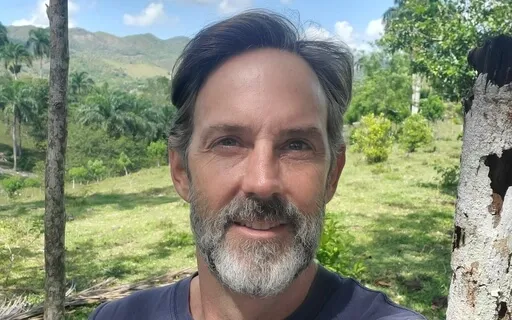
Welcome to Life,
Lessons,
And Laughter with your host,
Glenn Ambrose.
Hello,
Everybody.
I'm playing around with my lighting,
As you may be able to see.
See,
But I got all these shadows here that I'm not digging.
I'm going to try one other thing.
So how's everybody doing?
Let me know where you're from.
I'll see how that works.
Maybe a little less shadows.
So yeah,
Who's watching?
Who's tuning in live?
How cool is this that we can tune in live to stuff and just meet?
We can just talk to people all around the world live about anything that we want.
That's insane.
Insane in the membrane.
So tonight I am going to be talking about compassion.
This is a very organic episode because I had no idea what I was talking about 10 minutes ago.
And I had tons of good ideas.
Some of them that were passed along from friends and then some that I had.
And this is my week where I'm working with clients.
So when I'm working with clients,
I see patterns,
You know,
Recurring themes.
So sometimes I do that.
So today was one of those days where it wasn't that I had to come up with one idea.
It was one of the days where I had 13 ideas and I needed to cut them down to try to figure out which one I was going to go with.
Hey,
Susan from Australia.
And what time is it over there?
Is it is it morning with today's Monday at 6 p.
M.
So it must be Tuesday morning over there.
I'm guessing.
So,
Yeah,
So here we are.
Compassion.
And,
You know,
Guys,
Since I don't really know where I'm going with this,
Feel free to participate.
Yeah,
It's 8 a.
M.
In Australia now.
I get to get over there sometime.
But we'll see what will happen when the time is right.
So compassion.
Yeah.
How to open up a topic that's this big.
It's multifaceted.
It's a wonderful you know,
Of course,
Compassion is a good thing.
So I think I think where I'm a little hesitant,
But I'm going to lean in anyway.
I'm going to I'm going to start with the compassion.
As opposed to empathy.
Angle,
We'll call it.
And the.
I have to preface this by saying like five minutes ago,
I started looking up like definitions just to have something to kickstart the show.
And this word is one of the words that has multiple meanings to so like compassion,
Empathy,
Sympathy.
These things like if you go to the definition in the dictionary,
It can give you a very specific answer to the question.
But when I was reading the specific definitions of these words.
I didn't agree with their definition.
And not just from my perspective,
Like I don't think that some of the definitions that I was reading are really how most people that I've had conversations about these words.
I don't feel that it's the way they see them either.
OK,
So the reason I'm stating this is I'm going to talk to you about compassion,
The way that I understand the word and the way that when I have conversations with people around this topic,
Compassion,
Empathy,
Sympathy.
I'm going to go based on my own experience and the experience of the people that I've talked to thus far.
The reason I'm pointing that out is because one of the biggest catches we do is we get too caught up on words.
It doesn't matter if what matters is the energy behind it.
And do certain words have energy?
Yes and no.
Do words have energy?
Yes,
They do.
Does word have a specific energy?
No,
It doesn't.
A word doesn't have a specific energy.
A word has an energy that we assign to it.
OK,
And that's important because a lot of times we judge things because somebody used a word that we don't like or something or,
You know,
It's we get into all these controversies over words and it's ridiculous and we have to get beyond it.
It doesn't matter what the word is and matter.
What matters is the sentiment behind the word.
What matters is what you mean by the word.
People can have different definitions of different words.
You know,
It's one of the most popular things I saw with this was the Black Lives Matter.
Everybody that was all pissed off about the Black Lives Matter was pissed off because they're like,
Well,
You know,
I'm white.
My life matters,
Too.
It's like that's not what they're saying.
Like if you,
You know,
Because when all this stuff blew up there a year or two ago,
Like I looked into it so I could understand.
So I read like that what they were saying.
They were saying like they used examples like the Black Lives Matter movement.
I mean,
They used examples like if you're in a neighborhood and your house is on fire and you're running down the street saying,
Hey,
My house matters.
Can you help me put out the fire?
And somebody is over there standing.
Well,
My house matters,
Too.
It's like,
Yeah,
But yours isn't on fire right now.
We need some help with mine.
You know,
Can we just focus on mine for the time being?
Because mine's the one that's burning down.
I'm not saying that your house doesn't matter,
You know.
So like when I read stuff like that,
I was like,
Oh,
OK,
I understand what they're saying.
And that's the point.
Understanding what somebody is saying.
Instead of assigning our own meaning to what somebody else is saying.
This is I noticed that with the kneeling on a national anthem,
Everybody's running around going,
You kneel at the national anthem.
Well,
That means you're disrespecting the flag.
It's like,
No,
They said literally,
I am not disrespecting the flag.
I am not disrespecting the United States.
I'm taking a knee to draw attention.
That is racial inequality in the United States,
That that's why I'm taking a knee and everybody else went,
No,
That's not why you're taking a knee.
You're taking a knee because you're disrespectful.
It's like,
How can somebody outside of me.
Assign meaning to what I'm doing.
How is that?
What like why do we think we have the the ability to do that?
Like somebody says that's like me going outside and and,
You know,
I'll try to.
Like,
OK,
Well,
I have this little I have this little Taino sun god statue,
Right?
That's like me taking the Taino sun god statue,
Putting it out front and saying,
I'm going to put this out front of my house because I like the way it looks.
And then somebody come up and say,
No,
You hate Jesus.
Because you put the sun god out front of your house and it's not Jesus and it's a different god and different religion.
So therefore it's against Jesus.
You hate Jesus and Glenn is anti-Christ and he's probably the devil incarnate.
So what gives somebody else the right to assign the meaning to what I'm doing?
It's ridiculous.
I don't know when we started doing this or when why we think it's OK,
But you can't tell if somebody says,
Hi,
I'm doing something for this reason.
You can't come in from the outside and say,
No,
You're not doing it for that reason.
You're doing it for the reason that I don't like,
Therefore I don't like you.
You can't do that.
OK,
So please don't do that.
So the reason that I'm saying this is because we have to get beyond this stuff,
Get beyond the words and try to connect with one another.
We are more alike than we are different.
We all want to be heard.
We all want to be loved.
We all want to feel a connection with one another.
This is so let's meet down there.
Through compassion and then we can work our way up towards solutions to different issues.
Some sometimes the reason that I even came up with this topic and before I go off any further.
Hey,
Michelle from Panama.
Look at this.
We got Australia and Panama already.
Now,
I know some of you are in the US.
Post it.
So the reason that I decided to do this on compassion,
The first doorway in that I came to was.
Sometimes we need compassion.
As a deep.
Oh,
We got Gina from Canada.
Still no US people,
But this is very cool because we're all around the world.
Thank you,
Guys.
So what I was looking at right like I was talking with a client about a situation and the situation when you really boil it down.
What I believe is the way you perceive a situation causes the the negative or positive response.
OK,
So a situation comes in.
You don't like it.
You label it as negative and then negative emotions are spawned off of that.
Or if you label it as positive,
Positive emotions are spawned off of that.
Positive emotions aren't that big of a problem.
We tend to allow ourselves to feel those negative emotions are the problem.
We have a tendency to stuff those.
So a lot of times what we need to do when I'm experiencing a situation where I'm frustrated.
And and I don't like something,
You know,
I'm angry or frustrated or something.
That's a red flag to me that I need to reframe it.
And I don't believe we can just not think things or let go and let God like how.
Well,
I believe what we have to do is change the way we process something with replacement.
We can't just not do it.
That's like don't think of the color red.
Oh,
Don't let it bother you.
Of course,
It's going to bother you.
It's bothering you now.
Why is it bothering you?
It's bothering you because of the way you're looking at it.
So until you change the way you're looking at it,
It's going to continue to bother you.
Whatever emotions you feel,
Unless you allow yourself to feel them,
You're going to be stuffing.
And then every time a situation reminds you of that in the future.
You're going to be feeling negative emotions again.
So to stop that process,
What we can do is reframe the situation.
So you look at a situation most often,
It's a version of victim mentality.
You know.
Something happens,
You don't like it,
You feel like you're a victim of a person.
So a good way is to reframe it into a way where you're not their victim.
OK.
So as far as you know,
That works in most scenarios.
Today,
We came up with a situation where it really wasn't a good way to reframe.
Like you look at it,
You see it for what it is.
You're not really a victim,
But it's still a little annoying to interact with a person with this particular characteristic.
So,
You know,
I'll just it wasn't this,
But I'll just use this for an example.
Like if you're if you're talking with somebody that's a liar,
If you have to interact with somebody who lies regularly,
That can be frustrating.
Now,
You can sit there and go,
Well,
I'm not their victim and they can't control my life.
And I'm going to take dominion over my life and I'm going to make sure that they don't impact me negatively.
Wonderful.
Cool.
You know,
That's good.
But it can still be a little irritating if you have to continue interacting with somebody that's a liar.
So in a situation like that,
Like I believe love is under everything.
It's we can we can find love somewhere.
Oh,
Hey,
Cindy,
Central Florida.
Hey,
We're in the US.
So love is love is at the base.
You know,
Sometimes we just got to go deeper and deeper and deeper to look at it.
So what to find it.
So in this situation where,
Like you have to deal with the liar and you're like,
Well,
They they just lie.
Does it impact me?
No,
Not really.
I reframed everything however I could.
It's it's not that big of a deal,
But it does.
Irritate me that I when I'm dealing with them.
Well,
That is not a good way to to deal with somebody like if they irritate you every time you're dealing with them.
Then you're going to be irritated a lot,
And I don't think we have to go through life irritated.
So what I did was like,
OK,
Let's go deeper.
Let's follow this,
Because if you go deep enough,
You're going to connect with love and or connection to other people.
So I was going,
OK,
So let's go deeper with it.
Like,
Why is this person a liar?
Well,
It's a defense mechanism.
OK,
Well,
Why did they develop this defense mechanism?
Well,
Because they didn't feel they were good enough the way that they were.
Oh,
OK.
And do you understand that most belief systems and habitual things like this were created as children?
Oh,
So now all of a sudden you're going from somebody that lies,
That just annoys you and you follow it down.
And now you start getting to why they lie,
You know,
And you start getting down to the point where you're going like,
Oh,
OK.
I see a little child that doesn't feel like they're good enough.
Well,
Why don't they feel like they're good enough?
I mean,
Of course.
I mean,
That's how absurd it is to me.
I have to laugh like children aren't good enough.
Of course,
They're good enough.
So so why would a child think that they're not good enough?
Well,
Through negative reinforcement,
Being put down from being in an emotionally abusive environment,
Probably.
OK,
So now you have a little child being abused emotionally and that feels like they're not good enough.
Wow.
Now,
Do you see how when you start following it down,
All of a sudden the compassion starts arising?
It's not an excuse for their behavior.
I'm not saying that you have to say,
Oh,
Yeah,
Lying is a good idea.
They should continue that because they had a hard childhood.
That's not what I'm saying.
That's not what compassion does.
What compassion does is it brings in an understanding.
If you go deep enough,
All of a sudden you start understanding like,
Oh,
Wow.
Yeah,
I felt like that,
Too.
We can identify sometimes.
And even if we can't,
Like we can all identify with not feeling good enough in some sort of situation.
You know,
But even if you're not identifying with that,
You can have compassion for them.
I mean,
Why would you how could you look hypothetically,
Even in your mind,
Look at a kid,
Go,
Oh,
There's this little child and they're being emotionally abused and they don't feel like they're good enough.
How can you how does that not spark something in your heart?
You know,
That thing that that sparks in your heart,
That's compassion.
It's just,
You know,
That that's compassion.
And,
You know,
One of the things that you can see in tragedy,
And this is this is really a good thing to you know,
There's so much tragedy that still happens on this earth.
And we focus on the tragedy so much.
We know there's tragedy,
Man.
Like we know people are dying in the Ukraine.
We know that war is horrible.
We know all this stuff.
You know,
Like just sitting there ruminating about it.
Oh,
My God,
And it's so horrible.
That doesn't help anything.
But if you look around and you see the compassion that arises out of human suffering,
It's natural.
It's natural,
Man.
It's part of our nature.
When there's people suffering,
There are people around them trying to help them.
Focus on that.
You know,
We get so beaten down by humanity because the humans that are not connected to their source,
That are not focused on love,
That are not living good lives,
They cause all this destruction.
And that's all we look at.
And we think that's a representation of humanity.
It's not a representation of humanity because it has to override our natural instincts for compassion and love.
Everybody wants love.
Everybody wants compassion.
You know,
If somebody is so disconnected from it that they don't even know that they want it,
That's even sadder.
You know,
That's even more sad.
Like you're so disconnected from love and the ability and the right to have love in your life that you don't even want it anymore or you don't think you want it.
Oh,
My God,
That makes my heart hurt.
So this is what I mean.
We've got to go deeper to get to that compassion.
That's a natural instinct for people.
And we can see it in every tragedy.
So let me see some of these.
I don't care about the lies.
I care about the lies they tell that hurt my loved ones like kids.
Yeah,
Well,
It's I mean,
There are no there are no good ones.
You know,
I like I have plenty of firsthand experience with that.
You know,
And I'm not going to get into it too much,
But but like the the not being able to protect my son from some of that type of stuff was an extremely difficult thing.
And one of the biggest things that I had to learn on this journey was that he's on a journey to and I can't protect him.
Everybody suffers in this life.
And I'm not saying that this is a storybook little I'm going to make you feel better if,
You know,
It's sometimes the truth hurts.
And this is the truth.
The truth is our children have their own path to walk.
And sometimes we can protect them and sometimes we can't.
And when we can't,
It's hard.
But that doesn't change.
Just it being hard doesn't change the truth.
Like all we can do is teach our children to be strong.
To handle adversity.
We cannot protect them from emotional suffering.
And this is what most people try to do with their children.
They try to protect them from emotional suffering.
You can't.
It's literally impossible.
You cannot accomplish that task.
So if that's your task,
You're setting yourself up for failure.
It's going to you're going to fail.
Everybody suffers in this world.
So now does this mean we want to run around with our kid and shove them into emotionally painful situations?
Of course not.
I mean,
If there's something that you can do to not expose your child to emotional suffering,
Then don't do that.
You know,
I mean,
That's logical thinking.
However,
Our children are going to experience emotional suffering.
And thinking that there's something wrong with it simply isn't true.
This is the world we live in.
There is nothing wrong with emotional suffering.
We're all exposed to it.
What we're supposed to be able to do is we're supposed to be learning to rise above it.
Instead,
Everybody's running around going,
It shouldn't be happening.
How?
How did we come to the conclusion it shouldn't be happening?
What logic,
If you look at human life on this planet for the last hundred thousand years,
What makes what makes us believe that it shouldn't be happening because we don't like it?
No,
Of course I don't like it.
Doesn't mean it shouldn't be happening.
Doesn't mean there's something wrong with reality.
It means we need to interact with reality.
You know,
All suffering is resistance to what is.
So if we're resisting the reality that this stuff happens,
That causes suffering.
And then we pass that suffering on to the kids.
Oh,
This shouldn't be happening to you.
This is this is what we do in society.
We run around making everybody feel better.
We tell everybody,
No,
It's not your fault.
This shouldn't be happening to you.
Life isn't fair.
That person's a jerk.
That is the most disempowering load of shit that I've heard.
We have to stop doing that.
Stop disempowering your family and your friends and calling it love.
It's not.
It's disempowering.
You're telling them they're a victim and it's not their fault.
We need to teach people how to rise above this stuff.
We need to teach people how to push through.
Yeah,
And it doesn't matter if these are your children or somebody else's children.
It's just a dynamic.
You know,
It's this is what I'm talking about is a dynamic.
And sometimes I understand I come across cold sometimes when I'm expressing this stuff,
Because I express it with passion and fortitude.
And I and I'm like,
This is how it is.
And the reason I do that is because I'm trying to get the point across.
It's not because I'm lacking compassion.
I have compassion.
I feel for the situations.
I mean,
It was my freakin son that I had to deal with this for 10 years,
Living right down the street.
So,
Of course,
I have compassion,
But it doesn't change the dynamic.
The dynamic is what's important.
That's what we have to understand.
We have to deal with reality as it is.
And when we do that,
We can let go of the suffering and then we can work through it.
I see your comments,
Nikki.
Thank you.
So let's see,
I'm just going to scroll through because I know some of these and I know some of you guys are throwing some good comments out here.
Hey,
Buddy,
It's happening.
Massachusetts in the house and Carol Ann,
I think she's still Massachusetts.
Let's see what Michelle says here.
Something Eckhart Tolle teaches that helps with compassion is that you can imagine that the person hurting you is doing the best they can because they probably are.
It's true.
I mean,
They are doing the best they can.
You know,
I think a really good example of that is parents.
You know,
I mean,
Man,
We love our children so much.
It's just and if there is one place you want to screw up in life or you know you're going to screw up,
It's being a parent.
There is no way you're going to do being a parent perfectly.
It ain't going to happen.
So you're going to make mistakes and kids look at their parents.
It's very difficult to see the humanity in their parents,
Especially in the past.
I think we're starting to work through this because because like in the past,
It was such a power dynamic.
The parents were in power and the kid was subservient and you shut up and do what you're told and that type of stuff.
And it's very difficult to look at your your parent as having weaknesses or not,
You know,
Making mistakes because they never showed you they made mistakes.
Right.
So so like they act like they're perfect.
They act like they know everything.
So you expect them to be perfect.
You expect them to know everything.
And then all of a sudden you start getting older and you're like,
Wait a minute,
That's wrong.
And you don't understand why it's wrong because they must know everything.
So you start rationalizing.
You think they must hate me or they must be a moron or they're a jerk or,
You know,
And you're trying to create your own identity at the same time,
Which,
You know.
So,
Yeah,
It's people are doing the best that they can.
It's just,
You know,
I mean,
We have to we have to put down the stick in somebody else's eye while while we're ignoring the log in our arm.
I mean,
Really,
If we slow down and look at it and we start leaning into the compassionate way of thinking and we start thinking like we've all been there,
Man.
We've all been in the human race.
We've all done this stuff.
We've all been put down.
We've all been bullied.
I mean,
Even the bullies have been bullied.
That's why they're bullies.
Right.
So they're bullied by their parent.
Then they go bully kids at school or they're bullied by an older brother or an older sister.
So then they go bully somebody at school like it's all trickle down.
I mean,
Nobody comes out of the womb a jackass.
You know,
These are all defense mechanisms.
This is these are all developed.
So we've all been insecure.
We've all had these things and we've all chosen.
Different ways of dealing with it,
And if we understand that,
That's where we can land in compassion.
You know,
So the main you know,
There are versions off of these,
Of course,
But the main three ways that,
You know,
We we call it the fight or flight response.
But it's also defense mechanisms that are born out of these.
The main defense mechanisms is children are fight,
Flee or freeze.
You know,
Those are the those.
And if you look at the defense mechanisms,
They're usually a version of one of those three things.
Right.
So when people freeze,
They just shut down.
That is internal.
So a lot of times people don't catch that much flak until they're in a relationship and they constantly shut down.
And then the other person is like,
You can't keep shutting down on me,
Man.
You know,
And it becomes a problem.
Right.
And then same thing with fleeing.
Sometimes it's it's like you're getting yourself out of a situation.
Sometimes that works.
But but you can actually do that depending on how often and how extreme you do it and not get into that much trouble.
Why?
Because you're getting yourself out of the situation quite possibly until you're in a relationship.
And the person goes,
You can't just keep leaving.
The one that's the hardest to find compassion for is is the fighting.
You know,
Anger when somebody's go to his anger,
When when their go to is to fight back.
That's the hardest one because it's external so other people can get hurt.
And it's loud and it's noisy.
And often violent.
Right.
But it's just another defense mechanism.
And again,
I'm not excusing it.
I'm not saying that that people should be allowed to act out in anger or fight back.
What I'm saying,
I'm talking about compassion.
So I'm trying to I'm trying to explain these things so you guys understand why they're doing these things.
And if you understand why they're doing them,
Then not only can you have compassion for them,
But you can also deal with the scenario better.
Because,
Like,
You know,
Most people,
When they see somebody angry,
They get angry at them.
Like,
How does that help the situation?
Somebody you know,
Somebody is fighting back and then the other person comes in and goes,
Hey,
You can't fight back.
How's that going to go?
You know?
Well,
No,
Of course not.
You have anger energy and you're adding anger energy.
So guess what you get?
More anger energy.
Right.
So if you understand this stuff and you have compassion for people,
Then you're not all caught up in the emotion yourself.
You can make and you understand why they're acting like this.
You're more apt to deal with the situation appropriately.
This is what compassion gives us.
So this is what understanding gives us,
Because we have to have some level of understanding.
Well,
It helps.
We're very intellectually based.
So can you have compassion without understanding?
Yeah,
You can.
And some people do it.
In some situations it happens.
But understanding is the best way to get us to compassion.
If we if we're not already there.
So understanding that,
You know,
Fighting back or lashing out is just another defense mechanism.
And what are all defense mechanisms there for?
Fear.
So whether somebody is shutting down,
Whether somebody is running away or whether somebody is fighting back,
It's all a response to fear.
Have you ever felt fearful?
Ever?
We all have.
So do you see when you go deep enough,
You start finding connection,
You start connecting with one another,
You start finding the commonality.
Oh,
I've been fearful.
Really?
What do you do when you're fearful?
Well,
I shut down.
Oh,
Really?
Looks like this person acts out.
They fight back.
I wonder,
I wonder how they decided to fight back.
This is another interesting dynamic.
You know how everybody talks about siblings being different?
Of course,
They probably just are naturally,
Right?
But social conditioning plays a part in that as well.
So fighting is not a good solution to fear.
Fleeing is not a good solution to fear.
Freezing is not a good solution to fear.
None of them solve the problem.
They're just defense mechanisms.
They're just coping strategies for the moment.
Okay?
And people usually pick one as a go-to.
And none of them really work in all situations and none of them are that great.
So like,
Let's say,
You know,
And I mean,
I guess this is Glenn's theory.
I don't have any scientific proof of this.
But this is the information that comes through me when I contemplate this stuff.
Like when you see a sibling that what they do,
Let's say that the first sibling starts getting acclimated to life here on Earth.
Which is dysfunctional.
So they start trying to figure out how to interact with reality to get what they want to receive love from their parents,
Probably to fit in,
To be accepted,
All that stuff.
And when they are really at a crossroads where they don't know what to do,
They have to pick a coping mechanism.
So they go,
I'm going to fight.
So let's say the oldest one picks fighting.
Picks,
You know,
That's their go-to.
So now all of a sudden another child is born into the family.
And that child pays attention to everything,
Man.
They're sponges.
They pay attention to the parents,
They pay attention to the kid.
And what they're looking at,
They're going,
Okay,
Wait a minute,
My older sibling fights.
That doesn't work that well.
Now it doesn't necessarily work any,
Like,
It may work just as good as freezing or fleeing,
But the kid doesn't know that.
All the kid sees is one sibling fighting.
And it not working some of the time.
So the sibling,
The younger sibling,
Goes,
Hmm,
Fighting,
Eh,
Sometimes it works,
But it's really noisy,
It's really loud,
I see the negatives and it doesn't even work half the time.
So maybe I shouldn't do the fighting.
I'm going to do something different.
Why?
Because they see that not work.
So then they pick different.
So then now they got freeze or flee left.
They usually pick a version of one of those two.
Now all of a sudden you go,
Geez,
You know,
This one really acts out.
This one's really quiet.
Hmm.
You think?
They're just trying to figure out a defense mechanism to make sense out of this whacked out dysfunctional world that we're in.
So my point is,
Is that it doesn't matter what defense mechanism you pick.
It's a defense mechanism.
Why do you pick a defense mechanism?
Because you're overcome with fear and you don't know how to handle it.
You can't make sense of anything else.
And all these,
These things are set in place,
I mean,
Belief systems are set in place between ages of four and eight defense mechanisms might even be earlier than that.
Who knows?
So once we understand that it doesn't really matter what it looks like external.
That's what we're addicted to.
And that's a big problem.
And that's what causes most of the problems is we look at things on a surface level.
Oh,
This one fights.
They must be an asshole.
Well,
That's just,
That's a surface way to look at it.
You know,
If you go deeper,
You can see that that's a response to fear.
You know,
I fought all the time.
So I'm going to share this when I was in freshman year in high school,
When I was younger,
I went through a stint of fighting and stuff at school.
And then this teacher was like,
Glenn,
You shouldn't be fighting,
You have to stop.
And I really liked this teacher.
It was Miss Cowett in fifth or sixth grade.
Well,
That was her name then.
I'm not going to go down that road.
It's Miss Swatch Kewits now.
I did go down that road.
Okay,
So so I stopped fighting for a while.
I really liked this teacher.
She was a nice person that I she connected with me which most teachers didn't because I was a big pain in the ass.
So I stopped fighting through junior high and I was experiencing a lot of controversy.
Puberty was starting and I was breaking hard left and freshman year I got picked on.
I was 411,
100 pounds my freshman year and chubby and I got picked on all freshman year.
And that summer I started working out and I was like,
This is I'm not going through another year of that.
I was in constant fear,
Like constantly walking down the halls.
It was just this fear was in my body because I didn't know when one of them was going to jump out at me or which group because it was multiple groups picking on me.
I didn't know which one I was going to bump into what they were going to say,
How many of them there were.
It was it was horrible.
So I walked around in fear and that summer I was like,
I am not I am not walking through another year in fear.
I'm just not doing it.
So I you could tell like now when I look back on this stuff,
I see how my brain worked.
Even back then,
I keep going deeper.
So I went,
OK,
What am I scared of?
Like,
I don't know.
Getting bullied.
No,
Specifically.
It's like I get getting beat up.
I get like getting punched in the face and physically hurt.
I guess that's that's the root of my fear.
I was like,
OK,
So how do you prevent that from happening?
I don't know.
I can't.
OK,
Well,
I'm not walking around in this fear.
So what else can I do?
Well,
What if I just this you know,
This is 15 year old thinking.
It's not that smart,
But it was the best I could come up with at the time because I actually asked adults and they're like,
You know,
Punch the biggest one in the head.
Like that's what I heard in Massachusetts.
If you're getting bullied,
Punch the biggest one in the head.
So I didn't think that was right.
But like,
I couldn't come up with anything else.
So I was like,
Well,
I know what I'll do.
I'll get in so many fights because I like I wasn't I'm like,
I don't I don't I don't think I can really learn how to fight good.
I didn't have a channel for that.
I didn't know how to make that happen.
So I was like,
Well,
If I can't fight,
I wasn't confident in my fighting ability.
So I was like,
No,
I need something I can do now.
So I was like,
I'll just get in as many fights as it takes.
So I don't fear getting beat up.
So like I figured if I get beat up like five times,
10 times,
15 times,
Eventually I'll I'll stop being scared of it because I'll like have experienced it and know that I can still live.
And then I'll work through the fear that way.
So this was my 15 year old thinking.
I'm like,
I'm just going to get in as many fights as I can until I'm not scared of getting hit anymore.
And that's what I did.
I walked into school.
And it's first day of school,
That group,
One of the groups started with me and I drove the kid through a set of doors and hung them over a third floor railing.
I was this close to dropping them.
And I did that type of stuff when any whenever anybody would screw with me,
I would just go 10 times.
I would go into attack mode 10 times harder.
And I got a reputation for somebody to not screw with.
Even if people thought they could beat me up.
I would hear people and they'd be like,
Oh,
I'm going to kick Glenn's ass.
And the other people be like,
Don't even bother,
Man,
Because even if you do kick his ass,
He's going to keep coming at you and coming at you and coming at you.
He's never going to back down.
It's just not even worth your time.
And people would be like,
Oh,
Yeah,
He's one of those.
OK,
Never mind.
Whatever.
And I'd get left alone.
So now the reason I share that is because it was a solution.
But like a lot of solutions out there,
It was a crappy solution.
Did it solve my problem?
Yeah,
I got over the fear.
I didn't get bullied anymore.
So it worked for that scenario.
But I'm getting in fights all the time.
There's backlash from that.
I got into a lot of trouble for getting in fights.
I got hurt.
I got lots of negative things came out of that.
But where was it spawned?
So you can look at Glenn in high school,
Go,
Oh,
Glenn goes crazy and punches people.
And he's a maniac and he gets in all kinds of fights.
Yeah,
That's that's who I was on the surface level.
And as long as you look at me like that,
I'm a jackass.
But if you go underneath and you start understanding why I became like that.
And it was because as a response out of fear and confusion and not knowing what else to do and not being able to find out an answer.
Now,
All of a sudden you start landing in some compassion,
Hopefully,
You know,
And then you go,
Oh,
Everything's like that.
The people who freeze are like that.
The people who flee are like that.
People who fight are like that.
We have to have compassion and understand that these actions are birthed out of fear and make people feel safe.
You know,
It's sort of use a different example,
Like somebody that shuts down all the time.
You know,
Somebody that doesn't have that defense mechanism goes,
Why do you shut down all the time?
You're such a jerk.
You shut me out.
And that's not fair to me.
It's like,
What?
Whoa,
Whoa,
Whoa.
Wait a minute.
Why are they shutting you out?
They're scared.
Do you think yelling at them is going to make them feel safe?
Of course not.
You know,
This is what I mean when we get underneath and it's the same thing with fleeing.
When we get underneath these defense mechanisms,
It's all we're scared shitless dudes and dudettes.
You know,
We're fear based.
Because we live in a dysfunctional world that doesn't make a lot of sense unless until we start getting here.
This is where the sense starts coming in.
When you start opening up to compassion and start understanding why people do things and that it's fear based if it's negative.
And it's love based if it's positive.
Let's see some of the comments again.
Yeah,
Gina,
You know,
We need to teach them how to deal with the lies versus protect them from it.
You know,
That's a beautiful wrap up for what I was just saying with the kids and stuff.
And true,
But there is suffering and then there is life changing emotional trauma.
Everybody goes through emotional trauma.
That's what suffering does.
I have yet to meet an adult that doesn't have emotional trauma.
I mean,
I think we have to be careful with that word trauma people throw people use that word either not enough or too much.
In my opinion,
In my opinion.
It's like,
But,
So what causes the trauma.
Right.
And this goes back to what Gina just said,
We need to teach them how to deal with the lies versus protect them from it.
OK,
So you if if somebody has if somebody doesn't know how to deal with something,
That is what causes the trauma,
Not the actual situation,
Because you can have two people that are exposed to emotional trauma or emotional abuse,
We'll call it.
So two kids that are exposed to emotional abuse,
One walks away with trauma,
One deals with it.
What's the difference between those two?
It's the one that dealt with it,
Had the capability of dealing with it,
The one that didn't deal with it,
Didn't have the capability of dealing with it.
That's what the difference is.
This is why it's so important.
We need to empower them and teach them that,
Yeah,
There's going to be jackasses that do stuff to you.
And sometimes it's your own family.
I taught my son this stuff using me as an example half the time because I wasn't perfect.
So if I screwed up,
I would be like,
Hey,
Dude,
Look,
Did you see how I screwed up?
That was my my inability to handle a situation like if I lost my temper,
I've gone to him after and been like,
Hey,
You know how I lost my temper?
That was my inability to manage my emotions in a healthy way.
That's not what you did.
It wasn't it wasn't because of what you did.
I had when you did what you did,
I had a choice to either deal with it calmly or center myself and then deal with it or explode.
I wasn't able to control myself and I exploded.
That was my shortcoming.
That wasn't because of what you did,
You know,
And I also taught him that with other people.
You know,
When you're a kid,
You have to be taught that you can't take on what adults say.
And I did this with my kid,
With every adult.
I did it with his mother.
I did it with me.
I did it with his teachers.
I did it with his principal.
And I did it with every other adult in his life.
Do not take on what they say,
Especially when they're losing their mind about yourself.
You're a good person.
You've got to know you're a good person,
Regardless of what other people are telling you.
Stand in that.
And as a kid,
You've got to shut your mouth sometimes because there's nothing you're going to say that's going to benefit you.
Because the adults are in charge,
They're unconscious and they're jackasses half the time.
So know it.
You know,
I didn't.
People are so afraid to tell kids the truth.
And that is exactly what hurts them the most,
Because we act like adults know everything and they don't.
And they screw up and they do stupid stuff.
And then kids don't know how to process that because their adults know everything.
But yet they were a jerk to me.
So therefore,
They must be a jerk.
And then we wonder why they rebel against adults and think adults are jerks.
It's the only logical conclusion they can come to.
Why?
Because they were lied to.
That's why.
Nobody told them that adults make mistakes sometimes.
And if somebody loses their temper and takes it out on them,
It's not a reflection on them.
We need to start teaching these kids this.
So let's see.
Let me get back to compassion here.
I was courageous and brave.
I just chose something.
To me,
Choosing to fight was the same thing as choosing alcohol.
Like alcohol was.
.
.
Let me get this.
I just realized this love is coming up.
I was an alcoholic for 20 years.
So alcohol was my solution.
A lot of people think alcohol is the problem.
Alcohol is not the problem.
Drugs are not the problem.
The problem is you are maladjusted to life and you're turning to something to escape or help you.
So I didn't have.
.
.
I wasn't confident in myself.
I didn't know how to interact with life.
I drank alcohol and all of a sudden,
All the fear left.
I could talk to the pretty girls.
I could be a wise ass with the guys.
I could stand up for myself if somebody screwed with me.
I had no fear.
So I became who I always wanted to be through alcohol.
That was my solution.
It removed the fear.
The problem is my solution had a bunch of negative aspects to it.
It wasn't a good solution.
Did it solve what I tried to use it to solve?
Yeah,
Absolutely.
That doesn't mean it was good.
It just meant that it solved that particular problem.
And then ended up having much more problems.
It's nice empowering your children.
A lot of adults don't like it.
A lot of adults don't like when kids call them on their BS.
Honestly,
I talked to my son about this.
It's like,
Hey,
When you're a kid,
You're 10 years old and your teacher is wrong.
What do you gain by pointing out the fact that they're wrong?
Sometimes it's okay.
Every once in a while,
Hey,
Excuse me.
But fighting over every little thing,
Especially when a teacher is going,
No,
You're wrong.
I'm right.
Shut up.
You don't have power as a child in this world a lot of times,
Or if you're dealing with a parent.
If you know somebody,
Some kid's parent is abusing them emotionally,
It doesn't really do much good to teach that kid to go attack back at their parent because they have no power.
Yeah.
Right.
But you can change your inner dialogue.
Be like,
You know what,
It's not worth fighting.
You know your truth.
Because they go,
You know,
Their father's giving them a load of crap and I like,
You're a load of crap.
How does that usually end?
With more emotional abuse.
Right.
So you don't want to teach them to get more emotional abuse.
But there are times when they can stand up for themselves.
In those situations,
They can.
You know,
My,
My,
My son,
You know,
As he's gotten older,
He stands up for himself pretty well,
I think.
You know,
As you get older,
You get more empowered.
You know,
I just like if you know you're in a losing situation that,
You know,
I didn't do this well.
So maybe this is why I see this.
When I was a kid,
I fought everybody and everything.
And it didn't end up well.
I never won.
I mean,
Again,
You know,
This is not law.
I mean,
There are certain situations where I stood up for myself and it worked out fine.
But 90% of the time when I was standing up for myself,
All I did was get into more trouble.
If I would,
If I felt stronger about myself,
I don't have to convince,
I don't have to convince the person abusing me that they're wrong.
I'm never going to do it.
Why waste my breath?
Why get into more trouble?
Why cause more emotional suffering and possibly physical suffering in my own life?
Why get,
Trigger them to attack me more when I can't do anything about it?
You know,
You're fighting a losing battle.
So if you're strong within yourself,
It's like they can think what they want.
And really that this is a more appropriate coping mechanism,
Even when you're an adult.
Because really,
What's the most foolish thing you can do is argue with a fool.
Right?
So like if you,
If there's somebody on the other side that you know is wrong,
Who gives a crap?
Let them,
Let them go.
Let them be wrong.
You know?
So yeah.
So let me get,
Let me,
You know,
Really hone this back into compassion.
It's,
You know,
A lot of the,
Of course,
We talked a lot about kids,
But that's fine.
Because this is,
That's actually a really good,
Like,
Strategy.
When you're,
So,
So yeah,
I've mentioned this before,
But just to clarify,
I'm going to mention it again.
When you see somebody acting out of fighting or fleeing or freezing,
They look like little children.
Why?
Because that's when they locked in on this behavior.
You know,
Somebody that flees,
They'll often stomp out of a room like a little child.
You know,
If somebody is screaming and yelling,
They look like a little child having a temper tantrum.
Why?
Because that behavior was locked into place as a child.
That's why they look like a child.
Like if you can just step back and become the observer,
I've done this.
Just be the observer of an adult.
Just,
You know,
That's full blown into their either temper tantrum or storming out or even freezing.
If you just lean back and become the observer and you can just kind of like lock in on their energy,
They look like a little child.
Like their facial features will even look like they're starting to change.
Like they look like a little kid.
And it's because that's,
That's when,
That's what you're dealing with at the time.
You're dealing with a hurt little child.
So in your brain,
If you can be present enough to just be like,
Oh my God,
They're acting like a little child.
That's because they're acting out of a scared,
Fearful little child.
That's the emotion that they're in.
And this is their response to it.
You're going to,
Then you start treating them with kindness.
If you recognize that in a child,
You know,
If there's a three year old and you know,
They start throwing a temper tantrum.
What are you going to do?
Stop fighting back at them?
You know,
Probably not.
It's a little child.
So they start yelling.
You're not going to start yelling back.
Right?
Unless you have more of your own work to do.
Or if they're kind of scared and shutting down,
You're not going to start yelling at them more.
Right?
Usually we're more compassionate towards children.
So if you can kind of see the inner child with these people when you're acting like that,
You can actually relate to them more appropriately,
More on a level.
It's fear.
So what do you want to do?
You want to make them feel safe.
They're out of control.
So what do you want to do is lower the energy and get them feeling more in control.
Right?
We do that kind of,
Well,
Healthy people do that kind of okay with kids.
Not perfectly,
Not every time.
But they interact with children much better than they interact with adults.
When somebody's an adult,
They're like,
Oh,
They should have learned this by now.
Yeah.
Well,
They didn't.
We all revert at certain times.
So if we can see that,
We're going to choose how to interact with the adults in more of a compassionate way.
Yeah.
So that wraps up that mindset.
I just got to tune into compassion and see if there's anything else I want because we've been on for like an hour.
So compassion and empathy,
I won't go into this too much,
But empathy is like,
To me,
Again,
I don't know about the dictionary,
But to me,
Empathy,
You know,
It's a big word,
Empath.
What does empaths do?
They feel other people's energy.
They often actually take it on.
And that's a whole,
You know,
I've done podcasts on empaths and everything.
So I'm not going to go into that too much.
But the difference between an empath,
The way that I'm talking about that and somebody that's compassionate is you don't have to take on somebody else's suffering.
You don't even necessarily need to not only take it on,
But you don't need to feel it.
All you need to do is really understand it.
Like if I sit there and go,
Oh,
There are people suffering in the Ukraine right now,
Like because there's a war there.
And there are people that don't know if a bomb is going to drop on them or if they're going to be able to feed their children or eat themselves or if there's going to be water.
Like that's enough right there to go,
To trigger that instinct inside to go,
Oh,
My God,
I feel for these people.
It's not good that they're in that situation.
I wonder if there's anything that I can do to help.
That's what compassion does is it moves us to help.
It sparks that natural instinct to see somebody suffering and want to alleviate this suffering.
That's the important part about compassion.
I'm not going to go into this too deeply,
Too,
Because it's probably a whole other podcast,
But we have to slow down and be really careful if we are feeding our ego or if we're trying to help.
We need to try to help more.
And it's okay if you can't.
You know,
People,
Most people can't help.
I can't really help.
Can I maybe donate some money to relief in Ukraine?
Yeah.
Can I fly over there and do something to stop the war?
No.
Are there other political avenues that some people can take that either I'm not going to take either because I can't or because I won't,
Because it's not my personality,
It's not my lot in this particular lifetime?
Yeah,
There's some things that I'm just not going to do for one reason or another.
So a lot of people,
They have this natural compassion and they feel bad and they want to help and they don't know how to help.
What it helps,
What they do is they go on Facebook and they bitch about how wrong it is.
That is not helping.
Voicing the fact that you disagree with something doesn't help.
Unless you're signing a petition or you're on a march or you're writing a congressman or you're taking some sort of action,
Arguing with people on Facebook doesn't do it.
All that does is feed your ego.
That's all it does.
Because know what that is?
That's complaining.
Complaining about something.
You can state,
Hey,
This is happening and I obviously don't like that.
And then move on.
Either do something to help it or take it off your plate.
But walking around every day,
Do you believe that this happened today?
Oh my God,
Did you hear about this?
Oh my God,
This is so horrible.
Oh my God,
Can you believe the atrocity?
That does nothing.
All it does is send more negative energy to the freaking problem and it's complaining.
What is the difference between complaining and stating?
Tole did a wonderful job on this as well.
Complaining is not helpful.
There's no solution in it.
So Tole talks about ordering soup at a restaurant.
The soup's supposed to be hot.
It comes cold.
Fixing a situation,
Taking action,
Speaking up says,
Excuse me,
Waitress,
My soup is cold.
Could you heat this up for me please?
That's a solution based.
And that's fine and helpful.
Complaining is,
I can't believe that they serve this soup cold.
Why would anybody serve hot soup cold?
This is ridiculous.
Why did they do that?
That's just complaining.
There's no solution built in and all it is is stroking your ego.
All complaining by the nature of what a complaint is,
Is an ego stroke because there's no solution in there.
But people do it addictively,
Right?
People complain all the time.
So why are they complaining?
It's because they get an ego stroke.
Well,
How do they get an ego stroke?
They get one because of the unconscious implications of what they're saying.
They are basically implying that they wouldn't do it that way.
They don't necessarily say that.
But if you're complaining about the soup being cold,
What you're basically saying is they did something wrong.
If it was up to me,
I wouldn't serve hot soup cold.
But they did serve hot soup cold.
So they're bad.
I'm better.
And that's where the ego stroke comes in.
So every time we complain,
We are stroking our ego.
We are creating separation between us and whatever we're complaining about.
Even if it's a thing,
It doesn't even have to be a person.
We are implying that we are better than that thing by the very nature of complaining.
We are saying if it were up to me,
I wouldn't do that.
Therefore,
I'm better than the situation or the person that I just complained about.
So we just stroke our ego every time we complain.
And we get a little feedback from stroking our ego.
Oh,
I'm a good person.
So then we complain again.
Oh,
I'm a good person.
I wouldn't have done that.
I must be a good person.
And unconsciously,
We get addicted to that.
And that's actually how we stay stuck is because we feel a little bit better.
So we don't feel the actual suffering of being disconnected from the happiness and the peace and the love that's within us.
If we just allowed ourselves to feel that in its enormity,
It would be overwhelming for most people.
This is why people get addicted to complaining and shopping and drugs and alcohol because it suppresses all that stuff that's trying to bubble up.
If we're not connected to source,
If we're not living a connected,
Peaceful,
Loving existence.
And I mean on a deep level.
I mean,
There's plenty of wonderful,
Unconscious people out there.
You know,
There's plenty of people in the world that are technically they're unconscious.
They just react out of,
You know,
Learned behaviors.
They just react and they're unconscious and they don't fully know what they're doing or why they're doing it.
Most of the world is like that.
And there's plenty of good people in the world.
There's plenty of loving people.
But what I'm talking about is consciously living loving.
You know,
Unless you're consciously living loving,
Then you're going to experience suffering.
You're going to because you're separated from your source,
And you need to get connected to that.
So there.
So I think that's going to do it.
So it's,
You know,
To wrap up the compassion is helpful through understanding.
It's helpful to deal with situations that are normally difficult to deal with.
It's helpful to connect with others,
And to feel a part of.
So all right,
This is what I'm going to close with.
I just got it.
The book of joy,
I believe is the name of it with the Dalai Lama and Bishop Desmond Tutu.
Those two men,
If you want to learn about compassion,
Read that book.
Those two men are two of the most compassionate beings on the planet.
Bishop Desmond Tutu recently passed,
But they are two of the best examples of compassion that we have in modern day society.
And both of them are leaders,
Spiritual and political leaders of nations that have gone through amazing atrocities.
So they're even better examples because like when I give examples,
I like to give extreme examples and be like,
Oh,
Like,
So we're,
You know,
We,
We need to identify with stuff.
So it's like when somebody looks at compassion and go,
Well,
You don't understand,
Glenn,
I can't be compassionate because my boss is a real jerk or my family members really treat me like crap or you don't understand the difficulties that I've been through.
Really?
Well,
Bishop Desmond Tutu and Dalai Lama,
The people that they represent and serve were like murdered and killed and like all kinds of horrible atrocities.
So if they can do it,
Then you can do it,
Even if your husband's a jackass,
You know,
Like,
So there,
That's why I like them as examples because they stood in compassion in extremely difficult,
Extreme situations.
So if they can do it,
That makes them a good example that they talk about compassion.
One of the best ways they said that they were able to remain compassionate and even joyful is by through understanding and connecting with the suffering of those around them in their,
In their group.
So,
Which is ironic,
This is not something that you would,
You would really think,
Like the way they landed in compassion when they were overwhelmed and frustrated was by remembering that they were just one of their group.
And like I said,
Their group was suffering horrible atrocities,
But when they stopped and when I'm just one of them,
We're all going through this together,
I'm one of them.
I'm one of these,
This large group of people that's going through a difficult situation and I'm going to do what I can to help,
But we're all in this together.
That actually gave them solace.
So they didn't run from the atrocities.
They didn't even,
Well,
In some situations they got better,
But Dalai Lama,
Like,
I mean,
He's still not welcome in his own freaking country.
So I mean,
So there's no solution there,
Right?
So they didn't wait for a solution to their problem to be able to feel compassion.
There wasn't an absence of suffering before they could anchor into compassion or joy for that matter.
They're two of the happiest people that I've ever seen.
And yeah,
All this was happening.
So they are such a good example of how we can still be happy in amidst our suffering.
And we can still have compassion and use that as a guiding principle,
Even in difficult situations.
We can't use the difficult situation as an excuse.
Yeah,
But you don't understand.
It's really hard.
No,
The answer is still compassion.
And this is something that I always teach.
When you really get down to the root,
Which compassion is a root solution.
It's like it's like way down at the bottom and you end up at compassion,
Which is a version of love.
When you get down there,
It doesn't matter if it's hard or if it's easy.
It doesn't change the dynamic.
So like if it's if it's because believe it or not,
Most people think this way.
They go,
I go,
Well,
The solution is compassion.
They go,
Well,
I can't do compassion here.
It's really hard.
The solution,
The situation is really big and it's really difficult.
It's like,
Well,
Yeah,
But you still have to do compassion.
Well,
Yeah,
But it's too big.
It's really hard.
That's still the answer.
Like the answer doesn't change just because it's bigger or it's harder to do.
This is the answer.
The answer is compassion.
So I suggest you start trying to lean into compassion,
Since that's the only answer.
And I understand that it's hard and sometimes we have to do hard things in life,
Extremely difficult things.
Sometimes we have to chip away because we can't do it all at once.
So little by little,
We keep implementing compassion and eventually we get there.
You know,
We can't we can't look at the solution and go,
Well,
The solution is compassion.
And this isn't really too difficult a situation.
So I'll bring in the compassion and solve it.
But this one over here,
This one's really big.
So I'll just suffer for the next 72 years until I die because the solution is compassion.
But this is it's harder to bring it there because it's bigger.
So I just won't do anything.
You can't do that.
You still have to work towards it.
You know,
If that's the solution,
That's the solution.
It doesn't change it if it's if it's harder.
Yeah.
Yeah.
And people have done it.
And I'm just going to end with this.
People have done it in whatever situation you're in.
People have done it in more difficult situations.
It's happened.
Research it.
And this is a good example of that.
You know,
Gina just stated a family forgave the shooter of Sandy Hook.
That was an extreme example of compassion forgiveness.
Yes.
You know,
And I mean,
I was in Rhode Island when that happened.
That happened like an hour from me.
So it's I was very familiar with a lot of the dynamics and stuff and even reached out to I reached out to Nick Orton or who is I don't know if I should say it this way,
But he he's one of the faces of emotional freedom technique of tapping,
Which releases emotional trauma energy.
Right.
And he was down there.
That's where he's from.
He's from Connecticut right near the Sandy Hook.
And so he was working with some of the ones that were willing to work with him to to release some of that.
And I don't know if it's the same person you're talking about,
But one of the people there,
They were able to release the emotional trauma and the energy from that situation through tapping.
So I reached out to him and see to see if I could drive down and help.
And it just didn't work out for one reason or another.
So.
But yes,
The point is,
Is people do this in extreme situations.
And it's really hard.
And are we going to do it perfectly?
No,
Probably not.
You know,
Especially in the hard ones.
But it doesn't change the answer.
You know,
The dynamic stays the same.
So.
All right.
Cool people.
Thank you.
Thank you.
I had no idea where that was going to go.
So.
But I think there was some helpful information in there,
Hopefully.
So thank you for listening,
Watching,
Definitely participating.
It was this was one of the best participation nights we've had in a while.
So thank you.
Thank you.
Thank you.
I appreciate it.
I am going to go to my ending and I will talk with you guys soon.
Peace.
Looking for more?
Check out over 200 episodes of Life Lessons and Laughter or click the link in the description of this episode to connect with Glenn directly.