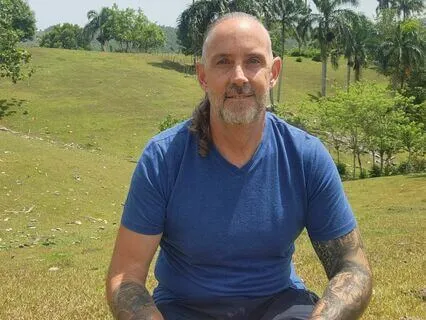
Welcome to Life Lessons and Laughter with your host,
Glenn Ambrose.
Welcome,
Welcome to Life Lessons and Laughter with yours truly.
So hello people,
Hope you're all doing well.
Lots going on out there.
Lots of perceived difficulties and lots of opportunity for change.
So,
Yeah,
This is,
You know,
A lot of where we are,
I've said this before,
We need to stop looking at and being overly concerned with what's falling apart.
Because what's falling apart is broken.
You know,
Well,
It's not broken,
It never really,
It was always set up to fail.
Like the system that we created as people,
As human beings,
Was imperfect.
Which,
Of course,
Everything is imperfect.
But if you just take a step back from it and look at just the general dynamics,
You know,
This is how I find out what makes sense in all situations.
Just take a step back and gain some big perspective.
And,
You know,
What's the general rule of society?
Society is set up in place and then you have a small group of people who make the decisions for all the other people.
Now,
You know,
We saw that didn't work,
Right?
We saw that didn't work.
So then we came up with the idea of a democracy where people vote and like the people are in control,
Which was a nice idea.
You know,
That was,
I think,
A step in the right direction.
Unfortunately,
You know,
Our lives get easy enough where we weren't really that invested.
Especially in the developed countries,
You know,
We're like,
Yeah,
You know,
People stop voting,
Stop taking an interest,
Stop.
They stop holding the people that were in power accountable for their actions.
And then,
You know,
As soon as that happens,
You're done.
Because then it's like,
You know,
The power just funnels upward.
The money funnels upward and it's driven by greed,
Which doesn't know limits.
It just knows more.
So the system that we have was always doomed to fail.
It's,
You know,
I mean,
You can see countries that never had,
Like the people never had a right to vote.
And then all of a sudden they get the right to vote.
And the amount of people that show up at the voting polls is like off the charts,
Right?
Because people are going,
Oh,
My God,
I have a voice.
Like,
We can actually determine what happens in our country.
This is amazing.
This is wonderful.
And then they go.
And,
You know,
They probably make some good changes.
And over the years,
Time goes by and less and less people go,
You know,
I'm working now.
You know,
It's easy to go to the polls when you're not working.
When your family's been starving for three generations and you have an opportunity to make political change and,
You know,
Nobody's working.
Yeah,
Sure.
You know,
Of course,
You know,
Of course you're going to take advantage of that.
Of course it's going to get exciting.
That's,
You know,
Everything is like that.
If you don't have it,
You can understand how important it is and how people want it.
Like a lot of people in countries that don't have schools on every corner,
You know,
The kids will walk 10 miles to school,
You know,
One way.
And they'll do it because they want to.
And they'll actually pay attention in class.
Whereas,
You know,
In the more developed countries,
The kids are made to go to school and they're just like,
I don't want to,
You know,
So.
So this is the type of mentality we have to be careful what we're immersing ourselves with.
So,
You know,
I get into the community.
I think one of the big problems in the world right now is things have just gotten too big,
Too out of control.
So so as I was saying,
You know,
I guess I'll just finish up that thought.
The paradigm is just it's it's not held accountable.
I mean,
If we could if we the people stayed invested in politics to the level that we,
I guess,
Should to for the system to actually work.
Like for us to do that,
We have to that has to feel like we have more control.
Like we have to be affected by things.
Most often the government and the countries are so big that the government can literally take trillions of dollars out of taxpayers money.
And we don't even know like we like we go to work.
We we still have,
You know,
Lobster on our birthday.
We still go out to a nice restaurant when we want.
We still have a roof over like it doesn't affect us.
That is too big.
It's too big to keep track of.
And this is what I'm seeing.
And so,
You know,
That's so.
Yeah.
So the old paradigm is falling apart.
Let's look at possibilities for a system that can stay together.
Let's look at the qualities that seems to work throughout history.
And quite honestly,
Just logically,
That's what I want to do with this podcast is just look at some dynamics,
Some community dynamics that seem to work,
That seem to make sense.
So there was I actually put up a post.
My friend Michelle.
She she's written a couple of books.
And yeah,
If you're looking for these books,
Just private message me and and I can hook you up.
So she has this quote,
And I think her second book says Mexican Sonora at the bottom.
I said the quote is bad roads bring good people,
But good roads bring all sorts of people.
So bad roads bring good people.
But good roads bring all sorts of people.
So this sparked a conversation on this private WhatsApp group that I have.
And as I started expressing my perspective on it in the group,
I saw it just kind of expanded into a sense of community,
Which sparked this podcast.
So what I what I was looking at,
You know,
When I started talking about that quote,
The information I was coming through is it's kind of,
You know,
Like I live up in the mountains in the Dominican Republic.
And the road getting up here was really bad when I moved up here.
It's gotten a little bit better over time.
But even more so,
The road that goes by like there,
There aren't that many roads here.
Right.
So there's a road that goes along the coast.
And then there's one that goes up towards the towards the center of the country a little bit more away from the coast.
And it goes out towards Santiago,
Which is a big city here.
That road they are redoing.
They're paving it.
They're redoing it.
And it's getting better and better.
And as that road gets better,
The more traffic goes on that road,
The more traffic that goes on that road,
The more people try to come up this road.
And this road's got a little bit,
Just a little bit better.
So.
So I've seen expansion,
Growth,
More people around in the last three years.
And when I moved up here,
Has it affected things?
Not too much.
Not too much.
You know,
There's a little bit of stuff that you see with people kind of coming through here and just blocking off the roads for no apparent reason.
Which,
You know,
Kind of disrespectful.
Hey,
This is a road I would like to get home.
Can you move?
And then they act like it's a big pain in the butt to move their vehicles out of the way.
I mean,
There's a little bit of that,
But but,
You know,
It's not too bad.
It's just but that to me,
That's a symptom.
Like when people came up here before,
It was like,
OK,
I know I'm going up into the Campo.
I know I'm getting away from civilization to some degree.
There's people up there.
They live up there.
It's their area.
Respect them.
And that's the energy in which I moved up here.
And that's the energy I kind of saw when people came to visit.
And that's dissipated a little bit.
There's a little bit less respect,
A little bit less concern about the locals.
The more people come,
It's just like,
Oh,
Like it's it's their place,
Too.
And they that,
You know,
Which technically it is.
But yeah,
Yeah.
There's just a little less respect.
That's all.
But it's not a big deal.
And some of that stuff is going to happen,
Happen.
But to me,
It's a symptom about of what we're talking about here.
So let's just expand this into a larger scenario.
You can see this with like I already mentioned,
You can see it with with the size of a country.
When you have the size of a country like the people lose touch with the government because the government can do too many things and hide too much money and steal too much power and do all this stuff without really affecting people.
Whereas like if you have a government,
Right,
Like in a small community,
I mean,
If you have a small community and the people in that community say,
Hey,
You know,
We want to have a school.
We want to we want to have a let's just say a new school for the kids.
And all of a sudden,
You know,
People start donating money or something,
You know,
Kind of like paying taxes.
Right.
And they start donating money or paying taxes or whatever they decide the thing is.
And then all of a sudden there need to be books kept and somebody is going to look at those books.
So the person who's holding on to the money can't steal the money because everybody is going to know who stole it.
Right.
That's accountability.
That is what doesn't happen when things get too large.
You know,
And why is that accountability?
Why does that accountability stay in a small community?
It's because people's lives are specifically affected.
Like my kid needs a new school and he's not getting it because this person stole the money.
Right.
That's where the accountability comes when it's too big.
Like you can't keep that level of accountability.
So this is the dynamic that I'm talking about.
This is the community connections that we need.
Now,
I'm not going to say that I know the answer,
Like specific answers.
You know,
I don't I don't know everything.
When we're designing things,
We have to design them through these conversations.
We have to design them through these conversations.
We have to talk about them.
We have to look at them from other different angles.
And sometimes we're going to have to try things and they're not going to work too well.
And then we have to make adjustments.
You know,
Nobody has a crystal ball to climb into the future and create this perfect system.
So I'm not going to have every aspect of this ironed out.
This is just the conversation I think that we have to start.
There is no accountability when things get too large.
You can see it in the government.
You can see it in just regular communities like,
You know,
Take New York City,
For example.
New York City is,
You know,
Tons of people and there there are benefits to that.
You've got so much individuality in certain aspects.
You have less judgment for other people because there's so much diversity there.
And those are good things.
But there's people walk by each other and don't even acknowledge each other.
Like New York City can be much lonelier place in a small community.
Because you can have millions of people all around you and nobody talks to you.
Nobody cares about you.
Nobody acknowledges you.
And you've got like it's one thing sitting there feeling alone when you're sitting there alone.
And you might go like,
Hey,
I feel lonely.
I feel alone.
I feel isolated.
Yeah,
That's because I am.
I'm alone.
I'm isolated.
Maybe I should do something about it.
Maybe I should be amongst people.
Right.
And you can that's one way to get yourself out of it.
Whereas when you're in New York City or,
You know,
A very populated place anywhere in the world.
And there's people all around you and nobody's acknowledging you.
You're walking around.
You're going out in public and you're still feeling lonely.
That screws with your mind a little bit more.
Because you're that I'm lonely.
Well,
I'm around all these people.
I don't understand why.
It's because there's no connection.
There's no community connection.
So I think,
You know,
You can see it in the government.
You can see it in the cities.
You can see it in business.
You know that the like of customer service can be a pet peeve like lots of people.
And,
You know,
And I try to look at things in healthier,
Healthy ways.
Because otherwise I get irritated.
So when something's bothering me consistently,
I try to look at it in another way.
And I look at the customer service and just the functioning of big business.
And it's impersonal.
And the customer service is,
I think,
Getting worse and worse.
It was bad when I was young.
And then,
I don't know,
Man,
I don't know if people complained or what,
But it got better for quite a while,
I think.
And then now it's just like,
I mean,
It's just getting really bad.
And I think it has something to do with the size of the businesses.
Because,
I mean,
Really,
Let's be realistic.
You know,
Of course I want customer service.
Of course I do.
You know,
We all want good customer service.
But,
I mean,
How do you run,
Like take a step back from what I want and look at a giant business.
How do they run?
Well,
They have to run by rules.
You know,
They have to set rules in place because you have to have that structure.
Otherwise you can't control hundreds of thousands of people or more doing all these jobs at all these locations.
And,
Like,
Treat them as individuals.
You can't.
It's literally impossible.
You wouldn't make any money.
And that's the point of businesses.
So when these businesses get so big,
You know,
It's the same thing in school.
You know,
People complain about the schools,
Or at least they used to.
Like,
Oh,
We used to have 15 kids in a class.
Now we have 30,
45,
50 kids in a class.
There's no way we can give them individualized attention.
Right.
I understand that.
You know,
And it's the same thing with businesses.
If you have hundreds of thousands of people working for you,
You cannot give them individualized attention.
Because you would have to have,
Like,
A very skilled leader for every,
You know,
I don't know,
20 people.
We'll make up a number.
For every 20 people.
And then,
Like,
How do you control all those leaders that are in control of all those groups of 20 people?
You can't.
Like,
You see,
The more people you have,
The more,
Like,
The more structure you need,
Because you can't be individual.
You can't,
Because when you're individual,
You make individual decisions based on individual people and individual situations.
And if you have that,
You have,
You know,
Let's say you have 10,
000 leaders,
Okay,
That are watching over all these people.
Well,
100 of those leaders are really laid back and let things slide.
150 of them are really strict.
And then all the gray area in between.
So the myriad of ways that your business would run is endless.
You have no control over it.
You can't do it.
Right.
So you have to bring in structure.
And when you bring in structure,
You remove the individuality.
When you remove the individuality,
You remove the humanity.
So now it becomes just a machine.
And I think,
You know,
One of the best ways we see this now in 2023 is the health care industry.
I don't know.
I don't know exactly what's going on in the health industry.
But oh,
My God,
Like it is.
It's ridiculous.
I mean,
I don't know of anything more foolish than the health industry in the United States right now.
It's completely off the charts.
It doesn't function.
And this is and one of the reasons that it doesn't function,
I believe,
Because,
Like I said,
You know,
When I when my son was extremely ill for six weeks,
You know,
As a parent,
You get worried,
You know,
So I fly over to Florida and I start looking in and I'm and I'm looking at things.
They literally wanted to take a I can't think of the word like like a biopsy,
I believe,
Out of his neck.
They wanted to take a biopsy,
Take a chunk out of his neck and test it to find out what it was.
OK.
And this was after they tested him positive for mumps.
Why would you need a biopsy to find out what's going on with his neck?
If the blood test came back positive for mumps,
You know,
It's mumps.
That's what it is.
You don't need to take a biopsy to find out that it's mumps when you already know it's mumps.
You know,
And I talk to these I talk to these people.
Not once did I ever hear mumps.
They told me everything that was wrong with him,
Supposedly the results of the test,
And they never mentioned mumps.
They didn't even know it.
This is what I mean.
Like it's so there's so many rules there.
So this is the combination problem.
It's the rules and the size.
There's such a thing that that is too much structure.
OK,
So and what happens in scenarios like this is they keep bringing in structure,
Bringing in structure,
Bringing in structure and removing individuality,
Removing thinking abilities,
Removing decision making.
And what happens is,
You know,
This is the only thing I can figure out that that's going on with the health care system,
Because I mean,
What I just said about the mumps is one thing out of.
Oh.
At least eight,
Maybe more that are ridiculously off the charts about that one situation with my son,
They didn't know what was going on.
One person didn't know what the next person did,
And then even that person would come and say something and you'd be like,
Well,
Wait a minute.
You said the opposite 10 minutes ago and they'd be like,
Oh,
Wait,
Oh,
Let me let me check.
And then they disappear and never come back,
You know,
And then somebody else would come in and say something else completely different.
It's just that this and you think what the structure,
What the structure does is like it it it sections off little things.
So there's less problems.
That's true with a certain amount of structure.
But you can get too much structure to where there is no thinking.
Like people literally are not allowed to use their brain in any way,
Shape or form.
Otherwise,
They get in trouble because if they use their brain,
They veer off of whatever the structure says to do.
Because sometimes that structure doesn't make sense.
So,
Of course,
They're not going to do it and then they get in trouble.
So they're taught not to think.
And when you have a human being that doesn't think they do things that don't make sense.
You know,
So this is a problem with with with with the too much structure because the size being too big,
Attempting to control things too much.
There's no individuality.
So this is what I'm talking about.
You see it,
Like I said,
You see it in government,
You see it in the health care industry,
You see it in business,
You see it in community,
Government,
Cities,
All that stuff.
So I think it's important to keep the connection in community.
I think what we need is smaller sections.
You know,
Like like like I grew up in in Massachusetts.
In a small town,
My son grew up in Rhode Island in a small town.
I also lived in Florida with gigantic cities and gigantic schools,
And it's a completely different experience.
And I think that the the smaller towns were I like them better.
I'll just say I like them better.
I was going to say they are better.
Whatever.
That's my perspective.
I like them better because there's more sense of community.
Now,
Even those towns,
There's less connection.
Like when I was young,
Basically everybody knew everybody pretty similar to when my son grew up.
But like when my son grew up,
It was it was more important to keep your nose out of other people's business than when I was young.
So like when I when I grew up,
Like if I got in trouble with somebody else's parent,
My first thought was,
Oh,
Crap.
I hope they don't tell my parents because that's usually what happens.
So I could I could get in trouble with the neighbor's parents.
And like I had to listen to them,
Don't come in my yard.
OK,
Sorry.
Whatever.
Oh,
No.
Kind of feeling.
And then like,
Oh,
Crap.
Oh,
I hope they don't.
I hope they don't tell my parents,
You know,
But they did usually.
So and then they tell my parents and I'm in trouble there,
Too.
So it's like,
You know,
And then my parents might make me go apologize.
Right,
So that's accountability.
Of course,
I didn't like it as a kid,
But that that's that's accountability.
And there was less of that when my son grew up.
You know,
There was more of a sense of community.
Like you didn't tell adults to go screw themselves as a general rule,
You know.
Because it was going to get back to your parents.
You know,
So so it's like that's that connection,
That sense of community,
That accountability that comes with it.
You know,
Like people nowadays can kind of live their life however they want.
Like dysfunctionally,
They can walk around being a complete jerk to people all the time and there's no consequences.
There's no consequence to their actions.
This is why it's like I believe in accountability and consequences.
And,
You know,
Sometimes I get in trouble because I grew up.
You know,
That small town was somewhat violent.
It was a long time ago.
So,
You know,
Sometimes it's like you kind of go back to your roots and simplify.
And it's like,
You know,
You watched what you said to people and who you were saying it to.
Because if you didn't,
You were going to get punched in the head.
Now,
I'm not saying that we should go back to that.
But what I'm saying is that the level that people thinking before they spoke and having a certain level of respect for other people,
That was kind of embedded in the community because it was small enough that everybody knew what everybody else was doing.
So there were consequences because people found out and people held you accountable.
So you didn't do certain things.
So this is,
I think,
What we have to get back to.
And,
You know,
I'm going to I want to clarify this a little bit.
It's,
You know,
Again,
It's not about punching in the head.
I'm not saying we need to do that.
But that is an example,
A dysfunctional,
So be it.
But it's a dysfunctional example,
But it's an example of accountability.
So let's look at the accountability piece in more of a clear way and less dysfunctional way.
So there's this term called Ubuntu.
And,
You know,
It's it was derived.
I shared this post a few times.
It was derived,
I believe,
From this this tribe in Africa that what happens is when one of the tribe members does something negative,
You know,
Maybe they steal something from somebody or whatever.
They do something that's deemed negative in the tribe.
What they do is the whole tribe stops for like,
I think it's up to like three days.
And they they put the the person in the middle of the the community and they all form a circle around them.
And for like three days,
They tell them everything good about themselves.
Everything good about that,
That person that made the mistake,
Because they believe that if somebody does something that is negative,
Then they must be out of alignment with who they truly are,
With the goodness that they are.
So they tell them all the good things about them to remind them how wonderful they are and how good they are.
And not only is that beautiful,
But I also believe it to be true.
You know,
A lot of times people like if I'm sometimes you got to you got to talk about the future,
Like a utopia,
You know,
Just to make sense of where we're going.
We're not really that close to a utopia yet,
But that's the direction that we're going.
And whenever you talk about a utopia,
What people always say is they're like,
Oh,
That's never going to work.
There's always going to be bad people.
It's like,
Why?
Why does there like people aren't bad.
People aren't inherently bad.
I don't believe I don't believe that.
Then,
You know,
There are lots of reasons why people are bad or do bad things,
But I don't believe inherently they're bad.
So if we're living in a utopian world where everybody has love,
You know,
Like and you can hopefully you can kind of see how people would get this more in small communities than in large communities where nobody knows anybody.
Oh,
Crap,
I just lost it.
Wow.
That just skipped right out.
Oh,
Well,
Who knows?
Maybe I'll come back.
I was just going down this road,
Man,
And it left me.
But,
You know,
What can you do?
So so let's start talking about something on topic.
Oh,
Yeah,
That's what it was out of alignment.
Yeah,
I believe that people are like in when they're in alignment.
They don't do things,
Negative things,
Because why would they?
You know,
It's it's when when people have enough food,
They have shelter,
Clothing.
They have other people that love them around.
They feel a part of like,
Why?
You know,
Why are you why are you going to go steal something or hurt somebody?
Like,
What benefit do you get out of it?
You know,
Nowadays,
People there are reasons.
You know,
That's one thing I noticed over here in the DR.
As a general rule,
There's less anger over here.
Like people are happy.
Right.
So how that how I see that kind of play out in in negative behavior is in the United States.
It seems that people break laws.
Take to violent behavior,
Damage property.
Even the way that like,
Even if they're stealing money,
The way they steal money is just angry.
You have and I don't and I should and I'm taking it from you and I deserve it.
And all this stuff and it's anger filled.
Whereas over here,
It seems that even the people like,
Let's say they they,
You know,
They can't feed their family.
So they go steal some food.
Well,
Or money,
Whatever.
They'll just go steal it to get it because they need it.
It's not this anger.
They're just like,
It's kind of more matter of fact.
It's like,
Well,
Yeah,
You know,
I need I don't have anything and I need it,
Which is completely different than you have.
And I don't screw you.
Like the the anger and the violence comes out in the United States.
Whereas over here,
It's just kind of more matter of fact.
You know,
And I think that has something to do with the size of the community over here and their lifestyle.
They're more laid back over here.
You know,
Of course,
You know,
Stealing is still stealing.
So it's a little bit off topic.
But but my point is,
Is that it's I believe people do things when they're out of alignment with their true nature.
If you're living in a happy community and you know,
This is completely feasible.
We have enough money,
Enough food,
Enough technology to give everybody shelter.
Like we have enough abundance on this planet to have where everybody can live a decent life happily.
We have that.
We just people at the top hoard and people at the bottom suffer.
You know,
It's distribution.
It's not lack.
So.
So,
You know,
If we if we're living in a utopian world where everybody had what they needed and people loved one another and connected to one another.
Why,
You know,
If somebody was like,
Hey,
You know,
I'm like,
Let's just say you live in a house of you live in a house with 10 other people.
Right.
And all of a sudden one of the people came and said,
Listen,
I just got laid off from work and I don't have enough money to eat.
You know,
Can you guys help me out?
Most likely those 10 people or the other nine are going to come together and help out.
Right.
Because one's struggling.
Now,
Picture that when you have a community of a million people.
Where do you go?
Where do you go?
Where somebody is going to listen to you to the mayor or something like it's not going to happen,
Man.
You know,
I mean,
I understand that there are governmental programs and that's a whole nother freaking podcast.
You know,
The dynamics of those and what aspects of them are good and what aspects of them hold people back and blah,
Blah,
Blah,
Which I'm not going to get into.
But I mean,
This is what I mean.
Like when there's so many people,
There's just no,
Like there's no individuality.
There's no,
Oh,
Really?
We look at the mental health crisis.
I mean,
Who do you go to?
You're alone.
You know,
We're so focused on individualization and being individual.
And like there's no community anymore.
So I think that,
You know,
We need to get back to community.
We have to understand what works.
Like I was watching this documentary.
Which one was it?
It might have been the 12.
If you haven't checked that out,
Check it out.
It's the 12 that had all these indigenous leaders go over to the New York City,
Which actually it's funny.
I was going to say something else about this,
But they came over to New York City and there was all these ancient wisdom teachers from all like from the bush out in the middle of nowhere,
All around the world.
And they come to New York City to have this creation aspect of the new paradigm basically.
And long story,
But anyway,
So they come and two of them were like from the bushes of Africa maybe.
And they're walking down the street with all these people and they start talking to each other.
And they go,
These people don't say hi to one another.
They walk right past each other and they don't say,
Hi,
I wonder what happened to them.
I wonder what happened to them where they don't say hi to each other.
You know,
They couldn't even understand how you can be around people and not acknowledge them.
Like,
And they,
And they,
When they saw that their first inclination is,
I wonder what happened to them.
Think about that.
I wonder what happened to them to make them like this.
Like from their perspective,
There is something wrong with these people.
There is something that is hurt on the inside or some sort of difficulty that they went through to close off their heart,
To get them to a place where they can walk down the street,
Passing each other,
Touching shoulders and not even acknowledging one another.
Like something negative must've happened to get them into this place.
I wonder what it was.
I mean,
To me that that's so interesting,
You know,
It's very telling,
You know,
And,
And I think it was that show and they were talking about talking to an indigenous leader,
You know,
In his little community and they said,
You know,
What is happiness to you?
It might've been a different documentary.
I'm not sure.
But anyway,
They were asking this guy and they said,
Well,
You know,
You seem very happy.
And he said,
He happy.
He says,
Yes,
Very happy.
He says,
Well,
Why?
And,
And he was,
He was like,
Well,
Because I'm part of a community.
That's why that's where I derive my happiness from.
I'm part of like,
We love one another.
I'm part of a group of people that loves one another and we care for one another.
That's why I'm happy,
You know?
And it's like,
Wow,
Man,
I can see that.
I can,
I can see how being a part of a community and,
And having that connection with fellow human beings is so important.
You know,
How can we,
How can we expect to live in harmony?
If we don't even care about one another,
If we're not connected,
We're not vested in one another's interests.
I don't know that we can.
And,
And I don't know how we can expect ourselves to be connected with one another when the communities are so large and the businesses are so large.
I don't,
I just,
I don't see how we get there.
I don't,
I don't see a way to take like,
Let's,
You know,
I grew up in the United States.
So,
You know,
That's why I use that for an example most of the time,
But you can use anything.
How do you,
How do you go into the United States and say,
Okay,
There's 50 states.
We have to get that smaller.
Okay,
Well,
Let's go by the city.
Okay.
Well,
Some of the cities are too big.
So let's go down to the boroughs.
And like,
How do you,
How do you break that apart and rearrange how the entire country functions?
You know,
How do you deal with like,
Right now we still need a military.
How do you have a country that big and magically make the people accountable in it?
I don't know.
Like,
I don't know that we can.
It's,
You know,
Maybe we can,
Maybe there's a way.
But what we're doing isn't working.
You know,
It's like the cities are even too big.
Like,
I mean,
Especially in Florida,
Of course,
But I mean,
Even in Massachusetts,
Like stuff goes on in,
In little states and little towns that,
That it's already even in those small microcosms,
They're too big.
To control what's going on,
To have people be accountable to one another,
You know?
So whatever,
You know,
This is going to play out over time,
But so I don't know the specific answer,
But what I do need know is that we have to start connecting to one another more,
And we have to start holding our leaders more accountable.
You know,
We have to start thinking of the connection of community as,
As something valuable.
Unconsciously,
We're just moving towards more individualization and separation from people.
You know,
Even like,
Even,
Even all the cars,
Like,
You know,
Like in the United States,
Most families I know have two cars.
Why?
Because,
Well,
I can't have one,
You know,
Why?
Like,
You know,
I'm a very independent person,
You know,
So I can be as guilty as everybody else when it comes to this,
But,
But I want to look towards things that,
That are better for my future and for the future of the world.
So this is why I contemplate this stuff and try to lean in a direction.
I'm more of a part of community over here in the Dominican Republic than I ever was back there.
I mean,
Growing up,
Growing up,
There was a sense of community.
Maybe I didn't really appreciate it in that small town.
But at least since then I'm closest to community over here.
So,
But like,
You know,
You,
You,
You go to a soccer game with,
You know,
You know,
I don't know,
20 kids or something,
You know,
And 19 cars pull up probably more than that.
You go to a soccer game with,
With 20 kids on the team,
Just,
You know,
I'm just talking about one team,
Not both teams,
But like there would be maybe 30 cars for 20 kids.
Why?
Well,
Because you have one car for each kid that,
That brings them.
And then,
You know,
Other parents meet you there or show up,
Have to show up late because they have something to do or whatever.
So you end up with like 30 cars for 20 kids.
Nobody carpools.
I mean,
You know,
We did a couple of times here and there,
But as a general rule,
No,
Like I have my life,
I have things to do.
I'm very busy.
I need my own car and I need to get there on my terms,
You know,
And you lose that sense of community.
You lose that talking to one another,
That back and forth that what's going on in your life.
Oh,
Really?
I look at it from this perspective.
See,
Like sometimes,
You know,
Life coaching has exploded in the last 20 years,
Right?
However,
There's still a lot of judgment about it.
And there's still a lot of people out there that could use life coaching that don't get life coaching.
And one of the main reasons is because people think that they're supposed to figure out things on their own.
And we're simply not,
You know,
I use this example all the time.
Take,
Take a person,
Who's been on a deserted Island for three years where they don't talk to anybody and,
And they get stuck in their own head.
Weird stuff starts to make sense.
And they're freaking crazy.
Right?
So this is what's happening a lot in our community.
Like you don't have to leave the house.
You can order food.
You can work from home.
Like there's no interaction with other human beings and you get trapped in your head and weird stuff starts to make sense.
When you get trapped in your head.
I can't count how many times,
Like I,
Myself and other people talking to me,
You know,
Thought they had something all figured out and then they say it out loud and they're like,
Oh my God,
I can't believe for some reason that made sense in my head.
I don't know why saying it out loud.
It doesn't even make sense.
That's part.
And then the other part is just different perspectives.
Weird stuff makes sense inside of us.
Stuff that doesn't make sense,
Makes sense when we're stuck in our heads and we're not getting any feedback.
We're not saying it out loud.
We're not talking it over with people.
This is why I still talk things over with people.
And also it's the different perspectives.
We're individuals for a reason,
Not so that we are each an Island.
That's not why we're individuals.
It's so we have different perspectives so we can be more together than we are separate.
It's balanced like everything else.
You know,
Of course you want to be individualized.
Of course you want to be an individual.
Of course you want to be unique.
We were designed that way,
But we're also supposed to come together in community and become more together than we could possibly be separate.
But,
You know,
It's more of a good thing is not always a good thing.
This is what,
You know,
It's like we were individuals and,
And we had a tribe of 10 and we couldn't accomplish everything.
Then we see this tribe of a hundred and we're like,
Oh my God,
Look at all the stuff they accomplished.
We should be a hundred.
Okay.
But at some point,
Maybe we should have stopped because now we have communities of,
You know,
I don't even know hundreds of millions or something.
And like,
That's too much of a good thing.
We went too far in the other direction,
Which is something we usually do.
So,
So it's about that balance.
You know,
Yes,
We can have community and we can be more together than we are separate.
But that's,
That doesn't mean we have to keep going in that direction and until,
You know,
We're so out of balance that we get all the detrimental aspects of it.
You know,
I mean,
I was an alcoholic for 20 years.
That's,
You know,
That's a problem with addiction.
It's like a little is good.
More is better.
Right.
So I drank and like,
Oh,
I don't feel insecure and I feel confident and my problems don't bother me and blah,
Blah,
Blah.
So I drank a little and that's what happened.
So if I drank more than I'll even be more confident and I can do more than now,
That's not how it works.
It's balanced.
It's in the middle.
Right.
So.
I think,
You know,
Maybe we can live in,
In,
In,
You know,
Maybe this is part of the answer.
Maybe we can live in large communities.
But have small groups.
Maybe we just have to connect to the people around us better.
Maybe that's just it.
You know,
Maybe we have to have smaller sections and stuff and that are love based.
And then,
You know,
Like all of a sudden you have,
Like,
Let's say you,
We,
We start seeing community groups or something.
I'm just gonna,
I'm just gonna try to like phrase this in a way that we can wrap our brains around it.
So like,
Who knows?
Maybe we,
We,
We start seeing community groups where it's,
It's like,
Oh yeah.
Like,
You know,
You,
We support one another and all that stuff and out of love.
And then all of a sudden it's like more of these groups pop up and more of these groups pop up.
And maybe we even have a number limit on it.
I don't know.
But like these groups stay small enough to where they don't,
They don't blow up into where we can't keep track of each other anymore.
You know,
Maybe that's an aspect of it.
The other thing that just popped in before I finish is,
You know,
The,
The,
An interesting dynamic in,
In AA,
You know,
Alcoholics Anonymous is only,
Those groups are only so big.
And I'm not saying that there's no dysfunction in AA.
There is.
But one of the things that's interesting about AA and the,
The model of Alcoholics Anonymous and the 12 step program has been studied immensely over the last 80 years or something.
So they have the least possible structure,
Like at the top,
Like you can't become powerful or make a bunch of money in AA.
Like you,
You can't make,
You can't do that.
Like that's,
And they specifically created the organization like that.
There is no power to be had.
There's no head of AA.
There is no person voting on a pay raise for themselves.
Like it has the least possible organization with nobody more powerful than anybody else.
Like,
And that,
That lens,
You know,
Maybe that's part of our,
Our future as well,
You know,
Because if,
If there's no possibility of becoming more powerful or,
Or making more money,
If you do,
If you,
You know,
Do things,
Then you're not going to do those things.
You know,
This is,
You know,
It's politics.
It's the whole game.
It's like,
You know,
Why did the people at the top do the things that they do?
Well,
It's,
It's because they can make more money and be more powerful if they do these things.
So they do,
And they're not held accountable.
So,
You know,
So if they don't have the ability to become powerful or to make money,
That could be a piece,
You know,
So,
You know,
This is the beginning of the conversation.
So,
You know,
Talk,
Talk to people,
Talk to me,
You know,
What are your thoughts?
You know,
How can we,
How,
What's the solution?
I mean,
I think,
I think that there is an aspect of connection to one another and a sense of community that is necessary moving forward.
But how do we get that?
You know,
I see all kinds of benefits with it.
Self-esteem rising.
When people are struggling,
There's people all around them going,
Hey,
We struggle too.
Oh,
Really?
There's not people at work with actually think that there's something wrong with them because they're struggling.
That's sad in this day and age of information.
Like it's,
There's nothing wrong with you because you're struggling.
You're trying to swim upstream in a dysfunctional system.
The fact that,
That,
You know,
You're struggling is probably a good sign because the system's dysfunctional.
You're not,
But there are ways to interact with it that are healthy and we can help one another,
You know,
Through community,
Through connection.
So how do we get that?
You know,
Let's start this conversation.
How,
How do we form communities on a grassroots level?
We don't need anybody's permission.
How can we form communities where we're closer to one another and we care about one another and we hold one another accountable,
You know?
So thanks for listening there,
Buddy.
Yeah.
I'd love to hear your input on this,
But that's going to do it for now.
So thank you.
Go be part of community.
Peace.