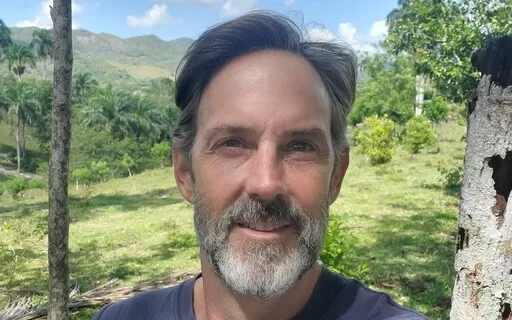
Welcome to Life,
Lessons,
And Laughter with your host,
Glenn Ambrose.
Hello everybody.
Welcome to Monday,
Monday at 6 p.
M.
Eastern,
6.
02.
How's everybody doing today?
Communicate with me.
That's my segue.
So this is what I'm talking about.
Talking about communication.
I'm going to try.
We'll see how it goes.
So you know how this routine is.
I'm going to start babbling.
And as I start babbling,
You guys say hi.
Let me know where you are watching from.
And you know,
Throw some questions,
Some comments,
Whatever.
Throw those out there.
Hopefully I'll be able to see your comments okay.
So communication.
Where to begin?
I don't know how to communicate about communicating.
Well,
Yeah,
I'm just going to dive right in like I usually do and we'll see where it ends up.
So I mean communication,
There are many different styles,
Many different personalities,
You know,
That go into,
Well,
That different people have.
So therefore,
There's many different communication styles.
So I guess,
So here's the starting point.
I just realized.
The starting point is more of the macrocosm.
It's more of the society.
What society is doing because like oftentimes we can see it in a grander scale in the macrocosm.
And we have to keep in mind that society as a whole is a reflection of the people in it.
That's all society is,
You know.
Society isn't some thing.
It's a collection of people.
So if society is functioning in a way,
A particular way,
Then oftentimes if we're capable of being honest with ourselves and we look into our lives.
I'm not saying this is a hundred percent,
But most often we can find ways that we behave like this in our own lives.
We might have to disconnect from the specifics.
And that's what everybody gets confused with is they get caught up in the specifics.
It's like,
Well,
You know,
Politicians argue about health care.
I don't argue about health care.
It's like that's not the point.
Like,
You know,
The specific topic is not the point.
So you have to kind of see the dynamics of how things are in the macrocosm and then see if you can draw a line.
So,
You know,
When I'm doing these podcasts,
It's all about identifying.
Which,
Well,
I guess I'm going to dive into this just a little bit.
I didn't know I was going to do this,
But I made a post the other day about how identifying creates compassion.
Because if you're,
You know,
They teach this or sometimes people teach this in recovery,
Where when I was very early on in recovery,
Somebody said to me,
You know,
You don't when you go to a meeting,
You you have to identify,
Don't compare.
And what that meant was don't compare stories,
Try to identify with what they're saying.
So like if if somebody goes,
Oh,
I you know,
I totaled six cars and my wife left me and I went to jail for attempted murder.
And that was,
You know,
And I and I realized that my life was was not going in the direction and I had made a mess of everything and I needed to do things differently.
And I realized that,
Like,
If somebody says that,
You don't get hung up on the fact that you didn't total six cars and your wife is still with you and you haven't been to prison.
That doesn't really matter.
Those are specifics.
So don't compare your specifics with their specifics.
You know,
You don't compare stories.
What you do is you try to identify with what they're saying.
And,
You know,
A good way to identify is have I felt like that before?
Have I thought like that before?
Have I acted like that before?
This bright,
This light is bright.
So so that's a good way to identify.
You know,
You're trying to find out and you're trying to identify with other people's feelings or the way they think.
So this isn't or,
You know,
The way they felt,
The way they think or the way they acted.
So this is a good way to identify with people.
So this is what we want to do when,
You know,
When I'm talking about these topics,
Try to identify with the message.
You know,
Don't compare.
Oh,
Well,
I never experienced that.
It's like,
Well,
You know,
So if I'm talking about communication and I'm talking about,
You know,
The macrocosm,
Which I'm going to talk about in a moment.
You know,
Try to draw a line,
Try to understand the dynamic,
The way of thinking,
The way of communicating,
Not not the specific topic I'm using as an example.
And then try to draw a line to that and to your life and see,
You know,
How can I grow from this?
Is there some place that I've I've done this type of thing?
Maybe it's not the exact thing that I can fine tune.
And that's how you're going to grow from my teachings as well as anybody else's teachings.
You know,
So communication macrocosm,
I mean,
It's pretty obvious that we're at a difficult place in society and therefore individually with communication,
Because we there is no communication anymore.
You know,
What happens is whenever there's a topic,
People pick sides and then they argue.
They say,
Well,
My side's right because of this,
This,
This.
And while that person's talking,
The other person is over here going,
Well,
No,
My side's right because of this,
This,
This.
And while one side's talking,
The other side's looking for holes in whatever the other person is saying so they can blast it apart when it's their turn to speak or they're looking for counters to whatever they said.
So what they're not doing is they're not trying to identify with the other person.
They're not trying to understand the perspective of the other person.
What they're trying to do is prove their point,
You know,
And this is not healthy communication.
So to get,
You know,
Into the healthy,
What the Dalai Lama said,
The Dalai Lama said he was accused of waffling,
Of going back and forth on subjects,
Because what would happen is one group of people would come in.
You know,
Now you got to remember the Dalai Lama's talking about,
You know,
World politics and,
You know,
He's their religious but also political leader of Tibet.
So,
I mean,
He's dealing with world politics as well as policy and global issues and all kinds of stuff that he weighs in on and is part of.
So,
You know,
He said that when one group of people come in and they start expressing their side,
Their perspective of an issue,
He listens with the intention of understanding them.
So he's trying,
He's actively listening.
You know,
This is something that we need to do.
We need to actively listen,
Not listen in the way to combat the other side.
You know,
We have to,
We should be looking for ways that they're right,
Trying to understand,
Not looking for ways that they're right so we can think like the way they think or so we can hop on their side.
That's not what I'm saying.
I'm saying looking for ways that they're right so we can understand the direction,
Like where are they coming from.
Like,
If you take,
This is so obvious with in global issues,
Like if you take Trump supporters and Biden supporters,
The other side thinks the other side is literally crazy.
That's when you know you have poor communication,
Because we don't have 50% crazy people in the United States,
But they're 50% divided,
You know,
Thereabouts.
Like,
How could 50% of the people think the other 55% of the people are just insanely crazy.
They just,
They don't know what reality is.
They don't,
They're living in a fantasy world.
Like that,
That,
And that's normal to us,
That's acceptable.
What's not acceptable is actively listening,
Trying to understand the other side.
That is what are you talking about,
Glenn,
This is ridiculous.
You know,
That's unacceptable,
Trying to listen to somebody else's side is unacceptable.
Thinking that 50% of the United States is literally insane and should be institutionalized.
That's normal,
We can accept that,
That's fine.
It's like,
Come on people.
So,
So we have to understand,
You know,
Like,
Like I was saying the Dalai Lama.
When somebody is trying to,
When somebody is expressing their side,
He's attempting to understand their perspective,
Understand their line of thinking,
Where they're coming from,
Why do they think like this?
Listen to the words that they're saying,
Listen to the evidence that they're presenting,
Listen to how they're presenting their information in a way that you hadn't thought of before,
So you can understand why they're presenting the information that way.
That way you actually comprehend where somebody is coming from,
Right?
So the Dalai Lama does that,
He actively listens.
It's a verb,
It's an action that he takes to actively listen,
To try to understand the other person's point.
So when they're talking,
He's sitting there listening going,
Okay,
All right,
I understand.
Uh huh.
Yeah.
Okay,
I see what you're saying.
Okay.
All right.
I see.
Yeah,
I see your point.
Like he says stuff like that.
Why?
Because he understands and he sees their point.
Doesn't mean he agrees with them.
And then somebody else says the opposing side,
Right?
And he's just sitting down and he's going,
Yes,
Okay.
All right,
I understand.
Okay,
I see your point.
I see your point.
And people are like,
Oh,
The Dalai Lama waffles.
He goes back and forth.
It's like,
No,
He's not going back and forth.
What he's doing is he's actively listening.
He's not making a decision.
He's listening and attempting to understand.
So like it's really,
I mean,
If you have an open mind,
I can have a conversation with somebody that is a Biden supporter.
And if I keep my mind,
I might disagree with them.
But if I have an open mind,
I can be like,
Okay,
All right,
So you're seeing it from that perspective.
Okay,
I happen to disagree,
But I understand what you're saying.
I understand why this makes sense to you.
If I was thinking of it from that perspective,
It makes sense to me too.
Now I understand.
And same thing with a Trump supporter.
If somebody goes,
Oh,
Well,
You know,
I believe this is why I think,
Oh,
Okay,
I might not agree with them,
But I can understand how they got there.
You know,
And again,
It doesn't mean that you have to agree.
It just means that you're trying to understand what the other person is saying.
This is how communication works.
And most people don't do that.
It's just like,
This is my side.
Well,
I want this.
So we fight.
So the only way to win is if somebody else,
Well,
Not somebody else,
If everybody else thinks like you.
With that outlook.
This is why we have so much polarity in society as well as individual lives.
Because like I said,
Society isn't a thing by itself.
It's made up of a bunch of people.
If people didn't communicate like this in their everyday lives,
We wouldn't have a society of people that communicate like this.
Right?
You following me?
You would not have a,
You can't say society argues and doesn't see the other side's point without the people within that society arguing and not seeing each other's point.
So this is what's happening in most people's lives.
And it's not just the United States.
It's all around the world.
It's more,
Like most things,
It's more prevalent in the more developed countries.
The more developed countries,
The more egoic identified they are and the more wrapped up into this system that they've been going.
That doesn't work.
Hey,
Jenny.
I have learned to do much more listening than I do talking.
People jump on you no matter what you do.
Yeah,
You know,
This is a lot more listening.
I think we all need to do a lot more listening.
And I say that from experience.
And I say that coming from my job is talking.
So,
But what I did was when I,
You know,
When I first woke up,
I decided I wanted to not tell any lies.
I want to be 100% truthful.
So I did like a year,
Year and a half of learning how.
And I was pretty honest.
I've said this many times.
But I would tell white lies and take easy ways out sometimes.
And I wanted to stop doing that.
So for like a year,
Year and a half,
I listened a lot,
You know,
Because I had to,
You know,
I listened because I needed to develop different ways of speaking.
So one of the best ways when you're trying to make sure you're only honest all the time is to lean back.
And like most things,
Lean back and be the observer,
You know,
So you're being the observer and you're paying attention.
And the first thing I realized was that a lot of times when I said things that were like maybe white lies or kind of phrased in a way to distract people from the truth or something,
Because like I said,
I really didn't lie that much.
So it wasn't like I was trying to overcome this lying habit.
I was just trying to be completely 100% honest.
So I was looking for things to tweak,
You know,
And it's,
You know,
One of the things I found is like I didn't,
I would say things because there was a moment of silence,
Or I was the next in line to speak.
And sometimes I like I stopped just filling those spaces.
And I know,
I noticed that most of the time people didn't notice,
They didn't need Glenn's input on everything.
So like,
It was really,
It was a really good lesson.
So I talked a lot less,
And I learned a lot more during that period of time,
You know,
By listening more and observing and trying to see where people are coming from,
Because I didn't keep throwing a dog in the fight.
You know,
I would just keep my space,
And I would just listen and find out,
You know where where I could say something and meaningful though,
You know.
So yeah,
You know,
We just need to learn how to,
How to listen,
How to listen and pay attention and be more cautious with the words we're choosing,
Which was the other thing that I learned,
You know.
Trying to,
There's nothing wrong with like,
Know what I never see happen is very rarely is somebody reinforce.
This is interesting.
Sometimes I do it myself sometimes is I'll actually reinforce something that I disagree with.
Just because it's kind of natural when you're actively listening.
So like when you're trying to understand somebody's perspective in like the conversation,
Like they can be talking,
They can be like,
Glenn,
I really believe this and it's something that I don't believe in.
Okay.
And they'll be like,
Yeah,
And because of this,
And this is how I see it,
And I see it this way,
This way,
And I go,
Oh,
Okay,
So,
So it's kind of like,
Like this,
Like if I use this example,
It's kind of the same thing.
So that's the way you look at this.
You come in this way,
And then therefore this makes sense,
And this makes sense,
And this,
And they're like,
Yes,
Exactly,
Glenn,
You got it.
I'm like,
Oh,
Okay,
Cool.
Yeah,
I'm following you.
I'm fine.
I understand.
I mean,
You know,
Personally,
I look at it differently.
And sometimes they're like,
What?
Sometimes it catches people by surprise,
Because they're not used to being actually,
Like actively listened to.
They're not used to people trying to understand what they're saying and why they're saying it.
And the only time that ever happens is when somebody agrees with them.
So they assume that I'm agreeing with them when I don't,
Which is fine.
I mean,
Even when that happens,
It's a much more smooth conversation than if I don't actively listen.
Then it's just back and forth,
Back and forth.
So that,
You know,
At least this way they feel heard.
Now it becomes a more thoughtful conversation.
They're like,
Oh,
You don't agree.
You,
But you just said,
I was like,
Yeah,
Well,
I,
You know,
I'm just trying to understand your perspective and where you are coming from.
And yeah,
I do.
I understand it.
I understand why you think the way that you think.
And to some degree,
It makes logical sense the way you explained it.
I just come at it from a different perspective,
That's all.
And then I'll explain my perspective.
See,
I come at it from this way,
Which means this,
Which includes this,
Which thereby gives me this conclusion.
So,
You know,
I understand you look at it from that,
And that's your prerogative.
It's your perspective.
If you want,
You know,
If you want to continue looking at it like that,
That's completely acceptable.
I mean,
I don't,
You know,
Who am I to tell you how to think?
What,
Why would I think I have the right to tell you what you're supposed to think?
You're a completely different individual.
You get to think however you want to think.
I just look at it like this,
You know,
And we,
We can go about our business and still have friends.
And you can continue looking at it the way you look at it,
And I'll continue looking at the way that I look at it.
Or sometimes one of us goes,
You made some really good points.
You know,
Maybe because,
Why?
Because there's no pressure.
I'm not trying to convince anybody.
There's no manipulation energy.
See,
This is what,
This is one of the major problems with communication.
When you're not actively listening,
When you're just trying to prove your point,
What that is,
Is it's manipulation energy.
Your whole energy is trying to get them to see your point,
Get them to think the way you think.
That's manipulation.
And people can feel that.
And this is one of the reasons why they get,
We get turned off so quickly.
And this is one of the reasons why so many people do it,
Because they feel the manipulation energy,
And then they shut down.
Now all of a sudden they're in defense mode.
So they're like,
Oh,
They're trying to manipulate me.
They're trying to get me to think the way that they think.
Why should I think?
Now it's not even about the topic anymore.
See,
This is what people don't realize,
Is arguments aren't about the topic.
It's a power struggle.
That's what we need to stop.
We're trying to manipulate one another.
You think the way that I think.
You should think the way that I think.
No,
You should think the way that I think.
And then it's just an argument over one person trying to control the way somebody else thinks.
That's what the argument is about.
That's why nobody's ever going to give.
Nobody's,
You know,
Like,
I mean,
Whoever,
Has anybody ever seen ever in their entire life,
Somebody yelling at somebody else in a manipulation energy or not even yelling,
Just forcefully telling the other person,
This is how it is.
This is how you should think.
And this is how I think.
And you're wrong.
And this is right.
Have you ever seen anybody go,
Thank you so much.
You're so right.
You are right.
And I am wrong.
I'm a complete moron.
And you're an intelligent,
Wonderful person.
Thank you for pointing that out.
I'm going to now go through the rest of my life thinking like you.
I appreciate this.
Thank you.
Has anybody ever done that?
I've never seen it.
Right?
Why?
Because it's a power struggle.
You're fighting over power.
You're not fighting over the topic.
You're not even discussing the topic anymore.
It's just who's going to manipulate the other person into thinking like they think.
Who's going to win the struggle?
Who's going to win the fight?
Nobody.
It's a stalemate.
So it never works.
Yeah,
It's just a pissing contest.
So,
Yeah,
This is what happens.
It's just going back and forth,
Going back and forth.
And it's a power struggle and it's manipulation energy.
Hang on.
So,
Yeah,
It's just manipulation energy and we can read energy way better than we realize.
So it's attack,
Defend,
Attack,
Defend,
Attack,
Defend.
And this is how most conversations go.
And this is why we never get anywhere.
You know,
It's because,
Like I said,
It's not about the topic.
It's about going back and forth.
So,
Solution.
You know,
Active listening,
Which I already talked about a little bit.
That is the direction of solution.
So we have to try to understand what another human being is saying.
If we would like harmony in our life and more peace in our life,
Well,
Then we have to have peace and harmony as a goal.
You know,
We have to start like because we have goals.
So this is kind of interesting.
We have goals,
Whether we know it or whether we don't know it.
And arguing is a good example of that.
Right now,
Most people in developed countries want to be right.
They want to be.
There's so much controversy in the world.
Everything is so up in the air.
Nobody feels safe.
All the COVID stuff and all the political stuff and all this stuff going on.
Nobody feels safe and they want to feel safe.
What do people latch on to to feel safe?
Well,
They want to control.
It's control,
Basically.
They want to have.
They either want to control something or have the illusion of control.
And if you think you can control things on Earth,
Then it's an illusion because you can't.
You might be able to get a consistent outcome in certain things,
In certain ways.
But as a general rule,
Everything changes in this reality.
That's kind of one of the foundational things of this reality is that everything changes.
So we can't really control things here.
We can do things in certain ways and understand dynamics.
And we can come out living a life like we can control our own life and how we interact with it.
But we can't control life itself.
We can't control external events.
We can't control external people.
We can't control anything outside of us.
All we can control is our insides and how we react.
So everybody's looking for safety in this very unsafe.
And society that we don't know what's going to happen next.
So what they do is they latch on to something.
They latch on to a side because people don't like not knowing.
It makes them very uncomfortable.
I don't know.
I love not knowing.
That's my comfort zone.
When I understand that I don't know,
I can relax.
When I think I know something,
That's when it gets a little bit like,
Oh,
Am I going to try to stick my hands in there and try to control it because I think I know how things go and what's right for everything?
Like,
Well,
No.
OK,
I'm not sure.
All right.
Good.
I'm good.
So I don't I don't I like not knowing because that's realistic.
To me,
My whole concept is that like I don't know anything for sure.
Especially in this temporary realm.
So it's like I understand that.
So when I start thinking that I know and I can control outcomes and then in this temporary reality,
That's when the red flag goes up and says,
Like,
Glenn,
You might be off base here because you're thinking you can control things that are outside of you in an ever changing reality and you can't.
So I'll play like a hypothetical game.
Oh,
Well,
It could be this.
It could be that.
It could be this.
Right.
So you can see it could be multiple things.
So there are multiple perspectives and you don't know which one's right.
Yeah.
OK,
Good.
So stay there.
Understanding that you don't know.
And I'm comfortable there.
But most people unconsciously latch onto a side because then they can stop thinking about it.
They don't like thinking about things.
They want to know,
Like,
You know,
Well,
I just I don't know.
I don't know that everything's up in the air.
I don't know.
I don't know.
Well,
This.
OK,
Tell tell me.
I really hope I believe this person because I really want to believe in something.
And right now I don't know what to believe in.
So tell me your side.
Oh,
Boy.
That's I don't know,
Man.
I don't know.
You tell me your side.
Oh,
Oh,
OK.
Well,
You had a couple of good points there.
OK,
I'm going to be on your side.
So then we fight them.
Right.
Is that the rule?
We fight these people.
OK,
Got it.
All right.
Now I know what side I'm on and I know what I believe the basis of it.
So I'm going to talk to a bunch more people on this side so I can understand it better,
So I can defend it better to those people.
Do you realize that's what we're doing as a society?
This like we are literally living our lives like that.
So much so that society is reflecting it back to us.
Like if you look at that dynamic as a society,
Hopefully you can understand that this is what society is doing.
And then you bring it into the microcosm and understand that that means a bunch of people in that society are doing that.
Like the majority,
Like probably you.
I mean,
Heck,
I even do it a little.
You know,
I think I'm pretty aware and I try not to do it much.
But I mean,
If I'm being honest,
I can still get defensive sometimes.
I can still,
You know,
Get irritated with another side and try to defend my way or something.
It happens.
Like I said,
Not that often,
But it can happen.
So if it's happening with me and you think it's and I've been working on myself with this stuff for 19 years and it's still happening with me occasionally,
Chances are it's happening with you somewhere.
That doesn't mean you're a bad person.
That just means you're like the rest of us.
There's little tweaks and things that we can grow and expand upon and become better versions of ourselves.
That's all.
There's nothing wrong with it.
It's just we have to see it for what it is.
You know,
This is why I'm telling you,
Man,
Recovery.
It gave me a great foundation for what I teach,
But lately I keep referring back to it,
Referring back to it,
Referring back to it.
And it's because there's so many similarities that I'm seeing right now in society with what society is dealing with compared to what I learned in recovery.
It's just,
You know,
The program of recovery is spiritual.
That's why it works.
What I teach is spiritual.
That's why it works.
Anything that works is spiritual.
In foundation,
This is what I believe.
If you have a different perspective,
I respect that.
But this is what I believe.
So it's,
There's similarities.
There's so many similarities.
And because we all struggle with the same things.
Alcohol is a solution.
Drugs are a solution.
They're not the problem.
You know,
People think that drugs and alcohol are the problem.
They're not the problem.
They're the solution.
The problem is that they're maladjusted to life.
So they turn to drugs and alcohol.
And guess what?
Everybody else in society that isn't turning to drugs and alcohol,
They're all maladjusted to life too.
Most of them.
Large majority of people on this planet are maladjusted to life.
Why?
Because they,
And they distract themselves with sex,
With relationships,
With shopping,
With social media,
With you name it,
Man.
Prescription drugs,
TV,
Reading,
Learning about spirituality.
You know,
It's eating everything.
We distract ourselves.
We are masters of distraction.
You know,
Because it helps the uncomfortability when,
If we're still and we're not distracting ourselves and busyness is probably the biggest one.
We're so damn busy.
We never stop moving.
Why?
That's a defense mechanism.
You know,
We figured that out.
It works really well.
If you're constantly in motion and you're not still long enough,
Then all the things that are bubbling up,
Trying to come to the surface so you can deal with them.
They have no space to come up.
There's no time.
They're like,
Oh my.
If he just sits still for one minute,
He'll feel his feelings.
And subconsciously,
As soon as we sit still,
We're like,
I'm bored.
I gotta go do something.
No,
That's uncomfortability bubbling up.
You're not bored.
If you've been busy for 14 years and you sit still for 45 seconds,
That's not boredom.
That's uncomfortability bubbling up.
It's funny how we're going 90 miles an hour,
Man.
We don't even slow down long enough to think.
Somebody goes,
Are you busy?
Yeah,
I'm busy.
Okay,
Cool.
We're busy.
Nobody even stops to go,
Like,
Why are we so busy?
Is this a good way to live?
Nobody even stops to ask that.
So,
Uncomfortability.
This is a spiritual shift that's happening on the planet.
People could live a slower paced life and be somewhat contented for tens of thousands of years.
Why?
Because it wasn't a spiritual shift happening.
That's why.
How is a spiritual shift going to manifest?
All of a sudden,
Everybody's just going to be like,
Oh my God,
I see God.
No,
It's going to happen over time.
How is it going to happen over time?
It's going to bubble up within us.
We're going to start feeling like,
You know,
Maybe there's more to life than going to college and getting a high paying job and buying a big house and having two cars and then having two nicer cars and then having two nicer,
Nicer luxury cars.
And then having four cars because our kids have their driver's licenses now and they need a really nice one on their 16th birthday.
And then,
You know,
You can't forget the infinity pool and the vacations.
And,
You know,
Like,
It's people are,
What's happening is people are waking this uncomfortability,
Like there must be more to life.
There should be some fulfillment,
Blah,
Blah,
Blah.
This type of stuff is like bubbling up within us.
Why?
So we can stop this ridiculous pace of life and stop this existence based on greed and power and money and crapping on each other.
And we can start getting into a reality based in love.
So this is what's bubbling up,
But we need to allow that to bubble up.
So we can deal with it so we can find some peace.
Cool.
Hey,
Tim,
What's happening?
Tim's with us on YouTube.
Thanks for joining,
Tim.
So,
So,
Yeah.
So,
You know,
So this is kind of what's happening globally.
And we need to start letting go of all this stuff,
All the all this distraction techniques and start actually,
You know,
Using our life as our laboratory.
This is where we need to start discussing things.
We need to start we need to start,
You know,
Opening up to those in our inner circle first.
We need to start learning how to communicate with one another.
And the first way to do that is by actively listening.
The other the other thing that's important,
You know,
Because I kind of talked about that a fair amount already.
Is safety.
You know,
You have to have a safe environment.
This is this because if you don't,
This is what feeds the attack and defend,
You know,
Because you're always on defense.
Why?
Because you're being attacked.
That's why.
With what?
An opinion.
And an energy that's trying to force it on you.
So you're defending against something.
So the first thing that you need to do is create a safe space.
You know,
Safe space where you guys can.
So like if you're just learning how to communicate,
What you can do is have conversations specifically in a way where you both agree to to not come to a conclusion.
The point of the conversation is to exchange ideas with never coming to the conclusion.
By never,
I mean in that conversation.
So this is this way you start learning.
You'll see if you if you set that intention.
And you have a conversation,
You go,
OK,
We're just going to exchange ideas.
We're not going to try to get the other person to agree with us or change their opinion.
We're just going to exchange ideas.
And there's going to be no conclusion at the end of the conversation.
We're just exchanging ideas with no attachment to an outcome.
You guys have heard me say that 160,
000 million times,
Right?
An attachment to an outcome.
This is spiritual law.
We cannot have an attachment to an outcome in any way,
Shape or form.
This is another.
Yeah.
Another example of that.
So we can't have an attachment to the not to an outcome.
So we have to be at first just don't have an outcome possible.
That's a great way to not be attached to it.
Right.
While you're still learning and just have a conversation where you exchange ideas.
That's it.
And then when it's over,
It's over.
You go your separate ways.
You can experiment with that.
That way you guys can get used to exchanging information without the manipulation energy,
Without the fear,
Without the attack and defend mentality dynamic.
Right.
And just learn that you can relax and be like,
OK,
Like I don't have to.
They can disagree with me.
It doesn't really matter.
They can agree with me.
Doesn't really matter.
They can't.
You know,
I mean,
We're not I have nothing to lose.
Nobody's trying to take anything from me.
So I don't have to defend anything.
So you just exchange information and you can do that.
You know,
Most most people think that the biggest roadblock to healthy communication is communication skills.
And it's not the biggest block to communication is people feeling safe.
Safe to exchange ideas without trying to be manipulated or bullied into a way of thinking.
That's the biggest roadblock until you get past that.
You're not even talking about the subject.
Like I said earlier,
You're just defending.
Don't you can't make me be you.
You're defending your energy,
You're defending.
You know,
So it's it doesn't matter if the other person made sense.
You're not going to hear it anyway.
You're just trying to figure out a way to combat whatever they're saying.
So we have to lower those defenses,
Relax,
Create a safe space.
When two people feel safe,
Then they can communicate because it doesn't matter if they disagree.
It's OK.
And they understand that it's OK and they understand that they're safe in it,
In disagreement.
It's OK.
You know,
And then when you're then if once you can communicate without feeling defensive,
Then your mind opens.
And you start it's safe to adopt somebody else's belief system,
Then if you choose if I'll adopt somebody else's belief system,
If I choose to adopt somebody else's belief system.
But I'm pretty rebellious.
And if somebody comes at me and tells me you should think the way that I think.
You know,
I mean,
If I'm in good space,
I'll rise above it and be like,
They can't.
Glenn,
Stay feeling safe.
Don't get defensive.
Don't rebel against them.
You don't have to think what they're telling you to think,
Even if they think you're supposed to or you should.
After they're done talking,
You can tell them to go screw.
It doesn't matter.
It's fine.
You're in control of what you think so you don't have to defend yourself against them.
You know,
When I'm in good space,
I might be able to do that.
But I mean,
If it's out of the blue and somebody goes,
You got to think the way that I think.
No,
I don't.
Let's let's not even talk about the subject yet.
Let's just talk about the fact that you think I need to think like you.
Let's let's settle that first.
Then maybe we'll have a discussion.
You know,
That's kind of more like what I would do.
Like,
Let's let's nip this in the bud.
If you think we're having a conversation and you're going to manipulate me into thinking the way you think,
This is not going to go well.
So why don't we just understand that you have perspectives,
I have perspectives and we have the right to our own.
If we can agree there,
Then I'll have a conversation with you.
So you see,
We have to create that safe space.
Otherwise,
Nobody's going to hear the other side.
And to me,
This stuff is.
It's simply dynamics.
It's the way things work.
It makes sense.
It's logical.
And if you look at things like this,
You can see how it works.
So like if you look at,
You know,
I've been kind of talking more about the one on one type scenarios.
So let's blow it back up.
I like blowing it up into the macrocosm and then shrinking it down into the microcosm.
That way you see both perspectives and you're like,
Oh,
My God,
It's true there and it's true here.
It must be true.
Right.
This must be the dynamics of how things work.
This must make sense.
So like blow what what I just said up into the macrocosm.
Which is something like large social change.
And I think when we see things like Nelson Mandela.
Beautiful example,
You know,
Like when Nelson Mandela was hard and pissed off and screw the other side.
They should be they should be treating us fairly and they're not.
So screw them.
He didn't get anywhere.
He didn't get anywhere when he was in that energy.
But after he was in prison for a long time,
He started waking up spiritually and saying,
Understand,
Wait a minute here.
Wait a minute.
Maybe I have to have an open conversation with them because this trying to jam my truth down their throat ain't working.
So what if I just had conversations with them and I started trying to understand their perspective,
Where they're coming from,
Why they're saying the things that they're saying,
Even though I disagree with them?
If I can understand their line of thinking.
As a human being,
Understanding that just because I don't agree with what they're doing doesn't mean they're insane and lack of knowledge and should be locked up and drooling on themselves for the rest of their lives.
That's not what it doesn't mean.
It just means that they have a different way of thinking,
A different line of logic that they're following,
A different perspective.
So if I try to understand their perspective.
Then maybe we can meet in some commonalities and I can explain our perspective.
And then maybe we can figure this out.
And that's basically what he did.
And that's the big deal of it.
Understanding what the other side is saying.
And then you have more of an ability to.
.
.
Now Nelson Mandela ended up,
He had an agenda.
He was trying to get his side heard.
And he ended up doing that.
But he wasn't going in with manipulation energy.
That's the difference.
He was going in trying to understand.
He was trying to understand the other side.
Why?
Well,
Because that's what's necessary in communication.
That's why.
And if you don't do that,
You never get anywhere.
If you just argue the whole time,
You never get anywhere.
That's why he was trying to do it.
Now,
He probably didn't know the outcome was going to be like,
Yeah,
Nelson,
You're out of prison and you're going to be present.
I doubt he could see into the future that good.
But the point is,
Is he let go of the argument and tried to identify with the other side.
And that's what opened up to actual constructive conversations.
You know,
If somebody is too busy,
Like if Nelson Mandela just constantly attacked,
Attacked,
Attacked,
You guys are horrible.
You guys are bad.
You guys suck.
You guys are horrible.
You guys are bad.
You guys suck.
Like if they wanted to do something different,
How would they do that?
How?
Like they would have to get to a point where they go,
OK,
You're right.
We're horrible people.
We suck.
We're bad.
You're good.
And we're bad.
And then so we'll do whatever you want,
Even though we're in control.
That wasn't going to happen.
He met them where they were and then they developed a way where they could go their own way.
Like I actually noticed this dynamic to some degree.
When I was young,
Like I'll never forget this.
I should I don't know if I've ever mentioned it to my friend Danny.
I should I should mention it.
But my friend Danny came home from college one day and I had a black eye as usual because I always got in fights.
Now I was hanging around the center of town where all the fights occurred and and going to parties.
And and he was like,
Man,
You got another black guy.
And I was like,
Yeah,
You know,
I'm small.
I take one going in.
You know,
It happens.
And he was like,
When are you going to stop fighting,
Dude?
Like this is kind of ridiculous.
You know,
Aren't you like in your 20s now?
And I never really thought about it because it was somewhat acceptable in the circles that I was hanging around.
So I was but but he planted a seed and I started thinking about it.
So I decided to stop getting in so many fights.
So what?
So I started thinking about the dynamics of what happens when a fight breaks out.
And I'm like,
Usually,
You know,
Somebody will say something.
And I was very defensive.
So somebody would say something and I would say something back and basically right right away at that point,
I would give them two choices.
They either kissed my ass,
Tucked the tail between their legs and walked away like a wuss or they hit me.
Those were basically the two options that I gave people.
Whenever anything started,
If there was even a hint of something started,
I went right after them.
And they had a choice.
Either hit me or look like a wuss in front of everybody.
So guess what happened?
Quite a few fights because people don't usually want to tuck their tail between their legs in front of a group of people.
So I realized this and I was like,
Okay,
What can I do?
What can I do to not fight at that moment?
And I realized nothing.
Like it's,
I mean,
That's a dynamic that I set.
Like they say something and I bring it right there.
So I was like,
Okay,
Once it's there,
It's too late.
A fight,
There's a good chance a fight is going to break out.
So what if,
What's the step before that?
Well,
They say something to me and I'm like,
Okay,
So what can I do when they say something to me?
What can I do other than paint them into a corner where they have to fight or tuck tail?
I was like,
Well,
I could give them an out maybe.
Like maybe just give them an out.
Give them an option where they could either get out without looking like a wuss.
Or if they want to take it further,
Then we took it further.
But give them at least an option.
I was like,
Oh,
This is good.
Good thinking,
Glenn.
So that's what I did.
And it worked very well.
I mean,
I would love to say that I never got in any more fights,
But I got in,
I still got into my share,
But they were very,
You know,
Very few between.
And back then,
It might be,
You know,
Once every year or two,
I would get into one after that,
Where before it was like,
Every couple weeks.
So,
So it worked.
It worked pretty well.
I mean,
You know,
The other problem was that I was a rageful alcoholic with,
You know,
A major complex.
So,
I mean,
Until I changed,
I haven't gotten in a fight since I woke up,
You know,
Spiritually or got sober.
So that's been 19 years or something.
It's amazing,
You know.
But back then,
It worked actually pretty well.
Why?
Because I gave people an out.
You know,
This is,
So why did that work?
Well,
Because I didn't paint them into a corner.
I didn't give them that where they either had to defend themselves or,
You know,
That was the only option.
And that's what's happening now is people,
The only option we have when we communicate with other people is to defend ourselves,
To try to prove our point and defend.
That's it.
It's like,
Well,
No wonder why there's arguing.
You know,
There's no way out.
There's no,
When you start talking about something,
That's it.
You either,
You either agree with them or you fight.
There's no,
You know,
And most of the time,
They already know that you're not going to agree.
So really,
It's just fight.
You know,
Thankfully,
It's arguing,
Not fighting,
Fighting.
But this is what we need to do.
We need to think ahead a little bit.
You know,
It reminds me of,
And,
You know,
Honestly,
I don't know if this is actually true.
But I saw a movie about JFK and the Cuban Missile Crisis years ago,
And I thought it was genius.
The way they portrayed it is the Cuban Missile Crisis was basically going to happen.
We were going to war,
Right?
And JFK was said,
In the movie at least,
He said,
I want everybody to find a way out for Russia.
We need to give them a way out without them tucking tail between their legs.
We need to give,
That's what I want you guys working on.
And I'm talking like the way it was portrayed within the last couple hours.
When war was imminent,
When it was going to happen,
What JFK said supposedly was,
Find them a way out.
Find them a way where they can't,
Where they don't have to shoot a missile at us to save face.
That's what I want you guys working on.
That's genius.
That's leadership.
Whether it happened or not,
That's freaking genius.
Give people a way out without losing face.
Let them have their dignity.
Stop trying to strip people of their dignity,
Of their freedom of choice,
And then expect them to just not fight back.
Of course you're going to fight back.
Of course they're going to argue with you.
Why?
Because it's not about the topic anymore.
It's about you stripping them of their free will to think for themselves.
You know,
We have to respect one another.
So this is,
I'm going to kind of bring it home down into the more of the solution.
The solution is respect.
It's respect.
It's love.
It's peace.
If your goal,
You know,
I mentioned earlier,
We have these unconscious goals.
Our goal is,
Unconsciously,
If you think you don't have a goal in life or a goal in situations,
That's because you're unaware of it.
We have unconscious goals that we're not even aware of.
So our goal in a lot of these situations is to not be pushed around,
Not be told what to do,
Not be manipulated.
That's our goal in a lot of situations.
So that's what we do.
But if our goal is to be peaceful and loving and respectful,
Then that's what we'll do.
Our brain will literally change the way we process information to accomplish that goal.
So if you're in a situation,
Like let's say I'm sitting here and I go,
OK,
I want my goal here is to be peaceful,
To be respectful to other people,
And to not argue when I get in conversations.
That's my goal.
And then somebody starts attacking me.
What I'm going,
My brain is going to start doing is it's going to start figuring out ways to either get out of the conversation or minimize the energy of it and just set the other person at ease.
Why?
Well,
Because that's how can I be peaceful with somebody freaking out on me?
Right.
So if my goal is to be peaceful,
I need to calm them down.
That's why this is what I'm saying.
Your brain tries to figure out how to accomplish your goal.
So that's why having a different goal makes all the difference.
So unconsciously,
We have a goal of being right or defending our position or not getting pushed around or living life our way or whatever.
We have those unconscious goals.
And we might,
We'll probably accomplish the goals that we set.
So,
You know,
You could not get pushed around.
You could live your life the way you want.
But you're going to be in arguments all the time,
And you're probably not going to have many people around you.
Why?
Because people get sick of arguing and sick of being told what to do and defending.
So if you change your goal,
Your brain is going to process information differently and you're going to look for people and you're not going to take the bait into arguments a lot of times.
One of the best ways to do this is understanding how much of a sovereign being you are.
So this is kind of,
I said I was going to bring it all together and I,
You know,
I kind of did there.
And I'm going to take it one step deeper into sovereignty.
You know,
We are sovereign beings.
We don't have to defend ourselves from people all the time.
They can't tell us how to think,
Even if they think they can tell us how to think,
They can't tell us how to think.
You know,
So why do we defend ourselves against it?
You should think like this.
Yeah.
All right.
You have the right to your opinion.
No,
You have to think like this.
Well,
No,
I don't.
I mean,
I don't have to think like that.
Yes,
You do.
No,
No,
I get to think however I want to think.
I'm an individual.
That's what I get to do.
And if they're really arrogant and that cray cray where they start saying stuff like that,
Then you might want to get away from that person.
They're either out of their mind at that moment or they're out of their mind period.
I mean,
Most people don't really think like that.
They can think that you should think the way that they think,
But they're not going to think you have to,
Especially if you phrase it that way.
You're saying just,
You know,
Clarify what you're telling me that.
I have to think the way you think.
Now,
Like about everything,
Like you are.
What are you saying?
Are you saying that you have the right to come into my life and determine my thought processes on everything?
You are you sure?
Are you sure you think that's that's true?
You really think you have that right?
Okay,
You may go.
Most people aren't going to do that because it's ridiculous.
So sovereignty,
Ultimately,
The safety that you seek is within you.
All work is self work.
So what you want to do is find the safety within you.
Build yourself love.
Build yourself confidence.
Build yourself esteem.
Then if somebody comes at you and says,
God,
You should think the way that I think.
And you don't have to defend it.
You don't have to get into this big argument.
Just be like,
No,
I think like this.
Well,
You shouldn't.
Yeah,
I do.
Yeah,
But you should.
I mean,
Really.
It sounds silly,
Doesn't it?
Doesn't it when you say it like that?
It's silly.
I mean,
Come on.
And we spend so much energy defending ourselves from that very thing.
Right.
But if you change,
If you're confident in yourself,
It's like the way the way that I usually explain this is like it's it's like a four year old comes and tugs on your pant leg and goes,
I'm going to kick your ass.
Do you get all defensive?
No,
You're not.
What right do you have to come into my world and start crap?
You want to go off?
We can go.
No,
We don't do all that.
Why?
Because it's appropriate.
No,
Not because it's appropriate.
We do it because we're not threatened.
That's why that's why we take a different approach to a four year old saying they're going to kick our ass because we're not we're not scared.
We're not we're like this kid can't kick my ass.
I'm really not too worried about it.
So I'm not going to get all defensive.
You might be like,
No,
Dear one,
That's not nice to say.
You shouldn't say that to people,
You know,
Something like that.
But you're not going to like get into this knockdown drago argument and start fighting with a four year old.
And the only difference is,
Is because you're not intimidated.
That's it.
That's the only reason you're just not intimidated.
You don't think you can do it.
So subconsciously,
You think that other people can change the way you think.
This is why you're so defensive of it.
This is why confidence is so helpful.
Slowing down from our fast paced,
Busy life,
Understanding our sovereignty,
Then nobody can tell us what to think,
Even if they think they can tell us what to think.
They can't.
So relax.
You don't have to defend it.
Let them banter.
I mean,
I'm not going to sit there and listen to somebody for a long period of time.
But,
You know,
If you if you want to listen to them a little bit and be like,
OK,
You know,
You can do that.
I can handle different situations differently,
But you don't have to get all defensive because they can't climb inside of you and make you think their way.
It's not an option.
You know,
So that is our safety comes from within first.
You know,
And if we're in a relationship with somebody or and I mean any relationship,
Family relationship,
Partnership,
Friendship,
Working relationship,
Anything,
They're all based in respect.
So if you guys just put respect first and try to have a safe space,
Then you'll see which way it breaks,
Because it's going to break one way or another.
If you just act respectful,
Most people argue because they're looking for food,
They're looking to feed the argument.
They don't know this,
Of course,
But that's what they're doing.
Like I got out of lots of this type of conversations with people by just not feeding it.
You know,
They're just like,
Oh,
Rah,
Rah,
Rah,
Rah.
And I'm like,
Yeah,
I don't really,
I don't really talk about stuff like that.
I'm really focused on trying to be happy.
And I found when I talk about that type of stuff,
I don't know,
It just it drags me down and I'm much happier when I don't talk about it.
So I just don't talk about that stuff.
And people like,
Yeah,
But I just don't.
Well shouldn't you?
Don't you think it's important?
Yeah,
Not really.
No.
Well,
You have to be in the know.
Yeah,
I know what's going on in the world enough.
Anything important happens.
It's all over everywhere.
I find out.
I'm good.
I don't know how you live like that.
It's okay.
You don't have to know how I live like that.
It's just my way of living.
And then after that happens a couple times,
They're like,
This guy's no fun to complain to or argue with because he doesn't engage.
So there's no energy exchange.
So it's just not worth it.
Eventually,
They just,
Most other people argue with them.
So they'll go argue with them.
They usually leave me alone.
I mean,
Sometimes there's some people that are really stuck on it and they think,
I swear to God,
There's some people that they think they can actually change my opinion on things.
Which,
I mean,
You've got to have your head really deep in the sand to think that you,
You know,
And these are the people that tell me,
What do you want to walk through life with your head in the sand?
I don't have my head in the sand.
I know exactly what's going on in the world.
I just don't choose to engage in it in a useless way like you're doing.
But your head must be in the sand because you think that you can actually change the way that I'm thinking,
Which is absurd.
And if you've had any conversations with me in your life,
You know that that ain't going to happen.
So,
Like,
I don't know why you think that you might be able to change my way of looking at things.
That's a head in the sand move,
You know.
But it's the confidence.
Nobody can change your beliefs without your permission.
So don't feel like you have to defend yourself so much.
Anchor into your sense of safety through your sovereignty.
You have the right to determine your thoughts,
How you interact with life,
And nobody gets to come in and change this stuff.
So be confident in that and anchor into that so you don't have to defend so much,
You know.
So that's it.
I just hit the wall of information.
It's time to stop.
So thank you guys.
Thank you guys for watching.
Participating,
Listening,
All that good stuff.
And best wishes to everybody.
Make peace your new goal.
To walk through life peacefully in general and in specific situations as well.
And,
You know,
I'm sure that you're going to notice a difference.
And if not,
Let me know.
You must be doing something.
Must be a little off.
Maybe I can help tweak it.
So,
All right.
Cool people.
Thank you.
Take care.
Talk soon.
Peace.
Looking for more?
Check out over 200 episodes of Life Lessons in Laughter.
Or click the link in the description of this episode to connect with Glenn directly.