You give up hope that you will be saved,
That you will get it.
And in that giving up hope,
Before you slide into the hopelessness and the narrative that goes with that,
Poor me and never and I can't,
There is this spaciousness.
Hello and welcome to Being Yourself,
Self Inquiry with Gangaji.
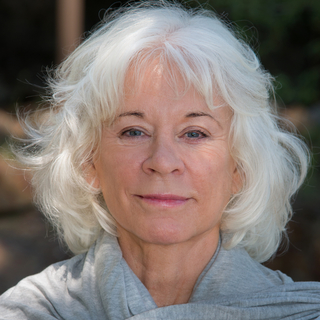
My name is Barbara Denempont.
A couple of weeks ago,
We returned from a silent retreat held at Fallen Leaf Lake,
One of our most beloved places on the planet.
And during that beautiful,
Precious gathering,
Gangaji spoke about the essential difference between psychotherapy and self-inquiry.
In psychotherapy,
We work to heal our mental and emotional bodies,
To fix the wiring in our brain,
Perhaps caused by trauma.
But in self-inquiry,
The purpose is altogether different.
The purpose is to discover the truth of who you are.
To discover what's already whole and complete,
What's already here and has absolutely no need of fixing.
And I knew this was a really important monologue to share with you as soon as I got out of the meeting.
So,
I'm so happy I get to share it today with you.
There's so much that we can do to develop our egos when they have been shattered as children or with trauma events,
And really wonderful skills,
More and more skills all the time as that's being revealed.
I mean,
Trauma is the big psychotherapeutic movement right now,
So that's like,
Great,
Great.
Who isn't traumatized?
And of course we know some people are extremely traumatized.
And there are tools,
Useful tools,
But they don't have anything to do with realization.
It's really important to recognize that.
And the truth is,
I'm not saying you don't have residual trauma in your life,
We probably all do in our nervous systems,
Just agitation or fear or helplessness or some kind of residue of unwanted events anyway.
And of course that goes to the extreme of rape and war and torture,
The extremes of what humans have done to each other and have had done to themselves.
So that's,
I support that,
And that's part of what I see as psychotherapy,
Therapeutic intervention,
Really useful.
And we've all benefited from that because that's basically the church that we live in.
I always share,
I feel like I have to continue to share this book I read some years ago called A Distant Mirror,
And it was about the 14th century.
Really that's a long time ago,
That's 1300s.
And this was in France,
And she just followed through research this particular nobleman.
But what came forth in the book of course was what this person was living in,
What was the culture,
The soup that they were living in,
And the primary ingredient of the soup at that time was the Catholic Church.
Whether you were a peasant or whether you were the king,
As the Catholic Church was your indoctrination and that's what you believed and that was your soup.
And of course in time the Reformation came and different things happened and that's no longer true.
But what is true is psychotherapy is our church,
And it's not as bad as the Catholic Church was.
It's still trying to help,
I mean the intentions of the Catholic Church started out of course as really pure and then were co-opted by humanity,
Greed,
Desire to control,
To fix,
To save,
To help.
The same thing with psychotherapy,
You find the right psychotherapist,
You're in a relationship and you are supported in your psychotherapeutic healing and that's wonderful.
Sometimes people come to Satsang expecting more of that,
Or maybe an elevated example of that.
So many times in these thirty plus years of speaking to people I've had to remind everyone this is not psychotherapy.
And you may need psychotherapy,
It's not anti-psychotherapy,
But this has nothing to do with fixing you.
This has nothing to do with erasing your past or changing your past,
As useful as that may be.
This has to do with discovering fully and completely what is always here and was always here in the worst moments,
In the best moments.
It's not about getting more best moments because both worst and best come and go.
That's the nature of experience,
Phenomenal experience.
We feel good or we feel bad,
Or it's a cloudy day or it's a sunny day,
It's cold,
It's hot,
I'm happy,
I'm sad.
All of that phenomenal experience comes and goes.
Like it or not,
It comes and goes.
And if we don't waste our energy either liking it or not liking it,
I mean,
There will be an initial,
Oh no,
I feel bad again,
But not wasting your energy following that,
I always come back to this,
I always feel bad,
This is what's always here.
It's just to stop for a moment and tell the truth.
Really inquiry is about telling the truth.
The questions of inquiry really direct you,
Direct your attention to the truth.
Do you always,
Every moment,
Feel bad?
No.
Do you always,
Every moment,
Feel good?
No.
Okay,
So it's not about good or bad because they come and go.
Do you always feel brave?
No.
Do you always feel weak?
No.
So they come and go.
Do you always feel seen?
No.
Do you always feel not seen?
No.
So that comes and goes.
And we could go on and on with the list of what most people are looking for.
To never feel bad,
To always feel seen,
To be happy,
And that's a sort of indoctrination,
A kind of catechism,
That we have hope that this elevated psychotherapy called Satsang won't give us that.
Yeah,
So that's just part of the programming that we bring to,
Like this book just showed the day-to-day immersion that was,
Whether they even attended church or not,
That was their life,
That defined their life.
And so you can discover if the psychotherapeutic model,
Without making it right or wrong,
Is defining your life.
Maybe it has in a good sense,
It's like pulled you out of a pit and supported you and actually being able to ask some difficult questions,
Great.
And maybe you will continue with your psychotherapy,
Great.
But what our meeting is about is not that.
It's closer.
It's always here.
You are always here and all the rest is weather.
Cloud formations,
Sun,
Rain,
Cold,
Weather,
Seasons.
Maybe affected by climate change or affected by the pollution in your area or affected by whatever changes that you can either fix or not fix,
But there is that which is unaffected by all those affects.
And that's who you are.
And this is always about discovering who you are,
Regardless of how bad you are or good you are or sane you are,
Insane you are,
Who you are,
Not the hows,
The who.
And then it takes care of itself.
People are sometimes shocked to see that I have a lot of bad habits.
I mean,
I don't see them as bad,
They see them as bad.
I think chocolate is a sacrament,
Actually.
So there's this idea,
You know,
When I get healed or when I awaken,
I will be different.
I won't be bothered by changes,
By phenomenal experience.
That idea itself is part of a narrative.
If you're willing to recognize that,
That that's a sentence that appears in your mind and then is followed,
Oh yeah,
That'll be great,
I will never feel bad again,
I'll always be good,
People will always love me,
You just unravel that.
You give up hope that you will ever be good again.
You give up hope that you will be saved,
That you will get it.
And in that giving up hope,
Before you slide into the hopelessness and the narrative that goes with that,
Poor me and never and I can't,
There is this spaciousness that has nothing to do with anything else and yet everything else only exists because of that space.
Pure consciousness,
Aware of itself,
Through this particular form,
It's really good news.
Really good news and it's available for you and you want it.
And maybe you thought you'd get a little psychotherapy when you came here but you knew actually because I would assume everyone here has at least heard me speak once,
Either through video or in person or podcast or something,
You know that's not what's being offered here.
It's not being rejected here but that's not what's here and there can be psychotherapeutic offshoots of just the conversations we have but that's not what's being offered.
This is a big deal.
When I met Papaji,
I had been to a lot of different things.
I never did extensive psychotherapy but I knew enough about psychotherapy to utilize what was in the popular culture and the Enneagram and all these things of seeing myself as object.
Very useful,
The strengthening of this person that gives the person the capacity to actually meet death.
That there will come a time when this person will be no more.
How startling and then to have my teacher,
You know,
Say,
Stop both your enlightenment and your unenlightenment,
Lose everything.
It was terrifying to me as I knew I had accumulated a lot of really good things.
I had a,
You know,
I had a six-shooter,
I had a knife,
I had flowers,
I had candy,
I had all kinds of good things and he was saying basically be naked.
Don't have anything.
Don't have your sanity,
Don't have your madness.
Surrender your identity and our identity is formulated by the narrative that we attend to in our heads since we were babies because that's the way human beings are made.
This is what is before that,
The very consciousness and spirit of life.
So not a religion,
Not psychotherapy,
No name.
Ramana called it inquiry.
That's a beautiful word,
Inquiry.
Although people then take Ramana's words and they practice inquiry and it becomes a quasi-religion.
That's what humans do though.
You can expect that.
That's what I meant when I said you will fail.
You have to fail because that's immediate feedback.
It's like,
Oh my god,
I objectified this again.
I made this mine.
I made this for me.
I made it for my narrative.
That's crazy.
The human species is crazy.
It's gone crazy with its own power.
Rather than surrendering it has,
You know,
Become inflated and we see the results of that all over the globe,
In every family,
In every neighborhood,
In every body.
But there is this that has always been here that remains untouched,
Pure,
Pristine,
Unthought.
Present in every thought.
And that's who you are,
Regardless of what your features are in this particular lifetime.
That's who you are and that's great news,
But the greatest news is you can realize that.
It's not you have to believe that.
You don't have to worship that.
That's who I am.
Consciousness,
Oh consciousness.
It's much more simple and that's what keeps it a challenge for most people.
It's really not complicated.
It's just giving up everything.
But couldn't I get,
No,
Everything.
Everything.
Oh no,
That would be hard.
Get that up.
That's giving up future and to give up future you have to give up past.
Then it's quite clear.