It's really difficult to speak in this foreign language.
I hope all of you will soon come to a retreat in Swiss Germany.
To make up.
I could get a bit of a talk in Swiss Germany.
Actually I need to put on the microphone,
Christine.
I'd like to speak about sympathetic joy or joyful appreciation tonight.
Nepali language,
Murti Thao.
I want to begin with a poem by Kabir,
The great Indian mystic.
If you find that you're not quite sure of what he's saying,
Never mind,
Just let it in.
Have you heard the music that now fingers enter into far inside the house?
What is the sense of leaving your house?
Suppose you scrub your ethical skin until it shines,
But inside there is no music.
Then what?
Mohammed's son pours over words and points out this and that.
But if his chest is not soaked dark with lust,
Then what?
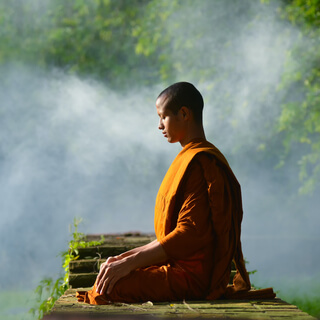
The yogi comes along in his famous orange,
But if inside he's colorless,
Then what?
So perhaps this talk is about bringing light and color to our practice.
Appreciative joy is one of the so-called Brahma Viharas.
Metta,
Kindness,
Is one what we've been practicing here together.
Karuna,
Compassion,
And Upata,
Konimati,
Are two other ones.
Christina spoke about those two in her last two talks.
Remains mudita,
Appreciative,
Sympathetic joy.
The word Brahma Viharas means that both the places where the highest gods,
The Brahma,
Abide,
Rest in,
Those mind states of kindness,
Of compassion,
Of appreciation,
And of equanimity.
These states are also called in Pali Apamanaya limitless states because they include an unlimited number of beings.
Kindness that is not just for some beings,
But for all without exception.
Metta is what opens the heart,
Inspiring,
Compassion,
Karuna,
More earnest,
Caring,
And mudita is more joyful,
Uplifting,
But bhikkhara is a wisdom that allows centered unshakable ability.
And the Brahma Viharas meditations are technically speaking Samatha meditation.
We know that refers to collectedness,
Concentration to calm abiding.
Now here collectedness and concentration acts as a magnifying glass,
Or perhaps like a microscope,
Or as an intensifier for the qualities that are the object.
It intensifies and deepens Metta if it's practiced with Metta,
Or appreciation if it's practiced with appreciation.
Samudita is appreciation or sympathetic joy and it comes from the root of the word mud,
Which means being joyful,
Means rejoicing.
And the definition says it's a joyful appreciation of the well-being and the success of all beings.
Mudita embraces sentient beings in their prosperity,
Their well-being,
Their success and their happiness.
It's different from Metta,
Metta wishes happiness.
Mudita hewns into happiness at present and wishes that it may grow,
Increase.
Mudita is a close relative of pithy,
Joyful interest.
And I feel it's important or it can be helpful to see that connection of joyful appreciation and joyful interest or even rapture.
And I'll branch off for a moment on this aspect.
This joyful interest or rapture is one of the central qualities in Buddhist practice.
Probably,
I assume,
In all spiritual practices.
It's just sometimes that with our background of a Puritan,
Christian tradition,
We often forget that joy is really a central aspect of spiritual practice.
This joyful interest is one of the so-called seven factors of enlightenment or qualities of the awakened mind.
The mindfulness,
Investigation,
Enthusiastic effort.
And then number four is joyful interest,
And calm,
Concentration and equanimity.
It's these qualities which need to be present for the mind to really open deeply.
And this joyful interest is one of them that needs to be present.
So these factors,
Including joy,
Have to become central qualities of practice.
On joy,
A friend,
Meditator,
Wrote during a long retreat,
What a miraculous way,
Even looking at the cold,
Grey sky,
My heart is filled with joy.
This joyful interest is also one of the so-called jhana factors,
The factors of absorption.
An aspect of deep concentration I spoke about two days ago.
Again,
Light,
Attention,
Sustained attention.
And then interest,
Joyful interest,
Happiness and one-pointedness.
And again,
Here too,
This peace,
This joy is quite central.
It's central for the mind to be able to open deeply,
Understand reality.
It's central for the capacity to absorb,
To concentrate,
To gain depth.
Also the aspect of appreciation,
That's central too in spiritual practice.
In the Theravada tradition they speak of a great number of meditation objects that are suitable for concentration,
40 or more.
And many of them are objects that serve the cultivation of appreciation and joy,
A design for that.
They have different purposes,
Some are designed to eliminate desire or attachment or craving,
Some are mostly for kindness against inversion,
And some are to cultivate appreciation.
Meditations,
Such as the reflection on the qualities of the Buddha,
One reflects in a concentrated way on deep wisdom,
Great compassion.
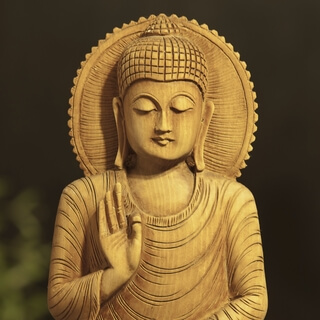
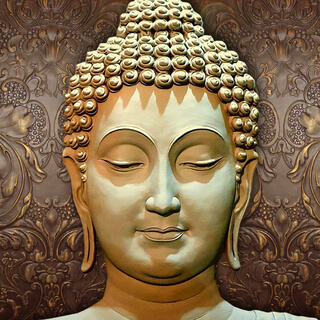
The images and altars,
Shrines are supposed also to inspire us in that way,
For those who find altars helpful.
That's what they do.
They remind us of those human qualities and inspire us,
But make us appreciate those qualities.
There's also the reflection and concentration on the wonderful qualities of the Dharma.
One appreciates all the ways and means to overcome suffering,
To cultivate happiness,
To liberate the heart.
They speak of reflections on the qualities of the Sangha,
The supportive,
Inspiring people who point the way,
Who have walked on the way before us.
Many other reflections,
Like one is on the benefit of practice.
Having practiced the while,
One reflects on all the good things that the practice does to open the heart in appreciation,
Reflect on the value of generosity or the qualities of moral integrity.
Sometimes we feel that we're pushed and pulled in our life between,
On one hand getting lost in sense gratification,
In excessive sense gratification,
And then on the other hand we may feel guilty,
Judgmental,
And fall to the other side,
Making up for it.
Again,
I think that also it's helpful to recognize that there's a more,
There's a happy quality that isn't somehow excessive,
But that brings joy,
And that we can feel good about that is central in practice.
And again that's appreciation,
Gratefulness,
And joy.
So to see that,
To be very clear that practice is not about deprivation,
Which we sometimes think,
It's really about inner abundance.
Mother Teresa said on joy,
Joy is praise,
Joy is strength,
Joy is the inerritable result of a heart that burns with love.
The danger on the other hand when speaking about all this joy,
Maybe similar to the danger we can encounter,
Or we know from the metta meditation,
When we believe that we should be able to produce those wonderful feelings.
In metta we should produce a constant flow of kindness that feels warm and nice,
And then have a problem when it doesn't work that way.
And here with this we may think,
Oh,
I have to produce joyful feelings all the time,
And feel that there's something wrong in my meditation when it doesn't work.
And people sometimes come and say in interviews,
I can't do the metta,
It doesn't work,
I can't do the mudita,
It doesn't work.
And then finding out why they think that is,
Because it doesn't produce those wonderful feelings right away.
So mudita and also metta,
They can be wonderful feelings.
There is a feeling of joy in this,
But maybe it can also just be an attitude of appreciation.
It can be just a gratefulness,
Just taking in,
Acknowledging,
Respecting,
Appreciating those things.
That's why sometimes I prefer to call it appreciation,
Rather than the classical translation that's used of sympathetic joy.
And it's maybe even more powerful when we understand it that way.
It doesn't always have to be so far out,
Even though it can be that way.
At the end of a one month retreat I did on mudita,
I wrote down a list of all the different flavors of this appreciation I remembered having experienced,
And I came across.
And I found that there was kind of deeply respectful appreciation,
There was playful appreciation,
There was very solemn appreciation,
Very loving or wide open,
All-embracing appreciation.
There was also sort of plain no-frills appreciation,
Or very hesitant appreciation,
Or light and easy appreciation,
Or sometimes,
Not so often,
Grandiose appreciation,
Or just silent appreciation.
There are so many ways we can appreciate ourselves,
Others,
The qualities of ourselves and others.
In doing a formal mudita concentration practice,
The phrases we use,
We first focus on the happiness,
On the well-being,
Or on the success of someone,
And then we say,
May your happiness,
Your well-being,
Your success,
Always grow,
Or ever increase,
Or please never end.
So we can use phrases like may your happiness always grow,
May your kindness ever deepen,
May your success never end.
Looking,
Using phrases we can connect with.
To be able to connect with mudita,
It's important to know that the proximate cause for this quality of appreciation is to see and to connect with the happiness,
With the well-being,
With the success of someone.
In karuna and compassion,
It is to see the suffering,
To see the pain in someone and open to that.
Whenever we are able and willing to do that,
Then compassion will be the natural response of the heart.
If we're not able to connect and open,
Then there will be resistance,
There will be aversion,
Or we will feel,
We should feel compassionate and sort of make an effort.
It's very similar with this quality of mudita,
Except that it's not connecting with the suffering of beings,
But with the happiness that we see that is there,
Or a success,
Or something that is pleasant,
That is good for them.
When we manage to connect,
It will make us happy.
Sometimes we see it and we don't manage to connect because we may like it for ourselves or we think they may not deserve it.
I think that's where it's really a key point.
I want to talk quite a lot about ideas and possibilities,
What happinesses they are,
So we get used to see them,
To find them,
That it doesn't stay abstract,
What the successes are we have and not have,
What the good qualities are we have.
We all sort of nod when we hear that,
But sometimes it's not so easy for us to actually find them,
Especially with ourselves.
While saying the phrases,
We either imagine happy moments in the person's life,
If we can't remember happy moments,
Maybe one happy moment,
Maybe one time we remember they received the flowers and they smiled.
So that's what we take to move in.
Pleasant situation or a fortunate condition that we know they have in life.
Maybe they have a good job or maybe they have a nice place to live or maybe they have a pleasant relationship or they have good health or they have nice kids.
Or what we can do,
We can imagine the person getting more of the things they would like to get.
If we know them,
We can imagine what they would like.
Maybe they like a better car,
Like a nicer house,
Maybe someone likes more hair in one place,
Maybe somebody else likes less hair in another place.
More wealth,
Great success,
And perfection in relationship,
Great friendship,
Or pleasant healthy bodies,
Or good looks,
Almost everybody likes that.
Or we wish them bodies of light and bliss,
Or deeper realization,
Or abundance of inequalities,
Of paramitas,
Or we wish them full enlightenment.
Anything that we know we can imagine makes them happy.
Helpful to begin to pay attention to the moment when appreciation,
When mudita is present.
So that we get familiar with that attitude,
With that feeling.
We know it well,
Especially in certain situations,
Certain moments with certain people.
We're quite good at it.
So to look into it,
How do I do that?
How do I start to know how we do it?
The word for meditation in Pali or in Tibetan,
Bhavana or Gom,
Means familiarizing oneself with something.
It's actually quite interesting,
Getting used,
Becoming familiarized with something.
So with often kindness or with appreciation,
Meditation on it makes us familiar with that attitude.
So we find it more and more easy to know how you do it,
How you have it,
How to connect with it,
How to fall back into it.
Making it accessible.
Sometimes it's difficult for us to rejoice and appreciate because we may have a deep deficiency,
Lack of respect and appreciation for ourselves,
For our own being.
And again I think our Occidental Judeo-Christian conditioning is not so easy.
Being basically guilty and then needing supreme beings to somehow help us out of this.
It's difficult predicament for a whole culture to be in.
I think that's why it's so important for us to work on our self-appreciation and on our self-respect.
So we can make a practice of seeing our own wholesome qualities,
Seeing our light,
Recognizing the goodness and the wisdom that is our innate nature,
That are our innate qualities.
And doing that doesn't mean we're sort of romantic or idealizing.
It's to genuinely recognize that we have those qualities within us.
We couldn't have invented them and made them up.
We couldn't have invented kindness or compassion or joy if it weren't our innate nature.
So it's there.
We only sometimes don't remember how to connect with it.
I'll say more about how to practice in this way.
I think,
Just to make that point,
At least we should be willing to sign the following statement by Ashley Brilliant.
It's possible that I'm not completely perfect,
But parts of me are excellent.
And I think it's true for all of us.
In formal practice of mudita we proceed more or less systematically like we do in metta from one person to the next.
But we begin with an easy person,
That is someone we like,
Someone we don't feel competitive,
And whose well-being we can see quite easily.
So again,
I think with all those qualities it's helpful to start where it weren't,
Where it's easy,
Where we see happiness and we can easily rejoice in.
Traditionally one doesn't do it first for oneself,
Like one doesn't metta.
But I would suggest,
And it's been helpful in my own practice,
That we should start with ourselves.
Or perhaps we could alternate between ourselves and the easy person,
Because maybe it's easier with the easy person than with ourselves.
And then it goes on and moves on to the benefactor friend,
Neutral,
Difficult person that's difficult for us.
And then opens to all beings in all the directions.
Just like with metta and with compassion,
There are also the so-called direct opponents of this quality of mudita.
The big ones of course are envy and jealousy.
This incapability to bear the happiness,
The success and the well-being of others.
And obviously when they're strong it's impossible to rejoice,
To appreciate.
When we crave their happiness,
Their success for ourselves.
Maybe someone is in a new relationship,
They look very happy and we think,
I should really be with that kind of nice guy.
Wanting that happiness for oneself.
Jealousy is maybe the other way around when we begrudge the pleasure or happiness of someone else.
You know,
Someone else in a new relationship I may feel,
She really doesn't or he really doesn't deserve such a nice person.
It's more envious.
In one case it's more envious,
In the other case it's more aversive.
Envy.
Jealousy.
In the other case,
Appreciative joy.
It's not even killed,
It can't possibly arise.
Another one is comparing,
Competitiveness,
Rivalry.
That's when we feel inferior,
Not good enough and we need to make up for it.
Or we feel superior,
Looking down on them.
Maybe we think we're better at our job than someone else.
And even if they're good we can't quite appreciate their way of being.
Or maybe they look better than I do,
Or I look better than they do.
So when pride comes in or arrogance,
That seems to block the possibility to open in an appreciative,
Joyful way.
And then there's competitiveness.
And yet Rumi asks us,
Inside the great mystery that is,
We don't really own anything.
What is this competition we feel then,
Before we go one at a time through the same gate?
Another opponent is stinginess.
A kind of small narrow-mindedness.
Muritta implies generosity.
Stinginess blocks it.
And I think stinginess does not only operate in the field of material or financial matters,
Not only that kind of stinginess.
With regards to our time we can be stingy,
With regards to our attention,
Giving attention or not,
Being willing to give attention to someone with our knowledge,
With our skills.
That inner atmosphere where one is constantly worried about being deprived or feeling unsailably treated,
Not getting enough.
Muritta on the other hand doesn't hold back,
Doesn't hold back anything.
To rejoice in the other's happiness.
Like we really are generous,
We give it to them.
Rumi says,
If I can read it.
The Sufi opens his hand to the universe and gives away each instant free,
Unlike someone who begs on the street to survive.
The Dervish,
The Sufi,
Begs you to give you his life.
It's openness and generosity in wanting beings to be happy and finding joy when they are.
Another opponent is boredom.
Boredom drains the energy,
Drains the joy because it's either not interested or it finds what there is not good enough somehow.
Murittas genuinely interested and appreciates his allies.
Another opponent is judging,
Condemning.
If we constantly judge and condemn ourselves,
We probably will judge and condemn others.
If I put myself down all the time,
I need to put you guys down too,
So I feel somewhat even again,
Somehow goes together.
And then of course it's pretty much impossible to rejoice in my good qualities because I'm putting myself down all the time and it's impossible to rejoice in others' good qualities.
Envy,
Jealousy,
Competitiveness,
Rivalry,
Stinginess,
Boredom,
Judging and condemning.
And it's qualities that are rampant in the world,
So no wonder Muritta is relatively rare.
There's also a so-called near opponent to Muritta.
The quality that almost looks like the real thing.
With mettas,
It's a certain kind of attachment.
We feel we lost that person,
But in a way it's more something between desire and attachment.
It looks somewhat the same until the person does not what I like anymore.
And then I start to realize it was actually not kindness,
But it was attachment.
I expected something,
I had conditions for my kindness.
Muritta,
The near opponent is,
I think it's exuberance in English.
When we sort of,
It's a kind of joy,
But we almost lose it,
It's a kind of excitement or over-excitement.
It took me quite a while to really understand what it was until I actually did the retreat of that.
And then sometimes I got so high,
It was like,
You know,
Is giddiness,
I think,
Something like that.
Giddiness.
Some months ago I did a week-long daily practice course where we practiced during the day,
During work.
And the theme,
The topic,
The practice we did was this Muritta.
And it was a little difficult in the beginning because using the phrases in the day while working was a little difficult.
And people realized they weren't used to see others' happiness and joy.
It's easier to see suffering and then be compassionate.
But then somehow everybody got the hang of it.
And by Friday I suddenly realized,
You know,
There was everybody,
We were 25,
And everybody was saying how fantastic this practice was and how,
You know,
How joyful it was.
And then we were sort of all,
And suddenly I said,
Oh hey,
There's something going on,
Which probably is that near enemy.
The connection gets lost and one is just sort of flying high.
Another possible near enemy,
I thought,
Is maybe hypocrisy.
Pretending to rejoice in someone else's good fortune,
But it not being genuine,
One pretending to rejoice because of self-hearing motives.
Sometimes also when we practice this sympathetic joy and we do it too much with the intention or the motivation to do something helpful and positive for ourselves,
Sometimes it doesn't work so well either.
Of course it is helpful and positive for ourselves,
But if that's the motive it can be a little more tricky.
We really have to do it for others,
Really be happy for them and then it works better.
Since it's a resource-oriented practice,
A new trend in psychotherapy,
I heard,
Resource-oriented therapy,
The point is not so much to try to work with problems and difficulties as one does in other approaches,
Practice often,
But rather it's to keep on putting the emphasis onto the positive,
The wholesome,
The joyful aspect.
We tune in and recognize the wellbeing that there is in life.
Rumi said,
When you go to a garden,
Do you look at thorns or flowers?
Spend more time with roses and jasmine.
What is enormously helpful and supportive is to reflect on our own good qualities of heart and mind and then to do the same with the good qualities of others.
And in doing that it's really important to actually do it,
Like you may decide to think of a number of good qualities you have and the good things you did every evening for two weeks and really decide it has to be two things.
And maybe the first evening that doesn't seem many,
But I don't know about you,
But I did this and I very quickly ran out of things.
There's nothing good I did anymore,
Except the three things that I usually remember.
So,
I remind you to think of your interests,
Our interests in life,
Our interests in understanding ourselves,
Interests in understanding human beings,
Our investigation of reality.
We do our patience,
We develop the perseverance,
We practice just being here,
You know,
Going through this,
Sitting and walking and sitting and walking,
Day in,
Day out,
Takes tremendous perseverance.
You may underestimate how much it takes.
The enthusiasm,
The collectedness,
Our insight,
Our wisdom,
Even a small insight,
Small insight,
Important.
Our love,
Our care,
Our compassion,
Our appreciation,
The generosity,
The trust,
And a tremendous amount of trust,
Even if you have doubt,
The fact that you came here to do that,
There's a very deep trust in that process of awakening.
It's amazing.
So many fabulous qualities we touch,
We calculate,
And we begin to radiate,
And they do shine forth.
And then to reflect on our own wholesome and positive deeds and actions.
And again,
To be specific and perhaps to write it down.
Again,
To give you some examples,
Sometimes we look too far and we forget our effort to care for our children,
To care for their education,
The work we do,
Maybe to support somebody,
Support the family,
Supporting relatives,
Maybe taking care of our old parents,
Visiting them or doing it in various ways,
Or our work that supports others or heals others or inspires others or does helpful things in so many ways for us,
Maybe as therapists,
Maybe as teachers,
Maybe as cooks,
Maybe as bakers,
Maybe as farmers,
Maybe as shop owners,
Whatever.
And even getting paid for it.
Still,
If we do it,
And we often do it with a good intention,
They're fantastic qualities,
Good actions we do.
We remember and appreciate all the small or all the big gifts we make,
Donations,
Contributions of any kind,
We choice in our ethical integrity and conduct.
And if sometimes it isn't so good,
Or we have lapses to remember when it is good,
Not to always look at the song,
But to really look at the roses.
You know,
The intention not to kill and to harm beings,
That's really our true intention,
Even when there's no opportunity to harm or to kill,
That good intention does something in us.
The intention not to steal,
Not even for taxes,
Not even keeping books we borrow from someone,
Small things we do.
Our sensibility and clarity in intimate relationships,
Our sensibility in dealing with drugs,
Alcohol,
Money,
Power.
And if sometimes we're not sensitive,
Okay,
Sometimes we're not,
But sometimes we are,
And to remember those instances and those tendencies and rejoice,
And appreciate our honesty.
Or rejoice in the fact of doing retreats,
Of reading and studying Dharma books out of interest in spiritual growth.
Being concerned for human rights,
Maybe someone into writing letters for amnesty,
That's what you do,
Or you support World Wildlife Fund or Greenpeace or a local group,
Maybe you give your signature for political initiatives,
For social justice,
For against manufacturing of farms,
For peace,
All these things,
But even if they're very small or they're big,
They're so powerful.
To cook or manage for meditation retreats,
To support monasteries,
Or to be friendly with our difficult neighbours,
Or to be friendly with our kind neighbours.
Encouraging others,
Praising others,
Making compliments.
To really start to notice we do all that,
We do a lot of that,
Can we appreciate that?
Or do we think,
Ah,
There's nothing,
Of course we do that.
When we can do that in ourselves then we find it much easier to do the same with respect to others,
And we can see it there too and can appreciate there too.
Appreciating their wholesome positive deeds in action.
And actually it's a practice that can be fun,
Looking at the good things.
Next,
To reflect about our own happiness or happinesses,
Our wellbeing,
When there's wellbeing,
Our success in various areas,
Small success,
Big success.
Rejoice if you can be mindful of one's in-breath,
It's great success,
I appreciate it.
Rejoice in our good fortune.
And again,
When we find these things,
Recognise them and can respect and appreciate them,
Then we can see them in others and appreciate them there.
It's often that we're just not used to see it because it's unfamiliar.
Not so much a way of looking at things for many of us.
It's almost easier to look at the thorns,
What is difficult,
What is hard,
When you look at media,
At newspapers and television news,
Probably about 90% of thorns and about 10% of flowers are really conditioned that way,
And this is to recondition that way of looking.
We may also find,
You know,
Yeah,
That's a good life,
But I mean,
What is it?
Can't think of much.
To look at the possibility,
To look at the fortunate circumstances we have.
Maybe we have ease with material things.
I don't mean we're rich or wealthy,
But we can make it without killing us.
I spend a lot of time in India mostly.
You see what the majority of human beings have to do to just stay alive,
It's incredible.
And they often can't make it.
Yes,
We're so fortunate with what we have.
Maybe we can reflect on the fact that we have political freedom.
We would want it differently probably,
You know,
Our political system and who is in power,
But we should compare with places where there isn't political freedom to remember,
There is some things to rejoice in.
We may have relatively good health or very good health,
Mobility,
We can go where we want to go.
Again,
Plenty of reason to rejoice.
We could read the Mangala Sutta,
The discourse by the Buddha on blessings.
And it's basically a long list of where he says what the things are that are valuable and beneficial in life.
And he goes through many of the things I just mentioned that we may not even think to be something special to rejoice in.
He lists them as special blessings.
And then it goes on saying,
The greatest blessings are to be content and grateful,
To hear the Dharma at the right time,
To deeply understand the noble truth of suffering and its end,
To realize liberation,
The unconditioned.
This is the highest blessing.
Heart and mind unshaken by worldly state,
Sorrowless,
Stainless and secure.
This is the highest blessing.
Those who live in this way are everywhere unshakable and find well-being everywhere.
There is the highest blessing.
The priest is the priest the priest The strolling through a beautiful snowed-in landscape one day,
The priest exclaims in awe,
Look,
Isn't it wonderful how God had this lake frozen?
Whereupon the friend looks over and remarks,
No wonder in winter!
Of course,
We take it for granted,
You know.
Do we take too many things for granted?
Or can we be grateful,
Grateful for one in-breath?
And there's still another in-breath which is quite far out,
If you think of the other option than not seeing one.
Grateful for the light on the flowers,
For the wind in the trees.
Maybe grateful for a knee pain that somehow forces us,
Or gives us an opportunity,
Depending on how we look at it,
To learn something,
To develop appreciation,
To develop the equanimity,
Or letting go,
Or acceptance.
The most radical and powerful support for mudita is bodhicitta,
From the Tibetan tradition,
That unshakable resolve or the deepest intention or motivation,
We could say,
To reachful enlightenment of Buddhahood for the benefit of all beings,
And just that decision,
Just that resolve in one,
If one generates,
To the extent possible,
Over and over again,
This basic motivation in life,
Then both compassion and sympathetic choice will over and over arise quite naturally.
I have many Tibetan friends,
Monks and nuns,
Who have practiced this a lot,
That's the central practice in their life.
And one of the things that often stands out with them is how joyful they are,
And how easy they can rejoice in other beings,
Good things,
Qualities,
Happinesses,
And it makes their whole life joyful.
So if we make the happiness and success of beings our project,
Our main purpose,
Then we'll be joyful whenever they succeed.
One last point,
One more support for mudita,
That I want to mention,
Is also connected to our motivation,
The dedication.
One of the most important teachings my teacher Nyoshal Kempo gave,
Quite often,
Has to do with what is called the three aspects,
Or three parts of the practice.
What determines whether our practice is simply a means for relaxation,
Or it's a means for personal well-being,
Or whether it's a means for our own personal liberation,
Or a means for enlightenment,
Or spiritual growth that serves everybody,
That serves all beings.
And those three aspects are called what is good at the beginning,
What is good in the middle,
And what is good at the end.
What is good at the beginning,
Again,
Is the motivation.
And in this case the altruistic motivation or intention to practice so as to benefit as many beings as possible,
Even just to,
At the beginning of practice,
At the beginning of the day,
At the beginning of the meditation,
To think that way,
To give it that direction,
And then to come to the breath,
Or whatever we do at that moment.
What we do then,
That's the middle,
What they call the main practice.
It could be samatha practice,
Or vipassana,
Or metta,
Whatever it is we do here,
For example,
Or insight,
Or liberation,
With the development of good qualities of the heart.
And then at the end it's the dedication.
Dedication clarifies again the intention to practice,
And in this case for not only our own welfare,
But for the welfare of all.
And that makes the practice open and wide instead of narrow and self-centered,
Because then the question is not so much,
Okay,
I just did another six hours of sitting and walking,
What did I get out of it for myself?
And you sort of look if it was worthwhile for me.
We know it was developing helpful qualities and it will somehow benefit life in some way.
It doesn't matter so much how it was for me exactly.
So,
In this sharing or dedication we give away all our accumulated qualities and good energies,
And our whole life in a way,
To the universe,
To life,
Or to all beings,
Or however we want to do that.
And in doing that there's a great freedom,
Because we don't look what we gain by practicing,
We give it all away from the beginning.
Now,
In terms of rejoicing and appreciation,
What is really central here is that we actually have to remember the positive forces we have developed.
If you want to share,
If you want to dedicate,
You sort of reflect back,
Oh,
Okay,
This,
This,
This quality was developed,
This and this,
And this meaningful aspect I touched into.
So,
We have to acknowledge that we have done something worthwhile,
That we have those qualities,
So that we can share them.
So,
We find respect and appreciation and even joy in having done this.
And then we dedicate.
It's not like I've often found myself at the end,
Like we've done the last two nights at the end of the last sitting.
By the power of whatever qualities I have developed,
If there are any at all,
May,
And sort of before I even think of dedicating,
Make them a little,
It wasn't really anything,
Just in case there was some good thing,
You know,
I'll dedicate it,
All beings,
To again,
Thereto,
To say,
Okay,
It was a lot that I practice today or this week,
Because this year or this life,
And I'll share it.
I'd like to close with the well-known dedication by Shanti Deva,
Free translation.
The meditation itself is mostly an expression of metta and compassion,
It's also of bodhichitta.
But I think to the degree we dedicate our merits,
And we acknowledge them first,
To the happiness of others,
To that extent we'll automatically rejoice when beings also attain that happiness.
Maybe you can sit quietly while I read this to close.
By the power of this practice,
May all beings everywhere plagued with suffering of body and mind obtain an ocean of happiness and joy.
May all animals be free from fear,
May all hungry ghosts be content,
May the regions of hell become places of joy,
With lotus ponds,
With ducks and with swans.
May the blind see forms,
May the deaf hear sounds,
May the naked find clothing and the hungry find food,
May the thirsty find water and delicious drinks,
May the poor find wealth,
May the sorrowful find joy,
And may the forlorn find new hope,
Happiness and prosperity.
May beings not experience unfortunate realms,
And may they never know any hardships.
May all beings uninterruptively hear the sound of the Dharma,
May they always meet with Buddha and with Bodhisattva,
And as for as long as suffering beings remain,
May I too abide and help to dispel their misery.