Hi,
And welcome to Delicious Ease,
Where we empower you with the mindset fundamentals and practical strategies for you to live and work with more time freedom and ease.
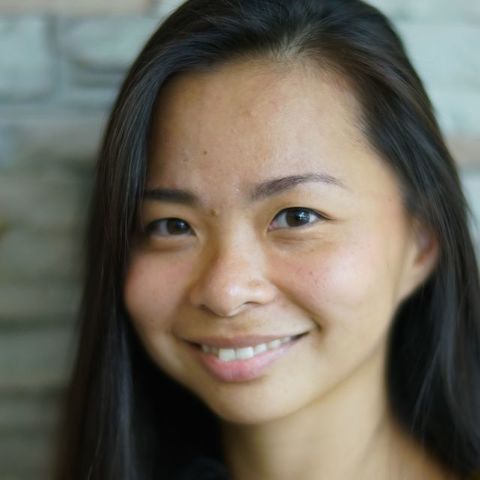
I'm your host,
Kay Margaret Solorio.
I'm a time freedom coach,
Mom,
Wife,
And food and wine nerd.
Join me as I talk all things mindset and deliver them to you in bite-sized episodes each Wednesday.
Get ready to sparkle.
We start today.
Hi,
Sparkles,
This is episode 47 of Delicious Ease,
And I'm your host,
Kay Margaret.
In today's episode,
I'm sharing my conversation with mindfulness and wellbeing coach,
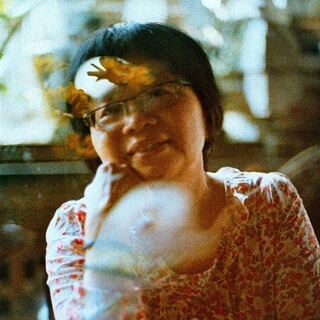
Wenlin.
We talk about the need for ease and the menstrual life and creative cycles.
She introduces us to the concept of the fluid self and encourages us to adopt the mindset that every step you take is necessary.
She's experienced in traditional Chinese medicine and shares with us the connection between the four seasons and the five elements.
She introduces us to qigong,
A form of energy cultivation.
And I love when she talks about the unfolding and leaving space for magic in your plans.
There's so much goodness in this episode.
Today's episode is brought to you by the Delicious Ease shop.
The shop is currently on Etsy,
And we have baseball style caps in neutral tones,
Including Pacific blue,
Black,
Cream,
And gray.
Also available are soy candles with a sparkly pink and gold design and pink trucker hats.
The latest and perfect for summer,
I've got my first line of stainless steel tumblers available.
These are good for hot or cold beverages.
These are,
And they're all designed to be positive energetic anchors.
So an anchor is a touch point,
A way to ground and connect yourself to your dream.
You may still be waiting for your dream to manifest,
But you can connect with the energy of it now.
All of the designs feature a word to support your energetic connection to your dream.
Currently I have available dream,
Magic,
Become,
Ease,
Power,
Energy,
And courage.
Click the link below or go to Etsy.
Com forward slash shop forward slash delicious ease to get yours.
All right,
Let's get to it.
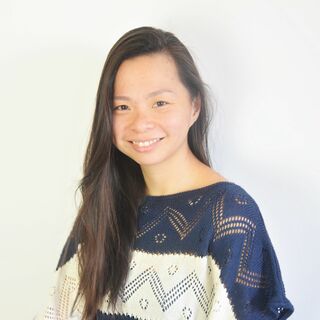
Wenlin Tan is a women's wellbeing coach,
Qigong and yoga specialist for women and Red School menstruality mentor.
She is passionate about supporting women to overcome overwhelm,
To find flow,
Ease,
And joy in their life through coaching and the ancient wisdom practices of Qigong,
Tai Chi,
Traditional Chinese medicine,
And yoga.
Without further ado,
Here's my conversation with Wenlin.
Hi,
Wenlin again.
Thank you for coming,
For taking time.
I'm so excited to have you here.
How are you?
We'll start with that.
I'm great.
Thanks so much for having me here.
Yeah,
It's been a great week.
I'm really looking forward to our conversation.
I feel like we have so much in common and I love that this podcast is called Delicious Ease.
I find that in this time and age where so much of the modern work rhetoric is around hustling,
Around striving,
We really could not encourage more this approach to welcoming ease.
I'm all with you on this.
Thank you.
And what a beautiful segue into how I usually start my interviews.
I really like to use this podcast to explore mindset and strategies to help women with exactly what you said,
To live life with more time,
Freedom,
And ease,
Kind of in opposition to what we were taught about all that hustle culture you were just talking about.
And I know ease looks different for everyone and that's part of the journey,
Redefining success.
But I'm curious then what would it mean to you to live with delicious ease?
Well,
For me,
Ease is kind of like a by-product.
We often think of ease as,
And I can think back to a conversation that I had with a group of meditators some months back where we were discussing how to move from a place of overwhelmed ease.
And I have an audio course on that.
And a lot of them were tackling or having this difficulty with regards to ease because many of us associate ease with a sense of laziness or being a slob,
Not doing anything,
And which is inherently at odds with what society has taught us that,
Oh,
In order to be of value,
In order to have the right to exist,
We have to produce,
We have to be generating,
We have to be on the move all the time.
And I feel that for me,
Actually,
Ease comes from a place of understanding what works,
Working with rather than against the frameworks and the structures and the things that are in place both inside of us,
For example,
Our physiology as women entrepreneurs,
But also at the same time with regards to other people as well,
Because we work not alone,
But in regards to,
For example,
Our clients,
In regards to our families,
Many of us are mothers or,
For example,
We are caregivers for other people.
So really understanding the things that truly matter and then letting go of the things that don't matter so that we can focus on the things that are essential and really fine tuning and finding the pace and the rhythm and the cycles for these things so that we can come into a state of flow and in flow,
Then we experience a sense of ease.
I absolutely agree with that.
And there's one thing that you said that I haven't had anybody respond with,
I appreciate,
Is the idea of value.
I think when you accept that you have inherent value,
That I often say you are enough just as you are in this moment,
There's nothing you have to do,
That you accept some of that relief and that ease automatically,
That you're right,
A lot of times we're taught in society that our value is only based on what we do and not that we are.
So that having that connection and to ease,
I hadn't made that connection before.
So I really appreciate that.
Well,
I know everyone else now is super excited from what you just said,
But please,
I'll have introduced you a little bit before this on the episode,
But I would love to hear in your own words if you could tell us a little bit more about yourself and the work you do as a women's wellbeing coach.
Sure.
So I work mainly as a women's wellbeing coach and I work a lot with women changemakers,
Entrepreneurs and creatives who want to leave greater lasting impact in the world and they're seeking to bring themselves and the work that they have in the world to the next level.
And my real passion is using all the tools that I've studied and that I really appreciate,
Which includes Qigong,
Which include traditional Chinese medicine philosophy,
They include psychology.
I used to study a major in psychology in university as well.
And for many years I also worked in health care research.
So I also bring with me various different angles and perspectives.
And it's all these different tools and things that I picked up mindfulness,
For example,
Creativity from being a freelance artist.
I was also a freelance artist for a period of time and I dabbled in that.
So my real interest is understanding how all these different tools can fit into the greater framework of what it is,
Is the creative cycles that pulsate through life.
And we can see them and experience them through the changing seasons in a year.
We can also feel them within the changing seasons,
Within the menstrual cycle.
If you are tuning in and you have ever experienced a menstrual cycle and if you have not ever experienced a menstrual cycle,
Then you can also feel them within your own life cycle.
So from the moment you were born and then you grew in early childhood and you were experimenting,
Playing,
And then you reached a stage of mature adulthood when your identity became more formed and you had a clearer understanding of who you are.
You were,
For example,
Connected to others in the world,
This very outward facing time of your life.
And then the later stages of life that we often call perimenopause or endropause,
In case anyone who's tuning in who doesn't identify as being a woman,
That's when we start to turn from outwards to in.
And this is also it mirrors the phase in the menstrual cycle that is the luteal phase when we are really more connected with the inner critic,
With the self-reflection,
With refinement,
With crystallization and understanding the true essence of what it is we bring to the table,
As well as within the project,
What this project really means and how we can then refine it for the next cycle to launch it,
To relaunch it again.
And then the last phase,
Again,
Within the entire life cycle,
Which would be when we're at the stage of the wise woman,
Where we connect with the element of water and when we are deeply rooted with the sense of insight and intuition that is beyond what the thinking mind knows.
And that is also connected to in the menstrual cycle,
The period of menstruality of when we're actually bleeding and when we're in this space of rest,
Deep connection with something much greater than ourselves.
So,
Yeah,
In essence,
That is the work that I do.
It's a little bit hard to explain to people sometimes.
And sometimes,
Yeah,
Sometimes if the time is short,
I just say,
Yeah,
I teach yoga and Qigong.
You know,
Because it's a bit of a mouthful.
Yeah,
It is.
But goodness,
We all benefit by you taking the time to explain that.
And I love how you,
I love your approach.
I don't know how else to explain it other than it feels next level.
Because I think a lot of,
A lot of,
Even where I've come from,
But a lot of the coaches I meet,
We,
We teach what we know,
But in terms of what we've experienced,
Because it has helped us so much,
We want others to benefit.
But I think from my impression of the work you're doing,
You actually have an even bigger why somehow this and have experimented almost with your own life,
And have used all these different methods to see and then benefited from that and then taught,
But almost as if your experience is just another,
More evidence,
You know,
In regards to those all those different methods.
And I think that is so cool that you,
You,
And in the way you explain it,
That there's a greater,
There's something bigger than ourselves.
And all these things combined and connecting with that is,
Is,
Yeah,
I don't quite have all the words,
But I love listening to you talk about it because it is it's this connection to bigger,
But it's also so profound inner.
That leads to me to another question I had,
Because I see this in you.
I was curious that,
And you share a good bit of your story and your journey also on your website,
Which I appreciated.
Did you feel like you saw all those stepping stones on your path in hindsight,
Or is that something because you are aware of this greater,
Something greater than ourselves that you could see it as you went along?
I was curious.
That's a great question,
Margaret.
Thanks so much for sharing that.
And I,
I can say that I,
For all of those of us who are tuning in,
I want to say,
If you are on a path and you might be thinking,
Or at points of time,
You might be asking or questioning yourself,
Have I gone on,
On the wrong path?
Am I taking a detour or am I wasting unnecessary time?
Just know that every step you take is necessary.
And if this is the mindset and the mentality you choose to have,
No step that you take will ever be wasted.
This is what I truly believe.
And I can recount back to a certain point of time when I was in between identities.
And I think that this is also,
It goes back to this,
My fundamental belief that the self,
The sense of self is fluid.
And if we choose to adopt and embrace this idea of fluid self,
Then we allow ourselves to open to all possibilities of who we might become as well as embrace the old parts of ourselves that might still offer value through the experiences and the challenges we faced.
So the short answer to your question is no,
I actually did not see that I would be doing all this work,
Not at all.
If you ask me at any stage of time,
I would have given a different answer.
Like for example,
At university,
In middle school,
I thought I would be a psychologist or maybe an artist.
I wasn't quite sure I had to pick between the two,
You know,
Like creative passions and then helping people,
You know,
Working in depth.
Like these things,
Like I always feel that I truly believe that every single one of us has many different creative potentials waiting to be fulfilled.
You could be a coach,
But maybe you're a closet artist or musician,
And you could be an accountant,
But really passionate about knitting.
And there is just so much that's waiting for us to discover about ourselves.
And for me,
Actually,
I think what really helped me on my journey is realizing that who I was doesn't have to be who I remain to be.
And I can continue over the next couple of years as I maybe discover new discipline or I discover how I like to relate to myself,
Or I discover an aspect of me that I never knew from before.
And I realized that this is something or someone I want to become,
Then that opens me up to a completely new,
Again,
Level or possibility.
And it's never a waste of time,
Like all the old identities or,
You know,
Career paths,
Let's say,
Or things I've pursued in the past.
That's how I choose to see it,
Let's say.
And I love that.
And that comes up in my work with time a lot,
That we feel like we're,
Like you just said,
Wasting time that we're not already the person we want to be.
And so that we're somehow losing time in the enjoyment part,
Because we're still working through all this stuff.
But you're right.
And I love how you also describe this fluid self.
I've really appreciated the word recently of evolution,
That it's not really your next self is not,
It may be completely separate and different,
But it's really this constant unfolding and evolution of that image of fluid really goes with that.
I appreciate that.
Well,
You had talked about creativity.
So I was actually,
You seem like a wonderfully creative person.
I was also curious how you view creativity.
I had read a book recently,
Gay Hendrick's book,
The Genius Zone.
He really talks about creativity in that way too,
That it's kind of this fullest expression of self.
And I loved how you said we all have multiple things that we can do.
Like there's not just one purpose for us in this life or one creative outlet.
So I was curious,
How do you view creativity?
That's a great question.
And thanks for bringing that up.
It's really at the heart of a lot of what I do.
And creativity is one of the values that I hold very close to my heart.
And I choose to prioritize it in a lot of the decisions I choose to make,
Whether that is in my personal life or in my career.
But I did not used to see myself as a creative person.
And I wasn't actually surrounded by people that I considered to be creative.
My parents were not particularly creative.
They were very logical,
Pragmatic,
Reliable.
And they're both teachers.
And I think a little bit of my passion for coaching and teaching probably came under their influence.
But I had always been interested in the arts and in making things,
In drawing and visuals,
In connecting with people.
And so I thought that,
OK,
Perhaps even if I weren't necessarily an intrinsically creative person,
At least I could learn some of these skills and become better at it.
And it's actually what helped me back from pursuing a creative and artistic career at an early stage of my life.
And then I reached a point of my life where I was doing research work.
I was a health care research manager.
I'm really,
Really successful in that job.
And I stayed probably I would be maybe even hitting the office in Singapore right now.
But I felt that I realized it didn't fulfill me creatively.
And I went to work every day.
But at the same time,
It sounds very cliched.
I really felt like I was a robot going to work along with all the other people.
I think a lot of us can relate.
Yeah,
Probably.
Right?
You're going to your corporate job.
You do great.
The salary is great.
Maybe your boss is telling you,
OK,
Pushing you for the next promotion.
You're like,
Yeah,
I could do it.
But there's something that is missing in this job that no amount of money or no foreign travels,
No amount of acknowledgement or compliments from other people can give you.
And so I started to once again return to some of my passions from before.
But it wasn't until later on when I started to discover various different communities.
So there's a wonderful community that I am a part of.
It's called Creative Mornings.
And it's created by a group of creators who are based in New York.
And they have various different communities.
And they have lots of free gatherings that are based in every single city.
And I would attend the gatherings and meet lots of people who are super creative.
They didn't necessarily have to work in the creative industry or be artists or work in an ad agency.
But I just felt like by being around them that I was creative too,
Or I was becoming creative.
And then during the pandemic,
I discovered that Creative Mornings had virtual meetings.
And through one of their virtual meetings,
I discovered another community,
Which is Cave Day.
And I also freelance part-time for them as a focus and deep working guide.
And they are,
I would say,
One of the main reasons I have evolved and changed and shifted and grown so much.
And I think that that's a common saying that you are the sum of the five people that you spend the most time with.
And the true reality is it's more complex than that.
Of course,
It's not five people.
But simply by surrounding myself with people that were more interesting,
More creative,
With different perspectives,
And that really helped me a lot.
And then I recall at a point of time when I realized that creativity doesn't have to be a trait.
It doesn't have to be like you're creative or not,
Or that you're on a spectrum from very creative to not creative,
And that you're stuck there forever.
No,
Lots of things are like skills that we can actually learn.
And I heard of one definition of creativity from the Cave Day,
One of the co-founders.
And he calls creativity actually the skill of being able to create something from nothing.
And it's a kind of problem solving.
So it's not really being artistic or being able to think out of the box in a very short period of time.
It's just being able to cultivate and commit to sending aside time to be creative,
To try to be creative,
And to practice being creative.
And so when I discovered that,
I was like,
Oh,
This is really exciting.
So I can become even more creative.
And so then I decided to adopt creativity as one of my three main values.
Every start of the year,
I do a review and I think to myself,
Okay,
What are the three values I want to embody in my life and my personal relationships,
As well as for my work?
And creativity and innovation has been on the top for a couple of years now.
And I think it's really come through.
Yeah.
That's amazing.
Oh,
That's wonderful.
I do.
We've talked a lot about mindset and inner work and self,
But I know you have a lot of experience connecting the physical.
So I want to make sure we spend a little time with that.
You actually had a quote on your website that resonated with me.
It says,
Listening to my body and her needs rather than seeking to control,
Ignore,
Or own it.
And that continues to be a big unlearning for me.
So I was curious how that came about to you to listen inward and kind of make that your first reaction instead of ignoring or trying to control my emotions or feelings.
I know you teach a lot about menstruations too.
Yeah,
That's a great question.
I owe a lot of the insights and knowledge that I have and that I share through my coaching and programs now to two founders of an organization called The Red School.
And they are Alexandra and Shani.
And the two of them,
They actually do a lot of education around menstruality.
And I was very fortunate to be able to go through their menstruality leadership program,
Which was very pivotal in helping me to gain a deeper understanding of my relationship with menstruation.
So I had from before already been very interested in seasonality.
I actually first discovered seasonality through men,
Not through women,
Through a mentor called Manuel.
And he was doing at the time some kind of like a boot camp for entrepreneurs.
And he was telling us how he actually manages a couple of different startups and he always syncs them so they are launching and then growing and experimenting and then refining and then taking a pause for closure at the same time.
So by syncing all of these projects so that they are at the same phase or roughly at the same phase,
He can save more energy.
And so he also does this in his life where he also tries to map it out in terms of a year.
So for a couple of months a year,
Close to wintertime,
He actually also is in hibernation.
So when I heard that,
I was so fascinated and I was like,
I want to be like that too,
Because at that point of time,
I was deeply immersed in the four seasons and the five elements of traditional Chinese medicine,
Which is a framework that is used in Qigong and as well as in healing.
And a lot of acupuncturists actually use this in coaching that they do with their clients.
And I had actually come across this and I thought that,
OK,
I would really like to integrate the seasonality at an even deeper level.
Then I realized that the seasonality doesn't just map onto the year,
But also into my menstrual cycle.
And that's what got me interested.
And at the beginning,
I was completely,
I would say,
Very new and very,
It was a little bit of a challenge,
Especially because I am someone who really loves to do.
I am most at ease in the springtime,
In the summertime,
When I'm like brainstorming ideas,
When I am studying projects,
Connecting with people,
Being live on podcasts.
And yeah,
And conversely,
Inviting me to be in stillness,
To stay,
To not have to do anything that was really,
Really difficult.
And also,
I think more importantly,
Since you mentioned the quote,
Acknowledging when I was tired and actually had to take breaks and not just try to push through,
Because that's what we've been told.
So many of us have been told and we've been brought up in the culture that,
Oh,
If you're tired,
You should push through.
Or if you're not really feeling inspired,
You should just sit down and do the work anyway.
And the creativity will come.
And yes,
I agree that sometimes,
Yeah,
We do need to have the discipline to sit down and consistently time block and say,
We write for three minutes without expecting the three minutes of writing to be exceptionally good,
Because that's the three minutes to warm up.
But sometimes it is really necessary if today,
For example,
You listen inwards and you really notice that,
Oh,
This thing is energetically not resonating with me right now.
And maybe for a good reason,
Actually,
Then is there something else I might be doing that might refuel me so I feel more inspired or I feel more well-resourced so that then for later on,
I can work and be in a better state and better place so that I can continue my work.
Because also because we're not robots.
And I feel that a lot of modern work ethic treats us like robots,
Like,
OK,
Productivity,
Efficiency,
Every launch has to be well-planned and we need to do everything to perfection.
We are not robots and we are humans.
And also we can see this,
I think,
Simply by the fact that we have menstrual cycles.
And for those of us tuning in,
Even if you don't have a menstrual cycle,
You have a bio rhythm.
And this bio rhythm is a reflection that you are as natural and as legitimate as the moon or as a plant that also takes breaks.
So they only photosynthesize in the day and at night they don't photosynthesize just because that's not how it's supposed to work.
So,
Yeah,
That was my journey.
Sorry for the long answer.
No,
It's absolutely.
It has.
And I really appreciate it.
And I think it's really important to say because it's not at least where I've come from and the things I've learned talking about menstruality is not something we do.
Like you said,
That that kind of robot attitude that was applied to that for me for decades,
Do not talk about it,
Do not admit to it,
Do not acknowledge it.
You know,
And so that leads to feeling like you want to try to control it or ignore it or or somehow have this.
I liked how you would describe to have a relationship with it,
Because I think that's exactly I've now I've been was introduced to I read Lisa Lister's book Code Red,
I think,
Is where I started last year.
And so I've been tracking for about a year.
And it's amazing how much it affects and it has such an impact on on ease,
Because when you're not fighting it and you have a different relationship and you're like,
Oh,
Wait.
And I love how you describe it with the seasons,
Because it's such an easier it's not only is it true,
But it's a very relatable way to understand,
Because we're all at least I think most of us and even if we don't live in a place that has four seasons,
I feel like all the books that you read,
Like,
You know,
I have kids.
So when you read them books,
So you read about the different seasons and might get we don't get snow here,
But they know winter is snow and they get very excited,
Even though they've never really seen snow.
So we're all familiar with this idea of four seasons.
I think that's that's absolutely fantastic.
You had talked about at Sigong,
You had mentioned it a few times.
And I have no idea what it is.
And I would think you're the first definitely the first expert on this podcast.
And my listeners might not be familiar either.
Could you give us a little bit of an introduction to the practice?
Sure,
Sure.
Perhaps you might not have heard of Sigong,
But perhaps I think in the US,
Tai Chi is very,
Very popular.
And Tai Chi is actually a specific branch of Sigong,
Just like within yoga,
There are many styles of yoga and many people know Vinyasa flow.
So actually Hatha yoga is the mother of all yogas and Vinyasa flow,
Ashtanga yoga,
They are branches just like you mentioned this big tree and then there are like smaller branches.
Same thing with Sigong.
Sigong is this mother.
And then there's Tai Chi Quan,
There are various different styles as well.
And I would say Sigong is the Chinese equivalent of yoga and it's often called Chinese yoga.
The main differences are,
Of course,
The origins that is rooted in traditional Chinese medicine.
It is known to be at least 3,
000,
Some people speculate 4,
000 years old.
And it works a lot with energy cultivation.
I would say it is a very nurturing practice for someone who is looking for some kind of embodied movement and a means to get to know yourself,
To understand yourself and to connect with you and feel your own energy.
Because I practice both yoga and Sigong,
I feel that they are very similar,
Even though they have differences.
And I think some of the main differences would be is that probably yoga is more well-known in the West.
And it's because it's been adopted by many different studios.
You can see it now in the gym as well.
Whereas Sigong is mainly,
I would say in the West,
It's been mainly positioned as something that is very gentle and is very suitable for people who are slightly older because they can't do something that's too athletic.
Sigong tends to be quite slow,
Even though there are also forms that are very energizing and even martial,
I would say,
Almost like a fighting kind of art,
Just because there are so many styles as well.
And for me,
Sigong came to me at a time when I was recovering from lower back pain.
And I had actually a very strong and intensive kind of yoga practice that was taking a toll on me.
And also,
Possibly I was not meant to continue with that practice anyway.
So I had recovered.
I was recovering from that sciatica pain.
And I was thinking to myself,
I can't continue moving like this for the rest of my life.
I want to try something that is sustainable,
That can give me a sense of ease.
And then I thought back to Sigong because I grew up in Singapore and I spent most of my life there.
It's a form of self-cultivation that is done in a lot of the community centers.
You see some of the older adults doing it.
And so I thought,
Maybe I could try that,
Even though it's not cool amongst younger people there.
Even though right now,
Actually,
Interestingly,
In Europe and in the US,
It's like going through a revival.
So lots of young people are actually interested in Sigong.
And a lot of the women I coach as well,
Sigong is one of the main tools actually we work with because it is a great way of regulating your energy.
And it works a lot with intention.
And in yoga,
We do that as well.
I mean,
Through all the movements,
We work with intention.
But I would say Sigong is even more subtle for me.
And yeah,
It's a great way of cultivating energy and aligning your body,
Your mind,
As well as your spirit.
So connecting with a greater consciousness.
Yeah,
I love how you talk about it being cultivating energy.
What a wonderful term.
Because I think a lot of times yoga is just advertised as physically good.
It helps you stretch and helps you with strength,
And it helps you with mobility.
But we don't think about how you are bringing yourself into yourself and present and cultivating energy.
That's really cool.
And you had also mentioned the creative cycle and five elements.
And I know we had talked some about seasons,
But I was wondering if you could expand upon that a little bit.
Definitely.
So I think the creative cycle is at the heart of what I do.
And again,
It's not like I knew this from the beginning.
I was studying one thing,
And it led to another,
And one thing led to another.
And now I'm based in Italy,
And there's this wonderful saying,
Da cosa nasce cosa,
From something,
Another thing is born,
Or another thing then happens.
And I feel this is really an unfolding.
And I encourage,
Especially if you're tuning in and you're someone who's very structured and you like to plan months ahead,
Years ahead,
Be open to the possibility of an unfolding and leave a little bit of space so that you create a vacuum or a void that then magical things can start to fill and enter into your life.
And this is what I've experienced and what I truly believe.
And so going back to the creative cycle,
It is rooted in traditional Chinese medicine and Qigong as well.
And this idea of that everything is a manifestation of an underlying kind of energy or force.
And we can actually feel these energies through the changing fluctuations or the energies of the day.
You can see it in the rising sun,
The setting sun,
The full moon,
The new moon,
The menstrual cycles,
And so forth.
And there are five different elements that correspond to five different kinds of energies.
And that these energies also correspond to,
For example,
When you start a project,
When you grow the project,
When you consolidate the project,
When you close the project,
And then the cycle continues again and again.
And what I've noticed from my own observations and from my own interactions with the people that I coach with,
As well as integrating a lot of the work that I self-study in traditional Chinese medicine philosophy,
Is that each of these five elements is associated with an emotion,
As well as a virtue or strength,
As well as an offsite.
When out of balance,
For example,
Water element,
Which is associated with the phase of before even starting something.
Let's say you are thinking of launching a program and you have just the idea in your mind and you're thinking,
Okay,
I might start with this,
But you're afraid.
So this is the phase of the water element when you are starting to seed,
When you are not even yet giving birth to this project.
It has not even seen the light of the day.
It's just in your mind.
So you're in the waters and you're connecting deeply with your intuition or with whatever impulse brought you to want to bring to life this thing.
And there's a small you who is like,
I'm really afraid I will fail or I will be taken as a joke or that the launch will have just one person interested,
Or it might not even have any interest.
And then there's the other part of you that is connected to something much greater than yourself that truly believes in the impulse and has this trust.
So the other side of water,
When in balance,
Is trust,
A deep,
Unshakable trust in something greater than yourself.
And this is really,
I would say,
The start of the creative cycle.
And the other corresponding elements,
Like,
For example,
The wood element.
So when we water a seed,
What happens?
It starts to sprout and unravel,
And we start to see the beginnings of what is new life.
And this is the initiation,
When we start to create and bring to life and manifest,
When we start to plan and say,
Okay,
Yeah,
This is actually going to happen.
We're actually going to do the podcast,
And we're going to set a time and date.
And I'm going to prepare the equipment.
So that's the initiation phase.
And for those of us who are tuning in,
If you menstruate,
That is the days after your menstrual cycle when you feel the energy rising again,
The follicular phase.
You're like,
Oh,
Yes.
You start to feel a little bit of wanting to be out in the world.
You're a little bit playful and experimental.
This is also mapping on to your life cycle,
The time when you were curious and playful as a child,
And you didn't necessarily have to achieve or be someone in the world.
You were just like,
Oh,
Taking in all that is to take in.
And from the wood element,
Then when we chop wood,
Wood then becomes fuel for fire.
Fire is this phase of when we are in this inner power,
When we step into this true confidence of who we are,
And we just shine.
Because if you are really authentic and connected with your why,
Which is where we came from in the water element phase,
And it all starts with that,
I believe.
Again,
It's a cycle,
So there's no beginning and end.
So the fire is this expansive energy.
It's connected with joy when in balance.
When out of balance,
It's a sense of anxiety.
So because you're not confident and you're not sure and you're playing small.
So one of the signs of this fire when out of balance is when you want to launch something and you start to self-sabotage and you start to feel anxious for no reason,
Even though you've done all the preparation from before,
You're already connected.
So there are some different applications of this creative cycle to both,
I would say,
Our physiology as well as business.
When you are launching a project,
When you are launching a program,
For example,
All of the different phases of the creative cycle can be mapped onto a stage of the project or a stage of where you are in your life,
As well as a stage of where you are in your menstrual cycle.
So we still have two more elements,
Actually.
So from fire,
What happens is when fire burns,
What remains is ash.
And in this ash,
We can find the bits of soil and earth,
And this is the earth element.
And in traditional Chinese medicine philosophy,
In the cycle,
Actually the earth element is very mysterious because it's the element that bridges all seasons.
It doesn't just stay in between fire and metal.
It is actually the mystery fifth element.
And because I went through this menstruality leadership program with the RIT school,
And they called it the four seasons of the menstrual cycle.
And I always felt something was missing in that framework because it's beautiful,
But it's not complete.
And I realized that through my own integration and exploration that for me,
At least my own felt understanding,
Embodied understanding,
Is that this fifth element is one of the most crucial elements of all.
The earth element in traditional Chinese medicine is associated with the stomach and spleen.
So digestion,
Assimilation,
It is the element that brings everything to center.
Meaning in any situation,
You're not thrown off.
You're not pushed by someone else.
You don't forget where you came from.
You always remember and connect to your roots.
And so when in balance,
This shows in the form of appreciation,
You're able to appreciate and celebrate your successes.
And you have a sense of contentment knowing who you are in relation to others.
And you don't feel that,
Like,
For example,
That you are worried that you don't know who you are.
You're not worried about,
For example,
The relationships you have with others because the earth element,
The archetype for the earth element is the mother.
So being able to mother yourself,
To mother your projects,
To mother also the other people with whom you have a relationship.
The mother has this energy that is much bigger than yourself.
And that's the earth element.
And the earth element,
The strength of it is that it can bring about transformation.
And I'm often quoted as saying this,
But it's not my quote,
But I've heard it from someone else that we cannot seek transformation.
We can only ensure that we have create all the conditions necessary for transformation to unfold because it is a byproduct.
So we cannot chase after success.
We cannot chase after transformation.
We can only do the work.
Yeah,
The process,
Exactly.
And then allow it to manifest.
So this is the earth element that bridges all seasons.
And one more time,
You mentioned that appreciation.
And I've heard that in another way recently that you can really know you're in appreciation when you can genuinely be happy for somebody else.
Because then you are,
Like you were describing,
And those who can't see because this is an audio,
But you keep kind of bringing your hands back to your center and talking about the center.
And I feel like when you are centered and know who you are,
You can genuinely be happy for somebody else because it's not a competition.
You're not seeing what you're not.
You're not seeing some sort of gap.
You're just genuinely content and happy with yourself and therefore genuinely content and happy for the other person.
I think that's a nice reflection of that.
I really love that insight that you just shared.
And I think it really builds on so nicely to my own understanding also because the earth element,
When in balance,
Is empathy.
Being able to connect with others and understand their feeling without necessarily having to feel like you have to save them or that you feel attacked or that you feel jealous.
So that's a really beautiful share.
Thank you for that.
And then the final element,
Which we have not yet covered,
Is the metal element.
It is so within soil,
You can find precious metals and minerals that we then can create,
Use to make containers that then can hold water.
So that completes the cycle.
And the metal element is,
I would say,
It maps on to the perimenopause phase and it maps on to the luteal or the PMS phase when we are starting to refine projects.
If we're doing a piece of writing,
Content writing,
That's when we sit down and actually very honestly and clearly ask ourselves,
Which parts of this writing is good?
Which parts will I keep and which parts will I eliminate and delete?
And the same for our lives.
So when in balance,
That surfaces in the form of this courage and clarity and confidence,
Knowing the true value of what it is that you are working with as well as yourself.
And when out of balance,
Instead,
It's this sense of being attacked and this kind of criticism from the inner critic and the sense of not having a good relationship and being in the place where you're always having to be on the receiving end of this negative self-talk that can sometimes be really,
Really challenging and difficult.
So yeah,
That is the creative cycle.
And in each of the stages,
There are challenges,
But there are also strengths and everything feeds into each other.
It's amazing.
There's so much there.
Not so much the wealth of knowledge that comes out,
But how you tie in how applicable it is,
That understanding and being comfortable with this cycle and being open to exploring.
And it's interesting,
You had mentioned to always leave,
When you're planning to always leave some room for magic to allow.
And I have a membership right now called Sparkle Time,
And we do a lot of planning because it's about time,
But I always say,
These are guidelines.
Yes,
We are setting ourselves up for success,
But remember,
Yeah,
That extra bit,
It can be even better than you imagined if you allow for that space too.
I love talking about that too.
Yeah,
And I love your energy too.
It's very calming and very safe.
And there's just so much excitement in that creativity of like,
Look,
This can be applied to this and this and this and this and this and this and this.
And you must have so much fun going for a walk.
Like there must be so much you see and like see connections because you have all that wonderful knowledge.
Well,
Please let us know the best place for people to find you and to follow your work.
Great,
Yeah.
My website is wenlintan.
Com.
So my name wenlintan.
Com.
And on socials,
I'm Flo with Wenling.
I'm a big proponent of flow.
So it's Flo with Wenling and that's on Instagram as well as on Facebook,
A little bit more active,
Slightly more active on Instagram.
And then also I can be reached on email as well,
Wenlintan.
Com.
And yeah,
Later on this year,
There'll be a couple of things coming up.
There'll be a longer journey that's specifically on the creative cycle that's designed for change makers and creatives who are looking to elevate and bring their work to the next level as well as a deep level of understanding of themselves.
Because I really believe that what we put out in the world is actually a reflection of ourselves and we can only go as far as we know ourselves.
So if we really understand ourselves more and seek to reach the further space we can go with ourselves,
Then that will surely reflect where we can go outwards in the world.
And so that's called the journey through the creative cycle.
It will be a five to six month coaching program that will be a combination of both live as well as self-paced programs and things.
And then also there will be various different small workshops here and then.
I'll also be in person teaching at various different places.
I work a lot with resorts as well as corporate organizations to share the work of the creative cycle.
Yeah,
I follow you on Instagram and there were pictures of,
Were you,
I think you were at a resort doing different things in the water.
Yeah,
Yeah.
This year is the Yin Water Rabbit year.
And for those of us who follow the Alamak from the traditional Chinese medicine.
So this is a really great year to be in close contact with water and to know water in all forms.
So not just the element itself,
But to ask yourself,
What does it mean to flow and what kinds of feelings does water give me?
How can I connect with water?
And water is also,
I briefly mentioned it just now,
It is the seed.
It is your intention.
It is your greater connection with your intuition and your insight.
So what brought you on this path and why is it you are wanting to do the thing you want to do?
Why do you want to bring it to life and really connecting deeply with it and receiving that from the eternal well,
I would say the well of everything.
Yeah.
Yeah.
And I think one thing I'll really take away from our conversation is this idea of our self,
Of our souls being fluid.
And I think that ties into the water and that allows also to tie into the creativity because it has no contain,
Like it fills the container you give it.
So if you're focusing then on the process and allowing for more than your soul and your creativity will fill that space that you allow for.
I think it's absolutely beautiful.
Thank you so much.
I've really enjoyed this conversation.
Thank you for having me.
I really enjoyed meeting you and I loved all the conversation we had.
I love that it was a to and fro and I loved hearing your perspectives.
Yeah.
Thank you.
Hey,
Thank you for listening to this episode of the delicious ease podcast.
If you haven't already click subscribe and follow.
And if you love this episode,
Please leave a review or share it on Instagram and tag me at delicious ease so I can say thank you.
Every review helps another woman find this podcast and learn to live with more ease.
All of my free resources,
Contact information,
Show notes and ways you can work with me.
Can be found at my website,
Delicious ease.
Com.
That's D E L I C I O U S E A S E.
Com.
I want us as women to sparkle,
To know our value in this world and to live with time freedom as masters of our own happiness and with strategies to appreciate,
Lean in and work through whatever comes up.
This is what it means to live with delicious ease.
Thank you again and I'll see you next week.
Bye.