Welcome.
Whether you're brand new to meditation or looking for a refresher,
I'm glad you're here.
Today I wanted to review with you what I consider to be the five elements of meditation.
They are environment,
Attention,
Posture,
Breath,
And observation.
Number one,
Your environment.
When you're sitting down to meditate,
I encourage you to find some space that is distraction-free.
Some place that is calm.
I prefer a place that's clear of clutter,
Maybe like a freshly vacuumed floor.
And somewhere that is quiet.
Number two,
Attention.
Attention.
I've heard it said,
Where attention goes,
The mind will follow.
A lot of various meditations will guide you to be attentive to your breath or attentive to your experience.
Some will ask you to be attentive to your senses or sensations of the moment.
So attention is all about guiding your awareness to one particular thing.
It's very natural for our mind to simply roll,
Like uncontrolled throughout the day being carried around by different thoughts and distractions.
And in meditation,
It's commonly thought it's about emptying and clearing the mind.
But rather,
I like to think of meditation as just being attentive to where the mind does go.
As Thich Nhat Hanh says,
Awareness is like the sun.
When it shines on things,
They are transformed.
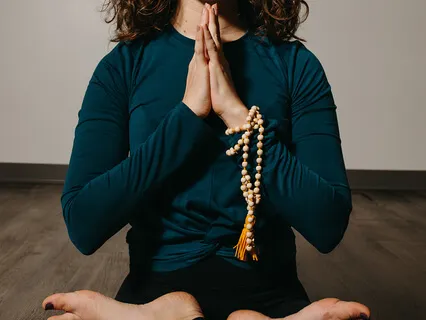
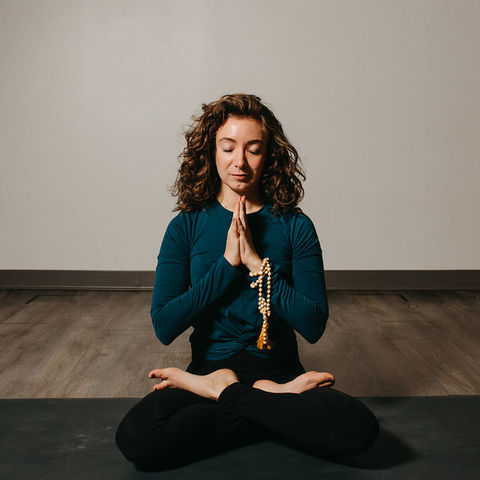
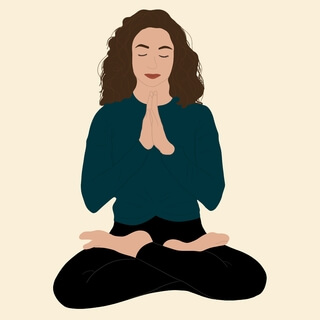
Number three is posture.
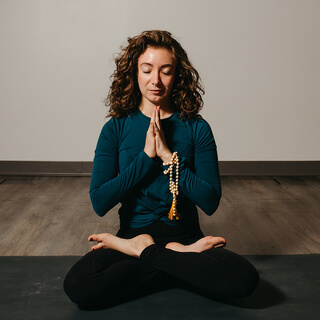
If you are taking a traditional seated meditation,
I encourage you to place something underneath your hips so that your hips are elevated above your feet.
And this prevents your legs and your feet from falling asleep and getting tingly.
So you could sit on a chair,
On the edge of a bed or a couch.
I use a meditation cushion.
You could just sit up on like a rolled up blanket or towel.
It can get really creative and innovative there.
And again,
If you're still assuming a seated meditation,
A tall spine with the low belly slightly engaged will help to support the tall spine.
A chin that is very slightly tucked will allow your breath to flow very easefully.
And then I also encourage palms on thighs.
If your palms face up toward the sky,
That will be a very opening and accepting position.
If you need some grounding,
Palms face down can feel really nice.
Now you can also lay down for meditation.
Same goes for like the environment if you're laying down.
You know,
If you're laying down,
Whether it be on the couch,
On the floor,
On your yoga mat or on the bed,
Just make sure you're in a distraction free environment and allow yourself to feel very cozy and supported.
Number four is breath.
Jon Kabat-Zinn says,
Breathe and let be.
So the breath is a tool to ground you and to really focus the mind and to guide your awareness like we talked about.
Breath is your life force.
It is also known as prana.
It's like a great form of energy that lives within the body.
Focusing the breath in a very specific and controlled manner can do wonders to calm the nervous system or it can even stimulate you and provide you with more energy.
So there will be some meditations that will guide you to control the breath or to pace the breath in a very intentional manner.
Lastly,
Number five is observation.
Meditation is about observing your experience.
And we want to come to this place of observation without judgment,
Without a negative story to it,
And try not to travel with the mind as a thought becomes a train of thoughts.
I find it really helpful to assume the beginner's mindset when assuming this place of observation.
The beginner's mindset is looking at an experience or a sensation as if you're experiencing it for the very first time.
Thought labeling can also be a really helpful tool when observing.
So if you have a thought,
You could say to yourself whatever you want to label that thought.
Like,
This is planning.
Or,
That thought is the future.
That thought is the past.
That thought is a judgment.
Things like this.
When I have a thought that I don't want to have at that moment in my meditation,
I'll simply say to myself,
This too.
This too.
Because this thought too belongs.
It's also part of your experience.
And by acknowledging it,
That's enough.
That's all I need to do,
And then it can pass just like a cloud passing in the sky.
Author Amit Ray says,
Self-observation is the first step to inner unfolding.
So I hope that these five guidelines or five elements of meditation help to give you an understanding and perhaps some reasonable expectations as you embark on your meditation practice.
Mother Teresa says,
Be happy in the moment.
That's enough.
Each moment is all we need,
Not more.
Thank you for joining me today.