Hi,
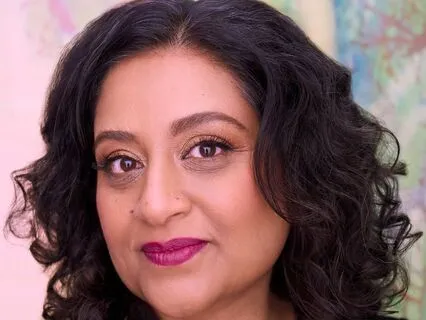
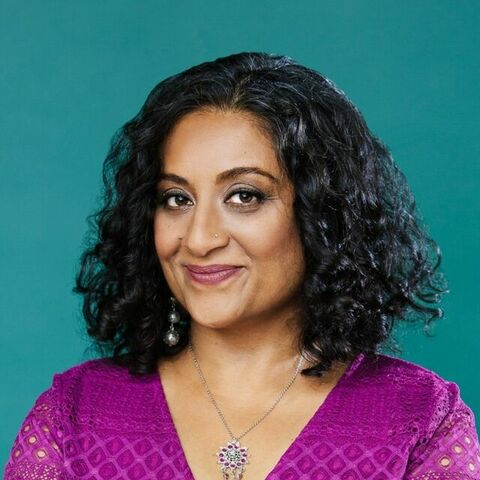
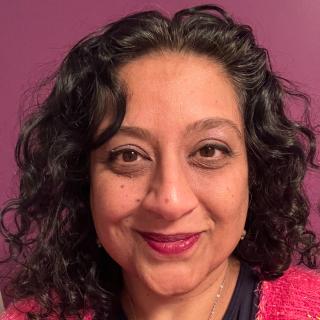
This is Barzana Doctor,
And this is a talk on burnout.
This is an issue that a lot of us have faced,
And there's a lot of confusion about it.
So to begin,
I want to say that burnout is structural.
While there are individual factors and things that we can try to control,
Burnout is something that is very much governed and organized by capitalism.
It's often a worker rights issue.
It's bigger than the individual.
I think that we need to demystify experiences of burnout as much as possible.
We need to de-shame it.
I also think we need to see burnout as not something to be prevented or avoided,
But something to understand so that we can notice the very early signs of it and then be able to attend to it ourselves and with the help of others.
So that's why I want to start by telling you my story.
Self-care and community care hasn't always been easy for me.
It sometimes still isn't.
My first burnout happened back when I was in my 30s.
I worked at a large mental health hospital.
There I managed two addiction programs,
Facilitated groups,
And had a caseload of individual clients.
I also traveled around the province teaching 2SLGBTQ cultural competency to other service providers and oof,
It was the early 2000s and we met a lot of resistance back then.
There was so much to do,
So many gaps to fill.
For many personal and structural reasons,
I had trouble saying no.
The work culture rewarded overwork by piling more of it on,
The bureaucracy was stifling,
And one of my direct supervisors was disrespectful,
And that's me being diplomatic.
While I loved the clinical work,
I didn't yet have a strategy for managing the trauma I was absorbing daily.
It was hard to delegate or ask for help.
At the same time,
I was attempting to finish my first novel,
Which I wrote on weekends and while on quote-unquote vacation.
My inability to rest meant that I was doing too much,
Even during my time off.
I wasn't sleeping well,
Eating healthily,
Or exercising much.
At the time,
I had no spiritual practice.
I considered self-care another to-do on my long and growing list of things I should do.
After almost a decade of this tedious routine,
I quit the job,
Took on some contract work,
And started a private practice.
I eventually created a writing routine that didn't involve vacation writing.
I restarted my own therapy,
Exercised more,
Tried meditation.
Sometimes I managed it consistently,
Sometimes not so much.
The burnout lifted,
Though.
Thanks to community care,
I could make these big changes.
I'd contemplated them for almost two years with the help of friends who listened to my repetitive,
Looping anxieties.
My privileges expanded my options.
I had enough savings to buffer me while I built my practice because my hospital job paid me more than I needed to pay my own bills,
And I was in good health with access to universal,
Basic health care.
But learning is a process.
And burnout would return to my life as a visitor in my forties,
When life revved up with more activism,
More writing,
And my private practice had filled up.
But that's another story for another time.
If you've experienced a burnout or are currently in one,
Take a moment to think about the factors that may have contributed to it,
Both individual and structural.
I'll leave a little space here,
But you may want to pause the recording if you need extra time.
Okay,
So let's talk about how our context matters.
Sociopolitical contexts and histories,
And how we learn to adapt to them,
Are directly connected to how we take care of ourselves and others.
You have a history and context that will have impacted how you learn to operate in the world.
In my early years,
My parents were too busy establishing life in a new country to think about balance.
There was a pervasive immigrant mantra of needing to work and study hard,
And the message that as racialized people,
We had to work harder,
Save money,
And quote-unquote,
Get ahead.
Patricia Hersey,
In her important book,
Rest is Resistance,
A Manifesto,
Refers to this as grind culture.
My adult life replicated my childhood experiences.
It was all about going full steam and waiting to rest on vacations,
And then wondering why it always felt like not enough time off.
Maybe you relate.
Or sometimes I had a spa day,
But wished I could live at the spa.
I call this the grand gesture approach to self-care.
It's reactive,
Maybe even expensive,
And ultimately not sustainable.
My community care had a similar tone,
Running headlong into others' crises without checking in on my own capacity,
Or having a near breakdown and sending an SOS email to ten friends.
How about you?
What did you learn growing up from your role models about taking time off,
Resting,
Self,
And community care?
Take a moment here to reflect,
I'll be quiet,
And of course if you need more time,
Pause the recording.
Shortly after my second burnout,
Which happened in my 40s,
I realized,
Not just intellectually,
But in an embodied way,
That self-care and community care needed to consist of multiple,
Daily practices that regulate my mood and nervous system.
And so,
Now,
On most days,
Because nothing is perfect,
It looks more like this,
Scheduling my day with multiple short breaks so there's time to stretch,
Eat,
Have a cup of tea,
Reflect,
Walk,
Notice,
Daydream,
And have deep thoughts throughout the day.
Note that some of these multiple short breaks only need to happen in 2,
3,
Or 5 minute increments.
I go slower,
I hustle less,
If a workday has to be full steam,
Sometimes it does,
I create a buffer at the end so I can recover.
I reach out to friends more often,
And about less urgent things,
I reach back to offer them the same.
I seek mental and physical health care earlier,
Before things get really bad.
I say no more often,
Respond more slowly to messages,
Don't overextend as much.
This approach feels more grounded and sustainable to me,
And I often feel like I have more capacity,
But it's a work in progress,
Or,
As I like to say,
A rest in progress.
So those are some thoughts about burnout,
Community care,
And self-care.
I wonder if you related to any of it.
Take a moment now to process which parts of what I discussed you related to,
And which things inspired some deeper thought.
Thanks for listening.