Hello,
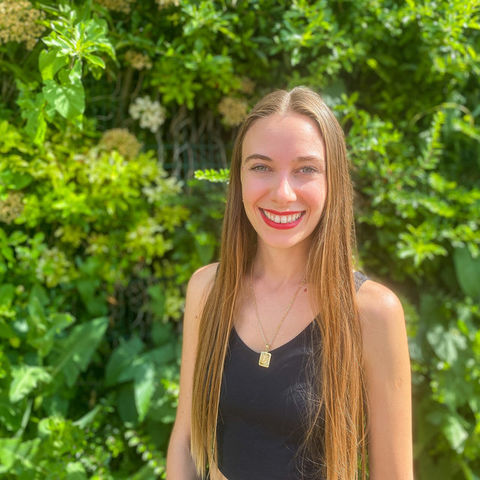
And welcome to In Conversation with me,
Fabienne Sandoval,
Life coach,
Author,
And speaker.
I talk way too much,
So I thought I'd put that skill to use by sharing with you this series of conversations designed to expound your awareness and knowledge of becoming secure and empowered in your self-worth.
Meet Sam,
My OBM,
Wing woman,
And literal can't live without.
We tried to break up once and it didn't work.
I'll be here to ask the juicy questions and help extract some of these powerful insights from Fabienne.
So let's begin.
Okay,
So today we're gonna be talking about a secure attachment.
So as with all of our little conversations,
We start off with that question is,
How do you create a secure attachment?
And that's quite a,
I feel like quite an ambiguous question,
But how do we Fabienne?
It's a pretty big question.
So this audio is for people that are fully aware of attachment styles.
And if you aren't,
You're still gonna get something from this,
But just like recommending that you maybe check out one of my other audios that say,
What is an attachment style?
First of all,
To kind of pre,
Before you come into this,
Creating a secure attachment.
So essentially what it is,
Is about becoming more secure in your sense of self.
And it's linked to attachment styles.
So we have three attachment styles,
Secure,
Anxious,
Or avoidant.
If we are in the camps of being avoidant or anxious,
Then one of the goals that we're gonna have is to become more securely attached.
Why?
Because it's gonna have us feeling better,
It's gonna have us having more stronger relationships,
And it's gonna essentially move us into a place where we're having really healthy,
Functional,
Loving relationships essentially.
And learning how to do that.
So how in the world do we create a secure attachment?
What they actually describe is people that have a insecure attachment that learned how to become secure.
They actually call it an earned secure attachment.
So you might hear that phrase like around as well,
If you've been listening to things around attachment styles.
So what are we trying to do?
Well,
I guess in the context of romantic relationships.
We feel comfortable being able to rely on our partner.
We feel comfortable that our partner can meet our needs.
And we also feel comfortable with them relying on us and asking us to meet their needs.
So essentially it's about reliability and needs and the communication of that.
And there was a really interesting piece that one of my coaches shared with me and they had shared this piece of research.
And they said that when they're looking at happy couples,
Happy couples do two things well.
So the first thing they do,
Which is a sign of being securely attached is that they're vulnerable.
So they can be vulnerable with each other.
The second thing is they can ask to have their needs met and do it in a way that is a request,
An invitation.
As opposed to it being a demand.
Now,
When we're insecurely attached,
A lot of the time we don't know what we need and therefore we don't know who to ask for it.
And therefore when we do ask for it,
It comes off as a demand because usually by the time we were asking for the thing that we want,
We are so beyond that need.
We are like almost like starving,
You know?
We're in the desert with that need.
And so then it comes across as a demand.
And of course,
Then it usually doesn't get met because no one wants to be demanded of,
Right?
In terms of,
You know,
Even if you love that person,
It doesn't feel nice.
So these are the two things they discovered that happy couples do really well.
Be vulnerable and ask to have their needs met in a way that is an invitation,
Essentially.
Yeah.
So with creating this kind of in a relationship sort of way of creating that,
How do you take that first step?
Do you look at the vulnerabilities within yourself and kind of work on that core first?
How do you take that first step?
Yeah,
So the way that I always describe it is that there's a couple of things that we can do.
And I'll give you a bonus thought toward the end.
But if we're working on the basis of that research,
So they're able to be vulnerable with each other.
If we take that out of the context of being in a couple,
But are you able to be vulnerable?
Do you know what that means?
That would be the first place I would start is can I be vulnerable?
Do I know what that means?
What does that look like for me?
Because usually people that are experiencing an insecure attachment,
They struggle with vulnerability.
They want to be vulnerable,
But it's really scary for them.
So the first place you wanna start is actually the practice of being vulnerable,
Which is essentially being honest,
Practicing being honest.
Because usually when we are sharing our truth,
Sharing our honesty,
Actually there's an element of that being quite vulnerable and letting people truly know what's going on.
I always call it like your internal landscape.
What's actually happening on the inside of me right now that I can share with the other people around me.
Of course,
There's a whole bunch of stuff that comes with that.
It's like,
Is this person trustworthy?
Have I built enough of a relationship with them?
Obviously we don't wanna get into oversharing and all of that kind of good stuff,
But it's important to just start with the practice of how am I vulnerable?
How good am I at being vulnerable?
Do I do that well?
It's really interesting.
So I'm just trying to work out which direction to go in next because you have that vulnerability and say you are confident then in being that vulnerable,
What would be the next?
Is there kind of a next step from that?
So I've got quite a few questions going on in my head at the moment.
So how about if you're in a relationship and you're able to create that secure attachment,
What happens if the other person isn't able to?
How would that affect your attachment?
Yeah,
So great question.
So research that has been done,
They actually state that it only takes one secure person in a relationship to create an overall secure relationship.
So even if the other person is insecure,
One of you is completely rooted in your security,
Then that's going to create an overarching secure relationship.
They notice no difference between two secure people together versus one secure and one insecure.
So that's a really cool piece to acknowledge.
I think you were asking,
Where do you go from being vulnerable?
So I mean,
That's a really scary piece in itself.
I think that we need to remember like start small.
So it's just little things like,
I had that really big meeting today and actually I got really nervous right before I was about to present.
That's being vulnerable.
That's letting people know what's happening inside of you.
Usually people that have an insecure attachment,
Whether they're anxious or they're avoidant,
They're not necessarily actually speaking to what's going on inside of them.
They're kind of hiding from that.
So it really just starts with the small,
Simple things like,
Yeah,
You know that meeting I had,
I was really nervous.
Or actually,
You know,
I was like,
I was so excited to see you.
You know,
If you're dating someone new,
It's really exciting to see you today,
Right?
That goes a long way,
Just these small little things,
Practicing that.
And you can do that in romantic relationships and also in friendships and,
You know,
With work.
Like you can do that all over the place.
It's a really great way to just,
You know,
Push yourself to practice being vulnerable.
The second- And I think that's interesting,
Sorry,
Go on.
No,
Go ahead.
I was going to say that's an interesting thing as well,
Because when you think of vulnerability,
You think of the kind of negative connotations like,
Oh,
I was vulnerable because I acknowledged I was nervous.
But actually also,
Like you said,
It's acknowledging when you were excited about something and that's being vulnerable.
I think you automatically assume being vulnerable is the negative.
Ooh,
I'm so glad you said that.
You know how many people are like,
Yeah,
But I'm weak if I'm vulnerable.
I'm like,
Okay,
That's the whole,
So I don't want to be like,
That's the whole point,
But when you're secure,
You're secure enough to acknowledge that you're human and that you have moments of vulnerability and that in that moments of vulnerability,
That is being excited.
That is also being scared.
That is also being nervous.
That is also needing to cry.
Like it's all of the things.
So why would we not,
If we're going to have a romantic partner,
Why would we not want to let them into that experience with us?
Why would we hide all of that inside of us and pretend it's not happening?
Essentially,
Then we are saying,
I'm not human.
I don't experience any of these things.
And that's the most craziest thing that we could possibly do.
How could we possibly say,
I'm not human.
I don't have feelings.
I don't experience any of this stuff.
We do,
But we usually gotten so good at hiding it and so good at trying to put on this brave face.
Like I don't have any vulnerabilities.
I don't have any of this.
Like you actually move yourself further away from being secure because secure people are comfortable with letting people know what their vulnerabilities are.
That's what makes them secure.
It's not the absence of your vulnerabilities.
It's the fact that you can speak to them and acknowledge them.
Yeah.
So I interrupted you and you were talking about a second step after the vulnerability.
Yeah.
So second step is once we are practicing vulnerability and learning how to get good at doing that,
Then the second thing that we want to do is start to recognize what our needs are.
This is a really,
Really,
Really big piece of becoming secure,
Right?
So when we're saying needs,
What do I mean?
Well,
That could simply be like,
We've been talking on this session for about 10 minutes now.
And actually I'm quite thirsty.
I need to drink water.
So that could be a need,
Right?
Or I need to use the toilet.
But also it could be,
I had a really hard day and I just need a cuddle at the end of the day.
Or alternatively,
I've had a really hard day and actually I need everyone to leave me alone for the next 30 minutes so that I can,
We can share.
Our needs come in all shapes and forms.
I might need to have fun.
I might need to relax.
I might need to sleep.
I might need to rest.
I might need to connect with other humans.
Like there's so many different needs that we have.
So it's about really getting closer to yourself and understanding what do I need?
Because no one else can do that job for you.
So when you know what it is that you need,
Then you're gonna be able to have the ability to one,
Check in,
How do I meet this need?
Can I do it myself or do I need help?
And then if you need help,
Then you're gonna be able to ask another person,
Entity,
Whatever it is for that help.
And thereby sharing your need,
Recognizing that you don't have to tend to all of your needs yourself.
There are some things that you can do alone and there are some things that you can be done together.
And it's about being secure is about having a balance of the two.
Again,
Coming back to the insecure attachments,
If we're more avoidant,
We're gonna typically wanna do everything alone and we're not gonna ask for help usually.
And if we're more anxious,
We're probably gonna ask always for help less things alone.
So it's about balancing that out,
Knowing what I can do and take care of myself and knowing when I need to ask for help,
What the moment is to ask for that.
And then inviting someone,
Hey,
Could you help me?
And if a person says like,
No,
I can't do that,
That doesn't mean they didn't wanna meet your need.
It just means they were unavailable in that moment.
And then ask,
Check in,
Ask someone else or ask,
Is there another way that you could help me with this?
Or do you have another idea?
It's about expressing what it is that you need and getting closer to that and knowing that for yourself and then being able to express it and communicate it.
So it's such a broad kind of question,
Wasn't it?
How to create a secure attachment.
So obviously we don't have all the time in the world to talk together about this.
So is there anywhere that they can find us more information or some more steps into helping them to create a secure attachment?
Yeah,
Absolutely.
So one of the things that you can do is you can check out my courses on Insight Timer.
I don't have any that are specifically directed to creating a secure attachment at this moment in time,
But do keep your eyes peeled because there is always new things coming.
There are a variety of courses that I do have on my page,
On my profile.
And all of those are all essentially coming back to the process of becoming more securely attached.
So the first thing I would do is go check out my courses,
See what fits,
See what feels like a good fit for you and you can start there.
Of course,
Becoming secure is a very,
I don't wanna say a very long and challenging road,
But we're not gonna rose tint,
We're not gonna put roses on and be like,
It's an easy peasy job because it's not an easy job.
It does take time and dedication and energy from you and the willingness to grow and to be uncomfortable.
So if that's your bag and you're like,
I'm ready to do this and I really wanna work on that and I really wanna have healthy functional relationships and I wanna get better at that,
Then yeah,
Get in touch with me.
And that is primarily the work that I do around helping people to become securely attached.
That's great.
Thank you so much again,
Fabienne.
You are so welcome.
See you next time.