Episode 5 of my tiny talks about dementia,
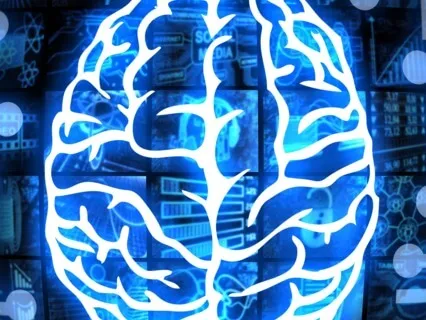
Where we focus on brain plasticity.
For a long time it was thought that brains and connections between neurons were fixed throughout adulthood.
The contrary turns out to be true.
Our brains change on a day to day basis.
Daniel Lane,
Clinical director of the Perth Brain Center,
Explains what it is in a YouTube clip.
He compares the brain to a metropole with lots of roads and traffic.
Here is my interpretation of what he explains.
Some roads are highways,
Where traffic moves fast.
Some roads are congested.
These roads represent our way of thinking,
Feeling and doing.
Every time we repeat a certain process,
It strengthens a particular pathway.
Traffic,
Neural signals,
Travels faster and processes become more automated.
When a road was not well constructed,
Is congested or you decide to do things differently one day,
A new road is accessed or even built.
In the beginning traffic will move slow.
But the more the road is used,
The faster traffic moves through it.
New procedures become automated.
If an old road or pathway is used less frequently,
It slowly withers.
Lane emphasizes that neuroplasticity is neither good or bad.
It just is what the brain is wired to do.
Psychiatrist Norman Dodge states that nothing speeds brain atrophy more than being immobilized in the same environment.
Or phrased differently,
Nothing is more detrimental to a person with mild cognitive impairment or dementia than an environment that does not stimulate the brain and the person overall.
Yet our natural response when people develop cognitive challenges is to strip away their tasks and activities.
Instead of looking for alternative ways to keep people engaged and active,
We take over,
Often with the best of intentions,
Because things just go too slow or are too confusing.
So not only does brain plasticity diminish because of the build-up of proteins in the brain,
We accelerate the process by significantly reducing the use of the brain.
In terms of neuroplasticity,
Old roads crumble whilst no new roads are being built.
Creating a stimulating physical and social environment will help.