Hello and welcome to episode 21 of my series of tiny talks about dementia.
Today I'll be talking about the humanity in dementia.
I am well aware that the topic I am raising feels offensive to some people,
As if I'm telling them you are doing it incorrectly.
And yes,
I am telling people that there is another way,
But at the same time I appreciate and honor that everyone is doing their very best,
With limited knowledge and skills at times.
This is not only true for family carers,
But also for those in the workforce.
Only 12% of nurse practitioners specialize in geriatric care,
Only 1% of nurses,
PAs and pharmacists,
And around 4% of social workers.
These numbers were taken from the Alzheimer's Association website.
The point that I would like to highlight today is that,
Although often unintentionally,
We do start treating people with dementia differently.
Differently from before the diagnoses,
Or from before the symptoms would become visible,
And differently from how we treat others.
Let me share some examples.
Talking about the person whilst they are in the room,
Or maybe they are not present but they are never consulted on matters that concern them.
Approaching a person from behind,
Talking to the person from an elevated perspective,
Or speaking in a loud voice or using simple language.
Not only do we exclude and stigmatize the person,
We also add to their deterioration.
Or phrased differently,
We are definitely not helping them to navigate the environment and to be socially engaged.
I always come from one of my mottos,
If you would not like it,
Others won't either.
Wouldn't you be startled if someone grabs you from behind or starts talking in your ear when you did not see them coming?
Would you appreciate your family or friends talking over your head?
Try to avoid making assumptions such as,
But they do not understand anyway.
They may not understand the words,
But they definitely pick up on the intention and the mood.
Feeling excluded,
Or what we call social exclusion in social psychology,
Is a form of abuse.
There are so many opportunities to include a person,
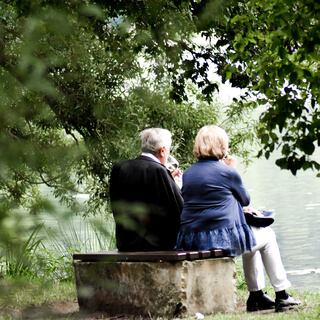
Even just sitting close to them,
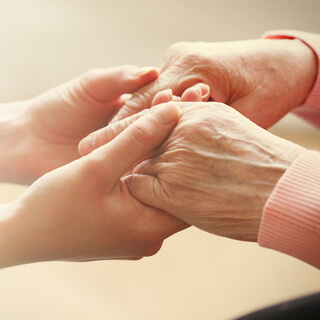
Holding their hands,
Making regular eye contact.
Connecting to see if what you are talking about on their behalf is not upsetting them.
Giving choices instead of asking open-ended questions can help them to engage in conversation.
Slowing down and allowing time for the person to answer does too.
Dementia challenges us to stretch our minds,
To open them even further,
And to explore what is possible.