Hi,
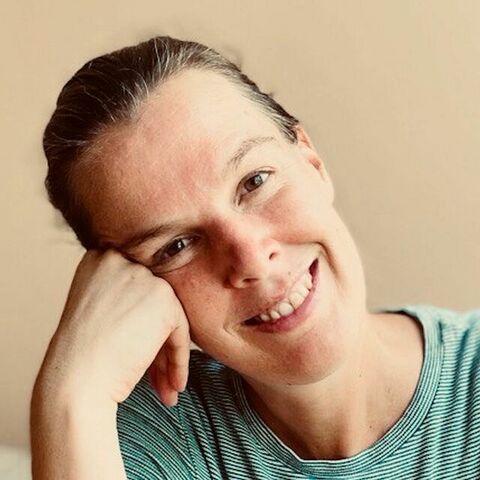
Eva here.
I am a dementia expert and I've been working in the field for over a decade.
In my series of Tiny Talks I will address issues that are relevant to people living with dementia,
Either themselves or caring for someone close to them.
In this first episode I talk about dementia basics.
Here are some questions about dementia that I'm frequently asked during mentoring,
Conferences and community-based Q&As.
Question.
Are dementia and Alzheimer's the same?
Answer.
Dementia is an umbrella term,
Describing,
Shortly said,
Brain damage.
We are unsure if Alzheimer's is a cause or a type of dementia,
With another underlying cause.
Question.
How many causes,
Types of dementia are there?
Answer.
The estimates range from 50 to over 100.
Question.
What are some of those causes and types?
Answer.
Brain damage can be caused by accidents as well as infections,
And delirium causes acute dementia.
These are reversible when the cause is treated or through brain plasticity.
Other examples are Alzheimer's,
Vascular,
Lewy body,
Prefrontal and mixed type.
Question.
Will everyone at a certain age develop dementia?
Answer.
Definitely not.
Many people live far into old age without developing dementia,
But it is true that the older people are,
The higher the chance of developing some sort of dementia is.
It is around 50% for those aged 85 and over.
Question.
Besides age,
What factors lead to an increased risk of developing dementia?
Answer.
Until recently we only knew of associations with family history and Down syndrome.
In recent years the Lancet has published a commission report describing 12 modifiable factors that predict 40% of all dementias,
And I will spend a tiny talk on those.
The factors include head injury,
Diabetes,
Social isolation,
Hearing impairment and lack of exercise amongst others.
Question.
Is there a medication that can cure or slow down dementia?
Answer.
Unfortunately there is no scientific evidence to support a pharmacological treatment.
Question.
So what can I do to prevent developing dementia?
Answer.
Although little is known,
The Lancet report is encouraging.
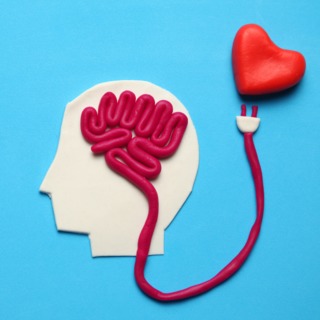
A brief summary is a healthy heart is a healthy brain.
And Dementia Australia had a wonderful campaign a couple of years ago stating,
Stay active,
Physically,
Cognitively and socially.
Final question.
How can I support someone who has dementia?
Final answer.
Focus on the person,
Not the disease.
The possibilities,
Not the limitations.
In close collaboration with the person themselves create an environment that supports independency and creates meaningful activities,
Roles and connections.