How Menopause Affects HSPs With Michele Jenkins
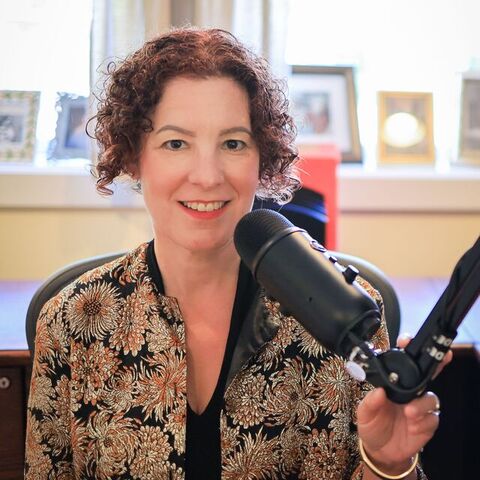
Are you a highly sensitive woman going through perimenopause? In this episode, two HSP psychotherapists (who are themselves navigating the menopausal transition) discuss the shortcomings of the medical system, the importance of healing past traumas and losses, developing agency, and the journey towards self-discovery and joy.
Transcript
Welcome to Compassionate Conversations,
Where we push the boundaries of comfort to empower you to become all that you dream of being.
Michelle Jenkins is a licensed clinical social worker in New Jersey who specializes in highly sensitive people,
Particularly women navigating the challenges of perimenopause.
As a highly sensitive person herself,
And currently in perimenopause,
She has both personal and professional experience to offer the women she works with.
Michelle's mission is to help women to achieve agency over their own bodies and to embrace their perimenopausal journey with confidence.
Hello,
Michelle.
Hi,
Thanks for having me.
I just have to tell you guys how many things we have in common.
So we are roughly the same age,
So I'm 53,
You're 50,
The fierce 50s.
So we have the same training and frontline experience as social workers,
So we have the same degrees.
We are both HSPs as well as psychotherapists,
And we both specialize in empowering HSP clients,
Mostly women,
To embrace their sensitivity and to thrive.
I just couldn't believe it.
We have a lot of the same experiences and feelings about this,
And so it was easy,
I think,
For both of us to just flow into this as where we can go with this.
So being HSPs,
This is going to be stream of consciousness.
This is how we work.
Well,
We've had our own stories about going through perimenopause.
I thought it might be good to start there.
So I'm 53 now,
And as of February 1st,
2024,
I had one year with no period,
So I was officially in menopause.
And I,
Oh God,
Thank God,
Yes,
I'm here.
I traversed the waters,
I crossed to the other side.
My journey was incredibly traumatic and distressing.
It lasted,
So it started at 45,
I remember.
So that went,
45,
That's seven years,
Yeah.
So yeah,
Pretty average.
But yeah,
I started with vaginal changes,
Dryness,
And just all this different stuff,
But also just,
It was mostly just felt like depression.
I was crying a lot.
But at 45,
My husband and I decided to move from one town to another on the same island.
We sold three properties to buy one,
No,
Four properties to buy one,
And we changed everything.
We used to have commercial offices that were separate from our home.
We each had our own office,
And then we had two living accommodations,
One in the city we live in now,
Victoria,
And then one in the Comox Valley,
Where we lived before,
Smaller area.
And yeah,
We just did it all,
And that was just a lot,
And there was a lot of stress with that.
And then when we moved into the house we live in now,
It's from 1912,
It's a very old house.
It didn't have any insulation,
Or it had knob and tube wiring that could have exploded.
There was just a lot of stuff.
So we had contractors here living on the property in a motor home for three months.
And yeah,
I ended up with some bladder thing,
I ended up going to emergency because it was all stress,
Stress,
Stress,
Stress.
And I didn't know I was in perimenopause either,
And I just,
My energy,
Being an HSP on top of all that.
So when I was 28,
I was officially diagnosed,
I have air quote fingers in your hair if you're listening,
With an anxiety disorder,
Generalized anxiety disorder.
Now I know I'm a highly sensitive person.
I don't believe I have an anxiety disorder,
I don't believe I ever did.
I don't believe that many HSPs have mental illness,
As they call it.
I don't like the term mental illness.
Mental health I like,
But not mental illness.
And so I'd been on antidepressants since I was 28,
Often on them,
And they didn't seem to be working the way that I thought they should.
And so I panicked.
So looking back now,
Well,
We'll get into this later,
But I panicked and I thought,
Oh my God,
What's wrong with me?
And I was waking up teary and crying.
So I thought,
I looked up what does perimenopause look like,
And whoo,
You know,
Depression and anxiety.
That's a scary thing.
Yeah,
I got scared from reading,
I call it Google Chondria.
Yes.
I used Google to diagnose me.
And then,
But I find that the health profession is also at the ready to do that as well.
So I went to my doctor,
They didn't know what was happening.
They said they could put me on more antidepressants,
Which I said no.
And then someone said,
Oh,
There's this naturopath and she can help you and you can take bioidentical hormones.
They're natural.
Okay,
Air quotes again,
They're natural and they'll help you.
So I literally,
I talked to a naturopath on the phone and it was about 15 minutes and she said,
Oh,
Your progesterone is tanked.
Okay,
But she hadn't even seen me.
Your progesterone is tanked.
We got to put you on progesterone.
She,
Very confident woman.
I was not feeling confident.
I was down and in a bad place.
So I went in,
She put me on progesterone and I had three and a half years of severe depression.
Now I have never been depressed in my life.
Did she take blood work yesterday?
No,
Blood work,
No,
No,
Yeah.
So,
Yeah,
So long story short,
I ended up in the hospital because it got so bad.
And when they found out I was on progesterone,
They freaked out.
This woman,
Two psychiatrists I remember who saw me said,
Oh my God,
You know,
That causes severe depression for many women,
Suicidal depression for women.
Well,
I'd never heard that.
So they actually asked me if I had any and they had my husband get rid of it,
You know,
Confiscate it.
They confiscated it.
They were so horrified that they wanted it.
Did she have reasoning to be leaving out the other important hormones for perimenopause,
The estrogen and the testosterone?
There was no explanation,
It sounds like,
For you.
No explanation,
No,
She was very confident.
This is what you need.
And so during that three and a half years,
My antidepressant,
They weren't working.
So during three and a half years,
I saw a psychiatrist for at least three of those years.
And that was another hell.
She put me on,
She put me on a whole bunch of,
She tried me on,
I think three or four different antidepressants at varying doses and if it didn't work,
She put the dose up.
I was on the highest dose of things.
I don't remember a lot of things from that time.
It was horrible.
I was working full time as a therapist and it was just the worst.
And so,
But nobody along the way asked if,
You know,
Looked into,
So the psychiatrist in three and a half years that I've seen her,
At least three years,
Never asked me,
Are you on something else?
Are you on taking any of the medication?
Not once.
So now I'm really pissed off when I think back to that,
Because if she had known that I was on progesterone,
We could have avoided this calamity.
And the length of suffering that I went through was horrific.
And so that,
I don't even consider that perimenopausal symptoms or anything,
That was up and down from different medications.
Brought on medically.
Yeah.
And then she was giving me benzos for anxiety,
And those are highly addictive and very hard on the brain and body,
And trying me,
Like,
I just felt like it was like candy and she just kept throwing,
It's like throwing spaghetti at the wall,
Well,
Maybe this will work.
And then,
Yeah,
The depression turned into,
I'd have to have a nap for two hours a day.
I would cry for,
I don't know how many hours a day,
Like I could work throughout the day,
But the rest of the time I was crying in bed.
So yeah,
Long story short,
That's what happened to me.
And I had another severe bout of depression,
Yeah,
Four years after the first one.
And I'm still recovering from that one.
And now I'm,
Yeah,
Just on the other side of menopause.
Thank God I've made it.
Well,
My heart is breaking for you in that it feels like you're a real testament to the failings and limitations of like our medical system and the ways in which the knowledge base of,
You know,
Menopause and perimenopause for our medical professionals,
Which I think is changing,
But certainly if you were 45,
46,
We weren't hearing much about perimenopause at all.
And to have gone through that because of that limited fund of knowledge from the professionals just is really hard to hear.
And I'm just like,
So sorry.
Yeah.
Well,
Thank you.
Yeah.
It's,
You know,
It's very,
I'm healing now,
But it has been quite a journey.
And I think so much of what happened to me could have been prevented.
I mean,
It's just infuriating.
I mean,
My husband and I,
He's livid,
You know,
When he found out that I shouldn't have been on progesterone that causes suicidal depression.
I mean,
I've never been suicidal before.
I've never been depressed before.
You know,
And I guess one of my messages to women that are listening to this and watching it is be very careful.
There's a lot of people who have a lot of money they can make off of people that have hit bottom and are not feeling good and are willing to do anything to feel better.
And I was one of those people.
I was at rock bottom and,
You know,
You become very vulnerable to those things.
So I know we're going to talk a lot about agency,
But my journey now,
I've made it to the other side.
I'm menopausal.
It's fabulous.
I have an extra,
I think it's five to seven pounds.
You know,
I've read that that's average.
It's the belly and the boobs.
What I've heard is that that is that when you're switching,
The estrogen is changing up and everything's going from your ovaries to the adrenals.
It's a different type of estrogen that the breasts and the belly hold the estradiol,
Which is the one you have when you're in your childbearing years.
It's holding whatever's left of that in your fat.
Yeah,
I've seen it.
And I've heard that it's to prevent you from getting breast cancer and ovarian cancer.
So I will take five to seven pounds.
Thank you very much.
I'm just a little uncomfortable because I'm five foot one and a half.
We also have that in common,
Esther.
So am I.
Oh,
Really?
Yes.
Really?
What?
You're five foot one?
Yes.
Really?
I know I'm saying you're a little.
So the weight gain,
The weight gain is so noticeable and it's,
That was,
That was hard.
I know,
But I'll say,
And the other thing that happened during this,
One of my best friends got brain cancer and died.
Oh my goodness.
So yeah,
She was 49 and she'd just gone through menopause herself and,
And I was worried sick about her and I was trying to do everything I could.
And yeah,
That was just all,
Yeah,
It was glioblastoma.
I also,
I lost a sister to that horrible disease,
But I similarly,
It's actually really strange to even be saying this because of the threads that run through our lives.
But also I had a very dear friend who,
She was 53,
Died of a,
Of a brain tumor.
So what,
What I think I,
What I want to say is like,
This is an important thing to touch upon is that when we ourselves are going through such profound emotional,
Mental,
And physical symptoms of perimenopause and whether we know it or not,
Or have support or not yet,
It's the things happening externally in our lives that are layering on top of that.
And I,
And I just really think that a lot of women feel like they're going crazy.
Think of having a friend ill and trying to support that friend while you yourself are struggling and the grief that that brought up for you.
And I'm sure,
You know,
I wouldn't venture to guess you have many other losses you've experienced throughout your life.
Those come creeping back up,
I mean,
And they come out like a pot of boiling water.
So,
Yeah,
So that's,
Okay,
So I just have to say that,
Michelle,
If you have any emotional unfinished business is what I call it,
Past trauma that you have not resolved,
This is the time it's going to come up.
And so,
Since my last severe depression,
It's been about eight months that I've been solidly recovered.
Since I started this healing journey months ago,
I did trauma therapy once a week for seven months,
Six or seven months,
Because I had no idea.
I've been a therapist 27 years.
I have done trauma training,
Intensive trauma training.
I've done trauma work with clients.
I am a pretty seasoned therapist,
And I really thought I had dealt with my trauma.
Whew,
No,
No,
Not even close.
This is ancestral trauma about the Holocaust and my people who were killed and childhood stuff,
Developmental trauma.
And I realized that I had lifted my head before.
That's what my survival was,
Living in my head.
I kind of lived from the neck up.
And I think this is important to share with women,
Because I think so many of us do that.
We get disembodied.
We don't,
We somehow get cut off from our bodies.
And the body,
So I'd always done top-down therapy,
Right,
Which is talking therapy,
Like most of us do,
And social workers.
We get trained,
It's all cognitive.
But,
Yeah,
Now I'm doing bottom-up somatic experiencing,
Is what I'm working so many with,
Somatic experiencing.
She's not even a psychotherapist.
She's a physiotherapist,
The best therapist I've ever met in my life.
I would give her an honorary master's in social work,
Counseling,
Whatever.
Well,
Because somatic is really where it's at when we're talking about what we're experiencing and trauma and such.
Yeah,
Yeah.
So it's coming out of my body.
It's,
I don't even know,
And this is hard for me being,
You know,
The kind of,
I don't like the word control freak,
But I'm very structured.
And this is very unstructured.
I never know what's going to come up when I see her.
This was every week I was just showing up and things just came out of my body.
And like,
Just I had no idea that that was in there.
It's,
But I can honestly say now that I truly,
Truly love myself deeply.
And that I have befriended myself in that little girl that was carrying the weight for so long of her ancestors before her and her parents and,
You know,
Just the culture.
There's so many layers,
Right?
And it's not,
You can't manage it with your mind.
I think that was what I was doing for my whole social,
I became a therapist because I learned that the way I could survive my situation was to study it.
I would understand,
I could understand.
If I could understand,
Then I could,
You know,
Make it.
But that only gets you so far.
Well,
I think what you're saying too,
And I think,
You know,
Our ancestral trauma,
Especially,
But also early trauma can,
Especially depending on the severity of it,
You know,
It gets buried in our unconscious after a while because our bodies want to survive,
We want to survive.
So we're moving forward,
You know,
In life.
And if everything's kind of going with an equilibrium,
It's going to stay in the unconscious.
Perimenopause,
Which I didn't know this before now,
But now I do.
Perimenopause is such a huge transformation in our life,
You know,
Similar to if we have given birth and we become a parent or when we went through puberty and birth.
It's a transformation of ourselves.
The unconscious starts to move up to the subconscious,
You know,
And I think that's where some of the,
You know,
Whatever's happening with our estrogen,
You know,
Lowering and fluctuating those,
To me,
Those feelings and emotions and those unconscious traumas get really starting to like get shaken up and rattled.
And then we start to feel them because we can't push them down anymore.
So that feels what's exactly what it felt like.
I felt like,
You know,
I felt like,
You know,
If you look at it as being a vessel,
You know,
That that it was I was sort of surviving at three quarters full.
But then when perimenopause happened,
It just started to overflow,
Just filled it too high.
And I was totally over and I just didn't.
Yeah,
I couldn't.
And I couldn't stop it.
I could not.
No,
Because that's what that's what trauma and unconscious stuff.
Once it starts to come up,
It has to at some point,
And it will.
So there's no stopping it.
Well,
And I don't want women listening to this to be afraid.
Overall,
I just want to tell everybody that I am so relieved now,
Like where I sit now at 53,
Having gone through menopause now,
Having worked on the trauma.
I'm still going now.
I'm going biweekly for somatic experiencing.
I still need a lot of it.
But I can't.
It's like losing 100 pounds.
Like,
I feel like this huge weight has been lifted off of me.
And I'm finally what I didn't realize before,
Michelle,
That I think is so important is that you when you're holding on to trauma,
You can't enjoy your life.
Like,
I was very cerebral.
I thought I had this great life.
I had,
You know,
Career,
Blah,
Blah,
Blah.
But I wasn't able to really go into joy,
Pleasure and relaxation.
Those are the three areas.
And I've said this before on the show that I read,
I heard this affirmation that stopped me dead in my tracks.
It was joy is my birthright.
And I've been studying that and using that for months now,
Just that joy is my birthright.
What the hell is joy?
Oh,
God.
No one told me.
I missed the memo on joy and relaxation and pleasure.
And all of these regulate the nervous system.
And the nervous system is what,
You know,
We really need to be thinking about,
I think,
As well,
When we're talking about the stage of life,
Because we won't even know it.
But it's constantly in a sympathetic state,
You know,
Versus parasympathetic,
If we're feeling disjointed and stuff's coming up.
I just want to say to women who are listening,
Watching,
That there is a reason.
So you can watch or listen to another episode I did.
I interviewed a woman named Susan Wilson,
Who wrote a book called Making Sense of Menopause,
The only one I recommend besides Christian Northrup,
The Wisdom of Menopause.
Yeah,
Incredible.
We were talking about the spiritual side of menopause,
And that it's actually a transformation,
That it's a metamorphosis,
Actually.
Look at its spiritual light.
So that's how I want to,
You know,
Go from here on in.
Looking back at how much I suffered and all that stuff,
You know,
It's very disheartening.
But if I was just trying to imagine if I had some wise woman,
Some wise elder back then,
Who could have told me that,
Oh,
This is all meant to be,
This is what's happened to you.
You're a caterpillar,
You know,
But you're going to have wings someday.
They explained the process to me.
And if I hadn't have taken bioidentical hormones,
And,
You know,
I know everybody's different with hormones and stuff,
But for me,
It was a nightmare.
You know,
If I'd had some wisdom,
Wise elders,
Where are they?
Where are these women that can tell you about the journey and what it's going to be like?
And,
You know,
And what it looks like on the other side.
Oh my God,
Happy dance.
It's fantastic.
If you're anywhere between 40,
You know,
And up,
That if you're starting to all of a sudden get sort of hit out of nowhere with emotional symptoms that you haven't experienced in a while or before,
The hope is that you kind of think to yourself,
I wonder,
I wonder if I should go to,
You know,
A hormone specialist or a doctor and see,
You know,
If this could be because of that,
Because there are treatments that can help even better than psychotropic medications,
You know,
That with your particular body chemistry,
You know,
That can help make it easier.
Because your story,
Esther,
Is,
You know,
I don't think of it as scary.
I think of it as heart-wrenching because you suffered.
You suffered.
And we're not going to be exempt from suffering,
You know,
A little bit through this process.
Most people,
Most women,
And life,
Right?
Because it's life.
It's part of life.
But,
You know,
As little suffering as possible would be,
You know,
Really helpful.
Yeah,
Yeah.
That'd be nice.
If I could,
You know,
Order it off the menu,
If I could have gone back,
I would have ordered less suffering.
Yeah.
Yeah.
No hard stuff.
Right.
Well,
Yeah,
I mean,
My story is that at 47,
I literally felt like I just got hit by a ton of bricks,
You know,
Physically,
Emotionally,
And mentally.
So,
You know,
I have struggled with some low-grade depression and anxiety,
Mostly after having a child,
Which I think was a little postpartum mixed in there.
But now I understand that to be,
That I am a highly sensitive person.
So the low-grade depression was probably coming more from overstimulation and deep processing and not feeling like I could find people who were similar to me.
And so a sense of maybe loneliness or isolation around that.
So,
But other,
You know,
Other than taking,
You know,
An antidepressant and a small dose for many,
Many years,
You know,
I was moving along okay,
You know,
Emotionally,
Physically,
I was really health conscious.
I did have some later in life trauma.
As I mentioned,
My sister passed away when I was 36.
And I,
She had a two-year-old and a six-year-old at the time,
And I had a six-month-old and a two-year-old at the time.
And it was also during the downturn of the economy in 2000,
And it was around,
She died in March 2009.
So it was like around 2008,
I gave birth and we hit that,
You know,
That time,
That horrible time here in the States with the economy.
And my husband and I suffered a loss of his job,
And we were living far away from her,
My sister and her family.
So we wanted to help them and be near them.
And so we ended up having to short sale our house.
So we lost our first home and all the equity in that home.
So it was just these like losses.
And she,
You know,
It was a long process of grieving and saying goodbye.
And all of that she did,
She was first diagnosed with a stage three,
And that was after her first child,
When he was only a few months old.
So she was able to go into a sort of remission,
And that's when she had her second child.
And then it came back as a stage four glioblastoma,
Not long after,
I guess,
Eight months or so after her second,
Her daughter,
It was terrible.
And as a therapist,
And as a human,
I now have experienced firsthand and know that there are so many ripple effects from the death,
Especially if it's an unnatural,
You know,
Death in that it's,
It's not in the right time scheme,
You know,
We would think of.
So the ripple effects,
I won't get into,
But it was just so much of people with family members,
Extended family members,
And losses there,
And breaks,
And,
You know,
Conflict,
And just,
It was just years and years of that.
And then my husband and I trying to figure out how to,
You know,
We were so involved with that,
You know,
The her family,
You know,
But we had to now really start to root and nurture our family.
And we were doing that financially,
You know,
In a very difficult place.
So we were literally building back up.
And I went into a full survival over functioning mode.
You know,
It was very important to me,
Again,
As a therapist,
And I work with children,
I've worked with young children.
It was very important to me that I wasn't,
You know,
Projecting my grief and stuff onto my children,
Because they are these,
You know,
Innocent,
You know,
Little vessels of joy and love.
And I just wanted them to grow up free from the heaviness of what had happened,
If possible.
But that's not really possible.
Right.
So guess where all that goes,
Right?
So I'm holding it,
It's trapped inside of me.
And although I had done therapy,
Because I firmly believe therapists have to do therapy,
You know,
Whenever and anytime they can.
I won't ever see a therapist if they're not in therapy.
Right.
So I but I just,
You know,
It was talk therapy,
It was top down therapy,
For sure.
I knew nothing about,
You know,
Somatic.
And it wasn't even,
I wasn't even fully conscious that I was had experienced trauma.
You know,
The definition of trauma,
There's so many different levels of trauma.
But the definition is really something that's psychologically altering,
You know,
So what we know into a psychological difference in how we view the world.
So everything had changed.
So I was experiencing a level of trauma and shoving it down.
And so,
You know,
Fast forward,
My 40s,
You know,
I was kind of just raising my kids.
And I'm in this like,
Type A area of New Jersey.
And,
You know,
Everyone's kind of like,
At top speed here.
And I was trying to keep up,
You know,
And trying to keep up,
Have my kids keep up.
And,
And then all of a sudden,
It was like 47.
And boom,
I mean,
The physical,
The physical was a great deal of body pain,
Horrible,
Horrible joint pain,
Full body pain.
And I now know that is called arthralgia.
And I now know that,
You know,
Estrogen,
And progesterone and testosterone play a huge role in,
In tendons and ligaments and all that.
And so,
You know,
I have been diagnosed with like tendon,
Tendonopathy of my hamstrings and my glutes.
And that's common.
But I didn't know that at the time.
So I all of a sudden had chronic pain.
And then I had horrible clenching of my teeth.
I had two,
I cracked two teeth and had to get two new teeth.
And I'm still struggling with TMJ today.
I should note that I am still in the thick of perimenopause.
Like I have not yet reached 12 months without a period.
So I'll go four months,
Six months,
Then it will start again.
So then I'm starting over.
And that is,
That is a tough place to be as well.
But,
But it helps me to empathize and understand.
But so the physical,
You know,
The weight gain was unbelievable.
It was an immediate,
Like overnight 15 pounds.
And then,
You know,
I've always been a weightlifter and stuff.
So I went into overdrive with that,
And only to gain another 15 plus.
So doing the activities,
Watching what I ate,
I actually gained more weight.
Nothing worked.
But yeah,
Yeah.
Been there,
Done that.
I'm still in that.
Yeah,
I still don't know exactly how this is all going to pan out,
Even though I have not given up despite a lot of bodily pain.
But I,
You know,
Went to doctor after doctor after doctor.
But what was as a therapist,
I think,
Really kind of shocking me even more was the emotional piece.
All of a sudden,
I was very,
Very anxious.
I was worried about everything going on with my kids.
I was worried about everyone around me dying.
It was like I was going into this existential place where I'm thinking about death.
And what's the point?
You know,
We're all going to die.
And we're almost there.
And everything's going to result in a loss.
And very,
Very negative.
Like,
You know,
And I know better.
When you've had a loss like that,
When the person dies,
First of all,
Quickly,
At a young age,
Has a young family.
It's your sister.
I don't know if you have any siblings besides just her and you.
Of course,
You're going to fear other people.
Of course.
I mean,
It makes perfect emotional sense what you were feeling.
Yeah,
No,
It helps to hear that.
Because I think,
Yeah,
It's like the other shoe dropping.
You know,
Like,
When is that going to happen?
If it's going to happen?
Yeah.
And then the depression,
You know,
Was it's a feeling of like,
I hear a lot of women say this in perimenopause,
Like all of a sudden,
Just feeling very low motivation and just tired and just slowing down.
And then with these dark thoughts and all that coming in,
It just feels like,
Am I going crazy?
You know,
Am I,
Is this it?
Well,
Susan Wilson,
In the interview I did with her,
She said that they used to lock women up when they were going through menopause.
It wasn't talked about,
But they just kind of went crazy.
You know,
That was just what expected.
But they didn't want to,
You know,
Burden society with these women.
And you know what?
We're locking ourselves up still.
I think we're locking ourselves up.
I think we're.
.
.
I know.
How far have we really come?
I mean,
You know,
Because I hear more people getting together with their friends and talking about this.
And now we do have like Mary Claire Haver and some other wonderful women.
Well,
Susan Wilson,
You know,
It's just amazing.
I've listened to your podcast.
Um,
But,
But we're really not seemingly comfortable with burdening the world with our symptoms.
And,
You know,
I will just walk around.
I'm saying it to like neighbors.
They must think I'm crazy.
I'm saying it to neighbors,
Clients,
Whatever.
I,
You know,
Well,
I'm in perimenopause.
So that's why I'm forgetting words.
You know,
I literally don't know the word for stairs right now,
You know?
Own it.
Yeah.
We have to.
We have to because that shame,
Um,
Is,
Is not helping us.
Yeah.
Yeah.
It's internalized.
And highly sensitive people,
Highly sensitive women,
HSWs,
We internalize.
So we don't act out aggressively,
Even though there is a lot of rage.
I don't know about you,
But oh my God,
Like not just,
It's not like I'm a little bit angry or,
You know,
Irritated.
No,
It's full blown.
I'm going to commit homicide.
I'm so scared.
I'm going to kill somebody.
I need to be alone right now.
That's the kind of,
Yeah.
You know,
But,
And that's,
That can seem scary.
Absolutely.
And I think it's like we're saying,
It's helpful to know that that's actually normal for us to feel at this point in time.
Like our,
It is literally our biology's causing those feelings and they're deep.
We have to find ways to handle our emotions,
But we also need to know that this is normal.
It's a phase and it's not going to be like this forever.
It's,
We're in transition.
We are being,
You know,
We're going through a metamorphosis.
We are like a caterpillar.
We're going to become this beautiful butterfly.
You know,
I like the idea of a Phoenix as well.
I'm finding that we are grieving pretty much throughout this because of the fact that it's a transformation.
Yes.
See,
We have to grieve what's behind us.
We have to grieve what we've lost,
But we also have to grieve the person that we are leaving behind.
The,
The woman that I'm becoming now,
And they call it the fierce,
I've also heard it called the,
You know,
But fierce.
Oh my God.
Fierce.
People are,
I've had grown men that,
You know,
That are actually scared of me.
I think they're six,
Four,
And they're scared of me.
I'm this tiny,
But I scare them.
Yeah.
And I don't think we're afraid to say much.
You know,
I think I've heard this from women.
Yeah.
Like women older than me,
You know,
And I always thought,
Well,
That's something to look forward to,
To not care so much about what we do say and be okay with asserting that,
You know,
The one that the,
The one that we held back and hid for so long and allowed ourselves to be passive.
It's okay to assert that.
And I,
So I think like,
You know,
That was part of at 47,
48 and 49,
Where I was dealing with all these symptoms,
You know,
And going to so many doctors,
Unfortunately,
Not one practitioner mentioned the word menopause until I went to my gynecologist,
You know,
Through 47,
48,
49.
It wasn't until I went to her and I go annually and started talking about the symptoms at 47.
It wasn't until age 49 that my gynecologist said,
Well,
It could be perimenopause.
Do you need here?
This medicine for,
Yes.
Right.
Oh my God.
Nothing mentioned for,
It was actually,
You're too young to be going through it at 47 and 48,
Um,
Not to knock,
You know,
My gynecologist,
But just,
There was no guidance.
And now I understand that they're not really trained heavily in,
In menopause.
But I think what is still missing is I think what you and I are talking about,
Which is sort of the more,
Um,
Therapeutic approach of,
You know,
Helping women to understand things from a sort of psychological viewpoint mixed in with some of that medical important expertise,
Um,
And then how to help themselves,
How to turn inward and help themselves.
Agency.
Yes.
Right.
To have agency.
Yeah.
Yeah.
Let's talk about agency,
Michelle,
Because that is,
Um,
Here,
Let me read you.
It is,
Um,
Bessel van der Kolk is his definition of agency.
And,
Um,
Let me just find it here.
I absolutely love him.
He's amazing.
Um,
He wrote,
The Body Keeps the Score,
If anyone's interested,
It's a great book.
So agency starts with interoception,
Which is our awareness of our subtle sensory body based feelings.
The greater that awareness,
The greater our potential to control our lives.
If you have a comfortable connection with your inner sensations,
If you can trust them to give you accurate information,
You will feel in charge of your body,
Your feelings,
And yourself.
You know,
And when we think of,
You know,
Women and,
Um,
The feminist movement,
I think has always been about agency.
You know,
The personal is the political,
That when women have agency over their own bodies and feel in control,
They are empowered.
They,
Um,
Have less health issues,
Less mental health issues.
I think the worst part for me of all,
There were a lot of worst parts of my journey,
Um,
But one of the worst parts was the lack of agency and how I felt completely at the mercy of the medical system,
Especially when I was in hospital and in terrible condition,
That was so awful and to be,
Um,
You know,
Just treated as,
As a body and as a mental illness to feel,
Uh,
And disembodied.
So you combine that with a major trauma history,
How embodied are you going to feel?
You have to be in your body.
Yeah,
No,
Absolutely.
I think that women feel very,
You know,
I hear it a lot that they feel very dissociated,
Like they're,
They're,
You know,
Um.
Like watching yourself from above.
From above.
Yeah,
Absolutely.
And,
You know,
And kind of really tuning into much to external opinions and voices.
Um,
You know,
I,
I just think it's very easy when you have an onslaught of,
Of symptoms,
Emotional,
Mental,
Physical,
That come along with this.
You start to search,
You start to search for answers.
So you start to ask people.
You're desperate.
You're desperate and you're,
You're in high need.
But that's leaving your body,
You know,
That's,
That's giving over,
That's dissociating from,
You know,
The parts of you that you need to be tuning into.
So you,
I know,
I want you to,
Um,
Expand on this,
Michelle.
I know you have this wonderful acronym you came up with.
Okay,
Yeah.
Called TIDES.
Yeah,
TIDES I thought was just really helpful because,
You know,
The TIDES go in and out.
They,
They're stronger at times,
They're weaker at times,
You know,
They move in and out and they're fluid.
And they are sort of,
You know,
Indicative of,
Of change happening,
Um,
In the oceans and the sand.
And,
Um,
And I,
To me,
That's sort of what's happening too,
You know,
And we have to be a little bit flexible and know that the TIDES are going to change.
Um,
Rigidity is not helpful at this time in life.
Um,
So the TIDES,
So my acronym,
The TIDES is tuning into yourself,
Identifying your needs,
Develop self-compassion and care,
Engage in self-advocacy and slow down.
Um,
So I don't know,
Should we take each one and kind of pick it apart a little bit?
I think so.
So why don't we have a working example?
Um,
Do you want to talk about yourself and what was useful or?
Yeah,
Yeah,
Yeah.
Well,
And I want to say like,
These are not linear,
So it's like,
It doesn't have to be in this order that you,
But I want these things to be kind of present in a,
In a woman's mind when she's going through this.
So yeah,
Like tuning into yourself.
Um,
You know,
I think one example,
Sort of what I just said,
You know,
I,
What I'd like people to do is like pause and really listen to your inner world and really like,
Um,
Recognize what you truly feel and truly need.
And so an example for me of where I wish I had done that is,
You know,
Shortly after I started to hit every doctor known to man to try to figure out every different symptom,
I would then go on Instagram and,
And then,
You know,
The algorithm was sending me things on weight and then sending me things on nutrition and it's sending me things on body pain and all these different,
And they're all just like piecemeal.
And I was kind of listening and it's all external.
It's all external,
Right?
It's not.
Yes,
Absolutely.
And,
And,
You know,
Going down sort of a rabbit hole that wasn't going to be helpful for me,
Because again,
Like I wasn't really looking inward and saying,
But what is it that I,
What do I know about myself?
You know,
We grew up in our bodies.
I went back to remember myself at age 13 and age 17.
And well,
What would happen then when I was feeling out of control of my body?
Like how,
What did I have to do to kind of pull back?
And so that tuning in,
You know,
It would be like,
You know what,
What I know about myself,
For example,
Is that I do respond really well to,
Um,
Sort of your run of the mill weight training.
I don't respond as well to functional training.
Like,
This is just an example,
You know,
It sounds a little trivial,
But we need to give an example.
So tuning in is like,
You know,
That kind of takes you to the next couple of steps,
Which is identifying your needs,
Um,
And developing a plan,
Engage in self-advocacy.
You know,
Once you tune into yourself,
Like I could say,
Like,
I'm tuning out all that other noise.
I'm going to pursue right now,
You know,
What I know might be the risk,
Something that will help my body respond and keep me in the least amount of pain or whatever it is.
And then I can follow that track for now.
And this is why the tides is important because you have to know that you might have to pivot.
Like if I go and I do that,
And then something else is kind of off,
Instead of giving up,
It might be that I just have to shift a little bit.
Like I have to dial back or I have to go back in and tune and say,
Wait,
Maybe I need to just walk for a week before I do that or do that half a day,
Whatever.
Yes.
And HSPs are.
.
.
And if you're a perfectionist,
That's going to be hard,
Right?
If you keep pounding yourself,
Well,
With exercise,
For example,
I think that we just think we're going to go full on,
You know,
Head first.
Exactly.
The body changes.
Yes.
Yes.
Yeah.
So that's,
Yeah,
What about you with a tuning in example?
If I tuned in and I was trying to remember myself as a younger person,
I would have focused on my strengths,
Reminded myself that I'm tough as nails.
I've been through so much and come out the other side that I just like that Bobo doll,
I get knocked down and get up again,
You know,
That makes me a cute song.
But yeah,
Just how resilient I am and how creative I am and that I never give up.
I'm stubborn as hell and that I'm going to get through this.
You know,
I know I've got my back and that it's going to be,
We're going to get through this,
Even if I don't know what that's going to look like or how.
Yeah.
Yeah.
And again,
Listening to the body.
So I've done hot yoga.
It used to be called Vikram yoga.
I've done that for over 15 years and I used to go three to four times a week.
It's 90 minutes and I think it's 106 degrees Fahrenheit in the room.
And I still do it now,
But I don't push myself as hard anymore.
And I see all the young ones and it makes me smile because they haven't hit perimenopause or anything and they're just giving it their all.
And I think you can't keep that up sister,
Like this is going to change.
And so I really enjoy now lying down in the middle of a pose or just not giving it my all and just being okay with that.
Like it's bearing certain amounts of discomfort in order to gain comfort.
Yeah.
And for me,
It's dropping perfectionism.
We need to discern our own,
You know,
What our body and mind and spirit respond well to and need and desire.
And that will help you take meaningful steps,
You know,
Towards something that is better for you.
And I,
You know,
My example for this is I,
As an HSP realized,
I absolutely need to have slow mornings.
It was like a non-negotiable.
I'm lucky enough that my kids are now in high school and I don't have to do the morning rush because they can get themselves going.
But there was still some shame around the fact that I sometimes need to still be sleeping,
You know,
When they're getting on the bus.
I need to wake up slowly and really process the day,
The upcoming day before I just sort of,
You know,
Propel into it.
So this is an example for me that I,
And my husband's very helpful with this,
That I kind of slowly wake up.
I try not to use an alarm.
I try to have a very natural rhythm.
I have my coffee where I'm just still really sitting and contemplating and relaxing.
And then I let my energy kind of guide me from there.
It takes a lot for my energy levels to come up to a functional level.
So that,
Yeah,
That to me is really an important part of all of this.
You know,
I can do this and I can therefore feel better and calm my nervous system better.
Well,
When I think of what I need,
The Eye of Tides,
I need to meditate after my workday.
And I need it to be a dark,
Very quiet room,
My eyes covered,
My legs up the wall usually.
I listen to a meditation from Insight Timers,
This fantastic app.
Yeah,
I have my favorite there.
And I just listen and I focus on my breathing,
Very,
Trying to get much more into breathing more commonly.
And I do that for 20 minutes to half an hour a day.
It's just,
It's sort of the transition.
And I do have to wake up very slowly.
I don't see clients until 11.
15.
That's my first appointment.
Yeah,
Ideally,
I exercise,
Have a sauna or whatever,
Do all of that before I go to work and check texts or emails or anything.
Me,
Two and a half,
Three hours to wake up,
Just like you.
I do think that a lot of women feel a lot of pressure to produce and kind of like,
Grab the day.
So I don't know if everyone's going to resonate with our examples of what we need.
But there might be some women out there that are like,
Oh,
That's totally what I need.
But they're denying it for themselves in some way.
And maybe they don't have the luxury of two and a half to three hours on their own.
But yeah,
But what can you do?
So for example,
If you're a highly sensitive person,
You probably need time alone every day.
Yes.
And if you're forgetting that,
Oh my goodness,
Your body's going to be screaming at you some other way.
So how can you carve out that time alone,
Even if it's 15 to 20 minutes a day?
Like,
How can you make something just for you,
Just luxurious?
That fills your cup.
Well,
That re-energizes you,
That fills your cup.
Right.
That nourishes your soul,
Your body,
Your spirit.
That has to be a non-negotiable.
It has to be something that you make sure that you have an agreement to yourself and keep that agreement.
You know,
That 15 minutes,
It's just quiet,
Calm.
I mean,
It could be in the shower.
You know,
I find sometimes that can just be,
You know,
A place to just do a few minutes extra,
You know,
With behind the locked doors.
Yeah,
Yeah.
So the D,
Develop self-compassion and care.
So what's the D?
So,
Yeah.
So what I like.
.
.
Oh,
Hallelujah.
So we're lacking so much self-compassion.
I hear,
You know,
In my practice,
I hear so many people so hard on themselves.
Do you know what I have to say,
Michelle?
I have to literally say this to clients.
I say,
I'm going to stop you right there because I don't let anybody use anybody else in this room.
And that includes you,
Abusing you.
Yeah,
And I know I have to catch myself.
Yeah,
But it's really noticing your inner voice and how do you talk to yourself?
And I like to tell people,
You know,
And I'll stop them and I'll say,
Wait a second,
If you had your best friend or your daughter or your sister sitting next to you right now,
And they were saying what you're saying,
What would you say to them?
You know,
And usually people will be much kinder to a friend,
Give friend advice,
And then we will be to ourselves.
We're just very self-critical,
Have that strong negativity bias about ourselves.
And yeah,
So,
You know,
I just,
It's however you can practice,
You know,
I think this speaks to like how our neural pathways do respond well to patterns and repeated,
You know,
Little tactics and skills where we have to start practicing turning around some of the negative junk we say to ourselves.
And I've gotten,
I've gotten really good at it.
And I can honestly say this,
You know,
At 50,
You know,
I can be quite hard on myself.
I think HSPs are very self-critical.
It's an old habit pattern.
We're always,
I think it's an old groove.
We're probably always going to go back to those grooves.
Right,
Those negative core beliefs that we actually believe,
You know,
Like I'm not worthy,
I'm not smart enough,
You know,
All those things.
And now it's an instant,
Whoa,
Like an instant sort of like proverbial,
Like,
You know,
Smack,
Like that,
Wow,
That was quite cool.
Like that,
Like that's uncalled for.
Like that's not,
That's not good.
I have a trick for this,
Michelle.
So it's,
Yeah,
Self-compassion.
So if you,
There's been a lot of research on the polyvagal nerve system,
And that that's our social engagement system.
And it's our,
It's just a sense of safety.
So it's the most primitive,
You know,
Brain that we have in the nervous system.
And it's always looking for safety.
Am I safe?
Am I going to get eaten or am I going to be okay,
Right?
So here's what I tell my clients,
Because I tried this on myself.
I found if I do this and my therapist got me to do this a lot,
I do this a lot.
Put one or two hands,
Oh,
So great.
It calms the nervous system.
It tells you there's no danger,
That you're safe.
And I have found that I can't be mean to myself while doing this.
I can't say mean things myself with my hand over my head.
So those voices come up,
Which they do a lot.
The hand goes to the heart and I'm like,
Ooh,
There's a shift.
It's like I just kind of,
That old tape.
I love it.
It just stops.
And then I replace it with something else.
Yeah,
You have,
One of my little mantras right now is my sensitivity is my superpower.
Yeah.
Well,
I have a little mantra that I kind of use whenever I feel like I'm going back to some of those old,
You know,
Patterns of saying,
You know,
The core beliefs are really kind of coming up.
And it's angel of God,
My guardian dear,
With whom God's love commits me here from on this day,
Be at my side,
To light and guard,
To rule and guide.
And it helps me to tap into sort of a more spiritual,
You know,
Support system.
So when I'm really feeling like I need to grasp at something that,
You know,
Where I have to reframe and start to be a little kinder to myself or lower some anxiety,
That kind of just comes right into my head now and helps the inner dialogue greatly.
My other one is that I have to accept life on life's terms.
I cannot,
Accepting life's terms and life's terms are different than my terms.
I'll tell you that much.
Yeah,
Very different than what I would,
What I'd ordered on the menu.
Yeah.
Part of being kind to ourselves and having some self-compassion,
I think is you got to be able to just kind of say certain things don't matter or,
You know,
I'm not going to worry about that.
And literally like,
You know,
That's unnecessary.
If it's certain things,
You know,
That you feel like maybe you're doing out of more of a societal expectation or a familial expectation.
You know,
I hear a lot of women feeling,
Saying,
I should,
I'm,
I can't be selfish.
You know,
That like,
That's,
That's not good.
No,
No.
But they have that confused with self-care.
So when,
When we practice self-care and well,
Let's call it self-compassion.
So I'm really into Buddhism and I call myself a Jubu.
Yeah,
It's what,
What's so wonderful about self-compassion is we,
In all of Buddhism,
It's the only sort of doctrine that I've ever studied that where self-compassion is at the forefront.
You have to be kind to yourself first before,
Even when you do something called Metta,
Which is sending out good vibes to other people.
You start with yourself.
May I be happy?
May I be peaceful?
May I be healthy?
And may I be free from harm or whatever it is.
Then you say the other person,
You know,
But,
But if you,
You know,
It's like that old adage,
You know,
From the planes,
You know,
Put on your own oxygen mask before assisting others.
Because if the mommy goes down,
The kids,
You know,
You really have to take care of yourself first.
So I'm sure we're talking to a lot of mothers or women that are caregiving or caretaking in some way.
You really have to take care of yourself first.
And it's not selfishness.
It's called self-compassion,
Self-preservation,
Self-love.
And the more love we have for ourselves,
The more compassion we have for ourselves,
The more we have to give other people.
It's just basic.
Yeah,
It's okay.
Yeah,
We were taught it all backwards.
Yeah,
Yeah,
Yeah.
So the E,
Engage in self-advocacy and create a plan.
You know,
I think that we need to have a little bit of a roadmap.
You know,
Again,
It has to be flexible as the tides come and go.
We might have to pivot,
Shift,
Can't go to the beach at high tide sometimes,
You know.
So we,
You know,
Just kind of the self-advocacy is for me,
I created,
And I have this on my website,
I created a letter to a gynecologist,
Obstetrician,
Or any sort of healthcare professional.
And there's one that explains the highly sensitive person traits.
But if you are not a highly sensitive person,
You know,
There's also a symptom list.
And I do think it's like important to really concretely,
Like,
You know,
Go through and be sure of what,
That you are covering every single symptom that you're feeling and describe it and talk about it.
And then if you are highly sensitive,
Listen,
I am highly sensitive.
This is what I know,
You know,
Highly sensitive women,
We respond so sensitively to medication.
So we have to be very careful and we really have to have a deep discussion.
So,
And so this roadmap that you're going to create is going to have you behind it,
You know,
And really asserting and advocating for yourself,
But also,
You know,
Have a sense of which doctors you really might think might be helpful for you.
Like,
So maybe you need to start with a menopause specialist.
So you might be led to a different doctor,
But if you start somewhere where you're having like,
You know,
This nice roadmap made based on what you know about yourself,
Based on your needs,
Then advocating,
Yes.
And I think it's going to be- Advocating for yourself,
Having agency.
You're driving the bus,
Yes.
And if you disagree with something that a practitioner says,
Or even,
You know,
A physical therapist,
Or even a masseuse,
You know,
If you're going down that road,
You got to speak up and just say,
No,
That's not working for me.
You know,
Because you only know what's going to make you feel better.
Oh,
So good.
It's such good training during perimenopause,
Where you're going through this stuff,
For the post-menopause years,
Where you are fierce,
And you have a voice,
And you speak it,
And you use it.
And what happens in the second half,
You know,
The menopause,
After you've gone through menopause,
Is creative centers of your brain are lit up,
And you have these passion projects,
And things that you want to do that are going to help people in the world,
And not just,
You know,
Your own family,
Your own community.
You get big with your ideas,
And you get excited about stuff.
So it's a good practice run,
I think,
In the perimenopausal years,
To start using your voice,
And start getting better at saying,
This is what I feel,
This is what's happening with me,
This is what I want,
You know,
Can you provide it?
And you're bringing us also,
I think,
Importantly,
To the last one,
The S in tides,
Which is slow down,
Because how can we understand those creative,
You know,
And I think people might have to tune into your previous podcast with Susan Wilson to fully understand that,
What you just described,
We actually have a hormone that is telling us,
Write,
Create,
Start a business,
Like,
Do the thing that you always wanted to do,
But never did,
Estriol.
So if we don't slow down a little bit,
And ease up on the pace of life,
So that we can be more inward and contemplate,
What is it at this point in time that really lights me up,
You know?
And so,
If given a little bit similarly to what we were saying,
Like,
You don't have to have put out 100% at every exercise class,
Just kind of like,
Allow your body to have a rhythm that,
You know,
Goes against maybe the grain of what we're taught is right,
Which is,
You know,
Don't stop,
You know,
We have to achieve,
Achieve,
Achieve,
Because then we're not mindful,
We're not mindful and our nervous systems are burnt.
And so,
Slow down,
Have a gentle rhythm,
Support your healing,
And support balance in your life,
Because balance is fun.
Yes,
Adrenal health.
The adrenals are very,
Very important,
Because the adrenals are where,
That's where the action is with estriol,
Which is the type of post-menopause that you are going to be producing.
It's all about the adrenals.
So you want to nurture the,
We've all heard about adrenal fatigue,
It's a real thing.
You know,
We have to really nurture and nourish our nervous system.
And as highly sensitive women as well,
If you're also a highly sensitive woman,
You know,
You're going to need to do even more of that,
Because your nervous system is constantly on and constantly going and probably much more vulnerable to weakness or,
You know,
Pooping out on you regularly,
You know.
And I even find,
Michelle,
That it's like every morning,
I used to just say,
Okay,
This is what I'm going to work out,
Do for my workout tomorrow.
And I'm now sort of saying,
Well,
I have a rough idea of what I might do,
But I'm going to see how I feel in the morning.
Because sometimes I just have a lot of pep and I want to jump around and do a dance routine.
And other days,
Well,
Yin yoga,
Something really mild.
Yeah,
But I think the other thing is if,
You know,
Women,
We're historically like a lot of times the nurturers and we're looking out for our friends and for elderly parents and spouses and children.
And if we don't kind of,
You know,
Even slow that pace down where we're kind of not hyper caring for other people,
But we kind of pull back a little bit,
We will have a deeper relationship with ourselves.
Because if you kind of let go of having to take care of everyone else and we are tuning in and doing the tides,
We're going to strengthen what we know about ourselves.
We're going to strengthen our relationship with ourselves.
And what is better than going into this next phase of life with a deeper connection to self so that we can manage what's to come.
I know when you're in the reproductive years,
You probably don't have time even to think about this.
But the fact is,
As we go through perimenopause and the menopausal years,
The children leave home,
You know,
The parents pass away or get sick.
People die,
They get sick.
There's losses,
Friendships might end,
You know,
That you've had for a very long time.
You grow out of certain things,
Then you grow,
You know,
You're attracted to different energies and different people.
It's this huge time of flux and change.
So these are all really good ideas.
I love the tides acronym.
Yeah.
I think this is a great point to wind up this conversation.
We'd also be very interested in hearing your thoughts and your experiences during this phase.
If you're going through perimenopause,
If you've passed menopause,
You know,
The struggles as well as the triumphs,
Tools that you've found that could be helpful to other women.
You know,
I'm really trying to build a community.
I'm hoping to create a community here,
A local,
You know,
One or,
You know,
Online because I really think that's important,
But it's gonna come together.
And I agree with you.
I'm kind of seeing if as I am,
You know,
Kind of continuing to use my voice with this topic,
That I would love to see what organically comes back and who would be interested in kind of pulling together and using it as a women's support network.
Well,
Thank you so much,
Michelle,
For agreeing to do this.
It's been wonderful.
Thank you.