The Diamond Approach offers an immense and precise body of knowledge about the nature of reality and the process of spiritual realization.
And now,
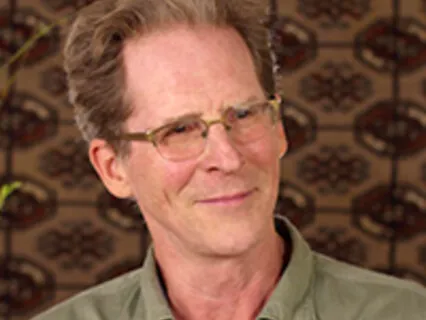
A talk from Byron Brown,
Long-time teacher of The Diamond Approach.
In one way or another,
We've all come here because we want less limitation in our life.
We want some kind of opening,
Openness,
More space,
More possibility.
We are each a human being,
And that's a very mysterious thing.
What is a human being?
In one sense,
We're a glorified animal.
We have clothes and houses and cars and jobs,
All these things that most animals don't have,
That strip away the clothes and everything else,
And we're just an organism,
An animal like most other animals on this planet.
So we have various dimensions to us,
Our physical,
Our instinctual,
Our energetic self.
We have our social self,
The ways we interact in our culture and society and on media now.
We have our emotional self.
We have our intellectual,
Our mental self,
The way we process information and have ideas and opinions.
And we also have a spiritual self,
Which many of us don't really know exactly what that is,
But it points to something fundamental in us,
Something in us that's beyond just our ordinary way of knowing life and knowing ourself,
Perhaps something more encompassing,
More inclusive,
More fundamental.
And in moments in our life when we have some context or situation or experience where we feel our immediacy,
When we feel our sense of being here in a direct way,
In a very strong way,
One of the qualities of that kind of experience is the sense of possibility,
The sense of potential,
The sense that we are something mysterious and something that has many possibilities that we could develop,
We could grow,
We could manifest,
We could interact,
We could create.
We could live in innumerable different ways.
At those times of immediacy we have a sense that we're not so limited,
Almost as if we could get up and walk into a new life,
Create something brand new for ourselves.
And that is a very inspiring kind of place and a very uplifting kind of sense to have.
But much of the time that's not what we experience.
We experience ourself in a familiar way,
Familiar sense of ourself that has certain limitations,
Certain patterns,
Certain habits,
Certain beliefs about ourself,
All of which tend to limit what seems possible.
There's all the physical limitations of the amount of money we have or the amount of money we make or the kind of job we have or the place we live or the color of skin we have or the kind of ethnic group that we're a part of or the kind of family we grew up in.
All these are kind of physical external limitations that definitely can affect what seem like the possibilities for us in our life.
And sometimes it can make us feel trapped,
It can make us feel hopeless,
It can make us feel very limited in what's possible.
But there's another whole dimension of our limitations which is what we're going to be looking at here and that's the kind of inner limitations that we carry with us.
The ways in which we have ideas about ourself,
Ideas about our situation,
Ideas about how other people see us,
Ideas about what's possible,
Ideas about how we should be,
Ideas about what will happen if we aren't the way we should be,
Ideas about what our capacities are.
So these ideas that we all carry,
They're part of our familiar world,
They're part of what makes us who we are in the sense of that's how we know ourselves and we play these ideas out in our life.
We get situations and people to reflect those ideas back to us because we believe them.
So it's those moments when we're in the present in a certain way,
We're immediate,
We're alive in this moment and the ideas go more in the background.
That's when we get a sense of possibility,
Oh I could be whatever I want to be,
I could be whoever I want to be.
And then the ideas come back,
Oh guess not,
There's this and there's that and yeah I have this problem and people would never understand and this and that and so that world gets smaller for us and we are caught again in a familiar world that's limited.
So as we look at our ideas,
As we explore them and question them,
As I'm sure many of you have in one context or another,
Looked at some of these beliefs that you carry that say something basic about who you are and what your possibilities are.
We see that one of the fundamental structural elements of these beliefs and ideas is that there's a right and a wrong in those ideas.
There's a good and a bad.
There's an okay and a not okay.
In fact,
If we look at most of our experience,
When we have an experience,
We've been through some kind of situation or interaction with somebody or something that we try or even go to a movie or go to a party or something and we come away from it,
One of the almost automatic things that we do at some level is to decide was that good or was that bad?
Was that a good experience or would I have been better off not doing it?
Was it the right thing to have done or was it not?
Should I have done something else?
Should I have said that or not?
So there's a very familiar dynamic that goes on often in the background.
We might not be so conscious of it,
But it's always evaluating our experience as to whether it's good or not,
Whether it's bad or not,
Whether it's moving us in the right direction or not.
In fact,
We find sometimes that when we don't know whether something was good or bad,
We feel a little lost.
Well,
What do I do with that experience?
I can't tell whether it was really good or bad.
Sort of had something good about it,
But then I don't know,
I wasn't really so comfortable with it and I just don't know.
And then we don't know what to do with it.
If we know that it's good or bad,
Then we can put it in the right place in our mind.
We can say,
Okay,
That wasn't so good,
We'll move away from that and do something different the next time.
Or that was good,
So I'll put that over there as a good thing I did and I can add more to it the next time.
So this sense of dividing our experience and evaluating it by its positivity or its negativity is a very deep kind of conviction in terms of what we need to do to operate in life.
It's hard to go for very long and not be making that decision about what's happening with us.
We start to feel uncomfortable.
We don't know whether it's okay.
How can I just go through my day and not know whether there were good things or bad things that happened?
If there are just things that happened,
Then I kind of start getting lost.
I start looking for something that I know is really good or even something that's really bad.
Because then I can kind of orient myself again.
So this is a very fundamental pattern that goes back to our childhood really when we were dealing with our family situation and the love and support of our parents.
And we got evidence from them,
Verbal,
Nonverbal,
Physical,
Various kinds of cues that indicated whether the way we were behaving,
The things we said,
The actions we did was good or bad.
And then that seemed to relate to whether they loved us or would support us or would be interested in us.
If we did things and they ignored us,
Then we'd tend to figure that was a bad thing to be doing because we weren't even noticed.
If we did things and they got mad at us,
Then that was a bad thing.
But for some of us,
It also got us noticed when we did something bad.
So that was kind of an interesting bad good thing.
Because some of us didn't get noticed unless we did something bad.
Some of us didn't get noticed unless we did something good.
But this became a very unconscious and automatic orientation towards our own experience and towards our self.
It was whether we were going to be more in the good camp or the bad camp.
Some of us got labeled bad a lot as kids or troublemakers or too loud or brats or whatever.
And so we began to identify ourselves as a bad one.
And then we began to see our experience through that lens.
Others of us were really good.
We did everything right.
We wanted to stay on the good side.
So it was really important to always be conscious of what was going to be a good thing.
And there were those of us who were in the middle who were sometimes good and sometimes bad.
But there was always a pull or a push between the good and the bad,
Between the right and the wrong,
Between okay and not okay,
Between enough and not enough.
These really became this archetype of dividing everything into one side or the other.
It becomes a fundamental structure,
If you will,
Inside our mind.
Things have to fall on one side or the other.
And the ways in which we determine where something falls become standards that we judge and we evaluate our experience by.
So the individual things for each of us,
We all share this good and bad,
Right and wrong kind of differentiation.
But for each of us,
We learn different standards to make that distinction.
For some of us,
The standard was to be quiet,
Be good.
For some of us,
The standard was to stand up for yourself,
Speak your mind.
For some of us,
The standard was to be truthful,
Honest,
Don't ever lie.
For some of us,
The standard was be helpful,
Compassionate,
Caring,
Think more about other people than yourself.
For some of us,
The standard was to look good,
Always pay attention to how you look,
Because people see how you look.
You've got to look good.
For some of us,
The standard was be strong,
Don't let them walk over you.
Be tough.
Some of the standard might be don't listen to what anybody else says,
Just do the right thing.
Some people might be the opposite.
Some might be be sensitive to what everybody else thinks.
Don't step out of line,
Don't let anybody see you doing something that they wouldn't like.
So these are all standards that suddenly make that right and wrong come alive.
Just talking about right and wrong,
Okay,
But once you've got a standard in there that feels familiar to you,
Suddenly there's energy there,
There's a charge there.
Yes,
I've got to be on one side of that or the other.
So this becomes a dominant kind of orientation in us that sets up limitations in our world.
It originally was set up to try and help us survive,
Help us be accepted,
Help us be loved,
Help us get the things we felt we needed as children,
Help us feel like we belong,
Help us feel like we're part of this world.
So it was helpful to us at that time to have this standard that we could look at and try and understand how things worked and how we were going to survive and succeed.
But once it became automatic and we'd grown up to be an adult,
These kind of patterns become a kind of background restriction because they're constantly shaping how we relate to ourselves and relate to our experience.
At a time and in a place now as adults where we don't particularly need that help.
Thank you for joining The Diamond Approach for this talk from Byron Brown.
Please explore more courses and opportunities to learn about The Diamond Approach with us at online.
Diamondapproach.
Org.