Lesson 11 Master Your Meal Planning In this lesson you are going to learn how minimalism can be used to improve your meal planning.
I will share with you the best practices you can use in your day to day meal plan to save you time,
Frustration,
Money and eat healthier.
Remember that your body is one of the most important elements of your life and we are what we eat.
After spending a lot of time perfecting our own meal plan and helping many clients and students improve their approach to meal planning,
We have documented the process and divided into 9 simple steps that you can follow while creating your own meal planning.
Step number 1 is understanding yourself.
What kind of chef are you?
There are a few questions that you can ask yourself so that you can understand how you want to approach your meal planning.
Do you enjoy grocery shopping?
How much time do you want to spend cooking?
Do you have a joy for cooking?
Some people use cooking as self-care and they are willing to spend 2-3 hours a day and they enjoy doing that.
Some other people choose to do other activities but they still want to eat healthier.
So by understanding how much time you are willing to spend that is going to also change how you are going to design your meal plan and how much time you are going to allow for it.
How much storage space do you have?
What are your kitchen skills?
Is your kitchen ready?
It's very important to have your kitchen ready.
Your kitchen is ready when you feel well cooking in your kitchen,
When you can find things easily,
When your kitchen flow feels natural and well and you feel inspired to go into your kitchen to cook.
Sometimes physical clutter,
Not having counter space,
Having too many dirty dishes,
Maybe you try to bake and the baking utensils are in a very inconvenient place.
Things like that can cause frustration and can make the experience of cooking for you frustrating.
If this is the case,
Getting your kitchen ready is probably one of the first steps.
Once you understand what kind of chef are you,
How much time you are willing to spend in your kitchen cooking and how much time you want to spend grocery shopping,
That's when you can get started with the next step.
An exercise that you can do is you can rate from zero to 10 how do you feel right now in your kitchen.
Zero being I don't want to go inside my kitchen because I don't want to go in there and 10 is I feel really well with my kitchen and I feel inspired to cook in it.
So rate from zero to 10 and then reflect about why do you feel that way.
What do you want to change in order for you to feel better?
If you are trying to change your meal plan,
If you are trying to maybe try a new diet,
If you want to make this an important area of your life,
You have to make sure that the physical space,
The kitchen itself,
It's inviting and you feel welcome in it.
So make sure that you break down any challenges and that you take action changing those before we move into the next step.
That is step number two.
Step number two is inventory your tools.
It's very important to be aware of what tools do you have available.
Do you have a bread maker?
Do you have a crock pot?
Do you have pans,
Pots?
You have an oven?
Do you have a barbecue maybe?
By being aware of all the tools that you have,
You can make the cooking time more efficient.
Why?
Because you can plan maybe one or two hours of cooking a week and you can have several tools going at the same time so that they allow you to make more food in the same amount of time.
This is only if you enjoy doing this batch cooking.
Some people,
As I was saying,
Enjoy cooking every day.
That's their self care.
That's how they decompress from the day.
Maybe they share the cooking with their partner or with a flatmate and they have fun catching up.
Maybe they have a glass of wine while they do it and they don't want to change that and that's totally okay.
You don't have to change it.
I only want you to change the things that cause you frustration.
And if you are looking for ways to save you time and be more efficient with meal planning while still eating well,
That's when meal planning can come into place.
So make an inventory of all the tools that you have.
Make an inventory of any other tools that you may use for meal planning.
Do you like using your phone for grocery shopping?
Do you have a specific app?
Just think about all the resources that you have around you and write them down so that you are aware of them.
Step number three is creating a list of your favorite meals.
We all have favorite meals,
A list of at least five to 10 main dishes that we always go to.
Maybe it's like cannelloni,
Spaghetti,
Soup,
Stir fries.
It will be different for every individual,
But it's important to start with things that you know how to make,
Things that you enjoy eating,
And then you can start building up from that list.
But it's important to create a list with the things that you want to eat,
The basic ones.
And then once you have that list,
It's going to be easier for you to create a grocery list.
It's going to be easier for you to plan when you are going to make these things.
What can you prep in advance,
If that's what you want to do.
And once you have that control and master,
That's when you can get started exploring new recipes because you will have the time and the energy to do so.
So grab a piece of pen,
A pen and a paper,
And make sure that you get started creating your own list and have it ready for the next steps.
While doing this list,
You can divide the meals by breakfast,
Lunch,
And dinner.
This is completely your choice.
Some people like to meal plan only lunches.
Some people like to meal plan lunches and dinners.
Some people meal plan everything,
And some people only meal plan dinners.
And some people don't have even a meal plan.
So this is all up to you,
But it can be helpful to brainstorm three to five ideas for breakfast,
For lunch,
And for dinner.
Because that way,
When we go into the next step of the grocery shopping,
That's going to be easier for you to do.
In our personal case,
We do have a board in the kitchen where we have all the days of the week,
Monday to Friday,
And then we have lunch and dinner.
And we actually write down,
Every Sunday normally we write down what we are going to eat the following week so that we know what to expect,
We know what we need for grocery shopping.
And Samantha and myself,
We alternate days.
So one day is Samantha's day for cooking and doing the dishes,
And the following day it's my day for doing that.
That's how it works for us.
It doesn't mean that it's the right system for you,
But this is just one idea of how you can implement this.
Step number four is creating an inventory list of all the food that you have and create a grocery list template.
So what does that mean?
I want you to go through your pantry,
Through your cupboards,
And really become aware of everything that you have.
Maybe you have an extra freezer.
So write down all the things that you have in there,
Because we always recommend to have extra food for sure,
But make sure that you rotate things,
Make sure that you don't let things go bad and expire.
And just being aware of what you have can help you create that meal planning way faster.
When you are planning for your recipes for the week,
If there is something that you need,
That's when you will create your grocery shopping list.
How do you do that?
We do it using pen and paper,
And we also use the board to write down things that we are missing.
For example,
If I go to grab the olive oil and I use the last drop of it,
I will write olive oil.
Or if we use it on a regular basis,
We may have a spare one already in the pantry.
So when I pick the spare one and there is no one left,
That's what I will write to get olive oil in the next grocery list trip.
By doing this,
You are being way more efficient with your time.
When you go grocery shopping,
You make sure that you don't forget anything and you don't make impulse purchases.
Again,
If you are the kind of person that enjoys going grocery shopping and maybe you enjoy doing that every day,
Then maybe you don't need to create a list because every day you go.
But if you want to optimize how much time you spend,
That's when having a grocery list can be helpful.
If you are a phone person,
For example,
And you really enjoy having your list on the phone,
You can use an app or you can use a note or you can use Google Keep.
For example,
I use Google Keep and I share it with Samantha.
We can write down things in there and then the other person can add to that to the same list.
That's another option.
It doesn't matter how you do it as long as you have a system that you understand and that you can follow.
Step number five is actually sourcing your food and creating a budget.
It's important to think about,
Do you want to have a budget for food?
Do you want to understand and limit how much money you spend grocery shopping?
If that's the case,
You can sit down,
You can look at maybe past months,
How much you spent in grocery shopping,
And you can come out with a budget that makes sense to you so that when you are grocery shopping,
You can be aware of trying to stay between that budget that you have decided.
When sourcing food,
It's important to understand where do you go.
Do you go to the grocery shopping?
Do you go to the market?
Do you buy things in different places?
It's important to understand how you do this because if you want to be efficient with your time,
Maybe grouping things together and making sure that you only do one trip to each store will save you a lot of time,
Gas,
Money,
And frustrations.
So think about that.
How do you search your food?
Where do you go and when?
In our case,
We try to go to the market that we have,
The local market here.
Normally every second Saturday in the morning,
We make it an experience.
We go,
We have breakfast with our little Eva.
We spend a little bit of time there and then we do the grocery shopping of the main bulk things that we need,
Like vegetables,
Fruits.
And then after that,
We hit the grocery store for all the things that we cannot find at the market.
And that normally works really well.
And it's enough for us to go every couple of weeks to do this.
So for us,
Once,
Twice a month is enough for grocery shopping.
Again,
This can be different for you,
But just be mindful and be aware of your specific needs and how you want to do it.
Step six is preparing your food.
So you went to the grocery store,
You have all your supplies.
You have the time,
And now you are going to get ready to prepare your food.
Depending how you choose to do this,
It can look like maybe you batch cook for the week.
Maybe you try to spend a couple hours and just make majority of the meals of the week because you don't want to spend time cooking during your week.
Some other people may choose to cook every single day.
You choose that.
But basically in this step,
We want you to be aware of the food preparation and the cooking.
We want you to optimize your effort.
You can use a timer to make sure that you don't miss things and that you are on track.
You can listen to music to make it more enjoyable.
You can make it social and maybe cook with a friend or cook with your partner and make it fun.
And then leverage your appliances.
Again,
When you did the inventory list of your appliances,
That's when you become aware of like,
Okay,
I have a crock pot that I can have going on.
I have an oven.
I have a pot and pan.
I have a toaster oven.
Maybe you have a microwave.
Just think about the things that you want to cook.
What do they require?
And can you cook several things at once?
For example,
In our case,
Sometimes we do like a couple hours of batch cooking,
Samantha and myself,
And then we make a list of things that we want to make.
The last time that we did it,
For example,
We made enchiladas,
Cannelloni,
We make pasta sauce,
We made pizza sauce,
And we made a couple of soups.
And Samantha made a chili in the crock pot.
So we had the oven going to roast the things for the soups.
We were cooking the tomatoes on the stove on a pot.
Samantha had the chili going on on the crock pot.
So as you see,
And then we were back in a few vegetables for the week to make sandwiches and some chicken.
So we had a few appliances going on and that worked really well for us because in a couple hours we were able to produce a lot of food.
This seems overwhelming to you or you are not interested in cooking so much because time is not a problem for you.
Maybe this is not the right approach.
This is why understanding yourself is so important.
In our case,
Some weeks we feel like doing that and some other weeks we don't.
Some other weeks we may cook every day a little bit or maybe every two to three days.
So every week is also different and life evolves and your needs may change,
But it's important to have the options.
If you are aware of your options,
You can then decide how you are going to use your time.
And sometimes you may have more energy and sometimes you may not.
Also step number seven is storing your food.
This is really important too because sometimes if you cook too much and you don't have space to store those things,
It's a problem.
In our case,
We invested in an extra stand-up freezer because when we do these cooking sessions and we make,
For example,
Two or three soups,
Maybe we have 10 liters of soup and we divide that soup into one liter containers.
So we may end up having 15 or 10 or 12 containers of those that if we only had our regular,
Our fridge,
We won't be able to freeze those soups.
By having the extra freezer allows us to have that inventory of food that we will use in the future.
So if you don't have that space,
You have to design your cooking to fit your storage space that you currently have or take steps to optimize how much food you can store by maybe adding a freezer.
We try to do an exercise that is every month,
At least once a month,
We try to use everything that we have and start fresh.
This exercise helps us be able to clean the fridge,
Helps us be able to avoid wasting food because we try to use everything that can go bad.
And the only thing that we really keep sometimes is just some canning things and stuff in the freezer that won't go bad.
But we try to rotate things frequently and that helps us save time,
Save money and avoid food waste.
Step eight is maintaining your system.
Once you understand yourself,
Once you have the sign,
How much time you are going to spend grocery shopping and cooking,
Your kitchen is ready and you know how much storage space you have.
That's when you have to make sure that you maintain that system,
That you maintain your grocery shopping list,
That you maintain the plan that you have created.
And if there are other people involved,
Make sure that you include them in the process,
That they have the option to participate in creating the foods that they like and that they can also cook because that way you don't have to cook yourself.
You can have extra help and you can rotate days or rotate weeks or however you guys want to do it.
But it's very important to be able to maintain the system,
Create a system that everybody understands and a system that is simple enough for you to maintain.
Because if you try to create a plan where you are going to try a new recipe every single day and you're going to go grocery shopping three times a week and you don't have the time,
Most likely you are not going to follow through with that plan.
And the last step is enjoy your food.
This is the most important step.
You have taken so much time and effort to create amazing and healthy food for yourself that is going to nurture your physical body.
Now it's time to celebrate,
Share it with friends,
Share it with family members,
Make it a great experience and enjoy what you have created for yourself.
To make it fun,
For example,
We create sometimes theme nights where we say,
Okay,
Tomorrow night we're going to do curry.
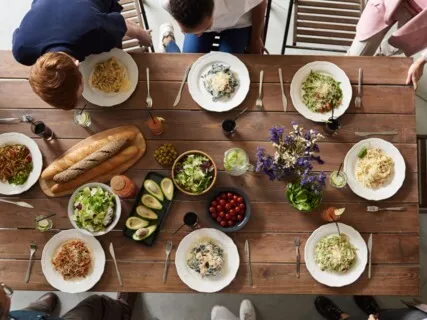
The following Friday we're going to do a pizza night and sometimes we have potlucks with neighbors and that's a lot of fun because everybody brings something that they have cooked and then we share and it's just such amazing food and we have such a great time.
And doing that allows us to be social,
Allows us to eat well and allows us to have a lot of fun.
But always remember that you need to start simple.
Start creating a plan that you can maintain,
That you can actually do and then build from that.
So start this week,
Create a meal plan.
If it's overwhelming to do the entire week,
Try to just get started just doing dinners.
And then after,
When you have dinners under control,
Maybe you do lunches and then over time you can implement the number of recipes and you can make your meal planning more sophisticated.
But start simple so that you can maintain.
So now it's time for you to reflect about these steps.
Make sure that you listen to this lesson as many times as you need and start taking action to create your meal plan that suits your needs and that helps you create your desired lifestyle.