Good morning,
Everybody.
Welcome to another session with me.
My name is Emilio Jose Garcia,
And I would like to start this session,
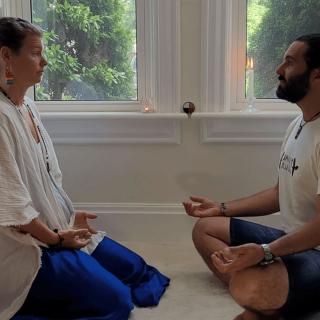
This time management with just a little bit of time for you to take a couple of deep breaths while you enjoy the sound of the singing bowl,
Okay?
Let's just transition from whatever you were doing into being present in this session,
Okay?
So please close your eyes and allow yourself a few seconds of silence and just breathe,
Okay?
It's very,
Very important,
Guys,
To transition from task to task with intention.
That's why I try to start my sessions with some sort of ceremony or something that allows you to just slow down for a couple of seconds and just breathe,
Okay?
So thank you so much for being here.
I am very,
Very excited to be talking about this topic,
Intentional time management.
This is a topic that is inside my heart every single day.
Every course I create,
Every live session I do,
It always comes up because we all have to manage our time.
We all have to manage our time.
Like it or not,
It is the reality.
We are all given 24 hours every day to do with them whatever we want,
Or if we don't set the intention,
Whatever life wants,
Whatever someone else wants,
Whatever your work wants.
And that's the difference and that's something that I'm going to talk about today,
Like being intentional.
That's why the session is called intentional time management because we all have the ability to start becoming more intentional in how we use our time.
So today I want to try a different format to do this session,
Okay?
I would like to just share with you in like 10 to 15 minutes max the content of this topic of today,
The steps that I will recommend that you guys follow.
And then I am going to invite you to share in the chat whatever questions or specific challenges that you are facing when it comes to time management and then we can expand into that specific thing,
Okay?
So I'm not going to be interrupted by the comments while I explain the steps and then we're gonna open the chat,
Okay?
So you are welcome to use the chat,
Write whatever you want,
But I am not going to be paying attention for the first minute,
Okay?
That way this content is more useful and for people who are listening to the recording,
It's just more tangible,
Less confusing,
Okay?
So let's just try.
Are you guys okay trying that format today?
Yeah?
Okay.
So I have divided this session into three steps and these steps guys will apply to anything that I do regarding of being intentional and organization in general.
It doesn't matter if it's paper organization,
Organizing your physical space,
Organizing your meal planning,
Or organizing your time and your schedule.
The three steps are very simple.
Step number one is awareness,
Okay?
Becoming aware.
Aware of what?
What you need to do an inventory of what you are doing.
So where is your time going?
How are you spending your time?
Some people may have a very clear idea on where their time is going.
Some other people,
They are just reacting to life every single minute and the day goes by and if you ask them,
What did you do?
They have a hard time knowing because they have been reacting and it hasn't been very intentional.
So they don't have a block of time intentional to do this task or to do this task.
It's been like multitasking,
Doing a thousand things all at the same time with very little intention and the result of that,
Majority of the times,
It's you feeling overwhelmed,
You feeling unfulfilled,
You feeling that you have no control over your schedule.
So the first step is awareness.
What does that step entail?
Just understanding where your time is going.
How can you do that?
You can start monitoring where your time is going.
You can do that using a journal.
You can do that using an app in your phone that you track what you are doing and then yes,
It requires a little bit of your time.
An investment of your time wants to become aware but then you are going to start setting intentions and you are going to start becoming more intentional in how you use your time and you are going to start doing the things that you love more and stop doing the things that don't matter.
Okay,
So awareness is the first.
Also it's really important to understand what are you facing when you are trying to schedule your time because many,
Many times I see people that I work with trying to put something in the calendar and they feel that they have a time management problem but they don't have a when problem.
When am I going to do this?
That's not their problem.
The problem is how am I going to do this?
And that how is uncertain and because they don't know how to do it,
When they are trying to schedule that task,
They feel that they don't know how to when to schedule that task and then they feel that they have a time management problem but it is not a time management problem.
It's a how problem.
Okay,
That's very important to recognize because when you have a how problem,
With that problem you have a lot of emotional baggage coming into that.
So you are feeling that you procrastinate,
You are feeling overwhelmed,
You are feeling that you are not good enough,
You are feeling that you don't know how to do it and you are failing.
There is a lot of emotional baggage coming with that how problem but that's not a when problem.
Okay,
So that's really important to understand.
So becoming aware of where your time is going,
Becoming aware of the task that you have to do.
So it's important to understand what do you must do,
What do you want to do and then identify when you are doing those things.
So what is a must do?
You must sleep,
You must eat,
You have to do specific things throughout your day and your week.
It's non-negotiable.
You have to take care of your children if you have them.
You have to spend time grocery shopping if you want to have food at home.
You have to spend time cleaning your house if you want to have a clean house.
There are specific things that need to happen on a daily,
Weekly,
Monthly basis.
There are other things that are optional.
Maybe you are doing a lot of them but when you really stand back and look at things,
I'm sure you can say no to a lot of things that you are doing that you don't need to be doing.
So this is the awareness process,
Okay?
You understanding that,
Okay?
So step number one is awareness.
Step number two is action.
So once you are aware,
Once you understand where your time is going,
And thank you,
Thank you,
Zeus,
For writing that on the chat,
It's very important to start thinking about those must do,
Want to do,
And then start thinking about when am I going to do these things,
Okay?
Start becoming intentional about,
Okay,
I want to read more.
I want to exercise more.
I want to spend more time with my family.
I want to start my own business.
I want to Y,
X,
And Z,
Whatever that is for you.
Once you become clear about that,
Then you start looking at your week and you start thinking about when am I going to find the time to do this task,
Okay?
And that's when I introduce the exercise called Designing Your Ideal Week.
That exercise is just very simple.
You have a piece of paper and then you have columns,
Seven columns.
Monday,
Tuesday,
Wednesday,
Thursday,
Friday,
Saturday,
And Sunday.
And then you have time slots.
My time slots go from 7 a.
M.
To 11 p.
M.
And then I will start writing down when am I going to sleep.
I go to sleep at 11 p.
M.
And I wake up between 7,
7.
30 a.
M.
,
Okay?
So that's sleeping time.
And then when do I eat?
So I have lunch at 12,
I have dinner at 6,
And then one day I am responsible for doing that.
And then I am going to meet my wife and then we rotate.
So I know that that's a must do for me.
I have to put food on the table.
And then when am I working?
When am I taking care of my daughter?
When am I going to the gym to play squash?
And then I start putting inside my week the blocks of things that I am doing.
For those of you who are already feeling overwhelmed with this exercise,
It's perfect.
It's beautiful and it's normal.
This is the first step of the process,
Becoming aware.
And then all these emotions are going to start coming up for you.
That's normal.
Just sit with them.
Observe them.
Why are they coming up?
And it's okay if you're feeling chaos.
If that's your case,
Then you will approach this exercise in a different way.
You will have the same piece of paper in front of you with the same columns and then instead of you trying to color in what you want to do,
You are going to start monitoring what you are truly doing now.
So you are going to start monitoring the reality of your week.
And then you start tracking.
I woke up today at 8 a.
M.
I had breakfast.
I check emails for half an hour.
And then I took a bath.
And then I went to the office.
And then I,
Whatever you do,
Start tracking those things.
And yes,
It's a little bit time consuming.
But let me ask you one thing.
Right now,
How is your time management working?
Is it working well or are you overwhelmed?
Is it working well and are you in a flow or are you frustrated?
Because if you are not frustrated and you are on a flow,
Then maybe you don't have to change anything.
But if you are feeling frustrated,
If you are feeling overwhelmed,
If you are feeling unfulfilled,
If you are feeling like you never have time to do the things that are important to you,
I will say that this exercise is going to help you.
Because you do it one time,
You design a better week,
And that week is going to repeat over and over the rest of your life.
So one time investment of time,
Maybe one or two weeks of you monitoring your time,
Maybe one or two weeks of you tweaking your week,
And then you have a beautiful week for the rest of your life.
Is that a good investment?
I would say it is a great investment of time.
My life has transformed with this exercise.
My wife's life has transformed.
Thank you to this exercise.
So that's the action,
Right?
Starting to set intentions.
Starting to think about what are the categories that I want to see in my week.
I want to see a work category.
I want to see a family category.
I want to see a couple time category.
I want to see a me category.
I want to see a squash,
Playing squash category.
I want to see a course creation category.
So you start thinking about the main categories that come to your mind.
And then you start thinking about when am I going to put them in my calendar,
In my week.
Okay.
So there is a sentence from Peter Drucker that says,
There is nothing less productive than to make more efficient what should not be done at all.
Okay.
Let me repeat that.
There is nothing less productive than to make more efficient what should not be done at all.
And this is the secret from time management guys.
This is not about becoming more efficient and faster at doing things.
That's a part of the process,
But the first step is for you to decide what are the things I want to spend time doing and really reassess them,
Really prioritize them and really be intentional.
And say no to all the things that don't matter to you,
To all the things that don't fulfill you,
To all the things that you don't want to be doing.
Of course,
There are things that are must do.
You have to do them unless you can pay someone else to do them.
So in that case,
That's when the action also,
I invite you to,
How can you become more efficient?
Okay.
So in my case,
Personal life,
My wife and I,
We have to eat every day and we enjoy eating healthy food.
So that's a task that we want to do and we must do to stay healthy.
So how we do it is like,
How,
This was my questioning Emilio,
How can you create a meal plan where you eat healthy,
It's between our budget and it takes the least amount of time.
That was my,
Those were my conditions.
And then I came up with a system.
So I'm going to create a meal plan for a week with the meals that I enjoy and I know how to do.
And then I go to create a grocery shopping list,
And then I'm going to optimize my grocery time.
So because I only go once every two weeks,
I get everything that I need.
Everything is clear.
I understand what to cook and when,
And then I put food on the table that is healthy and it's easy and simple for me to do.
That's one idea.
Okay.
So start thinking about the frustrations that you are experiencing.
And this step two of action is going to allow you to then start taking a different approach.
Okay.
So the first step was becoming aware.
Second step was action.
Start taking action,
Start changing things,
Taking a different approach,
Testing.
Okay.
And then see how you feel and optimizing the things that you want to do in a more efficient way.
And then the step three is the maintenance.
So the maintenance involves you testing what you are creating,
You tweaking what is not working,
Because it's not going to be perfect from day one.
This is a process that is going to be unfolding.
Okay.
So in the maintenance,
You are going to look at your week.
You are going to reflect about how you felt.
What did you do?
When did you do it?
Did it feel right?
You want to change it for the following week.
And then this is when you start becoming aware of your energy cycles,
Your creativity cycles,
The frustrations that you experience,
And then you have the opportunity to start changing them.
Okay.
And then in that maintenance,
You are going to test,
You are going to tweak,
You are going to reflect from your real information from last week.
You are going to reflect about what you truly did and how you felt.
And when you are doing that exercise of tracking and monitoring your time,
It is really important for you to write comments about playing yoga,
Doing yoga in the morning felt great.
Or maybe,
Wow,
Doing yoga in the morning,
I just didn't enjoy it because I wasn't there.
So I'm going to try next time to try in the evening or maybe midday.
When I was playing squash,
I remember it's like,
I don't know when is my best time to play squash.
So one week I went in the morning,
7am.
Following week,
Lunchtime.
Following week,
I did an evening.
And then I discovered very quickly that I played the best squash midday.
Okay.
That's my prime time.
So I play squash in the middle of the day,
And that also allows me to change the energy from me being sitting here doing something.
I go to play squash.
It's something social.
It's something that requires movement,
Exercise.
It's fun.
It's playful.
It gets me out of the house and back.
And then I sit and I can do something else with more energy and more intention.
So that gives me energy.
It doesn't drain me.
So my energy cycle gets increased by doing that task.
Okay.
So start thinking and becoming aware of your energy cycle,
Your creativity cycle,
And start thinking about the activities that you need to do in order for you to promote your own self care,
Your own mental health.
Start mixing those activities in a way that makes your day and your week beautiful to you.
Whatever that means to you.
But you have to discover that.
And the way for you to discover that is by following these three steps that I just shared with you.
Okay.
So do you guys want to know a few strategies about time management before we go into questions?
Or you just want to jump into questions right away?
Yes.
Okay.
Very quickly.
So some strategies that you can improve,
But this is the main process.
Okay.
Those three steps are key.
If you are not aware of what you are doing,
If you don't know where your time is going,
And if you don't set the intention about what you want to be doing,
All these strategies are going to be worthless because you are going to be optimizing things that you don't want to do in the first place.
Okay.
So some of the strategies,
First one,
Remind yourself being busy doesn't equal being productive or being intentional.
Okay.
So being busy doing stuff doesn't mean that you are being productive and it doesn't bring you fulfillment.
Okay.
Because you cannot be busy,
Only do two things in one day,
But those two things are amazing to you and you feel that you have had the best day of your life.
And some people are doing a thousand things and they are drained at the end of the day and they don't even know what they did.
And they go to bed feeling like chaos and overwhelmed.
So start being proactive.
Okay.
Start thinking about what do I want to see in my life?
Okay.
Guys,
Going back to the basics will improve your time management and your intention.
Eating well,
Drinking enough water,
Creating a combination of activities that promote your energy.
So movement,
Playfulness,
Communication and connection with other people,
All those things in different amounts for each people are important for you to create a week where you feel great.
Okay.
So start creating your self-care list can be very helpful.
It's about what can I do to raise my energy in just one or two minutes.
In my own experience,
I do juggle my balls one minute enough to put me in a state of like,
Wow,
Playfulness and gratefulness and happiness.
Playing with my daughter,
Going for a walk around the block.
Very simple things.
Breathing,
Deep breathing,
Doing this exercise,
Like raising my arms really quickly while I breathe like.
I do this like five times and my energy rises.
So start thinking about what can you do for self-care to increase your energy?
Okay.
The Parkinson's law is very important.
Parkinson's law says work expands so as to feel the time available for its completion.
What does this mean?
That the work will expand to whatever time you have available.
So if you want to do a specific task and you don't set a deadline,
That task is going to linger forever.
Okay.
If you set a deadline,
Then you are going to complete that task in less time.
And then another thing shows up here.
Perfectionism.
Okay.
Many of us,
Myself included,
Sometimes I want to do something so,
So,
So,
So,
So perfect that I will never get started because it's never going to be that perfect.
So I will fail before even getting started.
So I will not get started and I will procrastinate.
Okay.
And I will,
That's a how problem,
Not a when problem.
And that happens to a lot of us.
Okay.
So getting started in perfect action beats perfection every single day.
Okay.
So getting started in perfect action will beat perfectionism because perfectionism doesn't exist.
It's an illusion.
Okay.
So increase your mental health first,
And that will increase your productivity.
That will increase your awareness.
That will increase your alignment with yourself.
Okay.
That will increase your energy,
Your creativity,
Everything.
Self-care is everything.
If you are not feeling well,
Mentally,
Emotionally,
And physically speaking,
How much energy are you going to have to tackle your day?
How much energy are you going to have to do anything?
You're going to be just dragging yourself through the day.
You are not going to be excited,
Inspired,
Motivated.
Same with thinking about being intentional.
If your day is filled with things that don't fulfill you and you are not looking forward to doing them,
How likely are you to procrastinate?
How likely are you to be excited if what you are looking forward is something that appeals to you,
Is something that gives you energy,
Is something that you are excited about.
So that's the difference.
You get to control.
You get to create what you want to see in your life.
Another rule for time management,
Guys.
Whatever you have done until now,
It doesn't matter.
Okay.
It doesn't matter.
I don't care how many times you failed.
I don't care how many times you procrastinated.
I don't care how many times you didn't schedule things.
What matters is the present moment.
Right now,
You have the opportunity to create whatever you want.
Okay?
So when it comes to scheduling time management,
Being intentional,
You get to decide whatever you want to see in your life right now.
And moving forward,
Your actions are going to create your future.
So start thinking about who do you want to become?
What is your identity?
Okay.
What areas of your life you want to fulfill?
What kind of activities do you want to see yourself doing?
And start doing them now.
Okay.
And if you have no idea,
Allow yourself a testing period of time now.
Just to explore,
Just for the sake of exploring.
You don't need to have all the answers right now.
It doesn't matter if you have no idea what you want to do.
Your intention then is,
I am going to discover what I want to do.
And that's your intention.
It's not specific,
But it's very specific at the same time.
So you get the idea.
Okay?
Clear communication with your loved ones.
Clear communication and creating healthy boundaries is very important when it comes to time management.
Okay?
And then to finish up and open up for questions,
Some of the things that I share all the time.
The Pomodoro Technique.
It's a beautiful time management technique that uses a timer.
And then you can set specific intentional amount of time to do specific tasks.
Reducing distractions,
Reducing phone usage,
Starting to be more intentional about priorities,
About distractions,
Interruptions,
Start creating windows of time,
Protected time to do the activities that you want to be doing.
Okay?
And avoid,
Avoid distractions as much as you can by letting people know what you are doing,
When you are doing that thing.
Okay?
So task batching.
Looking at your life and then batching everything together.
So start thinking about categories more than specific to-dos.
Okay?
Don't,
I don't care about the specific to-dos that you have.
I care about the main intentions of your life.
Okay?
So our main intention can be writing a book,
Can be spending time with family,
Can be working on that specific project.
You have specific intentions in your life and that's your goal.
That's your intention.
How you do that,
It doesn't really matter because there are a thousand ways of doing the same thing and you will get to the same destination.
Okay?
And,
And that's pretty much,
I don't want to tell you more,
More stuff.
I would like to answer some questions now of specific challenges that you guys are experiencing.
And by doing this,
Everybody else is going to learn because real life and real examples are the best teachers.
Okay?
So I am opening the chat now for questions,
Specific questions.
Please be specific.
The more specific you are,
The more I will be able to dive deeper into,
Into your challenge or question.
So time for questions,
Guys.
My question is above.
Okay,
Sorry.
I don't know what it is.
There are a thousand things on the chat.
Can you copy and paste it please?
I just don't know.
This is going to be recorded.
Yeah.
You have to copy and paste your question.
What kind of calendar?
What kind of calendar do you use Emilio?
I use Google calendar.
Okay.
I use Google calendar and I do the exercise of my ideal week.
I do it on my journal first thinking,
And then I don't have distractions.
And then I transfer that to my Google calendar.
And when,
What I do is I write every task repeats weekly.
So I have a window of time.
I put them when I have to take care of my daughter,
Eva.
I put them when I'm doing lunch.
I put them when I'm working one-on-one with clients.
That's always Wednesdays.
I have a couple nights and couple morning twice a week.
So I have all those things as events and I repeat them weekly.
And I have them share with my wife because we both work in this business and sometimes she needs to book clients.
So we see each other's calendar and we don't have to ask ourselves anything.
We know when we can book things.
So Google calendar,
But it doesn't matter what calendar you use.
As long as you always go there.
Could you share examples of your categories again?
Yeah.
So some of my own personal categories are,
So if,
If you look at my week that I just created it last weekend,
I have Eva.
Eva is my daughter.
Okay.
So I have Eva time.
So this is my week.
I have seven columns and then you can see Monday to Sunday.
So the orange is Eva time.
So I have created blocks of time to take care of my daughter because I'm in charge of her.
And I have green,
Green blocks of time that that's my work.
As you see Tuesdays and Thursdays are my online days.
So I condense inside timer workshops,
Inside timer lives,
Workshops that I do on my own,
Support calls that I offer on my own.
All that stuff happens on Tuesdays and Thursdays.
So Wednesdays is where my wife and I,
We work one-on-one with clients and then Mondays and Friday mornings are fluid days.
Fluid days means that I don't have structure,
But I already have a list of things that I want to do,
But I don't have a specific time of when they need to happen.
So I can be creative and depending how I feel,
I will choose one task or the other.
Okay.
And then I have squash.
I have yoga.
I have a me category.
And then normally on me category,
I play my guitar.
I juggle my balls.
I may go for a walk.
I may see a friend.
I may go down to the basement and do a project,
Cutting or doing something with wood.
So that's me time.
And I try to do something away from devices.
Those are some of my categories.
Okay.
What is the difference between tasks to do list and being intentional?
Can you give me clear definitions please?
Yeah.
So Amy tasks and to do lists.
Tasks and to do lists are tasks that you are going to be doing so that you can get somewhere.
Okay.
So for example,
Your intention can be,
I want to write a book or I want to start a blog.
I know that you want to start a blog.
So let's,
Let's take that example.
I want to start a blog.
That's an intention.
That's a main intention.
Inside that intention,
Inside that goal,
You are going to have a hundred,
A thousand tasks.
It doesn't matter how many,
But you are going to think about what do I need to start the blog?
Okay.
I need to find a platform.
I need to do a social media strategy.
I need to write the content.
I need to find photos.
So you start coming up with,
With things that you have to do,
And those are tasks,
But there are different ways of starting a blog.
So getting to having your blog finished and published,
That's the main intention.
How you do that,
It doesn't matter as long as you get there.
So the tasks can change.
The approach can change because you can have a hundred tasks and maybe one day you decide to hire someone and all of a sudden,
All those tasks are gone because someone else is doing them for you.
So different approach,
Different tasks,
Same result,
Same intention.
You have your blog finished.
And this is why it's so important that you define,
Declare your intention clearly.
What do you want at the end of this process?
And then that's going to allow you to be intentional and that's going to allow you to flow and change your strategy,
Your approach as many times as you need until you get there.
Do you freehand journal daily?
Alexa,
Sometimes I do,
Sometimes I don't.
My wife does it daily.
I don't do it daily.
I do it when I feel like it.
I keep my to-dos in my journal,
But I don't have a thousand to-dos because I have blocks of time in my calendar.
This is how I organize my tasks.
So you see that in here I have blocks of time.
So one block of time is workshops,
For example.
So workshops on Inside Timer for me involves,
I need to come up with ideas.
I need to write a description.
I need to send that to Inside Timer.
And then once they publish that,
They are going to give me that,
They're going to publish it for me.
So that's the outcome that I want.
I want to have a published workshop that I can offer you guys,
For example.
So I will have a Google Keep or I will have a dedicated page on my journal that is going to be called Workshops Inside Timer.
And then inside that page or that Google Keep or whatever application you guys want to use,
You are going to keep track of everything that you need to do.
So when that intentional block of time comes,
I am going to sit down and I am going to only look at that specific list,
At that specific page of my journal.
And then I don't get overwhelmed.
Anytime I have an idea of things I have to do,
I will place them in the specific list.
And then when I am allowing myself time to do that specific category,
I will look at that list.
That's how I do it.
How you do it,
It doesn't matter as long as you always go to that specific place.
So if it's your journal,
Always go to your journal.
If you decide to have your house church on a board in the kitchen,
Always write them there.
That's what we do.
But we don't have a thousand things to do there.
We have three to five mugs.
And we get them done.
So there has to be a balance between how much you write and how much you do.
Okay?
So different approach for different folks.
Intention is to be specific.
Eyes for feeding in self-care for people who define their worth through work.
So IV,
When it comes to self-care,
I will encourage everybody to create a list.
Okay?
A self-care list is something that you can create where you are going to remind yourself of the activities that make you feel well.
Those can be very simple.
Those can be deep breathing two times,
Three times.
Closing my eyes for like 10 seconds.
Going for a walk.
Jumping up and down 10 times.
Playing my guitar.
Petting my pet.
Going for a walk.
Listening to a song that uplifts me.
Listen to a course.
Listen to a recording on Inside Timer that makes me feel well.
Whatever that is,
That's self-care.
So I will say,
What is your frustration?
And once you understand your frustration,
Start taking steps to change it.
In my case,
My frustration was I am sitting down too long.
So I need to mix my energy up a little bit.
So what can I do?
So as you see,
I have things very conveniently placed here.
So I am sitting here and then what do you see right there?
It's my guitar hanging.
Okay?
And then it's right there.
And then if I were to show you my bedside table,
You will see my juggling balls there.
And you will see my deck of cards there.
And then I have my singing ball here.
And then so I have a variety of things that will distract me,
That will allow me to experience playfulness very quickly.
I have my little speaker right here.
And then I play music that makes me feel well.
Okay?
So start finding the things.
I have my coffee because coffee comforts me and really makes me feel well.
So start thinking about what things can you incorporate in your working environment.
And then that they don't take time.
You can do them easily.
And then when you do them,
You feel better.
Okay?
How do you use the Pomodoro Technique at work?
For how long?
And do you switch between tasks?
Or do you prefer to finish one and only then start another?
Baby,
Pomodoro Technique,
I will show you how it works,
But you can customize it for your own needs.
Pomodoro Technique,
You have a timer.
I will recommend to have a timer that is not on your phone.
Because that way you won't get distracted with notifications,
Emails,
Social media,
Etc.
I will recommend that you put your phone in a different room.
The ringer can be on if you are expecting a call or something.
But just be intentional about that.
And then you set the timer normally for 15 to 20 minutes.
I can do up to 40 minutes to an hour and keep my concentration.
But that depends on every person.
The official method says 20 minutes.
Okay?
So you set the timer for 20 minutes and then you choose a task.
You do that task.
When the timer goes off,
You take a five minute break.
And then you do another 20 minutes.
And then another five minute break.
Another 20 minutes,
Another five minute break.
And then after three 20 minute chunks,
You do a longer break.
Normally 15 to 20 minutes break.
And then you can start another Pomodoro.
So a Pomodoro is three sets of 20 minutes followed by five minute break.
And after three times of 20 minutes,
You will have a longer break.
Again,
I will invite you to test that idea.
For some people,
They do five minutes Pomodoro and some people do 60 minutes Pomodoro.
And anywhere in between.
So start thinking about how much time can you concentrate for?
How much time does your task require?
In my case,
If I am creating a course,
I can go for 60 minutes no problem.
Even longer because I am in the zone.
I am creating a course.
And sometimes my creativity flows one day and the next day it doesn't flow at all.
So when it flows and I feel it,
I will use my time to prioritize that task.
Because I am feeling it.
Sometimes you cannot force creativity to show up.
It just comes when it comes.
But I notice that when I practice self-care,
My creativity keeps coming very quickly.
When I don't practice self-care and I just let my day control me,
My creativity decreases a lot.
Okay,
That's what I notice for my own personal.
So that's why I try to do tasks one or two hours and then I take a nice break.
And sometimes I play a game with my wife,
Sometimes we go for a walk,
Sometimes I cook lunch or dinner,
Sometimes I go snowboarding or rollerblading or to see a friend.
And then I come back and I keep doing whatever I was doing.
If you love coffee mugs and also minimalism,
How many do you have?
So two of these.
We just got a coffee espresso maker and I only have two of these.
So I just drink my coffee and I wash it,
Dry it and put it on top of the coffee maker.
That's what I do.
I don't pile coffee mugs.
But in the COVID we have six big mugs.
Because that's how much space we have.
Okay,
So what else do you have?
Once in the flow.
Good point.
Am I understanding the overall process?
Start with a few weeks of tracking time,
Clarifying tension.
Yeah,
So Amy,
Yes,
Absolutely.
So you need to become aware first.
Some people will be aware already of the things that they are doing and the things that they want to do.
Some people have no idea because they are stressed out and in chaos.
So if you have an idea,
You can get started by deciding your ideal week and starting to set the intention for your week.
Okay,
If you have no idea,
You will start tracking your time.
And I recommend at least one full week.
Two weeks better.
And then you will reflect about those weeks and then you will decide how to tweak the week to make it better for you.
That's what I have done myself.
And that's what I do with everybody who is trying to do time management better.
Okay.
So any more questions,
Guys?
It can be helpful to turn off all notifications when working.
Yeah,
Amazing.
T.
T3.
I like your name.
So when it comes to notifications on phone,
This is what I do.
You can do whatever you want.
Okay.
But this is what I do.
I don't have any notifications on.
My phone doesn't beep.
My phone doesn't ring.
My phone doesn't vibrate.
The only thing that vibrates is text messages and phone calls.
Phone calls,
I don't get a lot of them.
And when I get some,
If I don't know who they are,
It goes to voicemail and they will leave a voicemail.
And then when I feel like it,
I will return the call.
Okay.
So text messages is like a kind of like a priority for me.
Everything else is not a priority and it can't wait.
So if I am on working mode,
Nothing is going to bother me other than a phone call from my wife or a phone call from daycare right now.
Those are the only two things that I will pick up my phone for.
Anything else,
It can't wait.
Okay.
So again,
You may have a job that maybe requires you to be present.
That's a different story.
Then you have to be present.
But you can decide what is going to interrupt you and what is not going to interrupt you.
I also recommend the book Digital Minimalism.
You read that book and there is a challenge of being one week,
Even one month doing a digital detox.
Guys,
I did that for a week.
Amazing.
Everybody can benefit from doing that.
Okay.
Because you will discover a lot of things.
You will become way more intentional in how you use your devices and then moving forward,
You are going to decide what you keep and what you don't keep and how you are going to allow for that to unfold for you.
Okay.
Digital Minimalism by Carl Newport.
I think it was the name.
Digital Minimalism by Carl Newport.
I believe that was his name.
Okay.
So any more questions,
Guys?
Sorry if I miss your question.
Please copy and paste it.
What do you suggest?
What do you suggest when your intentions plan routine goes awry because wake up late and don't have time to complete what's needed to make obligation on time?
Okay.
Beautiful point.
This is going to happen to everybody,
Myself included.
What you do when that happens.
So you set your intention,
You set your day,
And then the next day comes and then you wake up late and then you drop the ball and then the day goes bananas and you just feel that you failed.
Please do not feel that way.
Okay.
I want you to change the approach here.
I want you to first,
I want you to celebrate that you are even thinking about being intentional.
Celebrate that.
Hello.
Yeah.
I am being intentional.
I am in the process of becoming intentional.
Okay.
I created a list.
So celebrate that you created a list and okay,
Today I failed.
I didn't fail.
Today,
I dropped the ball,
But tomorrow,
What can I do so that tomorrow this doesn't happen?
Okay.
So change the approach.
It doesn't matter what you did.
I repeat this.
It doesn't matter what you did before.
What matters is what are you going to do moving forward?
So I will celebrate the hell out of you trying to be intentional and then instead of you blaming yourself,
Feeling guilty,
Being moody,
You just say,
Okay,
Today it didn't work out.
That's okay.
What can I do tomorrow to make this work?
Maybe I can change my approach.
Maybe I can put my alarm clock.
Maybe I can get started listening to something inspiring.
Maybe whatever that is for you.
Try to create a different approach,
Different system so that you can follow through and you are going to drop the ball.
Not once,
Not twice,
But a lot of times because you are trying to create something new.
So be gentle with yourself,
Celebrate every single win.
Even if you fail three times and then you do one thing,
It doesn't matter.
One win over three fails,
It's better than no wins at all.
So every time you do something,
Celebrate the hell out of it and always think,
What can I do tomorrow to make this better?
How can I set myself up for success tomorrow?
That's what you have to focus on.
Forget about,
I dropped the ball,
I failed,
I'm not good enough.
No,
I don't want any of that.
You are beautiful.
You are perfect.
You are here.
You are trying.
So you are in the process of.
We all dropped the ball,
Need to be mindful of how we talk to ourselves.
Please be mindful.
Don't be mean to yourself.
Guys,
The fact that you are here,
The fact that you are listening to this session,
It's telling me that you are trying to change.
You are trying to be more intentional.
It's not going to happen overnight.
Okay?
This is not going to be a process that,
Okay,
I'm going to be intentional.
Tomorrow I'm going to be intentional and everything is going to be beautiful.
No,
It's not going to be like that.
It's going to be a roller coaster of emotions along the way.
You are going to face resistance and that's normal.
Okay?
Yeah.
Practice,
Practice,
Practice.
The best,
The best way is to take imperfect action,
Consistent,
Imperfect action beats anything else.
Okay?
So don't aim for perfection.
Just aim for something different,
For a little bit of progress every single day.
Now,
Going to get my old alarm clock from the basement right now.
Shut on.
We don't have phones on the bedroom.
We went back to old fashioned alarm clocks years ago,
Probably three or four years ago,
And we have a new policy of no phones in the bedroom.
So we don't use the phone for alarms.
We don't have the phones when we go to bed and we try to put the phones,
We have a charging station in the living room.
That's how we keep notifications,
Distractions away.
And we have intentional time in the bedroom when we are here.
We read,
We may watch a show with the computer,
We may talk,
We may go to bed,
But we don't have distractions.
So the phone is not the last thing and the first thing that we look at.
Okay?
And the alarm clock is there.
And let me tell you one thing.
Once we discovered our ideal week,
We never use the alarm clock anymore because we wake up naturally at the right time.
And that's,
That's beautiful.
Okay.
Progress over perfection.
Amazing,
Lanny.
I love it.
Okay,
Guys,
Any more questions before I go?
I have time for one or two more questions.
What were the three things again,
Please?
Yeah.
You'd step one,
Awareness,
Becoming aware of what you want,
What you need,
What frustrates you,
And what you want to see in your life.
And the intentions you want to set for your week,
Day,
Week,
Month,
And year.
Step number two is taking action,
Actually putting things in,
In,
In integrating those things in your day to day.
And then reflecting about how things are going,
Right?
Like,
Uh,
I put this exercise block here.
How did it go?
And write comments.
How did you feel?
Did you like it?
Would you change it next week?
And then once you start taking the action,
Then you maintain.
Step three is maintenance.
So reflect about what happened last week,
Reflect about how you felt and then tweak things as you need to create a better week,
To create a better flow for you.
Okay.
And then test,
Tweak and repeat,
Test,
Tweak and repeat.
And then once you have a system that feels good to you,
You just have to maintain it.
Okay.
And then every time life changes,
Make sure that you reassess your week because your needs may change.
Okay.
Okay.
Okay.
Any more questions?
How much of your day do you schedule every hour or just some hours?
Nicole,
Great question.
There are different approaches to this.
Okay.
So approach number one is you schedule all the time that you want,
But I don't like that.
I myself,
I have schedule in the calendar.
The things that happen need to happen at a specific time.
So I have to take care of my daughter at a specific time.
I have to cook lunch at a specific time.
I have to be here for a live session at a specific time.
I have to do my workshops at a specific time.
Okay.
And I have to work with clients one-on-one in their homes at a specific time.
And if a friend calls me and they told me,
Can you come tomorrow at five to help me pay my house?
If I say yes,
I will put that in my calendar.
Everything else for me is fluid.
What does that mean?
My Mondays are not,
There is nothing in the calendar.
It doesn't mean that I don't do anything,
But it's a day that I wake up and then I kind of feel the day and I decide what I want to do at the moment.
So what's my creativity telling me today?
Okay.
I'm going to work on that coach.
I feel inspired to create that podcast episode.
I feel inspired to go snowboarding.
I'm not going to work today.
You know what I mean?
I get,
I allow time to be fluid and I have structure.
So I do a mix of both.
But you have to find what makes you feel well,
And you will discover that by testing different ideas.
Okay.
Just allow yourself to test different ideas and then reflect about what you did and you will discover very quickly what you liked and what you didn't like.
What is your podcast called?
Make my podcast is called your thriving lifestyle.
You can find it everywhere.
And I have all the recordings.
I am uploading all the recordings.
I just started a book last weekend.
I just had an inspiration and guys in a matter of four hours,
I had a podcast created and available in every platform.
How crazy is that?
This is what creativity and inspiration can do sometimes.
Okay.
So last question.
And then I have to guys let you go because I have a support call after this.
When working for self,
It's very,
Very hard to allow that free time.
Especially if not earning enough yet.
T this is why you have to start setting the intention about when am I going to practice self care and don't let you deserve self care.
Doesn't matter what.
Doesn't matter if you are not earning anything.
If you are earning a lot,
If you are looking for a job,
If you are not,
It doesn't matter your situation.
Self care.
You can always find a few minutes a day for self care.
A few minutes.
You always have a few minutes and when you practice self care,
You are going to find more creativity.
You are going to be more inspired.
You are going to see more opportunities and that's going to impact the way that you're going to make money.
That's going to impact the way you are going to show up.
That's going to impact the way you are going to look at possibilities that come your way.
If you don't practice self care,
You will never see those things because you're going to be drained.
You're going to be feeling bad in a negative mood and who is going to hire someone that is in a negative mood.
How likely are you to find an opportunity?
How likely are you to find an opportunity when you are smiling,
When you are happy with yourself,
When you understand that you are in the process of earning money.
You are in the process of finding your next gig.
You are in the process of being more intentional.
So take that approach instead.
I am taking care of myself so that I can show up with more energy,
So that I can give more,
So that I can discover what I'm good at and share it with the world.
That's what you have to think about and things will start unfolding for you beautifully.
I promise they will.
So guys,
I have to go now.
Emilio,
Can we find these recorded sessions on your podcast?
Charlotte,
I am going to start posting them there too and I'm also trying to get them on Inside Timer.
I just have a backlog of a thousand audios that I didn't upload yet,
But I am hoping to have them available everywhere.
So hopefully you will have them soon.
This session you can find them,
If you go to my About tab on my profile on Inside Timer,
Go to the link in there and you will find the recording there today.
Okay?
Okay guys,
I have to go now.
Thank you so much for being here.
I hope that you guys get started being intentional.
I hope that you guys took some takeaways from today's session and I would like to invite you guys to transition into whatever you are about to do now.
Okay?
So please,
Close your eyes.
Take a couple of deep breaths,
Okay,
And just visualize what are you going to do now?
What is your intention for the next thing that you are about to do?
Maybe you are going to stretch your legs.
Maybe you are going to go and have lunch.
Maybe you are going to call someone.
Maybe you are just going to read.
Maybe you are going to go back to work,
Whatever that is,
Just do it with intention.
Okay?
I hope you guys have an amazing rest of your day and I hope to see you in the next session.
Okay?
Bye bye guys.
Have an amazing day.