Good morning,
Everybody.
Welcome to another session.
My name is Emilio José Garcia,
And today we are covering the topic of executive functioning skills.
What are they?
How do they work together?
And how do they manage our lives?
Before getting into the session,
I would like to do a quick practice with you if you are open to it.
And I did this in the last yoga session.
I went a couple days ago.
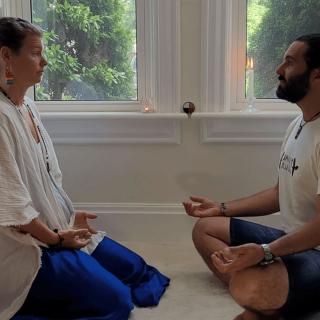
So I want you to sit comfortably if you can,
Okay?
I want you to close your eyes if you can.
And I want you to place your right hand on your forehead,
Okay?
It's like if you were taking your own temperature.
And then you can place your left hand on your chest,
On your head.
Somewhere there.
And just close your eyes and just breathe deeply in and out and try to be present here.
Just notice what you feel,
Especially on your right hand on top of your forehead.
What do you notice there?
Is it calming?
Is it grounding?
Yeah,
Thank you so much for doing this with me.
Did you guys enjoy that?
I really enjoyed it in yoga and I really felt,
What's the word?
I felt very taken care of.
Very nurtured.
This is something that I have been doing the past few nights to my daughter when she's in bed,
When she goes to bed.
Sometimes she's very excited and then she's just all over the place,
Full of energy.
She's just like in a wave of emotions,
Right?
And I just now she's sleeping on a banquet that we built.
So she's on the top.
So I just climb up the stairs slowly and then my head pops in front of her.
And then I just place my hand on top of her forehead.
I don't say anything.
I don't do anything.
I just try to be calm,
Breathing,
And I just place my hand in there and start touching her forehead.
And then she immediately starts calming down.
Right?
And then another thing that I do when she's almost half sleep,
I normally sneak into her room too and I place my hand there and I just touch her face a little bit and I just tell her I love you.
And then adios,
Good night.
And then I throw her a kiss and then she does the same thing.
And then guess what she's asking for now?
Say,
Papi,
Papi,
Can you please touch my head?
That's what she says.
So this is just a beautiful practice that you can do anytime.
Okay.
And today's session about executing functional skills.
So what are they and why this practice was relevant to that?
So executive functional skills is our conscious ability to control our thoughts,
Our emotions and our actions so that we can actually achieve a specific goal.
Okay.
So I talk about actions,
Emotions and thoughts.
Okay.
So those three components are really,
Really important.
And the executive functioning skills are a set of skills that are going to manage all those things together.
Sometimes you're going to see,
Sometimes these skills are going to work together.
Sometimes they're going to be more independent.
So when I go through the list that I have,
I would like you to,
If you can,
You can close your eyes.
Okay.
While I'm talking about them.
Okay.
Because I feel that sometimes closing your eyes if you can,
So don't do that,
This if you are driving or doing something or chopping with a knife.
So please be cautious.
Okay.
But if you can,
It's important when you close your eyes,
You are removing a lot of stimulation,
Visual stimulation,
And you can focus more on what you are listening to.
Okay.
So sometimes by focusing on what you are listening to,
You can tune in more into how that concept,
How that idea is sinking in you physically,
Emotionally,
Mentally.
Okay.
So,
Yeah,
The frontal lobe,
The frontal lobe,
Thank you,
Travis,
That's what's managing all these skills and that's also why I thought that putting your hand in your forehead was kind of relevant today,
Doing that little practice.
Okay,
So I'm gonna go through the list of some of the executive functioning skills,
There are a lot of them.
Okay.
If you search online,
If you read different books,
You are going to notice that sometimes they group them differently.
Sometimes they have different names for the same thing.
And at the end of the day,
Guys,
The main takeaway that I want you to take out of this session is understanding those skills independently.
Okay.
Understanding what they do and how that skill is showing up in your life right now.
Are you being challenged by it?
Are you having a great time with it and it comes naturally to you?
So as I talk about these specific skills,
Start thinking and reflecting about how is this skill showing up in my life?
How am I managing this right now?
And then this is going to help you start becoming aware of your limitations and your strengths.
And then the strengths are going to be great.
And the limitations are going to be an opportunity for you to nurture those,
To strengthen them,
To do something,
Change strategies,
Maybe take a different approach.
But when you are aware,
You can then start making changes.
You can then start making different choices.
Okay,
So let's start with the first one.
Okay.
And Amy,
Regarding of your question,
You say,
I would like to take notes today,
But I don't.
So should I have my eyes closed or not?
You can do either.
Do whatever feels good to you.
Okay,
If you want to take notes,
That's beautiful and people benefit from them.
So do that.
And if not,
You can always like don't do it.
So you have the choice.
Okay,
So it's up to you,
Whatever you feel good doing.
Okay,
So let's get started.
So let's talk about first,
I talk about the executive functioning skills are is the conscious ability to control thoughts,
Emotions and actions in order to achieve goals.
Okay,
In order to achieve goals.
So a few,
A few different ways of grouping these skills can be the what,
The when,
The why,
The how.
Okay,
So what are you doing right?
What do you want to do?
Why do you want to do that?
Why is that important?
Okay.
When are you going to do this?
Okay,
When,
When is that going to happen?
In what order?
What day?
What month?
And then how are you going to make this happen?
What strategy are you going to use?
What steps are you going to use?
So this is a way of thinking about this.
Okay.
Another way of thinking about these skills is controlling your thoughts,
Controlling your emotions,
And controlling your actions.
Okay,
That's another way of thinking about this.
So let's start with controlling your thoughts.
Okay,
There are three main skills here.
The first one is working memory.
Working memory is a skill that we all have.
So we have memory that we can use.
Working memory means being able to remember information that we are going to need to take action.
Okay,
This information can be short term information can be midterm information if you are working in a in a project that requires maybe a few weeks of your time.
But this is the capacity,
The ability,
The skill for you to remember the information that you need.
Okay,
So think about how do you manage that skill right now?
Is it something that comes naturally to you?
Is it something that you struggle with?
And then if you struggle with this,
Think about how do you do it right now?
And what strategies can you change to make that skill more manageable?
An example could be,
Maybe you have a journal and you write the important information there.
Maybe you take notes.
Maybe you use your calendar more often and you use the note section more so that you remind yourself of important information.
So you don't have to store everything in your head if you are not good at it.
You can use other strategies to strengthen that skill.
Okay,
So working memory was one.
Second one is adaptable thinking.
It's also called cognitive flexibility or flexible thinking.
This skill is the ability for you to change right?
To be flexible.
For example,
If you have decided that you're going to be going to do an activity today,
And something happens and all of a sudden you cannot do that activity.
Having the flexibility of being okay with that change,
Doing something different,
Transitioning into a different activity or maybe relaxing and so that flexibility is the flexible thinking.
It's also the capacity of being open minded to different ways of interpreting the world.
Okay,
That's also flexible thinking,
Like being able to put yourself in someone else's shoes and see that reality from their place.
Travis says shifting.
It's similar Travis,
But shifting it's also,
I'm going to talk about shifting in the,
In the time management section,
Because shifting means when you are intentionally shifting or transitioning from activity to activity and it's intentional and it is planned,
But you still need to transition.
You still need to remind yourself.
Okay,
Now I have a meeting,
So I need five minutes to transition or I need 10 minutes or I can just go now.
So,
Again,
These skills are going to be melted together.
Okay,
So they don't work independently,
They always work together and they flow with each other and you are using more than one of these skills at the same time,
Most likely,
The majority of the time.
So there is not a right or wrong approach to this.
Okay,
And also there is not.
The words are just words to name the skills these skills are what they are,
And you can name them in so many different ways.
And what I want you to get out of this is for you to be aware of these independent skills,
You can name them however you want however they make sense to you.
But when you become aware,
And you notice a weakness,
You notice a struggle,
You notice a frustration,
That's your entry door to start making intentional change.
Okay.
So,
Adaptable thinking,
Cognitive flexibility or flexible thinking.
Okay,
So adjust your behavior to add unexpected changes.
Okay,
And this is the difference between shifting transitioning and cognitive flexibility.
That you are adjusting to unexpected changes.
Okay,
It's not something that you knew was going to happen,
Something that all the sudden just happened.
The third one inside of this controlling your thoughts.
It's the metacognition.
Metacognition is a word that for many of you for me was like what is that?
Metacognition,
But that's just thinking about how we think.
This is about you taking the time to reflect about what you are doing.
And then notice what,
What am I doing?
Is it working?
Is it not?
So you take the time to,
To monitor your plan to monitor the steps to monitor your progress,
And then to reflect about it and then maybe make changes.
So this is thinking about how we think,
Becoming aware of the way that we interact with,
With our goals,
Our actions.
Okay.
Being the observer,
Angie,
I love that.
Being the observer,
A neutral observer that is like checking the performance of like what you wanted and intended to do.
And this is your choice.
So if you intend to do a specific activity,
If you intend to work towards a specific goal that you set for yourself and it's intentional and it's something that you are looking for.
So it's the capacity for you to step back and then think,
How is this going?
Is it working out?
Am I moving at a right pace?
Am I achieving what I want to achieve?
Do I need to change the way I do things?
So this is a metacognition.
It's your ability to think about how you are thinking.
Ability to reflect about your actions,
Your progress,
And how you feel doing this process,
And hopefully being able to switch,
Tweak,
And change anything that you need.
Okay.
Do I think about what I am thinking about?
So Trevis,
It's tricky,
But that's how,
If you look at the,
If you look at the,
At the meaning of metacognition,
You will see that,
That it means thinking about thinking.
That's the definition,
Right?
But again,
It's about being able to reflect about your own actions and choices and,
And how you feel.
So that's how,
And I feel,
I feel that mindfulness is something that allows you to do that.
Okay.
Cause you are taking action.
You are going through,
Through the day.
You are doing work and being,
Being a dad,
Cooking,
Doing whatever you are doing.
You are in the middle of doing,
But mindfulness allows you to just stop,
Be present,
And maybe reflect about how do I feel about my day?
How do I feel about my work?
What can I change to make that more enjoyable?
I am frustrated with my cooking.
Is there anything I can do to make that more enjoyable,
More pleasurable,
More efficient?
Whatever that is for you,
You have the ability to change your approach.
And that's metacognition,
Being able to do that.
And many times we don't allow ourselves the time to think about that.
Okay.
So those are the three,
The three skills inside,
Inside the controlling your thoughts,
Inside of the,
How we think.
Okay.
So the working memory,
The cognitive flexibility or flexible thinking and the metacognition.
Okay.
So we are going to move into how we control and regulate our emotions and what are the skills,
Executive functioning skills that fall into that place.
Okay.
And there are a few here.
Again,
You can find different names,
But the most common that I have found is first one is emotional control,
Emotional self-regulation.
And that's how,
How you react with your emotions,
Right?
That's how,
How you regulate.
And this is another thing that life happens to us.
And we are going to feel things.
We are going to have emotions triggered by those events.
And then that emotional control is going to allow you to really manage and cope with those things and taking time for mindfulness,
For reflection,
For stepping out and really understanding why what's happening.
It's going to help you like self-regulate more.
That's why meditation.
That's why mindfulness practices,
Yoga,
Walking in nature,
Self-care in general is important because it's going to help you self-regulate better.
Because you're going to be more in tune with yourself.
Okay.
So emotional control.
That's one.
Response inhibition.
That's another one that is in here.
And this one is the ability for you to suppress responses that don't fit the current situation.
Okay.
Sometimes we have ideas or we have things that we want to do or like triggers or whatever you want to call it.
But you know that is not the right thing to do right now.
You just feel it.
You know that it's not going to,
So your intention is one,
But you know that the impact that that action that you're about to do,
The impact that is going to have on people is going to be different than your intention.
And then you kind of know it's a gut feeling that you have.
Sometimes we are a bit off with that,
Especially in unfamiliar environments.
We don't really know how to behave,
What to say.
Everything is new to us.
So this is a skill that we all have,
More or less,
But we all have that ability to don't be inappropriate.
However you want to call it.
That's it's a it's a little bit confusing sometimes at these words that they come up with.
But yeah,
It's suppressing actions that are inappropriate in a given context and that interfere with goal driven behavior.
So if you are keeping in mind your outcome and what you want to achieve,
Sometimes you know that specific actions are not appropriate for you to be able to get there.
So that's how and then you have the ability to don't do them.
So you are not being impulsive pretty much.
That's what that's what it means.
Okay.
That's the next skill.
Again,
These ones kind of blend with each other.
Okay.
So again,
They work,
Majority of the times work together.
They don't work independently.
The next one is impulse control.
And this one means thinking before you act.
This means when someone when someone tells me,
Emilio,
You are being short fused now.
That means that I am reacting.
I'm snapping,
Right?
I don't take time to think.
I am charged,
Emotionally charged.
And then I feel like,
I feel frustrated.
So that's my inability to control my impulses right now.
And then what I normally try to do is like,
I just go out,
Practice some self-care,
Have some quiet time,
Transition into a different activity,
Change my physical environment,
Jump,
Jump up and down,
Do exercise.
And then that brings me down and I don't feel as charged.
And when I feel a bit more neutral,
More calm,
That's when I can control my impulses better.
So that's a skill that you can watch yourself.
When am I being impulsive?
When am I,
When am I not being able to control my reactions?
In my own case,
This happens with my daughter.
Sometimes she just,
She has a mommy face and sometimes she says,
No,
Papi,
No,
No,
No,
No,
Papi,
No.
And she pushes me away.
She says,
I don't love you,
Papi,
Stuff like that.
And sometimes I am grounded enough to understand that she doesn't mean what she's saying.
So I can keep that distance and I can be,
I can control my impulses.
I'm not reacting.
But sometimes I just come,
I didn't take the time to transition from maybe work or being frustrated into being at that.
And then she's there and then she comes and does that.
And then it triggers me.
And then it's like,
Eva,
Why are you saying that?
And then I am reacting.
I am not controlling my impulses.
I'm not realizing she's not meaning that.
It's just,
She's just three years old.
She,
She's just learning.
Okay.
So that's an example.
So the difference,
Amy's asking how is impulse control different from response inhibition?
So impulse control is kind of like,
It happens,
It's very fast,
Right?
It's something happens and you react to it.
Something happens and you snap to it.
That will be an impulse,
Right?
Like response inhibition can have a little bit of thinking behind it.
You can have a little bit of time and to decide if you are,
Sometimes again,
These things work together.
These skills sometimes work together.
So sometimes you are going to react to that impulse and you are not going to suppress whatever step you wanted to avoid to achieve your goal.
And they're going to happen simultaneously.
So sometimes,
Yeah,
It's,
It's,
It's difficult sometimes to,
To know what skill is working because sometimes they are,
There are more of one working together.
So it doesn't matter.
You can group them together if you want.
If that makes more sense to you,
Those two skills can be together and that's okay.
And then maybe you start monitoring those two skills together.
And as you start diving deeper,
You will start noticing the difference between those two things.
Okay?
Response inhibition sometimes is,
It can be a little bit premeditated.
It can be thinking about,
I really want to do this step,
But if I do this step,
I know that the impact of that step is going to have on these people.
And then I will not get what I want,
Or I will not achieve the goal that I want.
Okay?
This happens,
For example,
Sometimes you are trying to help someone.
Someone is in trouble and they didn't ask for help.
And you want to help and you want to say something,
But that saying that something,
Your goal is to help that person.
But deep inside,
You know that that person may not be ready to assimilate what you are about to say.
And maybe they didn't even ask for it.
Okay?
So you know that that moment is not the right moment for you to say what you need to say.
And you don't say it,
But you know it's important to you.
And you know that down the road,
You will find a time to do it.
Because your goal is to help that person,
Not to make that person more angry.
And you understand that that person right now is at a step that is not,
Maybe they are too charged,
Maybe they are not receptive,
Maybe whatever it is,
You cannot do that step.
You cannot say that thing.
Okay?
That will be response inhibition.
Okay?
That will be,
Yeah,
That will be you saying,
I'm not going to do this because I know that the repercussions are going to be different.
It's not the same as reacting and snapping.
Okay?
But they can happen simultaneously.
That's what I'm saying.
Sometimes you are short fused,
You are charged,
And then you,
Someone says a comment to you,
They trigger you,
And then you just,
And you say something that you automatically regret.
How,
How many times have this happened to you guys,
To me?
Thousand times.
More than that.
Okay?
I say something and then when I say it's like,
Oh no,
I didn't want to say that.
Okay?
I didn't want to say that and that's not getting me anywhere I wanted to go.
And it's making this person more uncomfortable and I'm just screwing up the situation more.
So that's the difference between those two,
But sometimes they happen together.
Okay?
Another one about self control that is similar to the emotional control is self monitoring,
Self talk,
Thinking about the self talk that is happening in your head.
Okay?
This can be associated with mental,
This can be associated with emotions.
It can be mixed up,
But it's about understanding your self talk and self monitoring yourself about what you say to yourself,
What you say to other people,
What you think about others thoughts,
Nice thoughts,
And like,
Are you being kind,
Are you being unkind?
So monitoring that self talk is also a skill that we all have.
Sometimes we choose to do it,
Sometimes we don't pay attention.
But when we don't pay attention,
We are going to end up doing things and not being in tune with ourselves.
And maybe we are not going to be kind with ourselves either.
So this ties up with self love,
Self care,
Be kind to yourself,
Be patient,
Be empathetic,
Forgiving,
Etc,
Etc.
Okay?
So self talk is also a huge skill that you can integrate in emotional self regulation.
You can also,
Yeah,
Can be indifferent.
Again,
They can tangle with each other,
Right?
So,
Another one that can be on an emotional,
Controlling your emotions,
Or controlling your actions is task initiation.
Okay?
Task initiation,
It's a skill that we all have.
Sometimes we have a hard time starting a task.
And sometimes we don't.
Sometimes we start 1000 tasks.
Different is if you complete or not,
And we will talk about that skill after,
Okay?
But sometimes starting something is difficult for some people.
And sometimes understanding why that's happening,
It's helpful.
Okay?
So task initiation,
It's a skill that can be inside the emotional control because sometimes emotions are stopping you from starting that task.
Sometimes the logistics of that task are stopping you.
Sometimes you're feeling overwhelmed.
So there are many reasons of why you may not start a task.
But you can reflect and you can see,
Am I having a hard time with this skill?
Yes or no?
And if the answer is yes,
You can then think about what ways can I use to make sure that I start a task.
Can I make the task smaller?
Can I change when I'm intending to do this task?
Can I make this task more interesting to me,
More appealing?
Can I get accountability from someone else to help me start the task?
So there are different,
Can I say,
Reminders in my calendar?
Do I need someone to call me to remind me?
Do I need to be in a specific physical space to make sure that I am in the right space to start this task?
So thinking about all these strategies and tweaking,
Testing,
Changing them until you find the one that works for you is going to be very,
Very helpful.
Okay?
So task initiation also,
Components that can affect to that is the emotional aspect,
The mental aspect,
The skill set that you may have to do that task,
Because you may procrastinate starting a task that you don't know how to do.
So maybe you need help.
Maybe you need to watch a video,
Read a book,
Get a coach,
Get a mentor,
Get a coworker to help you do it the first time,
Etc.
There are different ideas that you can try.
But it's important that you notice like,
Yes,
Task initiation is a struggle for me.
So what can I do?
Okay?
So now I'm going to move into the controlling your actions.
You can call this about how we plan,
How we organize,
The time management.
There are a lot of different skills that play in this area.
Okay?
And again,
All these skills are going to be working together with the ones that we have talked about.
Okay?
So you're going to be using your working memory,
Your flexible thinking,
Your metacognition.
You're going to be using your emotional self-regulation.
Okay?
Your impulse control,
Your task initiation.
Okay?
So they are all going to work together.
But by you being aware of them independently,
You are going to be able to start thinking and reflecting about,
Oh,
I don't start this.
I always have a hard time starting this task because I'm trying to do that in the morning in my kitchen.
And I am distracted.
And in the morning,
I don't have a lot of energy and my kids are distracting me,
For example.
So I'm going to try and move that task to the evening and I'm going to go to the library and I'm going to go.
Yeah.
And I'm going to listen to this music while I'm doing this.
So that's a strategy that you can try and change.
And maybe removing the distractions,
Changing the environment and putting yourself in a different situation is going to be helping you start that task.
Okay?
So let's dive into the ones that I think you guys are the most interested in.
And these executive functioning skills to help you control your actions,
To help you plan.
They are.
I'm going to name them first and then I'm going to dive deeper into them.
The first one is focusing and attention control.
Okay.
Being able to focus your attention.
The second one is time management.
Okay.
The third one is completing tasks,
Completing tasks.
The next one is organization.
And the next one is planning and sequencing.
Okay.
And then we have decision making.
We have prioritizing and we have shifting or transitioning from task to task.
Okay.
So guys,
Again,
These are,
I try to break them down into skills that make sense on their own,
But they always work together.
Okay.
Majority of the times there are several of these skills working together at the same time.
But it's important for you to start really narrowing down when you are feeling frustrated,
When you are feeling challenged,
When you are having a hard time.
It's important if you can dive deeper into when,
What specific skill is in play here,
And then you can start thinking about what strategies can I use to improve the specific skill or set of skills that I'm struggling with.
Okay.
So I am going to repeat the list.
This list is for you to control your actions.
So how we plan,
How we manage our time and how we manage our attention.
So we have focus and attention control.
We have time management.
We have completing tasks.
We have organization.
We have planning and sequencing.
We have decision making.
We have prioritizing.
And we have shifting or transitioning from task to task.
Okay.
So those are the skills that are inside this.
So the first one is focusing and attention control.
This one is your capacity to maintain attention in a specific task.
This is very difficult for some of you.
I have a hard time sometimes depending on the tasks too,
Especially if it's a task that I don't want to do.
Or I don't like.
I always procrastinate and I have a hard time putting myself,
Starting the task and also like keeping my attention because it's just boring to me.
Okay.
So focusing and attention control is something that you can improve by having a timer.
Okay.
Having a timer that tells you how much time you are allowing for that task.
Maybe you can have a,
You can use the Pomodoro technique that we talked about.
So you can set intentional chunks of time,
Maybe 10 minutes,
15 minutes,
And then you can have breaks between that and you are focusing on a specific task.
Okay.
So that's focus and attention control.
Okay.
The next one is time management.
Time management is something that it's about understanding when are things happening.
Okay.
When am I doing a specific task?
And this is something that sometimes you have a hard time,
Sometimes not with the when,
But with the how.
Okay.
Sometimes it's a how problem.
It's not a when problem.
I encountered a lot of people that they have no problem putting something in the calendar.
I am going to declare my home and they put that in the calendar,
Declare my home and they put it in the calendar and they have a specific day and time that they are going to do it.
But when the time arrives,
Then they have a hard time.
Okay.
They have a hard time really knowing what am I going to do here?
So what is the first step?
So that's not a when problem.
That's a how problem.
Okay.
So that's why it's a different thing.
Time management is about when a task is happening and understanding your energy cycle,
Your creativity cycle,
And then placing a task when it fits you the best.
Okay.
And again,
Tweaking,
Testing,
And trying different approaches is important because nothing is going to be perfect from day one.
You are going to be testing,
Tweaking,
And then you are going to be evolving and perfecting your skills as you use them.
And the way to use them and perfect them,
Guys,
Is to fail at them.
Okay.
You have to fail.
You have to try different things that won't work until you find the one that works.
And you will only find the one that works by allowing yourself the space and the time to fail and to try what doesn't work.
Because if you don't let what doesn't work and you don't let from that experience,
You will not find what works because it's just a part of the journey.
Okay.
You have to fail.
And at the end of the day,
It's not failing.
It's just testing,
Trying different approaches to see what you like.
It's discovering.
Let's just refrain.
Failing for discovering.
Guys,
I'm not failing.
I am discovering what works for me.
That sounds so much more appealing to me.
Okay.
So time management.
When a task is happening.
The next one is completing tasks.
It's goal oriented persistence.
Okay.
This is about your ability to persist,
Your ability to follow through with what you are saying and finishing the task.
Sometimes you create a humongous task that just looking at it overwhelms you.
So the likelihood of you finishing that task is going to be very unlikely because it's huge and it's unrealistic.
If you take that task and you divide it into specific sections,
That's going to be easier for you to attempt.
Okay.
So think about that.
Completing tasks also works together with the time management,
With the attention control and with the how,
The process that you are going to use.
So that's that's going to work together.
Okay.
The next one is organization.
And this is keeping track of things mentally and physically.
Okay.
So organization is about keeping an organized environment where you can function well.
Okay.
This is not about how the environment looks like.
It's not about that.
That's the next step.
Beautifying the space is the next step.
Making making it beautiful is the next step.
The first step is making it functional.
Okay.
So organization is all about a functional space with systems in place that you can maintain,
You can use.
They don't frustrate you.
They facilitate the activities that you want to be doing.
Okay.
So that's what organization looks like.
It's not about how the space looks like.
The paint that you use or the plant or the picture that you display.
That's also important.
But it's not that's not organization.
That's beautifying the space.
Okay.
So organization is about you creating a space where you feel well and a space that facilitates the activities that you want to be doing.
Okay.
The next one is planning and sequencing.
Okay.
Planning and sequencing means for you the capacity for you to plan something that has different steps and then sequencing those steps in the right order.
Okay.
This is something that comes up a lot when I'm doing filing cabinets,
For example.
Okay.
There is a lot of planning and sequencing in there.
And that's where people get lost.
And that's why people have paper clutter because they have a broken system because they don't have a sequence of steps.
That work well to achieve the desired outcome.
So an example is my desired outcome is to have a filing cabinet where every paper that comes in comes into my home is going to end up in that filing cabinet.
How it ends up there.
That's for you to decide.
Some people say,
Step one,
I take papers from the mailbox.
Step two,
I put place them on my kitchen table.
Step three,
Once a week,
I go to my desk.
I pay bills and then I file them.
So that's a process.
That's a planning with a sequencing.
Okay.
Again,
You have to test.
Sometimes there are missing steps.
Sometimes you realize this step doesn't make sense to do it here.
I'm going to move it here and do this first.
And then by you tweaking and perfecting the system,
That's going to allow you to be more efficient and to achieve what you want to achieve.
So that's the planning and the sequencing.
Okay.
Next one,
Decision making.
This is another skill that goes together with the other ones.
Making decisions and decision making fatigue is a thing.
It's real.
We only have so many decisions.
We only have so many good decisions every day.
So don't waste them.
Okay.
So the decision making is about you deciding about what you are going to do and making intentional decisions.
And sometimes we have a hard time doing that.
Sometimes we need approval from someone else.
Sometimes we feel we are not good enough to make this decision.
Sometimes we don't want to make that decision.
It's not even for us to make it.
So understanding that relationship with that skill,
It's important.
Okay.
Because that way you're going to understand is this a decision I need to make or can I delegate this?
Is this really something I want in my life?
Because if you don't just ignore it or just pass it to someone else or just say no to it.
And then the ones that you are deciding about make an intentional decision about when am I going to be doing this?
How am I going to be doing this?
Maybe I put it in pause for now and I will revisit it in two months from now.
Again,
This is very important.
So,
Amy,
Can you paste that comment again?
Because I haven't seen that.
Can you guys copy that comment and then I will address it,
Please?
Because I have missed it.
And then let me finish with the last two.
Prioritizing is the next one.
Okay.
Prioritizing is about what comes first.
And it's very important to understand the priority of things.
And this is something that sometimes no one is going to tell you about that.
You have to come up with the right one,
The right priority of things.
And sometimes that's intentional.
Okay?
That's intentional.
And the last one is shifting,
Transitioning from task to task.
Okay?
And that's a huge one for a lot of people and for myself included.
Sometimes I need to transition from being a dad to working,
From working to being a dad,
From being a dad to being a husband.
And then sometimes I have a hard time doing that.
So what do I need to transition with more intention?
And then thinking about that and testing new things is something very,
Very important.
So let's see if I can find this comment.
So this says,
So many steps for those of us with executive functioning,
Functioning difficulties.
It feels impossible to follow or remember.
Yeah.
And again,
Guys,
It's normal.
It's normal for you to be a little bit overwhelmed with all the things that are happening in our brains.
But this is why today is the intro.
And today it's important that you start noticing,
You start becoming aware of this group of skills so that you can start diving deeper into each one when you need to.
It's very important to have a global,
To have a holistic perspective of what's happening.
Okay?
For those of you who like hiking,
How many times have you gotten inside a forest and there is no way for you to find the exit.
There is no way for you to know where you are.
What happens when you step out and you climb to the top of the hill and then you look down and you see the whole thing all at once?
It becomes clear.
It's like a map.
And then you can follow the map.
It's way easier for you to to to manage,
To understand.
This is how it works for me.
Okay.
I know that there are many different learning styles,
Many different visual.
Some people need step by step.
Some people need holistic views.
Some people need very a lot of detail.
I know that there are many,
Many different styles of learning.
But the truth is that these skills are happening like it or not.
They are happening simultaneously in all of us.
So I wanted to shine the light on this list.
Why?
Because this is something for you to write them down and to start noticing them.
This is not just to the session and then you forget about it.
This is about you writing these skills down,
Okay,
Making a list that makes sense to you with those names and start paying attention,
Start connecting with each skill and then saying,
How do I feel about decision making?
Is this skill coming easily for me or is it difficult?
If it's easy,
What's the next one?
Prioritizing.
How is my prioritizing skill?
I really struggle with it.
So now is your opportunity to just focus on that specific one for the next two or three days and always pay attention to how am I prioritizing now?
When am I having a hard time?
Okay.
And what are the strategies that you can implement to do that?
Okay.
So that's my time.
So would you consider developing a workshop on this or a course?
It's a lot of very helpful content.
Yeah,
Amy,
I actually was planning on doing this course first because I could not find a course on Inside Timer.
I typed,
I search for executive functioning skills and I couldn't find anything.
So correct me if I am wrong,
But it's important and I am going to create one and I can do a workshop about this too.
So Travis says those of us with difficulties with executive function processing,
We have to use extra tools to help us organizing,
Writing calendars,
Reminders,
Etc.
Travis,
Absolutely.
It's very important to use extra tools because if not,
It's if you are struggling with a specific skill,
You need to complement that skill with something else to make it easier for you.
So for example,
If you don't have good memory,
Working memory that you need to process information,
You have to make sure that you don't keep everything in your head.
Because if you try to remember everything in your head,
You're going to be overwhelmed,
You're going to be drained,
You're going to be using a lot of energy to do something that doesn't come naturally to you.
So I will suggest using a journal,
Using your phone,
The notes,
Recording,
Making videos,
Whatever you need for you to remind yourself of what you need to know.
Okay.
For example,
One example about transitioning guys,
Something that I use with my daughter.
My daughter,
She's three years old.
And sometimes she has a hard time transitioning from watching cartoons to having dinner,
From getting up in the morning to having breakfast,
From having breakfast to getting dressed,
From getting dressed to going to school.
So it's a lot of executive functioning skills happening.
And so many times she struggles with it.
Let me tell you that when we started using this time timer.
She loves it.
So we come to her and then maybe she's watching cartoons and then she's just hypnotized.
She just is we just watching the TV like with wide open eyes and we don't exist.
But then we say,
Eva,
When the pie goes off,
We're going to stop watching cartoons.
Okay.
And then we're going to have dinner.
And then she says,
Okay.
And then when this time timer that has a red pie that disappears,
Okay,
When it gets to the top and it beeps,
She knows that it's time to transition.
And guess what happens?
She gets off the couch,
She grabs the remote and she turns off the TV.
How cool is that,
Guys?
Before it was a constant fight.
She didn't want to transition.
She wanted to watch more cartoons because deep inside she didn't understand what was going on.
When you explain to her what's happening,
What's happening after and why,
And then you have her repeat it to you,
Then she's okay with it because she understands.
And then she can transition nicely.
And now we use the time timer for everything with her.
And then she normally asks,
Papi,
Papi,
Can you please put the time timer?
And I will put it for her.
And then that's what she needs to transition more efficiently because she can see the pie disappearing.
She knows how much time she has and she's in control of the situation.
Okay.
So that's a great example of how transitioning can be challenging or easy,
Depending on the strategies that you use.
And guys,
The strategies,
There is not a right or wrong strategy to use.
This is why awareness is so,
So important.
First,
I want you to become aware of your relationship with each of these skills.
You don't have to do this all today.
You have the list.
You will have a recording of this session.
You can just go online and search Executing Functioning Skills and download a list.
Okay.
You can go to YouTube with a specific skill and watch more videos that will explain to you what that skill is and what it does.
Do whatever you need to assimilate the concept.
And then I want you to start observing yourself every day.
When am I using this skill?
Am I having a hard time with it?
When I have a hard time with this skill,
What am I doing?
Okay.
Can I do something different?
Can I try a different strategy?
And that's the time for you to then brainstorm.
When you are struggling and you just go to Google and you say,
I am overwhelmed.
What can I do?
What are you going to find?
You are going to find all kinds of things.
If you go to Google and you say,
I have a problem with my working memory.
Or you type strategies for improving working memory.
What are you going to find?
Most likely you are going to find very specific actions that you can start testing.
And this is how you start making progress at the pace that feels good to you.
Some people will devour this list all at once and they will be able to pay attention to all the skills all at once.
Some people will go one by one and it will take them one week for each skill.
One month for each skill.
It doesn't matter.
It doesn't matter the pace,
Guys.
What matters is that you get started and you honor your your rhythm.
You honor how you learn and you honor your needs.
Okay,
So you start voicing your needs.
You start becoming aware of them and then you start looking at these skills and you start noticing,
Wow,
I struggle with this one.
And then you start noticing in your day to day life how that skill plays in your life.
And then you can try and do something about it.
Okay,
So T says,
But it seems an ADD person has most of the issues sort of stepping over oneself.
Yeah,
T,
Absolutely.
And there is not a specific list that will apply to all of you.
ADD,
ADHD looks so unique and different for each individual.
These executive functioning skills,
They look very different for each of you.
They interact differently.
You will struggle with some and other people with others.
And then at the end of the day,
Awareness is what you need to do.
Become aware of your unique situation.
And then is there anything I can do to make this situation better?
And the more specific you can be about what are you looking for,
The better answers you are going to receive.
And then you start making little progress in a specific one.
And then when that starts to be manageable and that becomes a habit,
Then you pick another one.
The next one that feels good to you and then follow your gut feeling here,
Guys.
Just sit in silence with yourself and then allow yourself the time to think like,
What is my next step now?
Okay,
This is what I do sometimes when I feel overwhelmed.
I just sit in silence and then I ask a question,
Say,
What is the next step for me right now?
Because I have no idea and I am feeling frozen and overwhelmed.
And I just sit in silence.
And then I just let my I don't know how to explain it,
But I just sit in silence and then I will start noticing thoughts going by,
Whatever.
But then I start noticing clarity coming through,
Ideas coming through,
And then it just comes.
And then,
You know,
The next step and you don't need to know the next one.
You just need to know the next step and then take action on that.
And the following step will show up at the right time.
You need to trust that.
You need to start moving forward.
Okay,
This is the secret,
Guys.
You have to start moving forward at a pace that feels good to you.
Okay.
And forget about perfectionism.
Forget about planning too much.
Forget about trying to do too much.
Consistency and presence is what's going to get you going.
Consistency and presence.
Okay,
Because it doesn't take time to build a new habit.
It doesn't take time,
Guys.
It takes presence and intention.
Because you maybe want to improve your time management,
But if you don't do anything,
Three years will go by and you will be at the same spot.
If you take a lot of action in one hour,
You may have done a lot of progress.
Why?
Because you have put presence.
Okay,
So you need presence and consistency.
So consistent presence is what will get you going.
Okay.
Okay,
Guys,
The time is up.
Amy says an example of a webinar on the website above ADHD and Symptom Test Adult.
No more suffering in silence.
So yeah,
I will consider absolutely creating a workshop maybe on this topic and I am creating a course,
A basic course to just shine the light on these skills.
I am planning on doing follow up sessions with every specific skill if you guys want or maybe I can grab a couple and then we can dive deeper into those specific one or two or three skills that I choose.
And then we can really narrow down.
How does it feel like?
What are the things that people are facing with this skill?
What are some strategies that you can take to improve that?
Would you guys like that in future sessions?
Because I feel that that's going to be now that you guys have a holistic view of what executive functioning skills are and how they work together.
Now,
Maybe it's a good time to start diving deeper into an area and then really diving deeper into all these things,
Right?
How does it feel like?
What are my struggles?
What are common frustrations?
And then what are strategies that people are using successfully?
And then we can bring them together on how to move forward with these things.
Okay.
So guys,
Thank you so much for showing up.
Again,
A reminder that I do have courses here on Inside Timer that you can take to keep learning between sessions.
Okay.
I have one about self-care.
I have one about minimalism and I have one about creating your clutter-free home.
Okay.
So make sure you check those if you are interested in keep learning on the go.
And I will see you on Thursday for the next live session.
Okay.
And if you are listening to the recording,
I will include links below.
Okay.
Guys,
Thank you so much for being here.
Let's do an outer practice to get you out of this session with intention and I want to do the same one.
Okay.
So please sit down.
Close your eyes if you can.
And then I want you to place your right hand on your forehead and your left hand on your chest or your heart.
And I just want you to breathe in and out for a few times with me.
Thank you guys so much for doing this with me.
It really counts me down.
I really feel it.
I hope you have a beautiful rest of your day and I hope to see you in the next session.
Okay.
Oh,
Inside one of my courses.
Adios.