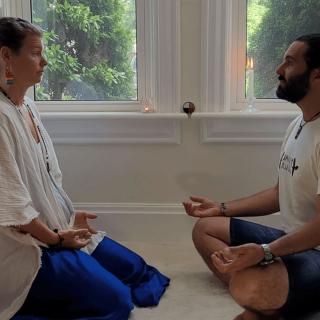
Hello everybody,
Welcome to another session.
My name is Emilio José Garcia and these these sessions I call them Your Thriving Lifestyle.
Okay,
Today's topic is about Executive Functioning Skills in action.
For those of you who are new here,
I do live sessions every week,
Twice a week here on Inside Timer and you can find a past session that I always record my sessions and post them here on Inside Timer and you can also find them on my podcast Your Thriving Lifestyle.
Okay,
I did a session about Executive Functioning Skills.
I dive really deep into each of them and I invite you to listen to that one if you want to learn more about them.
Today's session is all about looking at real day-to-day examples and analyzing how those skills are functioning and my goal here is to really help you shine the light on all of those different skills so that when you are facing a frustration,
When you find yourself not performing or not functioning the way you would like to,
These are tools to help you bring more awareness,
Deepen your attention to notice what is not working the way you would like to,
What is the skill that you can complement so that you can function better.
Okay,
Before getting started I have today with me my beautiful rain stick.
So I invite you to close your eyes if you can,
Please don't do it if you are driving,
Okay,
Close your eyes if you can,
Get comfortable and just enjoy the sound of this rain stick and I invite you to take deep breaths at the same time,
Okay?
So let's do it.
And the last one.
Such a beautiful sound,
I love this rain stick,
Really helps me relax when I need a little bit of quiet time.
So Stephanie,
You are asking,
Good morning Emilio,
Are you recording this one to put up as a track later?
Yes,
As I was saying I record all of my live sessions and I put them up as tracks here on Inside Timer and if you like listening to podcasts you can find my podcast pretty much everywhere,
Okay?
And the name of the podcast is Your Thriving Lifestyle.
I also have a circle here on Inside Timer that you can join and I normally when the track is published on Inside Timer I will share it there,
Okay?
So you can do that and you can share with other people,
You can listen to it again and sometimes it's helpful to be able to listen to it again,
Okay?
So today I want to talk about Executive Functioning Skills and I am creating a course about this.
I am in the process of creating a course but today's session I want to take some of the content that I am creating and share it with you because I think it's very practical and it's very very helpful and I don't see anything on Inside Timer about Executive Functioning Skills,
At least I haven't found anything with that keyword.
So before getting started I'm just gonna give you a recap of the skills,
Okay?
So what are the Executive Functioning Skills?
Just a quick rundown so that you can put names to them and then after we're gonna dive into some examples and see how those skills interact with each other,
Okay?
So the first three skills is they help us think,
Okay?
So they are working memory,
They are adaptable thinking or flexible cognitively and the other one is metacognition,
Okay?
So metacognition allows us to reflect,
Allows us to think about how we think,
To think about how we operate,
To think about our performance in a task and then be able to adjust to it,
Okay?
Working memory allows us to retain information that we can use for future uses while doing a task and adaptable thinking allows us to adjust when unforeseen changes are happening and also allows us to have different views and problem solving with more creativity and more options,
Okay?
So those are the three skills that allow us to think.
Then we have skills that allow us to control our emotions,
Allows us to regulate and those skills are emotional control or emotional self-regulation,
Okay?
And impulse control.
There are different names for the same thing,
Sometimes you will find different categories so group them as you like,
That's how it makes sense for my brain,
It doesn't have to make sense for your brain,
You can arrange them in a different order if you like,
I just want you to understand what they do,
Okay?
And then the skills that allows us to plan to focus our attention and to actually get things done in life,
Those are a bunch of skills that I'm going to name now.
They are task initiation,
Okay?
Attention control and focus,
Time management,
Completing tasks,
Organization,
Planning,
Sequencing,
Prioritizing and transitioning or shifting our attention from task to task,
Okay?
So those are some of the executive functioning skills,
The main ones that I have found that I am covering in my upcoming course.
So knowing these skills,
I've been really thinking a lot about this and all decisions that I do about intention and living,
Organization,
Time management,
They all talk about specific skills that I'm gonna mention today because that deep down those are the skills that allow us to function,
Okay?
And to manage our lives.
So let's take an example,
For example of a situation,
Maybe a challenge where you are not functioning the way you would like to,
Okay?
And a clear example,
Very physical,
That I encounter a lot with my clients and with the people I help is decluttering,
Okay?
So let's take the example of physical clutter.
Many people have the frustration of having physical clutter in their homes or they have physical clutter in their bedrooms or they have clutter in the calendar in the form of too many tasks,
Okay?
But let's focus on the physical clutter,
Okay?
So I would like you to share in the chat what are some of the causes that can create physical clutter in your home.
Would you like to share in the comments some sources of clutter?
Some situations that you may encounter and they will create clutter in your life.
Can you name some of them?
So illness,
Beautiful Tonia,
Illness.
When you are feeling ill,
What happens?
You don't have energy,
You don't have motivation,
You are tired.
So illness,
Lack of mobility and depression.
So mental health issues,
Okay?
What else?
Anything else comes to mind?
Kids are clutter machines,
Absolutely.
Kids love creating messes,
Task initiation,
Hard time getting started,
Cleaning up or organizing,
Beautiful.
Avoidance,
ADD.
I am in a hurry,
Laziness.
Taking care of others,
So parents,
Kids,
So the sandwich generation,
Guys.
You are taking care of your kids,
You are taking care of your parents and you don't have time to do this,
Okay?
So that's a great source of clutter,
Just not having the time,
Okay?
OCD and or perfectionism,
Yes,
A big one.
We want things so perfect and we are so afraid of not getting it right that we don't even get started because we are afraid that we are going to fail.
So that perfectionism will freeze us and we will not be able to initiate that task,
Okay?
Beautiful.
No one mentioned emotional attachment to belongings,
For example.
That's a huge one for a lot of people,
Okay?
Lack of self-awareness,
Yeah,
Lack of self-awareness,
Lack of clarity,
I would say.
If you don't have clarity about what you want,
It's very difficult for you to create an environment that is going to facilitate that,
Okay?
Shared space and the partner is sloppy.
So you have a partner that is not on the same page as you.
So I will add that,
Becca,
I will add communication,
Healthy boundaries,
Expectations,
Et cetera,
Et cetera.
So there is a lot to unfold with that.
So emotional items keeping us paralyzed or stuck,
Worry that you will get rid of something that you will need later,
Compassion fatigue.
So amazing.
So great,
Guys.
So you have named a lot of stuff and I have been helping people declutter for 10 years.
That's why I really wanted to pick up this example because I would say that I have developed an expertise of helping people transition from being cluttered to decluttering.
So looking at these executive functioning skills,
Okay,
I would like to then take that problem of having physical clutter and then start looking at each of those skills and see how each of those skills can be the cause for you to not be able to declutter your home,
Okay?
The first thing that I would like to say is that this is something that you need to want,
Okay?
So don't let anyone else impose something on you or don't impose on yourself to do something that you don't want to do.
Meaning,
Maybe physical clutter,
It is not a problem for you.
You have physical clutter but you are functioning just well and you don't need to do anything.
So if that's your case,
Then you are choosing not to take action and you are choosing not to do anything because it's not a problem for you,
Okay?
So that's one side and that's,
I respect that.
If on the other side you have physical clutter and you are frustrated with it and you are seeking for ways to change that,
That's when I would say that doing this exercise can be very helpful because the first step for everybody is the willingness to change,
The willingness to explore new ideas,
The willingness of accepting that what you are doing now is not creating the results that you want,
Okay?
So what you are doing now is not creating a clutter-free home that you would like to have.
If that's your case,
Then I will invite you to do this exercise with me.
So let's look at the three skills that help us think,
Okay?
So that was working memory,
Adaptable thinking and metacognition.
So when we take the physical clutter and then we think about,
Okay,
Metacognition for example is the skill that allows us to think about how we think.
So basically it's helping us reflect,
It's helping us go back in time and reflect about what have we done in the past,
How did that work out,
Was it good,
Was it bad,
Did I get the resource that I wanted,
Yes or no,
And then looking at that and reflecting about that,
Then you can adjust and you can change your approach and try something different,
Okay?
So if that executive functioning skill of metacognition is not functioning properly,
Maybe you don't have the ability to really reflect about what you have done.
So now you have an idea of what can I do,
Okay,
I should,
I could,
I could practice some mindfulness,
Maybe I can do a little meditation and think about,
Give myself space and time to think about what I have done in the past,
Become aware of it and then become aware of,
Explore new ideas on things that I can try that may help me create a different result,
Okay?
So if you are not able to do that,
What can you try that is new that you have not tried yet to create your clutter-free home?
And then you start brainstorming new ideas,
Okay?
Adaptable thinking is another skill that allows you to problem solve from different perspectives,
Allows you to,
If someone has an opinion about a specific topic,
You can have the ability to put yourself in their shoes and look at that reality from different angles,
Okay?
Adaptable thinking also allows you to adjust to changes that are not expected,
How many of you have had a huge life event happened that you were not expecting and the result of that huge life event is physical clutter?
Maybe you had an accident,
Maybe someone passed away and you don't have time,
You didn't have enough time to grieve and then all of a sudden you are receiving boxes and boxes and boxes and furniture and stuff from that person and then you have to deal with that.
So that's a huge source of clutter,
Inheritances,
Okay?
So these skills of metacognition and adaptable thinking come into play when that happens,
Okay?
So those are two entry points for you to explore.
How am I doing regarding my adaptable thinking?
How am I doing regarding my metacognition and reflection?
Am I being,
Am I allowing myself the time to reflect,
The time to think about this problem that I have and explore,
Brainstorm ideas,
Ask for help,
Just share my frustrations with someone else,
Listen to a live session,
Read a book,
Or hire someone to come to my home and help me?
Again,
These are just some ideas.
So metacognition,
Amy,
Is your ability to think about how you think,
Okay?
So basically it's your ability to sit down with yourself and reflect about what you have done.
For example,
In the example of physical clutter,
If you have physical clutter and you are not able to to get rid of your physical clutter,
Metacognition is going to allow you to think about and reflect,
Okay,
What have I done so far?
Okay,
So I have tried to tackle that closet.
I have tried to read this book and implement what I learned in that book,
But actually that didn't work.
And then you start thinking,
Oh,
Why didn't it work?
Oh,
Because x,
Y,
And z,
And then you start reflecting and then that process of metacognition,
Self-reflection,
Or however you want to call it,
Okay,
That process is going to help you take a different approach,
Okay?
So again,
Don't get stuck in the words of those skills because sometimes your brain may understand them with different words,
Okay?
So that's the official work that I found in several places,
But it's just your ability to reflect and analyze what you have done so that you can create a different strategy,
Okay?
So those are three skills that you can look at about physical clutter,
Okay?
Another huge entry point is the executive functioning skills that allow us to regulate our emotions.
So emotional control or self-regulation is one.
That skill allows us to control and manage our emotions,
How we feel,
Okay?
And the other one,
Impulse control,
Allows us to avoid acting impulsively without thinking about the consequences that our actions will have.
So taking,
For example,
The emotional control or the emotional self-regulation,
That is a huge entry point for a lot of people when talking about physical clutter.
Why?
Because in here,
Every time you are feeling emotional,
Majority of the times you cannot get started,
Okay?
So if you are trying to tackle your physical clutter and you are trying to tackle things that are evoking emotions in you,
Maybe you bought something that cost you a lot of money and you are feeling guilt.
Maybe items belong to a person that you love and they are no longer here.
And then when you look at those items,
You are experiencing emotions and you need to regulate those emotions in a way that you can function well.
Sometimes you need to take time to reflect,
To grieve.
Sometimes you need help,
Someone holding your hand and hugging you and actually helping you go through those emotions,
Okay?
So that's a huge entry point for a lot of people.
So understanding that can help you then bring some ideas about what can I do to regulate better when I'm trying to declutter because clearly one of my challenges is emotional control when I am facing those items,
Okay?
Impulse control is another one.
If you act impulsively,
If you have a partner,
For example,
That is not very organized and it bugs you and then you act impulsively and you say things that you will regret after,
You are not managing those impulses really well because you are taking action on those impulses without thinking and then you are probably offending the other person,
You are probably creating a huge conflict and that's not going to help you solve the problem of decluttering.
So that's another one.
Impulse control can be a huge one and vice versa.
If you are the one who is disorganized and someone is attacking you saying you have to get this sorted out,
I cannot deal with this clutter anymore and then you act impulsively,
Protecting yourself,
Maybe that's not the best way to do it either and maybe that's causing a lot of frustration to the other person or maybe you guys need help and a mediator to find a solution together.
So those are two entry points for those of you who are noticing that emotions are getting on the way of this process,
Okay?
And then let's dive into the other skills that allow you to plan to focus and to shift your attention,
Okay?
And that's the skills of task initiation,
Okay?
Attention control and focusing your attention,
Time management,
Completing tasks,
Organizing,
Planning,
Sequencing,
Prioritizing and transitioning,
Okay?
So let's look at one that someone already mentioned,
Task initiation.
That's an executive functioning skills.
Sometimes you know that you have physical clutter,
You know that it is bothering you,
But you just can't seem to get started actually decluttering,
Okay?
So that that that initiation never happens and you have a hard time starting.
This can be for many reasons.
Maybe you are procrastinating because you don't know how to do it.
Maybe you are.
.
.
Maybe you just don't have the time or cannot find the time.
Maybe you need help but you don't know how to ask for help.
Maybe this is not a priority for you.
You are not a priority for you.
You have other competing priorities that are more important for you,
Okay?
So that's one entry point.
Task initiation.
Maybe motivation is not there.
Maybe you just need a good reason to motivate yourself and you need to work on finding the reasons of why do you want to declare it in the first place.
And that's something that I always do with people.
Always try to find that thing that inspires them,
That excites them,
And that's going to help them initiate that.
Start motivation,
Start energizing them,
And then start connecting with that new reality,
The outcome that they want,
Okay?
So task initiation is one.
Attention,
Control,
And focus.
Two things that are really important.
Sometimes our attention is divided in a thousand things and then when we are trying to declare it,
We are saying,
Oh I have to do the dishes,
Or I have to walk the dog,
Or I have to put the laundry,
Or I'm gonna declare this room,
Or I have to answer to that email,
Or I have to answer this text,
Or I need to drink a glass of water.
You know what I mean?
Your attention is everywhere and you have a hard time placing your attention in the decluttering task.
So that can be something,
And sometimes I call that the butterfly effect.
I see people when they get started,
They go to one room and then maybe they have an object and say,
Oh this belongs in the kitchen.
So they go to the kitchen and then they see something that belongs in the garage.
Oh this hammer,
What is this hammer doing on the counter?
They grab the hammer and then they go to the garage.
Open the door of the garage and of course the garage is a mountain of stuff.
Oh that's stuffy,
What is that stuffy doing there?
That belongs in my in my daughter's bedroom.
So they grab the stuffy and then they go all the way to the second floor and put the stuffy in the bedroom.
And then they see a pen.
Hey this pen belongs in the office,
In the basement.
So they go all the way to the,
And then you know what I mean?
They start this cycle and then it never ends.
So attention control is your ability to decide.
Your ability to decide,
I am going to declare this room now and that's it.
Okay so that's your attention control.
You are deciding to take action on that specific task and you are ignoring everything else for now.
And focusing means that you can perform that task for a period of time.
Okay focusing for some people,
They can do that for 15 minutes.
Some people can do it for one hour.
Some people can focus for eight hours.
I did a paper session one time guys and the client pulled through paper.
It was a dentistry office.
We went through 12 years of tax papers.
She did eight hours straight.
Eight hours straight,
Just stopped 20 minutes for lunch.
She pushed through that task like I have never seen anyone do.
I was tired and she was like boom boom boom boom.
So that was a huge example of capacity to focus on a specific task for however long it takes.
And I asked like how can you do that?
I am tired and I have a professional doing this.
How can you do that?
And then she said it's been years for me that I was looking forward to having my tax papers in place.
You can't imagine the motivation that I have to get this finished today.
So I am not waiting any longer.
That's what she told me and we pushed through eight hours through papers.
My wife,
Myself and her.
So that's an example of attention control.
So she cleared her calendar and she set the intention that my attention today is going to be just this task.
And then she was able to focus her attention for that amount of time.
Okay,
So guys I'm not expecting you to do that.
Okay,
I'm expecting you to start becoming familiar with how long can I focus for and just test it.
Use a timer.
Do the Pomodoro technique.
I talk about that technique a lot.
Use a timer,
Put it for 15 minutes,
20 minutes,
One hour,
However much time feels good to you and then decide the task in advance and then set your attention to that task and set your focus to that specific task.
Okay,
So that's a clear example of attention control and focus.
Okay.
So another one is,
Yeah,
Someone is saying oh yes that will do it.
She was also able to do this because you and your wife were there.
Absolutely,
Stephanie.
Many times people don't have a problem performing the task.
Okay,
They have a problem staying connected with the task and for those people they may hire us or they may call a friend or they may have a video in the background because they need accountability.
They need something to help them stay on track and I call that body doubling is one name.
Body doubling means that you are just present there and then the person is doing its own thing but by having your presence there it's helping them stay stay focused.
Another one is just accountability.
Okay,
Just having someone there guiding you through the process.
Okay,
So absolutely that was a huge help and so many times people tell us I'm so glad that you are here because if you were not here I will never make the time for this and you helped me make this a priority and because I'm paying you money I have the expectation to get results so I'm forcing myself to actually do this.
So there are a lot of psychological and emotional resources of why people hire people like me because it's not only about doing the physical task it's a lot of stuff that is in the background and doing these skills that I'm this process that I'm showing you is going to help you shine the light on what's happening for you.
Okay,
Another huge skill time management.
Okay,
One of the things that everybody tells me is that I don't have the time to do that.
Okay,
Guys I don't have the time to organize my office.
Okay,
I have the time to waste three hours every day looking for papers but I don't have the time to spend one hour with you organizing my office.
I just don't have the time.
It's like yeah,
Makes total sense.
Just waste three hours every day because you don't have one hour once to create a system.
So that's a trap that many people fall into.
Okay,
They have the feeling that they don't have the time but you have to reflect about how much time am I actually investing in this task.
And what will happen if I do this differently?
What will happen if instead every year when tax time comes I am stressed out for two weeks,
I am looking for papers everywhere,
I pay hundreds of dollars to my accountant because I show up with a shoebox full of stuff.
Okay,
And that happens every year.
So how much time are you wasting?
How much money are you wasting and how much emotional baggage are you creating for yourself?
How much stress are you creating?
What will happen if you instead change your approach and say okay I'm gonna do something different this year.
I'm going to set up a system,
I'm gonna get help,
I'm gonna get my accountant,
I'm gonna get an organizer,
I'm gonna read a book,
Whatever it takes for you to create this and then you just do it once and then every year doing taxes become way easier.
So that's an example of time management.
Okay,
That's an example of metacognition.
You being able to reflect about what's happening every year with this specific task.
How can I improve this in the future?
Especially the tasks that frustrate you.
Okay,
Sometimes the time management is not a when problem because many people open the calendar and they put the task in their calendar so they can find the time but when they do it,
They don't have to do it.
So they procrastinate,
They don't initiate that task because then they may have problems with the next skills.
Okay,
The next skills are kind of they blend together with each other.
Okay,
They are completing tasks,
They are organization,
They are planning,
They are sequencing.
Okay,
So basically it's creating a plan.
Planning is creating a plan that includes the steps that you need to take to make that a reality.
Organization is actually using the resources,
Organizing your time,
Your energy,
Tools that you may need,
Put all those things in place so that you can actually take action.
Okay,
Sequencing is putting the steps in the right order.
And one of the,
For sequencing,
One example I have.
Our process is always the same.
Awareness,
Taking action,
And maintaining.
And in the taking action process,
We always start by decluttering.
So we first declutter and then we organize.
Okay,
So we first declutter everything that no longer needs to be there and when we are only left with the things that they want to keep,
Then we organize them by finding a home for everything that you are keeping.
So many people do the sequencing wrong.
They want to get organized and the first thing that they do,
They go to the store and they buy containers to organize things inside of them.
And then they go home and they try to organize everything they have.
But they have not done the awareness,
They don't have the clarity about what they really want,
And they haven't done the decluttering.
So the sequencing in that,
In that specific example is off.
Okay,
It's off.
It just doesn't work.
And that's why so many people are struggling having physical clutter because they don't follow the right steps.
They don't follow the right steps at the right time.
So when that happens,
You can use metacognition to really reflect about,
Okay,
What have I tried so far?
So I have tried this approach.
Did it work?
No,
Because I still have clutter.
So what can I do next?
Okay,
Maybe I try what Emilio is saying.
Maybe I'm gonna try to become aware.
Maybe I'm gonna try to connect with the outcome that I want.
And then once I have the clarity about what I really want,
And once I have connected with my family or the people I live with,
And they understand what I need,
And I understand what they need,
And we are on the same page.
So then maybe we have clarity and confidence to do the decluttering.
And then we will look at our items and we will decide,
Do I need to keep this?
Yes or no.
Is this object helping me create the outcome that I want?
Yes or no.
And then when you finish the decluttering and you let go of everything that you no longer need,
Then you organize what you need and then you beautify your space.
So that's an example of planning,
Organizing,
And sequencing all together.
Okay,
But it's important to understand the different skills that are playing in there so that you understand the challenge that you are facing and you understand how can you complement these functioning skills so that you can create a different outcome.
Okay,
Then we have another skill that is prioritizing.
Sometimes we don't prioritize the important things.
We prioritize the urgent things.
But sometimes the things that are urgent,
They are not important.
They feel urgent.
They feel that you have to get them done.
But if you allow yourself a little bit of time to reflect,
You may notice like,
Wow,
That thing that is oppressing me,
Do I really need to do it in the first place?
Is this something important?
And then what is my priority level about that?
And sometimes we have so many tasks that are demanding our attention that we don't know how to prioritize.
And that's another challenge that many face.
I face that in my life so many times.
When I am confronted with a lot of different decisions and possibilities,
Sometimes I have a hard time prioritizing what is next for me now,
Which one is the right step for me to do.
Okay,
And that's sometimes you don't have a clear answer,
But you have to make a decision.
Okay,
So that's why it's important the prioritizing something and just going for it.
Sometimes it's just necessary.
And then you prioritize something,
You start taking action,
And then you use your metacognition to reflect.
How is this going?
Is this going well?
Am I feeling well doing this task?
Is it creating the outcome that I was expecting?
Am I able to maintain my focus on my attention?
Am I doing the right sequencing?
Am I missing any steps here?
Did I do the planning correctly?
And then you start analyzing what's happening with way more intention.
Okay,
And the last one is transitioning.
Transitioning or shifting your attention.
Okay,
So in the example of decluttering,
Transitioning or shifting your attention,
The example is what I was sharing before.
So you have to make sure that you are transitioning from task to task with intention and you are not getting sidetracked.
That's one.
And another one is like when you shift your attention,
If you do it too frequently and then you start multitasking way too much,
You are not completing anything.
You are becoming overwhelmed and then you will give up.
And this is what happens to a lot of people.
So with the butterfly effect I was talking about,
They are trying to do one area of their home,
Like a bedroom for example,
And then they start doing the bedroom and then they have something.
They go to the other room to place it there and then they shift their attention to that room and then they start thinking about that room and then they grab something,
Go to the garage,
They shift their attention to the garage.
So all of a sudden they are starting to become overwhelmed because they are shifting their attention too much.
They are not being intentional about shifting their attention and then emotional control is happening because they are starting to feel overwhelmed.
They are starting to see belongings that maybe they are having a hard time with and then all of a sudden they start escalating to a point that they give up.
They don't complete the task and then in the future when they have to initiate the task they will hesitate because maybe the sequencing is not the right one.
Maybe they didn't cope with those emotions yet.
Maybe the time management is off.
Maybe,
You know what I mean?
So you can start looking at the skills again and deciding what's off here and then use your metacognition to reflect and to tweak and to adjust and to try a different approach.
Okay?
So Amy says,
Honestly the butterfly effect works for me in maintenance.
Amy,
It's beautiful.
We are talking here about,
So many people tell me,
Oh but I multitask and I love it and it works for me.
So then it's like,
So then what is your challenge?
Like why do you need to change?
And I want you to do that approach.
I want you to use this system with the things that are bothering you.
This is a system to help you analyze a situation that is frustrating for you.
A situation where you are not getting the results that you want.
So in your case,
Amy,
If you are doing the butterfly effect for maintaining,
That's a completely different strategy because you are maintaining.
That means that you have done the awareness,
You have done the decluttering,
You have found permanent homes for every item that you are keeping,
You have clarity about where those items go,
Everything has a reason,
Everything has a purpose and the only thing that you are doing is maybe once a week you do a recap of your home and oh this mark belongs here,
The pen belongs here because you have that clarity and the butterfly effect in that case works really well because you have the clarity so you are just maintaining.
For some people,
If they are not there yet and they start doing the butterfly effect,
It's important to start noticing,
Okay I am doing the butterfly effect.
So you have to stop,
Take a couple of deep breaths and then remind yourself,
What was I doing?
Just with your eyes closed,
Just remind yourself,
What is the task that I decided that I was doing?
So where did I intentionally set my attention into?
Okay I was trying to declare in my bedroom,
Okay so why am I in the garage?
Okay so I found a pen that took me to the kitchen and then in the kitchen I found a hammer that took me to the garage and then in the garage,
You know what I mean?
So you start using your metacognition and then okay so I was,
I fall into the trap,
Okay no problem,
I'm gonna go back to the bedroom again,
Okay and then I'm gonna keep going there or maybe you say you know what the bedroom doesn't make any sense for me anymore because I'm feeling emotional,
I was tacking some clothes and I was feeling bad because I lost weight and I gained weight and I lost weight and I just going through my clothes is just too much for me,
It's triggering me.
So I'm gonna change to the kitchen because I think the kitchen I have it,
It's good,
It's more easy for me,
It's not as emotional.
So that's metacognition in process,
Okay and then you decide to set your attention to the kitchen and then you put a timer and then you start decluttering your kitchen with intention,
Okay so that's an example of how things may work,
Okay so guys how are you feeling with this?
And I know that this is a lot of stuff to think about but I'm just planting seeds here,
Okay I am planting the seeds of you becoming aware of these skills independently because when you can break down your functioning into different pieces you can then look at a challenge that you are facing and then you can start analyzing that challenge from different angles and maybe you think okay I'm having this challenge and then does it have to do with my flexible thinking?
No.
Am I having a trouble with my task initiation?
No.
Am I having attention control issues?
No.
I have my timer here,
That's not a problem.
Am I having trouble with my time management?
No.
Am I having trouble with my emotional control?
Actually yes.
Why?
Because I am facing this object.
Okay what's happening?
This object is evoking in me this emotion.
Okay let's talk about it,
Let's reflect.
Maybe you just put that item aside and you do it later and you keep going with the rest.
This is an example of how this can help you move through,
Okay?
So Tonya says it's something I am procrastinating.
Paperwork.
Emilio this helps me because it takes executive functioning from emotional to logical steps.
I love that Tonya,
I love that because I want you guys to look,
I always try to find the practicality of things,
Okay?
But I also am aware that there is always an emotional side,
A mental side,
Okay?
Two things.
So I am trying to give you specific tools,
Break down all these skills into very little tiny pieces so that you can compare them with the situation you are facing and then you can start bringing light into what's going on here.
Because sometimes you have an emotional problem,
An emotional challenge with that specific task.
Sometimes you have a mental challenge with that specific task that you just don't know how to actually do it.
Sometimes you have an action challenge,
You don't know what steps come first or you need someone to show you how to do it first and then you can do it yourself.
So there are different challenges that you may encounter,
Okay?
And this is going to help you bring the light on,
Am I having a thinking problem?
Am I having an emotional challenge?
Am I having a focus challenge,
An attention challenge,
A planification challenge,
A procrastination challenge?
And then once you narrow down what the challenge is for you,
That's when I invite you to look for complementary strategies,
Okay?
So some of you said,
I am procrastinating that thing.
When you find procrastination,
Now you have a clear challenge,
I am procrastinating.
So this is not emotional,
This is not mental,
This is just procrastination.
And now you can dive into using your metacognition to really think about,
Okay,
Why am I procrastinating?
And you can procrastinate because maybe you don't have the logical steps to follow.
Maybe you procrastinate because you don't have all the information that you need.
Maybe you procrastinate because you didn't communicate clearly with the people that are involved in the same challenge,
So you don't feel confident moving forward,
So you procrastinate.
Maybe you procrastinate because when you face a task,
You are feeling emotional and then you need to do something about your emotions.
Maybe you procrastinate because you don't know what to do with your receipts,
As Kelly is saying.
Someone is saying,
I have a challenge with my receipts,
I don't know what to do with them.
And then this is when the sequencing comes in place.
Paper management is a great example for sequencing.
Paper management and finances.
And guys,
I did a whole session about finances last week that you can listen to the recording.
But let's look at how the executive functioning skills work into paperwork.
OK,
So paperwork.
It's paper flows into your life from different sources,
So there are different entry points.
You may have emails,
You may have physical mail,
You may have receipts that you get from purchases.
So you have schoolwork from your kids,
Medical records,
Whatever.
You start recognizing the entry points of your paper world and then you have an,
Ideally you have an outcome.
OK,
That's what you have to think.
What is the outcome for all these papers?
By the end of the process,
I want them to be in my filing cabinet.
I want them to be scanned and saved in this folder.
I want them to be in the cloud.
I want them to be sent to my accountant.
So think about your outcome and think about the entry point of those papers.
So you have an starting point and you have an end point.
So now you have to think about the sequencing.
What's happening in between?
OK,
So for example,
When it comes to paper,
Paper comes into my home,
Physical mail.
First step,
I look through those papers.
I recycle what I don't need and I bring inside my home what I need.
Second step,
I put all the mail in a tray on my kitchen counter.
Third step,
Once a week I go to that tray and I open all the mail.
I pay bills as necessary.
Step number four,
I file what I need to keep for taxes and I shred what I don't need to keep.
And then that's the end of the process,
Right?
That's a simple four,
Five step process for that paper strategy.
You may have more steps,
Less steps,
Different order.
You may have the tray in your office,
In your kitchen,
In your bedroom,
In the entry.
I don't care what it is,
But you have a system.
You have steps.
Many times paper clutter is the result of a broken system and you don't have all the steps needed to connect the start with the end.
How your paper flows into your life and where the paper ends.
OK,
Once you have the clarity of how do you want your paper to end,
You can start thinking about the logical steps and creating a system that is going to allow you to create the paper flow that you are looking for.
OK,
So that is really a great example.
And Stephanie says it is OK to write down the system.
Yes,
Of course it is.
That's what I do with my clients,
Guys.
When I am helping someone create a system,
I will create steps and sometimes I will even draw them if they need to visually see them.
I will invite them to.
I want you to draw every single step.
And this works really well with kids and I do this with my daughter.
I just break the sequencing as much as I can and then I let them I let her do it by herself.
I let her fail.
I let her ask me.
I let her think.
You have to allow for time for people to actually try what they are doing.
OK,
So guys,
That's what I have for you today.
OK,
Time is up.
I could be talking for hours,
But this is what I wanted to do today.
Share with you how executive functioning skills come into play in your day to day life.
OK,
So how are you feeling before we close the session,
Guys?
So Amy says,
Emilio,
Does paper flow differ if the area is a chronic medical condition?
A few of us are communicating about this.
Amy,
You still need a flow.
So if you have a medical condition,
You just have to tweak the steps.
You just have to create a system that is that works for you.
Again,
You have an entry point for paper and you have an outcome that you are seeking.
This is your outcome.
It's not my outcome.
You decide what do you want to do with those papers.
At the end of the process,
What happens with those papers?
What happens with those emails?
What happens with those files that you are trying to keep?
Once you create a clarity outcome,
A clear outcome,
That's when you can brainstorm,
How am I going to make that happen?
Maybe you delegate that to someone else and you give them the steps.
Hey,
And I know,
Amy,
I know Matthew will help you.
You say,
Hey,
Matthew,
These are the steps that I have created for my paper world.
This is my paper system.
Can you help me take action on these steps?
And now if I were Matthew,
I would look at that paper and I would say,
Sure,
I will follow this.
No problem.
I understand what I have to do.
So that's one example.
Maybe you have someone else that can help you,
But you have to create a system yourself.
You have to create something that makes sense or have someone help you create the system with you.
OK,
And again,
Guys,
I am here.
You can book a one on one session with me if you want,
Or you can listen to my courses or you can connect with me if you want help.
OK,
That's what I help people do,
Create systems.
So don't get stuck.
You can read books,
You can watch videos,
You can ask for help.
OK.
And then Amy says,
Yes,
He will help.
I have trouble asking him for help.
Just start by bringing all the paperwork in one place.
So,
Amy,
I feel that you are you are facing this is not a paper problem only.
OK,
Because you you are saying that you have trouble asking him for help.
So that means that there is looking at the list.
There is an emotional challenge there,
Too.
Maybe there is an emotional challenge that maybe you feel that you don't deserve help or maybe he's not going to help you.
Or maybe there is a belief behind that feeling.
And that's that's stopping you from asking for the help that you need.
So another great example for all of you to notice,
Oh,
This is not only an organizational problem.
This is also an emotional problem.
Challenge.
I would say just challenge.
There is an obstacle here that I need to solve.
I need to change.
I need to do something about.
Maybe there is a communication obstacle.
Maybe there is a limitation,
Physically speaking.
Maybe you don't have a filing cabinet yet.
Or maybe,
You know what I mean?
Like there are a lot of steps that you can tweak.
OK.
Amazing.
So,
Guys,
I hope that this session was helpful.
I invite you to now for you to.
Allow some time with yourself and then look at a challenge that you are facing right now.
Look at that challenge that you want to change,
That you intentionally want to try something different.
OK.
And then start going down through this list.
OK.
All of these skills that Emilio shared,
Which ones am I having a hard time with?
And then once you find the ones that you are having a hard time with,
Start thinking,
How can I complement them?
OK,
What can I do to complement these skills?
OK.
And that's it for today.
I don't want to overwhelm you with more information.
OK.
So,
Guys,
This is this is being recorded.
OK.
So if you miss something,
If you want to listen to this again,
If you want to share this with a loved one,
It will be available here on Inside Timer and also in my podcast,
Your Thriving Lifestyle.
OK.
Very easy to share.
You just have to click on share and you can share it in so many different ways.
Either here on Inside Timer or in my podcast.
So feel free to share this with whoever you think can benefit from.
Feel free to share to join my circle if you are not in the circle yet.
Here on Inside Timer,
It's called Your Thriving Lifestyle.
OK.
It's a circle.
And I share the recordings there and people ask questions there and you can get some support there.
And please check my other courses.
Excuse me.
I have three other courses that dive very deep into the decluttering.
I have a course about decluttering your home.
I have a course about minimalism and I have a course about self-care.
OK,
So those are three courses that you have available that are audio courses and you can listen to them on the go.
So feel free to join them and use the course classroom to share any questions that you may have.
I will be there to support you.
OK.
OK,
Guys,
Let's exit.
Let's exit the session.
OK.
I invite you to get comfortable again,
If you can.
Close your eyes.
And I am going to use my rain stick again to help you transition out of this session with intention and for you to feel calm.
OK,
So close your eyes.
I invite you to deep breath a few times and just enjoy the sound.
Last time.
Amazing.
Thank you so much,
Guys,
For being here today.
Thank you so much for your presence.
And I hope that you have an amazing rest of your day and I will see you in the next session on Thursday.
OK.
Until then,
Start paying attention to your executive functioning skills and start noticing how you operate.
OK,
Because the next session is going to be helping you on how your brain works.
It's going to be very gentle,
Very compassionate,
And it's going to help you put all these concepts into practice with more compassion for yourself,
Because we are trying our best.
We all are.
OK,
So have a wonderful rest of your day and I will see you in the next one.
Adios.