Hello everybody.
Welcome to another session with me.
Wow,
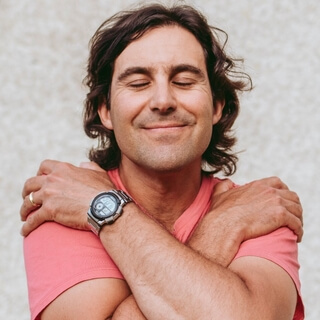
The sun is in my face.
It's a very sunny day here in Canada today.
I'm really happy with the weather.
That's why I shaved,
I cut my hair so I look more spring like.
How are you guys doing today?
Hi CJ,
How are you doing?
Thank you guys for tuning in today to another session with me.
Today's session is going to be about creating your advanced self-care list.
And I will talk about it in a second.
Let's do a little intro to get into the session together,
A little practice.
So hi Becca,
Hi Emilio,
I love your attitude towards self-care for spring.
Yeah,
Don't you guys feel that spring is a very energetic time for the majority of the people,
Right?
More sunshine,
More energy.
You live behind the winter,
Especially here in Canada,
Winters are long and cold.
So I think it energizes us a lot,
Especially the sunshine.
The energy from the sun is really amazing.
And being able to go outside without meetings and without having to dress a lot and spend more time outside,
Enjoy the outdoors more,
That's something that feels really good.
And I'm always looking forward to it.
Okay,
Let's do a little practice together,
Okay?
So we are going to do what's called a rapid breath exercise,
Or I think it was also called dragon breathing.
I think it was called something like that.
But basically the intention in this practice is you are going to exhale really deeply through your nose like this,
And then you are going to automatically inhale through the nose too.
So this is how it looks like.
This is a rapid breathing technique that if you feel uncomfortable,
If you think this is too much for you,
Please don't do it,
Just breathe normally.
But if you feel curious,
Just give it a try.
This is something that I do at yoga a lot,
And you use your abdomen to push the air out through your nose,
And then you inhale through your nose too.
You can also try to do it through your mouth if that's easier for you.
But this is how it looks like.
Let's just do it together for a little bit,
A few seconds.
Sometimes it's hard to do this kind of breathing if you are not used to it.
So be gentle with yourself and always approach these practices that I bring to you with curiosity and an open mind.
They don't have to be perfect,
And I just want you to give them a try.
This rapid breathing technique allows you to bring a lot of air in and out from your brain,
From your body really quickly,
And it's also forcing you to slow down,
To focus on your breathing,
And it's bringing you to the present moment.
So it's another excuse,
Another technique to bring you back to the present moment.
And it's an amazing self-care technique.
Breathing,
It's an amazing self-care technique.
There are so many different ways of breathing,
Breathing techniques.
Sometimes you inhale for maybe four seconds and exhale for double the amount,
And that's really good to calm your brain when you are feeling stress,
Anxiety,
Overwhelmed.
That signals your brain that everything is safe,
Everything is good.
You don't have to run away.
You don't have to fight.
You don't have to do anything.
You are just relaxed and calm.
So that's something that you can do when you are feeling charged.
I do this technique when I'm with my daughter sometimes,
And then she pushes my buttons because she knows all of them.
She just pushes that button that triggers me.
Sometimes I have to take a timeout.
I have to go to the washroom,
Close the door,
Make sure that she's safe,
And then just breathe a little bit and take a few seconds for myself.
Sometimes we have a word,
My wife and I,
We call it pineapple.
If I say pineapple or she says pineapple,
That means that we need a timeout.
We need to tag out.
And then the other person is stepping in.
So that's a keyword that we use with our daughter.
Anytime we feel that we are being too charged,
We try to avoid elevating more than that and we try to do something about it.
So this breathing technique is something that sometimes I do.
Sometimes I juggle my balls.
Sometimes I just go outside and come back.
Sometimes I listen to something.
Sometimes it doesn't matter what you do as long as it works.
And this is what self-care is all about.
Today,
I want to talk about creating your advanced self-care list,
But you have to start with a simple one first.
So Becca is asking,
Is an empty stomach best for dragon breathing?
So Becca,
It does help if the stomach is empty because you are using your abdomen muscles to kind of like push in and out the air.
So it's easier if you don't have anything,
If you are not digesting,
Like everything related with exercise,
Like forcing yourself to do something a bit like more than normal,
It's better if you are not digesting food.
That's same with practicing sports or doing something that is demanding.
It's better if you don't have anything,
But you can be gentle with yourself.
You don't have to do it really fast or really deep.
Just find the pace that feels good to you.
Okay?
And this is the secret about self-care in anything that you want to do about self-care.
Find what works for you.
Find the pace,
Find the length,
Find the steps,
Find the activities that make you feel well in the way that makes you feel well.
Because there are no rules here.
Self-care is care provided for you by you.
Okay?
So let's talk about,
So self-care is that.
It's care provided for you by you.
Okay?
And it's about brainstorming very simple activities that you can do hopefully anytime,
Anywhere that will help you feel better.
Okay?
So that's what self-care is.
And then the first step is to create your basic self-care list that I have been talking about this a lot.
Right?
It can be as simple as just having a piece of paper with a few bullet points.
Okay?
And then just writing down.
Sometimes guys,
I do,
My wife and I will deliver a lot of workshops and sometimes we give people a few minutes to create their own self-care list because we always ask,
Who has a self-care list?
And a lot of people say,
I don't have one.
I always wanted to create one or I always wanted to explore the idea,
But I never find the time.
That's what they told us.
I never find the time.
Okay?
So when we allow them a few minutes to just write down,
We challenge them to do three things.
Sometimes finding three things is difficult if you are not in the right mindset.
Right?
But then once you get started,
Finding things become easier and easier and easier.
Okay?
So simple things can be breathing.
Everybody's saying in the chat,
Breathe,
Deep breathe.
Yeah.
So that's something that we can all do more of.
Just stop and then take a couple of deep breaths.
You can do that anytime,
Anywhere.
Okay?
That's one thing.
Drinking water,
Drinking enough water.
Sometimes drinking a glass of water can be something very healing,
Right?
Sleeping more,
Resting more,
Spending time with your pet if you have one,
Spending time talking with a family member,
Drinking a hot beverage.
Self-care can look like anything,
A little bit of meditation,
Playing any instruments that you have and just focusing on the noise of whatever you have.
Maybe you play guitar,
Maybe you play piano,
Maybe you have a singing bowl,
Maybe you just have anything really that you enjoy may work.
So once you have three things,
Affirmations,
Mirror work,
Positive self-affirmation.
Sarah,
Thank you for saying that.
There are no rules here,
Guys.
You write there whatever you want to see.
Okay?
And it's important for you to brainstorm.
So majority of the people after doing that exercise,
They normally come and they say,
Thank you so much.
Thank you so much for allowing me the time and the space.
Because when I'm alone,
I never find time for doing this because it doesn't feel important.
It doesn't feel urgent.
Okay?
So there is a lot of emotions here that are preventing us sometimes from practicing self-care,
From creating our own self-care list.
Because we feel that there are always more important things to do.
And self-care is normally the last thing on our to-do list.
And majority of the times the to-do list is so long that we never get to the bottom of it.
So we never get to the self-care.
And that's why we need to start changing our approach to it.
How can you make self-care more intentional,
More convenient?
How can you integrate self-care in your day-to-day with more ease?
And this is why I feel that creating your advanced self-care list is really,
Really helpful.
It really helped me brainstorm ideas on how to do this,
Especially when I became a dad.
Okay?
Because majority of the times people were telling me,
Wow,
When you become a dad,
Forget about yourself.
And I have to say that triggered me a little bit because I didn't want to accept that.
And it doesn't mean that the situation changes a lot.
Don't take me wrong.
It does change a lot.
But I still wanted to be intentional enough to be able to still find time for myself.
I didn't want to just lose myself completely because I have a daughter.
Okay?
So that was one thing.
COVID was a huge one too.
Okay?
COVID was a huge one that removed a lot of my self-care activities.
And same for you guys,
I'm pretty sure.
All the social aspect,
All the exercise gym aspect,
All the yoga aspect,
All the potlucks,
Dinners,
Everything was gone.
And all of a sudden you are left not knowing what to do and how to make yourself feel better.
So that's when I reinvented my self-care list.
And that's when I started to think about how can I make my self-care list better?
Okay?
So some strategies that I invite you guys to have,
If you want,
Have colors or pen,
Paper.
And I invite you to start thinking about your self-care list.
If you have one,
Just grab it.
Okay?
And read what you have on your self-care list right now.
What activities do you have?
Are you actually doing them?
And if the answer is yes,
When are you doing them?
If the answer is no,
Please never,
Ever be hard on yourself.
Just think about why can't I do this activity right now?
What's standing in my way?
Okay?
Is it an emotional challenge?
Is it a physical challenge?
Is it a time management challenge?
Is it a location challenge?
Start thinking about how can I make this activity,
Again,
Look at the activities and then reflect about,
Is this activity still important for me?
Is this something that I still want to do?
For example,
I had a classical guitar that I bought back in the day when I was in Thailand,
When I was traveling the world,
And I wanted to learn how to play the guitar.
So I brought it to Canada and I had it here,
And then it broke a few months ago.
And then on my self-care list,
I have playing the guitar.
So I didn't have a guitar for a few months because I thought it wasn't important for me anymore.
But when I was looking at my list,
I realized I actually miss playing the guitar.
Okay?
So how can I make that a habit in my life?
Because playing the guitar can take a long time,
And to make progress,
It takes hours of practice.
But how can I make that activity that is good for me and I want to do intentional,
Convenient,
And doable?
Okay?
So what I did,
I bought a new guitar,
And then I started to test.
I had the guitar always with me.
I carry the guitar with me.
I sit on the table,
I have it beside me.
This is my old guitar,
By the way,
Behind me.
I did some sort of art.
I put some shells,
I removed the front,
And that was my guitar,
The one that I used to have at the beginning.
Okay?
And now I have a new one.
And then that guitar is hanging in my bedroom in a corner.
In that corner,
I found myself sitting in that corner.
And I was always thinking,
Why am I sitting here to play the guitar?
Because I can be on the couch,
I can be on the bed,
I can be in the kitchen,
But I always found myself sitting there.
So I made that my guitar corner.
I hung the guitar on the wall.
I put a little place to sit.
I put my music stand in there.
Okay?
And there is a lamp.
And then the tuner is there.
The capo is there.
Everything that I need to play the guitar is there.
So every time I pass through my bedroom,
I see the guitar,
And I will sit down and practice it.
And I don't sit down for hours,
Not even for like 10 or 15 minutes straight.
I normally sit down for a few minutes,
Sometimes a few seconds.
But I am practicing something and I'm seeing the progress.
So start thinking about activities that are relevant to you.
Okay?
And write them down.
And then start reflecting about,
Is this activity something I want to keep doing?
And once you find the activities that you want to keep doing,
Or if you want to explore new ones,
Start thinking about these concepts.
Okay?
Concept number one,
Location.
Okay?
If you create a self-care list that is based in your home,
But maybe you spend eight hours at work,
At the office,
You are preventing yourself from doing self-care all the time that you are at work.
So I challenge you to think about,
Maybe you can create a self-care list just for work,
Or maybe your self-care list can have activities that can be done anywhere.
They are not location-oriented.
Okay?
So for example,
If I want to play guitar and I spend eight hours at work,
Unless I have a second guitar at work,
That that's an option,
I will not be able to play guitar.
So that's not a self-care activity that I will do at work.
I could.
I could carry the guitar every day.
That's not probably something I want to be doing.
I could get a second guitar if I have the budget and then have it there.
That's another option.
Or you can think about my guitar playing is a home self-care activity.
So when I'm at work,
What can I do at work for self-care?
And then you start brainstorming at work.
Okay.
What do I have at work?
Okay.
I can go and drink water.
I can have a coffee.
I can go and see a friend,
A coworker,
And chat about something.
I can go outside and then maybe you open Google Maps and then you look what's outside my work.
Is there any park?
Is there any shop I want to explore?
Is there any restaurant I want to eat?
Is there.
.
.
You start exploring and brainstorming with an open mind and curiosity.
And then ideas will start popping up.
Are there self-care and mindfulness activities that you can do listening while you work or in your break?
Can you do a contest for maybe bringing a lunch,
A potluck,
And doing a challenge?
Everybody has to bring a curry.
Everybody has to bring pasta.
Everybody has to bring something and then make it playful.
Again,
Start thinking about things until something clicks with you.
Okay.
So location is a huge one.
Location.
Creating your self-care list with activities by location.
Another way of thinking about your self-care list,
The advanced self-care list,
Is to do it by person.
This is important if you have family.
Okay.
In my case,
I was being conflicted about,
Okay,
I want to do practice self-care,
But how can I integrate self-care when I am being a dad to my daughter?
How can I integrate self-care when I am being a husband to my wife?
How can I practice self-care when we are in a family setting,
All of us together?
So I started to brainstorm ideas,
Things I can do with my daughter Eva,
Things that I can do with my wife Samantha,
And then things that we can do as a family.
And that inspired us to,
As a family,
Come together and create activities that we all will enjoy.
That inspired Samantha and myself to create couple time and to find activities that we both will enjoy as a couple.
And then that inspired me to find activities to do with my daughter alone when I'm just with her.
So for example,
On my advanced self-care list,
I have a section that is things to do with Eva,
Right here,
Right?
And I have,
I can rollerblade,
I can bike with her.
Why can I do these things?
Because I was proactive and when she was born,
We got a bicycle trailer,
That it becomes a stroller and becomes a bicycle trailer.
So it's a two in one.
So I can push her,
I can rollerblade and push her inside that thing.
And I can also bike and pull her with the bicycle trailer.
So I can do that.
I can do,
I can juggle my balls.
So I can throw my balls in the stroller.
And when we go to the park,
I can juggle my balls.
And that's something that I do for myself with her.
I can play my didgeridoo.
I can fly a kite.
We can go for a walk in nature.
I can color.
I can do Play-Doh.
We can read stories.
We can play with chickpeas,
Beans,
And rice.
She loves that.
I just put in a container,
Some chickpeas,
Beans,
Rice,
A few spoons,
A few measuring cups from the kitchen.
And she spends hours doing that.
So all those things are things that I can do with her.
So thinking your life,
Does creating a self-care list by person make sense to you?
And if the answer is yes,
Start brainstorming ideas.
Maybe find two or three things that you can do.
Creating this advanced self-care list,
I just want to say,
Please do not feel overwhelmed.
You don't have to do all these things.
You don't have to create this list all at once.
This is something that will start coming naturally to you.
I didn't create this list from day one.
This is something that is the evolution of me having created a self-care list for a few years and having thought about the concept of self-care,
Activities I can do,
Testing things that I enjoy,
I don't enjoy.
So this is a process that is going to look different for each of you and is going to unfold differently for each of you.
So Amy says,
My nephew and I watch Disney movies together on WhatsApp.
I love it.
He's my angel.
Amazing.
That's an amazing activity that it is COVID friendly because you can do it online.
It's also distance friendly.
For example,
With my parents in Spain,
I use WhatsApp a lot because I cannot be physically present there with them.
So that's a wonderful way.
I used to play board games online with my friends during COVID and that was so much fun.
We used to have a chat going through WhatsApp or through Skype and then we used to have the board game online playing together.
So we were having a chat and laughing at the same time that we were playing and it was beautiful.
I loved it.
So we talk about location and we talk about by person.
Another way of creating an advanced self-care list is to think about activity type.
Activity type is really,
Really important.
Why?
Because your energy is going to fluctuate throughout the day and we have specific skillsets and attention focus depending on the kind of task that we are doing.
Sometimes we may feel drained to do a mental task,
But we feel energized by doing a physical task.
Sometimes how many of you have been sitting in a desk for hours and then you just think,
I just need to move.
I cannot be sitting here anymore.
It's just too much.
I need to move.
And then once you get up,
You move,
You do something,
You come back to that desk and you are feeling better.
You are more clear and you will solve the problem that you were struggling with before.
Sometimes it's the opposite.
Sometimes you feel like,
Wow,
I am overdoing the exercising part and I need to rest.
I need to just chill out in the couch,
Watch a movie or listen to an inside timer or a meditation.
And I need to change the activity type.
Sometimes you need to be social.
Sometimes you feel like you are lacking social connection.
So you want to do an activity that involves connection with other people.
And sometimes you find activities that will target all of those things.
So for example,
Sometimes I go to the gym.
So going to the gym,
It seems to be a physical activity because I'm going to go to play normally squash.
But I can make it social at the same time because I am inviting people to come and play with me.
So we have a chat before and after.
We can catch up,
We can share and we can ask each other questions.
And so that becomes social.
Then we play squash.
And then on the way to the gym,
I can be listening to a mindfulness practice,
To an interesting podcast.
So I am nurturing my mind.
I am nurturing a mental,
Emotional activity.
And then when I am done playing squash and socializing with the people I play squash with,
I can then go into the sauna and just chill out for five to 10 minutes.
And after that,
There is a massage chair that I can use.
So I can sit there and I can even relax further.
So all of a sudden you are being intentional about how can you make an activity hit different activity types.
And this is when you become resilient.
This is when self-care starts becoming convenient,
Playful,
And actually doable.
So I challenge you to start thinking if you have colors,
If you have your pen and your piece of paper,
Start thinking about how can I make my self-care list more fun?
What kind of activities can I include here that can be by activity type,
By person,
And by location?
And I invite you to try to challenge yourself to come up with at least three things that you can do on each of those categories.
And again,
If you're feeling that this is too much,
Just pick one,
The one that you feel attracted to,
And then brainstorm three things in that specific one.
That's going to help you.
Guys,
This is practice,
Okay?
So please don't be upset with yourself if you can't even come up with one thing.
Because if you have never done this,
It's okay.
Today is the perfect day to get started.
So today is the perfect day to start thinking about,
Wow,
I have never done self-care in my life,
Or wow,
I had the same self-care list for years.
So now it's time to maybe polish it.
Maybe it's time for me to be more playful and include new things.
And then how can I do this by activity type,
By location,
By person?
Yeah,
Maya,
So what were the three options?
Activity type,
By location,
And by person,
Okay?
So again,
Some examples of my own self-care list.
If we look location,
I have things to do when I'm at home,
I have things to do when I am traveling,
And I have things to do when I am with my daughter in the playground or going for a walk.
And then I brainstorm activities that I can do when I'm doing those things,
Okay?
Another thing that you can do is by person.
In my case,
I have things I can do with my daughter,
Eva,
So I can be a dad,
Things that I can do with my wife,
Samantha,
So that I am a partner,
Okay?
Things that we can do as a family,
So when we are all together.
Those activities can look different,
Okay?
You can also create this list by friend.
If you have a really good friend,
It's a very fun activity to present this idea to them and say,
Hey,
I'd really love seeing you once a week,
Okay?
And we normally have two hours together or whatever,
So let's brainstorm together things that we want to do,
Okay?
And then you get started finding fun stuff,
And you can rotate this.
Maybe one week,
You are in charge of finding something,
And then you surprise your friend,
And the other week,
The opposite.
He or she will surprise you.
You can also do this with your partner,
Right?
Sometimes Samantha and I,
We do a couple of times,
And we don't tell each other what we are doing.
So I just say,
Sam,
Be ready by 6 p.
M.
,
And then I find a babysitter,
I find the activity,
I organize everything,
And I don't tell her anything,
Just what she needs to wear and what time to be ready for.
Sometimes she does that to me.
And sometimes we drop the ball,
And we don't do anything during the week too,
And that happens,
Especially when we are super busy.
And then we feel frustrated after.
It's like,
Wow,
We haven't done this for a few weeks.
We better get back on it.
Again,
Always be gentle.
Always go back to what you want to be doing,
And don't focus on what you haven't done.
Don't focus on what you failed or what you didn't do.
Focus on,
Okay,
How can I make this happen next time?
So by location,
By person,
And then by activity type,
I took it to the next level on my list,
And then I have different colors.
So I made my list a little bit playful by using different colors for the different activity types.
So I have physical is green,
Relaxing is orange,
Creative is yellow,
Fun is purple,
And social is blue.
Okay?
So why is this important for me?
Because I thought color coding my activities,
First,
It makes me think about how many greens do I have?
How many yellows do I have?
How many purples do I have?
And then also when I look at my list,
I think,
What do I need right now?
And maybe I feel I need to be active.
So I will look at my green activities,
Because those are the active,
The physical activities.
So I have,
Oh,
I can do climbing on my training board that I have here in my room.
Okay,
What else do I have?
I can play tennis.
I can play squash.
I can go for a bike ride.
I can rollerblade.
Those two things I can do with my daughter as a family and just as myself.
I can go running.
I never do it,
By the way.
I just don't like it.
I can go hiking.
I can cross-country skiing.
I can play with a ball.
And then I can explore a new place,
Park,
Or area out of town,
And I can go there walking.
Okay?
So color coding really helps for visual people.
If you feel like being creative,
My creativity is yellow.
So I can play my didgeridoo,
I can color,
I can do Play-Doh,
I can take an online class and learn a new skill.
I can do something with my hands.
Okay?
I can play my guitar.
I can practice some piano.
So color coding will really help you if you are a creative person,
Or if you are fun,
If you are social,
And you want to find those activities really quickly.
Again,
There is not a right or wrong way of doing this.
Okay?
You can do this with colors.
You can do this with a bullet point.
You can create squares.
You can create a list in your phone if you are a phone person.
The only thing that I will recommend around technology is that technology normally will help you get distracted very easily.
Okay?
This is why having a physical self-care list is helpful,
Because it's a piece of paper or it's in your journal.
You can place it anywhere.
You can see it every day.
And there are no notifications,
Distractions,
Messages,
Emails,
Social media,
Et cetera,
To distract you.
So you can look at your self-care list and you can focus on just one thing,
Because that's what self-care is all about.
It's about helping you being present,
Helping you feeling better,
And helping you calm down.
Okay?
So guys,
How are you doing with your self-care list?
What do you have so far?
Are you willing to share in the chat activities that you have or something that came up for you that you are excited about,
Something that you want to include,
Or maybe challenges that you notice that you are trying to find strategies to change?
Just feel free to share in the chat anything that's coming up for you,
Because I know it will be helpful for other people too.
This is all a group activity,
And people will get inspired by others' ideas and vice versa.
So Amy says,
I just got an idea to start a theater stage reading club on Zoom.
Anyone here interested?
Amazing.
That's a great activity that is,
I would say,
Is relaxing and creative and social.
So you are hitting a few things,
And it's something that you can do anywhere,
Because doing a Zoom is doable anywhere you are with Wi-Fi connection,
With internet,
Right?
So that's fun,
Amy.
I love it.
Hopefully,
Someone else takes you on that.
What else do you guys have?
I used to be a director,
So I will be happy to choose the play and assign the characters.
Thank you,
Amy.
Another fun thing that my wife did was once we had the self-care list,
We had a mason jar,
And we brought the activities down in small pieces of paper.
We put them in the mason jar.
So sometimes we shake that mason jar,
And we just pick one thing,
And it's random.
And that's also playful and fun.
So Crystal says,
Amy,
Meetup website app could help you connect with other interested.
Yeah.
When you are wanting to do something social,
I use Meetup a lot.
I use Meetup because people create events.
You can create your own events,
Too.
Here in our community,
We have Eventbrite.
We have Yahoo groups.
There are different ways of connecting with people.
Facebook groups are good,
Too.
So it's about finding what works in your area and then putting your idea out there.
And most likely,
You will find people to do it.
Okay.
I would love to participate.
I am a film sound designer,
And I live in Mumbai.
So,
Baylon,
There you go.
You guys are connected now.
So CJ says,
Time-based color code helps me.
Ideas identify for times when I only have five minutes.
Yeah,
CJ,
That's also a category that I have on my to-do list.
I have a category that is activities that I can do in less than five minutes.
Okay.
And I have deep breathing.
I have meditation.
I have petting my cat.
I have juggling my balls,
Doing my climbing training ball,
Playing the guitar,
Sending a message to a family member or friend,
Reading affirmations,
Practicing gratefulness,
Doing my journaling,
Having a coffee.
So I have a bunch of activities to do in less than five minutes.
You can even challenge yourself to say,
Okay,
If I'm not practicing self-care and you want to make it really,
Really convenient,
Maybe you can just say activities that I can do in less than 30 seconds.
And you can do a lot of stuff in less than 30 seconds.
And you are then starting to form a habit because the length of the activity doesn't matter.
What matters is that you initiate the activity.
And we were talking about this in the last session,
Executive functioning skills,
Task initiation.
Task initiation is a skill that sometimes we struggle with.
So it doesn't matter if you choose to meditate for 30 seconds,
Five minutes or one hour.
You are trying to start the task.
Okay.
And when you can do that,
Then making that task longer over time is going to be easier for you,
But you are forming a habit.
You are forming the habit of,
I am going to meditate right now.
And even if it's for only 30 seconds,
If you do that every day,
I guarantee you that after a few weeks,
You are going to meditate automatically on autopilot.
And then doing a minute or doing two minutes or doing five minutes and 10 minutes,
It's going to be really,
Really easy because you already have the habit formed and you are initiating the task.
Okay.
So Melissa says,
I have a very demanding fast pass job that makes it hard for self-care.
I work in a kitchen,
So it's on your feet.
Any ideas of some self-care?
Yeah.
Melissa,
I used to work in a kitchen too.
And I just kind of like limited the hours that I was willing to work in the kitchen.
That's what I did.
So I tried to balance as much as I could shift with my co-workers so that I could create a week that was balanced for me.
I also looked to work in a place where they didn't do night.
So I ended up working at the Botanical Gardens Cafe when I was in Wellington,
New Zealand.
And then instead of me going to a restaurant that they were doing dinners and then late night,
I knew that that didn't fit well with my energy cycle because I'm not a night person.
I want to go to bed at 11 PM.
That's my bedtime.
So I look at places that they only open for breakfast and lunch and that's it.
So I was guaranteed to be home by 4 PM,
The latest.
So that really helped me have the evening for myself and also get a good night's sleep.
Okay.
I also created a schedule where I was working not seven days a week.
I always had two days off and I always made sure that I trade with co-workers.
And then I also offer my availability because they were flexible with when can you work?
When are you available?
So voicing that also is important.
So try to take as much control as you want and be as intentional as you can in what you need.
Because even if you don't get a hundred percent of it,
If you still get 50% or 60% of what you are demanding,
That's going to be better than having someone else impose something on you that you have no control over.
Okay.
So I hope that that helps,
But there are a lot of different strategies.
Yeah.
Taking smoke breaks,
Even if you don't smoke,
It's helpful.
Doing something that will alleviate that pressure on your feet is really nice.
I used to go to the back of the building and just lay in the grass,
Like open arms and open legs and just relax.
And that was really helpful to elevate my legs and my feet because I was always standing too.
I was washing dishes on Sundays.
I remember Sundays being overwhelmed by 11,
30,
12 after doing the whole morning and then lunch hit and dishes didn't stop coming in guys.
I was so overwhelmed.
Sundays were horrible.
So after a few weeks,
I stopped doing Sundays because I just couldn't do it anymore.
It was just too much for me.
So again,
It's important for you to understand what you need and then communicate that as much as you can.
Okay.
So guys,
Any other questions that you guys have about self-care,
About creating your advanced self-care list?
So Erin says,
Mindfulness can be incorporated into any activity,
Work or otherwise.
If you are on your feet a lot,
Take moments to stretch.
Yeah.
So mindfulness,
Always remember guys that any activity that you are doing,
If you start thinking creatively and with playfulness in mind,
Any activity really that you are about to do,
You can always make it more fun,
More entertaining,
More creative.
For example,
If you are doing dishes,
That's a boring activity for many of us,
But we have to do it.
So why wouldn't you get a tripod and put your phone in there and maybe watch a movie,
Watch an episode,
Listen to a podcast,
Listen to music that you like,
Listen to an audio book,
Have a video call with a family member,
With a friend,
Watch a TED talk,
Just make the task more entertaining.
The same applies if you are commuting.
The same applies if you are working on a computer doing tasks that are repetitive.
So those tasks,
They are not demanding for you anymore.
So you can listen to something at the same time that you are doing the task.
So start being curious and exploring ways of making your day-to-day activities more enjoyable.
And always keep in mind those ideas,
Like what is my mix about creativity tasks,
Physical tasks,
Relaxing tasks?
And then think about that social tasks,
Social activities,
And then how can you create a mix that makes you feel well?
How can you create a mix with these kinds of activities so that the day is enjoyable for you,
That you feel energized,
You are not drained?
And then that takes testing,
Okay?
So practice different ideas,
Test different activities,
Test different approaches,
And then start reflecting about how you feel.
And then you will be able to then start perfecting this list,
Start perfecting the way you practice self-care.
And that's beautiful to do it,
Okay?
The last thing that I want to share about the advanced self-care list is that integrating your self-care list in your ideal week is really helpful,
Okay?
So this is my ideal week,
For example,
That you have seen many times.
And basically,
Creating your ideal week is just grabbing a piece of paper,
Putting your days down,
Monday,
Tuesday,
Wednesday,
Thursday,
Friday,
Saturday,
Sunday.
And then in my case,
I have times from 7 a.
M.
Until 11 p.
M.
,
That's when I get up,
And that's when I go to bed.
And then I try to put in this week the things that I have to do.
So when am I sleeping?
When am I eating?
When am I working?
And then you start setting intentions there.
Then when you start seeing your week on paper,
You don't need to put every single thing down here,
Okay?
You don't have to,
Don't overwhelm yourself trying to fit every single thing in that list,
But at least the main categories of your life.
And then you start seeing,
You can start reflecting about,
Wow,
Today I felt great.
So what did I do today?
Wow,
I did exercise at lunchtime,
And then I did this workshop,
And then I was working,
And that mix was good,
I liked it.
Or maybe another day,
Say,
Wow,
Today I'm so drained,
I didn't like today.
So you reflect,
What did I do today?
I spent too much time in front of the computer.
I had a life call,
And then I had a workshop,
And then I have another one-on-one call.
That was too much for me.
I didn't like it.
So next time,
I need to spice things up a little bit.
So I am going to include some exercise in between.
Maybe I'm not going to do three calls in one day.
Maybe I'm going to spread them out in my week.
You know what I mean?
You start becoming aware,
You start reflecting,
And then you start changing your intentions.
So Erin says,
Acknowledging gratitude for the big and small things you are working on helps keep things positive.
Yeah,
I love that,
Erin.
Please,
Celebrate the hell out of every little accomplishment that you have.
Every little thing that you do,
Just get in that celebration mode with yourself.
Congratulate yourself,
Celebrate the fact that you got this done,
And just honor what you have done,
Even if it's a very little step.
Because I promise you,
If you repeat that step every single day for a few weeks,
That's a huge change that you are about to make.
And once you create that change and becomes a habit,
Then you will move to the next one,
And then you will move to the next one.
And it will be a pace that feels good,
A change that is progressive,
And a change that is not overwhelming.
It's something that will feel good to you.
So yeah,
I love that.
Celebrate everything,
Okay?
Yeah,
Celebrate by giving yourself a high five in the mirror.
Sounds silly,
But you can be encouraged.
Yeah,
Absolutely,
Guys.
I love that,
Maya.
Like,
Just give yourself a high five in the mirror.
Yeah,
I completed that.
Just have a gratefulness journal where you track everything that you are doing that you didn't do before.
And also a reflection journal where you can actually write down,
How did you feel?
How was your week?
Did you like it?
Didn't you like it?
What would you change?
What would you tweak?
And then that's going to help you then create the following week better and start implementing things in a different way,
Okay?
So guys,
This is the end of the session today.
I hope that you got value from this.
I hope that your self-care list got better.
And if you didn't get anything down,
I hope that I planted some seeds in your brain so that now you are looking at different ways of how can I integrate self-care by location,
By person,
By activity type,
And how can I mix up my day in a way that I can make my day-to-day more enjoyable and I can make my self-care more integrated,
Okay?
Integrate little doses of self-care in your day-to-day activities.
And that will make you feel better,
Will increase your mood,
Will increase your motivation,
And will just make your day more fun.
And at the end of the day,
Who doesn't want to have a more fun day,
Right?
And you always have way more control than you think of your life and the decisions that you have to make,
Especially at work,
With other people,
With dynamics,
Setting,
Stuff like that.
If you take the time to really connect with your own needs and with the things that you feel are going to make you feel better and then you communicate that clearly and you start implementing them slowly and progressively,
You will start making lots of changes,
Okay?
So just keep that in mind.
You don't have to make a huge change today.
This is something that it's going to start happening slowly every single day because it's going to be in your mind.
How can I make this more fun?
How can I practice that self-care activity more often?
How can I move my guitar somewhere where I can see it?
Someone placed their guitar in the middle of the living room.
They wanted to play guitar and they placed the guitar in the middle of the living room.
So every time they walked past,
They saw the guitar and then they started playing the guitar more.
Crazy idea,
But it worked.
So start thinking about ways on how you can make things more visual,
More convenient,
And more interesting,
And more fun,
Okay?
So guys,
Thank you so much for being here.
I love all your energy and your presence.
I hope that you guys can create your own self-care list now,
Your advanced self-care list,
And hopefully you can get started doing those activities that you want to get integrated in your life,
Okay?
And if you want to share a photo or something,
Please find me on social media,
Wherever you want,
And I would really love to see a photo of your advanced self-care list.
It will really warm my heart if you want to do that,
Okay?
You can also send an email.
Everything is on our website.
So you can just go to my Insight Timer profile or the link shared in this episode below if you are listening to the recording and please share what you are creating and how it's evolving for you.
I really,
Really love reading from you guys,
Okay?
Have a beautiful rest of your day,
Have an amazing weekend,
And I will see you next week when we are going to be talking about two techniques to help you declare your mind.
One is going to be a brain dump,
And the other one is going to be a mind mapping,
And you will see how they relate with each other.
So we will start doing a brain dump,
And we're going to do one together,
And I'm going to show you some examples,
And then the following day,
On Thursday,
We are going to do a mind mapping,
Because sometimes the mind mapping,
I like to call it an advanced brain dump,
And I find that when people can do brain dumps,
Moving into the mind mapping,
It's easier,
Okay?
So you will learn those two very specific techniques,
Okay?
So guys,
Have an amazing weekend,
An amazing rest of your day,
And I will see you next week,
Okay?
In the meantime,
You can listen to my recordings if you want,
Or you can take one of my courses here on Insight Timer.
Everything will be in the link below if you are listening to the recording,
And if you are live here with me now,
You can go to my Insight Timer profile,
And you can find all the information there,
Or you can just go to Your Thriving Lifestyle,
And that's the name of the podcast,
And you can listen to all the episodes in there too,
Okay?
You can do it in both ways.
Whatever is more convenient for you,
Okay?
Just choose that,
Okay?
Adios,
Guys.
Thank you so much for your support and for your presence.
Oh,
Let's do like a.
.
.
Sorry,
I forgot.
Let's do a little practice out together,
Okay?
So please sit in a comfortable position.
The sun is shining in my face.
This is really nice.
So close your eyes.
I want you to breathe deeply and just focus on the sound of these chimes.
Thank you so much,
Guys.
Adios.