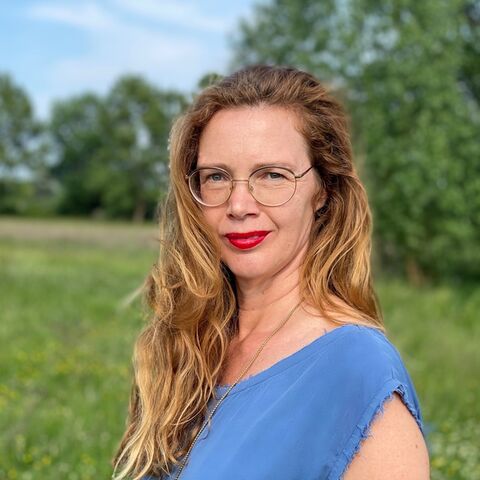
I'm Alexandra Kreis and you're listening to Outer Travel Inner Journey.
Journeying now for 30 years into the life and practice of yoga,
I have met many who have taken interesting turns when past extraordinary bumps and reached unexpected places.
People with whom I shared conversations about everyday struggles,
Intimate realizations,
Larger questions,
Ideas and dreams.
So today,
I'm passing on the mic to one of them so we could hear and celebrate the wisdom in people's differences and experiences.
Welcome to Outer Travel Inner Journey.
On my show today is Benjamin June.
Hey Benjamin.
Hello.
Nice to meet you.
Nice meeting you.
Benjamin is based in Berlin,
Germany,
Practicing in Berlin,
Living outside of Berlin,
Wise man.
And if you wanted to tag him down onto something,
I'd say he is a mindfulness teacher and an integral life coach.
And the reason we're talking today is that we want to talk about the truth of practices,
Not the truth as such that they are not true,
But you know,
How can you deepen your practices so they become reality from a very difficult transition from theory and understanding into lived wisdom.
That is what we're hoping to touch upon today.
So Benjamin,
You have quite a journey behind you from Korea to Germany with some trauma and maybe you want to give a rough idea to the listener.
Where did you absorb and fall into the path of wisdom teachings and Dharma teachings?
Well,
To understand me as a person,
I think there are some points of my life listeners should know.
And one thing is that I'm born in Korea and that I was an orphan with two and a half years old.
I lived in an orphanage for one year and then I was adopted to Münster,
A not too small town in the west of Germany.
For me,
It was more like different challenges coming together.
It's not like this one thing was challenging,
It was many challenges like changing again after being in the orphanage,
Changing again the environment and this in a very radical way.
Even the second one,
Not the orphanage,
I would say coming to Germany was much more radical.
So in the way of losing language,
Even losing the food and all the smell.
So everything which feels quite familiar.
And also even the person that you trust and you are befriended with coming into environment.
And then also not being able to communicate with the new called parents and even felt a kind of hostility by other children,
Not all of them,
Like just a couple.
But if you are a little boy,
You feel you have just one or two experiences based on my Asian heritage,
Which has been negative.
So I also experienced violence.
So this can be very intense,
Especially when you are already in a very vulnerable place and there's no one else like you.
So you have no one who can give you good advice or can help you in that moment.
So you are the only one who makes this experience or makes this experience in your environment.
So yeah.
Can I just intersect there for the listener who maybe hasn't met you and hasn't looked up on your website,
But you're coming from Generation X,
As they call it,
You were born in the 70s.
And so for somebody like my daughter,
She was born,
You know,
Like in Generation Y.
And,
You know,
There's a lot more going on in integrating Asian and African people into the community,
Into the German community,
I must add.
So you've been quite,
You know,
You've been taken into quite exceptional circumstances in Münster at the time.
So just to add that on,
Because,
Of course,
The world has opened up to a lot more integration.
Just to add that where that kind of struggle also is historically,
You know,
Kind of arriving from.
Yeah.
So with these experiences,
Many misconceptions were starting to grow in my mind.
And also some seeds of anger and frustration and sadness were watered.
So the misconception,
For example,
Was one of this was I have to be strong.
Right.
Because when you feel the violence and you feel weak,
You're maybe the smallest boy in the group,
In the kindergarten.
So then I had the belief I have to be strong.
So this was something I can follow up over many years.
I can see how this influenced my personality or my way of life.
And another misconception was I have to be kind of normal.
I have to be some kind of German.
Yeah.
So because something's wrong with me.
People tell me,
Other kids tell me I'm different and I want to be not different.
It is very interesting because being strong is a superiority and minority complex.
Right.
It's related to this.
I want to be stronger.
I feel weak.
I feel weak.
I want to be strong.
But this was an equality complex.
I wanted to be same.
I wanted to be very similar.
And this was very interesting because I had all kinds of complexes.
So I wanted to be similar.
But on the other hand,
I also wanted to be not that weak.
I wanted to be stronger.
I wanted to be the strongest even.
Right.
Yeah.
So and this with all these complexes and came also all the misconceptions.
So I was driven by them a lot.
And because complexes don't lead really to happiness,
They lead to more suffering.
So I suffered a lot when I was,
Especially when I was a youth.
I was very frustrated being on a very elitary school.
I would say with a little right wing mindset,
Very discriminating to weak people in the society.
And this was kind of obvious.
So they were talking loudly.
The teachers were talking badly about these people who are weak in the society.
This was for me very challenging to be there.
And I felt also I'm a part of these people.
And they are talking badly about.
So and from there,
I suffered a lot.
I felt not really integrated into the society.
I started also to hang with the wrong people in,
With Upward Socks.
Yes,
The right people at the time.
But yeah,
So hanging on the street and taking drugs.
And so this was my use to party a lot and to somehow feel that some people belong to me.
And that I can be happy even in this very sad time.
And drugs helped me and these people from the street helped me to feel that I belong to some.
Yeah,
And then I'm thinking about the original question that I mean,
Thank you for kind of giving us insight in your upbringing.
And it's super important to understand the next thing.
And also where you ended up in Buddhism,
You know,
Because Buddhism says,
You know,
Life is suffering.
And I read this the other day about that everybody who is on the spiritual path has some suffering,
You know,
Experience some suffering.
And the ones that experience strong suffering like you,
You know,
They're even much stronger drawn onto the question why and how and so on and so forth.
So yeah.
Yeah,
To make this long story a bit shorter.
I just want to point out that I made some spiritual experiences in my youth.
But I could not really understand this was kind of fantasy for me.
But it was a little bit different,
I felt because it was so deep.
What was deep?
Don't skip that part.
I'm so curious.
What happened?
Yeah,
I don't want to go too deep into it.
But one thing was that I realized why we are here.
Dreamlike realization,
Which was not really,
It felt like a dream in that moment.
But it was more a realization.
It helped me.
It helped me really,
That point.
And I was not that deep into some kind of spirituality.
I had never read a deep spiritual book.
I mean,
I come from Christianity,
And I was very curious about it.
And I read a lot in the Bible.
But it was never described this kind of realizations that a person can have.
That everyone can have this kind of realizations.
So some special people have it,
Right?
Like Jesus.
Some very amazing people have it.
But me,
As a youth,
Frustrated and a little bit silly,
Or a lot of silliness in the mind,
Can have this realization.
It was never described there.
I never saw that.
But yeah,
I had this realization,
And it helped me a lot to understand.
And the second one was a more mathematic realization to understand that everything is one.
It's just nothing,
That everything is one.
But it means even a tree is one,
But by everything,
Everything is inside in the tree.
Everything is in the drop.
Everything is on planet Earth,
In every human being.
And this was more,
It was a mathematic realization.
I was really understanding that in numbers,
That everything is just one.
It was so simple.
But it was a complex realization on the other hand.
The holographic universe that you're talking about.
If you look at a diamond,
On the one hand,
Diamond is one.
But it mirrors everything,
What comes from outside and can bundle everything at one point.
Even if you bring one light into the diamond,
It can spread in many different directions.
So these were maybe the two very important realizations that I had in that time.
That everything is one,
And that there is a reason why we are here.
Beautiful.
But that was it.
It was not like that I had a follow-up and then I followed a spiritual teacher and I did go to India.
No,
I still was struggling,
Suffering and taking drugs and partying hard.
I did it for a very long time.
And even my first passion was to work in this scene,
To become a techno and minimal house DJ and also throwing parties and even co-running a club in Berlin Mitte.
And this was going on until 25.
And there was one point,
It was just enough.
It was enough of drugs,
Alcohol is a part of drugs.
Enough of nightlife,
Of superficial relationships and also struggling with finances.
And I felt like maybe my father was right and I was going to study.
I think many people of us are at this point.
But I gave it a try for two weeks and we studied in Berlin.
Fortunately,
A friend gave me a call and asked me if he can hire me.
And he worked in the advertisement.
So it was a very good job.
He gave me all the professional environment.
I could learn a lot from his professional team.
I became the head of the department.
So I felt it was perfect from everything around me.
I had employees and I could really grow it in my way.
And it went also very well.
But it was advertisement.
So I was very happy with everything.
I had a good boss.
I had great employees around me in the team.
And we were very successful with what we did.
And in the same time,
I started to read Buddhist books.
Not Thich Nhat Hanh from the very beginning,
But in general Buddhism.
And somehow it changed something without that I was really aware of it.
I was asking questions like,
Is this it?
Should I really do this?
And there was one point a friend gave me a book from Thich Nhat Hanh.
And this was different to all the other Buddhist books.
Because the way he wrote,
It was the first time I really did understand the teachings.
It was so simple that even me,
I could understand.
Because before it was stories like the white tiger meets the monk on the mountain.
And I'm like,
What has this to do with me?
And it was more like something which is far away from my daily life.
And it was more like riddles.
Like Zen riddles.
It didn't help me.
It just confused me more.
But Thich Nhat Hanh gave me something else.
He gave me something that even I can understand it.
And that I can integrate it in my life.
And from there,
It started that I really began to question like,
What is the deeper meaning of what I do here?
And then we can fast forward maybe a good 20 years.
Or a little bit less.
Where you're now kind of comfortably sitting in this positioning of having an interest in this path and passing it on.
And as you said,
Before we came officially together here,
You mentioned there is a lot of skillful people out there these days that do wisdom teaching and dharma teaching.
And I also feel we've managed to break down these higher practices into more attainable steps and understandings from the lifestyle we live.
I also feel that totally.
That is one of my goals.
That was always one of my goals to break it down from the high teachings of sutras that contain so much in giving more life-related answers at first.
And I think Thich Nhat Hanh did a very good job on that,
Who absolutely is a gifted storyteller as such.
Yeah.
But as I said,
Fast forward if you kind of went and met your current teacher a while back and you asked him a question,
Maybe we can go on further here and talk about what we said we're going to talk about.
Yeah,
We just would like to add one or two things to give a bridge.
So for me,
From there,
I started to realize I want to live an ethical life.
So I worked with organic products and sustainability in this field.
And somehow I did feel this is not truly what I want to give in the world.
And I had after a long relationship and partnership in the business for organic restaurant and catering,
I was in maybe another very deep crisis in my life because I lost my partner.
And I lost also kind of my job.
I was still clinging on the part of the company,
Which was a cafe.
But I wasn't really there.
Not with my heart.
Even my ex-partner said like,
Let it go.
And I didn't.
Because I didn't know where to go.
I was really like now something stopped in my life,
But I didn't know what is the next step.
And there was just one question,
Big question for me.
Do I want to go back to business?
And I had a chance to go to business for a sustainable startup where I already worked as a consultant for a couple of months.
But it was very busy.
They were very hard work,
12 hours a day and every day.
Sometimes even more.
Or do you want to do what you really want to do?
What you ever wanted to do?
And I don't know,
This was the thing.
I did what I ever wanted to do.
All the things which I couldn't do because I was working so hard for many years.
And the other hand is,
What is it what I really want to do?
And to discover this.
And from there,
I really started to study again.
To study and I was a student everywhere.
If it was a student of parkour or basic movement training.
If it was becoming a student again from martial arts.
If it was to study cuddling,
Mindful touch,
Giving massage,
Authentic communication.
And there were so many things.
I was falling into a kind of scene where all these workshops have been.
I never was aware that they exist.
Like contact improvisation dance.
When I saw it,
I was so amazed by it.
And when I did it,
I even was amazed.
So I did it for many years.
But still,
All these people who do for many years authentic relating.
Or for many years,
They do this and this kind of dance or technique.
And this message,
I didn't feel that they're really,
Really happy.
Even the teachers,
I could not see that they really are that what they are talking about in their teaching.
They're also seeking for it.
This is one thing of the observation.
But it's not only in the outside.
It was also the inside that I realized that even I do this what I really want.
And it helps me to live more authentically.
But still,
I'm not really happy.
And I still feel I can see my unskillfulness and the lack of integration.
So I train authentic relation.
And I even teach it already.
But am I really always authentic in my communication?
And I had to realize that there was a lot of flaws in my own integration.
And therefore,
Also in my teaching.
Therefore,
I asked in the monastery of Thich Nhat Hanh in Plum Village.
I asked one of the monks.
And I told him,
Look,
I'm unskillful.
I have a look at my unskillfulness.
While I was here in the retreat,
I had a realization of my unskillfulness.
And I need your help because I suffer because of my unskillfulness.
I need skills to suffer less.
And he was very generous to give me a couple of advice.
But I think the main advice was,
Benjamin,
Your first and most important thing is that whatever you teach,
That you teach from deep experience,
From a deep practice.
And yeah,
One part of me was hurt.
Like I said,
Like,
Oh,
Maybe the part who had the hope,
You're not unskillful.
You're already skillful,
Benjamin.
Go out.
And this part was like,
OK,
He accepts that I'm unskillful.
And this was hurt.
Like,
OK,
Yes.
And maybe he even sees my unskillfulness.
Obviously,
He can see it because he is so skillful.
And on the other hand,
There was a part very grateful to be reminded that this is the next thing I have to focus on in my life.
That he gave me,
Like,
Said,
Like,
Your realization in the meditation was right.
You are unskillful and you have to take care.
And from there,
I reflected my way of teaching,
My way of how I am really,
How I really integrate my teachings in my personal life.
And that is less the theory,
The concepts,
That it's more I prove it.
I prove it and I live it and I try to integrate it more and more.
I'm so grateful that you brought up this difficult subject.
And it's funny that it's out there.
I think because I had a similar conversation with another podcast guest of mine.
And we talked about authenticity and the fear of vulnerability that comes with it.
So what you term skillfulness and becoming less and suffering is somehow the question,
You know,
I mean,
You always said it there,
You know,
Like,
How can I not suffer or suffer less?
And I think what's happening on the path really is that we have to come into the shadow side of these things that suffering is part of life,
Which is very difficult to understand when you kind of enter the part,
You know,
Like,
Why should I suffer?
And why shouldn't life be beautiful?
But mainly,
I'm grateful that you mentioned that the skillfulness is just being with what is,
You know,
That's kind of comes down to me.
And being with what is,
Is also to me,
Knowing when we're faking the material.
Oh,
We're not faking it,
We're just reciting and rehearsing something we heard instead of having lived it through.
And yes,
We need to do that at times to grow.
Even kids do that all the time.
They,
You know,
They say something back to you that you said,
They don't know what it really means.
But they know the energetic imprint of that,
They skillfully kind of read the energetic imprint of that and use it as such.
Yeah,
I don't think that faking is something,
Something really wrong.
I think neither do I.
Yeah,
Faking is very important.
We fake a lot.
And why we,
Because we can,
Because children and we can fake,
We can adapt.
And we can learn from the wisdom and from the skillfulness from others.
But faking is not enough.
That's the thing,
Like faking is,
There's nothing wrong with faking if you are not only clinging on faking.
So faking is sometimes helpful,
But sometimes not.
And we,
In our school system here in Germany and the Western society,
We adapt too much.
We learn too much of the system that we have to repeat the knowledge of the teacher or of the system.
And then we get an A or a note,
A good,
A good certification.
Right?
Yeah.
Good,
Great.
So we have not enough of experience-based learning and individual learning in our schools.
So that people,
That children can really give different answers,
Share other perspectives,
Come to other solutions,
Having own experience.
Even that maybe the solution is wrong,
But the way someone tried to come to a solution can be awesome,
Can be amazingly creative and could be more emphasized.
Right?
I can see that it's sometimes also happening.
It's not like that I did experiences with some of my teachers who also mentioned this.
They said like,
Yes,
The solution is wrong,
But the way how you tried was very,
Very nice.
And they also gave me,
Gave me points for this.
But even there,
It's a problem that we are clinging on getting points.
Right?
So not to talk too much about our school system,
But we experienced from our childhood with our school,
With our parents,
Maybe our family,
That it's good to adapt the knowledge of others.
And,
But we learn to less,
To still play and to practice,
To really practice and to joyfully practice.
Solution is something to get there.
The solution is to go the way,
The way of joy and that you feel motivated by your own deep joy to practice and learn.
And this also something I had to realize even deeper when I become,
Become a father.
Two years ago,
Or nearly two years ago.
Thank you.
And this was a huge challenge,
Still is a challenge,
But it was in the first year,
It was very challenging.
On the one hand,
I lost my practice and I lost my daily routine and I lost my sleep.
So I was very often in a state of mind,
Which was not the best conditions to be a mindful father and also to be a mindful teacher or partner.
When your son came into your life,
You actually felt like you weren't,
You know,
You were in a position where you know he can't be the mindful teacher,
Mindful father,
You've kind of desired to be.
Yes.
And even mindful student.
So yes,
The idea that I had about how I can practice and integrate meditation into my daily life,
This idea was not working anymore.
Somehow quickly I realized when I let go of this idea,
I can bring meditation to my daily life in a completely different way,
Maybe even deeper way.
And I just remembered a teaching of Thich Nhat Hanh,
Which was very important because I didn't like to wash my dishes.
And many people suffered.
People who lived with me in the same household,
They had to suffer and me too,
Because I discriminated dishwashing as something I don't want to do.
And he gave me the teaching,
Wash your dishes like the butt of your baby Buddha.
And then I had a little baby Buddha at home.
And this image helped me a lot because then I could change the diapers of baby Buddha in a very mindful way.
And I could hold him when he was going to sleep.
And it took sometimes a long time.
I could walk with him very mindfully in the park and just being with him and to be really aware that I'm with him,
To be really present in that moment,
To feel him and to have a very mindful hug in this time.
Another example is when he was full of anger and frustration or sadness.
The part of me was like overwhelmed and want to run away or want to make it somehow that it disappears,
The anger,
Yes.
But on the other hand,
I didn't know there's nothing to make away from these emotions.
And my son should learn that it's OK to be sad.
And I'm with him.
I'm present.
I know that you are suffering and I'm here.
I'm here for you.
That's the only thing to do and to not being against this anger or to empower this anger to be just there.
And to learn this with somehow my boy became kind of teacher as well and being a father become a practice as well.
So and then I could understand that I can integrate all the teachings and I could also see how beautiful it is.
I don't need to sit only one hour on the floor,
Which is nearly impossible in the first year.
But there are so many ways to meditate.
And this is very beautiful.
And this is,
I feel,
What is the whole teaching is about,
That we are not looking for perfect circumstances to be happy,
To practice,
That we take all the circumstances that we have for our practice.
And that this practice is for anyone,
Not only for monks,
Also for overwhelmed fathers.
Indeed,
All these practices are for reality.
And I think there's been misunderstood from so many of us as golden grails that we're turning ourselves.
Like you said,
Initially,
There is no Bible story mentions that Jesus was a drug or a drug addict or whatever.
But that misperception of that we either have to come as enlightened to this world and then get all the surprising moments immediately.
And then there is the other part of the world,
The other human beings.
But it's not.
It's all there in the living.
And I think this is filtering through very nicely in our conversation as well.
Yeah.
Yeah.
Yeah.
I don't have anything to add on.
No.
And I think you said something very important.
And I think that's almost a good roundup to our conversation in where you have arrived or where you can arrive if you follow your practices and where life is taking you with your practices to become more and more real,
More authentic and recognize that it's the magic light in the moment,
So to speak.
Yeah.
So maybe one more word for the listener.
Would you like to give a personal kind of insight?
I mean,
You've gave a lot of personal insights away already,
But maybe there's a gift or something you want to offer to the listener right now towards the end.
Yeah,
I just can repeat myself.
When I talk to some clients and students,
Some people,
They're waiting for better conditions to be able to practice,
To look at their suffering,
To go to a therapist or to a coach or to do something for themselves.
And they say,
I don't have time now.
Or,
You know,
And sometimes I also when I was a movement trainer,
People said,
I don't I cannot do movement training now because I'm not fit enough.
Yeah,
Yeah.
But one thing I can really tell is like there is practice outside which is really joyful and it's easy and it will bring you relief from the very first moment of the very first breath that you take mindfully will give you a relief in your life.
And you can do it in a very gentle way in that way that you can easily integrate it and you feel a great relief in your life and you don't need to wait for perfect circumstances.
Perfect circumstances are not the goal.
It is a way we create this circumstances in our lives and in the here and now with our practice.
And this is I want to motivate people.
Don't wait too long.
But our life is very short and happiness is here now.
Wonderful.
Wonderful.
Thank you,
Benjamin,
For coming to today's show and on the station and sharing openly.
And thank you,
Dear listener,
For having a go with us on this beautiful walk around Germany and in a landscape.
Thank you very much for the conversation.
I truly enjoyed it.