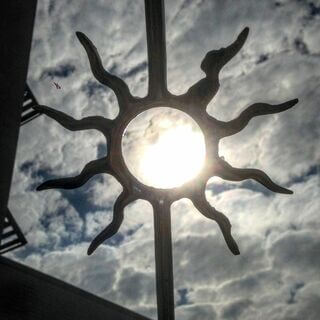
We all notice seasonal variation.
Most of us can't account for it.
It is perhaps the most common scientific misconception.
Contrary to popular belief,
We do not experience summer because the Earth gets closer to the sun.
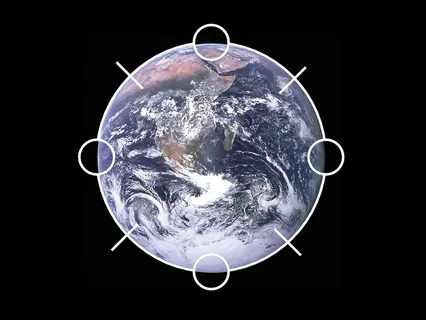
It's because the Earth is tilted on its axis.
When our hemisphere tilts toward the sun,
We get more light,
Things warm up,
And we call that summer.
Our planet does not actually rock back and forth on its axis.
It only seems that way,
Maintaining the same tilt as it revolves around the sun.
That point of maximum tilt toward the sun occurs in late June for the northern hemisphere.
It's the summer solstice,
Also known as mid-summer.
Sadly,
Most Americans are ignorant of this seasonal moment.
We seem marginally more familiar with the winter solstice,
Probably because of the vast commercial pressures that have accreted around that time in late December.
Even so,
Most of us remain unaware that the winter solstice,
Our time of maximum tilt away from the sun,
Is the inverse,
The opposite,
The antithesis of the summer solstice.
Six months removed from one another,
We might regard these two celestial events as antipodes,
Points on opposite sides of a circle,
Representing the cycle of seasons.
The poetics of the winter solstice are perhaps slightly better understood in our popular culture,
The birth of light in the depths of darkness.
What,
Then,
Are the poetics of the summer solstice?
If it is truly the inverse of the winter solstice,
Then it stands to reason that it must be the birth of dark at the peak of lightness,
Or the dying of the light at its very summit.
Perhaps this is why Americans have forgotten the summer solstice and the midsummer holiday.
We love summer,
With its connotations of fun and the sun and trips to the beach.
You'd think we'd be interested in celebrating this moment when the sun is at its zenith.
But at this moment of the sun's greatest power,
It begins to decline,
To wane,
To die.
There's something subversive about recognizing this,
Something almost offensive to our national character.
Our nation is caught up in a fantasy of endless growth and constant improvement.
Acknowledging limits established by nature goes against our grain.
Quite frankly,
It gives us the willies.
Elsewhere,
Things are different.
Midsummer is still the second biggest holiday of the year in the Nordic countries,
Especially Sweden and Finland,
But also in Estonia and Latvia.
You will may be bigger,
But the midsummer celebrations are more distinctive.
In Britain,
A certain bard wrote a rather famous play set on midsummer night.
Also famous is the monument known as Stonehenge,
Which marks several astronomical events,
But seems to be primarily oriented to the summer solstice.
It's one of many monuments around the world which honor the day.
If ancient people shared our qualms,
It did not stop them from observing the solstice.
And there are indications that this is slowly changing in America now.
As with every year,
Various communities and municipalities are rediscovering the holiday and celebrating in diverse fashions.
And how can we characterize the day itself?
To us on the surface of the planet,
It seems that the sun is rising ever higher in the sky.
And on this day it reaches its highest point,
Seeming to stand still in its march across the sky.
The word solstice derives from Latin for sun standing.
The days have been getting longer,
But this is the longest day of the year.
If you like natural light,
Rejoice!
This day has more of it than any other,
Provided the weather cooperates,
Of course.
In New Orleans and similar latitudes,
It's over 14 hours from sunrise to sunset.
Anchorage clocks in at 19 hours and 21 minutes.
At the Arctic Circle,
The sun stays up all day.
It is not difficult to make associations between summer and sunlight in life.
We know that virtually all life forms on our planet are dependent upon energy received from the sun,
Either directly or indirectly.
The summer season in general,
And the longest day in particular,
Might be said to represent or embody life in all its fullness.
Indeed,
Our word day derives from the Old English tag,
Which also meant lifetime.
It's related to the Lithuanian tagas,
Meaning hot season,
And the Old Prussian tagas,
Meaning summer.
Today,
We recognize at least two distinct meanings for the word day.
It refers to the 24-hour period,
Of course,
But that's a relatively recent definition.
The older meaning still with us is the daylight hours,
The opposite of night.
These associations suggest that midsummer might well be regarded as the ultimate day of the summer season,
The day of life,
The day of days.
Sometimes,
We might complain about all this energy the sun sends our way,
Especially if we get sunburnt or overheated.
But the truth is we capture only a tiny fraction of the sun's awe-inspiring energy.
Only about one billionth of the sun's energy enters Earth's atmosphere.
Even so,
This tiny fraction of solar energy is so vast that just one year's worth is equivalent to all our planet's non-renewable resources,
All the coal,
All the oil,
All the natural gas,
All the uranium combined.
We seem bent on consuming these resources as quickly as possible.
When they're gone,
The sun will still be shining.
Midsummer is the propitious time to recognize and celebrate the superabundance of energy,
To consider what it means for us and how we might respond.
Yet it would be facile and simplistic to imagine that midsummer is all about sunshine.
Precisely at this supreme moment,
At the very pinnacle of light and power,
The decline begins.
As Glenys Livingston writes,
The seed of darkness is born.
How could it be otherwise?
All extremes contain within them their opposites,
Necessarily,
Else they would not be extremes.
This idea is enshrined in the sacred symbol of the yin-yang.
In Chinese traditional medicine,
Yin is held to begin with the summer solstice,
When yang is at its peak.
In the light we find the darkness,
In the masculine we find the feminine,
In the heavens we find the earth,
In the fullness we find the void.
Midsummer is also a time to reflect on this mystery.
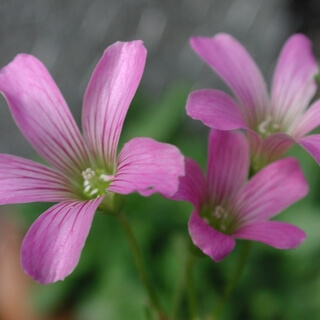
Flowers are a fine symbol of summer.
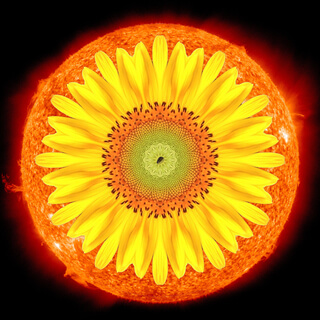
The sunflower especially comes to mind with its solar petals and seeds of darkness.
Calendula verbena,
Elderflowers,
St.
John's wort,
And many others have been associated with the day.
The rose in particular has been imbued with deep mystical significance.
Perhaps it's the combination of beauty,
Perfume,
And sharp thorns.
English folklore holds that a rose picked at midsummer will stay fresh till yule tide,
At which point it may be used to magically divine a young woman's future husband.
As the romantic floral connotations suggest,
Midsummer has long been a day for love and lovers.
For centuries,
June has been far and away the most popular month for weddings,
The very name of the month derived from the Roman goddess Juno,
Queen of the gods but also goddess of marriage.
This is the time to celebrate union,
And not just the young,
Passionate,
Lusty desires of May,
But also the more mature,
Stable,
Lasting commitment,
The intimate,
Deep commingling of self and other.
There are few events more happy than a wedding,
And no season so conducive to happiness as summer.
Midsummer is a time to contemplate all the good things that make us happy.
John Crowley writes in his sprawling novel Little Big,
The things that make us happy make us wise.
The book also contains a fantastic midsummer wedding scene.
Go out into wild nature if you can.
Glory in the beauty of Gaia untamed,
The thriving vitality of life.
Gather some wildflowers,
Inhale their fragrance,
Make a garland,
Dance,
Drink honey mead,
Take a nap.
Let yourself dissolve in the warm bliss of the longest day.
Starhawk calls it the giveaway time of the sun,
The superabundance of solar energy that makes possible our ecosystem,
The radiant light that sustains Gaia,
The very web of life of which we take part.
This is a gift.
We enjoy all this richness freely,
Nor are we merely recipients of this beneficence.
We also participate in it.
Like the flowers,
We can flourish,
Creating something new and beautiful.
The giveaway is not just to us,
But of us.
Well,
I'm Bart Everson.
I've been reading to you from my book Spinning in Place,
A Secular Humanist Embraces the Neopagan Wheel of the Year,
From a chapter called Flowers to Flame.
If you enjoyed this,
I encourage you to seek out the book.
It's available right now on Kindle only so you can get it from Amazon.
And thank you for listening.
And of course,
Have a happy solstice.