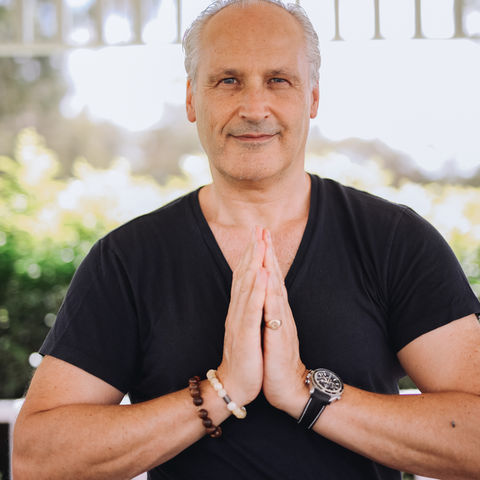
Hello and welcome back I'm Ed Andrew this is Human Impact and today I'm joined for episode 56 by Christopher Plowman.
Christopher is the CEO and co-founder of the world's largest meditation app Insight Timer with six and a half million subscribers,
Three thousand teachers,
Fifteen thousand meditations and one of the reasons I'm particularly happy to have Chris with me is because my family and I have used Insight Timer for the last year to meditate every single day.
It's free for every user,
Nobody gets locked out and it's a really inspiring journey of how to build a conscious business as well and it talks in great detail about how he runs the business,
How he tries to build a conscious business not being driven by profit and how they contribute and give back to their three thousand meditation teachers.
He also shares his own business and thoughts on entrepreneurship having lost three million dollars in his first year owing money to friends and family and it took him eight years to repay that.
How the next business took him seven years before it was a commercial success and that was before even set up Insight Timer.
So it's a great podcast,
Many many truth bombs,
Lots of pearls of wisdom in there about his own journey,
About what meditation is,
About building a conscious business and I really hope you enjoy it.
For all of those who love the show,
Thank you for coming back and listening again.
For those who are new,
Welcome to the show,
Thank you for coming and listening.
If you would love to subscribe or leave a review on Apple podcast that would be fantastic because that way more people will come and listen to the show because we're pushed higher up the rankings.
You can find all the show notes and everything you need at thehumanconsultancy.
Com and if you ever have any questions about guests or you think you'd be a guest yourself or someone to recommend,
Leave any comments on the show,
Please email me directly ed.
Edandrew.
Com.
That's ed.
Edandrew.
Com.
Anyway I really hope you enjoyed the show,
Thanks.
Hello and welcome back.
Today it gives me great pleasure to have as my guest Christopher Plowman who is the co-founder and CEO of Insight Timer,
The world's largest meditationer.
Christopher,
It's a great pleasure to have you with me today.
It's great to be here Ed.
Thank you for having me.
My pleasure.
We're gonna dive into something.
So I saw that a couple of days ago or a couple of weeks ago that for those who don't know Insight Timer,
It is a free app,
It always has been and we're gonna get into that very quickly but a couple of weeks ago,
Calm put up three very significant billboards in San Francisco advertising their services and it's the first time you'd ever advertise and you put up a billboard which was very clever opposite saying don't pay for someone to sleep with you,
Sleep with us for free and I love that's a brilliant bit of marketing.
I know you're an ex-startup guy but where does that sit in the whole sort of ethos of the business because I know that's probably a little bit of a break for you.
Yes,
Look I'm a little bit ashamed that this is the first thing we're talking about.
We have always believed that actually attraction long-term is much more powerful in promotion,
Right?
If you're sit and you're still that essentially entities gravitate towards you.
If you're loud and noisy you tend to propel them away and so we've never done any advertising at all.
We've got I think when Niko and I bought the app four years ago it had maybe a hundred thousand users we've now got about six and a half million users and between ten and twelve thousand people,
New people join our community every day all through word-of-mouth because we've never,
As I said,
We've never done any advertising.
But lately we've been frustrated I guess that the mainstream media seems to be focusing on kind of only two apps,
Right?
Calm and Headspace.
And Calm and Headspace play an important role in the conscious landscape but our view is it's a very narrow role,
Right?
It's a very sort of sanitized version of meditation which they've bundled up and called mindfulness and for some people that's great but there's a much bigger sort of opportunity here which is to actually try and raise consciousness around the world and we don't think that those apps alone are actually going to do that.
So we've been trying to think about ways where we could sort of elevate our story up into the mainstream.
We don't have a lot of money,
We don't make money,
We're a loss-making platform at the moment,
We hope to change that.
And a couple of days ago someone,
A friend of mine,
Sent me a picture of these massive billboards on the highway into San Francisco which was just Calm's logo and underneath it says come sleep with us.
And I just had an idea,
I thought I wonder if there's a billboard over the road that's available so I tracked down the company that sells them and lo and behold the universe seemed to be supportive of this idea because it turns out that there was a cheaper billboard on the other side of the road which was available for sale and so I quickly with my team came up with a sort of a bit of a joke.
We said well don't pay others to sleep with you,
Come and sleep with us for free because of course an insight timer we have about 15,
000 free guided meditations for sleep and anxiety and stress and Calm essentially charges for all of theirs.
And so we did something we've never done before which is we took a punt and we spent some money and we bought a billboard.
And for seven days I've been sitting here dying about whether or not this was the worst we've ever done or actually something that's good clean fun and funny and it turns out that it's the latter because we posted it on Instagram yesterday.
I think we've had 5,
000 likes on it,
It's been our most sort of shared and enjoyed post we've ever done.
So I don't think you'll be seeing us doing a lot more of that.
It kind of felt like a one-off thing and maybe I did it as an expression of frustration rather than a considered strategy but I'm glad we did.
Yeah I think you know what we'll move on from that because I can see your pain.
The people who are listening can't,
We're on video but we're not going to record that.
But you know what from a strategic point of view I had a guy and recently called for that's who's a corporate and political marketer,
He's a bit of a guru,
He's won three presidential elections and this is how he runs his campaigns right.
But he's doing very strategically which is really this effectively it's not negative advertising but it's taking another business and saying well it's supplying your message to them it's rather like the Mac PC ads.
It's not anti,
It's very ethical,
It's conscious but it's also saying look at us.
And so personally I'm an Insight Timer fan,
We use the app every day in our family,
My two girls,
My wife and I we use it every single day,
They meditate aged 8 to 9 every night and I've been doing it on your app for a year.
You know as a startup guy myself I think it's brilliant so good to me congratulations.
We haven't heard from Kam yet I suspect we won.
I think you raised a good point though,
It's not it wasn't negative,
It wasn't nasty,
It was funny.
It's clever,
Christopher it's clever you know there's no two ways about that and you know what it'll make people sit up and think.
And you raise a really good point which we can get more into which is you know about mindfulness and meditation and the place of Headspace and Calm and Insight Timer in the market and I think Insight Timer has 67% of all meditation apps listeners and subscribers which is staggering and it's nearly three times the combined weight of Headspace and Calm and yet because it's not paid for and it's not promoted and you're not an ex-monk you know it's getting less traction.
So one of the things which obviously you promote very heavily is conscious the fact that the business has a conscious leadership it's run as a conscious business and one of the things you mentioned earlier is that it's loss making.
So you're a startup founder you've been a successful entrepreneur yourself you know we've all had many ups and downs in that in that life.
How do you rationalize the loss making business with running a conscious business because there are so many people many of my listeners who I talk to on a regular basis who they want to do something alternatively which is not just about creating enormous wealth they want to do something to give it back to the planet to be conscious so how do you rationalize that?
Are you talking about how do you rationalize the fact that we need to make a profit and we also want to be conscious?
Yeah well I mean look at your perspective I'm assuming you don't have social depocas that you can make a loss forever.
I guess I could answer this,
A lot of people say oh it's wrong for meditation teachers to charge their time.
And of course it's just I was gonna say it's a silly thing to say it's just not a sustainable thing to say.
I remember I spoke to one of my meditation teachers once about that he says look we tried the poverty model and it doesn't work.
We have kids and we have mortgages and we need to sustain ourselves and we need to be comfortable so that we can teach and I think you can you can sort of take that line and extrapolate that out to companies.
Companies should also be sustainable and actually there's nothing wrong with profit right?
The problem with concepts like profit is they've been sort of commandeered if you like by greedy people right so profits become a bad word because you look at the banks and you look at companies that pull resources out of the ground and you look at what's happening with some of these big tech companies right now is they forget their responsibilities right?
I wrote an article on our blog the other day about the harmony the necessary harmony between rights and responsibilities and then somewhere along the way these two things have diverged right?
You absolutely have a right to create wealth right absolutely but you have a responsibility actually to be generous and to pay you tax and to do the right thing by others right and the problem we've got is a lot of people sort of savagely defend their rights but ignore their responsibilities and when you have rights without responsibilities they become divisive they become greed they become all these sorts of things.
So when Nico and I first started Insight Timer we kind of decided that there was essentially two types of organizations that existed today.
One of them is sort of the commercial entity which is essentially primarily focused around profit right companies they talk about fiduciary duty and value to shareholders and maximizing profits and efficiency and all this sort of stuff and a lot of these companies do a very very good job of creating a lot of wealth for their shareholders and a very very bad job of creating a conscious planet right?
They take it out of the environment they take out the planet they sort of hoard rather than contributing back so that's on the one hand on the other side you've got the complete opposite right which is in simplistic terms let's call them charities alright organizations that exist to serve the welfare of others.
The problem with this group of organizations is they depend on the charity the generosity of others right they're not sustainable and so they tend to reach a level of entropy at some point or they're constantly spending all of their time trying to find people to support them which is very distracting a lot of the funding that they earn has to go into sort of organizing teams of people to raise funding right and so we looked at these two things we thought well neither of these two things actually are going to sustain a conscious planet we actually we have to create something that's in the middle right if you want to get smart people out of school and university to come and work for you you need to create the possibility for them to build a career and to create wealth and to be comfortable and so this is kind of what we're trying to do it in such time which is we're absolutely unapologetically trying to create a profitable company right but we won't do it if it means at the expense of actually respecting our responsibilities which is actually considering the planet considering all of the stakeholders and that's very challenging you know because we give meditation away at the moment to six point two five million people for free and we have about 50,
000 people that pay a small five dollar subscription every month and we we could be profitable much sooner right we could turn off some content and lock down this and turn that off but we won't do it we're very fortunate we have we have a great group of investors that believe in insight timer and we hope we'll get there eventually but that's the challenge right it's like how do you give your product away for free and really give meditation away to every person on the planet and make a profit in the process and the answer is it's very very hard yeah it's and look you know I it's one of those things that you know if we just go back to sort of start up well for a little second it's one of those things where you know there are two schools of thought always do you start with free would you start with pay because very hard to convert there are lots of businesses have done had a real struggle converting free to paid regardless of how conscious you want to build your business anyway yours is I think a slightly different space and how you build a product and how you change that product in in in time as well so yeah I mean a good a good comparison there for you just for your listeners is if you look at Apple music and Spotify hmm right so and then two very reputable businesses very successful and two very different models right Apple's model which is a subscription business is you have to pay to play right you don't get anything unless you pay a monthly subscription same as Netflix of course they give you a month or two free to try it out but essentially if you want to consume the content you have to pay Spotify's model is very very different it says you can listen to whatever you want right and that's great for artists and it's great for the audience because we're creating sort of connections between artists and music and listeners but if you want to do certain things on our app well you have to pay for that right and we've kind of taken the Spotify approach if you want to download and things like that or take a course then you pay for the delivery of that correct but if you want to actually have a meaningful daily meditation practice with the timer and all the support groups and 15,
000 titles and access to three thousand teachers all of that's free yeah and look it is absolutely staggering I mean one of my favorite one as a family favorite is Sarah Blondin we just love her style of delivery and you know I was checking out some of your meditation teachers earlier and you know you've got some like Mary Maddox has been around for forever you've got Jack Kornfield's been around forever but these are mainstream teachers right on your platform as well and you know Sarah's had what 6.
2 million people listening so in the in bringing other new meditations I've got friends who have just become Vedic meditation teachers and had doing different things around the world and you know it's something I want to recommend to them to do that I don't know you'll know the answers but when they're coming on when people are listening to the free side of the presumably they then reach out or have the ability to reach out to the instruction say can I come and you know do you have any courses I can come and do and they're happy to pay for that is there flow back to those teachers even from the free side yes actually it's it's it's slightly better than that for the teachers so firstly insight time it really is the best platform for a meditation teacher to reach a whole new audience of people without spending money of their own money on advertising when you upload new contents for the first time in our app you might get 10 or 15 thousand people that day who will play your guided meditation and they'll raise it and I'll tell you what they think and then they can follow you on the app and join your group if you have one and then you can start a discourse with them and all of that is just part of the free service what we do which is also very different to most other platform is we share exactly half of all of our subscription revenue with our teachers is that great line which is a platform should create more value than it captures right and what that means is that's another reason why we're not profitable at the moment because if you take a dollar that someone spends on insight time up 30% of that goes off to Apple and Google for the App Store Commission's that leaves 70% we keep 35% and the teacher takes 35% for that and we pay teachers that 35% for their free content right so if you're a teacher that uploads regularly and creates great new content and gets good ratings at the end of the month we take the 35% of all the money we've earned and we split that up between all the teachers who've been uploading contents so even though their contents free they're actually getting paid for it from the revenue we generate through the subscription that's fantastic and presumably the paid content is a slightly different fee generation model as well I mean okay so 35% goes to you 35% goes to the teachers on the free side but the teachers who are part of the paid program it is that the same 35% gets split amongst them as well yes so so all the revenue that's generated the app stores get their Commission soon we'll be starting to sell stuff on the web as well so the app stores won't get their Commission so the website which I want to tell everyone inside timer calm beautiful just been up in the last few days I haven't checked it out today so what we do is we take half of the revenue that we get right and we divide that up amongst all the teachers according to how many people are doing their courses how many people listen to their free content we built this I hate to say it but an algorithm that looks at how our users engage with contents on an anonymous basis and that's how we determine who gets what from the teacher pool and of course we take things into account like teachers that spend a lot of time answering questions and responding to reviews and thanking people for their donations because you can donate to teachers as well they might get a slightly higher portion of revenue each month because they're engaging with the community so that we've only had a revenue engine if you like up for about a year now it's very early days but we it's been very well received by the community our biggest challenge it is we don't have enough users on the platform which is why we bought a billboard yesterday you know we've got I said we've got about six million users we only have about fifty thousand subscribers I guess but fifty thousand times five dollars times thirty five percent doesn't add up to enough to actually pay our monthly bills right so and what we need is we need to get to 50 million people meditating for free on the app and that makes me might have half a million subscribers right one percent and the beauty there is that that means we'd be sustainable and our teachers would be earning really really solid monthly income so it sounds like you need to do some promotion Christopher I could definitely put you in touch with a few others if you want to go down that path who've got very significant shows and can help in that respect as well but that would be great I essentially have a rule now where I just say yes to any not any person it's very exclusive now I'm this is kind of I think my role now for the next four months is just to demystify what mindfulness and meditation is and talk to people about the fact that you don't have to pay calm and headspace a hundred bucks a year for a meditation practice it doesn't mean you don't have to if you like it but the point is there's a free alternative with 3,
000 teachers and of course we'd love you to end up subscribing for a bunch of other things on the app of course we would but what we won't do which is what they do is we won't lock you out after seven days yeah if you don't subscribe you will continue to be a welcome member of our community and we will nurture you all the way through for as long as you like on our app as a meditator and that's pretty that's just this this morning well you know an hour so I go I'd use the timer and a bell and everything else and they come up with came up with seven you know seven days get the free content so that's great to hear for people who are actually listening and to hear that message right from you you're not going to get locked out and there are a couple of things I want to touch on because I know what time is short today um one is you know you've you've talked about two struggles that you've had yourself one is you know the early stage of a an entrepreneur you had like all of us successes and failures but you know it hurt it hurts you and you talk about success and failure do you think it's about time and I'm really passionate about this we stopped we started reframing around success and failure to just their adventures life is not a failure or a success it's a series of projects it's a series of ventures we have some we do better than others but every single time we learn from that because that's what you know meditation teaches us it teaches us not to be reactive it teaches us to observe it teaches us to be calm it teaches us to be much better at resolving problems from our heart base and from our mind yeah I think the big challenge with entrepreneurs is you have to detach your personal identity from your company and it took me a long time to understand that I had a web website web development company when I was 24 and financially speaking it was an absolute disaster I ended up with three million dollars worth of debt I couldn't pay the staff and this was back in the tech wreck of 1999 2000 2001 and I could have done what most companies did at the time which is just call it in declare bankruptcy but I owed my mum money I owed my brother's money anyway I spent eight years paying it back and I paid back every last cent but for a long time afterwards I felt like a huge failure money and family cause cause you know challenges and I really defined myself personally as a failure because my company had been a failure and I mean there but I say if I it was a it was it it was a disaster and then what happened was I started another company which was a discount ticketing business and for six or seven years that was a failure too and then it came good at the end and I suddenly I felt oh geez I'm not a failure anymore because I suddenly have a successful you made money yeah we made money we made a profit you made a profit and of course now as I get older I look back on that web development company and I realize in hindsight that kind of everything I learnt in that company is stuff that I'm applying to how we grow and protect insight timer right if I hadn't have been through that experience for ten years building that web development company I don't think insight timer would be what it is today right so you start to look back on your failures in inverted commas and then you start to consider them as assets but I do think I like the idea of considering them as adventures I do think the problem is we all attach entrepreneurs especially we attach our identity to our to our work life and partly that's not a bad thing because if you don't throw your whole self into a start-up it's not gonna work right but it's also gonna be quite quite damaging yeah I don't think people really understand how hard it is they all think you know the loss of people prodding the glory of being of having your own business yes it can create wealth for you there are other ways of doing that as well but it's not for everyone I've seen many people it's just not they just cannot get their head around what it takes and to move through and the other thing I wanted to do is start-ups like jumping out of a plane and trying to knit the parachute that means that many of us hit the ground right 93 yeah I find the analogy bit generous because it implies that if you know how to mix in your fast you can actually get there but statistically you know I think the analogy would be more accurate if it was you know you jump off a wall it's it's a hard gig and the other thing I wanted to touch on is like you're in Bali you went there I think in 2012 I went there in 2014 I went there for all sorts of different reasons as well and we were touching on this earlier I went there because I was diagnosed with cancer I just lost a bunch of money in a tech startup but you know and I was building another business and we needed time out we needed to really to go to a location where the energy was good it's reasonably clean in the sense of there's not too much white noise going on I mean it can be we have to try and tune out of it it's good for the kids and what I figured and we were talking about this is like all the nutrition I was a raw vegan all the exercise all the meditation all of the energy healing all the shamans I saw the one thing that I believe and my cancer left when I was meditating I'll put that out there right now so that's one reason to be doing stuff it really does work but the one thing was that I really believed it was going to happen and you were saying that you know in your experience of many people who come to the island many people who are looking to heal wherever they are in the world the one thing that the biggest impact is they know it's going to happen um sorry I didn't understand that saying that out of all the mechanisms for healing the one thing which really is most impactful is having the right mindset that you're going to get better or that you're going to yes this is a this is this is a tough one to answer I do think there is a direct correlation between mental states and health I don't think that's I don't think anyone would dispute that there also is now research which suggests a very high correlation between what's going on in your gut your stomach and your mental health and that that these things are all very sort of symbiotic or codependent call it what you like and I'm hesitant to go sort of too much further than that because different people deal with ailments and diseases and cancers and things in their own way but I do think the mental state is the primary state right and that worries me because I'm you know running a startup is a stressful is a stressful thing to do I'm I we can't explain yet why someone who perhaps eats a lot or smokes a lot can live to 95 but someone who's extremely healthy can die early right we don't really know why I read something about a year ago which said something what was it happy happy cells happy life right happy mind happy cells right and I kind of do think there's some correlation in there that if you're stress-free and generally happy with your life then your chances of longevity increase but I'm I'm out of my depth here it it's more of a it was just a question of having seen so many people through the rapper you know any trends or patterns that you see but the I know we've got a wrap-up in a minute but so the last question I had for you is you know you talk a lot on on other shows about you know your own daily struggle with meditation as well as fitting the time in and getting yourself into the right space so for any meditators out there are people who are thinking of starting to meditate because they you know that they want to experience the benefits of it what would you suggest how would you suggest they use the app as a first-time meditator yeah I always I'm getting uncomfortable as I as insight time it grows because I'm often asked about my meditation practice I think she's on the worst person and then I remind myself that my honesty around this is actually I think what the community appreciates right we're not those people that sit up on a hill and say you must meditate we we know that meditation is definitely beneficial right and I know that when I'm meditating corners in my life seem a lot rounder things seem a lot smoother I'm slower to react negatively to things and I know when I'm not meditating the opposite is true right the big question right is how do you maintain a regular meditation practice and the answer to that is that if someone knew the answer to that question solving it what I do know is there are things that you can do which can help a lot right the first one is stop using the word meditation frankly right because I think a lot of people think oh shit I don't know what that is and it conjures up all of these woo-woo stuff you know what we're talking about is taking you know 10 15 20 minutes twice a day to sit in a quiet space and just stop right and if you can do that and think of it that way it's just time out right and there are things that you can do such as breathing right regular breathing is a great way to get into a meditative state there are great music tracks on the app you can listen to which will help you get into that meditative state and just start there right we have a seven-day course on the app which is free as you know and there's that's done by Sarah Blondin and that will talk you through some more specific stuff but don't beat yourself up about it and don't think I don't understand it because if you're sitting quietly with your eyes closed for 15 minutes in the morning and 15 minutes in the afternoon just that is a great start right and then of course as you start to do that more often you'll possibly become curious about all the various different types of meditation right and you might get interested in one or the other that would be my that would be my guidance don't elevate meditation up on a pedestal just throw that idea out and just sit with yourself for 15 minutes a day quietly right and go from there that's a perfect message to end on and I was normally say where do you find where do people find you but I think that's a pretty obvious answer right it's no doubt on Android and iOS and the website is brand new insight timer calm Christopher it's been an absolute pleasure thank you so much for joining me I've enjoyed it next time you're back in Bali yeah thank you and I really hope you enjoyed the show if you'd like to know more about the guests read the show notes how to contact them and listen to other episodes you can do all of that to my website the human consultancy calm for more information about me and my training programs you can also visit the human consultancy calm and if you did enjoy the show then please leave a review on iTunes is that way more people will hear about it and lastly if you think it may be useful to learn more about what I'm doing then please subscribe to my weekly newsletter also on the website thank you and look forward to having you with me next time