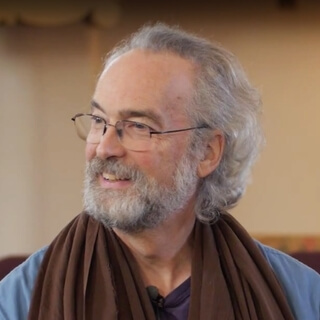
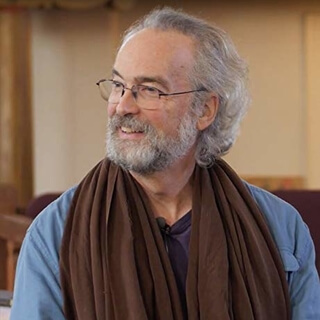
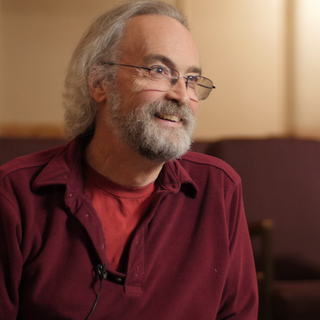
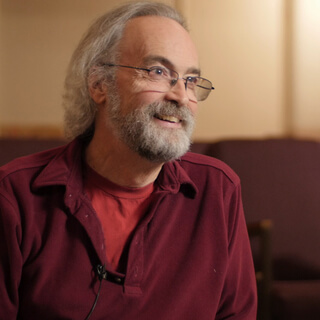
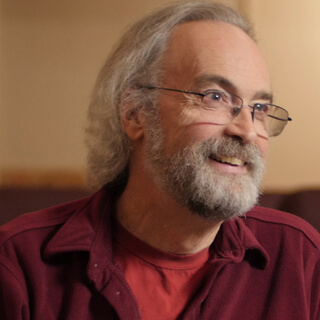
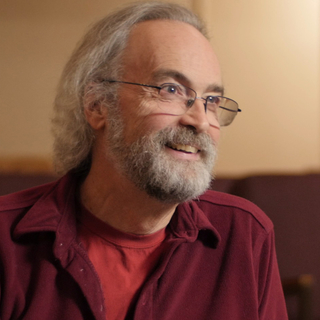
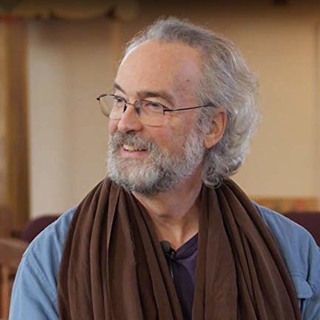
This is Amanda Kimball reading from Resting in the Waves by Doug Kraft.
The illness of meditation or any spiritual practice is not found in how wise,
Peaceful,
Or illuminated we feel sitting on a Zafu with our eyes closed.
It's in how clearly and heartfully we relate to the rest of our life.
Even if we meditate for four hours a day,
That leaves 20 hours when we are not engaged in spiritual discipline.
Fluidity of practice is hollow if it doesn't support fluidity of living.
Ultimately,
We may all be different manifestations of the oneness of everything,
But in the relative world,
There is a you and a me and everyone else with whom we interact in our daily lives.
Suggested exercise.
How do you rest in the waves of the ordinary world of friends and family,
Work,
And play?
To contemplate this question,
Let's reflect on the following topics.
A.
The burdens we all carry.
B.
The good hearts beneath those burdens.
C.
The compassion that arises naturally when we see our burdens and good heart at the same time.
Night guard.
But first,
A confession.
I wear a night guard.
It's a piece of plastic that fits snugly on my upper teeth.
My dentist said I need it because the wear pattern on my molars suggests that I grind my teeth at night.
When she told me this,
I thought,
I don't grind my teeth.
I'm a meditation teacher.
Teeth grinding would look bad on my resume.
She's mistaken.
Or maybe it's just a temporary thing.
I didn't say that out loud.
I just replied,
Let me think about it.
She said kindly,
Of course,
It's your choice.
Let me know what you decide.
So I went home and thought about it for over a year.
During that time,
I realized that many,
Maybe most of her patients have night guards.
She must make a lot of money on them,
I thought.
As appealing as that explanation was,
It didn't match what I knew of her.
In the 15 years I've gone to her,
I've never caught a hint of her putting her finances above the well-being of patients.
If I had to choose between thinking she was greedy and thinking I grind my teeth at night,
Grinding was a safer bet.
So I consented to a night guard.
This episode forced me to acknowledge a simple reality.
My resting state is worry.
This shouldn't have been a surprise to me because I came into this life worrying.
Yes,
I do remember my birth.
During a deep psychotherapy session many years ago,
I lay on the carpet of my therapist's office,
Doing breathing techniques to bring up distant feelings,
Memories,
And impressions.
During this session,
A faint image formed in my mind of being in a dark,
Cramped,
And clammy place.
Two gray bars descended and gripped my head on either side.
I began moving through a constricted tunnel.
Then I saw a man in a white lab coat.
He was short with red curly hair,
Freckles,
And dark-rimmed glasses.
Though he smiled,
His eyes were cold.
He didn't care about me at all.
There were other people around,
But they were ghost-like blurs.
I couldn't feel their presence.
I was all alone with these distant,
Emotionless beings.
I had a very strong feeling.
It wasn't exactly a thought.
But if I were to put it into words,
It would be,
Mistake!
This is a mistake.
This is the wrong place.
I don't belong here.
I've come into the wrong body in the wrong life.
As I came through the universe,
I should have turned left at Jupiter rather than right.
Now I'm stuck here.
What am I going to do?
Mistake!
Lying on the floor in my therapist's office,
I didn't take these images long.
They were metaphors arising out of the deep worry I carried.
Several weeks later,
I told my mother about the images.
She was silent for a few moments.
Then she said,
I never told you,
But you were a forceps delivery,
And the doctor looked just as you described him.
My regular doctor was on vacation when I went into labor,
So the red-haired doctor only came in to oversee the birth.
We didn't see him before or afterward,
And at the time,
I thought he would have been preferring to be playing golf.
They gave me scopolamine,
It was a medication used often back then,
With women in labor.
It stops the formation of memories.
I couldn't remember being in pain a moment before.
Then I'd relax.
The pain would not build on itself as I was in the hospital.
The pain would not build on itself as much.
The body could still do the birthing contractions,
With me suffering less because I couldn't remember it.
Since I couldn't remember,
I wouldn't have been present for you.
I don't know what was going on during that time.
I grew up in a schizoid family.
Especially my father and older brother had a flat,
Relatively emotionless affect.
The lack of emotional connection was confusing.
I didn't understand it.
I felt alone.
Gradually,
I slipped into a depression.
It was like a clay mask I didn't even know I was wearing.
In childhood pictures,
I always have a forlorn look in my eyes.
Those pictures break my heart.
The chronic depression was diagnosed in my late 20s.
It took another 10 years of therapy,
Bodywork,
And meditation to finally break free of it.
But the worry inside me was subtler.
Compared with depression,
It wasn't much at all,
So it remained.
As my mind heart got quieter in meditation,
I began to see a bit of worry,
Urgency,
Or fretfulness coloring every thought.
The most obvious sign of this was my needing a night guard in my sleep.
We carry a lot.
We all carry a lot.
Some of it comes from our early years.
There are ways each of us adapted in order to survive childhood.
Some of us worry.
Others feel longing,
Anger,
Stiff upper lips,
Or other tendencies.
Some of what we carry comes out of family dynamics.
Some of it comes in response to the world around us.
Does anyone feel angst about President Trump?
How do you feel about political polarization?
The coronavirus pandemic?
The kind of world we're leaving for our children and our grandchildren?
The environment?
Climate change?
The growing wildfire seasons?
Coastal flooding?
What else?
We all carry a lot.
Some of it we can lay down from time to time.
Some of it becomes layers of a clay mask we wear without realizing it.
What can we do about it?
The first thing we can do is to not leap into trying to fix it.
This may seem counterintuitive.
The German philosopher Martin Heidegger put it this way,
Imagine an awareness that sees to the heart of suffering with no urge to fix anything.
Imagine this awareness is the opposite of indifference.
Suggested exercise.
Imagine an awareness that is deeply engaged and yet so loving that it has no need to control,
Change,
Or fix anything.
When you see this way,
What do you notice in the depths of that experience?
John Travis,
One of my teachers,
Tells a story about this and what we can do about it.
He tells a story about this and what we see inside.
Venice of the East.
Bangkok used to be called the Venice of the East because of all its rivers and waterways.
In the middle of the 20th century,
It was growing rapidly.
The economic boom built tall buildings and big roads.
The old waterways were getting paved over with concrete streets.
During this time of expansion,
An old dilapidated temple was in the way of progress.
The temple contained a large clay statue of the Buddha that was inlaid with colored glass.
It would have been unseemly in a Buddhist country to take a wrecking ball to the shrine.
So on May 25,
1955,
Crews arrived outside the old temple,
Wat Tramit.
They brought large cranes,
Pulleys,
Ropes,
And chains to move the statue to a suitable location and free up the temple to be destroyed.
They were able to tie up the Buddha statue and lift it off its pedestal.
But as it moved,
The ropes broke and the statue crashed to the ground.
Miraculously,
The statue did not shatter into little pieces,
But it did crack and a few small chunks of clay fell away.
As crews assessed the damage,
They noticed shiny yellow metal deep in the cracks.
What had appeared to be solid clay turned out to be just a layer of stucco.
When they removed it,
There was a solid gold statue that sat 10 feet tall,
Weighed over five and a half tons,
And was worth over $250 million.
In the weeks that followed,
They pieced together the history of the statue from ancient history.
The gold Buddha was probably cast about 700 years earlier.
About 200 years ago,
The Burmese army was preparing to invade Thailand.
The Thai monks were afraid the army would carry off the statue as war booty,
So they carefully covered it in clay stucco to disguise its real value.
They used colored glass inlay and paint to make the statue seem genuine.
With the chaos of war and the subsequent decline in Thailand,
The underlying nature of the statue was forgotten until that fateful day in 1955 when the heart of the statue was exposed.
Underneath,
We are all golden Buddhas or golden Jesus's,
Mother Teresa's,
Or Gandhi's,
And we have all of this stucco.
Some of it is crude and some of it is finely carved and decorated,
But it gives little hint of the golden luminosity beneath.
When we come to meditation,
There is nothing we need to create,
Fix,
Heal,
Or transcend.
Most of us carry burdens that are best laid down,
But underneath those burdens is a heart of gold.
There is luminosity below the stuff we carry.
Compassion.
I think Heidegger got it right when he said we don't need to be fixed,
And I would take this one step further.
When we see our burdens and our luminosity at the same time,
The heart naturally opens,
And when we see another's burdens and the light within them,
Compassion for them wells up spontaneously.
Try it and see what you notice.
What might that look like?
What follows is an example from my own experience.
I woke up early one morning and sat up to meditate.
My mind wandered off into stories.
With my newfound appreciation for how easy it is for me to worry without knowing it,
I quietly asked myself,
Is there worry?
And there it was.
The fretfulness was obvious when I looked.
To see this clearly,
I had to let go of the content of the worry.
There can be endless volumes of content.
And they would take lifetimes to explore.
So remembering Heidegger's comment,
I let awareness see into the depths of the feeling of anxiety itself,
Without trying to lift a finger to fix anything.
The worry seemed like a herd of buffaloes in the distance.
I could feel the rumbling hooves,
But couldn't make out the individual animals.
I could feel the tension of worry without the storylines.
This was the essence of what the Buddha called wise effort.
It's the essence of the six R's,
Seeing process without content.
As the awareness got stronger and clearer,
The rumbling slowly faded into the distance,
Leaving a quiet luminous glow in its wake.
In that luminosity,
The subject of the worry seemed irrelevant and hard to remember.
Suggested exercise.
When discomfort arises within,
Rather than put it down or rush ahead to something else,
Imagine it floating gently in the center of your chest.
Let the content and stories drift into the background as you notice the feeling and tension themselves.
Rest gently in them.
Fluidity of self in daily life.
As we've seen,
There's a wide range of states and qualities of awareness we humans can experience.
Death and resuscitation are on the subtle end of this range.
In enlightenment,
The sense of self is light and irrelevant and the feeling of contentment is vast.
In Nibbāna,
The sense of self is gone.
On the coarse end of the scale is raging paranoia,
Where the sense of self is dense,
The feeling of threat is high,
The emotions are in turmoil,
And suffering is great.
I can't speak from personal experience about these extremes.
Like most people,
My experiences are fluid across the broad middle range.
For many people,
The most common experiences in the upper range occur when they are out in nature.
When I'm hiking in the High Sierra,
My sense of self feels irrelevant.
In his lecture,
Walking,
Thoreau said,
In wildness is the preservation of the world.
Nature is indifferent to who we think we are.
At times like these,
We may find we don't care that much either.
We just feel part of it all.
Another common experience at the subtle end of the awareness spectrum comes from gazing into the eyes of our newborn child.
All roles and posturing fade into the timelessness of that contact.
Other moments in the upper range include sexual orgasm,
A quiet evening on the beach,
Getting lost in poetry or music,
And deep meditation or contemplation,
To name a few.
I suspect we have more moments of selflessness than we realize,
Because the sense of self fades into the distance where we don't see it.
Meanwhile,
The joy or contentment are so strong,
We don't even notice.
For the purposes of spiritual training,
Rather than be concerned about self or non-self,
It's helpful to just notice how fluid the sense of self actually is.
It not only changes in content,
But it also changes in strength.
Suggested exercise.
Notice how the strength of a sense of self waxes and weens throughout the day.
From higher self to connectedness to selflessness.
I am surprised and amused at how often people will look back on their lighter moments and describe them as their higher self.
Even descriptions of a death experience often use this language,
But I don't think using this term is helpful or accurate.
The word self implies others,
A self separate from others.
I invite you to look at your own moments in the subtle range of well-being.
Did you feel yourself more separate from others or more connected to them?
And is connected the best word?
Did you feel more connected or just part of everything?
And if you felt part of everything,
Did that sense of belonging feel like a new invention?
Or did it feel like a broad,
Gentle awareness that had been waiting quietly even though you didn't notice it because other things were clamoring for your attention?
Awareness is fluid,
It waxes and wanes,
Shifts in depth and sensitivity.
Or perhaps awareness just is,
But tension waxes and wanes,
Giving the feeling of fluidity.
It doesn't help to push for what we think is best.
Resting in unborn awareness means letting things be as they are and letting the flower of awareness open in its own way.
Whatever you notice,
Let it be as it is and return to wholesomeness.
If what you are most aware of are external things,
Notice the attitude in the mind toward those external things.
Whatever the attitude,
Can you notice the quality of awareness looking at the attitude?
This is the path of resting in the waves,
Letting things be as they are and noticing the subtler qualities behind that awareness.
Suggested exercise.
Notice the attitude of mind that is the most important.
Notice the attitude of mind that is noticing this very moment.
Summary.
Awareness is a fierce,
Nuanced,
Kind,
And unrelenting teacher.
It is the center of the Buddha's path to awakening.
In the previous few chapters,
We looked at it as a source of both steadiness and fluidity.
Let me summarize a few of the insights.
The whole point of awareness is knowing what's going on around us.
All creatures,
Whether a single-celled organism or a complex human being,
Have a better chance of surviving if they know what to avoid and what to engage.
So the content of awareness is rudimentary and vital and draws our attention.
However,
Perception is imperfect.
Different sense organs pick up different information.
Our systems can ignore,
Enhance,
Confuse,
Or distort this raw sense data.
What we know is clarified by knowing how we know it,
The process of awareness,
As well as the contents.
Is the mind explaining,
Arguing,
Worrying,
Delighting,
Defending,
Bragging,
Etc.
?
Processes can distort.
Seeing the processes clearly helps minimize the effects of these distortions.
So in meditation,
Emphasis is placed less on what we know and more on how we know.
Once we can see the process,
It's easier to see the subtle qualities of awareness itself.
Is it clear,
Foggy,
Expansive,
Sluggish,
Jittery,
Loose,
Etc.
?
Knowing the qualities helps clarify awareness even more.
There is always some tension in awareness.
As we see this,
We can relax and let awareness get even clearer.
As we notice the qualities and relax the tension,
We may become aware of awareness itself.
We may see how it arises,
Shifts,
And fades.
As we are more aware of awareness,
Any tension around it may actually relax when it is not needed.
The difference between an enlightened mind and an unenlightened stone is that the expansive mind can be instantly aware of content,
Process,
Qualities,
And awareness itself when needed.
It is highly responsive without being compelled.
Deepening perception moves from content to process to qualities to awareness of awareness to fading of awareness itself to Nibbana.
The Buddha's map of the jhanas describes the upper end of this spectrum in detail.
The point of spiritual practice is training the mind to be responsive without being constrained.
It is both stable and fluid.
That is the nature of inner freedom.
It doesn't get us anywhere new as much as show us where we've always been.
Now we have the wisdom to see what once eluded us.
I can contemplate the sea,
But waves make me uneasy.
Milarepa,
Tell me how to meditate on waves.
If the sea is as easy as you say,
Waves are just the sea's play.
Let your mind stay within the sea.
I can contemplate my mind,
But thoughts make me uneasy.
Milarepa,
Tell me how to meditate on clouds.
If the sky is as easy as you say,
Clouds are just the sky's play.
Let your mind stay within the sky.
I can contemplate my mind,
But thoughts make me uneasy.
Milarepa,
Tell me how to meditate on thoughts.
If your mind's as easy as you say,
Thoughts are just the mind's play.
Let your mind stay within your mind.
Milarepa,
Advice to Polderbum.