Welcome to this new meditation of Taoist wisdom.
Today we'll be exploring the concept of Wu Wei,
A Chinese word that is essential to the philosophy of the Tao.
Translated literally as non-doing,
The spirit of Wu Wei is better understood as uncontrived or spontaneous action.
The idea is not to avoid action,
But to act with the right amount of effort at the right time.
We can illustrate this idea with the image of Judo.
A skillful martial artist embodies Wu Wei when he uses his opponent's attack to grab him as he overextends and to throw him off balance to the floor.
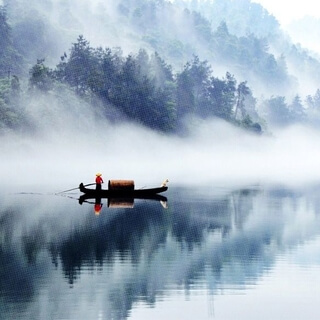
We can also find it in the art of sailing,
Whereas an agitated man would exhaust himself trying to row a boat.
The Taoist sage observes the powerful wind in his presence and chooses to raise a sail to move forward.
Wu Wei can thus be understood as a way of life in which we never force things,
But instead in the same way that the sailor quietly observes the marine winds,
That we develop our capacity to observe the natural course of events,
The forces existing in our social and physical world,
So that we can make the best use of them instead of fighting against them.
Through meditation we find a space of observation and stillness where we can see clearly into this natural way of the world until our actions flow spontaneously and skillfully.
Start by finding a comfortable seat with a straight back and make sure that the front of your body remains open to receive the full range of your breath.
As you take a deep inhale,
Open your arms to your sides and raise them above you and on the exhale float them gently back down in front of you.
Before closing your eyes,
Allow your gaze to soften and become aware of the space around you.
Take a deep breath in through your nostrils that opens your chest and inflates your belly and gently release it through your mouth.
With each new exhale allow your shoulders to fall naturally to your sides.
Unclench your jaw and let the muscles in your face soften as if your entire body was exhaling with your breath.
And come into an attitude of relaxed awareness.
When you're ready,
You can close your eyes and your mouth and turn your attention inward by letting your breath find its natural rhythm.
Bring your attention to the area where you feel your breath the clearest and make an intention to use this sensation as an anchor to come back to the present moment each time you notice that your mind has wandered.
Notice if your mind has drifted away from its focus and if it has,
See if you can welcome this realization with a smile,
Not taking this exercise too seriously and then kindly bring it back to your breath knowing that it will inevitably wander off again and you'll be there to bring it back again and again.
So come to your ears and let your feet take the very presentations and the jokes about yourselves out.
Now come into sensations as unless you know which dog you are,
Whether you're You can now relax your concentration.
And take a moment to let your mind go wherever it wants to go.
Before ending this meditation,
I'll read you a quote from the Tao Te Ching,
The foundational book on Taoism written by Lao Tzu.
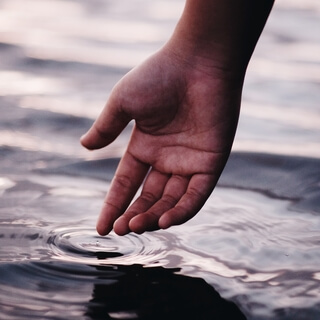
Do you have the patience to wait till your mud settles and the water is clear?
Can you remain unmoving till the right action arises by itself?
The master doesn't seek fulfillment.
Not seeking,
Not expecting.
She is present and can welcome all things.
It's quite common to experience some difficulty when we've made our meditation a regular practice.
It can take the form of frustration for not being able to concentrate,
Of difficult emotions that start to spring up,
Or in the form of tension that we can't seem to shake off.
What the principle of Wu Wei tells us is that instead of regarding these obstacles as enemies to our practice that we must get rid of,
We can use their presence to our advantage.
In the same way that water which arrives at a blind alley simply rises,
We can use our own obstacles and dead ends to raise our consciousness about our current situation.
I hope you enjoyed this session.
Feel free to let me know about your experience in the comments.
And I'll see you next time for a new meditation of Taoist wisdom.