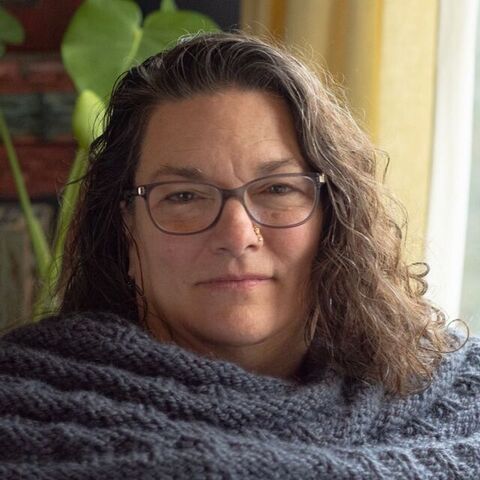
Welcome to our second meeting of sovereign self.
And I want to start by honoring the teachers,
All of the teachers that have contributed to everything that I offer.
Whether they are in body or not in body,
Whether they are human or not human,
I have so many teachers,
I feel like I stand on such broad,
Strong shoulders.
I also invoke the 5 guardians and whatever support.
I ask you too to go ahead and ask for whatever support from the Unseen Realms that you would like to call in as you listen.
As I consider,
Continue to consider and hold this image of sovereignty,
That's the kind of core piece that holds together on what I want to offer here.
I keep coming back to this piece around sovereignty being an experience of feeling power and being complete unto ourselves,
But also responsive and accountable to others.
And there's a kind of a mystery to that,
You know,
Because it can feel like,
No,
No,
No,
I have to take care of myself,
But we're not alone.
We actually cannot exist or survive by ourselves.
It actually just doesn't exist in the universe that there is really any way for us to be completely self-sufficient.
We need each other,
Right?
But if we are run by the sense that we have to take care of others in order to survive,
That's also not sustainable.
So I just wanted to explore that a little bit and bring that,
Drop in some ideas that can come into the meditation later and the deep communication circle if you're here in real time and are a part of that.
And I keep coming back to the experience of sovereignty being something that happens in our bodies.
We experience sovereignty in our bodies.
We don't experience it in our minds.
And it certainly affects our minds.
And we certainly know in our minds if we are not experiencing sovereignty because we are all over the place,
Usually thinking and having concerns about other than what is happening right here in this moment.
And so in the service of that,
In the service of really wanting to experience sovereignty,
I want to invite you as I did in the last talk,
Invite you to bring your body into this time together.
Bring your body into your whole life.
That's what I would love to really have you all take home.
But just for now,
Just if you can remember,
You know,
As I'm talking,
As we're all talking later,
To allow the awareness to settle into your body whenever you remember it.
And I will try to remember to remind you occasionally,
Just like in this check in with your body right now,
Just whatever calls you,
Whatever sensations are most obvious,
Doesn't have to be some huge intention,
Just a subtle like,
What am I noticing right here,
Right now?
That's the sensation.
And it's a great mystery.
Excuse me.
It's still a great mystery to me that the body,
The body,
Feeling the body is the answer to so much.
So,
I just drop in that invitation.
And I know it can just seem too simple.
No,
Can't be that simple to experience sovereignty,
Just by feeling my body,
Right?
And on a certain level,
It really is,
So.
And it's another part of this mystery to me that I experience over and over again that we're more responsive and connected to others when we are more self-contained.
That actually living in our bodies and in our sovereignty allows us to experience compassion and the needs of others in a more complete way,
Because the whole equation is being experienced.
You know,
Where often I think we lose ourselves in wondering how other people are thinking or feeling or what have you,
And we've left ourselves out of the equation.
So,
Just honoring ourselves allows us to be in connection.
For connection with ourselves,
We're in connection with others as well,
Because we're truly not separate.
And that's a great mystery that I'm not going to delve into too,
Too much right now,
But you know,
I think science is proving it's all connected.
We are all connected.
So,
This is something that I've been exploring a lot,
Both with other people inside myself.
The whole piece around how we co-regulate with one another,
Which is kind of what I'm hinting at,
And that's something that happens when things are going well,
When we're babies.
We co-regulate with,
Hopefully,
A safe caregiver,
And it's kind of how our nervous systems get built,
If you will.
And if that didn't happen,
For co-regulation to happen,
There needs to be safety.
And a lot of us didn't experience safety growing up,
And that's just,
That needs to be honored.
You know,
Whether that was really overt,
Non-safety and violence,
Or less overt ways that,
You know,
That just,
That this culture doesn't really set us up in the nuclear family to really support children.
You know,
That having co-regulation being dependent on only one or two adults is not really realistic.
You know,
We're meant to be tribal.
And that's pretty rare these days,
At least in the white Western world.
So in the best of all worlds,
We have a caregiver that is attentive and sensitive,
And we feel safe.
And so we co-regulate with their stable nervous systems,
And over time,
That co-regulation with somebody else's stable nervous system teaches us to self-regulate.
We learn how to regulate our nervous systems.
We learn how to feel calm.
We learn how to safely experience our bodies,
Because the nervous system is part of our body.
And unfortunately,
I think that's very pretty rare anymore in this world,
In this particular culture.
And so that's part of my goal,
If you will,
Is to communicate ways that that can happen,
Even if you didn't get it as a kid.
Or maybe you got it as a kid,
But circumstances have arisen so that it's too hard anymore as an adult to be able to self-regulate,
Because circumstances are just too adverse.
It's a hard world.
I just feel like I have to name it.
This is a really hard world that we are living in.
And I find myself saying this more and more to clients and to people.
Here I am crying again.
I'm going to cry at least one time every time I give a talk.
Let me just let y'all know that.
But we do not live in a world that is really conducive to being happy and stable.
There are a lot of adverse conditions.
So I just want to name it.
The simplest way to say that is it's not you.
It's not you.
If you're not happy,
It's not your fault.
And there are things that you can do to regain that sovereignty that we have lost.
And that I think can be a real relief just to hear like,
Oh,
It's not because there's something wrong with me.
Right?
There's nothing wrong with you.
And you can change it.
It's possible.
And it's one of the reasons that I wanted to make this primarily,
I mean,
Primarily this is a women's group in real life,
But I realize that men may be listening to the recordings.
So I just want to acknowledge that.
But this,
The in real time group is a women's group.
And a lot of times that feeling of not feeling safe is,
Has arisen because we don't always feel safe with the men in our lives.
I just think it's the value of affinity groups of women only space of LGBTQI plus only space of people of color only space that there is a way that we can experience more safety.
We can learn to co-regulate when there are certain kinds of pressures not in place.
We have not figured out how to heal the patriarchy.
And I'm not saying that men don't suffer in the patriarchy,
Men suffer greatly in the patriarchy.
But it becomes more fraught when we're in the structures and when we're in the dynamics that create unsafety.
So affinity groups are just a great way.
I just want to honor that,
That it's okay to seek out places where you feel safe so that your nervous system can experience a calm,
You can reset.
We need to reset sometimes.
And that's the value of meditation too.
You know,
Even if the meditation feels like it's all over the place,
There's something the nervous system is kind of gathering in the space of time of not engaging with stimulation.
You know,
Not of just withdrawing so that it's only the inner stimulation.
And I want to honor that sometimes it's crazy inside,
But to just allow a withdrawal from the external stimulation can bring the message into the nervous system that it's okay.
It's okay to just drop something,
Drop something,
Drop in a little bit more.
And over time,
The nervous system is retrained.
You know,
And in the Buddhist traditions,
It's called mind training,
But that also feels very masculine to me.
So I like this,
The idea of just describing it more as encouraging our nervous systems to calm down.
A little reminder to feel your body.
If some of these words have gotten the mind going,
Just to make sure the body's included in there somewhere.
You actually think in your body.
It can be something to think about like,
Oh,
There's actually sensation involved in the body when you're thinking.
I know for me,
I can tend to feel it as a little bit of kind of pressure in my forehead,
You know,
So that can be the doorway in of like,
Oh,
I've got all this thinking about these concepts.
Like,
What does it feel like to think?
It can be a doorway into the body.
It's your nervous system that's thinking.
And the nervous system is a part of the body.
In the last talk,
I talked about leaking energy,
Particularly with worry that it's a way that we lose connection with our sovereignty.
We are always sovereign,
But we may not experience it all the time,
Right?
So that's my invitation is how do we experience our sovereignty that is in existence all the time.
And when we,
You know,
As I'm calling it leaking energy,
When with worry in particular,
There's other ways we leak energy,
But with worry,
You know,
Of concern about how things are going or what other people are thinking,
Feeling or doing or wherever worry comes in.
And that that's a way that we lose touch with our sovereignty.
And what I want to add to that is that sometimes we worry,
Sometimes we leak energy because it's too hard to stay with ourselves because when we are with ourselves,
There are feelings that are really,
Really challenging to stay with.
And that needs to be honored.
The last thing that I want to do is introduce more fight in anyone's consciousness.
There's enough fraught energy in the world.
And so because I think of how so many of us are kind of wired and built,
Even that idea of like,
Oh,
You're leaking energy,
If you're worrying can become a self judgment.
It can be like,
I'm leaking energy,
I have to stop that.
And then it becomes,
You know,
Subtly or not so subtly,
There's something wrong with me because I'm still leaking energy because I heard that I shouldn't be leaking energy.
And I should really stop my worrying.
And it's just that is not the message that I want anyone to take home.
You know,
If worry is a repetitive thinking about things that we cannot control,
It can be scary to realize that things are not in my control.
That can be a really hard truth to come to.
So what I want to say about that is just to honor that if it is really scary,
If the worry is actually protecting yourself from something that is too hard to sit with,
Then take it in really small increments,
Right,
Check in with the body.
And if it's too uncomfortable,
Then drop it and let your mind,
Let your mind run.
You know,
Just a lot of permission for your nervous system to calm down at the rate that it can.
And with a really gentle intention just to keep at it with so much love,
Just so much love for and understanding and compassion that you got where you are for very good reasons.
And it's not going to happen overnight that you're going to be able to experience a stable and relaxed nervous system.
It's okay.
It's okay for it to take the time that it takes.
And also I want to acknowledge that when we can drop worry,
That will often come with the understanding that there are things that are out of our control and that can bring in grief.
It's hard to realize that things are not in our control.
So I want to honor if you notice grief arising as you work towards dropping worry that it makes sense,
You know,
And honor that.
That's where healing can come in is actually through the grief.
And if you don't experience any of that,
That's fine.
These are just some of the thoughts that I have.
Mainly I want you to experience exactly what you experience in this process and know that it's exactly what you're supposed to be experiencing.
What a concept.
Oh,
That's enough words about all that.
And so if you're not already in a comfortable position,
Go ahead and adjust your body.
You don't have to be super upright.
I don't have any kinds of goals for you to have your body in any particular shape.
Relatively upright is a good idea just because we're more awake then.
But be comfortable.
For me meditation is most useful when there's a lot of permission.
There's a quote and I don't know who the quote is from,
But some Zen master,
I believe,
But talked about having meditation be a really wide pasture for the horse that is your mind.
And that if,
You know,
When the horse is in a really tiny stall and it's cramped,
It'll experience some suffering.
So yes,
There's a container,
The wide pasture has a fence around it.
No,
You want to keep a gentle intention here to experience the body.
But also for there to be no judgment if thinking comes in and in fact the acknowledgement that thinking will come in is pretty rare that the mind doesn't think.
So we'll sit for about 15 minutes.
And just feeling the outline of your body,
All those sensations that translate in the mind as this is the shape of my body.
Let's do a little body scan and allow your attention to go from the top to bottom or bottom to top.
Realizing the pressure,
Areas of tingling.
The little spots of tension.
And if it feels right to release tension where you can,
Then go ahead and do that.
And somewhere in this field of the body,
There will be sensations.
Tensions that come with breathing.
There's something magic about the breath.
So if it's fairly easy,
Go ahead and allow your attention to rest primarily with the sensations of breathing wherever they're most obvious.
Take a others Aim.
Your attention might be captured by sound.
Just allow that.
Your attention may be captured by thinking.
Just notice that that's what's happening.
Your thinking will occur.
If you notice that there's a lot of thinking that's kind of crowded up there.
You can have the gentle intention to also feel your lower belly to the best of your ability and be a really grounding place to rest the attention.
Ok guys I think this is clear Thank you.
.
.
.
.
.
.
.
.
.
.
.
.
.
.
.
.
.
.