Hello,
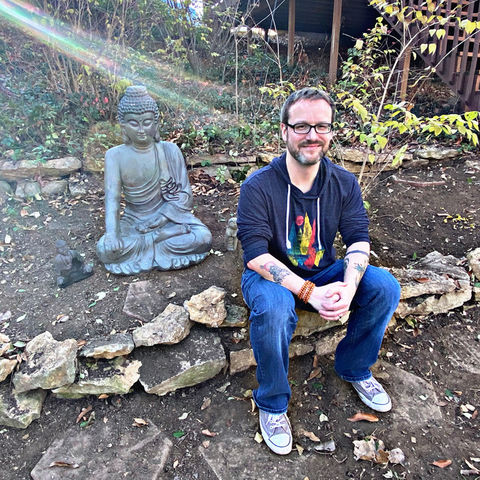
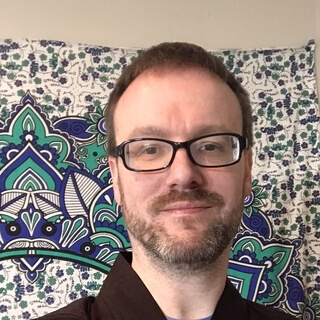
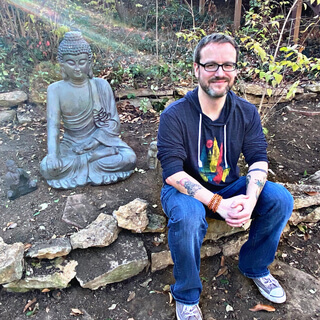
I'm Daniel.
I am going to recite a Zen koan and then lead a very,
Very simple guided meditation based on that koan.
It's going to be a very simple meditation,
Very limited instruction,
And so we will just see how it goes.
So I'm going to read the koan that is called Zhou Zhu's Dog or Zhou Zhu's Dog and then I will lead the meditation.
And I'm not going to go into detail explaining the koan except to express that it's a conundrum.
So this is the koan.
A monk asked Master Zhou Zhu,
Does the dog have buddha nature or not?
And the master said no.
Usually there is an exclamation point.
Usually it's the master shouted no.
A monk asked the master,
Does the dog have buddha nature or not?
And the master said no.
And we're going to just do a meditation where we reflect on that no a little bit.
The reason it's a conundrum is because the teaching of the buddha is that all beings have buddha nature.
So why would this great master say no?
Okay,
So I want you to sit up as straight as you can.
And if you're in a chair,
I want you to firmly plant your feet on the floor.
And if you're sitting on a cushion or on the floor,
I want you to do a cross legged position.
Generally,
I recommend the half lotus which is the right foot on top of the left knee and the left foot tucked underneath.
But the point is that we have a position where our feet aren't going to fall asleep.
And then with your hands,
I recommend what I call the bowl which is one hand on top of the other,
Thumbs gently touching so it makes kind of a bowl shape resting in your lap.
And I call that the bowl and really fancy people call it the cosmic mudra.
And then the other option that I recommend is having your just hands in your lap just flat in your lap that is called the relaxation mudra.
And I recommend an eyes open practice.
So what I do is I find either a point of the wall to look at that's blank or if I'm in a situation where I don't have a blank wall to look at,
The second option is just cast your eyes downward at a blank part of the floor.
Usually you can find a blank part of the floor.
And so I'm going to ring my bell and we will begin.
And I'd like to start by leading you in the practice called the healing breath and that's a slow breathing practice where we breathe in for a count of five,
We hold our breath for a count of five and we breathe out for a count of five.
So a breath takes 15 seconds and we're just going to do one of those.
So I'm going to do it.
I'm going to tell you what to do and I'm going to do it with you.
Breathe in.
Hold your breath.
Breathe out.
And take a moment to just feel the breath coming into and out of your body.
We say the breath is important because it's our connection to our environment.
We are bringing in the environment and we're putting out part of ourself into the environment and we're doing this all the time and we never think about it.
And then what I want you to do is just mentally repeat that word.
No.
No.
No.
We're taking it like a mantra and we're just mentally repeating no over and over.
No.
No.
And this is our anchor.
So every time a thought comes in to distract you and you think,
You know,
I'm hungry or why am I doing this meditation or whatever.
No is always there for us to return to.
We just bring our minds back to no.
So I think to myself,
I wonder when the timer's going to go off.
No.
I'm bored.
No.
No is always there to return to.
So we're just going to bring our minds back to no again and again.
No.
No.
No.
The master's answer to the question,
The answer that makes no sense.
The mysterious conundrum riddle answer.
No.
Bring it back.
No.
Not a gentle no,
Not no,
No,
No,
No,
No.
Firm rejection.
No.
No.
And then we're going to just sit and mentally repeat no for a little while.
Okay.
No.
No.
No.
No.
No.
No.
No.
No.
No.
No.
No.
No.
No.
No.
No.
No.
No.
No.
No.
No.
No.
No.
No.
No.
No.
No.
No.
No.
No.
No.
No.
No.
No.
No.
No.
No.
No.
No.
No.
No.
No.
No.
No.
No.
No.
No.
No.
No.
No.
No.
No.
No.
Thank you for taking the time to do that meditation with me.
I want you to just for the next few days just spend time reflecting on that story.
It is a riddle.
It is a conundrum.
It makes no sense.
And that's why it's important and why it's come down through the ages as a koan.
A monk asked the master,
Does a dog have buddha nature?
And the master said no.
Thank you.