Hello,
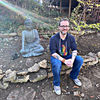
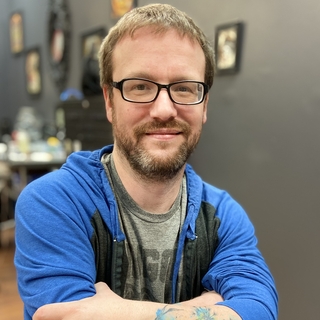
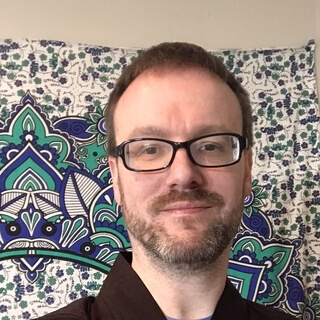
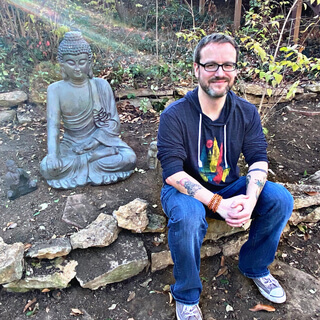
I'm Daniel.
I want to talk to you about voting today.
Voting is more than just going to the polls on Election Day.
Options like early voting,
Mail-in voting,
And ballot drop boxes are available to more voters,
And these options are growing in popularity.
How to Vote is a tool created by a company called Democracy Works,
And it breaks down the options your state offers for casting a ballot.
So this empowers you to decide when and where to vote.
There are barriers to voting as far as not knowing what to do,
Not knowing where to go,
And this is a tool that will help you because voting is important.
And when we all vote,
We can make a difference.
So that's all.
Please check out Democracy Works' How to Vote tool.
Thank you.
Have a good day.
This talk was recorded at Fountain City Meditation.
And we're going to begin by taking some deep,
Heavy breaths.
I like to sit in the half lotus,
Which is one foot on top of my knee and the other foot underneath.
A lot of people say the full lotus is the best way to sit,
And I'm not flexible enough,
So I don't.
I used to be able to do it,
Too.
My kids make fun of me because they can both do it and I cannot do it.
So I do the half lotus,
And I think that's good.
But the point is that you have something where you'll have some stability and where your feet will not fall asleep.
And I always say if your feet start to fall asleep and you need to move,
Just move,
Just get it over with,
Because that's going to distract you.
Of course,
You're going to be thinking,
I wish I could move my feet the whole time,
And that's not meditation.
And at home,
I do an eyes-open practice where I face a wall and I leave my eyes open.
But outdoors,
I feel like I cannot do that because there's too many things entering my field of vision all the time.
So I do recommend an eyes-closed practice here.
But that said,
If you're someone who,
Say,
Starts to fall asleep when you meditate with your eyes closed,
Another option is to just kind of look down at the ground.
Just the point is that there's not things constantly getting your attention,
Which if our eyes are open,
There's people walking by right now,
Right?
And I like to do with my hands,
There are two options that I recommend.
And one of them is what's called the cosmic mudra,
But I just call it the bowl because it's just one hand on top of the other,
Thumbs gently touching.
But fancy people call it the cosmic mudra.
And then the other option is what's called relaxation,
Which is just hands on your knees.
I like that one.
Most of the time I like that one better,
But sometimes I'll do this one.
But the point is that there's a plan for what your hands are going to be doing,
Because if there's not a plan,
We could tend to fidget.
I'm a real fidgeter.
So if I didn't have a plan for my hands,
My hands would be a point of distraction for me,
I'm certain.
So now.
Let's see,
Back legs,
Hands,
Eyes.
OK,
So now I'm going to invite you to do a practice that I like to do at the beginning of meditation.
It's called the healing breath,
The healing breath,
And it's a very slow,
Deliberate breathing.
And I like to do this at the beginning and at the end of my meditations.
And it's also something that's very portable.
And I like to also take it with me.
And if I'm in a stressful situation,
Use it to center myself.
So it's a practice I really like and I think not a lot of people talk about it.
And I really like it.
So the healing breath is where.
We breathe in very slowly to a count of five and we hold our breath to a count of five.
And we breathe out to a count of five.
And so nothing brings attention to the breath quite like not breathing.
Right.
So it looks like this.
So I would like to invite you to do the healing breath with me,
And I'm just going to direct you and tell you what to do.
So and we're going to do it three times.
So.
Breathe in.
Hold your breath.
Breathe out.
Breathe in.
Hold your breath.
Breathe out.
Breathe in.
Hold your breath.
Breathe out.
So that was the practice of the healing breath.
And again,
I like to use it if I'm in a stressful situation,
If I'm stuck in traffic or if I'm asking the kids to clean the basement and they're just not doing it,
I like to just do the healing breath and it gives me an opportunity to center myself.
So I'm going to now ring the bell and we're going to do the practice of following the breath and we're going to do that for a little while and then we're going to switch to another practice.
So.
I want you to bring your attention to your breathing.
And you can either focus on the breath going into and out of your nose or focus on your belly rising and falling,
Whichever is easier for you.
And I know some people have a whole lot of trouble bringing their attention to the breath.
And for people that have a whole lot of trouble,
I recommend just putting your hands on your belly and literally feeling it rise and fall.
This is something that's happening all the time,
But we don't we don't really think about it.
Our belly is always rising and falling and breath is always coming into and out of our nose.
So.
We're going to bring our attention to our breathing,
But we're not going to try to control it.
We're just going to pay attention to it.
This is our anchor.
So whenever something is distracting us.
Whenever we're daydreaming or thinking about what we're doing later or thinking about what we did today or thinking about all these sounds that are happening around us,
We just bring our mind back to our breath.
We don't want to beat ourselves up for getting lost and distracted.
We just want to bring our attention gently back to our breath.
And some people find it's really useful to count.
So on the breath in mentally note one and on the breath out mentally note two.
And that is helpful because then every time something comes to take you away from your experience,
You just go to one on the next in breath.
You just you don't think,
Why am I having such trouble?
You just go to one on the next in breath.
So we will do this,
Following the breath for a few minutes,
And then we will switch to another practice.
Lict the the the the the the the the the the the the the the the the the the the the the the the the the Now,
I would like to invite you to release your breath,
Stop paying attention to your breath,
And some of you may have done that already,
Stop paying attention to your breath and instead we're going to shift our focus and we're just going to pay attention to the full range of our experience.
We want to notice everything that's happening and our intent is to notice everything and not attach to it.
So to hear a crazy sound and not think,
I wonder what's happening over there,
But to just think,
Oh,
A crazy sound and just move on to just paying attention to our experience.
So to think about,
Oh,
I wonder what I'm having for lunch today,
But not go down a rabbit hole of thinking,
Oh,
I'm going to have this,
It's going to taste this good,
Right?
But just have attention on our experience and not attach to it.
Just notice the thoughts but don't have a thought take you to another thought.
We're going to try to do that practice for a few minutes.
All right.
And grey,
Whatever colour that is.
I'm going to show you the the the the the the the the the the the the the the the the the the the the And now we will close our meditation by doing the healing breath again.
So again,
This is a slow breath in to a count of five,
Holding our breath to a count of five,
And a slow breath out to a count of five.
So I'll direct you and we'll do it together.
Breathe in.
Hold your breath.
Breathe out.
Breathe in.
Hold your breath.
Breathe out.
Hey,
Do you want to come meditate with me?
I just wanted to tell you that I lead a public meditation event the second Saturday of every month at 11am on the lawn of the Nelson Museum here in Kansas City.
And I would love to see you there.
It's totally free and totally welcoming.
So please,
If you're able,
You should come.
Again,
Second Saturday of every month,
11am,
Nelson Museum lawn.