Hello,
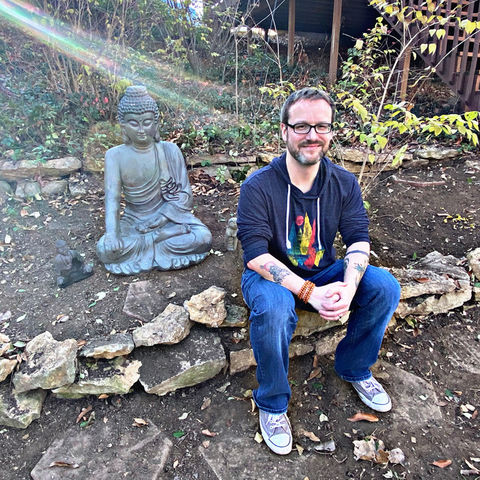
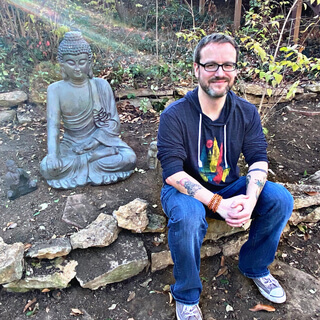
I'm Daniel.
I am going to read a passage from Trust in Mind today and then I'm going to comment on the passage and then I'm going to lead a meditation practice.
This is a book I like a lot,
Trust in Mind.
I highly recommend it.
So I'm gonna read two verses from this and then I'll comment on them.
Do not search for the truth,
Only cease to cherish opinions.
Do not remain in the dualistic state,
Avoid such pursuits carefully.
I'll do that again.
Do not search for the truth,
Only cease to cherish opinions.
Do not remain in the dualistic state,
Avoid such pursuits carefully.
This is a little bit heavy,
But truth.
Do not search for the truth.
What are we talking about here?
We're talking about how this meditation path is a path of action.
It's not a path of philosophical arguments.
It's not a path for that.
It's a path of action.
What are we doing?
We're doing this practice and we're seeing where it leads us.
And avoiding dualistic states,
That is just the tendency we have to put things in boxes all the time,
Especially or including people.
Like this is this kind of person and they're not like me,
Right?
And I'm this kind of person so I'm like this.
And we have this tendency to try to put reality into little boxes of this and that all the time.
And the truth is that those do not always fit.
In fact,
I would say they often don't fit.
So I can see someone in an NRA hat,
For example,
And I immediately could start having opinions about them.
About them and about how they're probably not like me very much.
But I don't know that person,
Right?
Someone could have all sorts of reasons to wear a hat.
That's not even a big thing at all.
It's a hat.
But I could easily have that tendency and I think we all could easily have that tendency to just start pigeoning-holing,
Pigeoning-holing,
Pigeon-holing another person and to just say,
Oh well you are wearing this therefore you're like this and this and this,
Right?
And that's not fair and it's not good.
So avoiding dualistic states is just trying to avoid that feeling of this,
This is like this and it's different from this because the truth is that things are more fluid than we realize.
And that doesn't just apply to people but also we think about things that we don't like,
Things we are aversive to and we think that that is important and that's rigid and the things we like also are important and rigid but the truth is that a lot of the time we change,
Our preferences change and also our preferences aren't as important as we sometimes think they are.
So I don't like vegetables very much.
I think of vegetables as things I don't want to eat for the most part,
For the most part or if I do eat them I need a lot of dressing,
Right?
And the truth is that I'm just putting vegetables in that category and I'm actually judging many things I haven't tried and I'm thinking well there's vegetables these are good for me therefore they don't taste good,
Right?
And we fall into that trap very easily in regards to all sorts of things but food is an easy one to point to.
I can especially say that as a father my kids when something has a certain appearance they don't want to try it.
They don't want to try it,
Right?
And the truth is that sometimes when they do try it the thing that looked really weird that they really didn't want to try they actually ended up liking.
Happens all the time when you make your kids try all sorts of different things and that's just a thing we do of putting things that's just a microcosm of the thing we do which is trying to put things into nice neat boxes that really the boxes don't fit.
Really the boxes don't fit.
That's our effort at putting labels on reality but we mistake the labels for reality so we see things and we think they are a certain way because we've put this label on them but actually we put that label there.
We put that label there and the truth is we don't know as much as we think we do and things are always more fluid than we think they are.
Things are always more fluid than we think they are.
The labels we put on things are very helpful as far as human advancement as far as learning how the world works and you know breakthroughs in science and medicine and in those senses it's very useful but in other senses it doesn't always serve us well.
It doesn't always serve us well to put things in neat categories all the time.
Sometimes it really does but other times it doesn't.
It doesn't in our relationships that doesn't serve us very well a lot of the time because it makes us judge without all the information.
It makes us judge without all the information and we think we tell ourselves that we don't look at people and judge them based on what they look like and how they present.
We might tell ourselves we don't do that but the truth is we're dishonest when we say that because we do.
We are in dualistic states all the time and we are always putting people into categories and putting things into categories.
We're always doing that.
It's what our brains do and one thing that happens with our meditation practice is we can get that space where we realize what we're doing before we do it.
So we realize oh I'm starting to judge this person.
I'm starting to judge this stranger that I know nothing about and when we have that space then we can take a minute to just reflect and think oh is it a good idea for me to judge this person?
Is it a good idea for me to judge this person?
Probably not right?
That's not to say like if somebody's coming towards you with a knife judge that person and then run right?
But in many situations in most situations it's not it's not like that at all and we can sort of think about that.
We can sort of think about how much we judge each other,
How hard we are on each other,
How harsh we are with people that we think are not like us because right now there's a lot of division in our society and was there always?
I don't know.
I don't know.
I can't speak to that if there was always but there's definitely a lot right now and we're having trouble listening to each other and I think we need to try to listen to each other and that is just dualistic states.
That's just exactly exactly what Singh San,
The author of this,
Is talking about.
That is dualistic states.
It is this and that.
It is I am NOT like you therefore I don't like you and it can be really harmful.
So but what is I didn't really address so avoid such pursuits carefully just carefully think about how you're labeling people and how you're labeling things because we put we put judgments on everything and we act like these judgments are important and real and they're not.
They're not.
There's not really good and bad food.
There's not really good and bad food.
There's only our preferences and I mean unless you're talking about like spoiled food or something there's not really good and bad food we're just talking about our preferences right?
I think chips are better than cucumbers but I'm making that up.
I'm making that up.
It's not literally better.
I'm reminded of and this seems ridiculous right now but when I was a kid I we had kids in the neighborhood and this is totally ridiculous but we had kids in the neighborhood who like Nintendo and kids in the neighborhood who like Sega and that seems so stupid now but at the time like you're not allowed to like both right you have to have your opinion and your opinion has to be something you can defend which is ridiculous because these are just products our parents bought for us and we didn't really have that much of a say in it but still I was a Nintendo kid and I was not the same as Sega kids but of course I was the same right that's an absurd opinion that we we would cling to we would cling to and it's just silly it's just silly so one other thing I want to address though is also it sure seems like in the modern world everyone has to have an opinion on everything everyone has to have an opinion on everything and that I sort of want to suggest limiting your social media which is ironic that I'd suggest that because that's not something I do very well but I feel like everybody these days a whole lot of people act like they're experts on a whole lot of subjects and if you spend too much time on social media like I do you see plenty of that just just you see something that you know nothing about like a medical fact or a legal event that happened and you just people just will act like they're an expert and they're like no well that's not right because this and this and this but the the truth is I'm not well educated on a lot of subjects and I try to avoid commenting on those I try to comment on the things I know a lot about especially like people will be uninformed about something and still come in and argue because they're holding on to this opinion so hard that they've heard from their favorite journalist or from their friend or from their family and they don't know much about the subject but they will still come in and argue about it and that makes me uncomfortable that makes me uncomfortable I think that's not a good way for us to behave I am someone that struggles with when I see someone say something on the internet that I think is wrong I have trouble not saying something when the truth is like saying something's not really helpful not really I don't think anyone looks at a social media argument and says oh well I'm convinced I'm gonna vote differently now I don't think that happens so in a sense it's something that I feel compelled to do because I could feel compelled to tell the truth but at the same time I have to recognize oh well this is gonna make people mad and frustrated and it's not no good is coming from this and I know somebody on here will probably say well no some good comes from it when you say you know the death penalty is bad for example like some good comes from that because people read it maybe but I don't know that it moves the needle in any way in that direction I don't know that it does so especially my advice is be careful on social media I think a lot of people are having their friendships ruined because people feel the need to just argue on every point even when it's something they don't know much about even it was and when it's something they don't even care that much about they'll still argue every point so that is that is dualism at its most insidious the most powerful insidious is when it compels us to argue when we don't even have a strong opinion and it's not it cannot be good it cannot be good so all of that being said um I'm ready to lead a meditation at this time so I'm going to ring the bell and I'm gonna instruct you in the healing breath practice and then we will slide into another practice okay we're going to the do the healing breath practice which is a controlled breathing it is an in breath that lasts five seconds holding our breath for five seconds and then an out breath that lasts five seconds so a breath takes 15 seconds and I'm going to show you what it looks like I'm going to do it right now okay so I want you to do that with me three times and I will direct you breathe in hold your breath breathe out breathe in hold your breath breathe out and we'll do it one more time breathe in hold your breath breathe out now I want you to sit up as straight as you can I've always found that when I start slouching my mind starts wandering and for sitting in a chair like I am right now I advise you to plant your feet firmly on the floor and I have two hand positions I recommend one I call the bowl which is one hand on top of the other thumbs gently touching I say it doesn't matter which one's on top resting in your lap some people say it's really important which hand is on top and I don't so rest in your lap and then the other option is just called relaxation it's just hands on your lap flat the point is we have a plan because if we don't have a plan our hands could be a come a point of fidgeting and I do an eyes-open practice so what I'm looking at is the wall that I've got behind you if you have an uninteresting wall you can look at that's what I recommend and if you don't an alternative to that is just gazing downward at the floor assuming you don't have a really colorful rug there right it's just we want to not be distracted and if neither of those options work for you I think closed eyes is okay it's just not what I do but I do think it's okay and we'll begin by doing the practice of mindfulness of breathing so I want you to bring attention to your breathing the breath coming into and out of your body your focus can either be the breath coming into and out of your nose or if it's easier the rise and fall of your belly sort of amazing to think that these things are happening all the time but they don't get much of our attention unless there's a problem so just bring your attention back breathing in breathing out breathing in breathing out and every time something comes up to distract you whether it's thinking about the future or thinking why am i doing this or thinking I'm bored or thinking what's that sound I hear or whatever it is just bring your mind back to the breathing this is our anchor and some people find it really helpful to mentally count so on the in-breath you mentally note one and on the out-breath two in one out two and that one is just always always there for us to come back to that's the important thing about it it's always there for us to come back to we want to not beat ourselves up when we have a thought come up but rather just go back to one one is always there for you and we'll do this for a few minutes and then I'll instruct you on an open awareness practice okay so and one out two in one out two you you you you you you you you you you you you you now I want you to release the breath as your anchor and for the next few minutes do we're going to do the open awareness practice and that is where we are just sitting and we're not trying to do anything we are just sitting and just being here and when we have a thought we just notice I'm thinking when we have a feeling we just notice I'm having a feeling but what we are trying not to do in this practice is get carried away so just notice I'm having a thought and not go from one thought to another thought to another thought as we often do so we want to just sit in silence and not try to do anything but just be present without using the breath or anything else as an anchor but just to notice the full range of our experience just to be here some people find this very difficult and some people find it very easy but we will just do that this is called open awareness or silent illumination practice and we're just going to do that for a few minutes and then we will be finished you you you you you you you you you you you now I want to encourage you to do the healing breath again this time only two times and again I will direct and do it with you breathe in hold your breath breathe out breathe in hold your breath breathe out that's it for today I want to thank you for taking the time to listen to me thank you very much have a good day