Hello,
Welcome to this session on choosing beliefs to serve you well.
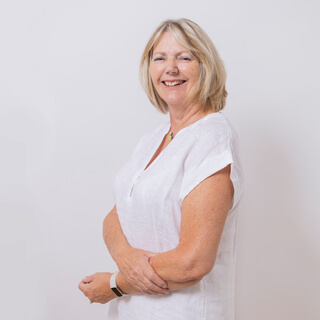
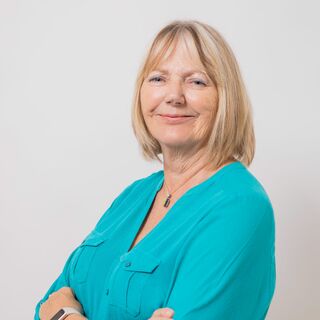
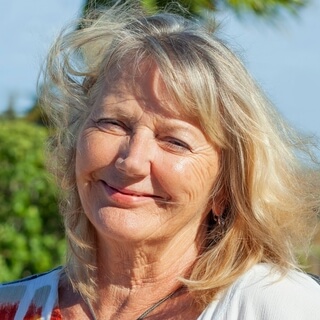
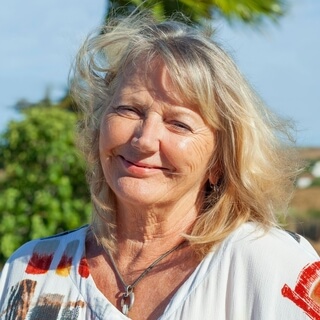
Session 2 in a three part series with me,
Jan Russell.
In this particular session,
You'll raise awareness and learn tools to help you choose the beliefs that you want.
Beliefs can be our best friend or our worst enemy and we make choices big and small every day,
Which are driven by what we believe to be either true or necessary.
Though we often do this at an unconscious level,
Believing is an active process,
It's something we do.
This is good news,
It means that it's within our power to create beliefs which serve you well and to move away from self-limiting beliefs which have held you back.
I combined a little research with my experience of the people who come to me for coaching and I noticed some of the more common limiting beliefs.
Have a listen to the list that follows and notice whether you recognise any of these in some form.
I am not good enough.
I can't transform my life because you can't shift embedded thoughts and behaviours.
I should always put others before myself.
It's important that everybody likes me.
It's too difficult,
I can't.
I'm a fraud,
An imposter and I'll be found out.
I don't have enough time.
It or I must be perfect.
I never need help.
I don't deserve any better.
Everybody else is having a better time than me.
Note how these statements have some common themes.
One,
The feeling of not being good enough or low self-worth.
Two,
The pressure to conform,
Often associated with guilt and full of shoulds and shouldn'ts.
Three,
Around what I deserve,
Whether or not it's OK for me to actually carve my own life.
And a fourth is around fear,
What happens if or I can't.
Think of beliefs as building blocks in the creation of you,
So you can remove them or you can tweak them or replace them when they're not right anymore.
Some might be more tightly glued or cemented than others,
But that's OK,
Because even loosening or chipping away at them can bring quick and surprising results.
It's almost definitely true that you've already changed some beliefs.
Can you remember something that you used to believe was true and now you know it no longer is?
It could be a childhood belief,
The tooth fairy for example.
Maybe there have been hard times in the past when,
At those times,
You never believed that good would come out of them,
And yet here you are.
And how many of you have achieved things that at one time you never believed you would?
You know,
All of the beliefs we've ever had have served a function at some time,
Keeping us safe.
They've kept us in the comfort zone.
So it's not surprising that sometimes,
Even though we want to move on,
At an unconscious level we haven't yet let our familiar beliefs go.
Let me introduce you to Sophia,
HR manager,
And a huge corporate business,
Highly successful,
And now required to make presentations to an international audience.
She came to the coaching room with much anxiety,
Quite unlike her.
I will never be able to do it,
She said.
I'm no good at presentations.
I know already that it will be awful.
I can just hear myself forgetting the lines and feeling nervous and seeing all their faces.
I feel almost sick just thinking about it.
Notice how Sophia was actively instructing her inner self to feel nervous,
To see unpleasant outcomes,
And to hear herself forgetting.
I think if I'd have given myself that kind of rehearsal,
I might have felt sick too.
Because Sophia believed that the presentation would end in failure,
She was rehearsing failure.
This is a simple and powerful first top tip.
We are often rehearsing in our heads.
Let's make sure that we are rehearsing what we want rather than what we fear.
Your point of power lies right now in this moment when you begin to rehearse,
And your future behaviours are fully under your control.
However different your beliefs are from each other,
They share the same structure,
A structure which has three key parts.
And once you understand this structure,
You have the basis for change for any beliefs which no longer serve you.
These three parts are cause,
Effect and meaning.
Cause is about who or what we hold responsible for our mental responses and actions.
It's what causes the whole process of responding and believing to go on.
So,
You make me feel inferior.
You shout,
I feel hurt.
We believe that X cause is Y.
Notice how that can mean that we can take no responsibility for our feelings.
If your it causes us to feel this way then we are helpless.
Effect is what's actually happening.
I feel upset,
I feel jealous,
I feel joyful.
It's a feeling,
A bodily state.
And we produce feelings through a rapid thought process.
Feelings follow thoughts as night follows day.
And you can absolutely change your thought.
After all,
If you can't,
Who can?
So instead of saying I feel hurt because you shouted,
You might choose to believe that shouting is the best the other person can do.
Not great,
Just the best they can do.
And decide that their action need not affect your state,
Certainly not for any length of time.
Meaning is the purpose and intention that we give to events.
I didn't get this job,
It means I'm stupid.
My partner forgot an important date in our diary,
It means she doesn't love me.
Maybe you didn't get that job because one small part of your experience didn't match.
Maybe your partner was just very busy and the forgetting means that she needs a little support.
There are always other possibilities of meaning if we look for them.
So pause for thought.
Even knowing these three parts of a belief raises your awareness because you can approach them one at a time.
In the words of the extraordinary Viktor Frankl,
Between stimulus and response there is a space.
In that space is our power to choose our response.
In our response lies our growth and our freedom.
You choose.
You can be at effect,
A victim or a cause,
The architect of your own wellbeing.
So let's experiment with some simple tips and hacks that chip away a little more at unhelpful beliefs.
I'm presenting these in five sections.
You might have a list of beliefs already if you've listened to the first recording in this series or you might not.
So you can follow the exercises through on first listening or you can listen to the whole recording and then work through it afterwards.
I recommend that you write down the thoughts,
Answers and changes that you want to make as writing access is a different circuitry in your brain which helps you to embody your process.
I will tell you the pause points so that you have warning before we go on to the next section.
First things first,
Identify a belief that now you would like to change.
State your declaration that you're willing to let it go.
Use the language of will.
Make that declaration out loud using the energy and physiology of your body to give it power.
Sound confident and determined.
For example,
I will now stop believing that I can't make presentations.
You're stating your intention in the now at your point of choice.
Use your breathing.
Use your posture as if you're trying on for size how it feels to be exercising your choice.
Then write it down.
Pause the recording now and restart when you're ready.
Now that you've committed your will to change,
We move to step two.
You're going to interrogate the belief.
This is all about asking the question,
How do you know the belief is true?
For centuries,
Earthlings believed that the earth was the center of the universe until along came Galileo who invented the telescope and pointed it to the heavens creating a perspective that had never been known before,
Thus giving us more information.
The earth is not the center.
We are going around the sun.
So let's point our personal telescope somewhere different and actively seek new information to review on helpful personal beliefs.
You remember Sophia.
The first simple challenge I gave her was,
What evidence do you have that you can't present successfully in your current context?
This was her answer.
I've never been able to.
I'm hopeless at presentations.
I replied,
Who says?
My teacher.
Oh,
You have a teacher?
Which teacher?
I asked.
Oh,
Not now,
She said.
One I had at school,
My history teacher.
Ah,
When did she say that?
I asked.
32 years ago,
Said Sophia.
Where is she now?
I don't know.
So who's saying it now?
Sophia paused smiling as she recognized that she was the only person limiting her potential.
In this realization,
She put herself at cause.
As a child,
She had understandably taken a negative comment to heart.
Now she was still taking it to heart over 30 years later on automatic pilot every time she repeated it to herself.
Her teacher was long since gone.
It was just that Sophia hadn't said goodbye.
Once she did,
She broke free from helplessness and embraced her own power.
She chipped away at that belief and she was able to begin to rehearse the scenario of Sophia succeeding with her presentation.
In every detail,
Walking through it,
Hearing herself,
Imagining interested faces and feeling confident and safe.
Hanging on to something someone once said as if it is a truth is incredibly common.
So the questions are,
How do you know who says according to whom?
So pause the recording now and restart when you're ready.
The next hack is how to deal with I can't.
Most limiting beliefs have an I can't somewhere in the structure.
Often we say I can't almost as a habit without really thinking about it.
We've said it so many times we convince ourselves I can't do a presentation.
We dismiss something that we want to do or might feel challenged by doing,
Often without full consideration.
Now far be it from me to suggest that you can just flip can't to can and everything will change.
I do know that changing how you speak about situations gives you more power.
There are lots of ways to do this.
In this short program we're going with a simple language hack.
We simply add the word yet to the end of the sentence that has I can't in it.
Listen to the following and notice the differences.
I can't make a successful presentation.
I can't make a successful presentation yet.
Now we have an open circumstance.
A tiny change in language has created a big change in possibility.
This is enough to scramble an old neural pathway and begin to open other channels to the brain.
It suggests that in the future I could be able to do the thing that I think I can't do.
We can follow it with a commitment if we want to.
I can't make a successful presentation yet.
I will work on this until I can.
Notice this language of commitment.
It's not something I need or that I'll try.
It's something I will change.
We begin to stack up the techniques.
How about I can't say no to people?
Another very common one.
I can't say no to people yet.
Again,
The yet suggests that this ability to say no is on its way.
It's only a matter of time until we discover the resource and the will to say no whenever we want to.
So the word yet changes a belief from an absolute truth to a temporary state of affairs.
Pause the recording now to try this one out for yourself and restart when you're ready.
The next hack is about shoulds,
Also known as oughts,
Have to's,
Need to's.
These words show up when we have beliefs which affect our self-determination or our self-confidence.
They are words which suggest rules,
So it's good to be aware when we're using them whether the rules we're giving ourselves are the ones that we want to.
Do they suit our values or were they learned long ago and aren't so useful anymore?
For example,
One of the common beliefs identified earlier is this.
I should always put others first.
This belief tangles with a whole subset of beliefs.
It might be that somewhere we believe it's selfish to put ourselves first and then we have a whole chain of thoughts going on,
Often putting our own needs so far to the back of the queue that we create stress or even illness.
So one simple way to begin to chip away at this belief is to change the word should or ought or must or need to could.
One of my clients,
Anna,
Complained that she's unable to make time for herself.
She has two teenagers,
16 and 18,
And her parents also have some support needs.
Anna's in a fairly new relationship with a partner.
The partner wanted them to go away for the weekend.
Anna already had so many shoulds that it was easy to see how finding time would be an issue.
For example,
I should visit my parents more.
I should clean the house more often.
I should see that everybody else is all right first.
I should make a cooked dinner every night for the kids.
Anna realised that all of these beliefs stemmed from that one central belief that she should always put others first.
I invited Anna to consider changing her should to a could.
Anna's new belief statement became I could put others first.
She considered this and had to try it on several times.
Then we introduced the word or to create an alternative to what she could do.
So I could always put others first or sometimes I could put my own needs first.
Anna liked this sentence but found it alien.
She practised it out loud.
I recommended that she said it in front of a mirror,
Trying out different tones of voice until she was happy with what she saw,
Heard and felt.
This really changed her energy.
And for the first time in a long time,
She decided that she could leave the cleaning of the house for one weekend and she could go away with her partner.
She talked to her teenagers and arranged that they visit her parents and her mum made a dinner for them while they were there and really enjoyed having a little responsibility.
New possibilities began to open up.
Some of your belief statements that are no longer useful will have shoulds in them.
So go through and change the should to could and add in an or to have another possibility open to you and notice what happens.
Pause the recording now if you want to and resume when you're ready.
Finally,
We have the amazing little device which will be a real friend to your self-determination and it's called the butt flip.
The butt flip is a fun,
Easy and powerful technique.
I was first introduced to the power of butt by an assertiveness trainer who showed me how butt negates what has gone before.
It just bursts right in and wipes it all out.
We use butt to hang on to limiting beliefs.
I'd really like to go away for the weekend,
But I don't seem to have enough time.
I want to make this presentation really good,
But I'm so nervous.
What's the person left with?
The intent is lost forever.
The butt has stolen the show.
So the first thing to do is to replace butt with and and that little trick itself makes a difference.
I'd really like to go away for the weekend and I don't seem to have enough time.
I want to make this presentation really good and I'm so nervous.
So now we're suggesting possibilities rather than restraints.
We're acknowledging the challenges and we're keeping the intent.
So let's add to this a little flip that I learned from the work of Robert Diltz.
Listen to these three sentences.
It's such a lovely day today,
But it will be raining tomorrow.
Notice how the pleasure of the lovely day today has diminished.
It's such a lovely day today and it will be raining tomorrow.
That's a different energy,
Fairly bland,
Not very emotional.
It will be raining tomorrow,
But it's a lovely day today.
Aha!
Now we can leave on a high.
Whatever will happen tomorrow doesn't take anything away from the pleasure of today.
Indeed,
The pleasure of today,
Now placed after the butt,
Takes away any concerns about it being raining tomorrow.
And this,
My friends,
Is a butt flip.
Using a butt flip we can influence what we believe is possible and our motivation.
I don't seem to have enough time,
But I'd like to go away for the weekend.
I'm so nervous,
But I'd like to make a really good presentation.
Doesn't that make a difference to the energy that you feel?
Now having a go is a possibility.
Before it was closed off by the butt.
Flipping the butt is an easy,
Instant game changer.
Pause the recording now if you want to try the butt flip on any of your belief statements and resume when you're ready.
So there you have it,
Some fundamentals of how you can begin to change unhelpful beliefs through altering their structure with five easy hacks.
This is an introductory programme and we can combine these hacks with other approaches to stack up their power.
They are a great start.
For me,
Taking charge of what I believe has been incredibly powerful.
I've used my belief system to overcome illness,
To increase my confidence in loads of contexts and to follow my dreams.
And I've used these tools and do use these tools to help others change their beliefs and empower themselves to create life changing decisions.
This has been the case in a whole range of contexts,
Including recovery from deep trauma to simply wanting to move from a good place to a better place.
So thank you very much indeed for engaging with me.
And in the next part of this short programme,
Part three,
We're going to move through a guided meditation to help you to create a compelling belief that you'd really like to have.
Until then,
Go well.