What does it mean to practice scientific self-help?
What interventions have the biggest impact on your mental functioning?
And how can you get started with neurohacking?
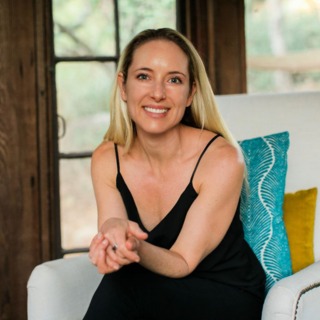
That's what I'm going to explore today with Elizabeth Ricker on your life in process.
If you're listening to this podcast,
You probably have some interest in self-help.
And I am curious,
How are those daily practices going for you that I offer at the end of every show?
I hope that you listen to the acceptance episode and want to know,
Did you notice any difference in your ability to stay present with discomfort when you practice accepting with your body or your behavior?
Some of the acceptance exercises may work better for you than others.
And we're going to explore this concept of personalization when I talk with Elizabeth today.
But before I do that,
I really want to thank those that have given me feedback on podchaser or have written into me at podcast at your life in process.
Com.
Terry Kiss wrote on podchaser,
I can't emphasize enough how much I love this podcast.
I've learned so much from Diana and always feel calmer and more centered after listening to an episode.
I'm learning what is important to me and how to step toward my values even when life is difficult.
Thank you,
Terry.
That was so kind.
And I am curious what is working for you,
What you're liking,
Who you want to hear from.
So shoot me a note and please write a review at podchaser.
Com.
So I am really interested in helping you personalize and apply science backed and time tested strategies to the important domains of your life.
If you want to take your self help one step further,
Adding some self testing and mini experiments where you randomize yourself into an intervention and take a pre post test can really help you identify which are the specific strategies that we talk about on the show and elsewhere that are helpful for you.
And that's where Elizabeth Ricker comes in.
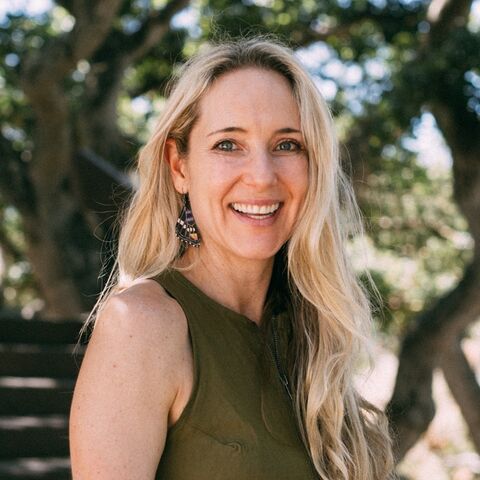
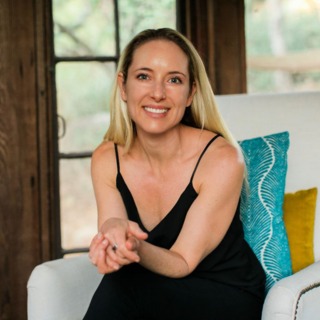
She's a brain trainer and a neuro hacker.
And she helps you find the type of brain training that works best for you through self experimentation.
Elizabeth's primary focus is on mental performance.
She worked in her first brain research lab in high school,
Received her neuroscience training from MIT and Harvard and worked in educational technology healthcare startups out of MIT,
Harvard,
Stanford,
And CMU.
She's got all the credentials and she applies the lessons she learned as a nationally ranked athlete,
Teacher,
Musician,
And now new mom.
She's also the author of Smarter Tomorrow,
How 15 minutes of neuro hacking a day can help you work better,
Think faster and get more done.
In this episode,
We talk about what is scientific self help and why it's so useful.
And we explore this new kind of IQ that includes executive functioning,
Emotion regulation,
Learning and memory and creativity.
And we talk about some of the interventions that are most effective in upgrading your brain and other ones that Elizabeth has some concerns about.
I found this conversation with Elizabeth eye opening and her practices are so fun.
So I'll meet you on the other side with one of them that you'll be able to try out some neuro hacking on yourself with this week.
So here we are with Elizabeth Ricker and we're going to talk all about neuro hacking today.
But even before we talk about neuro hacking,
I want to talk to you about scientific self help,
Because this is a term that you bring up in your work and that is distinct from self help.
And so get us oriented around that.
And then we can talk about how we can hack our own brains.
Absolutely.
So first off,
Thank you so much for having me on here.
This is such fun.
So scientific self help is a category that I'm hoping will really catch on.
And it's more than just infusing science into the popular popularization of a self help category.
It's what it is,
Is your brain research backed interventions at approaches,
But you're also trying things out on yourself.
So it's about running self experiments.
And what do I mean by a self experiment?
So we go through life and we see things that we think may be helpful.
So we're all subjected to these endless listicles of 10 things to do before you wake up in the morning practically.
And it seems impossible to do all of them,
But somehow we're expected to do all of them.
What scientific self help does is it says start with the things that are actually research backed,
First of all.
And then from there,
You actually still have a pretty large set of topics to try.
So use self experiments,
Which I can go into more depth with,
But take a scientific approach to testing things on yourself.
And so that could be as simple as before I go into a big meeting,
I don't know whether it would be best for me to meditate or if it would be best for me to do some exercise.
So why don't I go test that?
Rather than just proceeding through life blindly,
Why don't I actually go gather some data and learn what works best for me?
And the reason why this is so important is,
Yes,
Science is powerful and important and yes,
It's transformed our lives in many ways.
But the more we learn about the brain,
The more we're learning that our brains are incredibly maddeningly,
Gloriously unique.
And this is great because it makes us all feel special,
But it's a challenge because it means that one size fits all solutions are unlikely to actually work perfectly for each person.
So to create personalization,
You actually need to run self experiments.
And it's not as daunting as it sounds,
You don't need a PhD to do it.
You can actually just run what's called an A-B test.
And web marketers run this all the time on websites.
It's used in a variety of different industries.
Really what it comes down to is you're saying,
Does this,
Does A work better for me or does B work better for me?
And then you run this test a number of times and you start off with an A and a B that are actually research backed,
Hopefully.
But really scientific self-help is at its essence,
Use research backed approaches,
But then learn how to test them on yourself,
Become a self-experimenter.
Great.
So there's two things that kind of rose to the surface when you were speaking that one that I really liked when I heard about it and the other that I had some concerns.
Okay.
So the one that I love is this personalization and customization and what we know about,
I mean,
Everything from therapy to nutrition to type of exercise,
We're all out there trying to find the perfect thing that someone else says is the perfect thing when really we have to look at the data on ourselves.
Like what is the perfect thing for me?
And that's going to be different from you.
So scientific self-help can help a lot with that.
But I have to be honest with you,
When I picked up your book,
My first reaction was,
Oh no,
Another thing to do.
And as a working mom,
I'm like,
Oh no,
Now I have to like do this.
I can't just like go for my run in the morning.
I have to do the A and B test before and after I run.
And I have to say that that actually got a little bit debunked as I learned more about your work.
And what I actually found is that I'm already doing a lot of scientific self-help,
But I can get a little bit more streamlined about it and that actually it becomes fun.
It becomes interesting.
It becomes sort of learning more about me and how to like,
You know,
I don't even want to use the word optimize,
But really live in a way that is like my best self,
My most,
You know,
Flourishing version of me that's less irritable towards my kids and more focused when I'm with a client.
So I will say for folks that feel a little bit like,
Oh no,
Another thing to do,
There's ways that this isn't necessarily that.
That's yeah.
Thank you so much for saying that.
And I think that is exactly the yuck reaction that can occur when you hear this for the first time.
We all feel so overwhelmed,
Especially during COVID,
Especially during all the changes that are occurring right now.
We don't need yet one more thing to do.
I will say a couple of things on top of you've already covered so many fantastic elements to this.
The approach that I'm describing is just 15 minutes a day.
And I've been very,
Very careful about keeping it to just 15 minutes.
So the exact protocol that I use is there's a two and a half minute test before you start.
Then there's a 10 minute intervention and then there's a two and a half minute test at the end.
So it's not as daunting as it sounds.
Most of us have,
Most of us have 15 minutes that we can spare at some point in the day.
I'm also a mom.
I completely get it.
And my neuro hacking has sort of changed and evolved through my parenthood journey.
But I will say that the importance of it has actually grown even larger now that I'm a parent.
It's actually been more and more and more important to me as I've gone on.
So I'm so grateful to it.
And honestly,
I don't think I could have written the book while pregnant and then a new parent if not for neuro hacking.
So just put that out there.
It is doable.
Yeah.
And it's motivating because you see something having a benefit for you and then that motivates you to continue that thing.
So a lot of my work is around behaviorism and helping people change habits and maintain those habits.
But when you don't have feedback around it being of benefit to you,
Then you kind of give up.
So it can be helpful for motivation.
Exactly.
So you do a really good job talking about neurodiversity and about this work is not about making you more neurotypical.
That's not the goal of this work.
So I'd love to address that because obviously that's something that's on a lot of people's minds right now and something that is important in terms of also just sort of a concept to wrap our heads around.
Yeah.
Thank you for bringing that up.
So just to kind of for anyone who's not as familiar with what neurodiversity is,
There's a lot of definitions floating around.
But the idea is that there's actually a lot of diversity neurologically in the way that we all show up as humans.
So just in the way that we have in the same way that we have different colors of hair and eyes,
Skin,
And we are all different shapes and sizes.
We all actually have very unique brain wiring and some people will cluster around certain characteristics when it comes to emotional,
The ways that they regulate their emotions,
Or perhaps the way that their cognition works.
And so people have sort of grouped themselves and it's even become a little political.
So there are groups of people who are say on the autism spectrum or who are Asperger's as well who really identify with saying,
Hey,
This is not a disorder.
Stop trying to say that we're different and bad.
We're just different.
It's not bad.
In some cases,
Maybe it's actually good where these people are better at certain types of tasks than other people.
And then there are also people say who have been slapped with the label of ADHD and their groups are saying,
Hey,
Okay,
We're different,
But it doesn't actually necessarily mean that it is worse.
And there's sort of this Hunter-Firmmer hypothesis that has been put forth.
It's very interesting as well.
It says ADHD is kind of a throwback to more hunter-gatherer as opposed to farmer types.
And actually it's interesting if you look at EMTs and a lot of emergency type personnel,
These people are overrepresented as having ADHD.
And so it's thought that actually when you look at what's biologically going on for people who have ADHD,
They often do show up a little bit differently biochemically in terms of their response to high threat and stress where they may actually be calmer than the average person would be under those circumstances.
So it may be adaptive.
So the point here overall is that neurodiversity is saying,
Hey,
There's just a,
There's a lot going on.
It doesn't mean that there's one right way to be as a human and we should probably stop being so simplistic.
So where I come at this with neurohacking is I'm trying to say that neurohacking,
The point of neurohacking is to make you a better version of yourself.
It is not to make you a carbon copy of some mythical perfect average being.
And also it would be a bit preposterous if everyone was trying to be average,
Right?
Aren't we all trying to be better versions of ourselves?
The whole concept is a bit bizarre.
So anyway,
I'm very much against trying to turn everyone into some mythical neurotypical thing.
I'm really trying to say whatever it is that you want to be,
Let's figure out practical tools to get you there.
And so it may very well be that someone comes out as seemingly not very neurotypical.
They're very atypical.
And if there are aspects of that that are causing them grief in their life,
That are making them not able to function,
Well,
Of course you should work on that,
Right?
That's probably your primary bottleneck.
So for instance,
One of the very first steps,
Chapter six,
I talk about debugging yourself.
You should start with a mental health assessment.
If you are struggling in your life and you're miserable,
This is not a neurodiversity question.
This is a basic health functioning question.
You should address your depression.
You should address whatever the thing is that's making you miserable if it's not something that's helping you.
I mean,
It's funny because this can get complex.
Like we see examples of artists,
For instance,
Who did really good work when they were depressed.
And so they kind of hold on to their depression.
You often see this with creatives where they have this push-pull with what they think of as mental health.
So however you define it,
I really leave it up to the individual.
However you define it,
These are just tools.
Use the tools in the way that you think is best and you absolutely do not have to become neurotypical.
In fact,
I really hope you don't because we need more diversity in the world.
We have a lot of problems.
We all need to solve them.
And it's going to take a lot of different kinds of brains to do that.
Yeah.
You know,
My disorganization I think is a little bit linked to creativity and I kind of don't want to.
.
.
It probably is.
I don't know if they hold hands,
But sometimes my disorganization gets in the way of my creativity because I can't produce anything if I'm so disorganized,
Right?
Exactly.
So that's where you get to choose.
You get to choose.
You pick that as your bottleneck for a little while.
You get it up to a level that you feel more comfortable with and then it gets off.
Like I'll be honest with you,
Right now I'm starting another self-experiment and I did sort of a Nearest Resolution type life assessment and I looked across all these different areas and there are a number of areas where I was definitely lower.
I mean on the lower end of what I consider to be acceptable for me.
And I looked at those numbers and I was like,
I don't really care.
I'm not going to work on that right now.
I'm just choosing not to.
So I instead decided to focus on areas that I'm actually already strong in because it was a very intentional decision that in this time in my life,
This is more important and I will work on those things later.
I've worked on them before,
I'll work on them again later.
So the point is you don't always have to be working on your bottlenecks.
You can also just choose to ignore those for a bit or even celebrate your weaknesses if you want and just focus on the stronger areas.
That's what is right for you.
In your work you talk about sort of these four main areas around that we can neuro hack,
That we can work on in terms of our learning and memory,
Our emotion regulation and our creativity.
And I'd love for you to break down for us a little bit about why you chose those things.
And then we can go into a little bit more detail of what are some things that we could be trying out on ourselves and how we'd even go about trying out this concept of scientific self-help.
So I picked those four because they seemed to both,
Each one of them seemed to both be a very high real world impact.
In other words,
Having a demonstrated research backed impact on your daily functioning at work in your relationships and kind of generally when operating throughout your life.
And we have in some cases decades of longitudinal data indicating the importance of these mental abilities in those areas.
So what I mean by that is for individuals who are high in these mental abilities,
They seem to do better on a number of metrics that people really care about in their lives.
And for people who struggle in those areas,
It does seem that they tend to do worse and that they also have outcomes that people generally don't enjoy.
So that was the main thing.
I wanted to have areas that have really significant mental impact.
That seems obvious,
Right?
But the reason why that's so important as a researcher is that frankly,
There are a lot of areas that we cover in the research literature that are to me intellectually fascinating,
That have not really been demonstrated to have so-called real world significance.
So that's why I wanted to find things that actually,
If you're going to spend 15 minutes of your day,
I want to make sure you have a good bang for your neuro hacking buck.
So that's the real world component.
The other part is that there are things that we know seem to correlate strongly with long term outcomes,
But we don't necessarily have great data around being able to change them.
So they seem a little bit more immutable and there's some discussion as to whether they're fully changeable,
But there's enough controversy that I didn't think it was worth going after those.
And we can all think of things like that.
I mean,
Obviously height or past a certain age,
Barring something horrible happening like losing a leg.
There's often ways to decrease your abilities in certain areas.
So I wanted to focus on things that were also improvable.
So thanks to decades of recent research on neuroplasticity,
We have a lot of data that's indicating that these areas are changeable even into adulthood,
Even into older age.
So those were the two relatively strict criteria that I was submitting,
That I was subjecting all of these areas to before I selected them.
And then the other is that I wanted to know whether there were interventions that come from the randomized controlled trial literature that indicate that,
Okay,
We know which interventions actually seem to help.
There's a lot of things where you can see people can change,
But we don't exactly know why they're changing.
So I wanted it to be controllable by the individual.
And then finally,
These four in particular are interesting to me because they kind of span the gamut of what we think of as mental performance.
So when you think of,
You know,
You meet a really smart person,
You might be thinking,
Oh,
That person has great attention.
They have great memory.
They have,
You know,
A mind like a steel trap that they can just never hold on to,
Sorry,
Never lose a piece of information.
But we also think of really creative individuals as being particularly brilliant or admirable or contributing to areas.
And then we also think of people who have sort of a zen-like calm about them.
And that's really impressive as well.
So that's why I chose creativity,
Emotional self-regulation,
Which is kind of what it sounds like.
It's really the ability to detect your emotions,
To be that sort of self-aware,
And then also to be able to change what you're doing going forward based on that self-awareness.
So to kind of have that control both internally and then be able to make good decisions in your environment.
And then the other two,
Learning and memory,
Are kind of what people typically think of when they think about,
You know,
Oh,
That's a smart person.
And then,
Yeah,
So kind of bring all of these together.
You often will find people who are strong in one area,
But they're a little weaker in another.
And that is an exciting opportunity for neurohacking because it means that you can work on your strengths,
But you also can target your bottlenecks.
So in some,
I chose these four areas because they're research backed,
They're of real world significance,
And they are kind of interesting and diverse and they give you a lot of options for your neurohacking.
And they move beyond the sort of this traditional model of IQ that we're taught about in terms of smartness or grades that we're taught about,
You know,
In school and actually looking at these ways of functioning that if I can find my bottlenecks,
Which actually I did.
So you have all these self-assessments in there,
Which is so fun.
I did it on an airplane,
Did some of them on an airplane.
Well,
I had like a five hour flight.
It's like,
Oh,
I can do all these little self-assessments.
But,
You know,
It was interesting because even within one category,
So for example,
The category of executive functioning,
I heard someone say,
It was actually Dan Siegel that said he has an excessive attention disorder.
Like he can talk on a topic for seven hours straight.
I have that.
Like I can,
I have that too.
I can attend for way too long and actually go into states of flow really quickly.
So that's not my issue.
But my issue within the executive functioning is organization and serial planning.
So it was so helpful to kind of do these little very quick.
I mean,
It didn't take that long,
These little self-assessments to then be able to look at,
Okay,
If that's an area that's important to me,
Planning and an organization,
Which does show up,
I will have to say people that know me,
Like it's kind of disorganized working with you.
But it's something that I want to work on and get better at.
And I think I can.
And then the other arena was emotion regulation,
Which of course I love as a psychologist that you're including that in our looking at what is a healthy brain.
And for me,
Actually,
Interestingly enough,
My area that I struggle with is around my mood.
And so over the course of my whole life,
I've been sort of in someone that struggled with anxiety and I've naturally turned towards interventions for myself to manage my anxiety.
But I'm using your model to get a little more fine tuned.
Like if I do my yoga at noon,
Does it have a better impact on the rest of my afternoon with clients versus if I do it at the end of the day or I do it in the morning?
And that's where this kind of self experimentation is super cool because you can,
You may already know these things about yourself,
But you can get a little bit more fine tuned.
Well,
It's also fun about,
I love everything that you just said,
And it's so exciting for me to hear from a psychologist that you see the tie into the emotional regulation and that you like the expansion of what is mental performance and what is a healthy,
High operating brain.
And that was actually an eye opener for me.
I grew up in a very academic family and everything was very,
Very focused on sort of what I later learned was cognitive skills.
And it wasn't until I was much older that I began to realize that some of the areas where I was thinking I was having difficulty with attention,
I actually discovered had to do with mood.
I was like you struggling with some anxiety and in some cases low mood.
And I didn't understand how that was impacting even my ability to learn and remember at school.
So one of the things that actually drew me into this work was I was very puzzled as a child with my own mental performance.
And I had this very irregular pattern where I would sort of zone out in class and I didn't understand why.
And I would have brain fog and all these various issues.
And I mostly noticed because of the effect on my ability to pay attention and learn.
But it wasn't until later that I understood some of the tie-ins with emotional self-regulation and kind of mood and how when you look at the brain,
It's not a surprise because the limbic system,
The hypothalamus,
The executive function areas like in the prefrontal cortex,
All these are so either right next to each other or very tightly wired.
So it's no surprise that one area would affect another.
They're just absolutely in an ecosystem.
So anyway,
Thank you for saying that it makes me happy that you see that tie-in and that is that that's meaningful to you too.
I'm curious also about the timing effects that you discovered.
So you mentioned that you're exploring the effect of yoga at midday versus the end of day.
Have you tried it at the beginning of the day too?
And I'm curious kind of like what has that looked like for you and how are you finding the neurohacking helping inform it?
Yeah,
Well,
I'm finding that as much as my schedule does not like it,
Midday is ideal,
Which actually means I have to practice some acceptance of I'm not going to book a client in that spot so that I can do some yoga.
Because what I find is that when I,
For me,
When I take a break midday and do something that's totally not cognitive and that is very body-based,
That is movement-based.
So a lot of my work is sedentary as a therapist.
And so when I do something that's very and very cognitive,
Right?
So when I do something that's more body-based,
It almost resets my system so I can go in and be more creative and present and sit with a client in the afternoon.
I'm finding that to be more beneficial than at the end of the day for me.
Interesting.
Makes a lot of sense.
And then I don't do it at the beginning because I,
In the beginning of my day,
Is when I do more of my high-intensity interval training or running or also I do breath work in the morning and I find that that's really helpful.
And that's just through my own,
You know,
Over time,
I've just sort of learned that.
I say I'm going to exercise at four o'clock,
I will not.
So I also,
Which was,
You know,
You have so much information in your book around exercise.
And so let's talk a little bit about some of the interventions that you talk about.
Let's talk about them globally in terms of what you've seen in terms of these are effective interventions and then obviously it depends on the individual,
Right?
Because you're asking me for someone else,
Midday yoga is not there.
It could be the opposite.
Yeah,
It could be the opposite.
And what's so interesting too is that these are very affected by people's circadian rhythms.
So someone who is a stereotypical night owl as opposed to sort of an early bird,
They're like hormonal patterns throughout the day,
There are stress levels throughout the day,
There are alertness levels,
They look like different people because they're categorically different and so the best intervention for someone who is more of a night owl is going to be very different from someone who is a classic morning bird.
And you're a night owl.
I learned that about you.
So okay,
This is a very interesting thing.
So I have been a night owl for a very long time.
Now that I have a little one,
I have been forced to wake up early and it was very painful.
I'm not going to lie.
But what's interesting is that I have been adapting to it and I am starting to,
I don't know if I'm becoming an early morning person but I am realizing that many of my early findings that I thought I could rely on,
Like I know this is a good intervention for me at this time,
I know this is a good intervention,
Those things are changing.
And so this is actually,
This is one of the interesting and fun things about neurohacking is that it's very dynamic.
So you find truths about yourself that I would say are lowercase t and then they change.
And they're very useful for a while and then you run another experiment and then you discover okay,
Well this has changed,
This has shifted.
I have a new bottleneck or I have new interventions that work for me and that's okay.
It's kind of,
It's a fun exploration.
Yeah.
It's a process,
Right?
It's a process,
Exactly.
And that it's not all about outcomes here.
It's also about sort of being in sort of awareness of wherever you are in your development.
Welcome to motherhood.
It's just going to all change again in about three months.
So exactly.
Yeah.
And it's been fun because waking up in the morning to work out has,
The reason I thought of it was that working out in the morning was never something that I was going to do.
That was never a set of interventions that was going to be part of my regimen and now it actually is.
And so I've kind of unpacked this whole area that wasn't available before.
So that was kind of exciting.
So what does the research show around exercise and cognitive performance?
Let's just kind of give a big picture of that.
Yeah.
So there's so much.
And when you look at all the different interventions,
Exercise is really one of the ones that kind of almost without exception is helpful for just about every target.
So there's very,
Very strong evidence for improvement in executive function.
There's acute effects in learning and memory.
So there was one study where we were looking at,
Or not we,
Another set of researchers was looking at high intensity running on a treadmill and they wanted to see how well people could remember a list of words immediately versus a few hours later and then also a day or so later.
And what they found in that group was actually that the effect of the high intensity running was so profound that it was affecting them even hours later and days later as compared to the control group where they didn't do that running.
So it was quite literally improving the memory abilities of that training group.
In terms of emotional self-regulation,
The effect most likely of exercise is the improvement to mood.
So you get a bit of a mood boost and so mood has a bit of a role in learning and memory.
It also has a role in creativity.
So depending on the type of creative task that you're doing,
Certain types of exercise can be very,
Very helpful.
For instance,
There was a recent study at Stanford that showed the benefits of going on a walk for multiple measurements of creativity.
That's a pretty low intensity exercise,
A pretty fun one.
So I often when I'm brainstorming ideas,
I'll just go on a walk.
So then when it comes to emotional self-regulation,
If you're feeling a bit down in the dumps,
I actually do this myself.
Often if I'm feeling discouraged or frustrated about some problem at work for instance or if I'm squabbling with my sister or something like that,
I'll just do some jumping jacks.
It's a very,
Very simple quick intervention and it immediately brings my mind back into a state where I can think more logically,
Think more clearly and make decisions that I'll be proud of.
So those are very simple ways in which exercise can be helpful.
Well,
Gosh,
As a therapist,
There'll be so many times when I'll have a client come in and they'll be like,
Their whole life has changed,
Their problems have a different perspective on them,
Their stress levels,
Everything.
And I'll ask them how they're thinking about something differently or how they're approaching something differently.
And they'll say something like,
I took up pickleball.
Okay,
Yeah,
This intervention can have an impact like today,
Right now in the next 10 minutes,
And then also an impact over the next 10 years.
So it's a good one to take a look at.
And I loved how you talked about some of the research that showed that actually there is sort of a benefit for resistance training plus cardio,
Like that combination is particularly good for folks and at different age.
That's right.
Yeah,
There were differential effects depending on the age.
I'd have to go back and make sure I'm telling you exactly the right information,
But I believe the effect was probably strongest for adults in their sort of 20s to 40s range,
But I don't want to lead you astray.
So I'd have to actually go back and double check that study.
Or you can go get the book and you can look at the section on it.
Perfect.
And actually just to make it easy,
There are takeaways at the end of every chapter.
So you can always go to the very flip to the end of the chapter and see all of the really simple takeaways that I've included there.
Yeah.
So we all know that I think a lot of people are wanting to incorporate more movement into their lives.
But there's some other more kind of unusual neuro hacks that you talk about in the book.
And one that interested me was around nootropics.
That's sort of a hot topic for people right now.
People often want to say,
What can I take?
What can I ingest?
So I don't have to work so hard,
Really.
But what are some of the nootropics that you looked at and that you are experimenting with with yourself and then also suggesting people might want to try out in terms of cognitive performance?
Yeah.
So this is a really interesting topic and I always get asked about this.
And I have to admit that I always feel a little uncomfortable.
And I'll tell you why.
I personally do not use nootropics very much at all.
And there's a bunch of reasons for that.
Now that being said,
I'm happy to mention some of the ones that I do describe in the book.
But I want to start with why I don't use them because I think that's important.
So the main reason is that we don't have very solid data,
At least in this country,
On their efficacy.
That's the first part.
The second is that we don't have really solid data on their safety.
And that might be kind of surprising like,
Oh,
What does this mean?
How could it be that bad?
You know,
I can just buy this thing at my local drugstore.
What's the big deal?
Well,
The problem is that here in the U.
S.
As opposed to in many other countries,
We don't regulate the sort of manufacturing and processing and ultimately the quality of vitamins and supplements in the same way that we do for,
Say,
Prescription drugs.
And the reason why this is problematic is that there are groups like Labdoor or consumer labs or a bunch of others that have gone into local drugstores and they've picked pills out of the bottles and then they've brought them back to the lab and then they've looked at how well does what's written on this label actually match up with what's in the bottle.
And it's pretty shocking how poorly it often actually matches up.
So we're talking about 50% differences here or more in some cases can be 90%.
So what that means is that you think you're taking something that is 10 milligrams of X,
Y or Z but you're actually potentially taking half that or 90% of that or maybe 2X that.
And the problem is that for some of these substances,
It's not super well understood exactly what the effect is going to be on you.
So it's not that unreasonable to think that you could end up having some actual health conditions related to that.
And along those lines,
There's actually been long-term studies of people who even take multivitamins long-term.
And I'm not trying to say you should take multivitamins because for many people,
Their diet is not diverse enough and they don't have access to really high quality food.
We have a lot of issues with food supply in this country.
So I don't want to pass judgment.
But there are studies that you would expect if someone is taking consistent multivitamins,
They shouldn't have any nutrient deficiencies long-term.
They should on average have higher health than people who are not controlling for other factors like both groups are of similar health level.
In fact,
Actually,
There have been some studies that have shown that they have worse health.
And when you dig into it a little bit,
Some of the problem is that there can be issues around heavy metals and even around impurities in the actual content of the pills themselves.
So I'm not trying to lambast all vitamin supplement companies in this country.
There are plenty of heroes in that space who are doing great work.
It's just that as an average consumer who isn't really,
Really deeply researching every single thing that they're doing,
It can be really easy to accidentally take something that is not super safe.
So anyway,
That's my massive public service announcement.
Sorry to be annoying.
Well,
I think honestly,
It's refreshing to hear a quote neurohacker from,
I don't know,
Are you in Silicon Valley now?
I am in Silicon Valley,
Yes.
You fit all of the stereotypes with the neurohackers.
I know.
I'm not actually,
I'm not there.
But even,
I would say I take a nootropic when I take coffee.
I mean,
I drink coffee every day and it has a dramatic influence on my mood and on my attention and my alertness and in all of that.
And at the same time,
I have sort of figured out what the right amount of coffee is for me because if I go over my double shot,
I get sugary or I have difficulty sleeping.
So again,
Where it goes to that personalization of,
I was interested in on your combining coffee with ethionine.
Ethionine,
Yeah,
Exactly.
That's an interesting one,
Especially for people who have the profile of they run a little more on the anxious side.
So combining it with ethionine does seem to have this kind of more calming effect where you still get the attention and alertness boost from caffeine,
But you don't have that edge.
So it kind of evens it out.
And I will say that,
I mean,
Again,
I gave you my PSA about nootropics.
I certainly do.
I take caffeine.
I love tea.
I have all different types of teas that I use.
In the book,
I talk about guayusa.
I'm also a big fan of guerba mote.
I drink Pu'er tea,
Which is a Chinese tea.
There are all kinds of different,
I've also started trying mushroom coffees.
But all that being said,
I would not consider that to be a staple of my neuro hacking practice because I don't think that currently the level of research is there in most cases.
If you look at the randomized control studies,
Which I do mention in the chapter,
This chapter is called A Pill a Day towards the end of the book.
I do mention a number of randomized control studies that are trials that are done and that were nicely done studies.
And they were for kava,
Bakoba monieri,
Ashwagandha,
You know,
L-theanine and caffeine.
There's a number of these that either pull from Chinese medicine or from Ayurvedic medicine in India that they have long beautiful histories where these compounds have been used either through ritual as in the case of kava in the islands in certain groups that actually have lived there and worked with this compound for hundreds if not thousands of years.
So it's not that there hasn't been very effective use of these compounds.
It's more that our access to the high quality versions of them and our access to knowing exactly which protocols are right for us is kind of not there yet.
So that's why I know people are going to do it anyway.
But I do think it's worth being very,
Very cautious when you're doing neurohacking with nootropics.
And I think you should really start off in the areas that are,
I think,
More bang for a buck and have better science behind them,
At least at this point and for which we have better control over the quality of the actual product that we're using,
At least in this country.
There are exceptions where in other countries they have better regulation.
And so when you buy a vitamin or a supplement from the local drugstore,
You're actually probably getting what it says on the label.
But in this country,
That's just not always the case.
Well,
Yeah.
I mean,
I think you're also talking about there's this term from E.
O.
Wilson,
Who's yeah,
Consilience.
And so the sort of the idea of,
OK,
Here's something that's been used for thousands of years,
Like that's sort of a good idea.
Like let's draw from something that has some history behind it and that maybe has been used for thousands of years.
But then also the consilience of that in combination with what is the current understanding of research and its safety and the quality.
And then that also with you in terms of your own personal biochemistry and your response to it and how does it actually impact you.
And sort of the consilience being the idea that it kind of comes from all these different ways.
I mean,
It's sort of the Indian proverb of the elephant.
So we're all kind of looking at different parts of the elephant,
But can we step back and have a consilient view that takes into account all these different parts?
So I think of scientific self-help is one aspect of that.
But there's also a lot of tradition that we can look at as well.
And I think the other thing to do is to be really respectful of the fact that even if you if you attempt to pull ideas or inspirations or traditions from other cultures or from practices that were done in another time,
The realistic takeaway that you should always have is are you really doing it the way that they did it?
And the problem,
The thing that really worries me about attempting to sort of perfectly transplant something that came from say Ayurvedic medicine was practiced in villages for probably thousands of years is that their diet was different.
The practices around it.
I mean,
I talk about placebo and what placebo is and how incredibly powerful that is.
And in Western medicine,
We tend to talk about placebo in sort of a negative way.
But actually,
It's mostly because Western scientists are frustrated by the fact that placebo is so powerful and it often outcompetes many of the drugs that we're attempting to push forward.
So if you think of placebo in a more holistic sense of what the power is of interpersonal connection and of anticipation and your brain's ability to kind of create positive responses to situations,
Whether or not they have it has actually been physically affected.
All of those effects and factors may have been strongly at play in this other culture that are not at play here.
And so it may very well be that you simply cannot replicate that same effect that they so successfully had in say a village in India if you're sitting in downtown San Francisco,
Or if you're sitting in downtown New York City,
Or if you're sitting somewhere else.
It doesn't really matter.
The point is that you need to be aware of context.
And so that's where I often feel frustrated as a researcher and also as a practitioner of neurohacking because I'm trying to find something that's really going to work for you.
And I think it's important to be respectful of the fact that you can't expect yourself to replicate something that probably was even sourced differently.
If you're taking kava in a pill form,
That's just not at all the same as if you're participating in a ceremony that was social and be probably also sourced from maybe even a different part of the plant.
I mean,
There's a lot of complexity that you have to keep in mind.
So that's why I really think of that as an advanced tool.
And for people who are familiar with all these moving parts,
Absolutely go after it,
Enjoy it,
Explore it,
Be safe,
But go after it.
But for people who are just dipping their toes in,
I would say really start with the interventions that come earlier in the book.
So I actually start off with placebo.
I start off with exercise and I talk about how you can use those things to just get your muscles moving on the neurohacking.
Thank you.
That was such a beautiful description and such a nuanced description of how oftentimes we're trying to appropriate,
Culturally appropriate these things that work and grab them for ourselves.
And it's not the whole picture.
So let's talk about placebo because here we are,
This is self-help,
Scientific self-help.
And you are talking about placebo,
But oftentimes when you think of a placebo is someone's kind of telling you secretly,
This is really going to help you,
But you don't really know it's not the real thing.
Exactly.
How can you placebo yourself?
Yeah.
So this was such an exciting area.
I was a grad student at Harvard and I ended up just randomly having this dinner that was available for students with Ted Kapszczak,
Who was the head of the Center for Placebo Studies at Harvard,
Which is actually an amazing whole research area that I was completely unaware of.
And so his background was that he had studied in Chinese medicine.
He also had studied as a Western scientist and was obviously very familiar with the sort of standard biomedical research model.
And so he wove together these two fields,
These two deep areas of thought into one.
And so what he was studying was,
Okay,
What are the effects quantitatively the effects of placebo?
Let's not treat it as a nuisance variable.
Let's actually treat it as an intervention unto itself.
Let's do it on purpose,
In other words.
So he was trying to say,
Okay,
What are the measurements?
What are the effects?
And then what happens even if people know that they're receiving the placebo?
Does it still work?
And so that was a question that he was asking.
And then I got curious because my background was more in neuroscience.
I wanted to know,
Is anyone doing this in cognition?
And indeed they were.
There were people who were looking at the use of placebo in sleep.
So if you were told that you slept more,
Would you feel more alert?
The answer was yes.
In areas with brain games,
So I had done some research on brain training and brain games and I was curious,
Was placebo playing a role there?
Yes,
It does seem that it was.
But usually the reaction that we have both from what we see in the media and just when I've talked casually with people is,
Okay,
Well,
If placebo has played such a big role,
That just means it doesn't work,
Right?
Well,
That's certainly one way that you could look at it,
That you could be saying that the primary intervention here that you thought was causing the effect is not necessarily the main effect.
But there's a much more interesting way of looking at it,
Which is let's use the placebo.
Let's actually harness this incredible power for our own purposes.
So what that chapter is about,
Which is placebo on purpose,
Is what are all the ways that we've learned that we can actually use placebo and we can actually do it on purpose and we can use it in service of trying to improve our mental performance.
And there's one other thing that I would mention when it comes to placebo,
Which is nocebo,
And that's sort of the evil twin of placebo.
And it's essentially the anticipation that something will be negative for you.
So we all nocebo ourselves when we think that we're going to do poorly in something and then we do,
Right?
If you have performance anxiety and you experience kind of a reduction in your performance relative to how well you performed when you were just practicing or rehearsing,
You just nocebo yourself,
Right?
So it's a very,
Very real effect.
And I think part of what we need to do as neurohackers is use whatever tools we have available to us,
But also recognize when we're using those tools in a negative way on ourselves and learn not to do that.
And I personally certainly experienced that as an athlete where there'd be some other player that I was kind of afraid of because they had such an incredible win record.
And I would nocebo myself going in and I would have my coach comment and be like,
What were you doing?
You miss really easy shots there.
And I would have to come off court,
Do breathing exercise,
Try to do different things to try to put myself back into the right mental frame so that I actually could go in with a placebo rather than a nocebo.
If that makes sense.
Yeah.
Yeah.
At a certain level,
Especially in something like sport,
It is no longer actually the physical ability that's causing the win.
It's very much a mental mind state.
And that's why we have sports psychologists that are there on the team to help people practice mindfulness and all sorts of things.
And certainly with that nocebo concept,
When we look at some of the core processes that are involved in change,
Outcome and therapy,
Sense of self-efficacy and belief is a big part of that.
So we could even say that the sort of the placebo of therapy is coming into,
Especially in research,
I used to do,
I did treatment outcome studies and there was so much about the participant coming to a university,
Signing up for a treatment at a university.
The white coats and the diplomas at the back.
And the assessment.
I mean,
Is that why this treatment worked?
Especially since I was doing it against weightless control.
Especially with the weightless control.
That's a really rough one.
Yeah.
Yeah.
Yeah.
I would trust any of my dissertation outcomes.
And also what I also learned in that process was,
Gosh,
Behind the scenes when you're doing research,
Someone's coming in,
They're doing their intervention.
And for this group of people,
There's going to be some people that do well.
And then there's going to be some people that just really are not,
Like they do not improve.
All these different individualistic contextual factors that show up that are,
If you follow the protocol as is,
Don't actually individualize treatment.
And so that's what I really appreciate about even this idea.
But okay,
So how would you placebo yourself?
Like what would that look like?
So let me,
I'm actually going to pull up one of the protocols for you.
It's on my website right now.
So this is actually kind of a fun one that if anyone is listening to this,
They can follow along.
So if you go to the resource section,
I have a bunch of self experiments.
And this one is actually to boost creativity.
So it's called Placebos for Creativity.
So the experiment is going to compare the effects of two interventions on your creativity.
In one intervention,
You'll take a sniff of a particular scent.
And the other intervention,
You're going to be sniffing that scent and also hearing so called magic words.
So the idea here is that you,
This is building off of previous research that was done in a university setting,
And you're trying to do it at home.
And the idea is that if you are told that,
Say cinnamon has an effect on creativity,
And you sniff it,
That it will then kind of prime you to actually be more creative in subsequent activities.
And then there's also research that if certain magic words are said,
They may even be the sort of core ingredient here.
And those words would be things like clinical studies have shown significant improvements for mind body self upgrading processes,
Inhaling this scent will increase.
And since this is personalized for the person,
You say my creativity,
Right,
So inhaling this scent will increase my creativity.
So here you're actually,
You're using the placebo one yourself.
So the directions are as follows.
There's five steps.
First,
You take this performance based creativity test that you've chosen for your daily tracking,
And I include that in the book,
So it's relatively short.
You record your scores,
Then you check your randomization schedule.
So what I mean by that is that in research,
We randomize between,
You know,
What the control group is doing and what the intervention group is doing.
In this case,
You're both groups,
But it's just you versus you in different,
At different times and under different circumstances.
So you roll a dice or you use some kind of randomization,
You could flip a coin,
Actually,
That makes more sense.
You'd flip a coin to say which one you're going to do on that day.
And then you're supposed to have a schedule to say what you're doing that day.
Then on days when you're supposed to sniff the scent,
You do so,
But you don't say the magic words.
The other days you sniff the scent and you say those magic words.
Again,
It was clinical studies have shown significant improvements through mind,
Body,
Self-upgrading processes.
Inhaling the scent will increase my creativity.
Don't say it the way I just said it.
I just said it like I was a robot.
Say it like you mean it.
That'll actually help you to really benefit from this.
Yeah,
Exactly.
And then for 10 minutes,
You're going to do a task that actually allows you to be creative.
This is the really fun part,
Right?
So you could play with words and ideas to see if they turn into a short poem or a story.
If you're a musician,
You could riff on your guitar,
You could sing to yourself,
Pick a creative activity that you would enjoy doing for 10 minutes.
And then at the end,
You run the test again to see if your creativity score in this case has changed.
So you run this for a while.
In the book,
I talk about what an optimal schedule is so that you actually get good data.
And then at the end,
You can say,
Okay,
Well,
Does this intervention work for me?
So that's a way to dive in and really get a sense of,
Okay,
What could using the placebo for myself really look like?
And it's pretty fun.
And it's harmless.
You're not going to damage yourself in any way.
And if nothing else,
Even if it doesn't work in the way that you hope it will,
You still got to do an interesting creative activity.
Yeah,
You did a little painting in the morning or whatever.
So that's great.
And we can think about,
Yeah,
I mean,
This concept of placebo is even just in listening to this podcast,
We've said,
Oh,
Certain things may be helpful for your cognitive performance,
Like doing resistance training plus cardio.
And that in itself could be a placebo,
Right?
So all these,
You know,
When you start to understand that what we tell ourselves and what we believe actually can actually impact our performance.
And it's an important part of our cognitive performance.
Great.
So we've talked about some simple ones like exercise and placebo,
Maybe some ones to be a little bit more wary about like nootropics.
And there's many more in your book.
You talk about things like temperature.
You even talk about brain stimulation,
Which I wanted to talk to you about,
But we don't have time for today,
But that's of interest and sort of a hot topic right now.
Or neurofeedback also is one of my favorites.
I actually have a device here.
Yeah,
I was interviewed on her podcast on the aerial gardens podcast.
Yeah.
She's fantastic.
She's amazing.
Yeah.
It was really fun.
Such a cool person.
Yeah.
I love that.
And for anybody that's listening to this,
That had some biases and judgments about neuro hackers,
I think Elizabeth,
You've kind of softened us.
You've all tenderized us to what neuro hacking could really,
Really could look like.
And I hope so.
It's a lot of fun.
Yeah.
It's a lot of fun.
I want to talk to you.
I want to keep talking to you,
But I'm aware of our time and your life scoring is lovely.
It's such a,
I was like,
When I was going through your book and you were talking about that,
You have this assessment of life scoring.
I was like,
Oh,
I want to just like Xerox this and use it with my clients.
And so the last thing I want to say is,
Are you going to have some kind of place where all these handouts are?
Or were you going to have an app where we can,
You know,
Lose the paper and pencil and start doing this you know,
In our lives right then and there.
What's on the horizon for you?
I'm sure you have lots of good ideas that you're wanting to implement.
Thank you for asking about that.
So the current place where some of these things are starting to live is in the resources section of my website.
So if you go to ericker.
Com,
It's in that same place where I mentioned the self experiment where you're using placebo for creativity and there will be more of such items living there.
So if you want the kind of full experience,
I'm actually building out an email list and a newsletter and that's going to have a lot of good stuff.
So five minute neuro hacks that you can do at home,
The whole repository of all of the different assessments that I talk about in the book and it's just kind of evolving.
So it's there are a bunch of things that are probably on the horizon.
Definitely been talking about an app.
Definitely talking about an online course.
We'll see what kind of pops out first,
But it's really exciting to hear that these are things that are intriguing for you.
And yeah,
It's all going to be living on ericker.
Com.
So that's E-R-I-C-K-E-R and the email list is going to have a lot of good stuff.
Great.
We'll put links to your book Smarter Tomorrow.
We'll put links to all of those resources right there in the show notes so you can click on them and get connected with Elizabeth Ricker.
Thank you so much for having this conversation with me.
You're delightful.
It is just really wonderful to have you.
Thank you.
This has been great fun.
Thanks a lot.
What a fun conversation.
I'm really excited about this concept of scientific self-help and how it parallels the type of personalization that we're seeing in therapy,
In exercise and all sorts of different domains.
What we can start to do is take these ideas from science and really look at what is ideal for you based on your unique biology,
Learning history and context.
So Elizabeth and I talked about four areas that we can enhance with neuro hacking,
Which include executive functioning,
Emotion regulation,
Learning and memory and creativity and why she chose those areas in particular,
Because there's a good research base behind them.
There's areas that you can actually make changes in and they will have an impact on your life when you do.
We also talked about how exercise and movement is one of the most powerful interventions that you can try out for yourself.
And you can play with things like timing effects,
Intensity,
Type of exercise,
And may notice that it has a different impact on you depending on what your goals are.
So that's where scientific self-help comes in.
You get to test them out and it can be really motivating when you start to see the impact of the intervention on your performance.
And then we also talked about some other interventions like nootropics and the placebo effect,
Which Elizabeth's book goes a lot more detail into.
There's a ton of resources on Elizabeth's website and I'm going to use her website as part of our daily practice this week.
It's a great platform for you to get a sense of what we're talking about in terms of scientific self-help.
I put the link in the show notes and what it is,
Is it's a really simple mood hack that takes about five minutes to complete,
Including reading the instructions.
I did it on myself and it was fascinating to see the results.
What you do is you answer a few questions about your current mood state,
Both positive and negative moods you may be experiencing,
And then you try a one minute intervention.
I'm not going to tell you what it is because I don't want to mess with the experiment.
But then what you do is you take a post-test to see if there's any change in your mood from doing this one minute intervention.
I will tell you that I was pretty surprised by seeing that my negative emotion score started at an 18 and it lowered to a 12 after just one minute of doing this thing.
And it actually encouraged me to incorporate this one minute intervention into my day.
In between therapy clients,
I can do it,
Or I'm waiting to pick up my kids from school.
So go try it out.
It's quick and it gives you a taste of how scientific self-help works.
Once you get a flavor of scientific self-help and how to set it up,
You can try it on a number of things,
Even outside the arena of mental functioning.
So let me know your thoughts.
I want to hear from you and I will see you next week right here on Your Life in Process.
Thank you so much for listening to this episode of Your Life in Process.
When you enter your life in process,
When you become psychologically flexible,
You become free.
If you liked this episode or think it would be helpful to somebody,
Please leave a review over at podchaser.
Com.
If you have any questions,
You can leave them for me by phone at 805-457-2776 or by email at podcast at your life in process.
Com.
This podcast is for informational and entertainment purposes only,
And it's not meant to be a substitute for mental health treatment.