How can we practice wise effort at work,
Especially if we tend to be a little bit perfectionistic?
That's what I'm going to explore today with my good friend,
Sonia Looney on the wise effort show.
Welcome back.
I'm Dr.
Diana Hill.
I'm a clinical psychologist.
This show is all about putting your energy in the places that matter most to you.
And one of the places that really sucks our energy is perfectionism.
When we get rigid about how we do things,
When we get self-critical,
It can deplete us and also derail us from doing things that are more socially impactful.
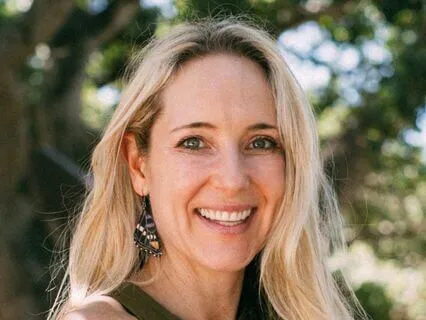
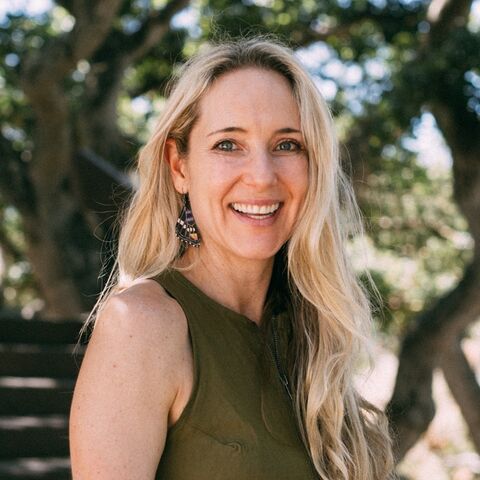
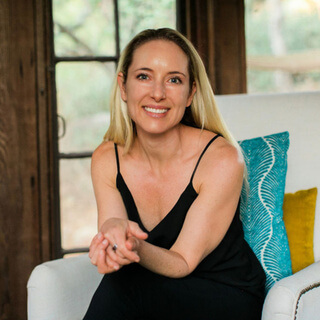
So today you're going to get to hear from my good friend,
Sonia Looney,
Who is well known as a professional mountain biker,
World champion in 24 hour mountain biking,
And also somebody who is really dedicated to this intersection of high performance and wellbeing through positive psychology.
She has spent years exploring concepts like grit and mindset and self-worth and purpose and success and happiness,
And more recently shifted her career.
She just earned her master's degree in applied positive psychology from the University of Pennsylvania,
Which is one of the most highly regarded programs in our country.
I think you'll find that Sonia is both brilliant and approachable,
But she's also just a normal person that struggles with the same stuff that you and I struggle with.
And this conversation is really just two good friends with perfectionistic tendencies talking about how we grapple with it ourselves,
How we help our clients with it,
And hopefully giving you some ideas to loosen up your grip a little bit with perfectionism so you can take more wise effort at work,
But also in any other domain that you tend to be perfectionistic.
All right,
I hope you enjoy this conversation with my good friend,
Sonia Looney.
Sonia Looney,
I texted you at,
What time was it this morning when I texted you?
8am?
7am?
Sometime.
Early?
I was awake whatever time that was.
I texted you and said,
I need to talk to you.
Can you do it today?
For multiple reasons.
One,
You're someone that I like talking to.
Second,
You are ripe for the picking right now because you just completed your master's in positive psychology with some of the most leading experts in the field,
And you've done this incredible research,
So I want to pick your brain about that.
And then three,
I'm writing on wise effort and work.
You are a good example of that,
Of somebody who's practicing wise effort at work.
Let's start with the wise effort at work thing.
You're at a bit of a crossroads that most people will not relate to in a specific way because you're at a unique crossroads,
But most people will relate to in a more general way of a shift in terms of your work.
I think that the reason why a lot of people start doing their work can shift over time.
Initially,
Like my initial role,
My primary role for many years was to be a professional mountain biker and to race my bike all over the world and to try to be the best.
And fortunately,
I was able to achieve some really amazing accolades.
I was a world champion,
Or I guess I still am a world champion.
I've won lots of races.
But initially,
It was to prove myself.
It was because I wanted to show that I was good enough.
My self-worth was contingent upon these results.
And over time,
That shifted to becoming something I did because I wanted to help other people,
Because I knew that the role modeling and example that I could set was meaningful.
And also,
The person that I wanted to become happened when I was training for these races.
And that was where the most personal growth came from.
But I've been racing for 20 years,
And I have two little kids.
So I'm not racing internationally as I once was.
And that was where most of my joy came from,
Was the exploration and novelty of something different.
And so I've been asking myself,
Why am I doing this?
And I still am racing.
I just won a race a couple of weeks ago.
But my relationship to racing has changed dramatically,
And the results actually don't even matter to me anymore,
And it's a weird place to be.
So that's why I wanted to pursue this master's,
Because it's something I've loved for over a decade.
It's given me words for things I've been trying to explain.
And I feel like it took a lot of courage to do this,
And my husband had to be on board as well as a support,
Because we have a two- and a four-year-old.
But for me,
Transitions are hard.
And I'm trying to figure out,
Where does racing and being an athlete play in my identity and also in my work?
Because it's something I still want to do,
But I just don't want to do it with the same amount of intensity,
Because it requires so much focus and sacrifice.
So now racing is maybe a fourth priority on my list,
When it used to be number one above all else.
And figuring out,
For work,
Because I'm not trying to pursue my income through sponsorship,
What does that look like?
And how can I use these skills that I have to make the biggest impact,
But also be personally succinctly at the same time?
OK,
So I want to go through this process,
Because I relate so much to what you're talking about and how my own career has shifted,
Even just the shift from the goal being initially to be in academia,
But then the goal to run the treatment center or to be the top,
The most important,
The most whatever.
That kind of falls apart at some point,
Either because you have to sacrifice so much to maintain Or it just,
You become disenchanted by it,
So that Buddhist concept of you're kind of pursuing,
You're the hungry ghost,
But actually,
After a while,
You're like,
I'm just not hungry anymore for that.
So that shifted,
But then it leaves you in this space of the in-between,
Because you're not,
I mean,
Obviously,
You are starting this new career,
And that space in between can be an uncomfortable place to be in.
That's where we need our values and support.
How are you working with that transition and shift in who you are,
Your identity as well as an athlete?
Yeah,
You know,
I've actually been in this place before,
Just it was when I was transitioning to becoming a pro mountain biker because I did my master's in electrical engineering and I had a job as a solar engineer.
It's hard to become a professional mountain biker and make an income doing it.
So it was many years,
Many years of half in,
Half out where I was working,
But I was also pursuing this other thing.
It was really challenging.
At the time,
I had this great yoga teacher in Boulder,
Colorado named Matt Kapanis.
In one of the yoga classes,
He said,
There is a wisdom in being stuck.
So every time I feel stuck in a transition,
I remind myself of that.
I remind myself of the choppy water and how that is just a normal part of the process and just trying to respect that it is hard and it's uncomfortable and it's scary.
I worry that I won't be successful at the next things that I try or that I just won't be able to do it.
All of these feelings that everybody has when they're trying something new,
But also just accepting that that's part of what this is about and then looking for support.
So something that I didn't do very well for many years was reach out for support when I needed it.
I've actually learned a lot from you about compassion and that I need to be able to accept compassion and accept help from other people.
And also sometimes you have to ask for it.
So I'm trying to get comfortable asking people for help.
And you and I had an offline conversation about building bridges.
And it's hard to put your hand up and say,
I need help.
And letting people hold you whenever you're so used to just being so tough and doing it all yourself.
And that's the wisdom in being stuck too,
Because sometimes it's not yourself that can get you unstuck.
It's been helpful for me when we've had exchanges and you've shared about places where you feel stuck around,
Because they're not always the same places that I feel stuck around.
And so that's also like a gift,
Because I can give you some perspective on what I see.
And it's like,
Oh,
That's not stuck.
You're fine.
Sonia Loney,
You've got the most interesting story of the mountain biker,
The professional mountain biker,
Positive psychology.
It's all so interesting.
But then the places that I get stuck maybe aren't so hard for you.
And so you can give me feedback around.
And that's where that's where health and community is so beneficial in these times of transition.
One of the things we talk,
You and I have shared about is this idea of process and being in the process.
And you were sharing a little bit about your research on perfectionism that kind of shifted your perspective on that,
Too,
That it's not all about the process,
That actually there is some outcomes,
Maybe they're not the outcomes we think of,
Like running the treatment center or getting first place,
But there are some outcomes that we could be focusing on as well in this process of transition.
Yeah,
So for my I did a research thesis for my master's degree,
And I picked the population of perfectionists because you were talking about and I was talking about as well,
If we got to get to this outcome,
This I want to be a world champion,
I want to be head of this treatment center.
I want to be the top,
Whatever.
But you get those things.
And if you are if you have perfectionist tendencies or you are a perfectionist,
It doesn't feel like anything.
You don't feel pride with your accomplishments.
Perfectionists,
When a researcher Frost in 1991 said perfectionists overvalue achievements and they undervalue themselves.
So you get this thing thinking you're going to feel a certain way and you're not and you don't feel that way.
You just it's just a hollow achievement.
And you're striving so hard to get to this thing almost myopically and you're letting things go like your relationships and making all these trades because you think you need to get that thing and then you get there and it's not what you thought it was going to be.
And it's crushing.
And I think it happens to so many people.
Perfectionism is not an on or an off switch.
It's a continuum.
And there's there's three different types of perfectionism,
Which all kind of interplay together.
So that's why I chose that population.
And because I can personally relate,
Because I was asking,
Like,
Well,
If accomplishment is something that is supposed to be part of our well-being,
If pursuit of goals,
You know,
That's part of,
Like,
Humanistic psychology,
Like we are here to fulfill our potential and and part of eudaimonia,
Like these are reasons why we're here is to pursue goals and to see what we're capable of.
But if we never feel a sense of accomplishment,
Then there's there's something broken.
So how do we how do we improve our sense of accomplishment?
So basically what I did was I don't want to go into the weeds because I don't know if anybody wants to hear it in the weeds.
But basically the gist of it is that if we think about the social impact that we're making as a role model or just as a collective goal,
It reduces our perfectionistic tendencies because you can't measure the outcome.
You can't you can't measure it against something to say,
Was this good enough or bad enough?
And in all the people I interviewed who are all very high achieving perfectionist with with very high personal standards,
All of them,
100 percent said that whenever they think about social contribution as part of their goals,
They feel so much better about the thing that they did way more than something that they would have done by themselves.
And I feel like I actually feel myself getting like goosebumps and and I tried to actually name that emotion.
What is the emotion of social contribution?
Because whenever we're trying to achieve personal goals like I want I want to be like whatever I want to be,
I want to be number one,
The emotion that you're supposed to feel is pride.
So it's a different emotion that you're feeling whenever there's a social contribution goal.
And that emotion is something bigger than you.
And that can open the gateway to purpose in life,
Which is something bigger than you and can sometimes include social contribution.
So I think there's a lot to be thought about when it comes to the social contribution of your goals and making sure that you don't use outcomes of what you think contribution is.
So,
You know,
Say you have your podcast and this is like the reason why you're trying to make you're making an impact on somebody.
You want to help people.
But then you start saying,
Well,
My podcast isn't getting enough downloads,
Therefore I'm not making an impact or I'm selling books and I oh,
I'm not a bestseller.
So I guess I'm not really making an impact.
Those are the wrong things to measure.
Those are not those are not indicative of how much impact you're making,
But you can't measure impact.
So it's complex in that way.
And the most the most accomplished we feel is when somebody tells us that they made an impact.
So I just I'm always urging people to tell somebody that if they made a difference,
Tell them.
Yeah,
I was sharing with you how I was gone for a while and I got this voice memo on my phone from a supervisee of mine who was a PhD student.
She was my postdoc and she was calling me from a retreat that she'd just been on.
She was like on our retreat.
We're doing a lot of work with our teachers.
And.
In this short voicemail,
She just expressed how our connection and her,
You know,
How our work together impacted her.
And that feedback felt so connected gratitude.
This is why I do the work that I do.
And no one knows it.
I mean,
I'm sharing about it here,
But no one knows it.
And I think that's why I like being a therapist so much is because of the nature of it being confidential.
It's all about impact,
Social impact and feeling it and seeing it with my clients.
And actually,
I don't even need my clients to say thank you.
That's the other part is when you're a therapist,
You don't get a lot of people being you get some that are like,
Thank you so much for being my therapist.
But you feel it.
You feel it in the room.
You feel it by the change that you're making.
And it eases up your perfectionism because social impact,
Like,
Well,
How can you be perfect at that?
Can I rewind,
Though?
Because you said there's three types of perfectionism and the perfectionist wants to have those answers.
What are the three types?
Yeah.
So this is based on Flett and Hewitt's model of perfectionism.
There's a few different overarching models.
So theirs is the multidimensional model of perfectionism.
And so you have self-oriented perfectionism.
So I learned this.
My advisor was Thomas Curran,
Who's a perfectionist researcher.
So I learned you don't call them self-oriented perfectionist.
It's self-oriented perfectionism.
So for anybody just curious and who cares about the little details,
So self-oriented people,
High and self-oriented perfectionism,
Because it's not you as a person.
It's a behavior that you're engaging in.
Is that why it's a it's a behavior.
But also nobody is just all one.
And people can you can find the scale online if people are curious to take it,
If you just want to know.
So those high and self-oriented perfectionism have very high personal standards.
They set their own standards.
And perfectionists rarely meet their standards,
So they set their own standards.
There's socially prescribed perfectionism,
Which is people that feel like society or somebody else has set the standards for you and you're striving to meet somebody else's standards,
Which is the most damaging form of perfectionism.
This is the one that's really impacting young people.
And if you think about how we view ourselves with the digital world,
Like this is crushing because you're never going to be able to be perfect according to society standards because it's an impossible standard.
And then there's other oriented perfectionism where you expect other people to meet your standards,
Which makes me think about marriage and it makes me laugh a little bit.
So everybody has a mix of these three.
Some people are it's very obvious,
Are very high in one and maybe like a little bit lower.
In my study,
It was interesting because I didn't do a qualifying scale before they entered the study.
I just kind of let them enter the study and then tested them.
And they all tested high and self-oriented perfectionism,
Which is interesting that the subgroup,
The people which were all they were acquired through my email newsletter,
Those people,
That subgroup are all high personal standards.
All the Sonia Looney followers.
Yeah.
So these results that I'm reporting,
They might not.
I think they're generalizable to broad audiences,
But the degree to which it's going to be as effective might be less.
But I think we can all relate with this.
We want to matter.
We want to feel like we matter in the world.
And I think that a lot of us are striving for our goals as a way to feel like we matter.
Like if I can just achieve this,
Then I'm a worthy person,
Then I matter.
And it's being measured against the wrong thing,
Because to add value and feel valued,
It's not just about you.
It's about how you're impacting other people,
How you're impacting society as a whole,
Not just yourself.
Right.
So that's where the social contribution comes in,
Because you really do feel like you matter when you're making a social contribution.
But perfectionism could get in the way of that,
Actually could get in the way of you feeling like you matter because you're so focused on being perfect.
I feel that with the podcast,
Where the more I get worried about,
Are people even listening to this or am I doing a good job or I just want to kind of give up on it.
And then when I actually think about,
OK,
Well,
What is even just having this conversation with you,
Like what is the social impact of this?
Now I feel like we're having a social impact because you're talking about things that could change people's life.
It doesn't really matter how many people hear it.
It matters more like one person,
One person hears it.
I'm going to take that another step further because I got some interesting feedback that really helped me.
So I put on this event last year called the Women's Cycling Summit,
And it's basically to help women feel like they matter.
And it features speakers and stories of all different types of people that work at different capacities in the cycling industry.
And we're doing it again this year.
And there was a woman who gave me some feedback.
I saw her this year at a race and she didn't even attend the Women's Cycling Summit last year because she was volunteering for an event that was associated with it.
So she couldn't attend the event.
But just seeing that the event was there inspired her to go back to her home country of Ecuador and put on her own Women's Cycling Summit where women typically don't do a lot of bike riding.
And that's a much broader social change than in the United States.
So even if somebody doesn't hear your podcast and just see that it exists might inspire them to go make social change or impact on others without them even hearing it.
So just it existing alone might be enough.
And we put all this pressure on things to be good enough.
I feel the same way.
I've had a podcast for seven years.
I actually don't look at the downloads anymore.
I think I might have told you that I had the lights turned off on my social media.
I don't want to look at those numbers because then I start asking myself,
Like,
Why isn't it this?
It's never going to be good enough.
And it becomes about the number and not about like going coming back to the beginning,
The process,
The process of I'm doing this because I enjoy making a difference because this is fulfilling because I want to learn and meet other people instead of like,
I need to get a certain number of likes or downloads.
Yeah,
So it is about the process,
But it does seem like it's about the impact outcome to for you to get the feedback from that happening in Ecuador based on a summit that you put.
I know you put so much energy into these summits,
Sonia,
And like,
Oh,
You put on so much,
Too.
So you know what you know how much goes into the summit summits.
So,
Yeah,
The energy you put into a summit and it can feel very.
It can feel very one way.
But that piece of information,
I mean,
That could that could hold you for years.
And so it is an outcome.
We're looking at research studies.
We're looking at outcome measures.
Maybe what is it that you're measuring that's problematic?
You know,
And the field of psychology is certainly looking at that more.
We're not about as much about symptom reduction anymore.
We're much more about life enhancement,
Like how how much vitality do you feel in your life with your panic disorder?
Not necessarily do you have panic attacks or not.
So there's a shift there as well.
I think we have to be careful with what we call it and how we're quantifying it.
Yes,
It's complicated,
Like this kind of finding a work that I've kind of stepped into,
I think there's a lot of refinement that has to happen and explaining it because it's not simple.
Which type of perfectionism do you relate to?
Very high in the self-oriented perfectionism.
Are there any like there's the shadow side to that,
But has there been any benefits to that for you?
You know,
I think in some ways,
So this is a huge debate amongst like amongst perfectionist researchers,
Perfectionism researchers is,
Is perfectionism adaptive?
Can it be healthy?
And there are some people that say yes,
And there's some people that say no.
I think if you can have wise effort in your strivings and you can manage your perfectionism,
Then it can be adaptive.
But I think it's better not to have it.
Well,
It's kind of like asking,
Is it better to have a chip on your shoulder or not?
Like I have a chip on my shoulder for sure.
And that's gotten me really far in my competitive life and in general,
Because when someone tells me I can't do something,
I get my back up and I say,
Well,
I'm going to show you like,
Of course,
Of course,
I'm going to do this now.
So I don't know,
I think for some people it can be helpful and for some people it can be really unhelpful.
Yeah.
I mean,
I guess the way that I view it is it's whether or not you have choice over it because if perfectionism is controlling me and it's making my choices for me,
Because either I'm attached to some identity that I'm trying to achieve or I'm trying to avoid a feeling,
I'm not like that wasn't perfect.
And that,
That sinking feeling of,
Oh,
I failed at something or I didn't measure up those two,
Like the attachment and the avoidance.
Then I would see perfectionism as being causing a lot of suffering and putting you in that cycle of samsara,
Like over and over and over again,
Trying to get the perfection.
And then I want to do a good job.
So is that perfectionism or is that just doing a good job?
And how can you tell the difference when you're in pursuit of that,
Doing your best?
I think it has to do with the evaluation of it,
Because I think all of us want to do our best and there's the behaviors while you're doing it.
Like I thought that I wasn't a perfectionist anymore because I am comfortable putting work in the world that is imperfect and I do it all the time and I don't it doesn't bother me.
But what happens,
Though,
Is in the evaluation of it,
It's never good enough,
No matter what,
No matter what results I get in a race.
Even when I won the world championship,
I can give I feel I feel shame whenever I say that because I know that there's other people out there that are better than me.
I just happened to win that day.
It's how you evaluate your accomplishment.
It's not just in the striving.
It's in the evaluation of it.
And if you never feel like anything you do is good enough and you can't ever accept the achievement,
Then I think you're really dealing with perfectionism,
Even if you can imperfectly strive for something.
And then there's like social isolation that comes from all of that because shame,
You said.
Yeah,
Yeah.
Shame is is like the number one emotion that perfectionists feel.
And I'll go back to why I'm talking about social impact,
Like self-conscious emotions are embarrassment,
Guilt,
Shame and pride.
And those are all very self-focused emotions.
But whenever you do something that's impacting somebody else,
That feeling you're feeling,
The goosebumps and the feeling in your chest,
That's not pride.
That's a self-transcended emotion,
Which actually that has not been labeled.
I've been trying.
I want to define what are the emotions of social contribution.
And I've made some guesses as to what they are like.
That sounds a lot like our elevation.
But perfectionists can feel those.
They don't have like the self-conscious emotions.
Perfectionists are going to go straight to shame.
They're not going to go to pride.
But if you go to this other class of emotions that are beyond you,
There are other focused and you're able to feel positive emotions around your accomplishments.
And I think that that is one of the mechanisms as to why that's actually impactful,
Especially for this population.
If you think about Buddhism and some of these things like mudita or compassion or loving kindness,
These are all feeling states when they're talking about the four immeasurables.
Maybe in the English language,
We need more words for that good feeling when you've helped someone,
When you're being giving.
So there's no there's no real term for that.
Huh?
There's not an emotional state.
I asked a bunch of different researchers and people are,
You know,
They threw out some ideas that I looked into,
But there hasn't been like I want to do a study on this,
Which it would be really hard to do because you'd have to like survey people,
But they don't know the words themselves either.
So,
Yeah,
But I think being able to name an emotion is a really powerful place to be.
I know for me,
Like especially with challenging emotions,
Being able to label the emotion is freeing.
So being able to know what you're feeling when things are feeling good is probably also really helpful.
I want to do more things that are put me in that state of feeling like I'm giving or I'm contributing and that I know that that's really rewarding for me.
So when I'm making a wise effort decision of do I do this or do I do that,
Then maybe that could be helpful as the guide of what helps you choose as opposed to being a perfectionist,
You know,
Or some external what looks good or what will give you more followers guide.
We should all take the hearts off,
Detracts from what you're producing.
I like that you took that off.
I don't even know how to do that.
I'm so inept with these things.
Well,
On every post,
You have to do it.
You have to say hide likes and views because I turned that off over a year ago.
And it's been so freeing because I literally don't because it also hides it for everybody else.
So when I go on Instagram and if I'm looking at stuff,
I don't see likes.
It's not about the likes at all.
Like I wish I could turn the follower count off,
Too,
Because it becomes about the content,
Not about the popularity of it.
Brilliant.
I think this comes back to this,
Like this was under one of the themes of my study is people define success and they evaluate success differently.
So like if you're defining something as this is successful,
You should be evaluating it based on what your definition is.
But people often define success one way and evaluate it a different a different way.
And that that tension and that mismatch creates a lot of dissatisfaction.
Like someone could say,
I define my success based on following my process,
But I'm going to evaluate success based on a number.
So you're like you're measuring and defining the wrong thing.
So whenever you're setting a goal,
Making sure that you're evaluating it based on what you define success to be in the first place,
That's the first step.
And also accepting that the goalpost is going to move and it might not ever feel like it's enough.
And that's something I've done is like I know that nothing's ever going to be enough.
So I just accepted that.
And it's been very freeing.
Yeah,
I guess there's moments where I feel like everything is enough.
It's usually when I'm in one of two states.
I'm either in a state of crisis because when I'm in a state of crisis,
Like somebody dies or somebody got sick or something's going on with my kids.
Then it's like,
Oh,
This is all enough.
Right.
Like my my life gets really like simple and it's totally more than enough.
I love my simple life.
Even just coming back home from being on vacation,
Like I love my little I love my little life.
Yeah,
That or when I am in a really clear,
Connected,
Spiritually connected,
Socially connected kind of space.
And it's so that is so rewarding to me that the other rewards do not compare.
Like it's like it just that whole disenchantment.
It just doesn't sound good.
So what's your what is your measure for you?
What you want to be measuring as you're making this transition because you're moving out of racing,
You're still probably going to keep racing.
You can't take the athlete out of Sonia Louie.
Oh,
Yeah,
I'm still going to race.
I've already made that transition.
I just coming to terms with it like I made that transition three years ago when I had kids.
It's just accepting the transition has been it's been a hard thing.
And actually,
A friend of mine just posted today about she's doing this race called the level 100.
She's an Olympian,
Like I think the last Olympics.
And she said,
You know,
My career,
Because she's an engineer,
My career and my kid,
Those are my top priorities.
And,
You know,
Still,
I'm this professional racer.
And yeah,
And I know that the people I'm racing against,
That's not the case for them.
So it's really weird.
Whenever you show up to a race,
You're like,
Well,
Like I call myself,
I'm a part time pro now because I don't I don't like I went to San Diego for a graduation party for three days and didn't train right before a big race.
Like I never would have done that in the past.
No examples like that,
Or like you just don't train as much as you used to so that the weight of that identity,
Like people still view you as that,
But you don't see yourself as that.
So on the outside,
Looking in,
It's not going to look like anything has changed when people look at what I've been coaching for years.
I've been speaking for years.
I've been writing for years.
But for me,
I know everything is completely different.
So it's coming to terms with that and accepting it and also being excited about it.
So you asked me,
How do I define success?
And I don't know yet.
I mean,
Right now,
Just like defining success is first,
I'm brainstorming all the possibilities of the things that I want to do.
And then I have to subtract a lot of them because I can't do them all all at once and picking the things that are the most energizing for me.
And the hard part for me is not doing them all all at once and not overcommitting myself because I am so passionate and excited and have the energy.
But every time I do that,
It crushes me.
I ask myself,
I evaluate,
I say,
How like what is important to me in my life?
And am I staying true to that?
Like my like my relationships,
Like that is a value that has come close to the top of my values,
Which wasn't in the past.
And so if I'm trading away my relationships so that I can spend more time working on these projects,
That is that is not an alignment with the person I want to be.
But old habits die hard.
Whenever I get excited and busy and see something,
I don't want to hang out with my friends.
I want to work.
But I know that that's not the best thing for me.
And when I go spend time with my friends,
I feel so much better or my family,
You know,
Being more present with my kids instead of thinking about,
Oh,
You know,
This book proposal that I really want to write,
You know,
I have to wait because I need to spend what I need to and I want to spend time with my kids.
So it's it's it's hard to balance these competing values.
Yeah,
I think it's hard to it is hard to balance.
It does become,
At least for me,
The when I'm in alignment with my values,
It's so rewarding to me that it just it becomes really clear.
So,
For example,
I had an hour before meeting with you.
I finished up one thing an hour and I could have spent that time,
As I said,
We just organized this morning.
I could have spent that time being your your old old world is like the perfectionist athlete.
My old world is perfectionist students like I I hit every mark that you can possibly hit in academia so that there is a old part of me that's like,
OK,
Go do a whole bunch of research on current act,
Whatever perfectionism.
And I go up to my my house and there's there's my son making a tuna sandwich.
And I'm like,
Which sounds better,
Make a tuna sandwich with my son or go research perfectionism.
It's the end of summer.
He's only here for a few more weeks.
He's a teenager,
Rare time to be in the same space with him.
And that I mean,
I don't know,
Where do you mark that in terms of life accomplishments to have a tuna sandwich with your son?
But for me,
At the end of today,
I'm not going to regret that.
Maybe listening back to this episode,
I'll have that twinge of shame or the twinge of I didn't do a good enough job.
And all of that will kind of float away over time.
But the time with my son won't.
And that's what he'll remember,
Too,
Because I know that there's been times where my kids have experienced me halfway there because I have half of my head on some project that I'm thinking about or working on and I'm not fully there for them.
And I know that they will remember that.
And so I review it at the end of the day.
Like,
What did I feel good about today?
Like what felt like it was in alignment for me.
And then that becomes the self-reinforcement to keep doing those things.
I think this is a good transition to just like you're using all the act skills like you're I mean,
I don't know them like you do.
Of course,
I'm very much a beginner,
But like perspective and taking committed action and like setting the boundary and realizing what the value is here,
Like you're doing all of those things.
And that takes practice.
It's hard to do the thing.
But whenever you practice it like you have,
It's inspiring to me to say,
Yeah,
I can do that,
Too.
I'm capable of doing that.
I'm holding the boundary.
I think it can be cognitive in the beginning,
At least for me when I was starting to learn act.
I was very into like,
Oh,
This is perspective taking or even with a client.
Oh,
We're in values now.
Oh,
This is a mindful moment.
Right.
But it feels more to me now of a there's more of an ease about it.
And perfectionism just doesn't it just it really doesn't sound good.
It doesn't sound as good anymore.
It's like you coaching or therapy.
You know,
If you ask somebody like,
Well,
What like the thing that the person thinks is so bad,
It's like,
Well,
Maybe like what is perfectionism doing to help you?
And then,
You know,
Maybe you realize,
Yeah,
Not doing as much as you think,
Or maybe it's actually creating a space where you feel safe somehow.
But I think the disenchantment piece comes very quickly once you realize what you're doing and why,
For me,
Just identifying that the reason why nothing ever feels good enough is because of perfectionism has been really enlightening.
I just I didn't even realize that.
So what I see in you,
Sonia,
And the difficulty with asking for help,
It's another one of those things,
Like once you start asking for help,
You start to realize,
Oh,
Like what was not asking for help doing for me?
I thought it was protecting me from looking bad or protecting me from being vulnerable or protecting me from being needy or whatever.
But actually,
Once I start asking for help,
I actually just get better at stuff because people are helping me.
You know,
That's how I see it now.
I'm like,
I bring on the help.
I love it.
There's I love a good consult.
I love all of the really wise people in my life that I get to,
On a regular basis,
Ask for coaching from who can see things that I can't see in myself.
We may be surprised if you let go of your perfectionism a little bit.
Life gets easier,
But also life gets better in a lot of ways.
And you get to have more of a contribution.
The asking for help part,
It's interesting.
It's not that I'm afraid to be vulnerable and show things that are hard.
It's that I don't want to put people out and be a burden on them.
Yeah.
And I and maybe I feel like I'm not worthy of their help,
Like things like that.
So it's believing that I'm like they want to help me.
And I have I've recently started asking for help.
And I noticed that I've heard myself being apologetic about asking for help in the last two days.
I've heard it.
And so that's now something like,
No,
No,
Like they want to help you.
You don't need to apologize if you're asking for help.
You're giving them the gift of social contribution,
Which you just described like the most important feelings that we can have.
Yeah.
They don't get to have that unless you ask for it.
Yeah.
You know,
Like it is it is a gift to offer somebody they can get to contribute.
It's a good feeling.
OK,
Thank you,
Sonia,
For this impromptu interview,
Conversation,
All of the above.
And I know it's going to be a while before your book is out.
But for people that want to hear more about these ideas,
I'm sure you'll be eventually talking about them on the podcast and in your writings.
And I know you have a newsletter that goes out.
Good.
Thanks.
Always fun to talk to you.
Fun to talk to you,
Too.
And good to hear where you're at with all this stuff.
OK,
Take care.
Thank you so much for listening to this episode of the Wise Effort podcast.
Wise Effort is about you taking your energy and putting it in the places that matter most to you.
And when you do so,
You'll get to savor the good of your life along the way.