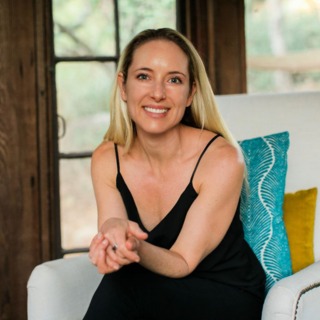
How can we shift our collective consciousness through mindfulness?
That's what we're going to explore today with Dharamachara Shantum Seth on Your Life in Process.
I hope to see you at some of my summer events.
In July,
I'm going to be online at the ACBS World Conference presenting a workshop on wise effort and a workshop with Alexis Karasbachik on infertility and pregnancy loss.
And in August,
I will be with Joseph Sirocci presenting on process-based therapy through PESI and offering a full-day workshop for clinicians on ACT and body image and eating concerns through PESI.
These events are listed in the show notes.
And please sign up for my wise effort newsletter where you can stay on top of what I'm up to,
But also get some more tips in your inbox to practice wise effort in your life.
Welcome back to Your Life in Process.
We have everything from real plays to researchers to Dharma teachers.
And today I am sitting down with Dharamachara,
Dharma teacher Shantum Seth,
Who was ordained by the Zen master Thich Nhat Hanh in 2001.
He's been teaching in India and across the world and leading pilgrimages in the footsteps of the Buddha since 1988 when he organized his first pilgrimage for the Venerable Thich Nhat Hanh.
He's led private sessions and tours for individuals such as Drew Barrymore and Sting,
But also with mindfulness researchers like Chris Germer and spiritual teachers like Joan Halifax and Trudy Goodman.
Shantum Seth is actively involved in social,
Environmental,
And educational programs and works with cultivating mindfulness in society with educators in the corporate sector.
And he's a senior advisor to the World Bank.
He's contributed to a number of books,
Including Walking with the Buddha,
Planting Seeds,
Sharing Mindfulness with Children,
And Volunteers Against Conflict.
And he's been a consultant on films such as Life of the Buddha,
Made by the BBC,
And The Story of India,
Made by the BBC and PBS.
He's spoken on TEDx and had a weekly program with Zee TV in India.
And one thing I want to say about this conversation and how it's different maybe than some of my interviews is that like the conversations that I've shared with Larry Ward and with Brother Phap Hu,
When I'm sitting with a Dharma teacher or spiritual teacher like Shantum,
I'm sitting to receive and to listen.
And some of the teachings are subtle.
They're not four bullet points to get rid of your anxiety fast.
They are subtle and they are deep.
So I hope that you can take a walk and listen to this.
You can take it in parts and just let it sort of digest.
You could even lie down and listen with your eyes closed and see the overlap between what we've been talking about on this show and wise effort.
The word pilgrimage has a similar root as the peregrine falcon.
And I have peregrine falcons that come around my little office in our house quite often.
I think they're looking for our chickens.
They're quite noisy and they're quite beautiful.
And they have this sort of bird's eye view on looking down at what it's like to live in this space.
And when we take a pilgrimage,
We get a different view on ourselves and our life.
When we interact with people from different cultures and different belief systems,
It expands our sense of self and our understanding of our interconnectedness.
So I hope this conversation,
This little pilgrimage that we're taking with Shant himself,
Expands and deepens your perspective on compassion,
On mindfulness,
And what it really means to live with right livelihood.
What have you done to your toes?
Got white at the end?
It's a pedicure.
Oh,
So at the end of it they put white?
Yes.
It's called a French pedicure.
They put a little pink and then they put a little bit of white.
Oh,
Nice.
Is it bad?
No,
It looks like it's been sort of taken care of.
Which is exactly what it is.
Normally people would paint their whole nail.
Normally people would paint their whole nail.
Yeah.
That's interesting.
It's like war paint.
People put a bit of war paint in there.
Yeah,
It's like war paint for your toes.
Yes.
Okay.
But here we are.
Thank you,
Diana.
Diana.
The goddess,
Right?
Yeah.
So I'll have introduced you before we start.
Okay.
But maybe it would be helpful for you to introduce yourself,
Too,
Of who you are and why you're here in Santa Barbara in my office.
Yes.
So,
No,
I come to America once every few years,
Maybe five years,
Something like that.
And I come for a number of reasons.
This time I came because there was a Center for Mindful Mindfulness being set up at Harvard in the name of Thich Nhat Hanh,
Who's my teacher.
And my daughter's graduating from Phillips Exeter on the 4th of June.
So I sort of bookended my trip.
And I thought,
Oh,
I have these five,
Six weeks in the middle.
What should I do?
And I thought I'll come and visit friends.
I've been,
You know,
Organizing and facilitating these retreats,
These pilgrimage retreats,
More or less like retreats on wheels,
For the last 35 years.
And so I've had a number of wonderful people come on these journeys,
Including your parents.
So I thought,
Okay,
Let me visit friends who are on this journey,
Who've come on this journey.
And California is also where I met my own teacher.
So it's a little bit like a pilgrimage for me.
So if I come to America,
I like to come to California.
And in this process I also like to know what's happening in the Dharma world here,
In the Buddha world,
In the mindfulness world,
In the sort of collective transformation that's taking place in society,
See what is really happening in this world,
What is some of the latest research.
What was it like to go to that Harvard Center for Mindfulness?
They were bringing in all sorts of folks,
Researchers and monastics from Plum Village,
From the Pratyumna Hans Foundation.
And they're setting up this center at Harvard.
What did you experience while you were there?
What was it like for you?
When I was invited for it,
I'm living in India,
So to come all the way for the launch of a center I was thinking,
Really?
But I thought it's probably the single most important event that's happened since Thich Nhat Hanh has passed away.
In the secular front,
Nothing like this,
Where there's been a recognition of Thich Nhat Hanh in Harvard,
Which is really the mecca of academia in the West,
And not only in the West,
In the world,
To have that sort of recognition of Thich Nhat Hanh's work as a scholar,
As somebody who's relevant to scholars.
So I felt,
Yeah,
I should go there.
And I think there were two or three elements which really struck me there.
The first was just this gathering of the clan.
And I've been a student of Thich Nhat Hanh for over 35 years.
And just meeting 30-plus monastics who are the old-timers,
Or the senior leaders or senior teachers of our community,
All in one place.
And we have centers in America,
In Germany,
In Asia,
All over the place.
So to get everyone together in one place.
So there was a lot of hugging,
And hugging meditations and things like this,
Which we do.
I think the other element which really,
Every talk that took place there,
I was just glued,
Because there was all this phenomenal research which was being offered on mindfulness.
I'm interested in it,
But I never get to,
I'm not an academic,
So I don't read all this stuff.
I know it's happening broadly,
But I don't.
And then to hear about that one in six people in the world have mental health issues,
And there's no way that medication is going to help that.
And mindfulness has been proven to help with mental health issues,
And the National Health Service in England prescribes mindfulness practices now.
So to realize this,
That it's not only free,
I mean,
It can be free,
But it can also be,
It's universal.
So I love that sort of thing.
The work with children,
All sorts of different research being done at different levels.
So I was just very impressed by the growth of mindfulness research.
And I think the third element was that to have this institution in a place like Harvard can also potentially shift how Harvard does its research.
This is a lot of applied ethics,
Basically.
Mindfulness is a type of applied ethics.
And it's impossible to quantify these things.
How do you quantify love?
How do you quantify compassion?
So people try and get some sort of questions.
But can we,
As a center,
Actually embody the practice?
Not just as researchers,
Not just doing this as a so-called objective research,
But really being subjects.
So one of the monks at the end said something very interesting.
He said when they set up a center called the European Institute of Applied Buddhism,
For the first six months they didn't open it up to anybody.
They just spent a lot of time with each other building community,
Building harmony,
And building a happiness amongst themselves.
And then they felt strong enough to invite people.
So for a center of mindfulness,
I felt,
Well,
Why not it be a practice center?
So when they eat together,
I'd say let's do mindful eating as a practice.
Let's practice mindfulness in our research community.
Then we're transforming ourselves in the process of our work.
It's not just something which you're doing for an academic paper.
So I'm hoping.
I mean,
That's just a little hope.
From the inside out,
That the practice actually happens within the minds of the researchers.
Correct.
That it is a lived practice that then informs how the research is done and maybe even how the research is interpreted.
Yes.
I interviewed an indigenous scholar from Native American scholar for arrows,
And he talked about how when neuroscience is interpreted,
It's interpreted from the sort of dominant Western world view,
And it's interpreted a certain way because of that.
Correct.
And then if you took an indigenous perspective first and interpret it from that world view,
You may have a different impact.
Entirely.
So having mindfulness be embedded in Harvard,
It may influence.
And mindfulness is always mindfulness of something.
You can't just study mindfulness.
It's relational.
So that also impacts the person who is actually doing the research.
So this,
You're right,
One is a dominant world view,
But the other is the subjective view or subjective space of the researcher,
And then trying to understand where is that relationship developing of mindfulness.
It's not mindfulness on its own.
It's mindfulness of something.
So that's another sort of space in your,
What is mindfulness?
Mindfulness is basically the faculty of awareness.
So we have the faculty of thought,
Which we use a lot in research,
But the faculty of awareness is not used as much.
So what you're saying is how do we use the faculty of awareness with the faculty of thought?
And thought is an interesting,
In our meditation,
We see thought,
And we become aware of the thought.
Oh,
It's just a thought.
It's a thought that arises and falls away and passes away.
And in our lives,
We sort of get caught in the thought and think that thought is real.
We just keep following it.
But when you bring an awareness to it.
So it's the same with research.
When you're researching something,
You know,
Oh,
I'm aware of the thought process of what I'm going through.
Things like that.
It's quite fun.
So you had said one of the things that you really enjoy,
Well,
Part of your life's work has been leading pilgrimages.
And I spoke with you earlier and you were talking about how on a pilgrimage,
You have a different perspective of the world because you're pulled out of your habitual patterning.
So you're on a pilgrimage from India to the U.
S.
Yes.
Right now in some ways.
And you often take people from the U.
S.
And other countries to India on pilgrimage.
Correct.
And one of the very well-known pilgrimages that you led was a pilgrimage with Thich Nhat Hanh.
Yes.
Well,
Actually,
I should say he's the one who,
The first one I ever did.
I was brought up in the area around Bihar and eastern India.
So I spent my childhood there.
But I always saw the Buddha as some sort of godlike figure.
So it was only in 1988 that Thich Nhat Hanh took me on a pilgrimage himself.
He asked me to organize it for him.
And he really brought the Buddha alive as a human being to me.
And that was very important to me.
And that still remains an important aspect of the way I lead my journeys.
And to see that the Buddha was having the same experiences as we have today,
In a slightly different context,
In a historical different context.
And then at the end of the journey,
Thich Nhat Hanh said,
Why don't you do this every year?
This is a practice the Buddha suggested 2,
600 years ago in the Mahabharata Nirvana Sutra.
And he says,
Go to the place where the Buddha was born,
Died,
Came to awakening,
Gave his first teachings in other places.
And it's a great benefit.
Now,
In these 30,
40 years I've been doing this,
35 years,
40 years,
I find it has been a great benefit.
And it has trained me in many,
Many aspects of my own life.
For example,
The way I handle difficult circumstances,
In a slightly non-reactive way.
India is a very challenging place.
And then to take 15,
20 people from the West,
Who have a completely different worldview,
In the middle of Bihar and eastern UP,
It's pretty tricky.
And each time it's an adventure.
I can imagine my parents weren't the easiest.
They were on a trip with Judy Goodman,
And I don't know who else,
But yeah.
Yeah,
I've been very lucky.
Some great teachers have come along.
And I feel that anybody who's interested in Buddhism should go to these places to meet that teacher.
But I think what I was sharing earlier is that when we go to a place which we're not habituated to,
There are different seeds in your consciousness that get watered,
That get touched.
Our consciousness is all these,
What we see,
What we hear,
What we feel,
What we touch.
And that filters into our store consciousness through our experience.
And there are certain seeds in our store consciousness which get touched on a journey which would never normally get touched.
So you get to know yourself better.
It's a way of getting to know yourself.
And that's what a pilgrimage is about.
It's that inner journey.
So you're going to these outer places on a geographical map,
But actually the real journey is the inner journey.
And the ultimate bonanza of it is some sort of awakening.
It doesn't happen each time.
That's also the laws of causes and conditions.
What you're doing is you're going,
Not just to the places associated with the Buddha,
And then reading the texts or hearing the stories about what is happening in his life,
Because they were in the context of that place.
He always sat under trees.
So you're sitting under the same tree that he sat.
You're sitting in the cave he sat.
You're sitting in the river that he walked across.
And he's referring to these things in his teachings.
You say,
Oh,
This is where he sat when he gave his teachings on the 16 methods of breathing.
Right here,
Under this tree.
And he was hearing the sound of the leaves with the wind.
And he's watching the sunset at Vulture Peak.
And he's talking about the sunset,
And you're watching the sunset yourself.
2,
600 years,
The sunset is still the sunset.
And so it becomes really powerful when you start referring to his teachings and how he then takes the analogy of those physical spaces into his teaching.
And we have a path.
But you see that in India,
Openly.
And that's then up to us whether we wake up to that.
So all these different external images that come to us,
Then how do we handle them?
How do we really process it?
And not just as individuals,
But as a group.
When you go on a group travel normally,
You suddenly find them all,
You know,
Molding into each other.
It's a bit like,
You sometimes say it's a bit like,
You know,
When you wash chopsticks.
You don't have to wash each chopstick.
You can wash them all together,
And they wash each other.
So that sort of process starts taking place on the pilgrimage.
And you start realizing that,
You know,
Somebody else's view is as important as your view.
But it may be diametrically opposite to yours.
Or it may be different,
You know,
Because of their own back experience of their culture,
Or their,
You know,
Their education,
Or their childhood.
So I think that's what's a joy.
And then you suddenly realize that,
What is the Buddha doing?
He was just teaching us how to overcome our dis-ease in this life.
What we may call suffering,
You know.
And he gave us a sort of methodology of doing that.
You start seeing every day something arising.
And then you see how to handle it.
And that's quite intense.
But it's totally transformative.
It's a little bit of a crash course in two weeks of what maybe people may be practicing at home.
And maybe they're doing little bits and pieces of that,
You know,
Pilgrimage in their life.
But it's much more intense to do it in the footsteps of the Buddha.
I mean,
India's a great teacher,
You see.
India's going to bombard all your senses.
So the Buddhist terminology,
We call it sashin,
A very intense,
It's like an intensive.
But actually,
What's happening is your,
The inner journey is really what is important.
Yeah.
Yeah.
So I want to,
I want to rewind a little bit and talk about,
Because you mentioned some words that are familiar within Thich Nhat Hanh's teachings and Buddhist teachings,
But maybe not very familiar,
Which is the Buddhist psychology of store consciousness and seeds and seeds being awakened.
And describe some of that to us and how it's related to how we are with the dissatisfaction or distress of living,
Like how we respond when those seeds are awakening.
So this thinking comes out of what we call Buddhist psychology.
It is developed primarily by people like Vasubandhu in the 5th century.
He's a teacher at the University of Nalanda.
We talk about eight levels of consciousness.
So we talk about eye consciousness,
Ear consciousness,
You know,
Smell consciousness,
These sort of ways that we impact with the world.
And then we have something called the mind consciousness,
Which is where we work from.
And then we have something called store consciousness,
Which is where all the seeds are.
So what happens is that in this,
In our life,
We will have some positive seeds,
Some unwholesome seeds,
And some neutral seeds.
So we'll have seeds of anger,
Of fear,
Of jealousy.
All of us have those seeds.
The Buddha had those seeds.
But you also have seeds of joy,
Of loving kindness,
Of mindfulness,
Of,
How do you say,
Compassion.
Now the training is how to strengthen that seed of mindfulness.
Because one of the seeds,
In different traditions you have different amounts.
We talk about 51 mental formations,
Or 51 seeds that we carry.
And one of them is mindfulness.
So the practice that we're doing is strengthening that seed of mindfulness in everything we do.
So from the time we wake up in the morning and being aware that we are alive,
From the time I turn,
You know,
I always lie down in my bed,
Flat on my back,
And I'm aware I'm lying down,
And where I'm hearing,
Seeing I'm alive.
And I move my body from my lying position to my sitting position,
Where I'm sitting,
Where I'm standing.
So I'm strengthening that seed of awareness and mindfulness right from the time I'm waking up to when I'm walking,
When I'm eating.
So that's the practice of mindfulness,
Awareness,
Trying to bring that.
Now,
What is that doing?
That seed can be accessed more easily when it's stronger.
So when a seed of,
For example,
Anger comes up,
Somebody says something,
Or somebody does something which really upsets me,
Or something touches that seed of anger,
Our normal thing is to react to it and say something or do something,
And later we might regret it and it's unskillful or whatever.
But as soon as it comes,
If you're practicing,
You say,
Oh,
Hello,
Anger.
First you name it.
And then slowly,
As the anger seed arises,
You can embrace it with mindfulness.
And as you embrace it,
And as Thich Nhat Hanh often reminds us,
It's a bit like a mother holding a child.
The child may cry,
The mother may not know why the child is crying,
But as soon as the mother holds the child,
You realize the child is crying because it needs to change the nappy or it needs some more food or whatever the cause of that child crying.
It's the same with anger.
It's the same with every emotion of ours,
With fear,
With jealousy,
With our happiness,
With our compassion.
You embrace it with that mindfulness,
And it tells you why it's arising.
And then over time you can see a patterning,
You don't become reactive to it,
And as you realize what is feeding that seed,
You try and change your diet.
And every day this happens in our lives.
Jealousy,
Where you can then transform it into being happy for somebody else's success.
And it's a much better feeling.
And you then slowly,
Slowly start realizing that somebody else's suffering is your suffering,
And somebody else's happiness is your happiness.
That's a great feeling.
When I see people being successful,
I say,
Wow,
That's great,
Because I see it as a collective shift.
And when I see people being really nasty and starting wars and discrimination and killing people because of religion or because they have different color,
Ideas,
Whatever,
It just makes me sad.
And then I work on that sadness,
And I say,
What can I do to make the world a better place,
Rather than just being caught with that.
So each time,
Inviting mindfulness.
That is the key.
You can invite mindfulness anytime.
No matter what's activating.
I was on a flight this past weekend,
A flight that had a lot of turbulence,
And then the plane was coming into the landing,
And then the pilot got in and said,
We can't land,
There's too much wind,
So we're going to have to go back up,
And we can't land.
And I was sitting next to this woman.
I got really scared.
I already have a little bit of flight anxiety.
And I looked at her.
Her hand was on the armrest,
And I said,
Can I hold your hand?
And she said,
Of course.
And so I held her hand,
And we held hands as the flight circled,
And then ended up having to go to another airport,
And it landed,
And then it,
Whatever.
We found our way back up to calm air again,
And I was holding her hand off and on this whole time.
And when we found our calm air,
She said,
I said,
First I said,
What do you do?
She said,
A nurse.
She said,
What do you do?
I said,
A psychologist.
Typical.
And then we kept on talking,
And I found out that she is the opposite political party than me.
She has some very strong opinions about practices of,
You know,
Schools and what they're teaching in schools,
And all of that came to the surface after in the calm air.
But I had,
Because I had had this moment of compassion and interdependence with her,
And mindfulness,
Really,
That's how we got through it,
And this practice,
I viewed it so differently.
I didn't,
You know,
I didn't get angry.
And if I had been sitting on that airplane in calm air,
And she had told me all those things before we almost.
.
.
Yeah,
Those different seeds would have been.
.
.
Those seeds would have been,
Wow.
What a nice story,
Yeah.
Yeah,
This is why you practice.
These are the times you practice.
Yes.
For both,
In both parts,
When you feel like your plane's going down,
And when you're sitting next to somebody on a three-hour flight that's a different political party as yours,
That there is,
There actually can be a peacefulness,
Even in those moments.
I actually felt so cared for by this nurse.
Yeah.
Yeah,
No,
I think what is important is to realize that we're all human beings.
Yeah.
And I think we have touched that each time,
And each one of us wants happiness and peace in our lives.
And,
Yeah,
Ideas come and go,
But this is.
.
.
And that's why I like the Buddha's teachings a lot,
Because,
I mean,
All teachings,
But it's funny,
When Facebook first started,
I don't know,
I opened up a Facebook page,
And I told you to answer every question,
So it said,
Religious affiliation.
So I thought,
Oh,
God.
So I said,
Buddhist,
Full of non-Buddhist elements,
You know,
Because Buddhism exists because of other things.
You know,
Trump exists because of Biden,
Or,
You know,
The Democrats,
You can't have the Democrats on their own.
The Democrats are there because the Republicans are there.
And so we have to understand our interconnectedness and our relationship with each other.
We always say that you can't have the left without the right.
The left says,
Oh,
We don't like the right.
Well,
You won't exist.
So,
You know,
It's a sort of how to understand each other and how to understand each other at a very basic human level.
Yeah.
Then we realize,
Oh,
Nobody wants war.
Nobody wants discrimination.
Everyone wants love.
And then we work at that level to shift the defilements of the mind.
That's what we call it.
Yeah.
The hate.
Then the basic idea of separation,
The greed,
And the elements of me,
Mine,
Wanting,
Letting go.
Not easy.
But that's why at the conference,
It was interesting.
Somebody said this,
And it sounded just right.
He said,
You know,
Mindfulness is not a pill.
It's a path.
A path.
A path.
Yeah.
It's not just a one-time fix.
That's what's hard for us,
Westerners,
Is we are so used to one-time fixes.
We have so many one-time fixes that are at our fingertips.
And I was mentioning this to you earlier,
The whole idea around mindfulness and that almost that mindfulness has become a pill for us.
There's Mindfulness Magazine and mindfulness apps,
And we're kind of,
I think some people are actually turned off to it because they've just heard it so much,
And then maybe they tried it twice,
And it didn't solve all their problems.
What is your,
What is the path?
And yeah,
What is your response to that mindfulness,
You know,
Westernization of mindfulness?
Yeah.
I think in the beginning,
I was also a little wary of it.
I was even critical of this sort of mindfulness movement.
But now I'm much more inviting of it because it opens the door to people who are looking.
And not everyone's going to go deep into Buddhism or into transformation.
Many people just want a little bit of,
It's like a pill.
They want a little bit of a headache.
They have a headache and they take a pill.
Yeah.
But they don't really sort the cause out of the headache.
Some people are interested.
Okay,
So why am I getting this headache again and again and again?
Why am I getting migraine?
And luckily,
Some researchers at some college say,
Oh,
We can show that migraine can be helped with mindfulness.
So somebody says,
Oh,
I'll try it once,
But then with every medicine you take it a little bit more.
So I think to have a culture growing out of mindfulness is okay,
But it opens the door for people to go into further transformation.
And I think it's also important that we go into the roots of where these practices came from.
The Buddha used mindfulness as a,
In his first teaching of Sarnath,
He talked about the Eightfold Path.
And he talks about mindfulness as a way of awakening,
Overcoming suffering.
He's already talking about creating a,
It's coming from a very calm and peaceful mind.
It's not mindfulness from an agitated mind.
I mean,
That's why he's doing it in the first talk.
So he's talking about how do you create a clear mind.
Now,
Most people in the world are not interested.
You know,
They say,
Oh,
Okay.
You know,
We're intoxicated with everything.
The next Netflix movie,
Some alcohol here.
We have a problem.
We go into some outward fix.
But I think more and more people are realizing that we have to fix it inwardly.
Even psychotherapists,
You know.
Why have psychotherapists come into business?
It's because people have realized that,
You know,
The religious confession thing wasn't working too much.
So,
Okay,
It's good to have communication,
Talk to somebody.
But then you finally realize the psychotherapist needs their own work.
So they go to another psychotherapist.
But ultimately,
You realize that you have to work on yourself.
That's always.
So mindfulness is just that opening.
And the more there is,
The better.
Because it's better than having war magazines,
You know.
So it's,
And we've seen a growth in our own monasteries and our own meditation centers.
We're setting up a monastery in India now in the Plum Village tradition.
And because there's a need of people wanting to have a deeper immersion,
And many of them are coming through this light,
Buddha light,
You know.
But they want to hear more deeply,
Get more deeply into this pilgrimage,
Into a center where they can live 24-7 in a mindful way.
And I think one of the very important elements of mindfulness is ethics.
And we have divorced a lot of mindfulness from ethics.
But that is an important base for mindfulness,
I feel.
Because we do work with the armed police,
For example,
Like the army in India.
We do work with teachers.
We do work with many,
Many different,
We do work with the corporates.
So we do work with different facets of Indian society.
And many of the soldiers are trained to kill.
That's what their training is.
And so we're doing counter-training.
We're building compassion.
So we have to understand their mind,
And yet be careful that we don't use mindfulness as a better sharpshooter,
But mindfulness as a way of developing their compassion.
So that's quite tricky.
Corporates take on mindfulness because they can get a better bottom line.
Right,
They can make more money.
Many companies have seen that if their workers are happier,
They will make more money.
Yeah.
Okay,
So their workers are happy,
That's good.
I mean,
I'm quite,
I'm pleased.
And you find that that develops into relationships with their families and their homes.
It's not just the workplace.
So whether,
I think Ford Car Company did some research some years ago.
People like Google have done some stuff.
If their workers are happier,
Then they're getting better results.
Yeah.
It's okay.
That's what they're doing.
But then always trying to remind them of ethics.
That's not easy to remind people because they feel that they cut some corner here or they make a little bit of an unethical type of decision.
It's okay in the long term because of the bottom line.
That's what we would like to emphasize.
And my understanding of it is that mindfulness is one part of that eightfold path where ethics is built in.
Correct.
To the right livelihood and right speech.
That's right.
So it's part of it.
Right concentration.
Yeah,
We kind of have pulled out the mindfulness component,
But there is a richness to all those other pieces.
Correct,
And they all interact.
You can start at any point.
Yeah.
But you're going to get onto that circle of the eight.
It's like a wheel or spokes of a wheel.
Yeah,
It's helpful to be reminded of the other components,
At least for me when we were talking about walking here and right livelihood.
For me,
It's been such a gift to have a job that I feel is right livelihood.
It feels that I actually don't have to work as hard because it's so aligned with my practice.
People are paying me,
But I don't really care.
I have people that have these outstanding bills,
And I forget to bill them because it feels so rewarding,
Just the work.
And if we had that more of a focus in our everyday life,
We actually will feel happier.
No,
You're very fortunate.
We're all very fortunate.
I'm doing my pilgrimages.
I do 70% of my work pro bono on all this mindfulness and education.
But my 30% I do for these pilgrimages,
I just love it.
I'm meeting my teacher each time.
I'm taking wonderful people.
And so we're lucky we've been able to create that.
And I was talking to my daughter who's a third-year at Smith,
And she's saying,
What career?
I have to do some internship.
Just what makes you happy?
What is your ideal of compassion?
Then your career will just develop.
It doesn't matter.
And she said,
I love being with young children.
I said,
Okay,
That's great.
Now see from that whether it's the legal aspects or the psychology aspects or the educational aspects,
But see what gives you some sort of satisfaction.
And we're lucky to have that.
It's very privileged,
Too.
I mean,
You're talking about a daughter that's at Smith,
And I went through a lot of education to be able to have that choice.
Very fortunate.
But then if you are fortunate,
Then use it.
Then use it.
Don't get caught in this other stuff again.
And yeah,
We have our advantages for whatever causes and conditions,
But then if we can really touch what moves us and moves our heart and our compassion,
Then it helps others.
It's beneficial to many.
It's not just for me.
And I think that's an important aspect,
That you can use fortune and circumstances for the benefit of others.
And as I was saying,
Others' happiness is your happiness.
And somebody offered us a center in America many years ago,
Many years ago,
In California.
My wife and I talked,
And we said,
You know,
I think we want to bring up our kids in India because it's a lesson every day.
You're seeing this contrast of poverty or different types of discrimination,
Whatever is happening in every society.
And I thought,
You know,
Also the neural pathways that have been created in India are much more creative than being in a Western society,
Where here,
You know,
It's another society,
But here you have a grid.
Okay,
You go on Highway 101,
Or you go,
You know,
It's like,
And you go,
And everyone's in their lane.
And,
You know,
If everyone goes off their lane,
They're like pop,
Pop.
And in India,
There's no lane.
There's no lanes in India.
There's no lane,
You know.
So my wife doesn't like driving here.
Because in India,
You drive with the mind that somebody's going to make a mistake.
Everyone's,
You know,
You're going to come up.
Whereas here,
You do the opposite.
Nobody's making a mistake.
You just do your thing.
Oh,
No,
You put your car in automatic,
And the car will.
So we just thought,
You know,
It's,
What are the neurons that we're developing or that neural pathway we're developing bringing up a child in India or bringing up a child here?
And we said,
You know,
Let's bring up our child in India.
And then one of them got a scholarship and came here.
So then,
You know,
But it's good.
They get to visit.
Both are good.
Yeah,
And people can come visit India and expand their neural pathways if they come on.
Now I'm really motivated to come on and engage with you.
It's something I want to do.
I want to bring my kids at some point.
Oh,
It's wonderful.
And when they're young,
They absorb so much.
It's real.
You know,
The family,
Coming as a family.
We've had friends who've come as families.
It's,
Yeah,
They don't forget.
I mean,
You know,
Something shifts in them.
Yeah.
And it's beautiful.
But I think more and more we understand each other's cultures and see the,
There's of course a dominant culture coming from the West,
Which influences all of us.
And the third biggest export in the U.
S.
Is media,
I think,
After armaments and agriculture.
Wow,
I'm sorry.
India is the third largest buyer of all this stuff.
So don't worry.
You can't have the seller without the buyer.
So we are as complicit in this aggressive mode of the war economy.
But I think what I feel is that understanding each other at a human level and understanding each other's friends and understanding each other's cultures,
This is one of the most important things we do.
So we can't discriminate.
We can't suddenly say,
Oh,
Those Argentinians.
Oh,
Those Chinese.
Oh,
Those Russians.
You know,
We're all just human beings.
If they catch us in an airplane,
Hold their hand.
Yeah.
You might go down with them.
Yeah.
Yeah.
And that love,
And that's what will help each other.
We'll give our blood to each other,
You know,
At that moment.
Yeah.
That's what flows through all of us.
So I think building that.
That's why I feel travel is important,
Too.
Once you've met friends or people.
You were saying your son met people from different countries in Plum Village.
Yeah.
Now he has a connection with some other kid in another country who's a friend.
Yeah.
He loved it when he met the little boy.
And he said,
Are there a lot of hot rods in California?
My boy loved it.
What are hot rods?
What are hot rods?
Those cars.
Like cars.
Yeah.
Yeah.
Yeah.
So I think he had a vision of people driving all these race cars around.
Yeah.
And it's just,
Yeah,
We have these misconceptions about what a country is,
What the people are,
What the generalizations are like.
And it's mind-opening.
Many new neural pathways from meeting people that are different from us.
Yeah.
And then seeing the commonalities.
And we're both 13-year-old boys.
Yeah.
Yeah.
And then talk to the moms.
And the moms look at each other and have more in common about bringing up a 13-year-old kid.
Oh,
Right.
Yeah.
What do we do about phones and having the same conversation?
Yeah.
Yeah.
And that's why,
Actually,
I'm really interested in research,
Which is to see the research on mindfulness or whatever,
On the brain or on the mind,
In different cultures,
And to see whether they're culturally neutral.
So whether we can do the same type of research with kids in China or India or in Sudan or and see whether that sort of stuff is culturally neutral.
That's very important.
Because then we're interested at the base as human beings.
Right.
The core process of mindfulness.
Yeah.
In Western psychology,
We call it a process,
A way in which that is a common experience of all humans.
Right.
So there's a process in our thinking that thoughts arise and thoughts go.
And we can get attached to our thoughts.
Yes.
We can let go of thoughts.
That's all humans.
Yes.
Or the way we relate to our emotions.
Right.
Mindfulness is a process.
Yeah.
I would imagine it's universal.
But,
You know,
There's a certain language in India,
In our Buddhist side,
Where we talk about mind and heart together,
Chitta.
You know,
We don't separate mind and heart.
So with here,
You know,
Mind becomes brain.
Is that brain?
Is it more than brain,
You know?
Yeah.
So what is mind?
And so then that creates a conversation in terms of what are you trying to research?
Do you really understand what mindfulness is?
Do you understand what awareness is as a faculty?
So we need to get some of those researchers on the footsteps.
Oh,
You've taken a few of them,
You said.
Yeah.
Yeah.
Lucky,
Christopher Germer,
The self-compassion,
Ron Siegel.
A number of psychotherapists have come.
And then other teachers like Bob Thurman or Ewan Halepax.
Stephen Batchelor is a good one.
He's been very interesting.
He's a British scholar of Buddhism.
But I think the person who really taught,
I mean,
I learned from all of them,
Actually.
I learned from each person who comes.
I think I always think that at the end of the journey,
I have another 14 teachers,
Each person.
But I think my foremost teacher has been Thich Nhat Hanh right through.
I've been three times with him.
And the first time he took me,
And then after that.
But with him,
Every year I take the monks and nuns of Plum Village.
I offer it to them as a,
I always feel that each one of them should go at least once to these places.
So they come to India and they come on pilgrimage.
And then I ask them,
Please teach.
So we do retreats there for young people and for students.
It's interesting,
Even at Harvard,
At that conference,
Hearing this 35-year-old monk,
30-odd-year-old monk,
Like Pappu,
Or the other monk.
And all these guys are sitting,
These Harvard guys,
80 years old,
Big papers,
Listening like this.
But what are these guys doing?
They're just living mindfulness.
And they're just sharing,
Oh,
This is what we do.
We hug each other.
How do we hug?
We hug with awareness.
We hold each other,
Breathe together,
Realize that I'm alive.
The other one's alive.
And then we're alive in this moment.
What a special moment.
And this moment will not come again.
And then you realize that the future is only made of one ingredient.
That's the present.
So how we are in the present.
And how we transition from moment to moment to moment to create as wonderful a future for each other.
And I think what I also find with mindfulness is that you're touching what Thich Nhat Hanh once called the miracle of mindfulness.
You're touching something which is,
I don't know what you call it.
It's like the spiritual moments we have,
You know,
Where we have no separation from each other or from nature.
And mindfulness helps us do that because that's what people are wanting to touch.
They want you to touch that,
You know,
I don't want to call it transcendent.
It's very real.
It's right here now.
But it's that I think all human beings want to touch that.
Some people call it God moment.
But when you're really aware and attentive,
You start communing with the flower.
You know,
You become the flower.
The colors become something.
It becomes a different moment of experience.
And I think that's where mindfulness can come into what we call awakening.
It's moments of awakening.
And as we can become more and more attentive and aware,
Then those moments become more and more frequent.
And sometimes I say the Buddha was just,
He was an awakened person,
As was Jesus or Muhammad.
But we are all part-time Buddhas,
You know.
All of us have moments of awakening.
And we practice so that we can keep that moment of awakening more prevalent in our life.
So each time we step,
Each time we step on the earth,
Ooh,
What a miracle,
You know,
This imprinting our mindfulness.
We're not imprinting our anxiety here,
Rushing.
But we realize the earth is supporting us.
Each time we eat a carrot,
You know,
I look at the,
I go wow.
You know,
This is a gift of the sunshine,
The clouds,
The rain,
The farmer.
It's not just a carrot,
You know,
It's the gift of the cosmos.
That moment,
And then suddenly this outer,
What I thought was an outer element then becomes me.
Each of those elements,
Whether it's the cloud or the sunshine or the farmer or the cook,
Has become me.
And then I suddenly start seeing there's no separation.
And all our meditations of mindfulness are like that.
When you become aware of breath,
For example,
Where is the outer and the inner?
Each breath you take,
Then you realize there's no me.
It's just breathing.
And that gives you that sense of freedom and liberation and,
For want of a better word,
Awakening,
You know.
And it's helpful for you to describe it in that way because they're very simple practices.
I remember in my 20s when I went to Plum Village with Thich Nhat Hanh,
Him talking about flowers and a vase and talking about the importance of having space between the flowers.
We tend to smash them all in and each flower needs breathing space.
And he's mindful of the flowers,
Right?
He's aware and this flower wants a little space from that flower so it can have some room,
Right?
And show its beauty.
And show its beauty.
And so there is a mindfulness of the flowers or the way that,
You know,
You talked about are you stepping with anxiety or are you stepping with mindfulness or are you eating with mindfulness?
And it feels very simple.
People want things to be complex.
And it's actually the very least I have found is the simple practices that we need the most.
The greater the suffering,
The more simple the practice,
At least for me,
Or when I'm working with clients.
Because when we're bombarded by our threat system or those seeds have been activated,
We need something very simple and something that we can hold,
You know,
That we can access quickly.
So these eating meditation or walking meditation or mindfulness of a flower,
I use those all the time.
And it's key.
They're available to you all day long.
If there's something to put your awareness,
Be mindful of,
Then own it.
Yeah.
Healthy living and awakened living.
You know,
These simple practices are so profound.
But because they're so simple,
People just miss them.
Right.
Or they discount them.
Yeah,
They discount them,
Actually.
And the thing is when you do it again and again and again,
You're building that mindfulness muscle,
Which then makes the whole world.
It's like it's miracle time.
I just feel every day I wake up as I was.
I'm so lucky to be alive.
Yeah.
In these 24 brand new hours I can work with.
And let me work with my heart of compassion.
Let me speak that it can help people.
So we just put intention to that.
But the fortune of being alive.
But right now,
Most of us,
The two of us,
And I hope all your listeners,
We're all alive.
We're breathing.
And can we really touch the miracle of this moment and this breath and this life?
And these hugs.
You don't know when you're going to see her.
Yeah,
Well,
At the end of this,
We're going to do hugging meditation.
You probably know how to do it with your son.
Did they teach you in Plum Village?
Okay.
They taught,
Actually,
The first time I learned it was out at UCSB.
Ah,
Okay.
I came to UCSB and they taught it there.
In 99?
Mm-hmm.
Oh,
You were there?
Mm-hmm.
Yes,
On the beach.
Yes,
I was there.
You were there,
Yeah.
Yeah.
Yeah,
And I remember him teaching.
I don't know,
All I remember is him walking really slowly and a lot of people in brown.
Yes.
I mean,
I was a college student.
You were a young person.
Yeah.
Yeah,
But it was good.
Yeah.
And I remember thinking about the hugging of my parents.
I think it's accessible to everyone,
But not everyone wants it.
So make it available for those who want to come to it and those who don't,
They can find some other way which may suit their mindset at that time.
Mm-hmm.
Yeah,
I wasn't going to start talking about Thich Nhat Hanh on the airplane with that.
The lady I was doing mindful hold hands with.
Yeah,
Exactly.
It's not always,
Yeah,
It's not always the right fit.
Yeah.
Although she was practicing it.
Yeah,
And she obviously has to use her compassion as being a nurse.
Right.
It's that muscle,
That quality that is so important.
For nurses,
I bow deeply to people like that.
You can be with people at the time of their deep suffering and then to explain to families,
Very tough work.
Well,
We better close.
I don't have a clock,
But I have an inner 50-minute clock and I think I've gone more than 50 minutes,
I can tell.
Fifteen minutes.
Fifty.
Five zero,
Yeah.
When you're a therapist in the U.
S.
,
You do a 50-minute hour.
Oh,
Okay.
Where you do 50 minutes of a session and then you have 10 minutes.
You're supposed to write your note,
But I never write my note.
I walk out to the garden.
Walk back.
But I can tell it's been.
Okay,
But I hope it's been helpful to the people who listen to this because it's nice chatting with you and trying to get to understand our practice,
How we can help others.
So next time I'll interview you about your practice.
Well,
It was helpful in many.
I was aware of many layers of helpfulness.
One is for people that are listening.
Yes.
Another is for me personally in terms of my own practice and my own parenting and working with clients.
Yeah.
But another layer is that you are a continuation of my parents.
And so by interviewing you,
I'm also connecting with my parents.
Yeah.
And sometimes it's harder to connect with your own parent.
They're lovely.
It's easier to talk with you for an hour than maybe talk to my dad for an hour.
So I feel that continuation.
I feel blessed to have the friendship with them.
They're very special people.
It's right.
As somebody was saying,
At home,
Yeah,
I'm a teacher right now.
But when I go home,
I can't be the teacher.
Right.
You have a different role at home.
Absolutely.
So that's what parents and children and all of us have our own.
We play different.
We have to have different hats.
Right.
I'm not a therapist.
But I shouldn't be.
Yeah.
Yeah.
They don't like it.
No,
But I think what you're doing is wonderful about these podcasts.
I mean,
As I said,
I'd heard them earlier.
And they really are helpful to people.
And they give a perspective which we can't get.
We can't meet the people you meet.
And the way you ask the questions or listen,
I should say.
Because I spoke much more than you.
But I think it's very helpful to other people,
What you're doing.
So media is a great multiplier.
If you listen to a number of my podcasts,
You'll hear that I talk more on some.
And I don't,
You know,
I didn't speak very much on this one.
Or the conversation with Brother Fapu.
Or the conversation with Larry Ward.
And that is because I'm receiving.
I'm here to receive.
Yeah.
Good.
They're good.
They're good brothers.
Both of them.
Fapu and Larry Ward.
Yeah.
I think what you're trying to do is shift a collective consciousness.
And what we realized,
One of the great insights of Thich Nhat Hanh,
He said,
There's always the next Buddha.
The next Buddha would be a Sangha,
Would be a community.
And I realized that because the collective is not the individual who's going to transcend and become awakened.
But we're shifting together in one way or another.
And it depends how we want to shift.
So it's up to us.
It's a sort of universal responsibility of how we want to develop the world.
And with the issues of climate crisis or,
You know,
Racial discrimination,
The war economy.
And yet on the other side,
You know,
How do we counter these things?
And how do we really build a space of love and peace and harmony and non-discrimination?
It's possible.
It's all possible.
So.
We're all part of it.
Yeah.
This is one little part of it.
It's not Harvard's,
You know,
Big mindfulness center.
But it's the little part that,
You know.
Yeah.
The log cabin.
Yeah.
The log cabin.
It's great.
It's wonderful.
It's like,
You know,
It's like a little magic space,
A hidden space in a big world.
Thank you.
And thank you for inviting me.
It's really nice sitting with you.
Yeah.
Thank you,
Diana.
We talked about a lot of different practices from the lineage of Plum Village and Thich Nhat Hanh.
You can bring mindfulness into your daily life this week.
First is being mindful while you're walking.
Mindful walking is paying attention to your foot on the earth and how you are walking.
What are you transmitting?
Are you transmitting anxiety and stress or gratitude or savoring as you walk?
Practice just walking from maybe your car to your home when you get home from work or when you wake up in the morning and you're going out to get the mail.
Just take a short little snippet of time to practice mindful walking.
I like to practice mindful walking from my office up to my house,
Which is not too far away.
And that little simple mindful walk can transform how I enter into the house,
How I arrive with my family.
It also makes me appreciate the transitions of my life,
So I'm not just rushing from one thing to the next.
The other place that I would love for you to bring mindfulness this week is mindfulness with somebody that is different from you,
A different cultural background,
A different political background,
Or maybe a different identity in some way.
Can you bring mindfulness there,
An open mind of curiosity,
Non-judgment,
And a beginner's mind to these interactions so that you're learning from them and maybe even developing some compassion and seeing your common humanity with that person.
So bring mindfulness to a short walk and bring mindfulness to an interaction of somebody that is different from you.
And both of these will begin to transform our collective consciousness.
And don't forget,
These practices are listed in your daily practice if you're a More Life in Process member.
And I'll have a meditation up there for you this week on right intention.
Thank you so much for listening to this episode of Your Life in Process.
When you enter your life in process,
When you become psychologically flexible,
You become free.
If you like this episode or think it would be helpful to somebody,
Please leave a review over at podchaser.
Com.
And if you have any questions,
You can leave them for me by phone at 805-457-2776 or send me a voicemail by email at podcast at yourlifeinprocess.
Com.
I want to thank my team,
Craig,
Angela Stubbs,
Ashley Hyatt,
Abby Diehl,
And thank you to Ben Gold at Bell and Branch for his original music.
This podcast is for informational and entertainment purposes only,
And it's not meant to be a substitute for mental health treatment.