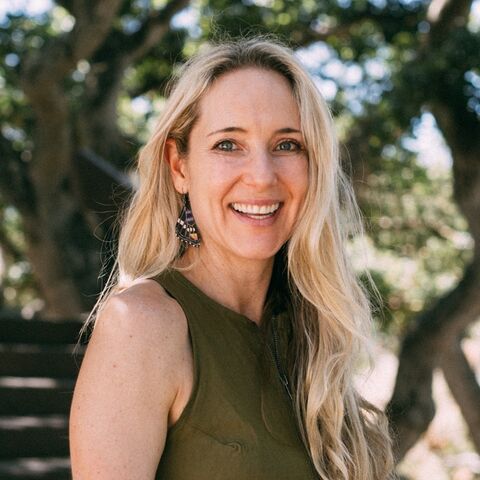
How does your identity change when you become a mother?
And are mom brain and mom guilt real things?
That's what I'm going to explore today with Melissa Hogeboom on Your Life in Process.
Hi,
I'm Dr.
Diana Hill.
And you know that I'm a clinical psychologist.
And you also know that I am a mom.
I just dropped my nine-year-old son off at camp.
And I have about three hours between nine to noon to get some work done before going to pick him up again.
And when I dropped him off,
He barely let me in the door before he ran off to meet his friends and work on his project.
It's such a different experience than other years that I've dropped my son off at camp.
Two years ago,
I could barely pry his fingers off of my pants to get him to stay.
And I stood outside the camp door while peeking my head in to make sure he was OK before leaving.
And two years before that,
I wouldn't even think about sending my kid to camp.
Camp was summers with mom,
Days at the beach and the library and pulling my hair out looking forward to preschool starting.
Our identity as parents changes so much over time.
It hits you smack over the head in terms of how much you are changed by becoming a parent.
And then you're in the process of trying to figure things out,
Who am I?
What type of parent do I want to be?
What are the expectations around parenting?
What are my peers doing?
What are genderized roles that I have taken on that I don't even know that I've taken on?
These are some of the things that we're going to explore today with Melissa Hogan-Boom.
But I want to take a little bit of a side road into psychological flexibility and motherhood because psychological flexibility in parenting turns out to be one of our greatest superpowers that we could have.
When you're a psychologically flexible mother,
You stay open,
Present and engaged with your values as you adapt and evolve and hopefully gain wisdom along the way of parenting.
Psychological flexibility is really rooted in values,
Right?
What is it that you care about in being a parent?
What's important to you and what type of parent do you want to be?
How do you want to show up with your kids when you're doing something like dropping them off at camp and they're holding on to your leg,
Not letting you go?
Or how do you want to show up with yourself when you're dropping your kid off at camp and they say,
Get out of here,
Mom,
And you feel that gut check of,
Huh,
My kid is growing up and they don't need me as much in that way anymore.
Psychological flexibility is also about being able to accept the discomfort of parenting.
There's probably nothing more painful in the world than becoming a parent.
I've heard someone say once,
When you become a parent,
It's like taking your heart out of your chest and putting it on your sleeve and then wearing it there for the rest of your life for people to poke at.
And certainly there's a vulnerability to being a parent.
At least for me,
It's been one of the most painful things that I've ever done because it's one of the most important things that I've ever done.
So with acceptance skills and your ability to stay open and present with the discomfort in parenting,
That helps you navigate all the changes that happen over time.
Navigate the grief around your kids growing up and navigate the resentment that you may feel sometimes about being a parent.
Acceptance allows you to open to all of it,
The myriad of emotions that show up in being a parent.
And with psychological flexibility,
You take action sometimes in an opposite direction than what your head is telling you.
In this episode,
We talk about things like mom guilt.
And there's been periods of time in my life where I've chosen to do things that are lined up with my values,
Even though my head was screaming at me and telling me that I should feel guilty about it.
Whether it's going away for a work conference or choosing not to participate in the kids' activity because that didn't work for our family.
Mom guilt is real.
And as I share in this episode,
Oftentimes our guilt shows up in the areas that we care most about.
So when you practice committed action as a parent,
You act on your values,
Even the presence of your sticky critical thoughts.
Psychological flexibility helps you stay open,
Present,
And engaged.
I hope you enjoy this conversation with Melissa Hogan-Boom.
She's an award-winning science journalist,
Filmmaker,
And editor at the BBC.
She has a fantastic series on the BBC about how motherhood changes your sense of self.
And I'll put a link to it in the show notes.
Melissa writes articles on a range of topics,
Including psychology,
Neuroscience,
And human evolution.
And her journalism has been recognized by multiple awards,
Including the Webbies.
She is the author of The Motherhood Complex,
Where she talks about a changing motherhood identity,
Gender equality,
And the mental load of being a mother.
Stay tuned to the other side where I'll give you some concrete tips to apply the concepts that we talk about on the show to your life and how to become a more psychologically flexible mom.
So here we are with Melissa Hogan-Boom,
And we are going to talk about sort of the ever-changing identity that happens with motherhood,
How motherhood changes your sense of self,
Your body,
Your brain,
And that some of these changes are lifelong and also in some ways unexpected.
So I'm excited to go through the course of motherhood with you.
And when reading your book,
It just,
I'm sure people say this all the time,
It brought back so many memories.
It's been a while since I've been a mom of babies.
And when you were writing your book,
You were writing it with an eight-month-old and a toddler.
So it just,
The descriptions that you give brought back a lot of memories.
But the book is called The Motherhood Complex,
And I think that's always a good place to start is defining things.
Why did you call it that?
And what do you mean by the motherhood complex?
For me,
The reason why I called it a complex is because so many of us want to become,
Many women want to become mothers,
But they also expect to,
So from a very young age,
We're kind of conditioned to believe that motherhood is what you become as a woman.
But then when I became a mother,
And then as I was diving into the research,
I found that who we are as mothers is very much tied into how other people expect us to be and societal expectations.
And that creates a conflict between your sense of self and the expectations.
And so I was like,
Wow,
That is quite just a complex thing and a clash of identity that you feel and your whole life changes.
I just found that was so tied into how you see yourself,
How other people see you.
And I was just going to call it a motherhood complex.
I didn't want it to be overly negative,
But I think I wanted to touch upon the fact that there's so many things going on at once and giving a name to it really validated,
I think,
What I experienced and what I know lots of other people experienced.
And there's many different types of mothers,
Right?
So there's birthing mothers,
There's adoptive mothers,
There's transgender mothers,
There's mothers that are in same-sex couples.
So there's lots of different identities within motherhood.
And one arena that you explore a lot is the identity of the birthing mother.
So the mother that is pregnant and the impact of pregnancy on your brain as well as your body and your identity.
So I'd love to start there with just pregnancy and because that's often when we start to feel,
For some birthing mothers,
When they start to feel like they are becoming a mother.
What are some of the brain and identity changes that happen in those early days of motherhood?
Yeah,
I loved discovering more about this because I think I came at it with finding it annoying how many people were talking about mum brain or pregnancy brain.
And I was like,
What are they talking about?
I was quite adamant for there not to be many differences when I became pregnant.
I think in hindsight,
That wasn't maybe necessarily healthy because obviously your body's undergoing huge changes.
I was looking into the brain changes just because I'd heard that word banded about quite like loosely and kind of in a negative way.
And it turns out there is plenty of neuroscience that shows that the brain does change during pregnancy in a lasting way.
So they've done follow-up studies.
I can literally tell just from brain scans alone,
People who have been pregnant versus not.
And it's beneficial.
So like grey matter is essentially pruned in a way that neuroscientists say allows the synapses to better potentially connect,
Like how you might prune a garden.
They say,
You know,
Getting rid of all the bad weeds.
It's the same kind of similar brain changes to what we see teenagers go through these huge transitions.
It's a time that your brain is literally adapting to a potential change in your day to day life.
And the parts of the brain that they notice changes where parts relate to empathy and theory of mind.
So like putting yourself into other people's shoes.
So really it's important for caregiving.
So I thought that was really fascinating.
So it's not,
It's a real thing,
Mumbrain,
I would say,
But it's not detrimental,
I would also say.
And some of those other things that we associate with Mumbrain,
Like memory and recall,
Which there is a difference there in terms of postpartum,
But they may be influenced by other factors,
Not necessarily due to brain changes,
But maybe things like sleep or stress.
Yeah,
Exactly.
There are studies that show that there is a slight cognitive decline,
But it's not as big as,
Like it's barely noticeable.
It's really around like small everyday things.
And what was interesting about it is the self-reported cognitive decline was greater than the actual one.
So it shows that you expect to have this Mumbrain.
And so your self-reported idea of how you're performing in tasks is actually lower than you actually are performing.
Again,
If you think about what's happening during pregnancy and afterwards when you become a mother,
You're sleep deprived,
You're focused on somewhat a new being for the first time in your life,
Potentially,
If it's the first time.
You have to care for their every needs.
Of course you're going to be tired and sleep deprivation,
Tiredness,
Focus on something new is exhausting.
And when you're tired and exhausted,
You do experience cognitive decline and other things.
So it's really hard to uncouple a part of sleep deprivation.
So Mumbrain is a real thing,
But it's not a result of being a mum or being pregnant per se.
It's just the side effects of it,
If that makes sense.
And it's also just sort of all the stigma that gets associated from the moment that you're pregnant.
And especially for folks that have careers or in the workplace,
No matter how supportive of a workplace you're in,
I think that we,
At least for me,
I was in,
When I learned I was pregnant with my first child,
I was working in a treatment center run by a woman psychologist,
All woman team.
And this was a psychologist who would like pump her breast milk during supervision with me.
I mean,
She was very supportive of motherhood and very open about working motherhood.
And I still remember being terrified of telling her that I was pregnant.
And because I was worried,
I was the clinical director of a treatment center,
I was in a position where there's a lot of responsibilities,
A lot of crises that were on my plate.
And those types of biases we carry with us in a supportive environment,
I can't even imagine what it would be like in a not a supportive environment.
One of the stories that you share is about how when you told folks that you were pregnant and it was a really peak performance job situation and how that influenced you.
So I wonder if you could share that story and also how pregnant,
Telling that we're pregnant to others is shaped by gender biases in the workplace.
Yeah,
Of course.
So I also agonized about when to share and I wasn't really showing,
But I was like 17 or 18 weeks and I was having article appointments every few weeks and I was like,
Oh,
They probably know,
I should probably say something.
I worked with the team quite remotely,
So I didn't see them face to face on a daily basis like I was in London.
Some of my team were in Bristol a couple of hours away,
But we had this amazing shoot planned with Sir David Attenborough in his home,
Which was just,
I was like so nervous.
It was like at the time quite a career defining interview that I was getting to lead and it was live social media.
So we did one of those Facebook live performances and I just shared it with my team prior to the interview and everyone was really excited.
It was really positive as I thought they would be because two of my colleagues were parents themselves.
And then I was chatting away to Sir David and there was some technical glitches.
So we were just talking about life in university and then a teammate,
I'm not sure if it was an interruption or part of the conversation,
He's like,
Oh,
And do you know what?
She's pregnant,
So she'll be off soon.
He said it in a positive way,
Like,
Oh,
She's one of my great producers and she's off to have a baby.
And then I was kind of like,
I can't believe that he shared that news for me.
Even though he was saying it in a positive way,
He was supportive,
He was positive,
He was just like kind of having a chit chat.
But I just remember that was kind of the first experience where I was like,
Oh,
I don't want this news to overshadow what I'm doing then or afterwards.
I didn't want people to presume I was going to be off.
And I was always like,
Oh,
Well,
I'm not taking much time off.
I always felt like I had to then justify the fact that I was taking off and mention I was coming back to show my commitment.
And I mean,
It turns out there's reasons why we do this because during pregnancy and afterwards women are literally seen as less ambitious,
Less committed,
And often that actually plays out in reality.
So you're less likely to get promotion,
Less likely to pay rise.
And so what you'll find is then even if women were ambitious and their ambition didn't change,
They might tone it down because otherwise their lived reality doesn't align with their experience in the real world.
So if you're ambitious but you're constantly getting pushed back,
What's the way to make that feel more comfortable to stop being ambitious?
And you hear women say all the time,
It's like,
Oh,
Well,
I love my job,
But when I had kids I couldn't do both or I couldn't continue the high paced career.
And it's kind of mad that we live in a world where we have to pick and one comes at a detriment for the other because both is unhealthy,
Right?
We want to be there for our children,
We want to pursue careers,
But it shouldn't have to have this constant clash.
And yet I think the kind of work culture we've built up in the West has made it inevitable.
Yeah,
It seems like there's some cultures that do it better than others.
And when you start to look at the research,
The US always kind of fares the worst in everything.
I know,
For you.
Yeah,
For us over here.
And it also shows up in our happiness reports that we don't do so well in terms of our happiness,
In part because of the lack of support,
Yes,
During pregnancy,
The lack of support postpartum and lack of support for both parents,
For fathers as well.
And what the research shows in terms of parental leave for fathers,
How that is so positive for the family and outcome,
Mental health-wise of the mother.
It's amazing that there's policies that allow fathers to take paid time off,
It has to be paid because sadly,
We live in a world where men tend to earn more than women.
And so if it's not paid,
Then it's going to cause a financial burden.
There's lasting benefits of a father taking time off in terms of his own physical brain changes,
His bonding with his child.
There's even evidence to show that when the male partner in a heterosexual couple takes time off,
A woman's earnings are more likely to increase.
It all boils down to inequality.
If there's inequality in the home sphere,
Then it's going to be impossible to break out of that and achieve in the work environment,
Which means you have this double bind of having a motherhood penalty,
Which is a literal term sociologists have coined to show the drop in earnings that happens when you become a mother,
And then lifelong earning potential.
It's not just money,
It's not everything,
But for a father to also be there for his child is going to have lasting beneficial impacts on the finances,
The well-being of the couple,
The happiness,
The relationship between the two partners.
You touched upon happiness there.
If there's constant stress and a juggle and inequality,
Then it literally carries resentment and that builds.
The more resentment there is and the more discrepancy there is between how much you do at home and how much you think you do versus how much you think you're a partner to can literally lead to divorce.
That's backed up by studies.
I'm not just being dramatic here.
Well,
And the sensitization of the brain in terms of caregivers,
So whether or not you've given birth to the child that you care for or not,
Your brain is changed by the activity of caregiving.
That's what's so wonderful about just the human species is that you don't have to have biologically given birth to a baby to develop some of these brain areas that are associated with caring and attachment and the good stuff that comes with parenting.
I think that's probably one of the lasting snippets of scientific insight that really stuck with me.
It's something called experience-dependent plasticity.
That's a bit clunky,
But it literally means that anything we do in life can change our brain because our brain is plastic,
As we know.
A pianist will have a slightly different brain to a non-pianist.
It really debunks the idea that women are biologically destined to be the primary caregivers.
Sure we get a head start if you are the biological mother.
Sure you get a head start in terms of the hormones,
Your body's literally producing milk if you're able to breastfeed.
But evidence shows that if fathers spend equal amounts of time with the child or if there's a male primary caregiver,
His brain will change to almost comparable levels to the woman's and release oxytocin as well.
So it just shows simply by being there that your brain will change and react to a caregiving role.
Then you can see that on a practical level as well.
I write a lot in the book about the mental load.
If you're doing everything and thinking about everything,
You become better at it,
Both on a practical level and biological.
So if you're not sharing the load,
Your brain's not going to change.
And then again,
That would have lasting effects.
So I love that because I think to reach equality,
We have to get away from the idea that a woman's role is to be a mother and that's her destiny.
We didn't see that in prehistory in some hunter-gatherer tribes.
We don't see that.
So why are we living out these gender roles?
So you talk about cognitive load and that is something that I think people often don't think about in terms of caregiving and motherhood,
Where it's not just the physical load of like actually having the baby or nursing the baby if you nurse or carting the toddler off to preschool,
But there's a whole part of parenting,
Which is the mental part,
Which is the worry,
The planning,
The organizing.
And last night I was reading through your book and it was after dinner,
The kids were back in the back of the house brushing their teeth.
And my partner was working on camps,
Camp organization.
So for those of you that are working parents,
There's a section of the year,
Like 12 weeks,
Where you have no school,
You have nothing.
You have to like piecemeal childcare together for your kids and it involves this crazy making matrix of camp formation,
Which is painful in so many different levels because you have one kid going to one area,
Another kid going to another area.
Some things are eight to 12,
Some things are nine to two,
Whatever.
And so he has taken that on full on as his project to do the full and I don't even have to think about it.
It's not even something on my radar.
He's doing 100% of it and I was able to sit down and read your book and prepare for this interview.
And it's things like that that I think that mothers in traditional gender,
You know,
Genderized households of heterosexual couples,
Or even in same sex couples where one person just takes on more of that load.
And it's a lot,
It's draining.
It's so much and it's draining because it's invisible and it's hard to put down and it's hard to quantify even.
You carry it with you because you feel like it's your responsibility.
So if you were thinking about camps and there was a deadline,
You can't like switch off that part of your brain.
I mean,
I've made a summer camp spreadsheet,
Believe it or not,
Just because last year I was like,
Suddenly my daughter's only just started school.
So we're quite new to having to fill the summer.
And I was like,
What do I do?
And even next week,
My husband was busy planning his week next week.
And I was like,
You do realize she's finishing at three every day,
Right?
And he's like,
Oh,
It's like,
What's next week?
Because he's like,
I can't wait to get back to kids in childcare next week.
And I'm like,
Well,
Next week's also going to be because we've both been off with COVID this past two weeks.
And I mean,
He won't mind me saying this,
But I had to remind him because it's in my brain,
The child holidays,
The camps,
Because I have taken that on and I'm aware of it,
Which I think is the first step to anyone else nodding along.
Because it's not just the big things,
It's things like the shopping list,
The shoe sizes,
The nappies,
The formula,
Knowing when the clothes are going to run out,
Knowing if you need a swimming costume in advance of a holiday break,
Because the last one will have been too small.
So it's all these tiny little things and they add up and they are ever present and you can take them to work with you.
And the reason why women tend to do a lot of it is often because we're the ones who stay at home on maternity leave for longer and so we kind of get habituated to these tasks and then there's no handover.
So that's what sociologists have found.
Even in couples that set out to do things 50-50,
Very rarely do they sit down and write a list,
Go,
Right,
You're going to do this and I'm going to do this.
You kind of fall into these gender patterns.
And unless you talk about it,
It's hard to notice.
And I think even though I'm quite aware of what's going on in terms of our own relationship,
I hadn't really cocked about the mental load until I read about it.
And I was like,
Yeah,
Why am I always the one packing for holidays?
And why do I know exactly where all the clothes are?
I know where to find,
Even if my daughter's messed up her clothes covered,
I'm like,
I know where her vests are and I know where this is.
Why am I the one that knows that?
And so,
Yeah,
I think being aware of it to anyone who wants solutions is really important.
And then making sure it's end to end,
Like what your husband does,
It has to be the thinking ahead,
The organizing,
The anticipation and the decision-making.
It's no good.
Just the doing part is no good if you haven't done the planning or the thinking ahead or having to be reminded because then even if you're doing all the things required,
If someone is like project managing that,
Then that still adds to the load.
It's exhausting.
And that's why I think women and mothers just tend to be more exhausted from it all.
So there's two things that I want to add to that and build on in terms of this conversation that actually came up for me around the whole camp thing.
One is when people start planning camps,
You start planning,
When your kids are a little older,
You plan like whose friends are you going to be in camps with,
Right?
So what happens is the mothers create the group text with me on it and then I have to rope my partner in to be on the group text because there's an assumption first,
There's an assumption that that's going to be my job,
Is the camp job,
Right?
So that's the one thing we also have to change our programming around is not assume,
Like not assume that the sports parent that's going to bring the drinks is going to be the mom,
Right?
Not assume that the high school party planner is going to be the mom.
These are just assumptions that we just are swimming in that we don't even think about,
Right?
But the other thing that came up for me around it,
Which I think is a common thread that starts in pregnancy and is carried all the way to being like a 65-year-old,
70-year-old mother,
Which I have in my practice,
So motherhood doesn't end when your children leave the house,
Is guilt.
And the guilt of not being the person that's planning the camps and the guilt of not being the person that's bringing the brownies or the guilt of not being the person that's breastfeeding until two years or whatever that mother guilt is around the idealized mother.
So I want to talk a little bit about that,
Mothers and guilt and how that shapes our identity as well.
Yeah,
It's interesting because again,
Mom guilt is another one like the mom brain thing that I can just hear banded about.
It's like we are all aware we have it.
It's like,
Oh,
You know,
Just feeling a bit of mom guilt whenever we do something that's slightly not seen as perfect.
But fathers don't do that.
And sociologists studied motherhood guilt extensively actually.
And they do find,
As you say,
It's tied to these kind of perfect parenting ideals.
And we're so kind of conscious of what a perfect mother should be that anything below that we feel guilty for.
And then we also feel guilty for sending our kids to childcare or for feeding them something that's not as nutritious as a home cooked meal full of five vegetables.
But all the things that are on the perfect mother list are impossibly high standards.
And what I always find so frustrating is if we kind of martyr ourselves for our children to the extent that we become less happy,
What message are we then sending to our kids?
So I think it's really important to recognize the guilt you feel and then learn about why.
I know for a fact that my kids are better off in childcare than with me all day because I can't keep up to energy levels all day long.
That they can when they're with professionals who are brilliant and give them age appropriate activities and are there for them with full energy all day long.
Whereas I'm trying to run a household and do admin and I can't sit and play with them all day long.
Nor do I want to,
Nor should I.
It's literally not how we evolved.
And I think it ties to the mental load a bit.
The reason why we take on so much of it is because we're expected to,
Like the camps,
We're expected to do it.
And then if we don't feel guilty,
We're judged for it.
If you've got a screaming toddler in a supermarket,
You might be judged as being a bad mother because it's not what they'd expect a mother to behave.
Or if you're not responding in a warm way because they're acting up and you should not be pandering to it,
They might think that you're being a bad mother.
And we feel this and we internalize it and that manifests in essentially maternal gatekeeping.
So that's the phrase used for taking ownership of some of the activities that we do when it comes to planning and organizing.
As women are judged for things in a way that men aren't.
And so we do more of it and it just has to stop.
And it's not just stressful on a day-to-day level,
It can literally lead to parental burnout,
Which is a newly diagnosed phenomenon.
It's becoming more present.
If you think about how families used to operate in terms of you'd have more support around you and ancient evolutionary past,
We grew up in groups of hunter-gatherers.
It was never set up to be this kind of nuclear family where there's only two primary caregivers.
And then if most of the pressure is on one,
It's no wonder why we feel stressed and we're failing and coupled that with the fact that more women work today than they ever did before.
But the expectations of what a mother does haven't really moved along with that.
So what's interesting about guilt and motherhood guilt is that,
And it kind of links to burnout,
Is that mother's guilt is actually also associated with reduced health practices.
So there's some research that suggests that mothers exercise less than non-mothers.
Mothers consume more sugary drinks than non-mothers,
And mother's sleep efficacy is reduced,
Obviously,
Than non-mothers.
And guilt is a predictor of that.
But what's really interesting is that mothers who have higher levels of self-compassion,
It actually mediates that relationship between guilt and taking care of your health.
So that being like,
I'm going to a yoga class,
I feel guilty,
And then I have self-compassion.
I need to care for myself so that when I come back and I'm back from yoga,
I can be less irritable with my kids,
I can be more present with my partner,
My nervous system will be a little bit more settled,
And I'll be a happier mom to be around,
I'll be a more pleasurable mom to be around.
And I can have some compassion for myself that I need this class,
Otherwise as I tell my kids,
I'm about to lose my marbles.
I'm leaving.
So that's part that we also have to wrap our heads around is that it's a system.
And for mothers to work with the guilt,
I think guilt is inevitable because we feel guilty because we care a lot.
But it becomes misdirected,
It becomes a problem when it starts to shape our behavior in ways that actually harm our children and our families and ourselves.
Absolutely.
And I think if there's anything,
It again comes down to recognizing when we feel it and why,
And then knowing when to shrug it off.
So I am the same.
I feel like I should be spending quality time on the hour that I have of the day before school or a childcare drop-off.
But in reality,
It's not a special time.
Everyone's stressed and getting dressed and running around eating breakfast and spilling it.
And so I'm like,
Right,
I'm going for a run.
I know I'm going to be home early because my hours tend to finish.
I tend to finish work earlier than my husband.
And so I always have that extra in the evening.
And so I'm like,
Well,
I can fit in my run in that half an hour of time when they're causing havoc.
And then when I come back,
They're going to childcare.
And so I have that time to myself to take a shower.
Whereas if I did the run later,
Then it would reduce the time,
The pre-work time.
And so I could feel guilty about it,
But I know that I will be a refreshed,
A better mother if I take that time for myself.
And I think you have to,
However little time you can carve out for yourself,
Work backwards or forwards or whatever's most helpful.
Because some stay-at-home moms literally do not get a time of five minutes in the day if their partners leave work at 7am and aren't back till late.
That's the reality of people with long commutes.
So it's just finding the snippets of time where you can be yourself and do something for yourself because it's not natural to sacrifice every part of your day for your children even though we are sold this idea that motherhood means self-sacrifice.
I don't think that is correct.
And I think it's very unhealthy because then we will become less happy and our kids will see that.
Then when you look at the research that shows like daughters of mothers who work are more likely to end up in higher income jobs themselves.
We're literally setting an example for our own children of what's possible in terms of just day-to-day,
But also gender roles.
So I think it's really important and good for your family's well-being to put yourself first where you can and just know the balance.
And then if that triggers guilt,
Just brush it off if you can do that.
I think a way that I've conceptualized it over time is putting our family's well-being first.
And that means all of us.
And seeing that,
For example,
Some boundaries that I set around bedtimes with my kids,
That is for their well-being and it's also for my well-being.
It's both.
And it impacts their mood the next morning.
It impacts their ability to pay attention in school.
But it also impacts my mood because I get a little bit of time with them in bed.
So I think that it's just I think a lot of the way that we view things is so individual in nature and we think that it's like it's work or parenting.
It's mom time or it's kid time.
And we're much more systemic than we think we are.
For me,
And actually this is some of the work that my good friend Yael Shumbrun,
She's a psychologist at Brown and she writes and teaches on,
Is that my work life enhances my home life and my home life enhances my work life and my friend life enhances my partnership life and my partnership life enhances my parenting life.
And that they all kind of feed into each other as opposed to like we have to just focus on one or the other or prioritize this.
That's really poetic actually.
I think that we do get a lot from all our different relationships and no one individual can fulfill all those roles.
And I'm with you on bedtime like 7pm,
Lights out.
But I agree with what you say on like we have these strict divisions between kind of work life parenting and our own time,
Which is I think it's a consequence of the society we live in because you don't see that in kind of many indigenous groups where kind of family life is much more together.
Everybody contributes.
Childhood isn't infantilized in the way that we do so in the West.
And I'm always careful when I talk about cross-cultural comparisons because you can't transport like desirable things from one culture and bring it to the other.
But we do have such a strong division of child care,
Of childhood and adulthood that we operate in such different sphere.
Like being called childish is an insult,
Right?
And it shouldn't be like a child should have age appropriate goals and age appropriate activities.
But it doesn't mean that they can't contribute to family life.
I try my best to kind of like practice what I preach with regards to that.
Like if I'm,
The other day I was trying to clean their handprints off the window.
We've got these big glass doors,
Which you can see behind me and they're just constantly full of handprints.
And of course the kids wanted to help.
And I knew that like they would create more watermarks on the windows and they'd splash water everywhere.
And I was like really fighting with myself saying,
Let mommy do it,
Let mommy do it.
And I was like,
Right,
Okay.
And I gave them each cloth and they both helped.
And of course they made loads of mess and it just created twice the work.
But I know that giving them meaningful tasks actually pay off later on because if they see that they're contributing to household tasks in a meaningful way,
They will learn.
I think they will learn to continue to do that.
Like there's,
I don't know if you have come across this,
But there's a research where literally like Western women,
Like women from Western countries are more likely to give their children mock work.
So like pretend work,
Like here's a pretend broom where you can sweep the floor.
Here's a pretend.
Yeah.
And I mean,
I've got a toy kitchen and it's kind of,
It's a distraction and it's because the kids want to do what adults do.
And the reason I'm bringing this up is because they understand that they're not doing meaningful help.
And that's a demotivator.
And so when you talk about like family life and happiness and wellbeing,
It kind of literally does come down to all being part of it together and them learning early on to contribute and to know what needs to be done.
And I think bringing that in early on is difficult,
But it's important.
Yeah.
So we can take that and fast forward it to teenagers and young adults.
And then eventually,
Like I mentioned,
I have parents in my practice that are in their sixties and seventies,
Older adults.
The time that you put in to creating intrinsic motivation and young children,
Having that be sort of the philosophy of your household.
In our household,
It's sort of,
We all are householders.
And so we all contribute to the household.
I have my kids write up what their contributions are,
Or we figure it out collaboratively.
But that sets them up for things like in college,
Seeing that they are part of the household,
They're part of the group,
They make an important contribution.
But I think that,
You know,
One of the things that happens for us again,
As parents and as mothers,
Is that not only does our whole identity change and shift with pregnancy,
That you had this line in your book where you kind of were saying how inside your head you were like,
I'm pregnant,
I'm pregnant,
I'm pregnant,
Like everywhere you went.
And I felt that when I was pregnant,
It was just like,
It was like this thing that happened to me and now that it would never go away.
It's just,
It's there now.
Like I'm a mother and I feel that.
That identity as a mother also changes as at different developmental stages of our children.
For example,
When my kids were little,
I would say that I prioritized my newborns and my little babies more than I did my work.
My work was kind of like on like a kind of keeping an even keel so that I could put a lot of energy into just how much energy it took to have young children.
And now that my children are in sort of the sweet spot of nine to 12,
My career is doing this big pickup again.
And I know that that will kind of come and go with the different stages of life as well.
So even our identity as a mother changes over time.
Yeah,
I hope you can teach me that you come to terms with it more as you get older.
I've definitely found that writing about it and learning about the changes in motherhood has definitely made me own it and validated my experience.
And now I feel like it's much more aligned with my identity,
But I still don't feel like a mom fully.
And I wonder if that will ever change.
I don't see myself as like a momsy mom or like I always still have that.
I was like,
Oh,
The people kind of are mothering better or they're like,
You know,
They have all the right snacks and I'm like scrambling together.
I think it's good to talk about these things because no one really has it put together in that way or not many people.
No,
You know,
I was talking to a consult with people like around the world,
Psychologists,
And I was talking to yesterday a psychologist from Denmark.
And of course this was on my mind because I knew that I was having this interview.
And she works with new parents,
And particularly she works with postpartum depression,
That's sort of her specialty and she's using this model ACT.
So I'm consulting with her around how to use ACT in her practice.
I said,
You know,
You all are so happy.
You keep on winning and the happiness.
Everyone in the Scandinavian countries wins in the happiness competition,
Which Americans have made it a competition,
Of course.
And I was like,
You know,
What are you seeing in terms of like,
You know,
Happiness and kids and parents and all this?
And she said,
You know,
I actually experience for the parents that I work with so much stress of these mothers where unlike with like American mothers where we feel stress around our children achieving,
They feel stress around having,
Which she described as having the perfect attachment with their kids,
Like healthy attachment and secure attachment.
And we can turn anything into some kind of an expectation,
Whether it's that you have to be the perfect attachment parent or you have to be successful at snacks and achievement.
Exactly.
And I think what's worrying about this trend is falling into this pitfall of over-parenting or intensive motherhood.
And so by obsessing over attachment or snacks or camp or like obviously there's the practical things that you have to do,
But by obsessing too much,
We're actually doing our children a disservice because we're limiting their independence.
At the same time,
I think there's this research I came across recently and I wrote a piece BBC about children influence their parents perhaps more so than we think and more so than we can mold them.
So I think the most striking fact from that is so identical twins,
Reared apart,
Are more alike than fraternal siblings reared together.
And so if you get your head around that,
It takes a while,
But it just shows that genetics plays a huge role in how our children are,
Their natural tendencies.
And we as parents respond to that.
So we can't mold them,
But we can respond to them and respond to how they are.
We can't change a shy person to be outgoing,
But we can work with them to overcome what's the most challenging.
So I think we think we can mold our children,
But they will be who they will be and we will hopefully grow with it and help them achieve their best by responding to them.
And I think knowing that takes the pressure off.
You can't mold your child into what you want.
And if you do,
You're going to see a kickback and then you're going to wonder what you did wrong.
What you did wrong might be you didn't listen to what your child wanted or you tried to think you could control things that you couldn't.
And I think that that's what my,
As I get more experienced as a mother,
I think that's what my biggest learning or challenge will be to kind of let my motherhood identity combine with what my children want and not try and force things onto them.
Yes,
There's that classic book that Alison Gopnik,
A gardener and a carpenter,
It's how do we create that nourishing soil so that it's just sort of like a good garden versus trying to be those carpenter parents that are trying to shape them.
It's hard because we think they need certain things and we're told that and then we again coupled with the economics uncertainty and the stress and the pandemic and war in the background,
It's a really,
Really tough time for children to be growing up.
And so we want to protect them,
We want to give them the best chance.
But if we are trying to cultivate their lives too much,
Then we're actually doing the opposite.
Yeah,
So I was just talking to a mom of,
I think her baby's like five months old,
And she said,
Well,
I felt so protected for the first five months,
Especially during COVID.
We were kind of all kind of holed up,
Just our little family doing our thing.
And now that some of the COVID restrictions are lifting and we're faced with questions like,
Do we do swim lessons?
And I was like,
Oh,
Yes,
You are,
You are just at the beginning of those questions.
And beware of the carpentry,
You know,
Like,
Beware of the other carpenters that are out there that say,
You need to do this now.
And it becomes a competition of,
Especially for privilege,
This is very much for privileged families,
Like a competition of how much you are doing or what activities your kids are in and whether or not that makes them successful or not successful,
But really your own ego as a parent that's wrapped up into all of that.
And it's just such dangerous territory,
I think,
For all of us.
It is,
But it's kind of a natural,
We also have to recognize it's a natural human tendency to constantly compare ourselves with those around us.
I fall into the trap too.
I think it's hard when we're surrounded by other people who are also trying to do the best and then it makes us judge whether or not we're doing enough for our children as well.
I want to ask you a last question of what projects are you working on?
Yes,
I'm busy writing a monthly column for BBC Future on Family Tree,
It's called.
So it's really,
I just did a piece on literacy and when's the best time to learn to read.
The next piece is going to be a bit about how play has changed throughout the pandemic.
And I'm working on another parenting but childhood book.
I'd say I'm still refining the idea,
But it's going to send a strong message about how we're all doing too much and we need to slow down for our own happiness and that of our children.
Again,
Evidence-based guide of how we can do that.
So I'm going to give,
Rather than the other,
This one was not prescriptive,
But I think the next one is going to be the steps we can take to stop doing too much,
Essentially.
So stop getting too involved in our children's lives.
It sounds like a contradiction,
But it's not,
I promise you.
Well,
Thank you so much.
Pleasure to speak with you.
Thank you.
So there's a lot of things that Melissa and I talked about and I really want to narrow your practice this week down to some concepts that link to psychological flexibility and the core processes of psychological flexibility in parenting.
The first thing that I want you to think about this week is the gender biases and stories that you have about parenting and some of the cognitive loads of motherhood that you may have taken on without even knowing it.
The psychological flexibility process that we're tapping into here is perspective taking,
Being able to zoom out a little bit and look at the stories that we're believing to be true that maybe we could take a different perspective on.
When you discover that you may be blindly following some stories about what it means to be a mother,
Like you should be the one making lunches or picking kids up from school,
Take a moment to ask yourself how much of those activities are contributing to your cognitive load.
And do you want to challenge these stories a bit?
How could you share that load?
What parenting tasks could you pass off to your partner or an allo parent that would help free you up to do the parts of mothering that you value most?
The second practice that I want you to explore this week comes from the conversation I had with Melissa around self-care.
And oftentimes we think as mothers,
We need to take more time for ourselves,
But I want to offer a little twist on that.
It's not just about taking time for yourself.
It's about the wellbeing of your family as a whole.
And the psychological flexibility process that I would love for you to engage in is values.
What are your values around your family's wellbeing?
What is important to you about caring for yourself and caring for each other?
And how are your individual well-beings interconnected and interdependent?
What boundaries could you set this week that would benefit your family as a whole?
And can you take some committed action towards that more holistic way of viewing your family's values?
Finally,
Mom guilt.
Our mom guilt comes in part from societal expectations that we've adopted and also in part because we care a lot about being a good mom.
And the more you care about being a good mom,
The more guilty you're going to feel when you think that you're not being a good mom.
So what do you feel most guilty about?
And how can you use that guilt as an avenue to looking at what is it that you care most about?
And can you act on your values instead of your guilt?
So be on the lookout for mom guilt this week and the three questions to ask yourself,
What do I care about that's making me feel guilty?
How can I open up and allow for the discomfort of mom guilt?
And how can I take action in the direction of my values,
Even with this mom guilt along for the ride?
All right,
So those are the three practices.
Be aware of gender biases in your parenting and consider ways to shift the cognitive load of motherhood.
Take a perspective shift on your self-care and consider what your values are around your family's well-being.
And then finally tackle mom guilt by looking at the values behind it and taking action on those values,
Even with that guilt.
And I look forward to talking with you all next week.
Don't forget,
You can always watch these episodes on YouTube.
And if you haven't done so yet,
Sign up for my newsletter.
I send an email every couple of weeks talking about what's up on the podcast,
What I'm up to,
And as always some tips and practical tools for you to apply act psychological flexibility and all the concepts we talk about on this show to your daily life.
Thank you so much for listening to this episode of Your Life in Process.
When you enter your life in process,
When you become psychologically flexible,
You become free.
If you like this episode or think it would be helpful to somebody,
Please leave a review over at podchaser.
Com.
And if you have any questions,
You can leave them for me by phone at 805-457-2776 or send me a voicemail by email at podcast at your life in process.
Com.
I want to thank my team,
Craig,
Angela Stubbs,
Ashley Hyatt,
Abby Deal,
And thank you to Ben Gold at Bell and Branch for his original music.
This podcast is for informational and entertainment purposes only,
And it's not meant to be a substitute for mental health treatment.